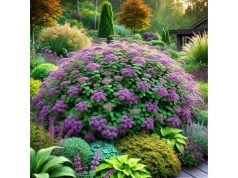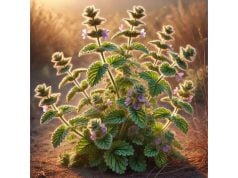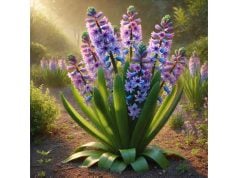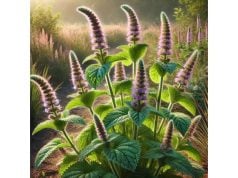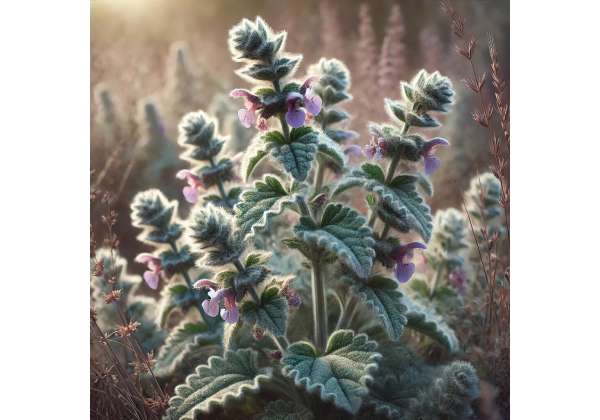
Despite the title, Stachys byzantina is not the same plant most readers picture when they hear “nettle.” It is better known as lamb’s ear or woolly hedge-nettle, a soft, silver-leaved member of the mint family that has a smaller but intriguing medicinal record. Traditional use and newer laboratory work suggest that it may offer antioxidant, anti-inflammatory, and mild antimicrobial effects, especially in topical preparations and simple herbal teas. It has also been used as a food herb in some regions, which makes it unusual: part ornamental, part folk remedy, and occasionally part of the kitchen.
The most important thing to know is that the evidence is promising but still early. Stachys byzantina is not a proven treatment for chronic disease, and there is no well-established human dosage standard. Still, its chemistry gives researchers good reasons to study it further for irritated skin, minor wound support, and cosmetic uses linked to oxidative stress. Used carefully, it is best approached as a gentle, traditional herb with practical limits rather than a miracle plant.
Quick Overview
- The most plausible benefits are mild anti-inflammatory and antioxidant support, especially for skin-focused use.
- Traditional use includes topical soothing, herbal tea, and occasional culinary use of the aerial parts.
- A cautious tea range is about 1 to 2 g dried aerial parts per 240 mL hot water, once or twice daily for short-term use.
- People who are pregnant, breastfeeding, highly plant-sensitive, or managing chronic kidney, liver, or medication issues should avoid self-treating with it.
Table of Contents
- What is hedge nettle and what’s in it
- What can hedge nettle realistically help with
- How do you use hedge nettle
- How much hedge nettle per day
- Side effects interactions and who should avoid it
- What the evidence actually says
What is hedge nettle and what’s in it
Stachys byzantina is a perennial herb in the Lamiaceae family, the same broad botanical group that includes sage, mint, and rosemary. Its thick, velvety leaves are what most gardeners notice first, but the plant has a long secondary life in folk use. In parts of Southwest Asia and the Mediterranean world, members of the Stachys genus have been prepared as simple herbal teas, poultices, or household remedies for irritated skin, minor wounds, and everyday inflammatory complaints. In Brazil, the leaves are also eaten as peixinho-da-horta, usually cooked rather than taken as a concentrated medicinal product.
The naming can be confusing. Stachys byzantina is often sold as lamb’s ear and sometimes described as woolly hedge-nettle. It is not the same as stinging nettle, and it also is not identical to the better-known traditional “hedge nettles” such as Stachys officinalis. That matters because readers often assume that all nettles share the same chemistry and effects. They do not.
What gives Stachys byzantina its medicinal interest is not one single compound but a cluster of bioactive groups. Researchers have identified phenolic acids such as caffeic, chlorogenic, and ferulic acids; flavonoids such as rutin and apigenin; glycosides such as verbascoside; iridoids such as harpagide and aucubin; and terpene-rich volatile components. Some extracts also contain phytosterols and measurable antioxidant compounds such as alpha-tocopherol.
Each group likely contributes a different piece of the plant’s profile:
- Phenolic acids and flavonoids are mainly linked with antioxidant and anti-inflammatory actions.
- Verbascoside and related phenylpropanoid glycosides may help explain the plant’s protective and soothing reputation.
- Iridoids often appear in herbs used traditionally for calming tissue irritation.
- Terpenes and aromatic fractions may contribute antimicrobial activity, scent, and some surface-level skin effects.
- Phytosterols may play a supporting role in barrier comfort and inflammatory balance.
That layered chemistry is one reason comparisons with rosemary and other Lamiaceae herbs can be useful. Plants in this family often combine polyphenols with aromatic compounds, and the final effect depends heavily on how the herb is prepared.
Another key point is that the plant part and extraction method matter. A tea, an alcohol extract, a fresh leaf, and a cream made from a fractionated extract are not interchangeable. Water pulls out different compounds than ethanol, and topical fractions used in experimental skin research may be much more concentrated than anything found in a home infusion.
In practical terms, hedge nettle is best understood as a soft-textured, polyphenol-rich herb with traditional topical and tea use, modest food use, and a chemistry profile that supports further study. It is interesting, but it is not yet standardized enough to treat like a conventional herbal medicine with a settled monograph.
What can hedge nettle realistically help with
The most useful way to think about hedge nettle is to separate traditional reputation from realistic expectations. The plant has been associated with wound care, inflammatory conditions, and herbal tea use for centuries, but modern evidence supports only a narrower set of probable benefits. At this stage, the strongest case is for gentle topical support rather than for major internal therapeutic claims.
The most plausible uses are these:
- Calming minor skin irritation
- Supporting comfort in superficial, clean abrasions
- Acting as a mild antioxidant botanical in skin-oriented formulas
- Serving as a low-intensity herbal tea or food-like herb rather than a potent internal remedy
For the skin, the plant’s value seems most believable when the goal is to make irritated tissue feel less inflamed, less reactive, and more comfortable. That does not mean it can replace prescription treatment for eczema, psoriasis, infected wounds, or severe dermatitis. It means it may function as an adjunct for mild redness, friction, or minor inflammatory stress.
Its traditional use for wounds also deserves careful wording. Fresh leaves are soft, absorbent, and easy to place over small areas, which helps explain why they developed a household reputation as a field dressing. But “useful as a temporary covering” is not the same thing as “medically proven wound therapy.” If there is dirt, drainage, spreading redness, or any sign of infection, sterile care matters more than herbal tradition.
Oral benefits are more uncertain. Some sources describe the aerial parts as a tea for digestive discomfort, sore throat, colds, or mild aches. These uses are plausible in a broad folk-herbal sense, especially because many Stachys species are consumed as mountain tea. Still, there is very little direct human evidence showing that Stachys byzantina meaningfully improves digestion, respiratory symptoms, pain, or mood when taken internally.
A fair summary is that hedge nettle may help most when expectations are modest:
- You want a soothing plant infusion for short-term, low-risk use.
- You want a botanical compress or rinse for minor, non-emergency skin care.
- You are using it as part of a broader routine, not as the whole treatment.
- You are willing to stop if it irritates you or does nothing.
Readers comparing it with other skin-calming herbs may find calendula for skin healing and inflammation relief a more familiar benchmark. Hedge nettle belongs in that same general conversation: a gentle-support herb, not a high-powered intervention.
The plant also has culinary relevance, which matters because food use sometimes signals a lower-intensity, food-like safety profile. Even so, being edible does not automatically make concentrated extracts safe, effective, or appropriate for long-term daily use. Many herbs are harmless on a plate and much less predictable as tinctures or strong extracts.
So what can hedge nettle realistically help with? Mild, surface-level problems are the most defensible answer. It may support comfort, reduce some local inflammatory stress, and contribute antioxidant activity. It may also work as a traditional tea for people who enjoy herbal infusions. What it cannot honestly claim, based on current evidence, is reliable treatment of chronic inflammatory disease, infection, metabolic illness, or any serious condition.
How do you use hedge nettle
If you decide to use hedge nettle, the safest approach is to keep the form simple and the purpose specific. This is not a plant that needs aggressive extraction or complicated blending to be practical. Most sensible uses fall into four categories: tea, compress, gentle topical application, and culinary use.
Tea or warm infusion
This is the most traditional internal use. A mild infusion is usually made from dried aerial parts rather than thick fresh leaves. A practical home method is:
- Place about 1 to 2 g dried aerial parts in a cup.
- Add roughly 240 mL hot water.
- Cover and steep for 5 to 10 minutes.
- Strain before drinking.
The result is best treated as a light herbal tea, not a strong medicinal decoction. Many people take it after food because that tends to be gentler on the stomach.
Cooled infusion as a compress or rinse
For topical use, a slightly stronger tea can be cooled and applied with clean gauze or cloth. This is a reasonable way to explore the plant for minor irritation, post-friction redness, or a soothing wash on intact skin. A compress is often the most practical way to use the herb because it avoids the unpredictability of homemade ointments.
Use clean materials, make a fresh batch each day, and do not apply it to deep wounds, punctures, or clearly infected areas.
Fresh leaves for temporary household use
Because the leaves are soft and absorbent, they have a folk reputation as a quick covering for scrapes. That may be fine in a true pinch on clean skin, but fresh garden leaves are not sterile. They can carry dirt, microbes, pollen, or spray residue. Use them only as a temporary measure until proper cleansing and dressing are available.
Prepared creams or extracts
If you find a commercial product using Stachys byzantina, choose one that lists the plant clearly and avoids heavy fragrance. Patch-test first. This matters because a sophisticated extract may behave quite differently from a home tea. For readers comparing options, aloe vera for skin and burns remains the more familiar choice when the goal is simple cooling hydration.
Culinary use
Young leaves can be cooked and eaten in small amounts. This is the best choice for people who like the plant but do not want to rely on supplements. Culinary use is also a reminder that not every helpful herb needs to be concentrated.
A few practical mistakes are worth avoiding:
- Do not use strong homemade extracts on broken skin without testing.
- Do not keep old infusions for several days.
- Do not assume a fresh leaf is a sterile dressing.
- Do not mix hedge nettle with many other herbs at once if you are testing tolerance.
- Do not use it as a substitute for medical care when symptoms are significant.
Used well, hedge nettle is a low-complexity herb. Tea for light internal use, a fresh infusion for topical comfort, and cooked leaves as food are the most grounded options. Once the preparation becomes highly concentrated, uncertainty rises faster than confidence.
How much hedge nettle per day
This is the section where caution matters most, because there is no widely accepted human dosing standard for Stachys byzantina. No major clinical monograph sets a fixed oral dose, no high-quality human trials define an optimal range, and extract strength varies sharply between products. That means any dosage advice should be treated as conservative, traditional-use guidance rather than evidence-based prescribing.
For a mild tea, a careful starting range is:
- 1 g dried aerial parts in 240 mL hot water once daily for the first few uses
If that is well tolerated, many people would stay within:
- 1 to 2 g dried aerial parts per 240 mL hot water, up to 1 to 2 times daily
That keeps intake in a food-like or traditional tea range rather than a supplement-level range. Stronger is not automatically better. In herbs with limited human research, higher doses mostly increase uncertainty.
For a topical infusion or compress, a slightly stronger preparation is reasonable because it is applied externally rather than swallowed:
- About 2 to 4 g dried aerial parts per 240 mL hot water
- Steep 10 to 15 minutes
- Cool fully before applying
- Use 1 to 3 times daily for short periods
For creams, gels, or extracts, follow the label rather than trying to convert percentages into grams of dried herb. Experimental research has used specific concentrations in laboratory and animal settings, but those numbers do not translate neatly into home dosing. If a product does not clearly identify the herb and form, it is better to skip it.
Timing also matters. Tea is usually better after meals if you are prone to nausea or stomach sensitivity. Topical use is best on clean, dry skin. Short courses make more sense than indefinite daily use. A sensible test window is often 3 to 7 days for tea and up to 1 to 2 weeks for topical use, provided there is no irritation.
Stop sooner if you notice:
- Rash or itching
- Mouth or throat irritation
- Nausea or cramping
- Loose stools
- Dizziness or unusual fatigue
There are also groups who should not experiment with casual dosing at all: pregnant or breastfeeding adults, young children, people with major kidney or liver disease, and anyone taking multiple medications for blood pressure, blood sugar, fluid balance, or sedation.
The practical rule is simple: start low, keep it short, and stay within traditional-use amounts. Hedge nettle is not a plant with a well-defined therapeutic dose window. Until better human evidence exists, the safest dosage approach is modest, symptom-guided, and easy to stop.
Side effects interactions and who should avoid it
Hedge nettle does not have a long list of well-documented human adverse effects, but that should not be mistaken for proof of safety. In herbs like this, the bigger issue is usually lack of formal data rather than confirmed harmlessness. Most risk comes from three places: plant sensitivity, poor preparation, and overconfidence with internal use.
The most likely side effects are mild and local:
- Skin irritation or allergic rash after topical use
- Mouth or throat irritation from strong tea or rinse
- Nausea, cramping, or loose stools if taken internally in larger amounts
- Headache or general intolerance in sensitive users
Anyone with a history of reacting to mint-family plants should be more careful. Patch-testing matters, especially with concentrated preparations or fragranced skin products. Fresh leaves can also irritate mechanically if the fine hairs bother the skin.
Who should avoid it or use only with clinical guidance:
- Pregnant or breastfeeding adults
- Children
- People with significant kidney or liver disease
- People with known plant allergies or very reactive skin
- Anyone taking several prescription medicines
- Anyone planning surgery soon, because interaction data are too limited to be confident
Potential interactions are mostly theoretical but still worth respecting. Because traditional Stachys species have been associated with mild calming, diuretic, anti-inflammatory, and metabolic effects, cautious users should assume possible interaction overlap with:
- Sedatives or sleep aids
- Blood pressure medicines
- Diabetes medicines
- Diuretics
- Anti-inflammatory drug regimens
This does not mean Stachys byzantina definitely causes these interactions. It means the evidence is too thin to promise that it does not.
Topical safety is usually the easiest route, but even there, limits matter. Do not apply homemade preparations to deep wounds, burns, infected lesions, or large areas of damaged skin. Do not use old, room-temperature infusions that may have grown microbes. And do not confuse a soft leaf with a clean medical dressing.
One useful comparison is that, unlike comfrey for skin repair, hedge nettle is not mainly discussed because of pyrrolizidine alkaloid safety concerns. That is a point in its favor. Still, absence of a famous warning is not the same as a full safety record.
There is also the issue of identification. Garden plants are sometimes mislabeled, and common names are messy. If you are not certain the plant is Stachys byzantina, do not ingest it.
The safest summary is this: hedge nettle seems best suited to careful, short-term, low-dose use, especially topically. The more concentrated the product, the longer the duration, and the more medically complex the user, the less appropriate self-treatment becomes.
What the evidence actually says
The evidence for Stachys byzantina is interesting, but it is still early-stage. Most of what we know comes from laboratory work, animal models, phytochemical analysis, and broader reviews of the Stachys genus. That means the plant has scientific promise, but not the kind of proof needed for strong clinical claims.
Here is the evidence in plain terms.
What looks most promising
Topical anti-inflammatory activity is the strongest lead. Recent preclinical work suggests that Stachys byzantina fractions can reduce inflammatory changes in skin models and may influence cytokines, nitric oxide pathways, and oxidative stress. That lines up well with the plant’s traditional use on irritated tissue.
Skin-focused cosmetic potential is another plausible area. Some extracts have shown enzyme inhibition relevant to pigmentation and skin ageing, which makes the herb interesting for future dermatologic or cosmetic formulations.
Its phytochemistry also looks credible. Multiple studies show that the plant contains antioxidant-related compounds and volatile fractions that help explain why it keeps showing up in discussions of antimicrobial and anti-inflammatory botanicals.
What remains uncertain
Human benefit. This is the main limitation.
There are very few meaningful human studies on Stachys byzantina itself. In fact, reviews of the broader Stachys genus repeatedly note that clinical trials are sparse, and that most species have not moved beyond preclinical work. That matters because many herbs look impressive in cell studies and much less impressive in real-world treatment.
A second uncertainty is standardization. Different studies use different fractions, solvents, concentrations, and plant parts. One paper may examine an ethanolic aerial-part extract, another a volatile fraction, and another a hydroalcoholic leaf extract. Those are not interchangeable products.
How to interpret the research responsibly
A balanced reading would look like this:
- The herb has real mechanistic plausibility.
- Skin use is more defensible than internal disease claims.
- Mild traditional use makes sense.
- Strong therapeutic promises do not.
Compared with better-known topical herbs such as witch hazel for topical uses, hedge nettle still sits earlier in the evidence pipeline. It is promising, but not settled.
The best current conclusion is that Stachys byzantina deserves attention as a gentle, multifunctional traditional herb with topical potential. It may be useful as a soothing compress, a mild tea, or a carefully chosen skin-support ingredient. But until human trials improve, it should stay in the category of “supportive and exploratory,” not “proven and primary.”
That makes it valuable in a modest way. Not every herb needs to be a blockbuster to be worth knowing. Hedge nettle’s real strength may be its combination of practical tradition, mild everyday use, and enough modern data to justify cautious interest.
References
- Genus Stachys—Phytochemistry, Traditional Medicinal Uses, and Future Perspectives 2024 (Review)
- Stachys byzantina K. Koch in the Treatment of Skin Inflammation: A Comprehensive Evaluation of Its Therapeutic Properties 2024 (Preclinical Study)
- Phytochemical Analysis and Biological Activity of Three Stachys Species (Lamiaceae) from Romania 2021 (Comparative Phytochemical Study)
- Stachys byzantina K. Koch (Lamiaceae) as a potential ingredient for delaying skin ageing and treating hyperpigmentation disorders in pharmaceutical products 2025 (Preclinical Study)
- Ethanolic Extract of Stachys byzantina Leaf: Optimization of Ultrasonic Probe-Assisted Extraction and Characterization 2025 (Preclinical Study)
Disclaimer
This article is for educational purposes only and does not diagnose, treat, or replace medical care. Herbal products can cause side effects, interact with medicines, and vary in strength or purity. Because Stachys byzantina has limited human research and no standardized clinical dosing, speak with a qualified clinician before using it medicinally, especially if you are pregnant, breastfeeding, managing a chronic condition, or taking prescription drugs.
If this guide helped you, please consider sharing it on Facebook, X, or any platform your readers prefer.