A high platelet count means your blood test found more platelets than expected in a measured amount of blood. Platelets are small blood cells that help form clots after injury, but a high number does not automatically mean your blood is dangerously thick or that a clot is about to happen. Many high platelet results are temporary reactions to infection, inflammation, iron deficiency, recent surgery, bleeding, or recovery from illness. Others come from a bone marrow condition, such as essential thrombocythemia, where the marrow makes too many platelets without a normal outside trigger.
The platelet count is usually part of a complete blood count, so the result should be read with the rest of the CBC, symptoms, medical history, and follow-up testing. A single mild elevation often needs repeat testing, while persistent or very high platelets deserve a more careful evaluation.
- A high platelet count is usually defined as more than 450 × 10⁹/L, also written as more than 450,000 platelets per microliter.
- The usual adult reference range is about 150–450 × 10⁹/L, but each lab’s range may vary slightly.
- Reactive thrombocytosis is the most common pattern and often comes from infection, inflammation, iron deficiency, bleeding, surgery, cancer, or spleen removal.
- Essential thrombocythemia is a bone marrow disorder that can raise clotting and bleeding risk, especially with older age, prior clots, or certain gene mutations.
- A CBC usually does not require fasting, but repeat testing may be needed if the result is unexpected or temporary illness was present.
- Urgent care is needed for stroke symptoms, chest pain, severe shortness of breath, one-sided leg swelling, coughing blood, or unusual heavy bleeding.
Table of Contents
- What a High Platelet Count Means
- Platelet Count Ranges and Severity
- Common Causes of Thrombocytosis
- Reactive vs Primary Thrombocytosis
- Clot Risk, Bleeding Risk, and Symptoms
- How Doctors Evaluate High Platelets
- Treatment, Monitoring, and Follow-Up
- Common Mistakes When Reading Results
What a High Platelet Count Means
A high platelet count means the platelet number on the CBC is above the lab’s upper reference limit, most often above 450 × 10⁹/L. The medical term is thrombocytosis. Some clinicians use thrombocythemia when the high count comes from a primary bone marrow disorder, especially essential thrombocythemia, but these words are sometimes used loosely in everyday medical notes.
Platelets are made in the bone marrow from large cells called megakaryocytes. Their main job is to help stop bleeding. When a blood vessel is injured, platelets stick to the damaged area, change shape, release chemical signals, and help build a clot. This is useful after a cut or injury. Problems can develop when platelets are too active, too low, too high, or not working properly.
A high platelet count can happen in two broad ways:
- The body is reacting to another condition. This is reactive or secondary thrombocytosis. The platelets are often normal in function, and the count usually improves when the underlying trigger improves.
- The bone marrow is producing too many platelets on its own. This is primary thrombocytosis, most often due to a myeloproliferative neoplasm such as essential thrombocythemia.
A high platelet count is not a diagnosis by itself. It is a clue. The same platelet count can mean different things in different people. A platelet count of 520 × 10⁹/L during pneumonia may be a temporary inflammatory response. The same count, if persistent for months with no infection, no iron deficiency, and no clear explanation, may lead to testing for a bone marrow disorder.
The platelet result also becomes clearer when read with hemoglobin, hematocrit, white blood cells, red blood cell size, and iron markers. For example, high platelets with small red blood cells and low ferritin often points toward iron deficiency. A fuller discussion of that pattern is covered in high platelets with low ferritin.
Platelet Count Ranges and Severity
Most labs report platelets as either × 10⁹/L or as platelets per microliter. These are just different ways to express the same result. A count of 450 × 10⁹/L equals about 450,000/µL.
A normal platelet count is commonly about 150–450 × 10⁹/L. Some laboratories use slightly different cutoffs based on their equipment, population, and reporting standards. Always compare your number with the reference range printed next to your result.
| Platelet count | Common interpretation | Typical next step |
|---|---|---|
| 150–450 × 10⁹/L | Usual adult reference range | Interpret with the rest of the CBC |
| 451–700 × 10⁹/L | Mild thrombocytosis | Repeat CBC and look for common triggers |
| 701–900 × 10⁹/L | Moderate thrombocytosis | Evaluate infection, inflammation, iron deficiency, cancer, spleen status, and persistence |
| 901–1,000 × 10⁹/L | Severe thrombocytosis | Prompt medical review, especially if persistent or unexplained |
| More than 1,000 × 10⁹/L | Extreme thrombocytosis | Needs timely evaluation for reactive causes, essential thrombocythemia, clotting risk, and bleeding risk |
These categories are helpful for communication, but they are not perfect risk labels. A very high platelet count can still be reactive, especially after spleen removal, major inflammation, cancer, or severe iron deficiency. A lower but persistent platelet count can still reflect essential thrombocythemia. The number matters, but the cause matters more.
A platelet count should also be interpreted with platelet size markers, especially mean platelet volume, when available. Larger platelets may suggest increased platelet turnover or activation, but MPV is not specific enough to diagnose the cause alone. A separate MPV blood test interpretation can add context when platelet count and platelet size are both abnormal.
False or misleading platelet results can happen. Rarely, tiny red cell fragments, cryoglobulins, bacteria, or other particles may be counted as platelets by an automated analyzer. A blood smear can confirm whether the platelet count is truly high and whether platelets look unusually large, clumped, or abnormal.
Common Causes of Thrombocytosis
Most high platelet counts are secondary to another condition. Platelets often rise as part of the body’s response to stress, inflammation, tissue injury, blood loss, or changes in iron metabolism.
Infection and inflammation
Infections are common causes of temporary high platelets. Respiratory infections, urinary infections, skin infections, tuberculosis, and other acute or chronic infections can raise inflammatory signals that stimulate platelet production. In children, infection is especially common as a trigger.
Inflammatory conditions can do the same. Rheumatoid arthritis, inflammatory bowel disease, vasculitis, connective tissue disease, sarcoidosis, and other chronic inflammatory disorders may keep the platelet count elevated for weeks, months, or longer. In this setting, inflammatory markers such as ESR and CRP may also be high. An ESR blood test or hs-CRP test may help show whether inflammation is part of the picture.
Iron deficiency and blood loss
Iron deficiency is one of the most important causes to consider, especially when platelets are high and red blood cell markers show microcytosis, which means small red blood cells. Low ferritin, low transferrin saturation, high TIBC, or high RDW can support this pattern.
Iron deficiency may come from heavy menstrual bleeding, gastrointestinal bleeding, low iron intake, pregnancy, frequent blood donation, bariatric surgery, celiac disease, inflammatory bowel disease, or poor absorption. Sometimes hemoglobin remains normal early on, so a person can have iron deficiency before anemia appears. That pattern is explained in low ferritin with normal hemoglobin.
When iron deficiency is the driver, platelet counts often improve after iron stores are corrected. If platelets stay high after ferritin and iron saturation recover, another cause should be considered.
Surgery, trauma, bleeding, and recovery
Platelets can rise after surgery, trauma, burns, childbirth, or significant bleeding. The body is repairing tissue, replacing blood cells, and releasing inflammatory signals. Platelets may also rise during recovery after a period of low platelets, alcohol-related marrow suppression, vitamin deficiency, or a serious illness.
Spleen removal can cause a large platelet rise because the spleen normally stores and filters platelets. After splenectomy, platelet counts may exceed 800 × 10⁹/L and can take weeks, months, or longer to settle. People without a working spleen may need special infection prevention and vaccination planning, separate from the platelet issue.
Cancer and chronic disease
Some cancers are associated with thrombocytosis, including lung, gastrointestinal, ovarian, breast, and lymphoid cancers. A high platelet count does not mean a person has cancer, but persistent unexplained thrombocytosis should not be ignored, especially when it comes with weight loss, night sweats, unexplained anemia, blood in stool, new abdominal symptoms, or a change in bowel habits.
Kidney disease, chronic lung disease, inflammatory liver disease, and other long-term illnesses can also affect platelet production indirectly through inflammation, tissue stress, or altered hormone signaling.
Medications and other triggers
Some medications have been linked with increased platelet counts in certain people. Examples reported in medical literature include some antibiotics, epinephrine, vincristine, clozapine, all-trans retinoic acid, and rebound effects after stopping treatments that previously suppressed platelets. Medication-related thrombocytosis is usually judged by timing: when the drug started, when the platelet count rose, and whether the count improves after the drug is stopped or changed.
Reactive vs Primary Thrombocytosis
Reactive thrombocytosis is more common than primary thrombocytosis. It happens when another condition tells the marrow to make more platelets. Primary thrombocytosis happens when the marrow itself has an abnormal blood-forming clone that produces too many platelets.
The most common primary condition is essential thrombocythemia, often shortened to ET. ET belongs to a group of bone marrow disorders called myeloproliferative neoplasms. In ET, platelets may be high for years, and the risk of clotting or bleeding depends on age, clotting history, cardiovascular risk factors, platelet count, symptoms, and gene mutations.
Common ET-associated mutations include:
- JAK2, which is linked with higher clotting risk than some other mutation patterns.
- CALR, which often appears in younger patients and may carry a different risk profile.
- MPL, which is less common.
- Triple-negative ET, where standard JAK2, CALR, and MPL testing is negative, but the clinical and marrow pattern still supports ET.
Primary thrombocytosis is not diagnosed from the platelet count alone. Formal diagnosis often requires persistent platelets of at least 450 × 10⁹/L, exclusion of reactive causes, molecular testing, review of other CBC markers, and sometimes bone marrow biopsy. Doctors may also evaluate for related conditions such as polycythemia vera, prefibrotic myelofibrosis, chronic myeloid leukemia, and other myeloid neoplasms.
| Feature | More suggestive of reactive thrombocytosis | More suggestive of essential thrombocythemia |
|---|---|---|
| Timing | Appears with infection, surgery, bleeding, inflammation, or iron deficiency | Persists for months without a clear trigger |
| Iron markers | Low ferritin or low transferrin saturation may explain the rise | Iron studies may be normal unless another problem coexists |
| Inflammatory markers | ESR or CRP may be high | May be normal, though inflammation can coexist |
| Other CBC findings | High WBC or neutrophils may fit infection or inflammation | High platelets may occur with otherwise unexplained blood count changes |
| Clot history | Clots may relate more to the underlying illness or surgery | Prior unexplained arterial or venous clot raises concern |
| Genetic testing | JAK2, CALR, and MPL usually negative | JAK2, CALR, or MPL mutation may be present |
The distinction affects treatment. Reactive thrombocytosis is usually treated by addressing the cause. ET may require aspirin, platelet-lowering medicine, or closer hematology follow-up depending on risk.
Clot Risk, Bleeding Risk, and Symptoms
Many people with high platelets have no symptoms. The result is often found on routine blood work. When symptoms occur, they may come from the underlying cause, from abnormal clotting, from bleeding, or from a bone marrow disorder.
Symptoms from the cause may include fever, fatigue, weight loss, joint pain, abdominal pain, heavy periods, signs of infection, or symptoms of iron deficiency. High platelets caused by inflammation or iron deficiency often do not cause direct platelet symptoms.
Clotting symptoms need urgent attention. These can include:
- Sudden weakness or numbness on one side of the body
- Trouble speaking, confusion, facial droop, or vision loss
- Chest pain, pressure, or pain spreading to the arm, back, neck, or jaw
- Sudden shortness of breath
- Coughing blood
- One-sided leg swelling, redness, warmth, or pain
- New severe headache, seizure, or fainting
In essential thrombocythemia, small-vessel platelet symptoms can occur. Some people have burning pain, redness, warmth, tingling, or throbbing in the hands or feet. This is sometimes called erythromelalgia. Headaches, dizziness, visual disturbances, or migraine-like symptoms can also happen.
Bleeding can seem surprising when platelets are high, but it can occur, especially with extreme platelet counts. When platelets are extremely elevated, they can interfere with von Willebrand factor, a blood-clotting protein needed for normal platelet adhesion. This acquired von Willebrand pattern can lead to nosebleeds, gum bleeding, easy bruising, heavy menstrual bleeding, or gastrointestinal bleeding.
The risk of a clot depends more on the cause and personal risk factors than on the platelet number alone. In reactive thrombocytosis, the platelet count itself usually causes less clotting risk than ET. However, the underlying condition may raise risk. For example, cancer, surgery, inflammation, hospitalization, smoking, estrogen therapy, pregnancy, and immobility can all affect clot risk.
In essential thrombocythemia, risk tends to be higher in people older than 60, people with a prior clot, and people with a JAK2 mutation. High blood pressure, diabetes, high cholesterol, and smoking also matter. Platelet count is part of the picture, but a count of 600 × 10⁹/L in one person may be more concerning than 900 × 10⁹/L in another person depending on the diagnosis and risk profile.
How Doctors Evaluate High Platelets
Evaluation usually starts by confirming the result and looking for common explanations. A single high value during an illness may not mean the same thing as a repeated high value when a person feels well.
Step 1: Repeat the CBC when appropriate
If the platelet count is mildly high and there is an obvious short-term trigger, a clinician may repeat the CBC after recovery. The timing depends on the situation, but repeat testing in several weeks is common. If the count is very high, rising, persistent, or paired with concerning symptoms, evaluation should happen sooner.
The rest of the CBC matters. Hemoglobin and hematocrit help identify anemia or increased red cell mass. MCV and RDW help show whether red blood cells look small, large, or varied in size. White blood cell and neutrophil counts can point toward infection or inflammation. A high platelet count paired with a high white blood cell count may fit infection, inflammation, steroid effect, smoking, or a marrow process, depending on context. For comparison, see high white blood cell count causes.
Step 2: Check a blood smear
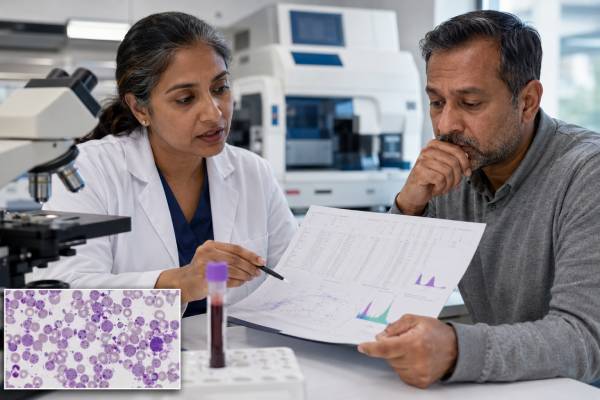
A peripheral blood smear lets a trained professional look at blood cells under a microscope. It can confirm whether platelets are truly increased and whether they appear unusually large, clumped, or abnormal. It can also show red blood cell changes, immature white cells, or other clues that automated counts may miss. A peripheral blood smear test is especially helpful when the CBC pattern is unusual or the platelet count is very high.
Step 3: Look for iron deficiency and inflammation
Iron studies are often part of the workup. Ferritin, serum iron, TIBC or transferrin, and transferrin saturation help identify iron deficiency or inflammation-related iron restriction. A broader iron panel test can clarify whether high platelets fit an iron-related pattern.
Inflammation testing may include CRP, ESR, liver tests, kidney tests, urinalysis, autoimmune testing, infection testing, or imaging, depending on symptoms and exam findings. The evaluation should follow the person’s story rather than use the same battery of tests for everyone.
Step 4: Consider molecular testing or hematology referral
If thrombocytosis is persistent and no reactive cause is found, clinicians may test for JAK2, CALR, and MPL mutations. Some cases need broader myeloid genetic testing. A hematologist may recommend bone marrow biopsy if the diagnosis remains unclear, if a myeloproliferative neoplasm is suspected, or if other blood count abnormalities are present.
A bone marrow biopsy is not needed for every high platelet count. It becomes more relevant when platelets stay high without explanation, molecular testing is positive, there is an enlarged spleen, there are unusual smear findings, or the clinician needs to distinguish ET from prefibrotic myelofibrosis or another marrow disorder.
Treatment, Monitoring, and Follow-Up
Treatment depends on the cause. Lowering the platelet count is not always the first or best treatment.
For reactive thrombocytosis, the main treatment is addressing the trigger. Examples include treating infection, controlling inflammatory disease, correcting iron deficiency, evaluating blood loss, managing cancer when present, or monitoring the expected rise after surgery or splenectomy. When the cause improves, the platelet count often falls.
Aspirin is not automatically needed for reactive thrombocytosis. It can increase bleeding risk in some people and may not reduce risk when the high count is simply a temporary reaction. Decisions about aspirin should consider the cause, clotting history, bleeding history, cardiovascular risk, platelet count, and whether acquired von Willebrand disease is a concern.
For essential thrombocythemia, treatment is more individualized. Some people need observation only. Others may need low-dose aspirin, medication to lower platelet production, or both. Common platelet-lowering options include hydroxyurea, pegylated interferon, and anagrelide. Choice depends on age, pregnancy plans, clotting history, mutation pattern, side effects, and other health conditions.
Pregnancy needs specialist guidance. ET can be associated with pregnancy complications in some people, and treatment decisions may involve aspirin, interferon, or anticoagulation in selected cases. Medication choices differ because some platelet-lowering drugs are not suitable during pregnancy.
Extreme thrombocytosis may require evaluation for acquired von Willebrand disease before aspirin is used, especially if there is bleeding or platelets are above 1,000 × 10⁹/L. In rare emergencies with active clotting or serious bleeding, plateletpheresis can rapidly lower platelets, but its effect is temporary and it is not routine outpatient treatment.
Follow-up usually focuses on trends:
- Is the platelet count rising, falling, or stable?
- Did it normalize after infection, inflammation, or iron deficiency improved?
- Are hemoglobin, WBC, neutrophils, MCV, RDW, or ferritin also abnormal?
- Are there symptoms of clotting, bleeding, enlarged spleen, cancer, or chronic inflammation?
- Has thrombocytosis persisted for more than a few months without a clear cause?
A personal trend is often more useful than one isolated number. A platelet count that drops from 720 to 490 × 10⁹/L after iron therapy is different from one that stays around 650 × 10⁹/L for six months with normal iron studies and no inflammatory explanation.
Common Mistakes When Reading Results
One common mistake is assuming that high platelets always mean a dangerous clot is likely. Mild or moderate reactive thrombocytosis is often a marker of something else happening in the body, not a direct emergency. The cause, symptoms, and trend matter.
Another mistake is ignoring high platelets because the person feels well. Many people with thrombocytosis have no symptoms, including some people with essential thrombocythemia. Persistent unexplained platelets above 450 × 10⁹/L deserve follow-up even without symptoms.
A third mistake is treating the platelet number without checking iron status. Iron deficiency can raise platelets even before hemoglobin becomes low. Correcting iron deficiency may normalize platelets and reveal whether further testing is needed. Red blood cell markers such as MCV and RDW can provide early clues; the MCV and RDW anemia pattern can help explain why small red cells and variable red cell size matter.
It is also easy to overinterpret platelet indices such as MPV, PDW, or plateletcrit. These can add context, but they do not replace the platelet count, smear review, medical history, and targeted testing. A high MPV does not diagnose ET. A normal MPV does not rule it out.
Another mistake is assuming that a very high platelet count must be primary. Extreme thrombocytosis can be reactive, especially after splenectomy, severe inflammation, cancer, major blood loss, or iron deficiency. At the same time, persistent extreme thrombocytosis should not be dismissed as harmless.
The most useful approach is simple: confirm the result, compare it with prior CBCs, look for reactive triggers, check iron and inflammation when appropriate, and escalate to hematology when platelets remain high without a clear explanation or when clotting, bleeding, abnormal smear findings, splenomegaly, or other blood count abnormalities are present.
References
- Secondary Thrombocytosis 2024 (Review)
- An Approach to the Investigation of Thrombocytosis: Differentiating between Essential Thrombocythemia and Secondary Thrombocytosis 2024 (Research Article)
- Essential thrombocythemia: 2024 update on diagnosis, risk stratification, and management 2024 (Review)
- Essential thrombocythemia: challenges in clinical practice and future prospects 2023 (Review)
- Risk of bleeding in patients with essential thrombocythemia and extreme thrombocytosis 2024 (Research Article)
- Platelet Disorders Thrombocythemia and Thrombocytosis 2022 (Official Health Information)
Disclaimer
A high platelet count should be interpreted by a qualified clinician who can review your symptoms, medications, medical history, and the rest of your blood work. Seek urgent medical care for symptoms of stroke, heart attack, pulmonary embolism, severe one-sided leg swelling, coughing blood, fainting, or heavy unexplained bleeding. Do not start or stop aspirin, anticoagulants, iron, or platelet-lowering medicine based only on a platelet result without medical guidance.