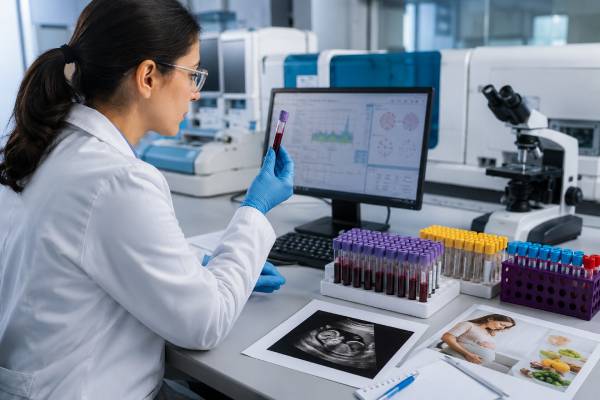
A high total iron-binding capacity (TIBC) test usually means your blood has more available iron-carrying capacity than expected. In everyday terms, your body has made more transferrin, the main iron transport protein, and much of it is not filled with iron. This pattern most often appears when iron stores are low, especially in early iron deficiency or iron deficiency anemia. TIBC can also rise during pregnancy and with estrogen-containing medications because transferrin naturally increases in those settings.
TIBC is not interpreted alone. It becomes much more useful when reviewed with serum iron, ferritin, transferrin saturation, and a complete blood count. A high TIBC with low ferritin and low transferrin saturation strongly points toward iron deficiency. A high TIBC with normal iron markers may need repeat testing, pregnancy-specific interpretation, or review of supplements, medications, bleeding history, and diet.
- High TIBC most often points to iron deficiency, especially when ferritin and transferrin saturation are low.
- A typical adult TIBC reference range is about 250–450 mcg/dL, but each lab may use a different range.
- Pregnancy can raise TIBC because transferrin often increases as iron demand rises.
- TIBC is best read as part of an iron panel, not as a stand-alone diagnosis.
- Follow-up matters if high TIBC comes with anemia, heavy bleeding, black stools, pregnancy, severe fatigue, shortness of breath, or chest pain.
Table of Contents
- What a High TIBC Result Means
- How TIBC Fits Into Iron Testing
- High TIBC and Iron Deficiency
- Causes of High TIBC
- Pregnancy and High TIBC
- Symptoms and When to Get Care
- Checking the Result
- Treatment and Follow-Up
What a High TIBC Result Means
A high TIBC result means your blood can bind more iron than usual. The test does not measure iron stores directly. It estimates how much iron your blood proteins could carry if all available binding sites were filled.
Most of that carrying capacity comes from transferrin, a protein made by the liver. Transferrin picks up iron in the blood and delivers it to bone marrow and other tissues. Bone marrow uses iron to make hemoglobin, the oxygen-carrying protein inside red blood cells.
When iron stores fall, the body often makes more transferrin. This creates more “empty seats” for iron in the bloodstream. TIBC rises because the blood has more room to bind iron, even though there may not be enough iron available to fill that space.
For many adults, a typical TIBC range is about 250–450 mcg/dL, sometimes also reported as 45–81 micromol/L. A value above the lab’s upper limit is usually reported as high. The exact cutoff varies by laboratory, method, age, sex, pregnancy status, and local reference population. Your own report’s reference interval should guide the first interpretation.
High TIBC is most useful when paired with other iron markers. A result slightly above range may be less meaningful if ferritin, transferrin saturation, hemoglobin, and red blood cell indices are normal. A clearly high result, especially with low ferritin or low transferrin saturation, deserves more attention.
A high TIBC test does not prove why iron is low. It points toward a pattern. The next step is to ask why iron demand is high, iron intake or absorption is low, or iron loss is occurring.
How TIBC Fits Into Iron Testing
TIBC is one part of an iron panel. It helps explain how iron is moving through the blood, but it does not show the whole picture by itself.
The most common iron markers include serum iron, TIBC, transferrin saturation, UIBC, transferrin, and ferritin. These tests answer different questions. Serum iron shows how much circulating iron is present at the time of the blood draw. TIBC estimates how much iron the blood could carry. Transferrin saturation shows what percentage of binding capacity is actually filled with iron. Ferritin reflects stored iron in most people, although inflammation can raise ferritin even when usable iron is limited.
| Test | What it reflects | Common pattern in iron deficiency |
|---|---|---|
| TIBC | Total available iron-binding capacity in blood | High |
| Serum iron | Iron circulating in blood at that moment | Low |
| Transferrin saturation | Percentage of iron-binding sites filled with iron | Low, often below 20% |
| Ferritin | Stored iron, unless inflammation is raising it | Low, often below 30 ng/mL in adults |
| CBC | Hemoglobin, red blood cell size, and anemia pattern | May be normal early; later may show low hemoglobin and small red blood cells |
TIBC is also closely related to UIBC, or unsaturated iron-binding capacity. UIBC measures the unused portion of iron-binding capacity. TIBC can be measured directly or calculated from serum iron and UIBC, depending on the lab. Because these values are connected, a high UIBC result often fits the same iron-deficiency pattern as high TIBC.
Transferrin saturation, often called TSAT, is calculated from serum iron and TIBC. The usual formula is:
Transferrin saturation = serum iron ÷ TIBC × 100
A high TIBC can push transferrin saturation lower because the same amount of iron is spread across more available binding sites. That is why high TIBC and low transferrin saturation often appear together.
TIBC also helps separate iron deficiency from inflammation-related anemia. In classic iron deficiency, TIBC tends to rise. In anemia of chronic inflammation, TIBC is often normal or low because inflammation changes iron handling and may reduce transferrin production. This difference is useful, but real-life results can overlap, especially when a person has both iron deficiency and inflammation.
High TIBC and Iron Deficiency
High TIBC is strongly linked to iron deficiency because the body responds to low iron by increasing transferrin. This response improves the chance of capturing and transporting whatever iron is available.
Iron deficiency often develops in stages. In the earliest stage, ferritin falls as stored iron is used up. Hemoglobin may still be normal, and a person may not yet have anemia. TIBC may begin to rise as the body tries to pull more iron into circulation.
As deficiency progresses, serum iron drops and transferrin saturation falls. Red blood cell production becomes less efficient because bone marrow cannot access enough iron to build hemoglobin. Later, the complete blood count may show low hemoglobin, low hematocrit, low mean corpuscular volume, low mean corpuscular hemoglobin, or high red cell distribution width.
A common iron deficiency pattern looks like this:
| Pattern | Most likely meaning | Usual follow-up |
|---|---|---|
| High TIBC + low ferritin + low TSAT | Iron deficiency is likely | Find the cause of low iron and treat deficiency |
| High TIBC + normal ferritin + low TSAT | Possible early iron deficiency, mixed inflammation, or recent variation in serum iron | Repeat iron studies, check inflammation markers if relevant, review symptoms |
| High TIBC + normal ferritin + normal TSAT | May reflect pregnancy, estrogen effect, lab variation, or mild physiologic change | Interpret with clinical context and the lab’s reference range |
| Low serum iron + low or normal TIBC | Less typical for pure iron deficiency; inflammation or chronic disease may be involved | Review ferritin, CRP, kidney disease, liver disease, and chronic inflammatory conditions |
Ferritin is often the most direct routine marker of iron stores. A ferritin test below the lab range, or below commonly used clinical cutoffs, supports iron deficiency. Many clinicians treat ferritin below about 30 ng/mL as evidence of low iron stores in otherwise healthy adults. In people with inflammation, infection, liver disease, chronic kidney disease, or cancer, ferritin can look normal or high despite iron restriction, so transferrin saturation and the rest of the iron panel become more important.
High TIBC can appear before anemia is obvious. This matters because a person may have symptoms from low iron even when hemoglobin still falls inside the reference range. Fatigue, restless legs, hair shedding, headaches, reduced exercise tolerance, brittle nails, or cravings for ice can appear before severe anemia develops. These symptoms are not specific to iron deficiency, but they fit the pattern when iron studies also show low stores.
TIBC can also stay high for a while during treatment. Iron stores do not replenish overnight. Hemoglobin may improve within weeks, while ferritin may take several months to recover, depending on the dose, absorption, blood loss, and starting level.
Causes of High TIBC
Iron deficiency is the leading cause of high TIBC, but the reason for the iron deficiency is the part that needs explanation. In adults, iron does not usually become low for no reason. The cause often falls into one of four groups: blood loss, increased iron demand, reduced intake, or poor absorption.
Common causes include:
- Heavy menstrual bleeding, including bleeding from fibroids, endometriosis, adenomyosis, bleeding disorders, or copper IUD use
- Pregnancy, postpartum recovery, breastfeeding, or short spacing between pregnancies
- Gastrointestinal bleeding from ulcers, gastritis, inflammatory bowel disease, colon polyps, colorectal cancer, hemorrhoids, or frequent use of aspirin or NSAIDs
- Low iron intake, especially with restrictive diets, low total food intake, or limited access to iron-rich foods
- Poor absorption from celiac disease, bariatric surgery, inflammatory bowel disease, low stomach acid, certain stomach surgeries, or long-term acid-suppressing medication use
- Frequent blood donation
- Rapid growth in children and teenagers
- Endurance training combined with low intake, menstrual blood loss, or gastrointestinal blood loss
- Estrogen-containing birth control or hormone therapy
- Late pregnancy, even without true iron deficiency
The most important cause to avoid missing is hidden blood loss. In menstruating people, heavy periods are common and often underrecognized. Soaking through pads or tampons quickly, needing double protection, passing large clots, bleeding longer than 7 days, or developing fatigue around periods can all suggest enough blood loss to lower iron.
In men and postmenopausal women, iron deficiency usually needs a careful search for gastrointestinal blood loss unless there is an obvious explanation such as recent surgery, major injury, repeated blood donation, or a known absorption problem. Gastrointestinal bleeding can be slow and invisible. Stool may look normal even when iron is being lost over time.
Diet can contribute, but diet alone is not always the full explanation. Heme iron from meat, poultry, and fish is usually absorbed more efficiently than non-heme iron from beans, lentils, spinach, nuts, seeds, and fortified grains. Vitamin C can improve non-heme iron absorption. Calcium supplements, tea, coffee, and high-dose zinc can reduce absorption when taken close to iron-rich meals or iron supplements.
Some people assume high TIBC means too much iron because the number is high. Usually, the opposite is true. High TIBC often means the blood has more unfilled capacity because available iron is low. Iron overload more often produces high serum iron and high transferrin saturation with normal or low TIBC, not high TIBC.
A low TIBC pattern has different causes, including inflammation, chronic infection, liver disease, kidney disease, malnutrition, and some cancers. If your result is low rather than high, the interpretation is different from the high-TIBC pattern and should be reviewed separately as low TIBC.
Pregnancy and High TIBC
TIBC can rise during pregnancy because iron demand increases and transferrin levels often increase. This change helps move more iron to the mother’s expanding blood volume, the placenta, and the developing baby.
Pregnancy increases iron needs substantially. Blood volume expands, red blood cell production rises, and the fetus stores iron for early life. If iron intake and iron stores do not keep up, ferritin can fall and iron deficiency can develop. A high TIBC result during pregnancy may be partly physiologic, partly a sign of low iron stores, or both.
Pregnancy also changes how blood test results are judged. Hemoglobin and hematocrit often fall because plasma volume expands more than red blood cell mass. This dilutional change can make mild anemia harder to interpret without iron studies. For that reason, ferritin, transferrin saturation, TIBC, and the CBC are often reviewed together.
A high TIBC in pregnancy deserves closer attention when it appears with:
- Low ferritin, often below 30 ng/mL
- Low transferrin saturation
- Low hemoglobin for the trimester
- Small red blood cells or rising red cell distribution width
- Fatigue, dizziness, shortness of breath, restless legs, or pica
- Heavy vomiting, poor intake, closely spaced pregnancies, or previous postpartum hemorrhage
A normal pregnancy-related rise in TIBC does not always mean treatment is needed. Treatment decisions depend on ferritin, hemoglobin, symptoms, trimester, diet, tolerance of oral iron, and how close delivery is. Many prenatal vitamins contain iron, but the amount may not be enough to correct established deficiency.
Iron deficiency anemia during pregnancy matters because it can affect the mother’s energy, heart strain, delivery tolerance, transfusion risk, and postpartum recovery. Severe or untreated anemia can also raise concern for pregnancy complications. The timing of treatment matters: oral iron can take weeks to raise hemoglobin and longer to rebuild stores. Intravenous iron may be considered when oral iron is not tolerated, absorption is poor, anemia is more severe, or delivery is approaching.
No one should start high-dose iron in pregnancy based only on TIBC. Iron treatment should be matched to the full iron panel and obstetric care plan, especially if there is a history of iron overload, thalassemia trait, inflammatory disease, or severe nausea and constipation from supplements.
Symptoms and When to Get Care
High TIBC itself does not cause symptoms. Symptoms come from the underlying reason, most often iron deficiency or anemia.
Mild iron deficiency can feel vague. A person may feel tired, cold, less focused, or less able to exercise. Sleep may not feel refreshing. Some people notice headaches, dizziness when standing, palpitations, restless legs, hair shedding, brittle nails, cracks at the corners of the mouth, or cravings for ice, starch, clay, or other nonfood substances.
As iron deficiency anemia worsens, symptoms can become more obvious. Shortness of breath with activity, rapid heartbeat, chest tightness, pale skin, weakness, or fainting can occur because the blood carries less oxygen.
Medical follow-up is important when high TIBC appears with any abnormal CBC result, low ferritin, low serum iron, or low transferrin saturation. Follow-up is also important if symptoms are affecting daily life, if bleeding is ongoing, or if iron levels keep falling despite supplements.
Get prompt medical care for severe or concerning symptoms, including:
- Chest pain, fainting, severe shortness of breath, or confusion
- Black, tarry stools or vomiting blood
- Heavy vaginal bleeding, bleeding during pregnancy, or postpartum bleeding
- Fast heartbeat at rest with weakness or dizziness
- Severe anemia on a lab report
- New iron deficiency in a man or postmenopausal woman
- Unexplained weight loss, persistent abdominal pain, or a major change in bowel habits
High TIBC should not be dismissed when the person “only” feels tired. Fatigue has many causes, but iron deficiency is common, testable, and treatable. At the same time, taking iron without confirming the pattern can delay the real diagnosis or cause side effects. The full set of results gives a safer path.
Checking the Result
A high TIBC result should be checked in context before any major conclusion is made. Serum iron changes during the day and can shift after meals, supplements, recent illness, and recent iron doses. TIBC is usually more stable than serum iron, but the calculated values around it can still vary.
Many clinicians prefer morning iron studies, sometimes fasting, especially when results are borderline or do not match symptoms. If you recently took iron, a multivitamin with iron, or an iron-containing prenatal vitamin before the blood draw, tell your clinician. Do not stop prescribed iron unless your clinician tells you to, but make sure the timing is known.
A useful follow-up review often includes:
- Repeat iron panel if the first result is borderline or unexpected
- Ferritin, because low ferritin strongly supports low iron stores
- CBC with red blood cell indices
- Reticulocyte count or reticulocyte hemoglobin content if available
- C-reactive protein or other inflammation markers when ferritin may be falsely high
- B12, folate, thyroid, kidney, or liver tests if anemia does not fit a simple iron-deficiency pattern
- Testing for celiac disease, stool blood, or gastrointestinal sources when clinically appropriate
- Pregnancy-specific interpretation when pregnant or recently postpartum
TIBC should also be reviewed with medications and health conditions. Estrogen-containing contraceptives and hormone therapy can raise transferrin and TIBC. Pregnancy can do the same. Liver disease may lower transferrin production, which can make TIBC lower than expected even if iron handling is abnormal. Inflammation can pull iron out of circulation and reduce TIBC, creating a mixed picture.
Do not rely on serum iron alone. A single low serum iron result can occur with iron deficiency, inflammation, recent illness, or normal daily variation. The combination of TIBC, transferrin saturation, ferritin, and CBC is much more reliable.
The question behind a confirmed high TIBC is not just “Do I need iron?” It is also “Why are iron stores low or why is transferrin high?” A result caused by heavy periods, pregnancy, or diet may need a different plan than a result caused by celiac disease, ulcer bleeding, or colon bleeding.
Treatment and Follow-Up
Treatment depends on the full iron pattern and the cause. High TIBC with confirmed iron deficiency is usually treated by replacing iron and correcting the reason iron became low.
Oral iron is often the first treatment when deficiency is mild to moderate and absorption is expected to be good. Common forms include ferrous sulfate, ferrous gluconate, ferrous fumarate, polysaccharide iron, and other preparations. The important number is elemental iron, not just the total tablet size. Many adult regimens use roughly 40–100 mg of elemental iron per dose, but the best dose and schedule depend on tolerance, severity, pregnancy status, and the clinician’s plan.
Some people absorb and tolerate iron better when taking it once daily or every other day rather than multiple times per day. Taking iron with vitamin C or a small amount of food may help tolerance, although food can reduce absorption. Tea, coffee, calcium, antacids, and some medications can interfere with absorption when taken close to iron.
Side effects are common and include constipation, nausea, stomach pain, dark stools, and diarrhea. These side effects are one reason people stop treatment early. Switching the formulation, lowering the dose, using alternate-day dosing, or treating constipation can help. Iron should be kept away from children because accidental overdose can be dangerous.
Intravenous iron may be used when oral iron does not work, is not tolerated, is not absorbed, or cannot correct anemia quickly enough. It may also be considered in certain inflammatory bowel disease, chronic kidney disease, bariatric surgery, late pregnancy, heavy ongoing bleeding, or severe deficiency situations. Blood transfusion is reserved for more urgent or severe cases and depends on symptoms, hemoglobin level, bleeding, heart disease, and overall stability.
Response should be monitored. Hemoglobin often begins to rise within 2–4 weeks if treatment is working and blood loss is controlled. Ferritin takes longer to recover. Iron therapy often continues for a period after hemoglobin normalizes so stores can rebuild. Stopping as soon as energy improves can lead to relapse.
Follow-up testing commonly includes CBC, ferritin, transferrin saturation, and sometimes TIBC. As iron stores improve, TIBC may move back toward the reference range, transferrin saturation may rise, and ferritin should increase. If TIBC stays high and ferritin remains low despite treatment, the plan should be revisited. Possibilities include missed doses, poor absorption, continued bleeding, wrong diagnosis, underdosing, or interference from other medications or supplements.
Food can support recovery but may not correct significant deficiency by itself. Useful iron sources include red meat, poultry, fish, shellfish, lentils, beans, tofu, pumpkin seeds, iron-fortified cereals, spinach, and other greens. Pairing plant iron with vitamin C-rich foods such as citrus, kiwi, strawberries, bell pepper, or tomatoes can improve absorption. Separating iron-rich meals from tea, coffee, and calcium supplements may also help.
High TIBC is usually manageable once the full pattern is clear. The safest approach is to confirm iron deficiency, identify the cause, choose the right iron replacement method, and recheck results until both hemoglobin and iron stores have recovered.
References
- Iron-Binding Capacity 2024 (Review)
- Iron Deficiency in Adults: A Review 2025 (Review)
- AGA Clinical Practice Update on Management of Iron Deficiency Anemia: Expert Review 2024 (Expert Review)
- Anemia in Pregnancy: ACOG Practice Bulletin, Number 233 2021 (Guideline)
- Final Recommendation Statement: Iron Deficiency and Iron Deficiency Anemia During Pregnancy: Screening and Supplementation 2024 (Recommendation Statement)
- FIGO good practice recommendations on anemia in pregnancy, to reduce the incidence and impact of postpartum hemorrhage (PPH) 2025 (Guideline)
Disclaimer
A high TIBC result should be interpreted with your full iron panel, CBC, symptoms, medical history, medications, and pregnancy status when relevant. This information is educational and does not replace medical care, diagnosis, or treatment. Seek urgent care for chest pain, fainting, severe shortness of breath, heavy bleeding, black stools, vomiting blood, or severe anemia symptoms.