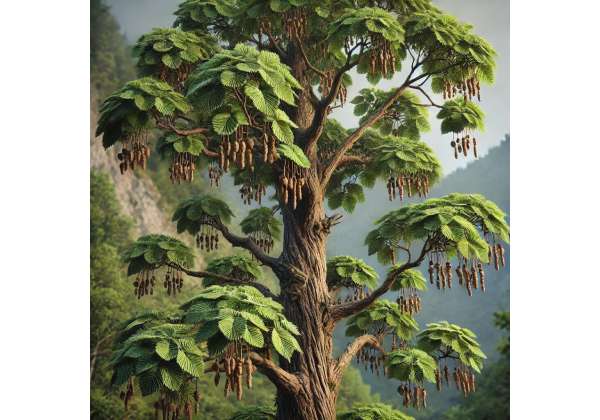
Himalayan elm, or Ulmus wallichiana, is a high-altitude elm native to the western Himalaya and nearby mountain regions. In traditional practice, its bark has been used most notably for fracture support, wound care, and as a soothing, astringent remedy. What makes this tree especially interesting today is that modern research has not focused mainly on its folk reputation as a “healing bark,” but on a group of flavonoid-rich compounds that appear to influence bone turnover, oxidative stress, inflammation, and vascular signaling in laboratory and animal studies.
That sounds promising, but it also needs context. Himalayan elm is still an evidence-light herb for everyday self-care. The strongest data so far come from preclinical research, not human clinical trials. That means the herb is best understood as a traditional botanical with intriguing pharmacology, rather than a proven treatment. For readers, the practical question is not whether it is “powerful,” but where it may fit realistically: as a cautiously used traditional adjunct, not a replacement for fracture care, cardiovascular treatment, or evidence-based medicine.
Essential Insights
- Preclinical studies suggest Himalayan elm may support bone formation and reduce bone breakdown.
- Early lab work also points to antioxidant, anti-inflammatory, and antimicrobial activity.
- Research extracts have been studied at 50 to 750 mg/kg/day in animals; a standardized human dose has not been established.
- Avoid unsupervised use during pregnancy, breastfeeding, childhood, or while taking blood-pressure or anticoagulant medicines.
Table of Contents
- What is Himalayan Elm
- Key Compounds and Actions
- Does Himalayan Elm Help
- How Himalayan Elm Is Used
- How Much to Use
- Side Effects and Interactions
- What the Evidence Shows
What is Himalayan Elm
Himalayan elm is a deciduous tree in the elm family, valued both ecologically and medicinally. It grows across parts of Afghanistan, Pakistan, northern India, and Nepal, where it has long been used in local healing systems. In traditional Himalayan practice, the stem bark is the part used most often. Local healers in Uttarakhand have described bark-based preparations for fractured bones in both people and animals, which is one reason the herb keeps attracting pharmacology researchers.
A useful way to understand Himalayan elm is to separate its traditional identity from its modern research identity.
Traditionally, it has been described as:
- A fracture-support herb
- A bark used in poultices or paste-like preparations
- A soothing and astringent remedy
- A plant also associated with wound care and mild diuretic use
Modern research, however, has concentrated on:
- Osteogenic activity, meaning support for bone-forming cells
- Anti-osteoclast effects, meaning slower bone breakdown
- Antioxidant and anti-inflammatory activity
- Possible blood-pressure and cardioprotective signaling effects in animal models
That difference matters. Many people assume “elm bark” works like other elm products used for throat and stomach comfort. Himalayan elm overlaps a little with that tradition, but its standout modern story is bone biology. In other words, this is not simply another soothing bark. Its most distinctive research thread is its effect on bone remodeling compounds and pathways.
There is also an important sustainability angle. Himalayan elm is frequently described in academic literature as a vulnerable species in need of conservation-minded handling. That makes sourcing more than a quality issue; it is also an ecological one. Unsustainably harvested bark may damage already pressured wild populations, so ethically sourced cultivated material is preferable whenever the herb is used.
For readers, the most sensible starting point is this: Himalayan elm is best viewed as a specialized traditional herb with a strong osteogenic reputation, limited human evidence, and a pharmacology profile that is more interesting than settled. It deserves curiosity, but also restraint.
Key Compounds and Actions
The most important “key ingridients” in Himalayan elm are not vitamins or minerals in the usual supplement sense. They are plant secondary metabolites, especially flavonoid and C-glycosylated flavonoid compounds isolated from the bark. These appear to drive much of the herb’s experimental activity.
The main compound groups linked to Ulmus wallichiana include:
- C-glycosylated flavonoids
- Flavonol glycosides
- Quercetin-related analogues
- Ulmosides and related glycosides
- Phenolic compounds with antioxidant potential
Several named compounds appear repeatedly in the literature:
- Ulmosides A and B
These flavonoid 6-C-glycosides were isolated from stem bark and are associated with osteoblast stimulation in early research. - Quercetin-6-C-β-D-glucopyranoside
Often shortened to QCG, this compound has been studied for effects on osteoclastogenesis and bone preservation in animal models. - GTDF
A longer-named flavonol-C-glucoside isolated from bark extracts, studied for osteoblast growth, differentiation, and bone-healing effects. - Aromadendrin-6-C-β-D-glucopyranoside
Another bark-derived flavonoid investigated for effects on osteoblasts, osteoclasts, and fat-cell differentiation.
What do these compounds seem to do?
The most consistent pattern is bone remodeling support. Some compounds appear to stimulate osteoblast proliferation and differentiation, while also suppressing osteoclast development. That is an unusually useful combination in bone health research, because stronger bone depends not only on building new bone, but on slowing excessive resorption.
A second pattern is oxidative stress control. Leaf and bark extracts have shown antioxidant activity in assays such as DPPH and ABTS. This does not automatically translate into a clinical effect, but it gives a plausible biochemical basis for some of the herb’s protective reputation.
A third pattern is inflammatory signaling. Experimental work suggests Himalayan elm extracts may reduce inflammatory activity in certain models. Here again, the mechanism seems more flavonoid-driven than mucilage-driven. That is one reason Himalayan elm differs from softer demulcent herbs such as marshmallow, which are used more for coating and soothing irritated mucosa.
One subtle but important insight is that traditional descriptions such as “demulcent” and “emollient” may be true at the whole-herb level, yet the modern pharmacology spotlight is clearly on flavonoids rather than on a single soothing polysaccharide. In practical terms, Himalayan elm looks less like a classic throat herb and more like a phytochemical-rich bark with targeted experimental actions.
Does Himalayan Elm Help
The honest answer is yes in preclinical research, maybe in tradition, and not yet clearly in humans.
The strongest area of support is bone health. Multiple animal and cell studies suggest Himalayan elm extracts and isolated flavonoids may:
- Increase bone mineral density
- Support osteoblast activity
- Reduce osteoclast differentiation
- Improve trabecular microarchitecture
- Support fracture repair pathways
That does not mean a person with osteoporosis should replace prescribed care with Himalayan elm. It means the herb has a credible research signal in bone biology, which is stronger than its evidence in most other areas.
The second area is inflammation and oxidative stress. More recent leaf-extract work has shown antioxidant, antibacterial, and anti-inflammatory activity in laboratory models. This makes the herb pharmacologically interesting, but it is still far from proving relief for arthritis, chronic inflammatory disorders, or infection in real-world patients.
The third area is cardiovascular signaling. Animal research has found antihypertensive and cardioprotective effects from certain extracts and fractions. These studies suggest possible effects on the renin-angiotensin-aldosterone system and nitric oxide and cGMP signaling. That is noteworthy, but still preclinical. It does not justify self-medicating high blood pressure with Himalayan elm.
A realistic benefit map looks like this:
Most plausible
- Traditional external use around fracture support
- Experimental bone-support activity
- Antioxidant and anti-inflammatory potential
Possible but unproven
- Mild wound-support use
- Antimicrobial usefulness in topical settings
- Cardiovascular support as a future research area
Not established
- Cancer treatment
- Reliable blood sugar control in humans
- Proven pain relief comparable to standard therapies
- Broad everyday “tonic” use
An important reader-centered takeaway is that the herb may be best for a narrow purpose rather than a broad one. Some herbs earn their reputation because they help with many common symptoms. Himalayan elm stands out for a more specific reason: it may influence bone metabolism in meaningful ways. That makes it more specialized than a general anti-inflammatory herb.
For that reason, people looking for the best-studied plant options for everyday inflammatory pain would usually start elsewhere, such as boswellia research, not with Himalayan elm. Himalayan elm belongs more to the category of “high-interest traditional botanical with promising mechanism and limited clinical translation.”
How Himalayan Elm Is Used
Traditional use and research use are not the same, so it helps to keep the forms separate.
Traditional forms
- Bark paste applied externally for fracture support
- Bark used in folk formulations for wound-related care
- Decoctions or other crude preparations in regional practice
Research forms
- Ethanolic bark extracts
- Butanolic fractions
- Isolated flavonoids
- Methanolic leaf extracts in laboratory testing
The 2025 ethnopharmacology paper is especially useful because it documents the traditional preparation identity of the plant rather than only its chemistry. In that setting, Himalayan elm is not used like a modern capsule first. It is used as a bark-based remedy prepared through a process and context that are part of traditional knowledge.
For modern readers, the most practical uses to understand are these:
1. External traditional use
This is the most culturally grounded use. A bark preparation may be used topically as an adjunct in bone or soft-tissue recovery. The key word is adjunct. It does not replace imaging, reduction, immobilization, casting, surgery, or rehabilitation. Fractures need proper orthopedic care first.
2. Oral extract use
Commercial oral products are less standardized than readers may expect. Unlike common herbs with widely recognized capsule ranges, Himalayan elm does not have a well-agreed human oral dosing framework. Products may vary sharply in species confirmation, bark part used, extraction solvent, and flavonoid content.
3. Experimental leaf extract use
Recent work on methanolic leaf extracts is useful for understanding the plant’s chemistry, but it should not be confused with traditional use or with everyday household preparations. Laboratory extracts are concentrated and method-specific.
4. Integrative use under supervision
The most responsible modern role for Himalayan elm is supervised use by someone who understands the reason for taking it. That might be a clinician comfortable with herbal medicine or a qualified traditional practitioner. The goal should be targeted use, not casual daily supplementation.
A practical mistake is to treat Himalayan elm as interchangeable with soothing topical plants. It may pair conceptually with simple skin-support bases such as aloe vera gel, but it should not be reduced to a generic “natural skin herb.” Its traditional value is more specific, especially around bone and tissue recovery contexts.
How Much to Use
This is the section where the evidence becomes most limited.
There is no standardized human dosage for Himalayan elm that can be recommended with confidence across powders, teas, tinctures, capsules, or extracts. That is the most important point. Anyone claiming a single “best dose” is overstating the science.
What the literature does provide are research doses in animals:
- Bark total ethanolic extract: 750 mg/kg/day orally in bone studies
- Butanolic fraction: 50 mg/kg/day orally in bone studies
- Extract and fraction in antihypertensive work: 500 mg/kg/day and 50 mg/kg/day orally for 14 days
- Isolated quercetin-6-C-β-D-glucopyranoside: 1 to 5 mg/kg/day orally in animal bone-loss work
These numbers are useful for understanding how researchers studied the plant. They are not safe self-conversion instructions for people. Animal doses depend on species metabolism, extract concentration, and study design. A 50 mg/kg purified fraction is not comparable to 50 mg/kg crude bark powder.
A practical hierarchy for readers is more helpful than pretending the herb has a settled daily amount:
- Do not translate animal mg/kg doses directly into a personal regimen.
Research fractions are often far more concentrated than folk preparations. - Prefer a clearly labeled commercial product over wild-collected bark.
Identity and contamination matter. - Use only one form at a time.
Combining powder, tincture, and capsules makes it impossible to judge tolerance. - Start with the lowest labeled serving if a product is used at all.
With sparse human data, conservative use is wiser than aggressive dosing. - Reassess quickly.
If there is no clear reason for continued use, stop rather than treating it as an indefinite daily supplement.
For timing and duration, there is no clinical consensus. Traditional external use may be short-term and situation-specific. Oral use should also be treated as limited and purposeful unless supervised.
One more point matters: if the goal is bone healing, the herb should never distract from fundamentals such as protein intake, vitamin D adequacy, calcium sufficiency where appropriate, movement-based rehabilitation, and formal medical follow-up. Herbs can sometimes support healing margins, but they do not replace the structural basics.
Side Effects and Interactions
Because human studies are scarce, safety has to be discussed with appropriate caution. That does not mean Himalayan elm is unsafe by default. It means the safety profile is incomplete.
Possible concerns include:
- Digestive upset from concentrated extracts
- Allergy or skin irritation with topical use
- Blood-pressure lowering interactions
- Additive effects with cardiovascular medicines
- Uncertain use in pregnancy, breastfeeding, and children
- Product variability, adulteration, or contamination
The clearest interaction concern comes from the antihypertensive animal data. If a plant extract can lower blood pressure in research settings, it is reasonable to avoid unsupervised combination with:
- Prescription antihypertensives
- Diuretics
- Nitrates
- Other herbs or supplements used to reduce blood pressure
A second caution is theoretical but sensible: people using anticoagulants or antiplatelet drugs should be careful with any herb that may have flavonoid-rich vascular effects, especially when there is not enough human interaction data.
A third issue is condition-specific use. Avoid self-prescribing Himalayan elm if you have:
- Chronic kidney disease
- Significant liver disease
- Unexplained edema
- Uncontrolled hypertension or hypotension
- Active ulcer disease that needs formal care
- A suspected fracture that has not been medically assessed
For topical use, patch testing is prudent. If redness, itching, swelling, or worsening pain occurs, stop. Do not apply crude plant paste to deep wounds, open fractures, or infected skin.
Who should generally avoid unsupervised use?
- Pregnant people
- Breastfeeding people
- Children
- Older adults on multiple medications
- Anyone preparing for surgery
- Anyone with unstable cardiovascular disease
There is also a sourcing safety issue that many herb articles skip. When a species is under ecological pressure, wild-harvested material may be poorly identified, harvested from stressed trees, or mixed with other bark material. That raises both conservation and safety questions. In that sense, Himalayan elm needs more caution than familiar topical botanicals such as witch hazel, which have a much clearer consumer use history.
What the Evidence Shows
The evidence for Himalayan elm is promising, coherent, and still incomplete.
What looks strongest
- Ethnobotanical support for fracture-related traditional use
- Repeated preclinical evidence for osteogenic effects
- Mechanistic data around osteoblast stimulation and osteoclast suppression
- Lab evidence for antioxidant, anti-inflammatory, and antimicrobial activity
What looks moderate
- Animal evidence for antihypertensive and cardioprotective effects
- Isolated compound work suggesting real pharmacologic specificity
What looks weak or absent
- Human clinical trials
- Standardized human dosing
- Long-term safety studies
- Clear drug-interaction mapping
- Product standardization across the market
That profile matters because it tells us how to use the information responsibly. Himalayan elm is not a “debunked” herb. It is also not a clinically established one. It sits in the middle: a botanically credible traditional medicine with unusually interesting bone-focused pharmacology and an evidence base that has not yet matured into everyday clinical guidance.
One of the most useful ways to interpret the research is this: the herb’s reputation is not resting on vague folklore alone. Scientists have isolated specific compounds and linked them to biologically plausible pathways. That is a real strength. But plausibility is not the same thing as proof in humans, and that is the current ceiling.
So where does that leave the reader?
A fair conclusion is that Himalayan elm may deserve attention in three situations:
- As a subject of bone-health and fracture-healing research
- As a professionally guided traditional adjunct
- As a conservation-sensitive medicinal tree worth careful sourcing
It is less convincing as:
- A self-prescribed daily supplement
- A substitute for osteoporosis treatment
- A home treatment for hypertension
- A broad anti-inflammatory cure-all
Readers who want botanicals with stronger human evidence for symptom relief will usually find more practical day-to-day options in better-studied herbs such as willow bark. Himalayan elm, by contrast, is better appreciated as a high-potential research herb whose most meaningful future may lie in standardized extracts, defined flavonoids, and clinically tested bone-support applications.
References
- Catechin and flavonoid glycosides from the Ulmus genus: Exploring their nutritional pharmacology and therapeutic potential in osteoporosis and inflammatory conditions 2024 (Review)
- The ethnopharmacological role of Ulmus wallichiana Planch., in osteogenesis: Insights from Indian traditional medicine 2025
- Phytochemical and Pharmacological Comparison of Wild and Micropropagated Methanolic Leaf Extracts of Ulmus Wallichiana 2026
- Extract and fraction from Ulmus wallichiana Planchon promote peak bone achievement and have a nonestrogenic osteoprotective effect 2010
- Evaluation of anti-hypertensive activity of Ulmus wallichiana extract and fraction in SHR, DOCA-salt- and L-NAME-induced hypertensive rats 2016
Disclaimer
This article is for educational purposes only and does not diagnose, treat, or replace medical care. Himalayan elm has limited human clinical evidence, no standardized human dosing, and incomplete safety data. Do not use it as a substitute for fracture treatment, osteoporosis management, blood-pressure care, or prescribed medicines. Seek guidance from a qualified healthcare professional before using this herb, especially if you are pregnant, breastfeeding, under 18, have a chronic medical condition, or take prescription medications.
If you found this article helpful, please share it on Facebook, X, or your preferred platform so more readers can discover it.