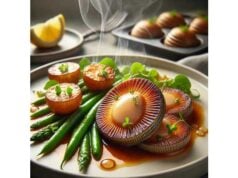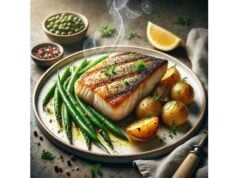
Hogfish (Lachnolaimus maximus) is a prized reef fish of the western Atlantic and Gulf of Mexico, renowned for its delicate, sweet flavor and tender, snow-white flesh. Often called “hog snapper” in markets, it is actually a large wrasse, recognizable by its long snout and ability to root out crustaceans. In the kitchen, hogfish behaves like the best lean white fish: it sears beautifully, flakes moistly, and shines with simple treatments—citrus, herbs, olive oil, and a hot pan or grill. Nutrition-wise, hogfish is a high-protein, low-fat seafood with selenium, B vitamins, and modest omega-3s, making it a smart choice for heart-conscious, high-protein meals. As a reef fish, it also raises practical questions: seasonal rules influence availability; ciguatera risk varies by size and location; and sustainability depends on local management and gear. This guide brings all of that together—benefits, numbers, safety, prep, and buying tips—so you can enjoy hogfish confidently and responsibly.
Quick Facts
- Lean white fish with ~19–21 g protein and ~1–2 g fat per 100 g; naturally low in carbohydrates and saturated fat.
- Typical serving: 100–150 g cooked fillet, 1–2 times weekly within overall seafood variety; rotate with low-mercury species.
- Key benefits: high-quality protein for muscle maintenance; marine micronutrients (selenium, B vitamins) and modest omega-3s.
- Safety caveat: large reef fish can carry ciguatoxins in tropical waters; choose smaller fish from trustworthy sources and avoid viscera/skin.
- Who should limit or avoid: people with prior ciguatera fish poisoning, pregnant or breastfeeding individuals, and young children should emphasize lower-risk species.
Table of Contents
- Detailed Overview
- Nutrition Profile
- Evidence-Based Health Benefits
- Risks, Allergies and Interactions
- Selecting, Quality, Sustainability and Storage
- Preparation, Cooking and Nutrient Retention
- Portions, Comparisons and FAQs
Detailed Overview
Hogfish lives on coral and hard-bottom reefs from North Carolina and Bermuda through the Caribbean to northern South America. Despite the market nickname “hog snapper,” it is not a snapper at all; it is the largest Atlantic wrasse. Its elongated snout and powerful jaws let it pry up mollusks, crabs, and other invertebrates, which explains the clean, shellfish-sweet flavor of the flesh. Culinary fans often compare hogfish to a cross between grouper and scallop—firm enough to grill, yet tender with a fine, moist flake.
From a nutrition standpoint, hogfish is a classic lean seafood: very high in complete protein with minimal fat and negligible carbohydrates. Micronutrients follow the lean-fish pattern—selenium, vitamin B12, niacin (vitamin B3), phosphorus, and potassium—with modest omega-3 fatty acids. Compared with oily fish like salmon or sardines, hogfish contributes less EPA and DHA per serving, but it pairs well with olive oil or nut-based sauces that raise heart-healthy fats at the plate.
Availability and sustainability are managed by region, with size limits, seasons, and gear rules tuned to protect local stocks. Handline and spearfishing provide highly selective harvest with low bycatch and minimal habitat impact—an environmental bright spot when regulations are followed. Demand is strongest in Florida and the Caribbean, where restaurant menus feature hogfish sandwiches, ceviche, tacos, and simple whole-fish grills.
Two practical cautions apply. First, as a reef species in warm waters, hogfish can occasionally carry ciguatoxins that accumulate up the food chain; risk increases with larger fish and certain high-risk locales. Second, like many ocean fish, mercury content varies; rotating among low-mercury species is the simplest way to keep long-term exposure low. When you buy from reputable suppliers, choose modest fillet portions, and cook simply, hogfish is an elegant, nutrient-dense centerpiece for weeknight dinners or special occasions.
Nutrition Profile
Notes on interpretation: Values below reflect lean hogfish fillet, raw, per 100 g; actual composition varies by season, habitat, and size. Values are rounded for kitchen relevance. % Daily Value (%DV) uses adult DVs and is approximate. Hogfish is a lean fish; omega-3s are present but lower than in oily species.
Macros and Electrolytes (per 100 g, raw fillet)
| Nutrient | Amount | %DV |
|---|---|---|
| Energy | 95–105 kcal | — |
| Protein | 19.0–21.0 g | 38–42% |
| Total fat | 1.0–2.0 g | 1–3% |
| Saturated fat | 0.3–0.5 g | 2–3% |
| Carbohydrate | 0 g | — |
| Sodium | 50–90 mg | 2–4% |
| Potassium | 300–400 mg | 6–9% |
Vitamins (per 100 g, raw fillet)
| Vitamin | Amount | %DV |
|---|---|---|
| Vitamin B12 (cobalamin) | 0.7–1.6 µg | 29–67% |
| Niacin (vitamin B3) | 3.0–5.0 mg | 19–31% |
| Vitamin B6 (pyridoxine) | 0.2–0.4 mg | 12–24% |
| Vitamin D (cholecalciferol) | 1–4 µg (40–160 IU) | 5–20% |
Minerals (per 100 g, raw fillet)
| Mineral | Amount | %DV |
|---|---|---|
| Selenium | 25–40 µg | 45–73% |
| Phosphorus | 180–230 mg | 14–18% |
| Magnesium | 25–35 mg | 6–8% |
| Calcium | 10–30 mg | 1–2% |
| Iron | 0.3–0.9 mg | 2–5% |
| Zinc | 0.3–0.8 mg | 3–7% |
Fats and Fatty Acids (per 100 g, raw fillet)
| Component | Amount |
|---|---|
| Omega-3 EPA+DHA | ~0.10–0.25 g |
| Omega-6 total | ~0.02–0.06 g |
| Cholesterol | 45–60 mg |
Protein and Amino Acids
- Complete protein with all essential amino acids; leucine typically ~1.6–1.9 g/100 g, lysine ~2.0–2.3 g/100 g in lean white fish.
- High digestibility supports meal planning for athletes, older adults, and post-illness recovery.
Allergens and Intolerance Markers
- Contains fish proteins that can trigger IgE-mediated fish allergy. Cross-reactivity among finfish species is common; individuals with known fish allergy should avoid hogfish.
Contaminants/Residues (context for hogfish)
- Methylmercury: levels vary; as a general practice, rotate species and keep portions moderate for people who are pregnant, breastfeeding, or feeding young children.
- Ciguatoxins: a reef-fish hazard in some tropical/subtropical locations; risk increases with larger fish and certain hotspots (see Safety).
Footnote: Cooking methods do not destroy ciguatoxins or remove mercury. However, trimming dark muscle and avoiding liver/viscera may modestly reduce exposure to some fat-associated compounds. For ciguatera, the most effective mitigation is source selection and size limits.
Evidence-Based Health Benefits
High-quality protein for muscle and metabolic health
At roughly 20 g protein per 100 g, hogfish delivers the building blocks for muscle protein synthesis with minimal calories and saturated fat. Consistent protein intake—distributed across meals—supports maintaining muscle mass, satiety, and post-exercise recovery. For older adults, pairing a 120–150 g cooked portion with a resistance-training session is a practical way to reach a leucine threshold for muscle anabolism.
Selenium, B vitamins, and trace minerals
Lean marine fish are among the most reliable dietary sources of selenium, an antioxidant cofactor involved in thyroid hormone metabolism and redox balance. Hogfish also contributes vitamin B12 for neurological health and niacin for energy metabolism. While not a calcium or iron powerhouse, it offers small contributions that “round out” seafood-centric meals built with vegetables and whole grains.
Cardiometabolic support from marine fatty acids
Hogfish’s total omega-3 content is modest compared with salmon or sardines, but it still adds EPA and DHA to the weekly tally. Public health advice emphasizes eating a variety of fish across the week; combining lean fish like hogfish with more oily species helps meet omega-3 goals while keeping menus diverse. Substituting fish for higher-saturated-fat meats also helps improve dietary patterns.
Culinary versatility that promotes healthier patterns
Hogfish cooks fast and pairs with olive oil, citrus, herbs, tomatoes, capers, and seasonal produce. That versatility makes it easy to compose Mediterranean-style plates with whole grains and vegetables—an eating pattern linked to better cardiovascular outcomes. Its mild flavor suits children and seafood-wary adults when prepared simply (e.g., pan-seared with lemon).
Weight-management friendly
A 120–150 g cooked portion typically lands under 180–220 kcal (depending on added fat), yet provides ~25–32 g protein. High-protein, lower-calorie meals help control hunger without sacrificing culinary satisfaction, especially when served with fiber-rich vegetables and legumes.
What this does not mean
Hogfish is not a substitute for medical care, and its omega-3 dose per serving is lower than oily fish. If your aim is maximizing EPA+DHA, rotate in salmon, sardines, trout, or mackerel while using hogfish for lean-protein variety.
Risks, Allergies and Interactions
Ciguatera fish poisoning (CFP)
Ciguatera arises when reef fish in tropical/subtropical waters accumulate heat-stable ciguatoxins produced by microalgae on coral. Symptoms may include gastrointestinal upset, neurological changes (temperature reversal, tingling), weakness, and in some cases prolonged fatigue or dysesthesias. Cooking, freezing, and marinating do not destroy the toxin. Risk is higher in larger, older fish and in certain hotspots; prior CFP may increase sensitivity to repeat exposure. Prudent steps: buy from reputable dealers, prefer smaller fish or center-cut fillets, and avoid viscera and skin. People who are pregnant, breastfeeding, or serving young children should emphasize lower-risk species when in ciguatera-prone regions.
Mercury
All predatory and many reef fish carry some methylmercury. While hogfish is not among the highest-mercury species, exposure depends on size, location, and frequency. The simplest precaution is to rotate seafood choices, keep hogfish portions moderate, and follow national consumer guidance for vulnerable groups (pregnant/breastfeeding individuals and young children).
Allergy
Hogfish contains common finfish allergens. If you have a confirmed fish allergy, avoid hogfish unless your allergist has tested tolerance to this species. Cross-contact in restaurants is common; inform staff clearly.
Drug and condition interactions
- Anticoagulants: fish oil and vitamin K are not abundant in hogfish fillet, but keep overall diet consistent if you use vitamin K–sensitive anticoagulants.
- Sodium-restricted diets: fresh hogfish is naturally low in sodium; sodium rises with brining or heavily seasoned preparations.
- Thyroid disease: selenium in seafood supports normal thyroid hormone metabolism, but people on thyroid medications should keep iodine and selenium intake steady across the week.
Food safety basics
- Keep fish at ≤4 °C (40 °F) from purchase to cooking; cook to an internal temperature of 63 °C (145 °F) until the flesh is opaque and flakes easily.
- Avoid temperature abuse with ceviche or crudo; use same-day, high-quality fish and strict cold-chain handling.
- Ciguatoxin is not removed by cooking; source selection is the main control step.
Selecting, Quality, Sustainability and Storage
Selecting and buying
- Labeling: look for the species name Lachnolaimus maximus (often sold as “hogfish” or “hog snapper”). Ask for harvest area if available.
- Cut and handling: fillets should be translucent, moist, and firm, with a clean, marine scent—never fishy or sour. Skin-on fillets help confirm identity.
- Harvest method: handline and spearfishing are highly selective and typically low-impact. When possible, favor suppliers who disclose gear and location.
- Seasonality and rules: state and federal seasons, minimum sizes, and bag limits can affect availability; reputable sellers comply with current regulations.
Sustainability notes
- Regional management in U.S. waters has tightened size limits and seasons to protect stocks. Hand-harvested product tends to have lower bycatch and minimal habitat disturbance.
- Consider local alternatives when hogfish is out of season: gray triggerfish, lane snapper, or mahi-mahi can stand in depending on the recipe.
Storage
- Refrigerate on ice, 0–2 °C (32–36 °F), and cook within 24–48 hours.
- Freeze well-wrapped fillets at −18 °C (0 °F) up to 3 months for best quality; thaw slowly in the refrigerator.
Quality cues before cooking
- Flesh should spring back when pressed, with no gaping between muscle flakes.
- Bloodline should be bright red to dark cherry, not brown/oxidized.
- For whole fish, look for bright, clear eyes and pink gills.
Ethical and traceable sourcing
- Buy from retailers who can answer where and how the fish was caught.
- Ask about previously frozen status; high-quality frozen fillets can perform very well if thawed properly.
Preparation, Cooking and Nutrient Retention
Hogfish’s lean, tender texture rewards gentle heat and simple seasonings. Because fat content is low, pair it with extra-virgin olive oil, nut oils, or butter to improve mouthfeel and fat-soluble nutrient absorption.
Core techniques
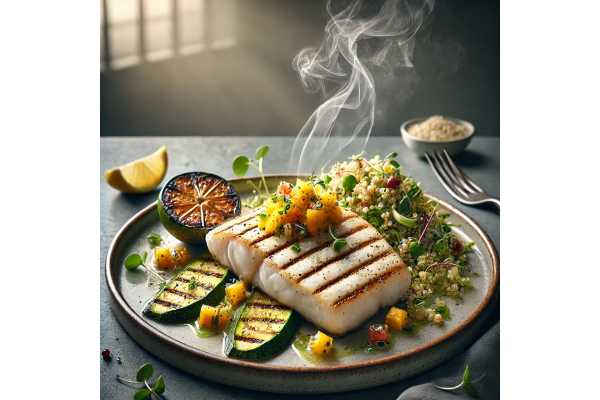
- Pan-seared hogfish with lemon and herbs
- Pat fillets very dry; season lightly with salt and pepper.
- Heat a film of oil in a heavy skillet over medium-high until shimmering.
- Sear presentation side 2–3 minutes, flip, lower heat, and cook 1–2 minutes more.
- Finish with lemon zest, parsley, and a spoon of olive oil or butter.
- Doneness: opaque flakes and 63 °C (145 °F) internal temperature.
- Grilled fillets, skin-on
- Oil grates well; keep fire medium.
- Brush fillets with oil, season, and grill skin-side down 3–4 minutes; flip once to finish 1–2 minutes.
- Serve with fresh salsa of tomato, capers, and herbs.
- Citrus-marinated crudo (advanced)
- For same-day, pristine fish only, and strict cold handling. Slice thin, season with salt, extra-virgin olive oil, and citrus.
- Note: marinating does not kill pathogens or neutralize ciguatoxins; rely on sourcing and cold chain.
- Steamed parcels
- Wrap fillets with zucchini ribbons, cherry tomatoes, and basil; bake/steam at 200 °C (400 °F) for 10–12 minutes.
- Result: moist heat minimizes moisture loss and preserves delicate texture.
Nutrient retention tips
- Avoid overcooking to preserve B vitamins and moisture; remove from heat when the center just turns opaque.
- Use added healthy fats (e.g., olive oil) to enhance flavor and satiety without significant saturated fat.
- Salt smartly: lean fish allows you to keep sodium low—brighten with lemon, herbs, or a caper-olive salsa instead.
Flavor pairings
- Citrus (lemon, lime, orange), herbs (parsley, dill, tarragon), sweet-acid vegetables (tomato, fennel), and briny accents (capers, olives).
- For a richer profile, pair with browned butter, toasted almonds, or miso-scallion butter.
What to avoid
- Heavy breading that masks the delicate flavor.
- Overpowering smoke or charring that dries lean fillets.
- Saving leftovers beyond 2 days; quality and safety drop quickly.
Portions, Comparisons and FAQs
Practical portions and frequency
- Serving size (adults): 100–150 g cooked fillet (about 140–200 g raw).
- Frequency: 1–2 times weekly as part of a varied seafood pattern that includes low-mercury oily fish to meet omega-3 goals.
- Children and pregnancy: prefer low-mercury species; if choosing hogfish, keep portions small, purchase from trusted sources, and limit frequency.
How hogfish compares
- Versus salmon: far leaner and lower in omega-3s; better when you want high protein with minimal fat.
- Versus grouper/snapper: similar lean texture and mildness; hogfish is often sweeter and more tender, with a finer flake.
- Versus tilapia/cod: comparable leanness; hogfish has a more pronounced, shellfish-sweet flavor and handles high-heat searing well.
Buying and menu swaps
- If hogfish is out of season or unavailable, substitute yellowtail snapper, lane snapper, triggerfish, or mahi-mahi depending on preparation.
- For tacos and sandwiches, its delicate flesh benefits from a light batter or just a quick sear and flake.
FAQs
Is hogfish high in mercury?
Levels vary by habitat and size. To be prudent, rotate species and keep hogfish to moderate portions, especially for pregnant or breastfeeding individuals and young children.
Can I get ciguatera from hogfish?
It is possible in tropical reef areas. Choose smaller fish, buy from reputable suppliers, and avoid viscera/skin. If you have ever had ciguatera, many clinicians advise avoiding high-risk reef fish.
Is hogfish good for athletes or weight loss?
Yes. It is rich in complete protein with very little fat, making it ideal for high-protein, calorie-conscious meals that still feel satisfying.
How should I store fresh hogfish?
Keep very cold on ice and cook within 24–48 hours. Freeze well-wrapped fillets for up to 3 months.
What wines pair with hogfish?
Crisp whites (Albariño, Vermentino, Sauvignon Blanc) or light, citrus-driven rosé complement its sweetness without overwhelming it.
References
- Advice about Eating Fish (2024)
- Food Poisoning from Marine Toxins (2025)
- Hogfish (2025)
- Recreational Closure for Hogfish in South Atlantic Federal Waters off Georgia, South Carolina, and North Carolina on September 26, 2023 (2023)
- Lachnolaimus maximus, Hogfish (2025)
Disclaimer
The information in this article is for educational purposes only and is not a substitute for personalized medical advice, diagnosis, or treatment. Seafood composition and contaminant levels vary by species, size, and harvest area. If you are pregnant or breastfeeding, have a fish allergy, have experienced ciguatera fish poisoning, or are preparing fish for young children, consult a qualified health professional and follow your local public health guidance.
If this guide was useful, please consider sharing it on Facebook, X (formerly Twitter), or any platform you prefer—your support helps us continue creating clear, evidence-based food guides.