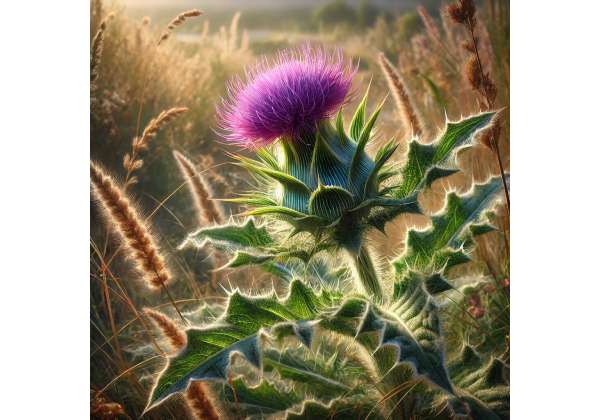
Holy thistle is one of the older common names for Silybum marianum, the plant more widely known today as milk thistle. It is a striking Mediterranean herb with glossy, white-veined leaves and seeds that contain the flavonolignan complex called silymarin. For centuries, people have turned to it for liver and gallbladder complaints, sluggish digestion, and recovery after toxic strain. Modern interest still centers on the same themes, but with sharper language: antioxidant support, anti-inflammatory activity, and possible hepatoprotective effects.
What makes holy thistle especially useful is not that it “cleanses” the liver in a vague way, but that its seed extract has been studied for how it may influence liver enzymes, cell membranes, inflammatory signaling, and oxidative stress. At the same time, it is easy to oversell. The research is mixed, effects are usually modest rather than dramatic, and product quality matters a great deal. Used well, holy thistle can be a thoughtful adjunct. Used carelessly, it becomes just another supplement wrapped in bigger promises than the evidence supports.
Quick Summary
- Best known for liver support, especially in people with elevated liver enzymes or fatty liver patterns.
- May also help with post-meal heaviness and bile-related digestive discomfort.
- Standardized silymarin extracts in studies are commonly used in the 140 to 420 mg per day range.
- Avoid self-use if you are pregnant, breastfeeding, or highly allergic to ragweed and related plants.
- Do not use it as a replacement for medical care in hepatitis, cirrhosis, poisoning, or cancer.
Table of Contents
- What is Holy Thistle
- Key compounds in Silybum marianum
- What does it help with
- How is it used
- How much per day
- Side effects and who should avoid it
- What research actually shows
What is Holy Thistle
Holy thistle is Silybum marianum, a tall thistle-like plant in the daisy family whose seeds are the medicinal part most often used in supplements and extracts. Although “holy thistle” appears in older herb books and some modern wellness writing, the plant is far more commonly sold and studied under the name milk thistle. That naming detail matters because readers sometimes confuse it with blessed thistle, which is a different herb with a different chemistry and a different traditional role.
The plant is native to the Mediterranean region but is now grown widely in Europe, Asia, and North America. Its most recognizable features are the purple flower heads and the white marbling on the leaves, which helped shape some of its traditional religious symbolism. Historically, it developed a reputation as a “liver herb,” a phrase that still defines much of its modern appeal. Traditional European use linked it to jaundice, gallbladder discomfort, sluggish digestion, and recovery after dietary excess or toxin exposure.
What makes holy thistle stand out from many traditional herbs is that modern science did not simply dismiss the old reputation. Instead, researchers isolated a group of seed compounds now called silymarin, with silybin or silibinin usually described as the major active fraction. This shifted milk thistle from folklore into pharmacology. Today, it is discussed not only in herbal medicine but also in hepatology, toxicology, and supportive care research.
That does not mean every old claim has been proven. Some uses remain more plausible than established. But it does mean the herb has a stronger biochemical foundation than many supplements promoted for “detox” or “cleansing.” The core idea is no longer mystical. It is mechanistic: the seed extract may help reduce oxidative stress, influence inflammatory pathways, and stabilize liver cell membranes under certain conditions.
Another useful distinction is between the whole plant and the standardized seed extract. The plant can be eaten in some traditional food contexts, but the medicinal conversation almost always centers on seed-derived preparations. When people talk about holy thistle’s benefits, they are usually talking about silymarin-rich extracts, not casual leaf use or generic powdered herb.
So the best modern description is this: holy thistle is a seed-based medicinal herb with a long record of use for hepatobiliary support and a reasonably well-studied active complex. It is better grounded than many “liver cleanse” products, but it still works best when expectations stay realistic and the product is properly standardized.
Key compounds in Silybum marianum
The key ingredient in holy thistle is not a single molecule but a group of closely related flavonolignans collectively called silymarin. This complex is extracted from the seeds and is responsible for most of the herb’s medicinal identity. Within silymarin, the best-known components are silibinin, also called silybin, along with isosilybin, silychristin, and silydianin. The flavonoid taxifolin is also part of the broader phytochemical picture.
Silibinin gets the most attention because it is often considered the most pharmacologically active constituent. In simplified terms, it appears to work through several overlapping pathways rather than one dramatic “on-off” effect. These include antioxidant actions, changes in inflammatory signaling, membrane-stabilizing effects, and possible influence on fibrosis-related pathways. This is one reason milk thistle keeps turning up in liver research. Its chemistry is broad enough to affect several biologic processes that matter in chronic liver stress.
Silymarin is often described as hepatoprotective, but that term deserves unpacking. It does not mean the extract rebuilds a damaged liver overnight or reverses every liver disease. It means the compounds may help reduce oxidative stress, blunt inflammatory cascades, and support healthier cell behavior under stress. In practical language, that makes holy thistle more of a supportive herb than a rescue herb. It may help the liver cope better, but it does not replace diagnosis, lifestyle change, or evidence-based treatment.
Researchers also describe anti-inflammatory effects that extend beyond the liver. Silymarin appears to interact with pathways such as NF-κB, MAPK, and related inflammatory signaling networks. That is part of why it has been studied in skin inflammation, metabolic disease, radiotherapy-related irritation, and even broader immune-modulating contexts. Those findings are interesting, but they should not be turned into blanket claims that milk thistle helps “everything inflammatory.” The strongest tradition and the clearest clinical relevance still point back to hepatobiliary use.
An overlooked but important detail is that not all products contain the same balance of flavonolignans. One extract may be standardized to a stated percentage of silymarin, while another may use a different ratio or delivery technology. This matters because low-bioavailability products may underperform, and users often assume that every capsule works the same way. With milk thistle, that assumption is not especially safe.
For readers who compare herbs by active profile, a useful contrast is curcumin as a polyphenol-focused extract. Both herbs are discussed for antioxidant and anti-inflammatory actions, but holy thistle’s reputation remains more tightly connected to seed flavonolignans and liver-oriented supportive use. Its chemistry is not vague or generic. It is one of the reasons the herb remains credible even when the marketing around it becomes exaggerated.
What does it help with
Holy thistle is most strongly associated with liver support, but that phrase needs to be translated into practical expectations. The herb is not a “liver detox” in the popular marketing sense. It is better understood as a supportive botanical that may modestly improve certain liver-related markers or symptoms in some situations, especially when the underlying problem involves oxidative stress, inflammation, or fatty liver patterns.
The best-supported area is chronic liver strain rather than acute dramatic illness. Reviews and meta-analyses suggest that silymarin may help reduce ALT and AST in a meaningful share of studies, especially in people with nonalcoholic fatty liver disease and some viral hepatitis settings. That is helpful, but it is not universal. Some studies show no meaningful change, and a smaller number show worsening markers or no clinical advantage. The main lesson is not that holy thistle is ineffective. It is that its effects are context-dependent and usually moderate.
Digestive support is the second major use. Traditional practice often placed milk thistle in the space between liver and digestion, where bile flow, appetite, fatty-meal tolerance, and post-meal heaviness overlap. In real life, that often means people reach for it when they feel sluggish after rich meals, when digestion feels “heavy,” or when liver concerns and digestive discomfort appear together. This part of the herb’s use is often more noticeable to users than the slower lab-marker conversation.
There is also a more specialized medical use that many readers do not know about. Purified silibinin has been used in Europe under medical supervision for poisoning from Amanita phalloides, the death cap mushroom. This is important not because people should self-treat poisoning with milk thistle supplements, but because it shows the plant’s compounds have serious pharmacologic relevance beyond wellness culture.
Other possible uses are more tentative. These include inflammatory skin conditions, metabolic support, insulin sensitivity, and adjunctive roles during certain drug exposures. Early studies and mechanistic reviews suggest potential, but these areas are not as settled as the herb’s liver-centered identity. The farther the claim moves from hepatobiliary support, the more cautious the language should become.
A useful way to frame benefits is this:
- Most plausible: support for liver enzyme patterns, oxidative liver stress, and some fatty liver contexts.
- Reasonably traditional: digestive heaviness, bile-related sluggishness, and appetite support.
- More experimental: metabolic, dermatologic, and broader inflammatory applications.
- Not established: self-treatment for cancer, cirrhosis reversal, or dramatic “detoxification.”
If someone mainly wants help with mild digestive heaviness or sluggish bile-related digestion, a more meal-focused herb such as artichoke for digestion and liver comfort may be easier to match to symptoms. Holy thistle is often best when the goal is not just digestion alone, but the overlap between digestion and liver-related stress.
How is it used
Holy thistle is used in several forms, but the form matters because it changes both effect and reliability. The most common medicinal form is a standardized seed extract, usually in capsules or tablets. This is the preparation most often used in clinical research and the one most likely to deliver a predictable amount of silymarin.
Whole seed powders and teas also exist, but they are less precise. Because silymarin has limited water solubility, a simple tea is not the most efficient way to deliver the active complex. That is one reason many traditional and modern preparations favor crushed seeds, alcohol-based extracts, or formulated products rather than a casual infusion. People sometimes assume that because it is a seed herb, any home preparation will work equally well. That is not really true here.
In supplement practice, holy thistle is often used in three main ways:
- As a daily standardized extract for liver support over several weeks or months.
- As a short- to medium-term adjunct during periods of metabolic or digestive strain.
- As part of combination formulas alongside other hepatobiliary herbs, phospholipids, or antioxidants.
Timing is usually practical rather than rigid. Many people take it with meals to improve tolerance, especially if they are prone to nausea or loose stools with supplements. Others divide it into two or three daily doses because that is how many study protocols and commercial products are structured. There is no strong evidence that a special hour of the day makes or breaks the result. Consistency matters more than clock timing.
Formulation quality deserves more attention than most users give it. Some products are standardized to a defined percentage of silymarin, while others use vague language such as “milk thistle blend” or “seed extract” without telling you what the active content really is. That difference matters. If a product is weak, poorly extracted, or mislabeled, users may conclude the herb does nothing when the real problem is product quality.
There is also a difference between consumer supplements and medical use. Intravenous silibinin for death cap poisoning is not the same thing as swallowing an over-the-counter capsule. The existence of that medical use supports the seriousness of the plant’s chemistry, but it should never encourage home treatment of poisoning or liver failure.
A practical way to use holy thistle is to define the goal first. Are you trying to support digestion after meals, track liver enzymes with your clinician, or test whether a standardized extract improves how you feel during a period of hepatic stress? The answer should shape the form and duration. Without that clarity, people often take it vaguely and then judge it vaguely.
Compared with more sensory digestive herbs such as ginger for nausea and motility support, holy thistle tends to feel subtler. Its benefits often show up more in longer trends, symptom steadiness, or lab follow-up than in an immediate dramatic effect after the first dose.
How much per day
Dosage depends on the product form, but the most practical conversation centers on standardized silymarin extracts rather than loose herb powders. Across clinical studies and systematic reviews, common silymarin doses often fall in the 140 to 420 mg per day range, usually divided into two or three doses. This is the most useful “real world” range for readers because it reflects how the herb has commonly been studied and sold.
That said, dosing is not perfectly uniform. Some trials use 140 mg three times daily. Others use higher total daily amounts, and a few research settings push much further, sometimes up to 700 mg three times daily for limited periods. Those higher doses are usually supervised and should not be treated as a casual entry point. A product’s stated amount may also refer either to raw extract weight or to standardized silymarin content, which can create confusion if the label is poorly written.
For everyday use, the most grounded approach is simple:
- Start with a clearly standardized extract.
- Aim for a conservative total daily intake in the range commonly used in studies.
- Split the dose if the product or your digestion tolerates that better.
- Reassess after a defined period rather than taking it indefinitely without a goal.
Duration matters. Holy thistle is usually not judged after one or two doses. It is more often used for several weeks to a few months, especially when the goal is to influence liver enzymes, fatty liver patterns, or longer digestive trends. The 2025 meta-analysis suggests that lower-to-moderate doses and shorter courses, often up to about two months, may show better enzyme-related effects than simply increasing the dose and extending use without clear purpose.
Timing with meals is reasonable because it improves tolerability for many users. Taking it before meals is less central than with certain bitter digestive herbs. With holy thistle, consistency and tolerability matter more than ritual timing.
There are also dosage formats beyond standard capsules. Liquid extracts, powders, lipophilic formulations, and combination products exist, but these are harder to compare directly. A “250 mg extract” is not necessarily equivalent to “250 mg silymarin.” This is why label literacy matters. The exact standardized amount is more useful than the large number printed on the front of the bottle.
A practical reader takeaway is this: standardized silymarin extracts are usually easier to dose sensibly than whole-seed or weak tea preparations. If the product does not clearly tell you what is standardized, that alone is a reason to be cautious. Holy thistle is not hard to use, but it rewards clarity. The best dose is not the biggest one. It is the one that matches the formulation, your goal, and the time frame you are actually willing to track.
Side effects and who should avoid it
Holy thistle is generally well tolerated, especially at standard oral doses, but “well tolerated” does not mean completely free of risk. The most commonly reported side effects are fairly mild and tend to be gastrointestinal. These include diarrhea, bloating, nausea, gastroenteritis-like upset, and occasional headache. Some people also notice itching, rash, or hives.
The biggest predictable safety issue is allergy. Because Silybum marianum belongs to the Asteraceae family, people who react strongly to ragweed, chrysanthemums, marigolds, or daisies may be more likely to react to milk thistle as well. This does not happen to everyone with seasonal allergies, but it is a reasonable caution point, especially for first-time users.
Pregnancy and breastfeeding require more restraint. Human data are still limited, and while some small studies have explored lactation-related questions, the overall evidence is not strong enough to support casual supplement use during pregnancy or breastfeeding without clinician input. Children are another group where the routine use case is weak because dedicated pediatric safety data are limited.
Drug interactions are often overstated online, yet they should not be ignored. Milk thistle does not have a reputation for severe interaction burden at standard doses, but it can influence some liver enzyme systems and may matter more with narrow-therapeutic-window drugs. Caution is sensible with warfarin, diazepam, raloxifene, and complex medication regimens in general. Another practical concern is blood sugar. Some data suggest milk thistle may lower glucose modestly, so people using diabetes medicines should monitor more carefully.
Who should avoid self-directed use or at least speak to a clinician first?
- Pregnant or breastfeeding people.
- Children.
- People with strong Asteraceae allergies.
- Anyone taking anticoagulants, sedatives, raloxifene, or complex chronic medication regimens.
- People with diabetes or recurrent hypoglycemia.
- Anyone using the herb in place of treatment for hepatitis, cirrhosis, poisoning, or cancer.
There is also a broader caution worth saying plainly. Holy thistle has a strong reputation for “protecting the liver,” which can tempt people to use it as permission to keep drinking heavily, ignore fatty liver risk, or postpone workup of abnormal labs. That is the wrong relationship with the herb. At its best, it is an adjunct, not a shield against all damage.
If your main interest is gentle food-based support rather than concentrated extracts, dandelion as a digestive bitter may feel more intuitive for some people, though it has its own limits. Holy thistle is more specific, more extract-driven, and more closely tied to targeted liver support than to casual everyday herbalism.
What research actually shows
The research on holy thistle is strong enough to justify respect, but mixed enough to justify caution. That balance is what makes the herb interesting. It is not an empty tradition, but it is also not a miracle answer that consistently transforms liver disease in every trial.
The most defensible conclusion is that silymarin can improve liver enzyme patterns in a meaningful subset of studies, especially in nonalcoholic fatty liver disease and some related chronic liver settings. Meta-analyses published in recent years support a statistically significant reduction in AST and ALT overall, but they also show variability. Dose, duration, underlying disease, product formulation, and patient characteristics all seem to matter. In other words, the herb works better in some contexts than in others.
Mechanistic research is one of its strengths. Holy thistle has a convincing laboratory story: antioxidant activity, anti-inflammatory signaling effects, membrane stabilization, antifibrotic potential, and modulation of cellular stress pathways. This makes the herb pharmacologically plausible, which is more than can be said for many supplements marketed for “detox.” The problem is that mechanistic plausibility does not automatically become reliable clinical effect.
Another area where the evidence is respectable is safety. Standard oral use is generally well tolerated, and neither LiverTox nor broader clinical summaries treat milk thistle as a common cause of liver injury. That is an important point because supplements sold for liver health can sometimes worsen the very organ they claim to support. Milk thistle does not seem to fall into that category under usual use conditions.
Where the evidence is weaker is in dramatic disease outcomes. The herb may help liver enzymes, symptoms, or supportive care, but it is not clearly established as a stand-alone treatment that reverses fibrosis, cures hepatitis, or replaces medical therapy in cirrhosis. Even in fatty liver disease, the best interpretation is that it may be a helpful adjunct, especially alongside weight loss, dietary change, exercise, and alcohol reduction.
A grounded summary of the evidence looks like this:
- Strongest support: hepatobiliary relevance, antioxidant and anti-inflammatory mechanisms, and modest liver enzyme improvements in some chronic liver settings.
- Reasonable support: good tolerability at standard doses and a credible role as adjunctive therapy.
- More limited support: broad claims for “detox,” dramatic liver regeneration, or robust benefits in every liver disease subtype.
- Not supported: using it as a substitute for medical diagnosis or treatment.
That makes holy thistle an herb worth taking seriously, but not romantically. It is one of the better-supported liver herbs available, yet it still performs best when used with realistic goals. In practice, it is not a shortcut. It is a measured tool: potentially useful, generally safe, but best when paired with the boring things that actually change liver outcomes, such as weight control, alcohol moderation, movement, sleep, and appropriate medical care.
References
- Are alterations needed in Silybum marianum (Silymarin) administration practices? A novel outlook and meta-analysis on randomized trials targeting liver injury – PubMed 2025 (Meta-analysis)
- The clinical anti-inflammatory effects and underlying mechanisms of silymarin – PubMed 2024 (Review)
- A review of the botany, phytochemistry, pharmacology, synthetic biology and comprehensive utilization of Silybum marianum – PubMed 2024 (Review)
- Impact of Silymarin Supplements on Liver Enzyme Levels: A Systematic Review – PMC 2023 (Systematic Review)
- Milk Thistle – StatPearls – NCBI Bookshelf 2024 (Clinical Reference)
Disclaimer
This article is for educational purposes only and is not medical advice, diagnosis, or treatment. Holy thistle, also known as milk thistle, may offer supportive benefits for some liver and digestive concerns, but it is not a substitute for evaluation of abnormal liver tests, jaundice, hepatitis, cirrhosis, poisoning, or cancer. Supplement quality, dose, and drug interactions all matter. Speak with a qualified healthcare professional before using Silybum marianum if you are pregnant, breastfeeding, allergic to ragweed-family plants, taking prescription medicines, or managing diabetes or chronic liver disease.
If you found this article helpful, please share it on Facebook, X, or your preferred platform so more readers can find careful, evidence-aware herbal information.