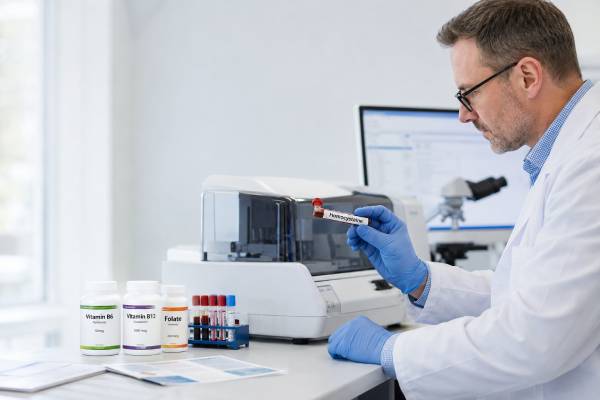
A homocysteine blood test measures the amount of homocysteine in your blood, usually reported in micromoles per liter (µmol/L). Homocysteine is an amino acid made during normal protein metabolism. Your body normally recycles it with help from folate, vitamin B12, and vitamin B6, so a high result often points toward a problem in B-vitamin status, kidney function, thyroid function, medication effects, smoking, or a less common genetic cause.
Homocysteine is also linked with cardiovascular risk because high levels are associated with artery irritation, oxidative stress, inflammation, and clotting tendency. Still, the test should not be read like LDL cholesterol, ApoB, blood pressure, or diabetes markers. Lowering homocysteine with vitamins can improve the number, but it has not consistently prevented heart attacks or reduced deaths in broad cardiovascular-risk groups. The result is most useful when it leads to a specific, correctable finding.
- A typical adult homocysteine reference range is about 5–15 µmol/L, but some labs use age- and sex-specific cutoffs.
- High homocysteine usually means the level is above 15 µmol/L; severe elevations above 100 µmol/L raise concern for rare inherited metabolism disorders.
- Vitamin B12, folate, and vitamin B6 help clear homocysteine, so deficiency or poor absorption can raise the result.
- Fasting for 8–12 hours may be requested before testing, and recent B-vitamin supplements can lower the result.
- Homocysteine is a cardiovascular risk marker, but it is not a stand-alone heart disease test.
- Follow-up often includes vitamin B12, methylmalonic acid, folate, CBC, creatinine/eGFR, thyroid testing, and a full cardiovascular risk review.
Table of Contents
- What the Homocysteine Test Measures
- Normal Range and Result Levels
- Why Homocysteine Gets High
- B Vitamins, MTHFR, and Methylation
- Cardiovascular Risk and Evidence
- Preparation and Testing Details
- What to Do After a High Result
- When Results Need Prompt Medical Attention
What the Homocysteine Test Measures
The homocysteine blood test measures total homocysteine in plasma or serum. “Total” means the lab measures homocysteine in several forms, including protein-bound and free forms. The result reflects how well your body is processing methionine, an amino acid found in protein-containing foods.
Homocysteine sits at a crossroads in one-carbon metabolism, a group of chemical reactions that help make DNA, recycle amino acids, support red blood cell production, and maintain normal nerve function. Your body has two main ways to handle homocysteine:
- It can recycle homocysteine back into methionine. This route depends mainly on folate and vitamin B12.
- It can convert homocysteine into cysteine. This route depends on vitamin B6.
When these pathways slow down, homocysteine can rise in the blood. That slowdown may come from low vitamin intake, poor absorption, kidney disease, thyroid disease, certain medications, inherited enzyme differences, or a combination of smaller factors.
A homocysteine test is most often ordered in three situations. The first is suspected vitamin B12 or folate deficiency, especially when symptoms or blood count changes suggest a problem. The second is unexplained early or repeated blood clots, especially when the result is very high or a clinician suspects homocystinuria. The third is cardiovascular risk assessment in selected patients, usually when a person already has risk factors such as high LDL cholesterol, diabetes, chronic kidney disease, or a personal or family history of vascular disease.
Homocysteine does not diagnose a heart attack, stroke, or blocked artery. It also does not replace standard cardiovascular markers. For artery risk, it is usually interpreted alongside a standard lipid panel, blood pressure, smoking status, diabetes markers, kidney function, family history, and sometimes advanced markers such as ApoB or Lp(a).
Normal Range and Result Levels
A common adult reference range for homocysteine is about 5–15 µmol/L. Some laboratories use a single cutoff, while others use separate reference intervals by age and sex. Men often have slightly higher values than women, and levels tend to rise with age. Results may also rise after menopause.
Reference ranges are not the same as treatment targets. A lab range shows where most results fall in a reference population. It does not prove that every value near the upper end is ideal for every person, especially in someone with cardiovascular disease, kidney disease, low B12, or multiple risk factors.
Common result categories
| Homocysteine result | Common interpretation | Typical follow-up focus |
|---|---|---|
| About 5–15 µmol/L | Often within the standard adult reference range | Interpret with symptoms, vitamin status, kidney function, and cardiovascular risk |
| 15–30 µmol/L | Mild elevation | Check B12, folate, B6 status, kidney function, thyroid status, medications, diet, and smoking |
| 30–100 µmol/L | Moderate to intermediate elevation | More urgent search for deficiency, kidney disease, medication effects, malabsorption, or genetic contributors |
| Above 100 µmol/L | Severe elevation | Evaluate for homocystinuria or other inherited metabolism disorders, especially with clots, eye findings, or early vascular disease |
Mild elevation is common and usually has more than one contributor. For example, a 68-year-old man taking metformin and a proton pump inhibitor may have borderline B12 status, reduced stomach acid, and age-related absorption changes. His homocysteine might be 18 µmol/L even if his diet looks reasonable. A young vegan adult who does not supplement B12 may have a similar result for a different reason.
Moderate elevations deserve a more careful workup. A value of 45 µmol/L, for instance, is not usually explained by one missed serving of leafy greens. It raises the chance of significant B12 deficiency, folate deficiency, chronic kidney disease, hypothyroidism, medication effects, or an inherited metabolism issue.
Severe values above 100 µmol/L are uncommon. They may occur in homocystinuria, classically from cystathionine beta-synthase deficiency, or other serious problems in methionine metabolism. These results need medical evaluation rather than routine supplement guessing.
Low homocysteine is less commonly discussed. Most low or low-normal results are not a medical problem. A very low result may be seen with recent B-vitamin supplementation, low protein intake, or lab variation, but it rarely carries the same diagnostic weight as a high result.
Why Homocysteine Gets High
High homocysteine usually means the body is making homocysteine faster than it can clear it, or the clearance pathways are not working efficiently. The result can rise from nutrient deficiency, organ function, medication effects, lifestyle factors, genetics, or a mix of these.
The most common nutritional causes are low vitamin B12, low folate, and sometimes low vitamin B6. These vitamins are not interchangeable. Folate and B12 support remethylation, the process that turns homocysteine back into methionine. Vitamin B6 supports transsulfuration, the pathway that converts homocysteine toward cysteine.
Vitamin B12 deficiency is especially important because neurological symptoms can occur even when anemia is mild or absent. Symptoms may include numbness or tingling in the hands and feet, balance changes, memory problems, fatigue, mouth soreness, or mood changes. A vitamin B12 blood test helps, but borderline B12 results often need methylmalonic acid testing because methylmalonic acid is more specific for functional B12 deficiency.
Folate deficiency can also raise homocysteine and cause large red blood cells, fatigue, mouth sores, and anemia. A folate blood test may be useful when intake is low, alcohol use is heavy, pregnancy needs are higher, or medications interfere with folate metabolism.
Vitamin B6 deficiency is less common than marginal B12 or folate problems, but it matters in people with poor nutrition, alcohol overuse, inflammatory illness, kidney disease, or certain medications. When B6 status is uncertain, a vitamin B6 blood test usually measures pyridoxal-5-phosphate, the active form.
Kidney function has a strong effect on homocysteine. The kidneys help clear homocysteine and related compounds, so chronic kidney disease can raise the level even when B-vitamin intake is adequate. In that setting, the result may reflect reduced renal clearance as much as vitamin status. Testing creatinine and eGFR helps separate kidney-related elevation from a primarily nutritional problem.
Hypothyroidism can raise homocysteine, and treatment may improve it when thyroid hormone levels normalize. Smoking can raise homocysteine and also damages blood vessels through other pathways. Heavy alcohol intake may increase homocysteine by worsening folate and B-vitamin status, reducing diet quality, and stressing the liver.
Medications can contribute. Metformin may lower B12 over time in some people. Proton pump inhibitors and H2 blockers may reduce absorption of food-bound B12, especially with long-term use. Methotrexate, some anti-seizure medicines, trimethoprim, and other folate-interfering drugs may affect folate pathways. Nitrous oxide exposure can inactivate B12 and may cause serious neurological problems in susceptible people.
Pattern clues in follow-up testing
| Pattern | Possible meaning | Helpful next tests |
|---|---|---|
| High homocysteine plus high methylmalonic acid | Functional vitamin B12 deficiency is more likely | B12, methylmalonic acid, CBC, intrinsic factor antibodies if pernicious anemia is suspected |
| High homocysteine with normal methylmalonic acid | Folate deficiency, B6 deficiency, kidney function, thyroid disease, or other causes may be more likely | Folate, B6/PLP, creatinine/eGFR, TSH, medication review |
| High homocysteine plus macrocytosis | B12 or folate deficiency should be checked carefully | CBC, B12, folate, methylmalonic acid |
| Very high homocysteine above 100 µmol/L | Inherited metabolism disorder or severe deficiency needs consideration | Metabolic specialist evaluation, amino acids, urine organic acids, genetic or enzyme testing when appropriate |
A complete blood count can show anemia or large red blood cells, but a normal CBC does not rule out early B12 deficiency. Neurological symptoms can appear before classic blood count changes.
B Vitamins, MTHFR, and Methylation
Folate, vitamin B12, and vitamin B6 are central to homocysteine metabolism. When one is low, homocysteine may rise. When the deficiency is corrected, homocysteine often falls. The important step is identifying which nutrient or pathway is actually affected instead of taking high-dose supplements blindly.
Folate is the natural form of vitamin B9 found in foods such as leafy greens, legumes, asparagus, avocado, citrus, and liver. Folic acid is the synthetic form used in fortified foods and many supplements. Many countries fortify grain products with folic acid to reduce neural tube defects. In fortified populations, severe folate deficiency is less common than in the past, but it still occurs with low intake, alcohol use disorder, malabsorption, pregnancy, and certain medications.
Vitamin B12 is found naturally in animal foods such as fish, meat, poultry, eggs, milk, and yogurt. Fortified foods and supplements can provide B12 for vegetarians and vegans. Because B12 absorption depends on stomach acid, intrinsic factor, and the small intestine, a person can become deficient even with adequate intake. Older adults, people with pernicious anemia, people after bariatric or stomach surgery, people with certain intestinal disorders, and long-term users of metformin or acid-suppressing medicines may need closer monitoring.
Vitamin B6 is found in poultry, fish, potatoes, chickpeas, bananas, fortified cereals, and other foods. B6 deficiency is less often the only cause of high homocysteine, but it can contribute, especially when diet quality is poor or medical conditions increase needs.
MTHFR is an enzyme involved in folate metabolism. Common MTHFR variants, especially C677T, can affect homocysteine levels more noticeably when folate status is low. The presence of a common MTHFR variant does not automatically mean a person has a dangerous clotting disorder, needs lifelong high-dose methylfolate, or should avoid ordinary folic acid. In many cases, the homocysteine result and actual vitamin status are more useful than the gene result.
The word “methylation” is often used in wellness discussions, sometimes accurately and sometimes too broadly. Methylation includes many normal chemical reactions, and homocysteine is one marker connected to those pathways. A high homocysteine result can suggest a methylation-related bottleneck, but it does not map the whole system. It should prompt a focused review of B12, folate, B6, kidney function, thyroid function, medication effects, and diet rather than a large, unfocused supplement plan.
Supplement form can matter for some people, but it is rarely the first issue. Folate may be taken as folic acid or 5-methyltetrahydrofolate. B12 may be taken as cyanocobalamin, methylcobalamin, adenosylcobalamin, or hydroxocobalamin. Many people respond well to standard forms. People with proven deficiency, malabsorption, neurological symptoms, or pernicious anemia may need higher-dose oral treatment or injections under medical supervision.
More is not always safer. High folic acid intake can improve anemia from folate deficiency while allowing unrecognized B12-related nerve damage to continue. High-dose vitamin B6 can cause nerve toxicity when taken in excessive amounts over time. A careful plan corrects deficiency without turning a mild lab abnormality into long-term megadose supplement use.
Cardiovascular Risk and Evidence
High homocysteine is associated with higher risk of cardiovascular disease, stroke, peripheral artery disease, and blood clots in many studies. The biological explanation is plausible: high homocysteine may irritate the endothelium, the inner lining of blood vessels; increase oxidative stress; affect nitric oxide signaling; promote inflammation; and contribute to clotting tendency.
Association does not prove that homocysteine is the main cause of disease. People with high homocysteine often have other risk factors at the same time, including older age, smoking, kidney disease, poor diet quality, diabetes, high blood pressure, high LDL cholesterol, and inflammation. Homocysteine may be part of the risk picture, but it may also act as a marker for other problems.
Clinical trials have shown that B-vitamin therapy can lower homocysteine. The harder question is whether lowering it prevents cardiovascular events. Across broad groups of people with or at risk for cardiovascular disease, homocysteine-lowering vitamin therapy has not consistently reduced heart attacks or all-cause mortality. Some analyses show a small stroke benefit in certain settings, while others show no clear clinical benefit. Results may differ by baseline folate status, food fortification, kidney disease, stroke history, genetics, B12 status, and which vitamins were used.
For that reason, a homocysteine result should not distract from risk markers with clearer treatment pathways. LDL cholesterol, non-HDL cholesterol, ApoB, blood pressure, diabetes status, kidney function, smoking, and family history usually carry more weight in routine prevention. If cholesterol risk is being refined, an ApoB test can estimate the number of atherogenic particles, and an Lp(a) test can identify a largely inherited risk factor that may be missed on a standard lipid panel.
Homocysteine can still add useful context. A high result may reveal treatable B12 or folate deficiency. It may strengthen the case for correcting smoking, poor diet quality, low activity, or heavy alcohol use. It may encourage closer review of kidney function and thyroid function. In someone with premature vascular disease, recurrent clots, or very high levels, it may point toward less common disorders that need specialized care.
Inflammation markers can also help put homocysteine in context. For example, high homocysteine plus high hs-CRP may suggest a broader inflammatory and metabolic risk pattern. That does not prove one marker caused the other, but it can guide a more complete risk discussion.
A reasonable way to view homocysteine is as a “why is this elevated?” marker, not simply a “make this number lower” marker. Correcting a true B12 deficiency is valuable whether or not it prevents a heart attack, because B12 deficiency can affect nerves, blood cells, cognition, and quality of life. Treating hypothyroidism or improving kidney-risk management also matters beyond homocysteine itself.
Preparation and Testing Details
Homocysteine testing is a routine blood draw, usually from a vein in the arm. The collection itself takes only a few minutes. The sample must be handled properly because homocysteine can change after blood is drawn if processing is delayed. This is mostly the laboratory’s responsibility, but it is one reason results can vary between labs or repeat tests.
Many clinicians order fasting homocysteine. A common instruction is to avoid food for 8–12 hours before the test, though water is usually allowed. Follow the ordering clinician’s or laboratory’s instructions because requirements vary. If fasting is requested, morning testing is often easiest.
Tell the clinician and lab about supplements and medicines before testing. Recent folic acid, methylfolate, B12, B-complex, multivitamin, or energy supplement use can lower homocysteine and may hide an untreated cause. Do not stop prescribed medicines on your own. If the clinician wants a baseline result without supplements, they can tell you how long to pause them and whether that is safe.
Illness, kidney function changes, recent major diet changes, alcohol intake, and lab handling can affect results. A single mildly high result is often repeated or interpreted with related labs before any major decision is made.
Questions worth asking before the test
- Should I fast, and for how many hours?
- Should I keep taking my multivitamin, B-complex, folate, B12, or B6 before the test?
- Are we testing homocysteine to evaluate vitamin status, cardiovascular risk, clotting history, or a very high result?
- Will methylmalonic acid, B12, folate, CBC, creatinine/eGFR, and TSH be checked at the same time?
- If I already started supplements, should the result be interpreted as treated rather than baseline?
Homocysteine results are usually reported in µmol/L. Some older or uncommon reports may use different units, but most modern clinical labs use µmol/L. Always compare your result with the reference interval printed on your own report.
What to Do After a High Result
A high homocysteine result should lead to a cause-based plan. The first step is to confirm the degree of elevation. A value of 16 µmol/L in an older adult with mild kidney impairment needs a different response from a value of 95 µmol/L in a young person with a history of blood clots.
The next step is to look for correctable causes. Most clinicians start with B12, folate, methylmalonic acid, CBC, creatinine/eGFR, and TSH. Vitamin B6 testing may be added when diet, symptoms, medications, or risk factors point that way. A medication review is important, especially for metformin, acid-suppressing medicines, anti-seizure medicines, methotrexate, and folate-interfering drugs.
Diet changes can help when intake is low. Foods rich in folate include lentils, beans, spinach, asparagus, broccoli, avocado, oranges, and fortified grains. B12 comes from animal foods and fortified foods; vegans usually need reliable B12 supplementation. B6 is found in fish, poultry, potatoes, chickpeas, bananas, and fortified cereals. These foods support homocysteine metabolism, but diet alone may not correct deficiency caused by malabsorption, pernicious anemia, surgery, or medication effects.
Supplement treatment depends on the cause. Someone with mild folate insufficiency may need a different plan from someone with B12 deficiency and numb feet. A common mistake is taking folate alone when B12 status is unknown. Another mistake is taking very high-dose B6 for months because homocysteine is mildly high. The safest plan is targeted, monitored, and adjusted after repeat testing.
Lifestyle changes matter because homocysteine often travels with broader vascular risk. Stopping smoking, improving blood pressure, treating diabetes or insulin resistance, increasing physical activity, improving sleep, and reducing heavy alcohol intake may reduce risk even if the homocysteine number changes only modestly.
Repeat testing is often done after about 6–12 weeks of treatment or diet correction, though timing depends on the situation. B12-related symptoms may take longer to improve, and some neurological symptoms need urgent treatment rather than waiting for repeat lab trends.
A practical follow-up sequence
- Confirm the value and compare it with the lab’s own reference range.
- Review fasting status, supplement use, medications, kidney function, thyroid status, smoking, alcohol intake, and diet.
- Check B12, methylmalonic acid, folate, CBC, creatinine/eGFR, and TSH when not already done.
- Treat the identified cause rather than treating homocysteine in isolation.
- Repeat homocysteine and related abnormal labs after the planned treatment interval.
- Address standard cardiovascular risk markers at the same time.
When cardiovascular prevention is the reason for testing, the plan should not rely on B vitamins alone. Cholesterol management, blood pressure control, diabetes prevention or treatment, tobacco cessation, weight management when needed, and regular exercise have stronger evidence for reducing cardiovascular events.
When Results Need Prompt Medical Attention
Most mildly high homocysteine results are not emergencies. They deserve follow-up, but they usually do not require urgent care. Prompt attention is needed when the result is very high, symptoms suggest severe B12 deficiency, or there are signs of a clot, stroke, or heart problem.
Seek urgent medical care for sudden chest pain, shortness of breath, weakness on one side of the body, facial drooping, trouble speaking, sudden vision loss, coughing blood, fainting, or a swollen painful leg. Those symptoms should be treated as possible heart attack, stroke, pulmonary embolism, or deep vein thrombosis concerns. Homocysteine testing is not used to rule those emergencies in or out.
A very high homocysteine result, especially above 100 µmol/L, needs timely clinician review. This is especially true in children, teenagers, or young adults with early clots, lens dislocation, severe nearsightedness, developmental concerns, skeletal features, or a family history of early vascular disease. A metabolic specialist or hematologist may be involved.
Neurological symptoms also deserve careful attention. Numbness, tingling, burning pain, balance problems, memory changes, confusion, or trouble walking can occur with vitamin B12 deficiency. Treatment should not be delayed while experimenting with multiple over-the-counter supplements. B12 deficiency can become harder to reverse when nerve injury continues for a long time.
Pregnancy is another situation where professional guidance matters. Folate and B12 needs are important for fetal development, but supplement choices and doses should be coordinated with prenatal care, especially if homocysteine is elevated or there is a history of pregnancy loss, clotting, malabsorption, bariatric surgery, or vegan diet.
Homocysteine is most helpful when it leads to a clearer diagnosis or a better prevention plan. A high number should start a focused search for vitamin deficiency, kidney or thyroid problems, medication effects, inherited metabolism disorders, and cardiovascular risk factors that can be managed directly.
References
- Homocysteine Test 2025 (Official Medical Test Page)
- Homocysteine: Function, Levels & Health Effects 2025 (Medical Review)
- Vitamin B12 – Health Professional Fact Sheet 2025 (Official Fact Sheet)
- Homocysteine in the Cardiovascular Setting: What to Know, What to Do, and What Not to Do 2025 (Review)
- The effect of B-vitamins on the prevention and treatment of cardiovascular diseases: a systematic review and meta-analysis 2024 (Systematic Review)
- Homocysteine-lowering interventions for preventing cardiovascular events 2017 (Cochrane Review)
Disclaimer
Homocysteine results should be interpreted with your medical history, symptoms, medications, kidney function, vitamin status, and cardiovascular risk profile. Do not start high-dose folate, vitamin B12, or vitamin B6 to treat a lab result without checking for deficiency patterns and safety issues, especially if you have neurological symptoms, kidney disease, pregnancy, clotting history, or take prescription medications. This information is educational and does not replace medical diagnosis or treatment.