
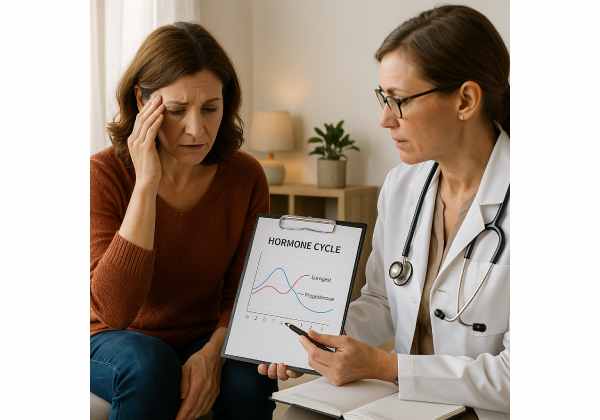
Hormones help regulate sleep, energy, appetite, sexual function, stress response, body temperature, and many brain systems involved in mood. When hormone levels shift sharply, stay abnormal, or interact with a person’s individual sensitivity to hormonal change, mood symptoms can appear or worsen. For some people, the connection is mild and temporary. For others, the mood change is severe enough to disrupt relationships, work, school, parenting, safety, or daily functioning.
“Hormone-induced mood disorder” is often used as a descriptive term rather than a single, uniform diagnosis. In real clinical practice, the pattern may be described more specifically as premenstrual dysphoric disorder, perinatal depression, perimenopausal mood symptoms, mood disorder due to a medical condition, medication-induced mood symptoms, or worsening of an existing depression, anxiety, or bipolar disorder during a hormonal transition.
The key question is not simply whether hormones are “involved.” Hormones are involved in many normal mood and body rhythms. The more important question is whether the timing, severity, recurrence, physical signs, and functional impairment point to a hormone-related mood condition that deserves a careful diagnostic evaluation.
Table of Contents
- What Hormone-Induced Mood Disorder Means
- Symptoms and Signs to Recognize
- Hormone-Related Causes and Triggers
- Risk Factors That Raise Susceptibility
- Diagnostic Context and Pattern Recognition
- Complications and Effects on Daily Life
- Urgent Warning Signs
What Hormone-Induced Mood Disorder Means
A hormone-induced mood disorder refers to clinically important mood symptoms that are closely linked to hormonal changes, endocrine illness, or hormone-affecting medication. The symptoms are more than ordinary mood variation; they are persistent, recurrent, intense, or impairing enough to raise concern.
Hormones influence mood through several connected pathways. Estrogen, progesterone, testosterone, thyroid hormone, cortisol, insulin, prolactin, and reproductive neurosteroids can affect serotonin, dopamine, norepinephrine, GABA, glutamate, inflammation, sleep regulation, and the stress-response system. A change in one hormone system can also affect another. For example, thyroid dysfunction can alter energy, sleep, cognition, and emotional stability, while cortisol dysregulation can affect anxiety, irritability, motivation, and concentration.
The term can apply to several broad patterns:
- Cyclical reproductive mood symptoms, such as severe premenstrual mood changes that appear in the luteal phase and improve after menstruation begins.
- Pregnancy and postpartum mood symptoms, where dramatic endocrine shifts occur alongside sleep disruption, physical recovery, identity changes, medical complications, and psychosocial stress.
- Perimenopausal mood changes, especially when fluctuating estrogen, night sweats, insomnia, and prior mood vulnerability overlap.
- Endocrine-related mood symptoms, such as depression, anxiety, agitation, or cognitive slowing associated with thyroid disease, Cushing syndrome, adrenal disorders, or other hormone-producing conditions.
- Medication-related hormonal effects, including mood symptoms associated with corticosteroids, some reproductive hormone medications, or abrupt hormone withdrawal.
- Hormonal worsening of an existing psychiatric condition, where a person already has depression, bipolar disorder, anxiety, trauma-related symptoms, or another condition that becomes more severe at predictable hormonal times.
This distinction matters because hormone-related mood symptoms do not always mean hormone levels are simply “too high” or “too low.” In many reproductive mood disorders, the hormone levels may fall within a typical range, but the brain may be unusually sensitive to normal hormonal fluctuation. That is why a person may be told that routine labs are “normal” while still having a real, pattern-based hormone-linked mood condition.
The phrase also should not be used to dismiss symptoms as “just hormones.” Severe mood changes can be disabling, frightening, and medically significant. Hormonal context may help explain the timing, but it does not make the symptoms less real. A careful evaluation considers mood symptoms, physical symptoms, timing, medical history, medication exposures, reproductive stage, sleep, substance use, and safety risk together.
For readers trying to understand whether their symptoms may fit this pattern, a broader discussion of hormones and mood changes can be helpful background, but diagnosis depends on the full pattern rather than one symptom alone.
Symptoms and Signs to Recognize
Hormone-related mood disorders can look like depression, anxiety, irritability, emotional volatility, mixed mood states, or occasionally mania-like or psychosis-like symptoms. The most important clue is often timing: symptoms tend to cluster around hormonal transitions, cycles, endocrine changes, or medication exposure.
Emotional symptoms may include persistent sadness, tearfulness, loss of pleasure, guilt, hopelessness, intense irritability, sudden anger, emotional sensitivity, panic-like episodes, or a sense of being overwhelmed. Some people describe feeling unlike themselves, as if their reactions are stronger than the situation would usually explain. Others feel flat, detached, slowed down, or unable to access normal interest and motivation.
Cognitive symptoms are also common. A person may notice poor concentration, indecision, forgetfulness, racing thoughts, rumination, intrusive worries, or a drop in mental stamina. In perimenopause, thyroid dysfunction, postpartum states, sleep disruption, and cortisol-related illness, “brain fog” may appear alongside mood symptoms. These cognitive changes can be mistaken for laziness, burnout, attention problems, or early memory decline when the timing and physical signs are not considered.
Physical and behavioral signs often provide important context. Depending on the hormonal system involved, these may include changes in sleep, appetite, weight, menstrual timing, hot flashes, night sweats, palpitations, tremor, heat or cold intolerance, fatigue, acne, hair changes, changes in libido, headaches, breast tenderness, bloating, dizziness, blood sugar swings, or unusual muscle weakness. Physical symptoms do not prove a hormonal cause, but they can help point the evaluation in the right direction.
| Pattern | Mood features | Timing clues | Physical or contextual clues |
|---|---|---|---|
| Premenstrual pattern | Irritability, sadness, anxiety, sensitivity, anger, feeling overwhelmed | Worsens before menstruation and improves after bleeding starts | Bloating, breast tenderness, sleep changes, cravings, headaches |
| Perinatal pattern | Depression, anxiety, intrusive fears, agitation, emotional numbness | During pregnancy or within the first year after birth | Sleep disruption, birth recovery, lactation changes, medical complications |
| Perimenopausal pattern | Low mood, anxiety, irritability, reduced confidence, mood swings | During years of irregular cycles before menopause | Hot flashes, night sweats, insomnia, cycle changes, brain fog |
| Thyroid-related pattern | Depression, anxiety, agitation, apathy, emotional instability | May develop gradually or with thyroid flare, medication change, or postpartum thyroiditis | Heat or cold intolerance, tremor, palpitations, fatigue, weight change |
| Cortisol or steroid-related pattern | Anxiety, insomnia, irritability, depression, euphoria, mania-like symptoms | After corticosteroid exposure or with signs of cortisol excess | Sleep loss, weight redistribution, muscle weakness, blood pressure or glucose changes |
A hormone-related mood pattern can be confused with several psychiatric conditions. Premenstrual symptoms may resemble major depression, generalized anxiety, panic disorder, or bipolar disorder. Perimenopausal sleep disruption may mimic depression or attention problems. Thyroid disease may resemble anxiety, depression, or cognitive disorder. Corticosteroid-related symptoms can resemble bipolar mania or psychosis.
Severity is another key sign. Mild mood shifts that do not interfere with functioning are common during many hormonal states. A possible mood disorder becomes more likely when symptoms cause marked distress, conflict, missed work or school, impaired caregiving, withdrawal from usual activities, risky behavior, suicidal thoughts, or a repeated sense of losing control.
People who notice strong cyclical patterns may find it useful to understand hormone-related mood tracking as a diagnostic concept. Tracking is not a diagnosis by itself, but repeated timing patterns can help distinguish hormone-linked episodes from mood symptoms that occur continuously or unpredictably.
Hormone-Related Causes and Triggers
The causes of hormone-induced mood symptoms usually involve a combination of hormonal fluctuation, brain sensitivity, medical illness, medication effects, sleep disruption, and psychosocial stress. In many cases, there is no single cause; the mood episode emerges when several vulnerabilities converge.
Reproductive hormone fluctuation is one of the best-known pathways. Estrogen and progesterone shift across the menstrual cycle, pregnancy, postpartum period, and menopause transition. These shifts can affect neurotransmitter systems and neurosteroids involved in emotional regulation. Premenstrual dysphoric disorder is not simply “bad PMS.” It is a severe, cyclical mood disorder in which emotional symptoms occur before menstruation, improve after onset of menses, and cause meaningful impairment. Some people also experience premenstrual exacerbation, where an existing disorder such as depression, bipolar disorder, anxiety, or PTSD worsens before menstruation rather than appearing only in that phase. A focused explanation of PMDD symptoms and cyclical mood changes can help clarify that distinction.
Pregnancy and the postpartum period involve large endocrine and neurobiological changes, but hormone change is only part of the picture. Sleep loss, birth complications, pain, feeding stress, prior trauma, relationship strain, medical illness, and lack of support can all shape symptom severity. Perinatal mood symptoms may include depression, anxiety, obsessive intrusive thoughts, irritability, panic, emotional numbness, or, rarely, severe confusion, delusions, or hallucinations. Postpartum psychosis is uncommon but urgent because it can develop quickly and may involve impaired reality testing or risk of harm.
Perimenopause is another common window of vulnerability. Estrogen may fluctuate unpredictably for years before the final menstrual period. During this time, many people experience irregular cycles, sleep disruption, vasomotor symptoms, and mood changes. Mood symptoms are often strongest when hormonal fluctuation overlaps with insomnia, night sweats, high stress, a history of depression, or major life pressures. Some people mainly notice anxiety and irritability rather than classic sadness.
Endocrine disorders can also produce mood symptoms. Hypothyroidism is often associated with fatigue, slowed thinking, low mood, apathy, and poor concentration. Hyperthyroidism can cause anxiety, agitation, irritability, panic-like sensations, insomnia, tremor, and palpitations. Autoimmune thyroid disease can complicate the picture because symptoms may fluctuate and may overlap with anxiety or depression. Readers considering medical causes of mood changes may benefit from understanding when thyroid testing for anxiety, depression, and brain fog is part of a broader evaluation.
Cortisol-related conditions and corticosteroid medications are another important category. Cortisol is central to stress response, energy regulation, immune function, and sleep-wake rhythms. Excess cortisol, as in Cushing syndrome, can be associated with depression, anxiety, irritability, cognitive changes, and sometimes severe psychiatric symptoms. Prescription corticosteroids can also trigger insomnia, agitation, mood elevation, depression, mania-like symptoms, or psychosis-like symptoms, especially at higher doses or in susceptible individuals.
Other hormone-related contexts may include polycystic ovary syndrome, adrenal insufficiency, pituitary disorders, diabetes-related glucose instability, postpartum thyroiditis, premature ovarian insufficiency, gender-affirming hormone changes, fertility medications, androgen-related conditions, and abrupt changes in hormone therapy. Hormonal contraception can be neutral, helpful, or mood-worsening depending on the individual, formulation, timing, and prior vulnerability. Because experiences vary, a temporal relationship alone should be interpreted carefully rather than assumed to prove causation.
Risk Factors That Raise Susceptibility
A person is more likely to develop hormone-related mood symptoms when biological sensitivity, prior mood history, reproductive transitions, endocrine illness, and environmental stress overlap. Risk is not a character flaw, and it does not mean the person is “too emotional” or unable to cope.
A personal history of depression, anxiety, bipolar disorder, PMDD, postpartum depression, postpartum anxiety, trauma-related symptoms, eating disorder symptoms, or severe insomnia can increase vulnerability during hormonal transitions. Family history may also matter, especially for mood disorders, bipolar disorder, thyroid disease, autoimmune conditions, or severe reproductive mood symptoms. Genetics may influence both hormone sensitivity and psychiatric risk, although the relationship is complex rather than deterministic.
Previous hormone-sensitive episodes are especially important. Someone who had severe premenstrual mood changes, mood symptoms after starting or stopping a hormonal medication, postpartum depression, postpartum anxiety, or perimenopausal depression may be more likely to notice similar vulnerability during later hormonal transitions. The strongest clue is often a repeated pattern across time.
Reproductive stage can change risk. Adolescence, the late luteal menstrual phase, pregnancy, postpartum months, perimenopause, and medically induced hormone shifts are all periods when hormone systems may change quickly. People with PMDD may be sensitive to normal cyclic changes rather than abnormal hormone levels. People with perimenopausal symptoms may have mood disruption even before cycles stop. Those with postpartum symptoms may have intense symptoms even when standard lab tests are not remarkable.
Sleep disruption is a major amplifier. Hormonal changes that disturb sleep can worsen emotional regulation, concentration, anxiety, appetite, pain sensitivity, and impulse control. Night sweats, infant care, shift work, insomnia, sleep apnea, and steroid-induced sleeplessness can all intensify mood symptoms. In some people, sleep loss can also contribute to mania-like symptoms or mixed mood states.
Medical factors can raise suspicion for endocrine involvement. These include known thyroid disease, autoimmune disease, pituitary or adrenal disease, diabetes or blood sugar instability, polycystic ovary syndrome, severe menstrual irregularity, premature ovarian insufficiency, infertility treatment, unexplained weight change, tremor, palpitations, heat or cold intolerance, unusual fatigue, or new physical changes that appear alongside mood symptoms. A broader discussion of hormone testing for mood changes, brain fog, and fatigue explains why clinicians usually interpret labs together with symptoms and timing.
Medication exposure can also be relevant. Corticosteroids, reproductive hormone medications, some endocrine therapies, and abrupt changes in hormone-related treatment can be associated with mood changes in some people. Non-hormonal substances matter too: alcohol, cannabis, stimulants, sedatives, and some supplements can affect sleep, anxiety, mood stability, and interpretation of symptoms.
Social stress does not rule out hormonal involvement. In fact, stress and hormone sensitivity often interact. Bereavement, relationship strain, caregiving pressure, discrimination, financial stress, trauma reminders, workplace burnout, and lack of sleep may lower the threshold for symptoms during a vulnerable hormonal phase. A careful formulation considers both biology and context rather than forcing a false choice between them.
Diagnostic Context and Pattern Recognition
Diagnosis depends on whether the mood symptoms form a clear, impairing pattern that fits a hormonal transition, endocrine condition, medication exposure, or psychiatric disorder. A single lab value, a single bad week, or a vague sense of “hormones being off” is usually not enough.
Clinicians typically start by clarifying the symptom picture. They may ask about depressed mood, loss of pleasure, irritability, anxiety, panic symptoms, sleep, appetite, energy, concentration, guilt, hopelessness, intrusive thoughts, impulsive behavior, elevated mood, racing thoughts, hallucinations, delusions, substance use, and safety. They also consider timing: when symptoms began, whether they come and go, whether they follow the menstrual cycle, whether they appeared after pregnancy or birth, whether cycles are changing, whether a new medication was started, or whether physical endocrine symptoms appeared at the same time.
Pattern recognition is central in premenstrual mood disorders. PMDD usually requires symptoms to be prospectively tracked across at least two menstrual cycles to confirm the timing. This helps distinguish PMDD from major depression that happens to feel worse before menstruation. Premenstrual exacerbation can be just as distressing, but it has a different pattern: symptoms are present outside the premenstrual phase and intensify cyclically.
In perinatal settings, diagnostic context includes pregnancy stage, postpartum timing, prior episodes, bipolar symptoms, intrusive thoughts, sleep deprivation, birth trauma, medical complications, and infant-related stress. Screening tools can identify people who need fuller evaluation, but screening is not the same as diagnosis. The Edinburgh Postnatal Depression Scale is one common perinatal screening tool, and a separate explanation of the EPDS and what it screens for may help readers understand its role.
Endocrine-related mood symptoms require a wider medical lens. Thyroid tests, reproductive hormone tests, cortisol evaluation, metabolic labs, pregnancy testing, medication review, or other workup may be considered depending on symptoms and exam findings. The goal is not to test every hormone for every mood change. It is to match the evaluation to the pattern. For example, tremor, weight loss, palpitations, and heat intolerance suggest a different pathway than premenstrual rage, postpartum intrusive fears, or perimenopausal insomnia.
Psychiatric differential diagnosis remains important. Hormone-related symptoms can coexist with major depressive disorder, bipolar disorder, generalized anxiety disorder, panic disorder, OCD, PTSD, eating disorders, substance-related disorders, or neurocognitive conditions. Bipolar disorder is especially important to consider when symptoms include decreased need for sleep, unusual energy, impulsive spending or sexual behavior, grandiosity, pressured speech, agitation, or psychosis-like experiences. Labeling those symptoms as “hormonal mood swings” without considering bipolar disorder can miss a serious diagnostic clue.
Because many screening tools are designed to flag risk rather than provide a final answer, it may help to understand the broader difference between screening and diagnosis in mental health. Hormone-related mood disorders often require both: structured symptom screening and a clinician’s judgment about timing, impairment, medical causes, psychiatric history, and safety.
Complications and Effects on Daily Life
Hormone-related mood symptoms can affect daily life as deeply as other mood disorders, especially when episodes are severe, recurrent, misunderstood, or untreated. The complications often come from the combination of emotional distress, functional impairment, physical symptoms, and uncertainty about what is happening.
Relationships may be strained by sudden irritability, withdrawal, tearfulness, anger, reassurance seeking, loss of libido, or emotional reactivity. Partners, family members, and friends may misread the symptoms as personality change, lack of effort, or conflict avoidance. The person experiencing symptoms may feel ashamed afterward, especially if the mood shift seems to arrive suddenly and then partially lift.
Work and school functioning can also suffer. Poor concentration, fatigue, insomnia, panic, depressive slowing, or unpredictable emotional surges can make it hard to meet deadlines, attend meetings, study, parent, or maintain routine responsibilities. In cyclical conditions, a person may function well for part of the month and then have several days of marked impairment. That uneven pattern can be confusing and may lead others to underestimate the seriousness of the condition.
Physical health may be affected when mood symptoms interfere with sleep, eating patterns, medical follow-up, physical activity, medication adherence, or recognition of worsening endocrine illness. For example, thyroid-related anxiety may be mistaken for panic alone, while cortisol-related mood changes may be missed if physical signs develop gradually. Conversely, assuming every mood symptom is hormonal can delay recognition of major depression, bipolar disorder, trauma symptoms, or substance-related problems.
Hormone-related mood episodes can also increase psychological burden. People may begin to fear certain points in the menstrual cycle, dread the postpartum period, feel destabilized by perimenopause, or lose trust in their own emotional responses. Repeated invalidation can make this worse. Being told that symptoms are “normal,” “just stress,” or “just hormones” may discourage people from describing the full severity of what they are experiencing.
Some complications are safety-related. Severe depression can involve suicidal thoughts, self-harm urges, hopelessness, or inability to care for oneself. Severe anxiety can involve panic, agitation, inability to sleep, or intrusive fears. Mania-like states can involve dangerous impulsivity, reduced need for sleep, reckless decisions, or impaired judgment. Psychosis-like symptoms can involve hallucinations, delusions, paranoia, disorganized thinking, or confusion. In postpartum states, new psychosis, severe agitation, or thoughts of harm involving the baby are urgent warning signs.
There may also be diagnostic complications. Hormone-linked symptoms can be mislabeled as ordinary PMS, burnout, personality problems, “mom stress,” menopause alone, or generalized anxiety. On the other hand, a true psychiatric disorder can be incorrectly attributed only to hormones. The most accurate understanding often requires both perspectives: the mood symptoms are real psychiatric symptoms, and hormonal timing may be an important part of why they appear, worsen, or recur.
Urgent Warning Signs
Some mood symptoms require urgent professional evaluation regardless of whether hormones may be involved. Hormonal timing can help explain risk, but it should never delay emergency attention when safety, reality testing, or basic functioning is impaired.
Urgent warning signs include:
- Thoughts of suicide, wanting to die, or feeling unable to stay safe.
- Thoughts of harming someone else.
- Self-harm behavior or escalating urges to self-harm.
- Hallucinations, delusions, paranoia, severe confusion, or disorganized behavior.
- New manic symptoms, such as very little sleep with unusually high energy, grandiose beliefs, reckless behavior, or extreme agitation.
- Postpartum symptoms involving confusion, bizarre beliefs, hearing or seeing things others do not, or fears of harming the baby.
- Inability to sleep for multiple nights with worsening mood, agitation, or impulsivity.
- Severe depression that interferes with eating, drinking, basic hygiene, parenting, or necessary medical care.
- Sudden neurological symptoms, severe headache, fainting, seizure, chest pain, or other acute physical symptoms occurring with mental status changes.
These signs are not meant to frighten people with milder mood changes. They are included because severe hormone-associated mood episodes can be mistaken for normal stress or expected reproductive change. A person can have a hormone-linked pattern and still need immediate evaluation if symptoms become dangerous or disconnected from reality.
The emergency threshold is especially low in the postpartum period, after starting high-dose corticosteroids, during abrupt severe insomnia, when bipolar symptoms are possible, or when a person has a prior history of suicide attempt, psychosis, mania, or severe postpartum illness. A related guide on when to go to the ER for mental health or neurological symptoms explains the kinds of symptoms that should not wait for a routine appointment.
For non-emergency diagnostic concerns, the most useful next step is usually a clear description of timing, symptoms, physical changes, medications, reproductive stage, and impairment. Hormone-induced mood symptoms are most accurately understood when mood and body patterns are examined together rather than separated into “mental” versus “physical” categories.
References
- Women’s reproductive mental health 2025 (Review)
- The prevalence of premenstrual dysphoric disorder: Systematic review and meta-analysis 2024 (Systematic Review)
- Screening and Diagnosis of Mental Health Conditions During Pregnancy and Postpartum 2023 (Guideline)
- A Systematic Review of Anxiety and Depressive Symptoms in Women Experiencing Vasomotor Symptoms During the Menopause Transition 2025 (Systematic Review)
- Neuropsychiatric Manifestations of Thyroid Diseases 2023 (Review)
- The cortisol axis and psychiatric disorders: an updated review 2025 (Review)
Disclaimer
This article is for general educational purposes only and is not a substitute for professional medical advice, diagnosis, or treatment. Mood symptoms linked to hormonal changes can overlap with serious psychiatric, endocrine, neurological, and medication-related conditions, so individualized evaluation is important when symptoms are severe, recurrent, or impairing.
Thank you for taking the time to read this; sharing it may help someone recognize that severe hormone-linked mood changes deserve careful, respectful evaluation.





