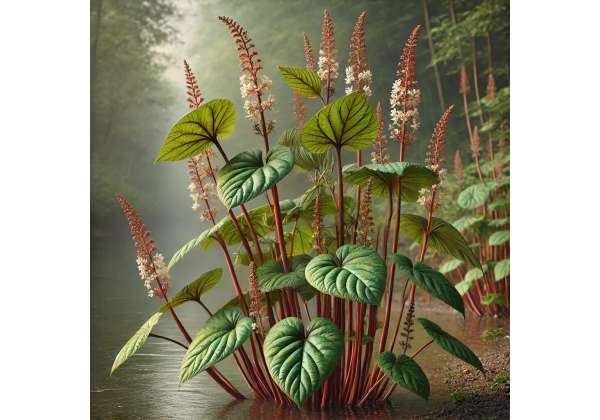
Hu Zhang is the traditional Chinese medicine name for the root and rhizome of Reynoutria japonica, also known as Polygonum cuspidatum or Japanese knotweed. In classical herbal practice, it is valued for clearing heat, moving blood, easing pain, relieving dampness, and supporting the skin and respiratory tract in certain patterns of illness. In modern supplement language, it is best known as one of the richest plant sources of resveratrol, but that description is only part of the story. Whole-herb Hu Zhang also contains polydatin, emodin, physcion, and other compounds that shape both its potential benefits and its safety profile.
That distinction matters. A standardized resveratrol capsule is not the same as a traditional Hu Zhang decoction. The herb has broader actions, stronger gastrointestinal effects, and more caution points than many buyers expect. Used thoughtfully, it may offer practical support for inflammation, minor topical issues, circulation-related discomfort, and certain digestive or biliary complaints. Used casually, especially at high doses or for long periods, it can become irritating. The best way to approach Hu Zhang is as a focused medicinal root, not a generic wellness trend.
Core Points
- Hu Zhang is most often used for inflammation-related discomfort, circulation support, and certain topical or heat-pattern complaints.
- Its key compounds include resveratrol, polydatin, and emodin, which help explain both its appeal and its cautions.
- A traditional decoction range is 9 to 20 g of the crude root or rhizome per day.
- Avoid unsupervised use during pregnancy, with active diarrhea, or when taking complex medication regimens.
Table of Contents
- What is Hu Zhang
- Key compounds and actions
- What benefits is it used for
- How to use Hu Zhang
- How much should you take
- Side effects, interactions, and warnings
- What the research really says
What is Hu Zhang
Hu Zhang is the medicinal root and rhizome of Reynoutria japonica Houtt., a plant also known in older literature as Polygonum cuspidatum. In East Asian medicine, it has a long history as a heat-clearing and blood-moving herb. In practical terms, that means it has traditionally been used when a person presents with signs that herbal systems describe as hot, inflamed, swollen, stagnant, or damp. This includes problems such as jaundice linked to damp-heat patterns, painful injuries, menstrual blockage with pain, cough with thick heat signs, burns, boils, and certain bowel complaints.
For a modern reader, the easiest mistake is to treat Hu Zhang as if it were simply “a resveratrol herb.” It is true that the root is a major botanical source of resveratrol, and that is one reason it became popular in Western supplements. But the traditional herb is broader and rougher than purified resveratrol. It includes polydatin, anthraquinones such as emodin and physcion, flavonoids, and other phenolic compounds that shift both its actions and its tolerability. The whole root can be more stimulating to the gut, more active topically, and more complex in safety terms than a purified extract.
Another source of confusion is the plant’s invasive reputation. In many countries, Japanese knotweed is known first as a difficult invasive species. That ecological reality does not erase its medicinal history. It simply means the same plant can be a management problem in one context and a medicinal raw material in another. What matters in herbal use is correct plant identity, correct processing, and correct expectations.
In traditional practice, Hu Zhang is rarely framed as a daily “longevity tonic.” It is more often used for a job. The job may be to help move bruised or stagnant tissue after injury, support the body through inflammatory heat signs, dry dampness, or address certain topical problems. That makes it more like a targeted medicinal root than a gentle nutritive herb.
The best modern definition is this: Hu Zhang is a traditional Chinese medicinal root and rhizome with broad pharmacological interest, especially for inflammation, circulation, topical care, and oxidative stress. It has real promise, but it also needs respect. The whole herb is not interchangeable with a generic antioxidant supplement, and that distinction shapes every sensible decision about dosage, duration, and safety.
Key compounds and actions
Hu Zhang’s medicinal profile comes from a dense mixture of stilbenes, anthraquinones, and other polyphenols. The most discussed compounds are resveratrol, polydatin, emodin, and physcion. Each one adds something different, which is why the herb cannot be reduced to a single ingredient story.
Resveratrol is the compound most readers already know. It is often marketed for antioxidant support, vascular health, and healthy aging, and that overlap is one reason many people first encounter Hu Zhang as a source plant for resveratrol supplementation. In the whole herb, however, resveratrol is only one voice in a larger chemical chorus. Polydatin, its glucoside form, is often abundant in the raw plant and may behave differently in absorption and metabolism. Many herbalists consider this part of the reason whole-root preparations do not feel identical to isolated resveratrol products.
Then there are the anthraquinones, especially emodin and physcion. These compounds help explain several traditional features of Hu Zhang. They contribute to the herb’s activity in inflammatory and antimicrobial research, but they also help explain why the plant can irritate the gastrointestinal tract and why long-term or high-dose use deserves caution. Emodin is especially important because it appears in both the benefit and risk conversation. It is one of the compounds linked to promising pharmacology, yet it is also one of the compounds that raises questions about liver stress and drug interactions in preclinical work.
The herb also contains flavonoids and related phenolics that broaden its antioxidant and tissue-level actions. This matters because the practical effect of Hu Zhang is not usually “one molecule, one result.” Instead, it behaves like a multi-compound root with overlapping effects on inflammatory signaling, oxidative stress, microbial activity, tissue repair, and vascular responses.
From a traditional-to-modern translation standpoint, the main actions are best summarized this way:
- Anti-inflammatory potential: relevant to joints, soft tissue irritation, and topical inflammatory states.
- Circulatory and blood-moving effects: one reason it appears in trauma and pain contexts.
- Heat-clearing and damp-resolving use: the traditional frame for jaundice, skin eruptions, and certain urinary or bowel complaints.
- Topical support: especially for burns, scalds, irritated gums, or minor skin issues.
- Mild bowel-moving tendency: useful in some constipated heat patterns, but a drawback for sensitive digestion.
A useful insight for readers is that Hu Zhang is stronger as a whole-herb medicine than as a wellness slogan. People often borrow the language of antioxidant supplements to describe it, but the herb’s real personality is more grounded and more medicinal. Its chemistry supports broad biological interest, yet that same chemistry is why dosage, formulation, and duration matter so much.
What benefits is it used for
The most realistic benefits of Hu Zhang sit at the intersection of traditional use and modern preclinical research. That means it makes sense to talk about likely support areas, but not to overstate the herb as a proven treatment for chronic disease.
One of the clearest traditional uses is for pain and swelling linked to injury, bruising, or stagnant circulation. In that role, Hu Zhang behaves less like a gentle tonic and more like a working root. It is often discussed for traumatic pain, sore tissues, wind-damp arthralgia patterns, and inflammatory discomfort. Readers looking for a more familiar Western comparison might think of how willow bark is used for pain-focused support, though Hu Zhang is chemically and traditionally quite different.
A second major area is heat-related skin and topical complaints. Hu Zhang has a long history of use for burns, scalds, carbuncles, sores, and irritated tissues. This is one of the more coherent traditional-to-modern matches because lab and topical studies suggest antimicrobial, antioxidant, and tissue-supportive activity. It is not a replacement for urgent wound care, but the plant’s long-standing use in topical products is not random.
Liver and biliary support are also part of its classical profile. In traditional terms, Hu Zhang is used to help “excrete dampness and remove jaundice.” In modern language, that does not mean it has been clinically proven to treat liver disease. It means the herb has historical relevance in jaundice and damp-heat patterns, and modern pharmacology has explored anti-inflammatory and hepatoprotective directions. The evidence remains much stronger in the lab and animal space than in human trials, so this is an area for careful optimism rather than confident claims.
Hu Zhang is also used for respiratory and bowel patterns. In classical indications, that includes cough due to lung heat and constipation when heat and dryness are involved. These uses make sense when you remember the herb is not primarily soothing. It is clearing, moving, and somewhat purgative. That is why it can help one person and unsettle another.
In practical summary, Hu Zhang is most plausibly used for:
- Soft tissue pain, bruising, or inflammatory discomfort.
- Minor topical support for irritated, hot, or infected-looking tissues.
- Certain traditional liver and damp-heat patterns.
- Heat-related bowel sluggishness or constipation in selected cases.
- Formula-based support where circulation, inflammation, and heat signs overlap.
The key word is “selected.” Hu Zhang is rarely the right herb for vague fatigue, simple stress, or long-term daily wellness. It is better when the goal is sharper and the reason for using it is clearer. That is often the dividing line between good herbal thinking and loose supplement marketing.
How to use Hu Zhang
Hu Zhang can be used in several forms, but the most important practical distinction is between the traditional crude herb and the modern standardized extract. They are related, but they are not interchangeable.
In traditional Chinese herbal practice, Hu Zhang is usually used as a decoction. The root or rhizome is simmered in water, often in combination with other herbs chosen for the person’s pattern. This is the classic form for internal use because it reflects how the herb has long been prescribed: as part of a broader formula, not as an isolated trendy ingredient. Decoction use suits the herb’s stronger, more medicinal side and is still the best frame for thinking about crude-herb dosage.
Granules and concentrated powders are also common in modern practice. These offer convenience, but the dose must be translated from the crude herb equivalent by the manufacturer or practitioner. A capsule labeled with Hu Zhang may contain a full-spectrum extract, a partially standardized root extract, or a product designed mainly to deliver resveratrol. Those are not the same thing. If the label highlights resveratrol alone, the product is already moving away from traditional Hu Zhang use and toward a more narrowed supplement model.
Topical use has its own place. Hu Zhang appears in liniments, burn oils, washes, and other external products in East Asian practice. This is often one of the smartest ways to use the herb because it fits its traditional strengths while reducing systemic exposure. For minor irritated skin or localized discomfort, this route may make more sense than long-term internal use. In that respect, it sometimes fills a practical niche similar to topical botanicals used for surface-level tissue support, though Hu Zhang is generally more heat-clearing and less soothing.
Here are the main use forms to understand:
- Decoction:
Best for traditional internal use and pattern-based prescribing. - Granules or powders:
Convenient, but only reliable if the crude-herb equivalent is clear. - Capsules and extracts:
Useful, but highly variable. Some are whole-herb leaning, others are basically resveratrol products. - Topical preparations:
Practical for localized skin or soft tissue support.
One of the most valuable insights about Hu Zhang is that its use should match its logic. A resveratrol capsule may fit a person looking for a narrower antioxidant supplement. A whole-root decoction may fit a practitioner-led herbal formula for inflammation, heat, and stagnation. A topical preparation may fit a localized tissue issue. The mistake is assuming every form does every job equally well. Hu Zhang rewards form-specific thinking. That is part of what makes it a real herb rather than just a source of a marketable molecule.
How much should you take
Hu Zhang dosage depends heavily on the form being used. For the crude root or rhizome in traditional decoction practice, a practical reference range is 9 to 20 g per day. That is the kind of dose range used for the raw herb, not for isolated resveratrol and not for concentrated extracts unless a product specifically states the crude-herb equivalent.
This point matters more than it first appears. A person may see “Japanese knotweed extract” on a supplement bottle and assume it maps neatly onto a traditional Hu Zhang dose. It does not. Extract concentration, solvent method, standardization target, and resveratrol content can all change the effective profile. One product may be a broad botanical extract. Another may function more like a concentrated stilbene supplement. Treating them as identical is one of the fastest ways to dose poorly.
For crude herb use, several practical rules help:
- Use the lower end first: around 9 g daily in decoction is a sensible starting point in many cases.
- Reserve the upper end for specific uses: higher crude-herb amounts are usually best guided by a practitioner.
- Keep duration purposeful: Hu Zhang is usually better for short to moderate courses than indefinite daily use.
- Adjust to the person: a robust adult with inflammatory heat signs may tolerate more than a person with loose stools, low appetite, or a sensitive gut.
With extracts, it is better to follow the product-specific label and look for one thing in particular: whether the label tells you the crude-herb equivalent or the percentage of key compounds. Without that information, the dose number alone is not very meaningful. This is especially true when comparing whole-root Hu Zhang with products marketed more like standardized anti-inflammatory extracts. The label may look simple, but the chemistry underneath is not.
Timing also matters. Taking Hu Zhang with food may reduce stomach irritation in sensitive people. If the herb is being used in a more traditional digestive or constipation-related context, timing may be adjusted around meals or bowel patterns. For general supplement-style use, though, food is often the safer choice.
A useful rule of thumb is this: the less traditional the form, the more cautious the dosing should be. With crude decoctions, the historical framework is clear. With capsules and extracts, the user has to read more carefully and assume less. That is why casual self-prescribing with concentrated Hu Zhang products is less straightforward than many supplement labels imply.
Side effects, interactions, and warnings
Hu Zhang is not a gentle herb for everyone. Its benefits are closely tied to compounds that can also irritate the gut, affect drug metabolism, or create problems in the wrong person. This is where the whole-herb approach demands maturity.
The most common short-term side effects are gastrointestinal. Because the root contains anthraquinones such as emodin, some people develop loose stools, cramping, abdominal discomfort, or urgency. That can be useful when the herb is chosen for a heat-related constipation pattern, but it is an unwanted effect in someone with a sensitive gut, irritable bowel tendencies, active diarrhea, or low body reserves. Long-term high intake is especially hard to justify in those settings.
Pregnancy deserves clear caution. Traditional formulary sources advise caution in pregnancy, which makes sense because Hu Zhang is considered a blood-moving herb and can also stimulate the bowel. That combination is enough to place it outside casual self-use during pregnancy. Breastfeeding data are too limited to support confidence, so conservative practice is sensible there as well.
Liver safety also needs an honest mention. Hu Zhang is sometimes marketed in liver-friendly language because of its traditional use for jaundice and its anti-inflammatory reputation. Yet one of its well-known compounds, emodin, also has a documented toxicology conversation. That does not mean every properly dosed Hu Zhang formula is liver-damaging. It does mean that high-dose, long-duration, or unsupervised use is not risk-free, especially in people with existing liver disease or multiple medications.
Potential interaction concerns include:
- Drugs metabolized through CYP pathways, especially where emodin-related inhibition is a theoretical or preclinical concern.
- Anticoagulant or antiplatelet therapy, where caution is reasonable because Hu Zhang is often used in circulation-focused contexts.
- Laxatives or bowel-stimulating regimens, which may compound gastrointestinal effects.
- Multi-herb or multi-supplement stacks built around polyphenols, where the total burden becomes harder to predict.
People who should generally avoid unsupervised internal use include:
- Pregnant people.
- Anyone with active diarrhea or chronic loose stools.
- People with significant liver disease.
- People taking anticoagulants, transplant drugs, or complex prescription regimens.
- Anyone preparing for surgery.
- Children, unless a qualified clinician directs use.
This is also the right place for one practical warning: whole Hu Zhang and purified resveratrol are not safety twins. A person who tolerates a low-dose resveratrol supplement may still react badly to full-spectrum Hu Zhang. That is one of the most important differences to remember before assuming the herb is “just a natural antioxidant.”
What the research really says
Hu Zhang has a richer research profile than many traditional herbs, but the strength of that research is uneven. The best-supported part of the story is phytochemistry. We know the root and rhizome contain important stilbenes and anthraquinones, and we have a growing body of laboratory and animal work suggesting anti-inflammatory, antioxidant, antimicrobial, vascular, topical, and metabolic effects. That is why the herb keeps attracting interest from both traditional medicine researchers and supplement companies.
Where the evidence becomes thinner is in human clinical proof. A great deal of the literature focuses on isolated compounds, cell models, animal experiments, or formula-based use rather than high-quality monotherapy trials in people. That means a reader should be careful not to jump from “mechanistically promising” to “clinically proven.” Hu Zhang is a good example of a herb that looks impressive in pharmacology papers and still remains under-tested in real-world human dosing studies.
The topical evidence may be one of the more practical modern angles. Decoction-based and extract-based studies on oral and skin-related tissues suggest that the herb has enough biological activity to justify its traditional use in wound, burn, and irritated tissue settings. That does not establish it as a first-line clinical wound therapy, but it does make the old applications easier to take seriously.
Internal benefits are more mixed. There is strong scientific curiosity around inflammation, lipid metabolism, liver protection, vascular effects, and microbial activity. Yet these areas are often carried by preclinical evidence or by research on single compounds such as resveratrol and polydatin rather than by definitive trials on the whole herb. This is a major reason the evidence conversation around Hu Zhang can become distorted. The plant is real, active, and promising, but the promise is often broader than the proof.
A fair bottom line looks like this:
- Chemistry: strong and well characterized.
- Traditional use: deep and coherent.
- Preclinical evidence: substantial.
- Human monotherapy evidence: limited.
- Best current use case: short-term, targeted, and form-specific.
For readers who value evidence, Hu Zhang belongs in the “serious but not fully settled” category. It is more than folklore, less than certainty, and most useful when those limits are respected. For readers who value traditional medicine, the herb offers a clear lesson: whole roots do not act like isolated marketing compounds. The best results usually come when the herb is matched to its actual strengths instead of being stretched into a universal answer.
References
- MOH T&CM Formulary 2026 (Formulary).
- Advances for pharmacological activities of Polygonum cuspidatum – A review 2023 (Review). ([PMC][1])
- Oral Wound Healing Potential of Polygoni Cuspidati Rhizoma et Radix Decoction—In Vitro Study 2023 (In Vitro Study). ([MDPI][2])
- Polyphenol Composition of Traditional Decoctions from Polygoni Cuspidati Rhizoma et Radix of Different Origin and Their Impact on Human Gingival Fibroblasts 2025 (Decoction Study). ([MDPI][3])
- Advances in the mechanism of emodin-induced hepatotoxicity 2024 (Safety Review). ([PMC][4])
Disclaimer
This article is for educational purposes only and is not medical advice, diagnosis, or treatment. Hu Zhang is a pharmacologically active herb with meaningful safety considerations, especially for pregnancy, bowel sensitivity, liver concerns, and possible drug interactions. It should not replace medical care for jaundice, burns, infections, chronic pain, liver disease, or any serious condition. Speak with a qualified healthcare professional before using Hu Zhang internally if you are pregnant, breastfeeding, managing a chronic illness, or taking prescription medicines.
If this article helped you, please share it on Facebook, X, or another platform you prefer so more readers can find careful, practical information about Hu Zhang.