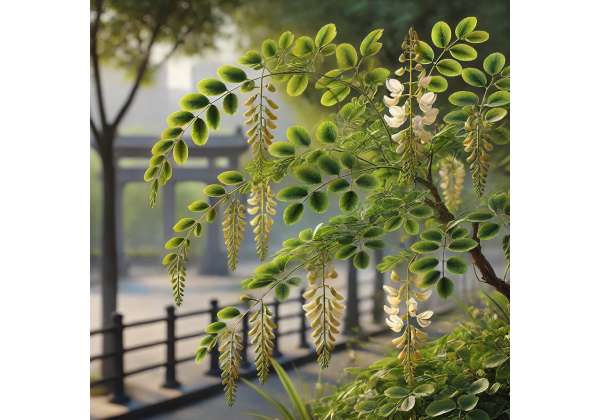
Huai Hua is the dried flower of the pagoda tree, a traditional East Asian medicinal herb best known for its long association with bleeding disorders, hemorrhoids, and vascular fragility. In classical practice, it is valued as a cooling, astringent herb that helps “stop bleeding,” especially when heat or irritation is part of the picture. In modern terms, its reputation rests largely on a rich flavonoid profile, especially rutin and quercetin-related compounds, which help explain why the herb continues to attract interest for capillary support, antioxidant activity, and circulatory health.
What makes Huai Hua especially worth understanding is that it sits between old and new herbal thinking. Traditional medicine emphasizes where bleeding occurs and how the herb is prepared. Modern research emphasizes the chemistry of the flowers and buds, their flavonoid concentration, and the gap between promising lab data and limited human evidence. That balance matters. Huai Hua is not a cure-all, but it is a meaningful herb with a specific identity: cooling, vessel-focused, and most useful when chosen for the right reason and used with sensible caution.
Essential Insights
- Huai Hua is used most often for hemorrhoids, nosebleeds, and other mild bleeding patterns linked to heat or irritated vessels.
- Its best-known compounds are rutin, quercetin, kaempferol, and isorhamnetin, which help explain its vascular and antioxidant profile.
- Traditional decoction use often falls around 5 to 10 g per day, though extracts and formula products vary widely.
- People who are pregnant, breastfeeding, or taking anticoagulants or antiplatelet drugs should avoid self-prescribing concentrated products.
Table of Contents
- What is Huai Hua?
- Key ingredients and actions
- What Huai Hua may help with
- How to use Huai Hua
- How much Huai Hua per day?
- Safety, interactions, and who should avoid it
- What the evidence really says
What is Huai Hua?
Huai Hua refers to the dried flower of Sophora japonica, a tree also widely called the Japanese pagoda tree or Chinese scholar tree. In newer botanical naming, the plant is often placed under Styphnolobium japonicum, but in traditional medicine and much of the supplement world, Sophora japonica remains the name most readers will recognize. That naming overlap matters because product labels, review articles, and herb shops may use either botanical name for the same plant material.
A second distinction is even more important: Huai Hua usually refers to the opened flower, while Huaimi refers to the immature flower bud. Many articles and products blur the two, but classical practice and modern chemistry both suggest the distinction is meaningful. The buds are usually richer in certain flavonoids, especially rutin, and are often preferred when the goal is extraction or stronger hemostatic use. The opened flowers are still medicinal, but the chemistry shifts as the plant matures.
Traditional East Asian herbal medicine classifies Huai Hua as bitter and slightly cold. It is most strongly associated with the large intestine and liver pathways and is used to cool heat, stop bleeding, and calm symptoms such as red, irritated, inflamed vascular tissue. In practice, that often means it appears in formulas for:
- Bleeding hemorrhoids
- Blood in the stool
- Nosebleeds
- Heavy heat-type bleeding patterns
- Red eyes or headache linked to rising heat in classical frameworks
That traditional profile makes Huai Hua more specific than many general “circulation herbs.” It is not simply taken for better blood flow or vague cardiovascular wellness. It is chosen because the vessels seem fragile, hot, inflamed, or prone to bleeding.
The plant’s modern identity is broader. Today, Huai Hua is discussed not only as a traditional herb but also as a source of flavonoids for supplements, food ingredients, and cosmetic applications. Its flower material is especially valued for rutin, a compound long associated with capillary stability and antioxidant effects. That dual identity explains why Huai Hua can appear in both TCM formulas and modern flavonoid extracts.
A practical way to understand the herb is this: Huai Hua is a vessel-focused flower medicine. It is most relevant when the question involves fragile capillaries, irritated veins, mild bleeding patterns, or the broader chemistry of rutin-rich botanicals. Readers comparing it with other vascular herbs sometimes look at better-known vein-support options, but Huai Hua has a more hemostatic and cooling identity than those comparisons suggest.
Key ingredients and actions
The best way to understand Huai Hua is through its flavonoids. While the flowers and buds contain multiple classes of phytochemicals, the compounds that matter most to both traditional reputation and modern research are rutin, quercetin, kaempferol, isorhamnetin, and related flavonoid glycosides. These compounds are the reason Huai Hua is often described as a vascular-supportive and antioxidant herb rather than merely an old bleeding remedy.
Rutin is the signature constituent. In many preparations, especially from immature buds, rutin is present at unusually high levels and is commonly used as a quality marker. This matters because rutin has long been associated with capillary integrity, reduced vascular fragility, and antioxidant protection. It does not act like a prescription clotting medicine, but it helps explain why Huai Hua has such a strong historical connection to bleeding from fragile vessels.
Quercetin is another central compound. It is formed naturally in the plant and can also increase when certain processing methods convert rutin into quercetin. Quercetin attracts interest because it appears to have stronger direct antioxidant and anti-inflammatory activity in some experimental systems. That is one reason processing methods such as roasting are not just cosmetic in traditional herbal practice; they can change the herb’s chemical balance in meaningful ways.
Other notable compounds include:
- Kaempferol and isorhamnetin derivatives
- Phenolic acids
- Minor triterpenes and polysaccharides
- Additional flavonoid glycosides that vary by plant part and maturity stage
There is also a practical difference between flowers and buds. Immature material tends to concentrate the flavonoids that supplement makers and researchers care about most. That is why buds are frequently preferred for extraction, standardization, and industrial processing. Opened flowers remain useful, but they are not always chemically interchangeable with the bud material even when shops market them loosely under the same common name.
From a functional point of view, Huai Hua appears to have several likely actions:
- Capillary-protective
- Mildly hemostatic in traditional use
- Antioxidant
- Anti-inflammatory in preclinical studies
- Astringent and cooling in herbal energetics
This is where nuance matters. A flavonoid-rich herb can sound more powerful than it is. Huai Hua is biologically interesting, but that does not mean every rutin-related claim is clinically proven. Much of the enthusiasm comes from chemistry, cell research, and animal models. The herb deserves respect, but not exaggeration.
A useful comparison is with other rutin-rich plant foods and herbs. Huai Hua stands out because it concentrates those compounds in medicinal flower material rather than in an everyday grain or berry. That concentration is part of its appeal, but it is also why dose, preparation, and safety context matter more than many readers expect.
What Huai Hua may help with
Huai Hua’s traditional uses are fairly focused, and that is one of its strengths. Instead of trying to do everything, it has a recognizable pattern: it is used when blood vessels seem inflamed, delicate, or prone to bleeding. In real-world herbal practice, that makes it most relevant for hemorrhoids, blood in the stool, nosebleeds, and similar mild bleeding presentations where heat, redness, or irritation are part of the picture.
Hemorrhoids are probably the best-known modern entry point. Huai Hua often appears in classic formulas for bleeding hemorrhoids, especially when there is swelling, irritation, or a feeling of heat. That does not mean it is a guaranteed hemorrhoid fix. Lifestyle factors, bowel habits, constipation, fiber intake, and local care still matter. But it helps explain why the herb keeps appearing in both traditional prescriptions and modern supplement discussions.
The second major area is capillary fragility and vascular support. This is less about an emergency bleeding problem and more about the broader logic of rutin-rich plants. Huai Hua is sometimes discussed for fragile vessels, easy bruising, and microvascular resilience, though in practice these uses are much more speculative than the hemorrhoid tradition. It is better to think of the herb as potentially supportive of vessel tone rather than as a treatment for diagnosed vascular disease.
There is also a traditional role in heat-related upward symptoms, such as red eyes, headache, or dizziness. These uses come from classical herbal pattern language rather than modern clinical trials, so they should be understood as part of traditional system logic rather than as directly evidence-based recommendations.
Possible benefit areas include:
- Mild bleeding hemorrhoids
- Blood-streaked stool linked to irritated hemorrhoidal tissue
- Occasional nosebleeds in a heat-type pattern
- General capillary-support interest
- Antioxidant support from flavonoid-rich extracts
What Huai Hua is not well established for is just as important. It is not a proven treatment for uncontrolled hypertension, stroke prevention, severe gastrointestinal bleeding, or serious vascular disease. Those claims often appear because the herb’s chemistry is impressive, but chemistry alone does not equal clinical effectiveness.
A careful reader should also separate traditional hemostatic use from modern flavonoid marketing. The first is specific and rooted in pattern-based herbalism. The second often expands the herb into a broad “circulation” supplement without enough human evidence. The truth sits somewhere in the middle: Huai Hua is plausible for mild, tradition-aligned vascular complaints, but not a substitute for diagnosis or standard care.
For readers comparing it with other astringent or vessel-oriented herbs, some topical and local-care discussions overlap with astringent herbs used around hemorrhoidal discomfort, though Huai Hua is usually taken internally and framed more as a cooling blood-level herb than a purely topical one.
How to use Huai Hua
Huai Hua can be used in several forms, but not every form reflects traditional practice equally well. The classic method is as a decoction or formula ingredient, often combined with other herbs rather than taken alone. In traditional medicine, form and processing matter because the herb may be used raw, lightly stir-fried, or more deeply charred depending on the clinical goal.
Raw Huai Hua is generally associated with cooling and clearing heat. This version is more likely to be chosen when the herbal goal is to calm irritated tissue and reduce heat-related bleeding or redness.
Processed Huai Hua, especially lightly roasted or stir-fried forms, is often chosen when the emphasis is more strongly on stopping bleeding. That distinction is rooted in traditional processing logic, but modern chemistry offers a partial explanation: heating can shift the balance between rutin and quercetin and may alter antioxidant and antimicrobial behavior.
Common modern forms include:
- Dried herb for decoction
- Granules used in TCM practice
- Capsules or tablets standardized for flavonoids
- Multi-herb hemorrhoid or vascular formulas
- Extracts marketed mainly for rutin content
For most readers, the safest entry point is not a high-potency extract but a well-labeled formula or a practitioner-guided product. That is especially true because Huai Hua is often more useful as part of a pattern-based formula than as a stand-alone capsule. In hemorrhoid-focused formulas, for example, other herbs may address bowel movement quality, local congestion, or inflammatory heat while Huai Hua contributes the hemostatic and cooling piece.
A practical use framework looks like this:
- Decide whether the goal is traditional formula use or modern supplement use.
- Choose whole-herb decoction or granules if you are working within TCM.
- Choose standardized products only when the label clearly identifies plant part and extract type.
- Reassess after a short, defined trial rather than taking it indefinitely.
One of the most useful but overlooked points is that Huai Hua is not a casual daily wellness tea for everyone. Its logic is targeted. If you are not dealing with a vascular or bleeding-related issue, a different flavonoid source may make more sense. Readers interested in polyphenol-rich herbs for general antioxidant support may find other vascular polyphenol options more aligned with that goal than a TCM hemostatic flower.
In other words, Huai Hua works best when it is matched to the right pattern and preparation. The herb is specific, and that specificity is part of what makes it useful.
How much Huai Hua per day?
Huai Hua does not have one universal modern dose, and that is the first thing to get right. The proper amount depends on whether you are using the whole flower, the immature bud, a traditional granule, or a flavonoid-standardized extract. It also depends on whether the goal is traditional formula use, mild self-care, or a modern supplement approach.
In traditional decoction practice, a common working range is about 5 to 10 g per day of the dried herb, though some formula traditions may go a little lower or higher depending on the pattern, the other herbs in the prescription, and whether the material is raw or processed. This should be taken as a practical traditional range, not as a modern clinically proven standard.
For granules and extract products, the label becomes the real guide. A product standardized for rutin or total flavonoids may use much smaller weights than a whole-herb decoction because the plant material has been concentrated. This is one of the most common mistakes readers make: they compare grams of raw herb with milligrams of extract as though they mean the same thing. They do not.
A good way to think about dosing is:
- Whole herb: usually measured in grams
- Granules: often lower than whole-herb gram amounts because of concentration
- Capsules/extracts: measured in milligrams, sometimes standardized to flavonoids or rutin
Timing depends on purpose. If Huai Hua is taken in a traditional formula for hemorrhoids or bleeding, it is usually taken as part of a scheduled daytime regimen rather than around bedtime or meals for a special effect. If the goal is modern vascular support, supplement labels often divide the dose once or twice daily.
A practical approach is:
- Start at the low end of the stated range.
- Use a clearly identified product.
- Avoid combining multiple Huai Hua products at once.
- Reassess after two to four weeks unless a clinician suggests otherwise.
Huai Hua is also not a good herb for indefinite self-experimentation. If bleeding symptoms persist, worsen, or recur often, the right next step is evaluation, not escalating the herb. Blood in the stool, repeated nosebleeds, or heavy menstrual bleeding deserve proper assessment.
The smartest dosing principle here is context before quantity. A modest, well-matched dose in a good formula is more rational than a high-dose extract chosen from a marketing page. Traditional herbs often work best when matched to a pattern, not chased upward milligram by milligram.
Safety, interactions, and who should avoid it
Huai Hua is generally considered a relatively low-risk herb when used appropriately, especially in traditional amounts and for short-to-moderate periods. Even so, “generally safe” is not the same as risk-free. The main concerns are not dramatic toxicity in healthy adults, but misuse, overly concentrated extracts, and theoretical drug interactions related to its flavonoid content.
A recent safety review found no serious health risks clearly linked to appropriate supplement use of Japanese Sophora flower or flower bud, which is reassuring. Still, the same review also noted important data gaps, especially in pregnancy and breastfeeding. That means caution, not free permission.
The people who should be most careful include:
- Pregnant or breastfeeding people
- Anyone taking anticoagulants or antiplatelet drugs
- People scheduled for surgery
- Those with recurrent unexplained bleeding
- People using multiple high-flavonoid supplements at once
- Children, unless guided by a qualified practitioner
Why the caution with blood-thinning medicine? Partly because the herb is used in bleeding-related conditions, and partly because flavonoids such as rutin and quercetin may affect platelet behavior or drug handling in ways that are still not fully clarified in clinical practice. That does not prove a dangerous interaction for every user, but it is enough reason not to improvise.
Possible side effects are usually mild when they occur and may include:
- Digestive upset
- Nausea
- Loose stool
- Headache
- Sensitivity to a strong extract
Whole-herb formulas are often better tolerated than aggressive isolates. The herb can also be confusing because its traditional “stops bleeding” reputation may make some readers think it is appropriate for any bleeding problem. It is not. If you are having significant rectal bleeding, black stools, repeated nosebleeds, or unexplained bruising, the correct first step is medical evaluation.
Another important point is duration. Huai Hua makes more sense as a purpose-driven herb than as a permanent daily supplement. Once the reason for use is gone, it is wise to reassess whether you still need it.
If your interest is mainly in a high-rutin supplement for general antioxidant support, a more straightforward nutrient-style product may be easier to dose and monitor. Huai Hua is best used when its traditional pattern and its chemistry both fit the situation.
What the evidence really says
Huai Hua has a respectable evidence base in some areas and a very thin one in others. The strongest evidence is not for dramatic disease treatment, but for composition, traditional use, and plausible vascular and antioxidant actions. The weakest area is high-quality human clinical evidence.
What is fairly solid?
First, the phytochemistry. The flowers and especially the buds are rich in flavonoids, with rutin as the major signature compound in many preparations. Modern analytical work consistently shows that the plant’s chemistry changes with maturity and processing, which supports the traditional idea that buds, flowers, and roasted material are not identical.
Second, the traditional use profile is coherent and longstanding. Huai Hua has been used for hemorrhoids, hematochezia, epistaxis, and related bleeding patterns across Chinese, Japanese, and Korean traditions. That does not prove effectiveness in the way a modern drug trial would, but it is far more meaningful than scattered anecdote.
Third, there is preclinical support. Extracts and isolated compounds show antioxidant, anti-inflammatory, antibacterial, and vascular-related activities in cell and animal studies. These findings make the traditional uses more plausible, especially for irritated vessels and local inflammatory states.
Where does the evidence weaken?
- There are very few strong human trials.
- The best-known hemorrhoid trial used a multi-herb Sophora flower formula, not pure Huai Hua alone.
- Even that trial suggested safety more clearly than strong efficacy.
- There is no strong modern evidence supporting broad claims for hypertension, stroke prevention, or major vascular disease treatment.
This leads to a useful real-world conclusion. Huai Hua is a credible traditional herb with strong phytochemical interest and modest clinical support, not a clinically proven mainstream therapy. It is strongest when used in a narrow lane: mild bleeding-related patterns, hemorrhoid-focused formulas, and flavonoid-based vascular support under thoughtful guidance.
That balance is important because the internet often splits herbs into two extremes: miracle cures or useless folklore. Huai Hua fits neither category. It is better than folklore because the chemistry is real and the tradition is consistent. It is less than a miracle because the human trial data remain limited.
For readers who care about evidence quality, the honest summary is simple: Huai Hua is a good example of a herb that deserves cautious respect. Its plant chemistry is impressive, its traditional uses make sense, and its clinical promise is real but still incomplete.
References
- United States Pharmacopeia comprehensive safety review of Styphnolobium japonicum flower and flower bud 2022 (Review)
- Metabolomic analysis reveals dynamic changes in secondary metabolites of Sophora japonica L. during flower maturation 2022 (Open Access Study)
- Chemical composition and pharmacological properties of Flos sophorae immaturus, Flos sophorae and Fructus sophorae: a review 2023 (Review)
- Sophora japonica L. bioactives: Chemistry, sources, and processing techniques 2024 (Review)
- A randomized, double-blind, placebo-controlled trial of a Chinese herbal Sophora flower formula in patients with symptomatic haemorrhoids: a preliminary study 2012 (RCT)
Disclaimer
This article is for educational purposes only and does not replace medical advice, diagnosis, or treatment. Huai Hua is a traditional herb with a focused but limited clinical evidence base, and it is not appropriate self-treatment for significant or unexplained bleeding. Speak with a qualified healthcare professional before using it if you are pregnant, breastfeeding, taking blood-thinning medicine, preparing for surgery, or managing a chronic vascular or gastrointestinal condition.
If you found this article helpful, please share it on Facebook, X, or any other platform where thoughtful, evidence-aware herbal guidance might help someone else.