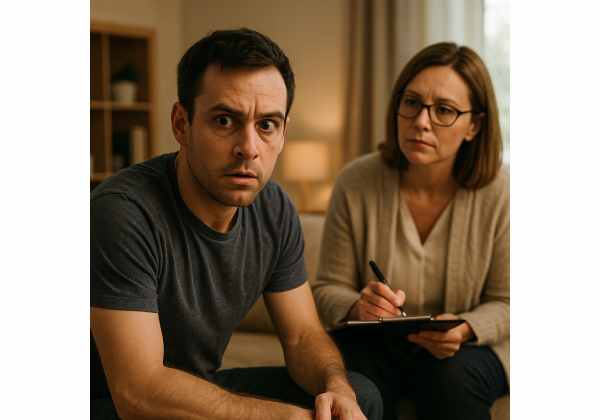
Hypervigilance is a state of heightened watchfulness in which the mind and body stay on alert for possible danger, even when the immediate situation is not clearly unsafe. It can feel like scanning rooms for exits, noticing every sound, reading people’s faces for signs of threat, or being unable to relax because something might go wrong.
This state is not simply “being cautious.” Hypervigilance becomes clinically important when it is intense, persistent, hard to control, and disruptive to sleep, concentration, relationships, work, school, or basic daily comfort. It is most often discussed in relation to trauma and post-traumatic stress disorder, but it can also appear with anxiety disorders, panic symptoms, chronic stress, substance use, certain medical states, and episodes involving suspiciousness or paranoia.
Table of Contents
- What Hypervigilance Means
- Hypervigilance Symptoms and Signs
- Hypervigilance vs Normal Alertness
- Causes and Related Conditions
- Risk Factors for Hypervigilance
- Effects and Complications
- Diagnostic Context and When to Seek Evaluation
What Hypervigilance Means
Hypervigilance means the brain’s threat-detection system is working in an overactive or overly persistent way. A person may feel driven to monitor the environment, other people, body sensations, or possible future danger, even when there is no clear immediate threat.
In ordinary danger, alertness is useful. If a car swerves nearby, a loud crash happens, or someone enters a dark parking lot alone, the body can quickly shift into a protective state. Attention narrows, muscles tense, hearing and vision may feel sharper, and the person prepares to act. This short-term response can help with survival.
Hypervigilance is different because the “danger mode” does not shut off easily. The person may remain on guard long after a threat has passed, or they may detect possible danger in situations that others experience as neutral. This can involve external scanning, such as watching doors, windows, faces, traffic, or crowds. It can also involve internal scanning, such as checking the heart rate, breathing, stomach sensations, dizziness, muscle tension, or signs that panic might begin.
Hypervigilance is often linked with the fight-or-flight response, but it is not limited to a single burst of fear. It can become a background state: a constant readiness for something bad to happen. People may describe it as being “keyed up,” “wired,” “on edge,” “unable to settle,” or “always waiting for the other shoe to drop.”
The experience can be confusing because it may feel protective and exhausting at the same time. On one hand, scanning can create a sense of control: if every risk is noticed early, perhaps danger can be avoided. On the other hand, constant monitoring can reinforce the feeling that danger is everywhere. The more the person scans, the more the mind may find ambiguous cues to worry about.
Hypervigilance is a symptom, not a diagnosis by itself. Its meaning depends on the wider pattern: when it started, what triggers it, whether trauma was involved, whether there are panic attacks, intrusive memories, suspicious beliefs, sleep disruption, substance use, medical symptoms, or mood changes. For example, hypervigilance after a traumatic event may appear alongside PTSD symptoms such as nightmares, avoidance, intrusive memories, emotional numbing, or exaggerated startle. In anxiety disorders, it may appear more as worry, fear of panic, health checking, or constant anticipation of what might go wrong.
A key point is that hypervigilance is not a character flaw, weakness, or attention-seeking behavior. It is a pattern of threat sensitivity that can become deeply distressing and physically draining, especially when the brain continues to treat ordinary situations as unsafe.
Hypervigilance Symptoms and Signs
Hypervigilance can show up in thoughts, body sensations, emotions, and behavior. The most recognizable sign is persistent monitoring for threat, but the full pattern is often broader than “looking around a lot.”
Some people notice mostly physical symptoms. They may feel tense, jumpy, restless, or unable to sit with their back to a door. Others notice mental symptoms, such as racing thoughts, suspicion, difficulty concentrating, or a need to plan escape routes. Still others mainly notice social effects, such as feeling unsafe in groups, overreading tone of voice, or becoming irritable when interrupted.
| Area affected | Possible signs | How it may feel in daily life |
|---|---|---|
| Attention | Scanning rooms, tracking exits, monitoring faces, noticing small sounds | Feeling unable to focus because attention keeps shifting toward possible danger |
| Body | Muscle tension, racing heart, sweating, shallow breathing, stomach tightness | Feeling physically braced even when sitting still or trying to rest |
| Startle response | Jumping at noises, flinching at movement, strong reactions to surprise | Feeling embarrassed, shaken, or angry after being startled |
| Sleep | Light sleep, trouble falling asleep, waking to small noises, checking locks | Feeling too unsafe or alert to fully switch off at night |
| Social perception | Reading hidden meaning into expressions, tone, silence, or delayed replies | Feeling tense around others because their intentions seem uncertain |
| Behavior | Avoiding crowds, sitting near exits, repeatedly checking surroundings | Planning ordinary activities around safety, visibility, or escape |
Hypervigilance may also include emotional signs such as irritability, impatience, fear, anger, shame, dread, or a strong need to control the environment. A person may become upset when plans change, when people stand too close, when rooms are noisy, or when they cannot see what is happening around them.
The signs can be subtle. A person may appear calm but be internally tracking every movement in a room. They may laugh, work, care for others, and meet responsibilities while feeling constantly braced. In other cases, hypervigilance is more visible: pacing, checking windows, repeatedly asking for reassurance, startling easily, or leaving places abruptly.
Hypervigilance can overlap with sensory sensitivity. Bright lights, sudden noises, crowded spaces, strong smells, or chaotic environments may feel unbearable because the nervous system is already alert. This can be especially noticeable in people who also experience nervous system dysregulation, trauma-related symptoms, panic, or neurodevelopmental sensory differences.
It can also overlap with dissociative symptoms. Some people shift between being intensely alert and feeling unreal, numb, distant, or disconnected. This contrast can be confusing: the person may feel both too aware of danger and strangely detached from the present moment. When that pattern occurs after trauma, it may be useful to understand how dissociation can interact with threat responses.
The most important clinical clues are persistence, intensity, context, and impairment. Occasional caution in an unsafe environment is expected. Hypervigilance becomes more concerning when it appears in safe or ordinary settings, lasts beyond the immediate stressor, causes significant distress, or limits the person’s life.
Hypervigilance vs Normal Alertness
Normal alertness helps a person notice real risks and respond appropriately. Hypervigilance is more likely when alertness is excessive, difficult to turn off, disproportionate to the situation, or based on an ongoing expectation of threat.
The difference is not always obvious from the outside. Context matters. Someone walking alone at night in an unfamiliar area may reasonably pay closer attention to surroundings. A security worker, emergency responder, new parent, or person in an active crisis may also need a higher level of monitoring for a period of time. In these cases, alertness is tied to a realistic demand.
Hypervigilance tends to continue when the demand is no longer present. A person may feel unsafe in a quiet living room, a familiar office, a grocery store, a classroom, a parked car, or a conversation with someone they trust. The body responds as if danger is near, even when the person intellectually knows they are probably safe.
Several distinctions can help clarify the pattern:
- Normal alertness rises and falls with the situation. Hypervigilance often remains high across many settings.
- Normal alertness improves decision-making. Hypervigilance can make it harder to think clearly because attention is split between the task and threat scanning.
- Normal alertness is flexible. Hypervigilance can feel rigid, urgent, or compulsive.
- Normal alertness usually fades after reassurance or safety checks. Hypervigilance often returns quickly, even after the person checks locks, exits, symptoms, messages, or other cues.
- Normal alertness does not usually damage sleep, relationships, or daily functioning. Hypervigilance often does.
Hypervigilance is also different from careful planning. A person can be safety-conscious without being stuck in alarm. For example, locking the door once at night is ordinary. Repeatedly checking the lock because the body still feels unsafe may point toward hypervigilance, especially if the checking becomes hard to resist.
It is also different from healthy intuition. Intuition is usually a quick signal that helps a person pause and assess. Hypervigilance is more consuming. It can generate many possible dangers at once, including dangers that are vague, unlikely, or based on ambiguous cues. The person may feel compelled to keep searching for certainty.
The distinction from paranoia can be particularly important. Hypervigilance involves heightened watchfulness and threat sensitivity. Paranoia involves intense suspiciousness or beliefs that others intend harm, especially when those beliefs become fixed despite evidence to the contrary. The two can overlap, and severe hypervigilance can sometimes look like paranoia. However, a person who says, “I know I may be overreacting, but I feel unsafe,” is describing a different kind of experience than someone who is fully convinced others are plotting against them.
A similar distinction applies to panic. A person with panic symptoms may become hypervigilant toward body sensations, watching for a racing heart, dizziness, chest tightness, or shortness of breath. This can make panic attacks feel more likely because attention keeps returning to sensations that are interpreted as dangerous.
In short, hypervigilance is not defined by one behavior. It is defined by the combination of high threat monitoring, difficulty relaxing, disproportionate alarm, and meaningful distress or impairment.
Causes and Related Conditions
Hypervigilance can develop when the brain learns, expects, or repeatedly rehearses danger. Trauma is one of the most common contexts, but hypervigilance can also be connected to anxiety, panic, chronic stress, sleep disruption, substance effects, psychosis-spectrum symptoms, and medical or neurological conditions.
Trauma-related hypervigilance may follow experiences involving threat, helplessness, violation, injury, sudden loss, violence, abuse, assault, combat, accidents, disasters, or repeated exposure to danger. In PTSD, hypervigilance belongs to the arousal and reactivity cluster, along with exaggerated startle, irritability, sleep problems, concentration difficulty, and reckless or self-destructive behavior. People with complex PTSD symptoms may also experience a persistent sense of current threat, especially after prolonged or repeated interpersonal trauma.
Anxiety disorders can also involve threat scanning. In generalized anxiety, the person may monitor for signs that something will go wrong. In social anxiety, attention may lock onto facial expressions, tone of voice, posture, or signs of rejection. In health anxiety, the focus may shift inward toward body sensations. In panic disorder, the person may become highly alert to physical changes that could signal another panic attack. These patterns often sit within a wider set of anxiety symptoms and triggers.
Obsessive-compulsive symptoms can sometimes resemble hypervigilance, especially when a person feels driven to check for danger, contamination, harm, mistakes, or moral risk. The difference depends on the underlying pattern: OCD usually involves intrusive obsessions and repetitive compulsions performed to reduce distress or prevent a feared outcome.
Hypervigilance may also occur during chronic stress or ongoing unsafe conditions. Someone living with domestic violence, stalking, bullying, housing instability, discrimination, community violence, or unpredictable caregiving may be alert because danger is not only remembered but still possible. In those settings, watchfulness may be partly adaptive. The concern is that the threat response may remain active even when circumstances later become safer.
Sleep loss can intensify threat sensitivity. Poor sleep makes the brain less efficient at regulating emotion, interpreting ambiguous information, and filtering irrelevant stimuli. A person who is exhausted may startle more easily, misread neutral cues, or feel less able to calm the body after a stressor.
Substances and medications can also contribute. Stimulants, intoxication, withdrawal states, high caffeine intake, some decongestants, certain recreational drugs, and abrupt changes in sedating substances can increase arousal, suspiciousness, panic-like symptoms, or insomnia. This does not mean the symptom is “not real.” It means the timing and substance history matter in understanding the cause.
Medical and neurological factors may be relevant when hypervigilance appears with sudden confusion, fainting, seizures, severe headache, fever, thyroid symptoms, medication toxicity, delirium, traumatic brain injury, or major changes in personality or awareness. These situations require diagnostic caution because psychiatric-looking symptoms can sometimes have medical contributors.
Psychosis-spectrum conditions are another important diagnostic consideration. Hypervigilance can overlap with suspiciousness, but fixed delusions, hallucinations, disorganized speech, marked confusion, or a clear break from reality point to a different level of concern. In those situations, a psychosis evaluation may be needed to understand what is happening.
Risk Factors for Hypervigilance
Hypervigilance is more likely when a person has been exposed to danger, learned that safety is unpredictable, or has a nervous system that remains highly reactive after stress. No single risk factor guarantees it, and people with similar experiences can respond very differently.
A major risk factor is exposure to trauma, especially repeated, interpersonal, early-life, or inescapable trauma. Events involving betrayal, powerlessness, violence, sexual assault, childhood abuse, neglect, captivity, war, forced displacement, or repeated threat can train attention toward danger. The person may become skilled at noticing tiny shifts in mood, sound, movement, or tone because those cues once mattered.
Previous trauma can increase risk after later events. A person who has already lived through danger may have a lower threshold for alarm when another stressful or threatening situation occurs. This is not because they are “too sensitive” in a dismissive sense. It may reflect a threat system shaped by past experience.
Ongoing stress also matters. Financial insecurity, unsafe relationships, chronic conflict, discrimination, high-pressure caregiving, unstable housing, legal stress, or workplace bullying can keep the body in a prolonged state of readiness. When stress does not let up, the line between realistic vigilance and persistent hypervigilance can blur.
Certain personal and family histories may increase vulnerability. A history of anxiety, depression, PTSD, substance use disorder, sleep disorder, or other mental health condition can make threat responses more intense or persistent. Family history may also matter, partly through genetics and partly through the emotional environment in which a person learned about safety, danger, and trust.
Temperament can contribute. Some people are naturally more sensitive to sensory input, uncertainty, conflict, or emotional shifts in other people. In a safe and stable environment, that sensitivity may be manageable or even useful. Under chronic threat or after trauma, it can become part of a hypervigilant pattern.
Occupational exposure is another risk factor. Military personnel, police, firefighters, emergency medical workers, health care workers, journalists covering violence, humanitarian workers, and people in other high-risk roles may repeatedly encounter danger or distress. The body may learn to remain prepared even after the shift ends.
Social support after trauma can influence risk. People who are believed, protected, and supported after a frightening event may be less likely to remain stuck in a state of threat. People who are blamed, isolated, ignored, or forced to keep functioning as if nothing happened may have more persistent symptoms.
Age and developmental stage can shape the presentation. Children may not describe hypervigilance as “being on guard.” They may show clinginess, irritability, sleep problems, stomachaches, aggression, withdrawal, or intense reactions to separation, noise, or reminders. Teens may appear angry, defiant, numb, risk-taking, or overly controlling, while the underlying feeling is fear or unsafety.
Risk factors are best understood as context, not destiny. Hypervigilance usually develops through a combination of biology, learning, stress exposure, environment, and meaning. Understanding those factors can help explain why the symptom exists without blaming the person for having it.
Effects and Complications
Persistent hypervigilance can wear down the body, narrow daily life, and strain relationships. Even when it begins as a protective response, staying on alert for too long can become costly.
Sleep is often one of the first areas affected. A person may have trouble falling asleep because silence feels unsafe, or they may wake repeatedly to small noises. They may sleep lightly, position themselves to monitor the room, check doors and windows, or avoid sleeping in unfamiliar places. Over time, poor sleep can worsen irritability, concentration problems, memory lapses, pain sensitivity, anxiety, and mood symptoms.
Concentration can suffer because attention keeps being pulled toward potential threat. Reading, driving, studying, working, or following conversations may become harder. A person may miss details not because they do not care, but because part of the mind is busy tracking exits, sounds, body sensations, other people’s moods, or possible danger.
Relationships can become strained. Hypervigilance may lead someone to misread neutral expressions as anger, delayed replies as rejection, or ordinary changes in tone as warning signs. The person may ask for reassurance, withdraw suddenly, become irritable, avoid intimacy, or need control over plans and surroundings. Loved ones may feel confused if they do not understand that the behavior is driven by threat sensitivity rather than lack of trust or affection.
Hypervigilance can also lead to avoidance. A person may stop going to restaurants, events, public transit, stores, classrooms, family gatherings, medical appointments, or unfamiliar places because the monitoring feels unbearable. Avoidance may reduce distress in the short term, but it can gradually shrink the person’s life.
Physical complications can include chronic muscle tension, headaches, jaw clenching, stomach upset, fatigue, chest tightness, sweating, trembling, and a persistent sense of being unable to rest. These symptoms can be especially frightening when the person interprets them as signs of immediate danger, illness, or loss of control.
Emotional complications may include anger, shame, guilt, sadness, or emotional numbness. Some people feel embarrassed by their startle response or frustrated that they cannot “just relax.” Others feel ashamed because they know their reactions may not match the present situation, yet the body still reacts powerfully.
Hypervigilance can also increase the risk of substance misuse when alcohol, sedatives, cannabis, stimulants, or other substances are used to alter alertness, sleep, fear, or emotional pain. Substance use can then worsen sleep, anxiety, mood instability, and suspiciousness, creating a more complicated cycle.
In trauma-related conditions, hypervigilance may interact with intrusive memories, avoidance, negative beliefs, emotional numbing, and exaggerated startle. In anxiety disorders, it may reinforce worry and fear. In conditions involving paranoia or psychosis, it may intensify mistrust and the sense that threats are hidden everywhere.
The seriousness of hypervigilance depends on impact. A mild pattern may be uncomfortable but manageable. A severe pattern can become disabling, especially when the person cannot sleep, work, study, travel, maintain relationships, or feel safe in ordinary settings.
Diagnostic Context and When to Seek Evaluation
Hypervigilance is evaluated by looking at the whole clinical picture, not by the symptom alone. A clinician may ask when it began, what situations trigger it, whether trauma occurred, how long it has lasted, and whether it appears with sleep problems, panic, intrusive memories, avoidance, suspicious beliefs, substance use, mood symptoms, or medical changes.
The timeline is important. Hypervigilance immediately after a frightening event may be part of an acute stress response. If trauma-related symptoms last beyond a month and interfere with daily life, PTSD may be considered. If symptoms center on worry, panic, social fear, health concerns, or compulsive checking, an anxiety or obsessive-compulsive pattern may be more relevant. If there are fixed false beliefs, hallucinations, disorganized thinking, or major changes in reality testing, a psychosis-spectrum or medical evaluation becomes more urgent.
A mental health evaluation may include clinical interview questions, symptom checklists, trauma history, safety screening, substance use history, sleep assessment, and review of medical issues or medications. Screening tools can help organize symptoms, but they do not diagnose the cause by themselves. Results need interpretation in context, especially when several conditions overlap. A broader mental health screening may be one part of that process.
Professional evaluation is especially important when hypervigilance is new, severe, worsening, or associated with major changes in behavior. It also matters when a person is avoiding important parts of life, sleeping very little, using substances to get through the day, feeling persistently unsafe, or experiencing intense distress after reminders of trauma.
Urgent evaluation may be needed if hypervigilance occurs with thoughts of suicide or harming someone else, inability to stay safe, command hallucinations, severe paranoia, confusion, delirium-like symptoms, mania, intoxication or withdrawal, recent head injury, seizures, chest pain, fainting, or sudden neurological symptoms. In those situations, it is appropriate to seek emergency help or use local crisis services. A guide on when to go to the ER for urgent mental health or neurological symptoms can be relevant when symptoms feel unsafe or medically unclear.
For children and teens, evaluation is important when hypervigilance appears as persistent fearfulness, aggression, sleep disruption, school refusal, regression, self-harm talk, severe separation distress, or repeated physical complaints without a clear explanation. Children may not have the language to describe feeling on guard, so behavior and context carry extra weight.
For adults, evaluation is particularly important when the symptom follows trauma, interferes with work or relationships, leads to isolation, or begins suddenly without a clear psychological explanation. Sudden onset in later life, especially with confusion, memory changes, neurological symptoms, medication changes, or substance exposure, deserves careful medical consideration.
Hypervigilance can be distressing, but it is also understandable. It often reflects a threat system that has learned to stay prepared. The diagnostic task is to understand why that system is active, what else is happening, and whether the pattern signals trauma-related distress, anxiety, another mental health condition, substance effects, medical factors, or a combination of causes.
References
- Post-traumatic stress disorder 2024 (Fact Sheet)
- PTSD and DSM-5 2025 (Clinical Reference)
- Posttraumatic Stress Disorder 2024 (Clinical Review)
- Anxiety disorders 2025 (Fact Sheet)
- Post-traumatic stress disorder 2025 (Guideline)
- Attention to threat in posttraumatic stress disorder as indexed by eye-tracking indices: a systematic review 2019 (Systematic Review)
Disclaimer
This information is for general educational purposes only and is not a substitute for professional medical advice, diagnosis, or treatment. Hypervigilance can have several causes, including trauma-related, anxiety-related, substance-related, and medical factors, so persistent, severe, sudden, or unsafe symptoms should be evaluated by a qualified health professional.
Thank you for taking the time to read this guide; sharing it may help someone better understand a difficult and often misunderstood state of constant alertness.