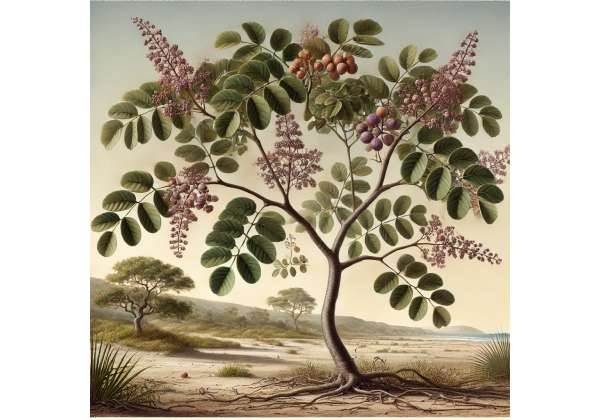
Indian beech, Millettia pinnata, is a coastal and tropical legume tree better known in older herbal and botanical texts as Pongamia pinnata or karanja. It has a long history in South Asian traditional medicine, where the leaves, bark, roots, flowers, and especially the seed oil have been used for skin complaints, wound care, digestive discomfort, and inflammatory conditions. What makes the tree especially interesting is its unusual double identity: it is both a medicinal plant and an industrial oilseed species. That overlap has drawn modern researchers toward its chemistry, particularly its flavonoids, fixed oils, and bioactive compounds such as karanjin and pongamol.
The most realistic way to understand Indian beech is to see it as a traditional remedy with promising laboratory and animal data, strongest external uses, and limited human clinical guidance. Its most practical modern role is in cautious, topical, and research-informed use, not casual self-dosing. For readers who want an honest overview, the key questions are not only what it may help with, but also how much uncertainty still surrounds it.
Core Points
- Indian beech is best known for traditional skin, wound, and itch-related uses.
- Laboratory and animal studies suggest anti-inflammatory, antimicrobial, and glucose-lowering potential.
- Experimental animal studies often use roughly 100 to 400 mg/kg extracts, but no validated human medicinal dose exists.
- Seed oil and concentrated extracts should be approached cautiously, especially for oral use.
- People who are pregnant, breastfeeding, using glucose-lowering medicines, or prone to skin reactions should avoid self-medicating.
Table of Contents
- What is Indian beech
- Key compounds and actions
- Does Indian beech help
- How Indian beech is used
- How much to use
- Safety and who should avoid it
- What the evidence really says
What is Indian beech
Indian beech is a medium-sized tree in the legume family, Fabaceae. It grows across India, Sri Lanka, Southeast Asia, and other tropical coastal regions, where it is valued for shade, soil stabilization, seed oil, and traditional medicine. The name can be confusing because the plant is widely known by more than one botanical label. In current usage, Millettia pinnata is accepted, while Pongamia pinnata still appears in much of the medical and ethnobotanical literature. In practical terms, readers researching the herb should treat both names as referring to the same plant.
Traditional systems do not usually reduce Indian beech to a single “active part.” Different parts are used for different purposes. The leaves have been described as bitter, digestive, and useful in folk care for cough, dyspepsia, and skin complaints. Bark has a long reputation in wound and ulcer formulas. Roots have been associated with oral hygiene and local cleansing uses. Flowers and seeds appear in older texts for metabolic and inflammatory concerns. The seed oil, often called karanja oil, is the most recognizable preparation in modern commerce.
That oil is important because it shapes how the plant is perceived today. Indian beech is not only a medicinal tree; it is also a major non-edible oilseed crop linked to biodiesel, agricultural use, and green chemistry. That industrial side has increased interest in seed composition and bioactive fractions, but it has also created confusion. A plant can be medicinally interesting and still not be a simple wellness supplement. In Indian beech, that tension is central.
Traditionally, the strongest reputation of the plant is external rather than internal. It has been used for chronic itchy skin, minor wounds, ulcers, scalp problems, and difficult-to-manage skin conditions. That pattern matters. It suggests that traditional healers often treated Indian beech as a strong-working plant to be applied carefully rather than as a casual daily tonic. That is still a useful way to think about it.
Another practical point is sourcing. Because Indian beech products can come from crude seed oil, cosmetic oils, standardized extracts, or non-medicinal industrial streams, product quality can vary widely. A bottle labeled “karanja oil” may be intended for cosmetic blending, agricultural application, or experimental natural care, not necessarily internal use. For readers, that means identity and preparation matter as much as the plant name itself.
Seen clearly, Indian beech is a multi-use medicinal tree with a strong traditional skin-care identity, expanding pharmacology, and important safety limits. It is promising, but it is not simple.
Key compounds and actions
Indian beech has a rich phytochemical profile, and much of its medicinal reputation comes from that chemical complexity. The plant contains flavonoids, furanoflavonoids, chalcones, fixed oils, sterols, terpenes, and fatty acids. Among the best-known named compounds are karanjin and pongamol, two constituents repeatedly discussed in the literature because they appear to contribute to antioxidant, antimicrobial, anti-inflammatory, and metabolic effects.
Karanjin is especially important. It is often treated as a marker compound for Indian beech seed material and oil. It is also one reason the plant cannot be discussed as though it were a mild kitchen herb. Karanjin is pharmacologically active, which may help explain some traditional benefits, but the same property is part of the reason internal use deserves caution. Pongamol has a similar double role: it attracts interest as a bioactive molecule while also reminding us that potency and safety are inseparable.
The plant contains many other flavonoid-type compounds as well, including examples such as pongapin and pongachromene reported from bark and seed-associated material. These compounds do not need to be memorized to understand the herb, but they help explain why Indian beech behaves like more than just a fatty seed oil. It is chemically layered.
The seed oil also contains common fatty acids, including oleic, linoleic, palmitic, and stearic acids. Those lipids influence texture, absorption, oxidation behavior, and formulation stability. In practical use, they help explain why karanja oil appears in soaps, balms, skin oils, and scalp products. But the oil’s action cannot be reduced to fatty acids alone. The medically interesting effects are more closely tied to the flavonoid-rich fraction and associated phenolic chemistry.
Based on the research so far, the most plausible action categories are:
- Anti-inflammatory activity, especially in animal and cell models.
- Antimicrobial activity, including activity against selected bacteria and fungi.
- Antioxidant effects, likely tied to flavonoids and phenolic compounds.
- Wound-support potential, especially in topical and preclinical settings.
- Antihyperglycemic potential, suggested in animal studies and compound-isolation work.
This chemistry also places Indian beech beside other botanicals that combine polyphenols with strong traditional topical use. In that sense, it shares some conceptual ground with curcuma’s anti-inflammatory plant chemistry, where multiple compounds contribute to a broad but still interpretation-dependent pharmacological picture.
A useful insight here is that Indian beech does not behave like a one-compound herb. Its traditional profile likely emerged from the interplay between fatty material, bitter principles, and flavonoid-rich actives. That kind of layered chemistry often produces wide-ranging claims online, but it should really encourage more precision. The plant may be active in many directions, yet the form, dose, and route of use change the outcome dramatically. Oil, bark paste, leaf extract, and isolated karanjin are not the same medicine.
Does Indian beech help
Indian beech may help, but the most credible benefits are narrower than broad marketing claims suggest.
Its strongest traditional and experimental case is in skin and wound-related care. Older medical traditions and newer preclinical studies both point in this direction. The plant has been used for itchy skin, chronic lesions, ulcers, and difficult minor wounds, and several studies support antimicrobial and wound-healing activity in extracts or topical formats. This does not mean it is a proven replacement for standard dermatologic care, but it does make skin support the most believable place to begin.
The second major area is inflammation. Extracts and isolated compounds have shown anti-inflammatory effects in vitro and in animal models. That can matter for skin irritation, local swelling, and perhaps some pain-related traditional uses. Still, the evidence is not strong enough to treat Indian beech as a general-purpose anti-inflammatory supplement for daily oral use.
A third promising area is metabolic support, especially blood sugar regulation. Animal studies and compound-based experiments suggest antihyperglycemic activity, particularly from karanjin and pongamol and from certain bark or fruit fractions. This is scientifically important, but it should not be confused with clinical proof. People with diabetes should see these findings as early-stage evidence, not as a green light to self-treat with seed oil or improvised extracts.
Antimicrobial action is another recurring theme. Extracts from the plant have shown activity against selected microbes, which may partly explain its traditional role in skin and wound care. That said, petri-dish activity is not the same as clinical infection control. It supports plausibility, not certainty.
Realistic potential benefits may include:
- support for minor skin irritation and local microbial balance,
- experimental wound-healing support,
- modest anti-inflammatory potential,
- early metabolic interest in preclinical work.
Less realistic claims include curing chronic skin disease, replacing diabetic care, serving as a validated daily immune tonic, or acting as a proven oral anti-inflammatory medicine. Indian beech is not best understood as a general health booster. It is a strong traditional tree medicine with areas of real promise, but also with important limits.
A helpful comparison is with traditional neem skin care. Both plants have deep roots in South Asian practice, both are often discussed for difficult skin conditions, and both require more respect than many “natural remedy” summaries allow. Indian beech may well help in the right context, especially topically, but its best uses are selective, not universal.
That distinction is important because people often turn to traditional herbs when standard care has been frustrating. Indian beech deserves a place in that conversation, especially for external use, but it works best when treated as a focused tool rather than an all-purpose answer.
How Indian beech is used
Indian beech is used in several forms, but not all of them are equally practical or equally safe.
The most familiar preparation is seed oil, often sold as karanja oil. In traditional practice and modern natural-care products, this oil is mainly used externally. It appears in skin oils, soaps, balms, scalp products, and protective formulations. Its thick texture and strong smell can be a surprise to first-time users, which is one reason it is often blended rather than used alone.
Leaf preparations have also been important historically. Folk use includes leaf juice, leaf paste, and decoctions for skin, digestive, or cough-related complaints. The leaves are easier to prepare than seeds and often play a more accessible role in household medicine. Bark has a particularly strong place in wound traditions, and in some South Asian practices it is mentioned for ulcers and difficult skin lesions.
Roots and flowers appear more in classical or regional literature than in modern consumer use. Roots have been connected with gum and dental cleansing traditions, while flowers have occasionally been associated with metabolic and digestive uses. These parts are interesting, but they are much less standardized in the modern marketplace.
A practical modern use framework looks like this:
- Topical finished product
This is the most realistic current format for most users. It may include karanja oil in a cream, balm, or diluted skin oil. - Traditional external preparation
This includes paste, wash, or local application made from leaves or bark, though quality control is a challenge. - Research-style extract
This is how many laboratory findings are generated, but it is not the same thing as a home remedy. - Oral traditional use
This exists historically, but it is the least straightforward and the least suitable for casual self-experimentation.
The biggest modern mistake is assuming that because a plant has broad traditional use, every part should be taken internally. Indian beech is not that kind of beginner herb. Its oil is generally treated as non-edible in ordinary practical use, and its internal preparations are not well standardized for today’s consumers.
For readers looking mainly for topical botanical care, Indian beech is closer to a specialized traditional skin oil than to a daily tea herb. In that sense, it is more comparable to tea tree in carefully formulated topical products than to a gentle digestive infusion. The route of use shapes everything.
Another key point is duration. External use is usually brief and problem-focused, not indefinite. Traditional formulas were often used for a condition, then stopped or adjusted. That logic still makes sense. Indian beech is best approached with a reason, a limited area of use, and a clear stop point if irritation occurs.
In short, Indian beech is usually used best from the outside in, not the other way around.
How much to use
There is no validated modern human medicinal dose for Indian beech.
That is the single most important dosage fact, and it should stay at the center of any responsible discussion. Unlike more standardized herbs, Indian beech does not have a well-established adult dose for capsules, teas, tinctures, or oils based on strong human clinical trials. As a result, many precise dose claims online are either borrowed from traditional practice without context or taken from animal studies that do not translate directly into safe human use.
What we do have is a mix of experimental dosing and traditional-use patterns.
In laboratory and animal studies, Indian beech extracts and fractions have often been tested in ranges such as 100 to 400 mg/kg, depending on the model and plant part. Anti-inflammatory and antihyperglycemic studies commonly fall into this type of range. These numbers are useful for science, but they are not ready-made recommendations for people. Converting an animal dose into a human dose requires far more than simple arithmetic. Extract type, route, purity, and active-compound concentration all matter.
For topical work, older wound-healing research has explored ointment-style preparations rather than oral dosing. This is more aligned with the plant’s traditional strength. Even here, however, study formulations are not the same as a consumer recommendation. A research ointment made with bark extract under controlled conditions is not interchangeable with raw seed oil or an improvised kitchen preparation.
A sensible way to think about dosage is by route:
- Oral dose: not established for routine self-care.
- Topical dose: depends entirely on the finished formula and concentration.
- Animal-study dose: informative, but not a personal-use guide.
- Traditional use: relevant historically, but too variable to standardize safely on its own.
Timing and duration matter too. If Indian beech is used topically, it usually makes more sense as a short-term, targeted application rather than a permanent daily routine. If irritation, burning, or worsening rash occurs, the plant is not “purging” the skin; it is probably not being tolerated well.
For oral use, the safest answer is restraint. The seed oil especially should not be treated as a casual supplement. Bitter plant preparations from bark or leaves may exist in traditional practice, but without proper training or product standardization, there is too much room for confusion.
So how much should a person use? In practical terms, only as much as a clearly labeled external product directs, or as guided by a qualified practitioner familiar with the herb. In Indian beech, the absence of a standard dose is not a missing detail. It is a central part of the safety profile.
Safety and who should avoid it
Indian beech deserves more caution than its traditional familiarity might suggest.
One reason is that its best-known medicinal form, karanja oil, is chemically active enough to be useful and irritating at the same time. Strong topical oils often sit in that middle ground. They may help some skin problems, yet still cause burning, redness, allergy, or barrier disruption in others. That is why patch testing matters, especially for people with eczema-prone skin, fragrance sensitivity, or a history of reacting to botanical oils.
A second reason is that Indian beech is not a validated oral wellness oil. The seeds and seed fractions contain bioactive compounds, including karanjin and pongamol, that draw scientific interest but also complicate safety. Traditional use does include internal applications of certain parts, but that does not mean casual oral self-dosing is wise. For most modern readers, the plant is safer to discuss as a topical or practitioner-guided herb than as a home supplement.
People who should be especially cautious include:
- pregnant or breastfeeding people, because reliable human safety data are lacking,
- children, because there is no established therapeutic dose,
- people with diabetes, because preclinical glucose-lowering activity could theoretically interact with treatment,
- those with chronic liver or digestive problems, because internal tolerability is not well defined,
- people with sensitive or damaged skin, because topical irritation is possible,
- anyone with known allergy to plant oils or legume-related botanicals.
Possible adverse effects may include:
- skin irritation or rash,
- burning or stinging on application,
- stomach upset with inappropriate internal use,
- unpredictable response with crude seed oil,
- interaction risk when combined with glucose-lowering therapy.
Another important safety issue is product quality. Some karanja oils are made for cosmetics, some for agricultural or protective uses, and some for industrial purposes. Those are not interchangeable. A product intended for crops or external repellent use is not automatically appropriate for skin, much less for internal use.
This is one reason many people prefer gentler, more standardized topical options unless there is a clear reason to choose Indian beech. For routine skin support, some users are more comfortable with tamanu-based skin oils or other better-known topical botanicals. Indian beech can be effective, but it is not the most forgiving starting point.
In real life, safe use comes down to three habits: know the product, limit the area of use, and stop early if the skin objects. With Indian beech, caution is not pessimism. It is part of competent herbal use.
What the evidence really says
The evidence for Indian beech is promising, but it is still mostly preclinical.
That means the plant has a meaningful traditional record, a well-described phytochemical profile, and multiple animal or laboratory studies suggesting real biological activity. What it does not yet have is a large, reliable human evidence base that would support confident mainstream dosing or broad therapeutic claims.
The strongest evidence clusters around three themes:
- traditional skin and wound use,
- anti-inflammatory and antimicrobial activity,
- metabolic effects in animal models.
This is a credible foundation, but it is not the same as clinical certainty. A wound-healing animal study, a bark-paste case report, and a glucose-lowering rat experiment are valuable signals. They tell researchers where to look next. They do not automatically tell a patient what to apply, swallow, or repeat for three months.
The evidence hierarchy is especially important here because Indian beech is easy to oversell. It has so many traditional indications that readers can come away with the impression that it treats nearly everything: wounds, piles, diabetes, cough, gums, skin disease, inflammation, infection, and more. In a sense, that breadth is historically real. But broad traditional use does not mean every indication has equal modern support.
What seems most convincing today is this:
- the plant is rich in active compounds,
- topical and external applications make the most sense,
- laboratory findings support its old reputation for skin and inflammatory problems,
- metabolic effects are interesting but not ready for self-treatment,
- human dosing remains poorly defined.
That last point deserves emphasis. The gap between “pharmacologically active” and “clinically usable” is where many herbal misunderstandings happen. Indian beech has crossed the first threshold. It has not fully crossed the second.
Still, the tree is important. It is a good example of how traditional medicine can point science toward worthwhile compounds and formulations. Karanjin and pongamol remain active areas of interest, and modern extraction work suggests the plant may continue to yield new applications. But that future promise should not be confused with current proof.
So what does the evidence really say? Indian beech is a serious medicinal plant in traditional practice, a chemically rich source of bioactive compounds, and a plausible topical and anti-inflammatory botanical. It may one day have stronger clinical uses. For now, the best-supported position is respectful, selective, and cautious.
References
- Medicinal uses, phytochemistry and pharmacology of Pongamia pinnata (L.) Pierre: a review 2013 (Review)
- Pongamia Pinnata: An Heirloom Herbal Medicine 2023 (Review)
- Anti-inflammatory activity and phytochemical analysis of Macaranga peltata Boiv. Ex Baill. leaves and Pongamia pinnata (L.) Pierre. seeds 2025
- Wound healing potential of bark paste of Pongamia pinnata along with hirudotherapy: A case report 2021 (Case Report)
- Scalable extraction of pongamol from Pongamia pinnata for synthesis and application of colloidally stable iron nanoparticles 2025
Disclaimer
This article is for educational purposes only and does not replace medical advice, diagnosis, or treatment. Indian beech is a traditional medicinal tree with promising preclinical research, but it does not have a well-established human dosing standard for general self-care. Seed oil and concentrated extracts can be irritating or inappropriate for internal use. Seek qualified medical guidance before using Indian beech if you are pregnant, breastfeeding, treating diabetes, managing chronic skin disease, or considering use on children or large areas of damaged skin.
Please share this article on Facebook, X, or your preferred platform if you found it useful.