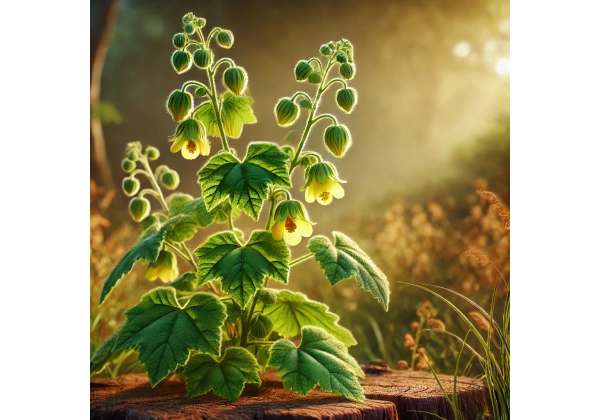
Indian mallow, Abutilon indicum, is a soft, shrubby member of the mallow family that has been used for centuries in Ayurveda, Siddha, and regional folk medicine. It is often called atibala or country mallow, and nearly every part of the plant appears in traditional practice, including the leaves, roots, bark, seeds, and flowers. What makes Indian mallow notable is not one dramatic modern claim, but its broad traditional role as a soothing, restorative herb for inflammation, wounds, urinary discomfort, digestive upset, and general weakness. Modern research gives that history some support by identifying flavonoids, phenolics, sterols, and other compounds linked to antioxidant, anti-inflammatory, antimicrobial, and glucose-regulating activity.
At the same time, Indian mallow is not a fully standardized clinical herb. Most evidence still comes from laboratory and animal work, not large human trials. That means the most responsible way to use it is with measured expectations: respect its long medicinal history, pay attention to the route of use, and avoid treating preclinical findings as proof of a validated daily supplement.
Key Facts
- Indian mallow is best known for traditional use in skin care, wound support, and soothing inflammatory complaints.
- Early research suggests antioxidant, anti-inflammatory, and glucose-regulating potential.
- Experimental oral extract studies often use 250 to 500 mg/kg, but this is not a validated human dose.
- People who are pregnant, breastfeeding, or using diabetes medicines should avoid self-medicating with it.
- Topical use is generally more realistic than routine internal use for most readers.
Table of Contents
- What is Indian mallow
- Key compounds and actions
- Does Indian mallow help
- How Indian mallow is used
- How much to use
- Safety and who should avoid it
- What the evidence really says
What is Indian mallow
Indian mallow is a medicinal shrub in the Malvaceae family, the same broad botanical group that includes many soft-textured, soothing plants. It grows widely across India, Sri Lanka, Southeast Asia, and other tropical and subtropical regions, often in roadsides, field margins, and disturbed soils. In traditional medicine it is valued not because it is rare or exotic, but because it is accessible, versatile, and deeply woven into household care.
The plant is usually recognized by its velvety leaves, small yellow flowers, and rounded seed capsules. Classical South Asian medicine often refers to it as atibala, and that older name hints at one of its traditional themes: support for strength, recovery, and general debility. At the same time, Indian mallow has never been limited to one use. Traditional records describe it for inflammations, wounds, ulcers, stomach complaints, pain, urinary discomfort, piles, and metabolic problems. That breadth is impressive, but it also demands interpretation. A plant used for many conditions is not automatically proven for all of them.
One useful way to understand Indian mallow is by plant part. The leaves are often linked with soothing, anti-inflammatory, and external applications. The roots appear in traditional formulas for urinary and nervous-system support. The bark has a more astringent and restorative reputation. The seeds are sometimes mentioned for bowel and urinary complaints, though they deserve more caution than casual herb summaries usually give them. The flowers are also used in some regional systems, though much less often than leaves or roots.
Because it belongs to the mallow family, Indian mallow is sometimes loosely grouped with gentler soothing herbs such as mallow-family demulcent plants. That comparison is helpful up to a point. It shares the family’s traditional association with tissue comfort and softening effects, but Indian mallow is better understood as a more pharmacologically mixed herb, with both soothing and more metabolically active features.
Its traditional reputation also reflects how people actually used herbs in everyday life. Indian mallow was not usually treated as a purified “active ingredient.” It was made into pastes, decoctions, juices, poultices, and compound formulas. That matters because the herb’s effects likely came from multiple constituents working together, not from a single isolated molecule.
Today, Indian mallow sits between classical herbalism and modern pharmacology. It has a strong traditional record, growing chemical interest, and limited clinical standardization. That combination makes it promising, but it also means that careful readers should separate cultural importance from proven therapeutic certainty. It is a meaningful medicinal plant, but it is still a plant that needs context.
Key compounds and actions
Indian mallow has attracted scientific attention because its chemistry is broader than its modest appearance suggests. Studies on leaves, seeds, roots, and whole-plant extracts describe a mix of flavonoids, phenolic compounds, sterols, terpenoids, alkaloids, and other secondary metabolites. This diversity helps explain why traditional medicine assigned the plant more than one role.
Among the most discussed compounds are flavonoids and phenolic constituents, which are often linked to antioxidant and anti-inflammatory behavior. Recent work has also identified luteolin in leaf extract, a useful detail because luteolin is a known plant flavonoid often studied for antioxidant and cell-signaling effects. Indian mallow also contains sterols such as beta-sitosterol and various other plant lipids and phenolics that may contribute to membrane protection, tissue repair, and inflammatory balance.
Another important point is that Indian mallow is not chemically static. Leaves and seeds do not have the same profile. Seed material may behave differently from leaf extract, and root-based preparations may bring out a different balance of constituents again. This is one reason online herb summaries often oversimplify the plant. There is no single “Indian mallow extract” that represents the whole medicinal tradition.
From a practical perspective, the likely action categories suggested by current research include:
- Antioxidant activity, mainly from phenolic compounds and flavonoids.
- Anti-inflammatory effects, supported by both older and newer experimental studies.
- Antimicrobial potential, especially in crude and leaf-based extracts.
- Glucose-modulating effects, suggested in rodent and cell-model work.
- Tissue-protective and wound-support potential, especially in external use.
These categories fit well with how the plant has been used traditionally. A plant with antioxidant and anti-inflammatory activity is easier to understand in formulas for skin irritation, swelling, and slow-healing tissue. A plant with mild metabolic effects is easier to understand in older discussions of weakness, urination, and sugar-related complaints. The chemistry does not prove every traditional use, but it often explains why certain uses persisted.
It is also worth noting what the chemistry does not prove. A lab result showing radical scavenging or enzyme modulation does not automatically translate into a clinically meaningful effect in humans. Many herbs look impressive in cell assays because those models isolate one pathway at a time. Real use is much messier. Absorption, metabolism, dose, extract type, and individual tolerance all change the outcome.
For readers, the most useful conclusion is this: Indian mallow has a chemically credible profile, and its reputation is not empty folklore. But it is a multi-compound herb, not a single-target drug. That means its most realistic value lies in broad supportive actions rather than dramatic one-claim marketing. The chemistry makes the plant interesting. It does not eliminate the need for caution.
Does Indian mallow help
Indian mallow may help in several areas, but the strongest case comes from traditional use supported by preclinical research, not from robust human trials.
The most convincing benefit category is inflammation-related support. Animal and laboratory studies suggest that Indian mallow extracts can reduce inflammatory signaling and swelling. That aligns well with its traditional use for painful, irritated, or swollen conditions. This does not mean it works like a prescription anti-inflammatory medicine, but it does make inflammation one of the more believable centers of its action.
The second major area is skin and wound support. Traditional medicine uses the plant externally for wounds, ulcers, and irritated skin, and this pattern appears repeatedly in the literature. That kind of long-standing use carries practical weight, especially when the herb also shows antimicrobial and antioxidant activity in experimental settings. In real-world herbal practice, that combination often points to a plant that supports the healing environment of damaged tissue rather than acting as a single powerful wound drug.
A third promising area is metabolic support, especially in relation to blood sugar handling. Older animal work found that aqueous extract could reduce glucose levels, partly by slowing glucose absorption and enhancing insulin-related responses in rodent models. More modern discussions continue to cite Indian mallow as a plant worth studying for metabolic health. Even so, this is not enough evidence to justify self-treatment of diabetes.
Other traditionally cited areas include digestive discomfort, urinary complaints, cough, and general weakness. These uses make sense within holistic medical systems, but they are less directly supported by modern evidence than the anti-inflammatory and wound-oriented themes.
The most realistic benefits may include:
- support for irritated or inflamed tissue,
- modest help in topical skin and wound care,
- antioxidant support at the extract level,
- early-stage metabolic effects worth further research.
The least realistic claims are the sweeping ones. Indian mallow is not a proven cure for chronic inflammatory disease, diabetes, or infection. It should not replace wound evaluation, glucose monitoring, or standard treatment when symptoms are significant. That distinction matters because herbs with broad traditional use are often oversold to people who are already frustrated with conventional care.
A fair comparison is with other traditional wound-support herbs that combine soothing, protective, and mildly antimicrobial actions. Indian mallow fits that kind of pattern better than it fits the image of a high-potency modern supplement.
So does it help? Quite possibly, especially when used in the right form and for the right kind of complaint. But the evidence supports a focused, cautious “yes,” not an unlimited one. Its most practical strength is supportive care, especially for inflamed tissue and external use, not broad internal self-medication.
How Indian mallow is used
Indian mallow has been used in many forms, and the route of use matters as much as the plant itself. Traditional systems do not rely on a single standardized preparation. Instead, they match the part of the plant and the method of preparation to the problem being treated.
Leaf paste and leaf juice are among the most practical traditional forms. These are especially associated with topical use for irritated skin, minor wounds, and inflammatory conditions. Leaves are accessible, soft enough to process easily, and well suited to the herb’s external reputation.
Decoctions of roots, leaves, bark, or the whole plant are another classic form. Decoctions are more common when the goal is internal use for digestive, urinary, or inflammatory complaints. Because decoction strength depends on boiling time, plant part, and local tradition, this form is difficult to standardize in a modern supplement-style way.
Powders also appear in traditional use, especially for roots or seeds. Powders can be mixed with other herbs, added to food-like carriers, or used as part of compound formulas. This is important because Indian mallow was often not used alone. It frequently appeared beside other herbs chosen to balance digestion, cooling, tissue support, or elimination.
Topical oils, creams, and ointments are the most realistic modern-use category for many readers. These formulas often make more sense than improvised internal dosing because the traditional record and the current evidence both support local external use more clearly than routine oral self-treatment. In this respect, Indian mallow works better as a targeted plant than as a casual wellness tonic.
A practical way to think about current use is:
- Topical traditional use
Best aligned with the herb’s strongest historical reputation. - Short-term decoction use
Rooted in tradition, but harder to standardize safely. - Powdered multi-herb formulas
More traditional than modern consumer-friendly. - Standardized extract use
More relevant to research than to typical home herbalism.
This is also where restraint becomes useful. If someone mainly wants a soothing skin herb, they may be more familiar with aloe-based topical care. Indian mallow is less commercial and less standardized, but it belongs in the same general conversation about plant-based support for irritated tissue.
One more point matters: preparation quality can change the experience dramatically. Fresh material, dried powder, crude extract, and manufactured product do not behave the same way. A plant with decent evidence in one form can disappoint or irritate in another. That is why Indian mallow should be used with a clear purpose and a clear form, not just because the plant has a broad reputation.
In practice, the herb is most convincing when used in ways close to its traditional strengths: external support, limited-duration use, and form matched to need.
How much to use
There is no well-established human medicinal dose for Indian mallow.
That is the central fact readers need to know before looking at any numbers. Unlike more standardized herbs, Abutilon indicum does not have a widely accepted evidence-based dose for capsules, tinctures, decoctions, or powders backed by strong human trials. That means exact daily amounts found online often come from either traditional practice without modern validation or animal studies that cannot be converted directly into personal use.
What the literature does provide is experimental dosing.
In anti-inflammatory animal studies, ethanolic whole-plant extract has been evaluated at 250, 500, and 750 mg/kg. In other experimental work involving inflammatory gene expression, ethanolic leaf extract was used at 250 and 500 mg/kg in rats. In metabolic studies, aqueous extract has been used at 0.5 and 1 g/kg body weight in rodent models. These numbers are informative because they show that the plant has been tested at substantial doses in animals. They are not a safe or reliable do-it-yourself guide for people.
That distinction matters for three reasons:
- extract strength varies,
- plant part changes the chemistry,
- human absorption and safety are not the same as in rodents.
Traditional dosage patterns are less precise. Classical systems often describe a decoction, paste, juice, or powder in practical household terms rather than exact milligram standardization. That is useful historically, but it does not solve the modern need for reproducible dosing, especially in people taking medicines or managing chronic illness.
For real-life use, the safest framework is route-based:
- Topical application: follow the product instructions if using a finished preparation.
- Decoction or powder: best reserved for practitioner-guided use rather than self-prescribed experimentation.
- Seed use: deserves extra caution because newer toxicity work focused on seed extract, not just leaves.
- Commercial formulas: use only clearly labeled products that identify the botanical species.
Duration matters too. Indian mallow is not best thought of as an indefinite daily supplement. In traditional practice, it is more often problem-focused: used for a phase of healing, irritation, or imbalance, then reduced or stopped. That pattern still makes sense.
So how much should a person use? For most people, only the amount directed in a reputable topical product or a clinician-guided formula. The absence of a validated internal dose is not a minor missing detail. It is part of the herb’s core safety story. When a plant has promising activity but limited human dose data, caution is not hesitation. It is good practice.
Safety and who should avoid it
Indian mallow is often described as gentle, but that description needs context. A plant can be traditionally valued and still require dose awareness, route awareness, and product-quality awareness.
The first safety point is simple: external use is easier to justify than routine internal use for most modern readers. The traditional record, the likely mechanisms, and the current evidence all line up more clearly around tissue support, inflammatory complaints, and local application than around daily oral supplementation.
The second key point is that different plant parts carry different risk profiles. Leaves and roots are often discussed in traditional care, while seeds deserve closer scrutiny. A newer toxicology study on methanolic seed extract found minimal toxicity at some doses in animals, but it also reported liver-related toxic effects at higher repeated doses. That is a meaningful detail. It suggests that “natural” does not equal unbounded safety, especially with concentrated seed preparations.
People who should be especially cautious include:
- pregnant or breastfeeding people,
- children,
- people taking diabetes medicines,
- those with liver disease or complex medication use,
- people with sensitive skin or prior plant allergies.
Possible adverse effects may include:
- stomach upset with internal use,
- skin irritation or rash with topical use,
- unpredictable effects from crude seed preparations,
- interaction risk where blood sugar is already being actively managed.
Another important safety issue is product type. Not every Indian mallow product is designed the same way. Some may be traditional powders, others cosmetic-style oils or creams, and others crude extracts used in experimental settings. These forms are not interchangeable. Concentration, solvent, and intended use can change both benefits and risks.
For topical use, patch testing is a sensible first step. That matters especially for people who react easily to botanicals. Even herbs with good skin reputations can irritate if the skin barrier is already compromised. This is one reason better-known topical botanicals such as tea tree in carefully diluted products are usually discussed with strict preparation guidance. Indian mallow deserves the same level of respect.
The overall safety message is balanced. The plant does not appear wildly dangerous when used appropriately, but it is not standardized enough to invite casual internal dosing. The best way to think about safety is this: Indian mallow may be useful, especially topically, but usefulness does not remove the need for restraint, especially with seeds, concentrated extracts, and long-term internal use.
What the evidence really says
The evidence for Indian mallow is promising, but it remains mostly preclinical.
That sentence is the most accurate summary of the plant’s modern standing. There is strong traditional use, a respectable chemical profile, and a growing body of laboratory and animal data. What remains limited is the kind of human clinical evidence that would support confident dosing, indication-specific recommendations, or strong comparative claims against standard care.
The traditional record is broad and consistent enough to matter. Reviews of Indian traditional medicine place Abutilon indicum among the long-used Malvaceae herbs for inflammation, wounds, stomach ailments, pain, diabetes-related complaints, and general restorative care. That continuity should not be dismissed. It tells us the plant was observed over time, across settings, and for recurring types of problems.
Modern research strengthens some of those old impressions more than others. The best-supported experimental themes include:
- antioxidant activity,
- anti-inflammatory activity,
- modulation of inflammatory gene expression,
- glucose-handling effects in rodent models,
- ongoing work on phytochemical profiling and safety.
This is meaningful progress. It suggests the plant is not being studied merely because of folklore. There are real signals worth following. The more recent literature also shows a maturation in approach. Researchers are not just testing crude extracts for one endpoint; they are identifying marker compounds, profiling metabolites, and looking at toxicology more carefully than older herb papers often did.
That said, several limits remain. Most studies use animals, cell lines, or extract systems that do not map neatly onto real-world human use. Traditional forms such as paste or decoction are not always the same as the extracts used in research. Human outcomes such as symptom relief, tolerability, and long-term safety remain underexplored. This is especially important for internal use.
A trustworthy conclusion should therefore do two things at once. It should acknowledge that Indian mallow is a serious medicinal plant with enough evidence to justify interest. It should also make clear that the herb has not yet reached the level of clinical certainty needed for routine self-prescribing in the way many supplement articles imply.
So what does the evidence really say? Indian mallow has credible traditional uses, chemically plausible actions, and preclinical findings that support continued study. Its most realistic current role is as a cautiously used traditional herb, strongest in topical and supportive applications. The research is encouraging. It is not final.
References
- Ethnomedicinal, Phytochemical and Ethnopharmacological Aspects of Four Medicinal Plants of Malvaceae Used in Indian Traditional Medicines: A Review 2017 (Review)
- Phytochemical Analysis and Antioxidant Evaluation of the Ethanolic Extract of the Leaves of Abutilon indicum 2023
- Evaluation of the Ethanolic Leaf Extract of Abutilon indicum on Isonicotinic Acid Hydrazide-Induced Proinflammatory Marker Gene Expression Changes 2023
- Densitometric method for assessment of six specialized metabolites in four Sida sp. and its congener Abutilon indicum: Targeted metabolomics, greenness assessment, and chemometrics analysis 2024
- Toxicological profiling of methanolic seed extract of Abutilon indicum (L.) Sweet: in-vitro and in-vivo analysis 2024
Disclaimer
This article is for educational purposes only and does not replace medical advice, diagnosis, or treatment. Indian mallow has a strong traditional history and growing preclinical research, but it does not have a well-established human dosing standard for general self-care. Internal use, especially of concentrated extracts or seed preparations, should be approached carefully. Seek professional guidance before using this herb if you are pregnant, breastfeeding, taking prescription medicines, managing diabetes, or considering use in a child or on damaged skin.
Please share this article on Facebook, X, or your preferred platform if you found it useful.