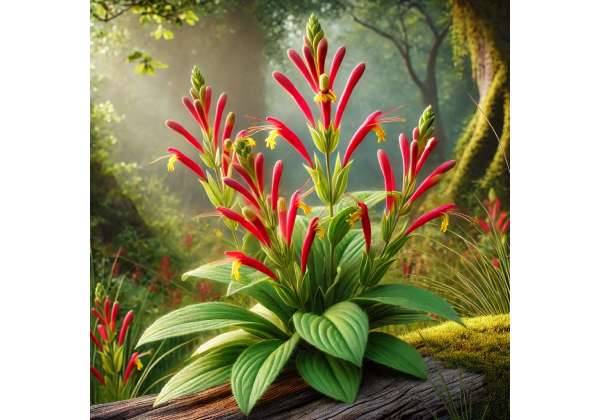
Indian Pink (Spigelia marilandica) is a striking flowering plant native to the southeastern United States, known both for its ornamental beauty and its historical use in herbal medicine. For centuries, Indigenous communities and early American herbalists valued the plant—particularly its root—for its potent medicinal effects. Traditionally, it was used primarily as a vermifuge, meaning a remedy designed to expel intestinal parasites, especially roundworms.
Although Indian Pink gained popularity in early American botanical medicine during the 18th and 19th centuries, modern herbal practice treats the plant with significant caution. Its therapeutic compounds can be powerful, and improper use may cause toxicity. Nevertheless, the herb occupies an interesting place in medical history because it was once considered one of the most effective natural treatments for parasitic infections before modern pharmaceuticals became widely available.
Today, Indian Pink is studied more for its bioactive alkaloids and neurological effects than for routine herbal use. While the plant has intriguing pharmacological properties, it is generally used only under professional guidance.
Understanding its chemistry, traditional uses, potential benefits, and safety considerations is essential before considering this historically significant but potent herb.
Quick Facts
- Historically used as a natural remedy to help eliminate intestinal parasites such as roundworms.
- Contains powerful alkaloids that affect the nervous system and digestive tract.
- Traditional dosage ranges from 100–300 mg of dried root preparation, taken only under expert supervision.
- Should be avoided by children, pregnant individuals, and anyone without professional medical guidance due to potential toxicity.
Table of Contents
- What is Indian Pink and its active compounds
- Traditional medicinal benefits and uses
- How Indian Pink was used historically
- How much Indian Pink per day
- Side effects risks and who should avoid it
- What modern research says
- Modern herbal perspective and alternatives
What is Indian Pink and its active compounds
Indian Pink (Spigelia marilandica) is a perennial flowering plant belonging to the Loganiaceae family. It is native to the southeastern regions of North America, particularly the United States, where it grows in woodland environments and moist soils.
The plant is recognizable by its bright red tubular flowers with yellow interiors, which make it popular in ornamental gardens. However, the root of the plant has historically been the focus of medicinal interest.
Herbalists traditionally harvested the rhizome and root of Indian Pink because these parts contain the plant’s most active compounds.
Key bioactive constituents
Indian Pink contains several compounds that influence the nervous and digestive systems.
Important compounds include:
- Spigeline (alkaloid)
- Volatile oils
- Resinous compounds
- Organic acids
- Glycosides
Among these, spigeline is believed to be the most pharmacologically active constituent. This alkaloid has strong effects on the nervous system and smooth muscles of the digestive tract.
Mechanism of action
The historical use of Indian Pink as an antiparasitic agent likely relates to its ability to influence the neuromuscular activity of intestinal parasites.
The plant’s compounds appear to:
- Stimulate intestinal movement
- Affect the nervous system of parasites
- Facilitate expulsion of worms from the digestive tract
This mechanism made the herb especially valuable in early American medicine before pharmaceutical anthelmintic drugs existed.
Plant toxicity considerations
Unlike many gentle herbal remedies, Indian Pink is considered potentially toxic when misused. Its active alkaloids can affect both the gastrointestinal tract and central nervous system.
For this reason, the herb was traditionally administered carefully and often combined with other herbs that moderated its effects.
Historically, herbalists sometimes paired Indian Pink with digestive-support herbs such as ginger for digestive comfort to reduce nausea and stomach irritation.
Because of its narrow margin between therapeutic and toxic doses, Indian Pink is now rarely used outside specialized historical or academic contexts.
Traditional medicinal benefits and uses
Indian Pink gained prominence in early American herbal medicine primarily as a treatment for intestinal parasites, particularly roundworms. During the 18th and early 19th centuries, parasitic infections were common in many parts of the world due to limited sanitation and poor hygiene conditions.
Herbalists considered Spigelia marilandica one of the most effective plant remedies available at the time.
Anthelmintic activity
The most well-known benefit of Indian Pink was its use as an anthelmintic, meaning a substance that expels parasitic worms from the body.
The herb was traditionally used to treat infections involving:
- Roundworms
- Threadworms
- Other intestinal parasites
Its compounds stimulated intestinal activity and weakened parasites, allowing them to be expelled through the digestive tract.
Because of its potency, the herb was often administered alongside a laxative to help remove the parasites from the intestines.
Nervous system effects
Some early herbal texts noted that Indian Pink had stimulating effects on the nervous system. These properties were thought to contribute to its action against parasites.
However, these neurological effects also explain why excessive doses can lead to symptoms such as dizziness or nervous agitation.
Historical pediatric use
Interestingly, Indian Pink was frequently used in the past to treat worm infections in children. Herbalists believed it was especially effective in pediatric cases, although modern medicine would now consider this risky due to its toxicity.
Additional traditional uses
In smaller doses, the herb was sometimes included in formulas intended to support:
- Digestive health
- Mild laxative activity
- Elimination of intestinal toxins
Herbal traditions often paired Indian Pink with plants that soothe the digestive tract, such as peppermint for digestive relaxation.
While these historical uses are fascinating, modern herbal practice generally favors safer alternatives with wider safety margins.
How Indian Pink was used historically
Indian Pink became well known in American herbal medicine during the colonial era. Indigenous peoples had long understood the plant’s medicinal properties, and early settlers adopted this knowledge through cultural exchange.
By the late 1700s, the herb had become a recognized treatment for parasitic infections in North America.
Indigenous knowledge
Native American tribes were among the first to use Indian Pink medicinally. They recognized its ability to eliminate intestinal worms and used carefully prepared decoctions of the root.
Traditional preparation methods emphasized careful dosing and observation to prevent adverse effects.
Colonial herbal medicine
Early American physicians and botanists quickly recognized the plant’s therapeutic value. During the 18th and early 19th centuries, it was widely prescribed by physicians practicing botanical medicine.
The herb became part of many medicinal preparations intended to treat parasitic infections, especially in children.
Preparation methods
Historically, Indian Pink was prepared in several ways:
Decoction
The root was simmered in water to extract active compounds.
Powder
Dried roots were ground and mixed with honey or syrup.
Combined herbal formulas
Indian Pink was often combined with other herbs to balance its potency.
One commonly used companion herb was senna as a natural laxative, which helped expel parasites after the plant weakened them.
Decline in modern use
As pharmaceutical medicine advanced during the 19th and 20th centuries, safer and more reliable antiparasitic drugs replaced herbal treatments like Indian Pink.
Today, the herb is primarily studied from a historical or pharmacological perspective rather than used in routine herbal practice.
How much Indian Pink per day
Because Indian Pink contains potent bioactive compounds, determining a safe dosage requires caution. Unlike many culinary or tonic herbs, this plant has a relatively narrow therapeutic window.
Historical dosage ranges
Traditional herbal texts generally recommended very small doses of the dried root.
Typical ranges included:
- 100–300 mg of powdered root
- Usually administered once daily
- Often combined with a laxative or supportive herb
The herb was rarely taken for extended periods. Instead, it was typically used as a short-term treatment lasting only a few days.
Forms of preparation
Indian Pink was historically prepared in several forms.
Common preparations included:
- Decoctions of the dried root
- Powdered root capsules or mixtures
- Herbal syrups for children
Each preparation could vary widely in potency depending on plant quality and extraction methods.
Timing considerations
Herbal practitioners often administered the herb:
- On an empty stomach
- Followed by a mild laxative several hours later
- For a limited treatment cycle
This approach aimed to weaken parasites first and then help remove them from the body.
Professional supervision
Due to safety concerns, modern herbalists strongly recommend that Indian Pink not be self-administered without professional guidance.
Safer herbs for digestive cleansing and intestinal health are widely available today, such as wormwood for traditional parasite support.
In modern practice, Indian Pink is primarily discussed in historical herbal literature rather than used as a routine remedy.
Side effects risks and who should avoid it
Indian Pink is considered a potent medicinal plant with significant safety concerns. Although it was historically used in herbal medicine, improper dosing can lead to toxic reactions.
Common side effects
Even moderate doses may cause uncomfortable symptoms.
Possible reactions include:
- Nausea
- Vomiting
- Dizziness
- Headaches
- Stomach cramps
These symptoms occur because the plant’s alkaloids strongly stimulate the nervous system and digestive tract.
Toxic reactions
Higher doses may lead to more serious effects, including:
- Visual disturbances
- Nervous system agitation
- Tremors
- Heart rhythm irregularities
In extreme cases, poisoning could occur.
Individuals who should avoid Indian Pink
Certain groups should never use the herb due to higher risk.
These include:
- Pregnant individuals
- Breastfeeding individuals
- Young children
- People with cardiovascular disorders
- Individuals with neurological conditions
Because of the plant’s effects on the nervous system and heart, professional supervision is essential.
Medication interactions
Indian Pink may interact with medications that affect:
- Heart rhythm
- Nervous system activity
- Gastrointestinal motility
Anyone taking prescription medications should avoid the herb unless under medical supervision.
Modern safety perspective
Modern herbalists generally recommend safer alternatives with similar benefits but fewer risks.
Plants such as black walnut for traditional parasite cleansing have historically been used with wider safety margins.
Overall, Indian Pink is best regarded as a historically important medicinal plant rather than a routine home remedy.
What modern research says
Scientific research on Spigelia marilandica is relatively limited compared to many other medicinal plants. Most modern studies focus on the plant’s chemical constituents and pharmacological properties rather than clinical use.
Alkaloid pharmacology
Laboratory investigations have identified several alkaloids in the plant, including spigeline. These compounds appear to affect neuromuscular signaling pathways.
Researchers believe these compounds are responsible for the herb’s historical anthelmintic effects.
Antiparasitic mechanisms
Experimental studies suggest the plant’s compounds may interfere with parasite nervous systems, leading to paralysis and elimination.
This mechanism resembles how some modern antiparasitic drugs function.
Toxicology studies
Modern toxicology research confirms that the plant’s alkaloids can influence cardiovascular and neurological activity.
These findings explain the historical reports of adverse reactions associated with improper dosing.
Research limitations
Despite interesting pharmacological data, modern clinical trials involving human subjects are scarce.
Important unanswered questions include:
- Safe therapeutic dosage ranges
- Long-term safety
- Clinical effectiveness compared to modern drugs
Because of these uncertainties, most modern herbal practitioners avoid recommending Indian Pink.
Modern scientific interest
Researchers continue to study the plant’s chemical compounds for potential pharmaceutical applications. However, such work focuses on isolating individual compounds rather than using the whole herb.
Modern herbal perspective and alternatives
Modern herbal medicine has evolved significantly since the era when Indian Pink was widely used. Today, practitioners prioritize herbs with strong safety records and well-documented therapeutic effects.
Because Indian Pink carries notable toxicity risks, most contemporary herbalists consider it a historical remedy rather than a practical treatment.
Why modern herbalists avoid routine use
Several factors explain why the herb is rarely recommended today.
These include:
- Narrow safety margin between therapeutic and toxic doses
- Lack of modern clinical research
- Availability of safer alternatives
- Potential neurological side effects
In many cases, safer plants can provide similar digestive or antiparasitic support.
Safer herbal alternatives
Modern herbal practitioners often recommend herbs with broader safety profiles.
Examples include:
These plants offer antimicrobial properties without the severe toxicity risks associated with Indian Pink.
Educational importance
Although the herb is rarely used today, it remains important in the history of American botanical medicine. It illustrates how early herbalists relied on powerful plant medicines to treat conditions before modern pharmaceuticals existed.
Studying plants like Indian Pink also helps researchers understand how traditional knowledge contributed to the development of modern pharmacology.
Responsible herbal practice
The modern approach to herbal medicine emphasizes:
- Evidence-based use
- Safety-focused dosing
- Integration with modern healthcare
Viewed through this lens, Indian Pink is best appreciated as a historically significant but high-risk medicinal plant rather than a commonly used natural remedy.
References
- Medicinal plants used as anthelmintics: A review 2018 (Review)
- Plant derived alkaloids and their pharmacological effects 2020 (Review)
- Natural products as sources of new antiparasitic drugs 2021 (Review)
- Natural plant compounds in antiparasitic drug discovery 2022 (Review)
Disclaimer
This article is provided for educational and informational purposes only and should not be considered medical advice. Indian Pink is a potent plant with known toxic properties and should not be used without guidance from a qualified healthcare professional. Always consult a licensed medical practitioner before using herbal remedies, especially if you are pregnant, breastfeeding, taking medications, or managing a medical condition.
If you found this article helpful, consider sharing it with friends or colleagues on Facebook, X (formerly Twitter), or your preferred social media platform to help others learn about the history and science of medicinal plants.