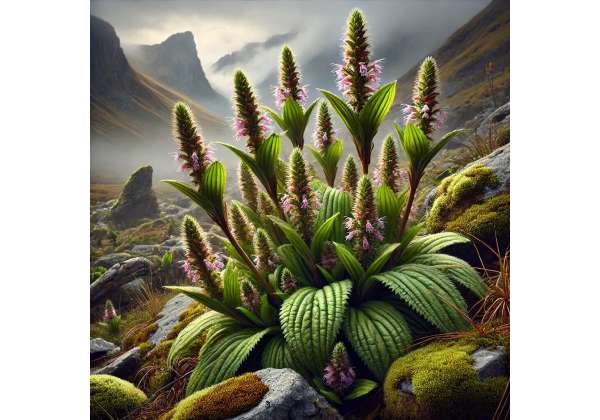
Indian spikenard, also called Nardostachys jatamansi or jatamansi, is a fragrant Himalayan herb valued in Ayurveda, Unani, and Tibetan traditions for its calming, aromatic rhizome. Older herbal texts often group it with valerian-type herbs because it has a similar reputation for supporting sleep, emotional balance, and nervous system calm. Modern research has not confirmed every traditional claim, but it does suggest that the plant contains active compounds with antioxidant, neuroactive, and cardiovascular effects. That makes it especially interesting for people researching stress support, sleep quality, blood pressure, and brain health.
At the same time, Indian spikenard is not a simple everyday tea herb. It is potent, often sold in concentrated forms, and best approached with the same care you would use for any herb that may affect mood, alertness, or circulation. Product quality, preparation, and dose matter. So do safety questions, including pregnancy, medication use, and sedation. This guide explains what Indian spikenard is, what its key compounds do, where the evidence is strongest, how it is commonly used, and when caution matters most.
Essential Insights
- Indian spikenard is best known for potential support for stress, restlessness, and sleep quality.
- Early research also points to antioxidant and blood-pressure-related effects, but clinical evidence is still limited.
- A commonly cited traditional powder dose is about 2 to 3 g per day, while one human trial used 3 g per day for 4 weeks.
- Pregnant or breastfeeding people, young children, and anyone using sedatives or blood-pressure medicines should avoid self-prescribing it.
Table of Contents
- What is Indian spikenard?
- Key ingredients and how they work
- Does Indian spikenard help with stress and sleep?
- Other potential benefits and uses
- How to use Indian spikenard
- How much Indian spikenard per day?
- Safety, side effects, and who should avoid it
- What the evidence actually says
What is Indian spikenard?
Indian spikenard is a small perennial herb native to high-altitude Himalayan regions. The medicinal part is mainly the rhizome and root, which are intensely aromatic and have been used for centuries in traditional medicine, perfumery, incense, and ritual applications. In practice, when people buy jatamansi, they are usually buying dried rhizome powder, capsules made from the powdered root, a concentrated extract, or the essential oil distilled from the underground parts.
One reason this herb stands out is that it sits at the meeting point of tradition and modern interest. Traditional systems describe it as a calming, grounding herb used for restlessness, disturbed sleep, mental overactivity, and certain heart-related complaints. Modern researchers are interested in many of the same areas, especially the nervous system and circulation. That overlap does not prove effectiveness, but it does explain why the herb remains widely discussed.
There is also some botanical confusion in older sources. Indian spikenard has historically been placed in or compared with the valerian group, and some older references classify it differently than current taxonomic sources. For a reader shopping for supplements, the practical point is simple: check the full Latin name on the label and look specifically for Nardostachys jatamansi. Common names alone are not reliable enough.
Another point that matters more than many buyers realize is sustainability. Indian spikenard is a high-value wild medicinal plant, and heavy demand has contributed to conservation pressure. That means a good product is not just the one with the highest potency claim. It is also one that clearly identifies the plant, states the plant part used, and preferably comes from cultivated or responsibly sourced material. If a brand says nothing about origin, testing, or botanical identity, that is a reason to pause.
From a practical standpoint, Indian spikenard is most often researched and used as a calming herb rather than as a daily nutritional supplement. It is closer in spirit to valerian for calming and sleep support than to a food-based tonic. That does not make it unsafe by default, but it does mean the herb is usually chosen for a specific purpose, such as evening relaxation, tension with poor sleep, or short-term nervous system support, instead of general wellness without a target outcome.
Key ingredients and how they work
The chemistry of Indian spikenard helps explain why traditional healers and modern researchers both focus on the herb’s effects on the brain, mood, and circulation. The rhizome contains a complex mixture of volatile oils and non-volatile plant compounds, with sesquiterpenes being especially important. Among the best-known names in the literature are jatamansone, also called valeranone, along with nardosinone, nardostachone, jatamansic acid, and several coumarins and phenolic compounds.
These compounds matter because they are not all doing the same thing. Some appear to influence the central nervous system, which is one reason the herb is often described as calming or sedating. Others show antioxidant behavior in laboratory studies, meaning they may help limit oxidative stress under experimental conditions. Still others are being studied for anti-inflammatory, neuroprotective, or vascular effects.
It is useful to think of Indian spikenard as a multi-compound herb rather than as a single-ingredient natural drug. A capsule does not deliver only one active molecule. It delivers a matrix of compounds that may work together. That is part of the appeal of herbal medicine, but it also creates a challenge for research. Different preparations can vary widely in chemistry depending on where the plant was grown, how it was dried, whether the product is whole powder or extract, and which solvents were used during processing.
The essential oil deserves special mention because it is often marketed separately. Its aroma comes from volatile constituents that are more concentrated than what you would get from a tea or powder. That is why the oil can smell strong and act strong. Aromatic use may feel gentler because the dose is lower, but concentrated oils still need care. A few drops diluted in a carrier oil is very different from ingesting a root powder.
Another part of the chemistry story is that Indian spikenard may have both traditional synergy and modern complexity. For example, one compound may contribute more to a calming effect while another may contribute more to antioxidant activity. This is why a product standardized to one marker compound is not automatically “better” than a full-spectrum extract. In some cases, a whole-plant preparation may preserve the broader profile that traditional use depends on.
For readers comparing herbs, Indian spikenard shares some conceptual overlap with bacopa for cognitive support and with other adaptogenic or calming botanicals, but its chemistry is distinct. It is not a direct substitute for those herbs. Its identity comes from its own aromatic sesquiterpenes and the way those compounds appear to affect brain signaling, oxidation pathways, and possibly vascular tone. That is why the herb is often described as both a nervine and a medicinal aromatic.
Does Indian spikenard help with stress and sleep?
This is the question most people are really asking when they search for Indian spikenard. The short answer is that it may help some people feel calmer or less mentally restless, but the best support for that idea still comes from traditional use and preclinical research, not from large modern human trials.
In Ayurvedic use, jatamansi is commonly associated with a quieting effect on an overactive mind. It has been used for irritability, emotional agitation, poor sleep, tension, and states that today might be described as stress-related overarousal. That long pattern of use is one reason the herb remains popular in formulas intended for evening use or mental settling.
Experimental studies give that tradition some biological plausibility. Researchers have reported central nervous system depressant activity in animal models, which fits the historical description of the plant as calming and sleep-supportive. The phrase “central nervous system depressant” sounds alarming, but in this context it means the herb may reduce activity in a way that resembles mild sedation or nervous system quieting. The same general concern also explains why people should not combine it casually with alcohol, strong sleep aids, or other sedating herbs.
That said, there is an important limit here. A calming effect is not the same thing as proven treatment for insomnia, anxiety, or depression. Human sleep studies on Indian spikenard are still sparse. We do not have the kind of evidence base available for widely used sleep and stress herbs such as passionflower for stress and sleep support or even some forms of valerian. So the honest interpretation is moderate traditional confidence, interesting mechanistic support, and modest clinical certainty.
If someone wants to use Indian spikenard for stress or sleep, the best use case is usually specific and conservative. It may fit:
- Evening restlessness with a racing mind
- Stress that shows up as tension and poor sleep
- A short-term calming herb in a practitioner-guided formula
- Aromatic use when someone prefers not to start with oral supplements
It is less convincing as a first-choice self-treatment for chronic insomnia, panic symptoms, or major mood disorders. Those situations deserve a broader evaluation.
A practical insight that often gets missed is timing. Herbs that calm the nervous system often disappoint when people take them at random times. Indian spikenard is more likely to feel useful when taken consistently, usually later in the day or before bed if sleep is the goal. If a product makes you feel drowsy during the day, that is not always a sign that the herb is “working well.” It may be a sign the dose or timing is wrong for you.
For people who respond well, the benefit is usually described less as a dramatic sedative effect and more as a gradual softening of mental intensity. That is exactly the type of result traditional nervous system herbs often aim for: less inner agitation, easier settling, and a smoother transition into rest.
Other potential benefits and uses
Although stress and sleep are the most common reasons people look into Indian spikenard, they are not the only ones. The herb has a much broader traditional and experimental profile, with interest in cardiovascular support, antioxidant protection, cognitive function, and even topical or aromatic use.
One of the most interesting human findings involves blood pressure. A small randomized controlled trial in adults with essential hypertension used 3 g per day and reported reductions in both systolic and diastolic blood pressure over four weeks. That is meaningful because it moves the conversation beyond folklore. At the same time, the study was still small, short, and not enough on its own to establish Indian spikenard as a reliable blood pressure treatment. For now, it is best viewed as an early signal, not a replacement for standard care.
Traditional medicine also describes Indian spikenard as a heart-supportive herb. In practical terms, that usually means it has been used in people whose stress, palpitations, or agitation seem to affect the cardiovascular system. Modern readers should be careful not to over-translate these claims. “Heart tonic” in historical herbal language does not automatically mean a proven therapy for heart disease.
Another area of interest is brain health. Experimental work suggests antioxidant and neuroprotective effects, which has led to discussion of possible roles in memory, cognitive decline, and stress-related brain changes. This is promising but still early. It does not mean Indian spikenard has been shown to prevent dementia or reverse cognitive loss. It does mean the herb belongs in the category of plants researchers are watching for brain-related mechanisms.
Topical and aromatic use is another dimension. The essential oil has a deep, earthy, resinous aroma that some people use in massage blends, meditation rituals, or calming evening routines. Used this way, Indian spikenard often overlaps conceptually with lavender oil for stress and sleep, though the aroma profile is much heavier and less floral. Some traditional systems also apply preparations to the scalp or hair, but these uses are less standardized than oral use.
Potential uses people commonly explore include:
- Support for stress-related tension
- Nighttime calming routines
- Complementary support for elevated blood pressure under medical supervision
- Aromatherapy or meditation use
- Traditional formulas aimed at cognition or emotional balance
The key word across all of these is complementary. Indian spikenard may be a useful adjunct in the right context, especially when chosen thoughtfully and used consistently. It is not a miracle herb, and it is not backed by enough human data to justify sweeping claims. The most balanced view is that it has a strong traditional reputation, several plausible mechanisms, and one especially notable human signal in blood pressure, but still needs better trials before stronger claims are warranted.
How to use Indian spikenard
Indian spikenard can be used in several forms, and the form you choose changes the experience. That matters because many disappointing herb experiences come from using the wrong preparation for the wrong goal.
The most traditional form is powdered rhizome. This is usually taken in capsules or mixed into warm water, milk, or another liquid. Whole powder tends to reflect traditional use most closely because it keeps the natural balance of plant compounds. The tradeoff is taste and smell. Jatamansi is aromatic, earthy, and somewhat bitter, so not everyone enjoys taking it loose.
Extracts are more concentrated and easier to swallow. These may be sold as capsules, tablets, or liquid tinctures. The advantage is convenience and lower volume. The disadvantage is variation. One extract may be far stronger than another, and many labels do not say enough about extraction ratio, solvent, or marker compounds. When using an extract, it is smart to treat the label dose as product-specific rather than assuming it can be compared directly with raw powder.
Tea or decoction is less common than capsules, but it is still used. This can be a gentle way to experience the herb, especially for people who want a lighter, more traditional routine. The limitation is that water extraction may not capture the same profile as a powdered or alcohol-based preparation.
Then there is essential oil. This is best reserved for aromatic use or carefully diluted topical use. It should not be used internally unless a qualified practitioner specifically advises it, because essential oils are far more concentrated than the raw herb. For many people, inhalation or diffusion is the simplest way to explore the herb’s calming reputation without committing to oral use.
A sensible way to choose a form is to match it to the reason for use:
- For general calming or traditional use, start with powder or capsules.
- For convenience and consistency, use a reputable extract with clear labeling.
- For a bedtime sensory routine, consider aromatic use.
- For people sensitive to supplements, begin with the gentlest format and lowest practical dose.
Quality matters as much as format. Look for:
- The full botanical name Nardostachys jatamansi
- Rhizome or root identified on the label
- Third-party testing if available
- Clear serving size and extract details
- Responsible sourcing or cultivation information
One more practical point: Indian spikenard usually works best when it is tied to a routine. A calming herb taken once in the middle of a chaotic day may not show much. Used more consistently, especially at the same time each day, it may feel more predictable. That routine-based approach is common with many nervous system herbs, including ashwagandha for stress support, though the feel and purpose of the two herbs are not identical.
How much Indian spikenard per day?
This is where readers need the most caution, because there is no universally accepted modern dosing standard for Indian spikenard across all products. The right answer depends on the form, the goal, the concentration, and the person using it.
A commonly cited traditional human dose for jatamansi powder is about 2 to 3 g per day. That gives a useful anchor because it appears in modern research discussion as well. In a human trial involving essential hypertension, researchers used 3 g per day, divided into capsules taken three times daily, for four weeks. That is one of the clearest real-world dosing points we have.
Still, it would be a mistake to assume every Indian spikenard product should be taken at 3 g per day. Raw powder, standardized extract, tincture, and essential oil are not interchangeable. A 500 mg extract capsule might be stronger than several grams of loosely ground root, depending on how the product was made. That is why label directions matter.
A practical dosing approach looks like this:
- If using raw powder, stay near established traditional amounts rather than pushing high doses.
- If using a capsule or extract, follow the manufacturer’s serving guidance unless a qualified clinician advises otherwise.
- If using the herb for evening calm or sleep support, take it later in the day rather than first thing in the morning.
- If using it for blood pressure-related interest, do not self-adjust other medications around it.
For many people, the best starting strategy is not “What is the highest effective dose?” but “What is the lowest sensible dose that lets me assess tolerance?” That is especially important for herbs that may cause drowsiness. Starting low helps you notice:
- Daytime sedation
- Mental fog
- Stomach upset
- Changes in blood pressure
- Any unusual sensitivity
Duration matters too. Indian spikenard is better thought of as a short-to-medium-term supportive herb than as something everyone should take indefinitely. A person might use it for several weeks during a period of stress, then reassess. If the goal is sleep, some people may notice benefit within days, while others may need one to two weeks of steady use. If nothing changes after a fair trial at an appropriate dose, increasing the amount aggressively is usually not the smartest next step.
The best timing is generally:
- Evening or before bed for calming and sleep goals
- Split doses for products designed for daytime clinical use
- Consistent daily timing for clearer results
In short, the most defensible dosing message is this: traditional powder dosing is often in the low-gram range, 2 to 3 g per day is a common reference point, 3 g per day has been used in one human study, and concentrated extracts must be dosed according to their own label rather than by copying powder amounts.
Safety, side effects, and who should avoid it
Indian spikenard is often described as gentle in traditional practice, but “traditional” does not mean risk-free. The herb deserves the same safety mindset you would use with any botanical that may affect the central nervous system or cardiovascular system.
The main safety issue is sedation. If an herb may calm the nervous system, it may also make some people drowsy, heavy, or less alert than expected. That matters most with higher doses, concentrated extracts, or combinations with other calming substances. If you use sleep aids, anti-anxiety medicines, alcohol, strong antihistamines, or other sedating herbs, Indian spikenard is not something to add casually.
Possible side effects include:
- Drowsiness
- Slowed alertness
- Mild digestive upset
- Nausea
- Head heaviness in sensitive users
There is also a reasonable concern about additive effects with blood-pressure-lowering medicine. Because a small human study found reductions in blood pressure, combining Indian spikenard with antihypertensive medication without supervision could, in theory, increase the chance of lightheadedness or an unintended drop in pressure. The same logic applies to people who already have low blood pressure.
Who should avoid self-prescribing it:
- Pregnant people
- Breastfeeding people
- Young children unless specifically guided by a qualified clinician
- Anyone taking sedatives, sleep medicines, or multiple calming herbs
- People on blood-pressure medicines or with unstable blood pressure
- Anyone preparing to drive, operate machinery, or do safety-sensitive work soon after taking it
If you have chronic insomnia, ongoing anxiety, depression, palpitations, or unexplained high blood pressure, Indian spikenard should not delay a medical evaluation. Herbs can complement care, but they are not a substitute for figuring out why symptoms are happening.
Product safety matters too. Because this is an aromatic root collected in different regions and sold in multiple forms, contamination and misidentification are real concerns. Buy from companies that test for identity and contaminants. If a product smells strange, lacks the botanical name, or offers dramatic medical promises, that is a warning sign.
Stop using the herb and seek advice if you notice excessive sedation, dizziness, worsening symptoms, rash, or any reaction that feels unusual for you. That is especially important with first use, because sensitivity to aromatic and nervine herbs can vary a lot.
The most practical safety rule is simple: Indian spikenard is best used thoughtfully, at modest doses, with clear timing, and with extra caution if anything else you take affects sleep, mood, or blood pressure.
What the evidence actually says
Indian spikenard has a stronger traditional reputation than clinical evidence base. That does not mean the herb is ineffective. It means the quality of support varies a lot depending on the claim.
The strongest human-level signal so far is blood pressure. One randomized controlled study in adults with essential hypertension found that 3 g per day over four weeks reduced systolic and diastolic blood pressure compared with placebo. That is valuable because it shows the herb can produce a measurable clinical effect under controlled conditions. Even so, a single small study is not enough to establish routine clinical use. Larger trials, longer follow-up, and better replication are still needed.
The evidence for stress, sedation, and sleep is plausible but less direct in humans. Animal and laboratory studies support the idea that the rhizome has central nervous system depressant and antioxidant activity. Those findings line up well with traditional use for restlessness and poor sleep. But researchers still need well-designed human trials that measure sleep quality, sleep onset, anxiety symptoms, daytime functioning, and tolerability.
The evidence for cognitive and neuroprotective effects is earlier still. There are interesting preclinical and computational studies suggesting that compounds from the plant may interact with targets relevant to neurodegenerative disease and oxidative stress. That is enough to justify research interest, but not enough to justify bold consumer claims about memory, dementia prevention, or brain repair.
So how should a careful reader rank the evidence?
Most supported:
- Traditional use for calming and mental settling
- Preclinical support for sedative and antioxidant activity
- Early clinical support for blood pressure effects
Promising but not proven:
- Sleep improvement in modern clinical terms
- Cognitive support
- Neuroprotection
- Broad heart-health claims
Not justified at this stage:
- Using it as a replacement for prescription treatment
- Assuming all extracts work the same way
- Expecting strong benefits from very small, irregular use
This is a good example of how herbal evidence often develops. First there is long traditional use. Then experimental work suggests mechanisms. Then a small human study offers a signal. Only later, if enough research follows, do we get confident dosing rules and strong clinical recommendations. Indian spikenard is somewhere in the middle of that path. It is more than folklore, but less than fully established medicine.
For most readers, the fairest conclusion is that Indian spikenard is a serious traditional herb with credible calming and cardiovascular potential, but it should still be used with realism. It may be worth considering for targeted support, especially under practitioner guidance, but it is not a shortcut around evidence, diagnosis, or safe prescribing.
References
- Nardostachys jatamansi: Phytochemistry, ethnomedicinal uses, and pharmacological activities: A comprehensive review 2024 (Review)
- Efficacy of Nardostachys jatamansi (D.Don) DC in essential hypertension: A randomized controlled study 2020 (RCT)
- Central nervous system depressant activity of Jatamansi (Nardostachys jatamansi DC.) rhizome 2022 (Experimental Study)
- Jatamansinol from Nardostachys jatamansi: a multi-targeted neuroprotective agent for Alzheimer’s disease 2023 (Preclinical Study)
- An Important Indian Traditional Drug of Ayurveda Jatamansi and Its Substitute Bhootkeshi: Chemical Profiling and Antioxidant Activity 2013 (Open Study)
Disclaimer
This article is for educational purposes only and does not replace medical advice, diagnosis, or treatment. Indian spikenard may affect alertness, sleep, and blood pressure, so it should be used carefully, especially if you take prescription medicines, are pregnant or breastfeeding, or have an ongoing medical condition. Always review new herbal supplements with a qualified healthcare professional before starting them.
If this article was useful, please share it on Facebook, X, or your preferred platform.