Indian strawberry, also called mock strawberry and often listed in modern botany as Potentilla indica, is a low-growing herb in the rose family with yellow flowers and bright red, strawberry-like fruit. It has a long history in Asian folk medicine, where the whole plant or leaves have been used in decoctions, poultices, and topical preparations rather than as a mainstream food herb. What makes it interesting today is not its flavor, which is usually described as mild and bland, but its chemistry. Researchers have identified a dense mix of phenolic acids, flavonoids, tannins, triterpenes, and other compounds that may help explain its traditional reputation for cooling, soothing, and anti-inflammatory use.
The modern evidence is still early. Most findings come from laboratory and animal studies rather than human clinical trials. Even so, Indian strawberry has drawn attention for possible antioxidant, anti-inflammatory, immune-modulating, skin-soothing, and tissue-protective effects. This article looks at what the herb is, which compounds matter most, how it is traditionally used, what dosage information is available, and where caution is still necessary.
Quick Facts
- Indian strawberry is best known for potential anti-inflammatory and antioxidant activity.
- Its phenolic compounds, flavonoids, and tannin-rich fractions are the main reason it is studied for medicinal use.
- Traditional decoction use is commonly listed at about 9 to 15 g of dried herb per day.
- Pregnant or breastfeeding people and anyone using anticoagulants, cancer therapy, or immune-active medicines should avoid self-prescribing it.
Table of Contents
- What is Indian strawberry?
- Key compounds and medicinal properties
- Does Indian strawberry help with inflammation?
- Other potential benefits and uses
- How to use Indian strawberry
- How much Indian strawberry per day?
- Safety, side effects, and interactions
- What the evidence actually says
What is Indian strawberry?
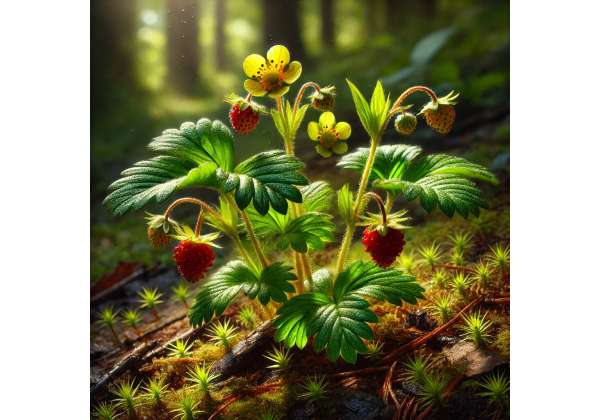
Indian strawberry is a creeping perennial herb in the Rosaceae family. It spreads by runners, forms low mats, and produces trifoliate leaves, small yellow flowers, and bright red fruit that resembles a tiny strawberry. Because of that appearance, many people first notice it as a groundcover plant rather than as a medicinal herb. In herbal traditions, however, the plant has been valued for much more than its looks. Traditional systems in East and South Asia have used it for heat-type conditions, skin irritation, swelling, sore throat, diarrhea-like states, and topical care.
A detail that matters for readers is naming. The older name Duchesnea indica is still widely used in herbal literature, product descriptions, and lab studies, while modern botanical sources often place the plant under Potentilla indica. In practical terms, both names point to the same medicinal plant that many consumers know as Indian strawberry or mock strawberry. That labeling overlap can cause confusion when people search for supplements or dried herb, so it is worth checking both names on product labels and research papers.
Unlike common culinary berries, Indian strawberry is not primarily used for its fruit in modern herbal practice. The whole herb, leaves, and sometimes extracts of the aerial parts are the focus. This matters because someone seeing the red fruit in the garden might assume the “berry” is the medicinal centerpiece. In reality, research attention is mostly on the plant’s broader phytochemical profile, especially its phenolics, tannins, flavonoids, and related compounds.
Traditional use also frames Indian strawberry as more of a functional medicinal herb than a daily nutritive tonic. It is usually discussed alongside herbs chosen for irritation, swelling, local inflammation, topical applications, and supportive care rather than as a broad-spectrum wellness plant taken casually for months. That distinction helps set expectations. This is not a kitchen herb with a strong human clinical track record. It is a traditional medicinal plant with an interesting laboratory profile and a long folk history that still needs stronger human evidence.
Another practical point is sourcing. Indian strawberry grows widely and can be confused with ornamental or wild populations exposed to pesticides, roadside contamination, or poor drying practices. For medicinal use, the safest approach is a verified herb product with botanical identification, plant-part labeling, and basic quality control rather than self-harvested material of uncertain origin. That may sound cautious, but for lesser-known herbs, quality control is often more important than marketing claims.
Key compounds and medicinal properties
The reason Indian strawberry continues to attract research interest is its chemistry. It contains a broad mix of phenolic compounds, ellagic acid derivatives, tannins, flavonoids, triterpenes, sterols, and polysaccharide fractions. In plain terms, this means the herb has several families of plant chemicals that may work together rather than one single “star” ingredient. That multi-compound pattern is common in traditional herbs and often helps explain why the plant has been used in more than one way.
Phenolic compounds appear to be especially important. Studies have identified ellagic acid-related compounds, hydroxybenzoic and hydroxycinnamic acid derivatives, and a range of flavonoids. Some extracts also show notable levels of ferulic acid, vanillic acid, salicylic acid, cinnamic acid derivatives, and related antioxidant compounds. These substances matter because they are often linked with oxidative-stress control, membrane protection, and inflammatory signaling. That does not mean the herb will reliably deliver those effects in people, but it explains why the plant keeps showing up in antioxidant and inflammation research.
Flavonoids such as quercetin-, kaempferol-, and apigenin-type compounds also help shape the herb’s medicinal reputation. These are the same broad chemical families that make many herbs attractive for oxidative and inflammatory balance. If you are familiar with polyphenol-rich botanicals such as green tea for antioxidant support, the logic is similar: the interest is less about one miracle molecule and more about a dense network of interacting plant compounds.
Tannins are another major piece of the story. Tannin-rich herbs often show astringent, protective, and surface-soothing qualities. That matters for traditional topical use, where Indian strawberry has been applied to irritated tissues, minor inflammatory skin states, and local swelling. Astringency can also help explain why folk medicine describes the plant as “cooling,” drying, or useful for overly wet, irritated, or weeping conditions.
The herb’s triterpenes and sterols add another layer. These compounds are frequently studied for membrane effects, inflammation signaling, and tissue response. Meanwhile, polysaccharide fractions from Indian strawberry have been examined for immune-related actions, which suggests the plant may influence more than one biological pathway.
When people ask about Indian strawberry’s medicinal properties, the fairest short answer is this:
- Antioxidant
- Anti-inflammatory
- Astringent
- Potentially immune-modulating
- Traditionally cooling and swelling-reducing
The key phrase is “potentially.” These properties are mostly inferred from chemistry, cell studies, and animal models, not yet from a strong body of human trials. Still, the compound profile is rich enough that the herb deserves serious interest, especially in areas linked to oxidative stress, topical soothing, and inflammation-driven tissue irritation.
Does Indian strawberry help with inflammation?
If one health question stands above the rest for Indian strawberry, it is inflammation. This is where the herb has the clearest experimental case, even though the evidence is still mainly preclinical. Multiple studies on extracts of Duchesnea indica have found reduced inflammatory signaling, lower oxidative damage markers, and less activation of pathways linked to tissue injury. That does not prove the herb treats inflammatory disease in humans, but it does give a more focused reason for the plant’s traditional use.
In lab models, Indian strawberry extracts have been shown to reduce inflammatory mediators in immune cells stimulated to behave like they are under attack. Researchers have reported lower nitric oxide production, better antioxidant enzyme activity, and reduced lipid peroxidation in some settings. A 2025 paper went further by linking part of the anti-inflammatory effect to inhibition of the MAPK/ERK pathway in LPS-stimulated macrophage cells. In practical language, that means the extract appeared to calm one of the signaling routes cells use to amplify inflammation.
Animal work also adds to the picture. A 2022 study in mice found that Duchesnea indica extract improved outcomes in a septic shock model and lowered inflammatory markers. That is not the same as showing benefit in people with sepsis, and it should not be interpreted that way. Still, it strengthens the idea that the herb is biologically active in systems where inflammation and oxidative stress are intense.
A 2023 study on Potentilla indica extract also found reduced oxidative stress in the kidneys of diabetic rats, including lower reactive oxygen species and lower lipid peroxidation, alongside better mitochondrial enzyme activity. That matters because inflammation and oxidative damage often travel together. A herb that influences both may be more useful in theory than one that affects only one side of the process.
What does all of this mean for a real reader? It means Indian strawberry is promising as an inflammation-focused traditional herb, but the realistic outcome is still modest and uncertain. At this stage, the best-supported statement is not “Indian strawberry treats inflammation,” but rather “Indian strawberry contains compounds and extracts that repeatedly show anti-inflammatory and antioxidant effects in early research.”
That distinction is important. People with arthritis, inflammatory bowel disease, eczema, autoimmune disease, or chronic pain should not assume this herb has proven clinical benefit. It may eventually find a place as a complementary botanical, but right now it belongs in the category of plausible, interesting, and incomplete. Used carefully and with realistic expectations, it may make sense as a traditional support herb. Used as a substitute for diagnosis or proven care, it would be overreaching.
Other potential benefits and uses
Although inflammation is the clearest research theme, Indian strawberry is not a one-topic herb. Traditional use and modern lab work suggest several other areas of interest, though nearly all remain preliminary.
One area is antioxidant support. This overlaps with inflammation but deserves its own mention because Indian strawberry extracts have shown strong free-radical scavenging activity and polyphenol richness in several studies. Seed and whole-plant extracts have been examined for their ability to reduce oxidative stress and protect tissues from oxidant-related injury. In practical terms, this makes the herb relevant to conditions where oxidative stress may contribute to damage, though that is still a research framework rather than a clinical guarantee.
Another area is topical use. Traditional applications include crushed fresh herb, poultice-style preparations, and soothing external use on irritated tissue. This fits the plant’s tannin-rich, astringent profile. Readers familiar with witch hazel for topical astringent support will recognize the same general logic: herbs high in tannins often make sense for surface-level calming, tightening, or drying support. Indian strawberry is not interchangeable with witch hazel, but the rationale is similar.
Researchers have also explored immune-related effects. Some studies on polysaccharide and whole-plant fractions suggest that the herb may influence immune cell behavior. This is interesting because it helps explain why the plant has historically been used for swelling, recurrent irritation, and certain infectious or inflammatory states. At the same time, immune-modulating herbs can be a double-edged sword. A plant that affects immune signaling may not be ideal for everyone, especially people taking immune-active medication.
Cancer-related research is another reason Indian strawberry gets attention online. Extracts and phenolic fractions have shown anti-proliferative, migration-limiting, or apoptosis-related effects in cell studies and some animal models. This sounds impressive, but it is exactly where readers need the most restraint. Cell and animal oncology findings do not equal proven anticancer benefit in humans. The herb may be pharmacologically interesting, but it is not a clinically established cancer therapy.
Some traditional systems also use the herb for sore throat, local heat, dysentery-like complaints, minor skin problems, and swelling. These folk uses make sense when you look at the plant’s astringent and anti-inflammatory profile. They also show why Indian strawberry is better understood as a “pattern herb” in traditional medicine rather than as a supplement designed for a single narrow mechanism.
So the broader benefit picture looks like this:
- Antioxidant support
- Topical soothing and astringent use
- Possible immune modulation
- Experimental anticancer interest
- Traditional support for heat, swelling, and irritated tissues
All of those uses should be read through the same lens: interesting, plausible, and mostly early-stage rather than clinically settled.
How to use Indian strawberry
Indian strawberry can be used in a few different ways, and the form matters. In traditional practice, the whole herb or fresh leaves are more central than the fruit itself. That is a useful starting point, because many newcomers assume the red berry-like structure is the main medicinal material. In reality, decoctions, juices, external applications, and standardized extracts are more relevant to the herb’s medicinal history.
The most traditional oral form is a decoction. The dried herb is simmered in water and taken for a short period when the goal is internal support. This type of preparation fits the herb’s place in traditional Chinese and other Asian systems, where whole-herb boiling remains standard for many medicinal plants. Decoction is often preferred over casual tea infusion for tougher plant material because it extracts a broader share of water-soluble compounds.
Fresh-herb use is also common in traditional descriptions. The plant may be crushed into juice or pounded into a paste for external application. This is where Indian strawberry resembles plantain for poultice-style skin support: the herb is valued not only as something ingested, but also as something applied directly when a local, soothing, or swelling-reducing effect is desired.
Modern supplement forms include capsules, powdered herb, fluid extracts, and experimental gels or serum-style topical products. These may be more convenient, but they come with a tradeoff. Once a lesser-known herb is sold in extract form, quality differences become a major issue. One product may use the whole aerial parts, another only leaves, and another a concentrated solvent extract with very different chemistry. That means “Indian strawberry extract” is not a uniform category.
Practical use depends on the goal:
- For traditional internal use, dried whole-herb decoction is the classic format.
- For gentle topical use, fresh crushed herb or a prepared gel may be preferred.
- For convenience, capsules may make sense, but only when the source is reputable.
- For skin support, choose simple, clearly labeled products over fragranced blends.
A few real-world tips help:
- Use verified botanical names on the label.
- Avoid wild-harvested unknown material from polluted areas.
- Do not assume fruit snacks, berry powders, or ornamental plant parts are medicinal equivalents.
- Treat stronger extracts as separate products with separate dosing rules.
Because Indian strawberry is not yet a mainstream evidence-based supplement, the safest way to use it is thoughtfully and specifically. It makes more sense for short targeted use than for casual, indefinite daily supplementation. People looking for a gentler, better-known herb for mild skin or irritation support may sometimes be better served by options such as chamomile for calming and skin comfort, especially when long-term safety and predictability matter.
How much Indian strawberry per day?
Indian strawberry does not have a modern, evidence-based, universally accepted human dosage in the way better-studied supplements do. That is the most important sentence in this section. There are no large clinical trials that define a best daily dose, ideal duration, or standard extract strength for common health goals. What we do have is a mix of traditional herb dosing, official materia medica-style usage ranges, and preclinical extract research.
For dried whole-herb decoction, a commonly cited traditional range is 9 to 15 g per day. Fresh-herb use is often listed at a higher weight because fresh plants contain more water, with 30 to 60 g sometimes cited in traditional practice. Those figures are useful, but they should be understood as traditional whole-herb amounts, not as a conversion target for capsules, tinctures, or concentrated extracts.
That distinction matters. A 500 mg extract capsule is not equivalent to 500 mg of dried herb. Likewise, a liquid extract can vary enormously depending on the solvent, the plant part, the concentration ratio, and whether the product is standardized. This is why copying a whole-herb decoction number and applying it to a supplement label is not a safe approach.
A reasonable way to think about dosage is:
- Traditional dried decoction: often 9 to 15 g daily
- Fresh-herb use: often 30 to 60 g daily in traditional contexts
- Standardized extracts: follow product-specific labeling, not whole-herb numbers
- Topical use: external quantity depends on the product and the area treated
Timing and duration also matter. Indian strawberry is better suited to short, purposeful use than to indefinite self-treatment. Someone using a whole-herb decoction for a traditional reason may use it for days to a few weeks, then reassess. If a concentrated extract is involved, shorter and more cautious use makes even more sense because human tolerance data are limited.
The safest dose strategy is usually:
- Start at the lower end of traditional guidance if using whole herb.
- Do not stack multiple forms at once.
- Stop if you notice stomach irritation, dizziness, rash, or unusual symptoms.
- Reassess after a short trial rather than escalating quickly.
People often make one common mistake with lesser-known herbs: they assume that because the plant is natural, more is better. With Indian strawberry, that is not a smart assumption. Tannin-rich and chemically active herbs can cause stomach upset, interact with medications, or behave differently depending on the extract.
So while a traditional range of 9 to 15 g dried herb per day is useful as a reference point, it is not a license for unsupervised high-dose use. Think of it as a historical guidepost, not as a modern clinical endorsement.
Safety, side effects, and interactions
Safety is where Indian strawberry needs the most humility. The herb has a long traditional history and is often described as low in overt toxicity in the amounts normally used, but that is not the same as having strong modern safety data. Human trials are scarce, standardized products vary, and interaction studies are limited. That means caution should come before enthusiasm.
Possible side effects are likely to be similar to those seen with other tannin-rich, astringent, or concentrated herbal products. The most plausible problems are:
- Stomach upset
- Nausea
- Dryness or irritation with high-tannin preparations
- Mild skin irritation with topical use
- Sensitivity reactions in people prone to plant allergies
Interaction risk is harder to map because direct studies are limited, but several groups should be careful. People taking anticoagulants or antiplatelet drugs should avoid casual self-use because polyphenol-rich herbs and traditional “blood-cooling” or swelling-focused herbs can have unpredictable overlap with medication effects. People on chemotherapy, immunotherapy, or immunosuppressants should also avoid self-prescribing Indian strawberry because the plant has shown immune-active and anticancer-related behavior in experimental models. That does not prove a harmful interaction, but it is enough to justify caution.
Pregnancy and breastfeeding are major stop points. Because human safety evidence is inadequate, concentrated extracts, capsules, and medicinal dosing are best avoided unless a qualified clinician specifically recommends them. The same cautious approach applies to young children. Folk use exists, but modern safety data are not strong enough to make home dosing a good idea.
Topical use is often gentler, but not automatically risk-free. Patch testing is wise, especially for gels, serums, or products that combine Indian strawberry with alcohol, essential oils, or fragrance. A herb may be soothing in theory and still irritate sensitive skin in practice.
Who should avoid it without professional guidance:
- Pregnant people
- Breastfeeding people
- Young children
- People on anticoagulants or antiplatelet drugs
- People receiving cancer treatment
- People using immune-active medicines
- Anyone with a history of strong plant allergies
A final point on safety is quality. Lesser-known herbs are more vulnerable to weak labeling, substitution, and contamination. That means a “safety problem” may sometimes be a sourcing problem rather than an herb problem. Choosing a clean, botanically identified product is one of the simplest ways to reduce risk.
What the evidence actually says
Indian strawberry is a classic example of a herb with interesting chemistry, strong traditional momentum, and incomplete clinical evidence. The research is meaningful, but it does not all sit at the same level. Some claims are much better supported than others.
Most supported:
- The plant contains abundant phenolics, flavonoids, tannins, and related compounds.
- Extracts show antioxidant activity in laboratory assays.
- Several studies show anti-inflammatory effects in cell and animal models.
- Traditional use for swelling, heat, and irritated tissue is at least biologically plausible.
Promising but not proven:
- Kidney-protective effects linked to oxidative stress
- Immune-modulating activity
- Topical benefit for irritated skin
- Adjunctive roles in inflammation-driven conditions
Much too early to claim:
- Reliable anticancer treatment in humans
- Proven benefit for sepsis in patients
- Standardized therapeutic dosing for common diseases
- Long-term safety of concentrated daily use
This is why Indian strawberry should be read with two ideas in mind at the same time. First, it is not an empty folk remedy. The plant clearly has bioactive compounds and repeatedly demonstrates antioxidant and anti-inflammatory behavior in early research. Second, it is not yet a clinically settled herbal medicine with robust human outcomes, clear prescribing rules, and broad safety consensus.
That middle ground is actually useful. It tells you when the herb is worth taking seriously and when it is not yet worth overselling. A careful reader can reasonably conclude that Indian strawberry may be a legitimate complementary herb for short-term, targeted use, especially in traditions that already know how to prepare it properly. That same careful reader should also conclude that the herb is not ready for confident self-treatment of chronic disease.
In other words, Indian strawberry sits in the promising-preclinical category. It deserves more research, better standardization, and eventually human trials that clarify:
- Which plant part works best
- Whether whole herb or extract is better
- What dose makes sense for humans
- Which conditions are realistic targets
- Which interactions matter most
Until then, the smartest use of Indian strawberry is informed, modest, and evidence-aware. It may have real value, but the strongest current evidence supports respectful curiosity, not hype.
References
- Duchesnea indica (Andr.) Focke extracts exerted anti-inflammatory effect via inhibiting MAPK/ERK pathway in LPS-stimulated RAW264.7 cells 2025 (Preclinical Study)
- Molecular Networking Reveals Antioxidant Properties and Phenolic Profiles of Four Rosaceae Seeds 2025 (Open Research Article)
- Antioxidant Effect of the Ethyl Acetate Extract of Potentilla indica on Kidney Mitochondria of Streptozotocin-Induced Diabetic Rats 2023 (Preclinical Study)
- Duchesnea indica Extract Ameliorates LPS-Induced Septic Shock in Mice 2022 (Preclinical Study)
- Recent phytochemical and pharmacological advances in the genus Potentilla L. sensu lato – An update covering the period from 2009 to 2020 2021 (Review)
Disclaimer
This article is for educational purposes only and does not replace medical advice, diagnosis, or treatment. Indian strawberry has promising laboratory and traditional uses, but human clinical evidence remains limited, and safe use depends on the plant part, preparation, dose, and your medical history. Speak with a qualified healthcare professional before using this herb medicinally, especially if you are pregnant, breastfeeding, taking prescription medicines, or being treated for an inflammatory, immune, or cancer-related condition.
If this article helped you, please share it on Facebook, X, or any platform your readers use most.