
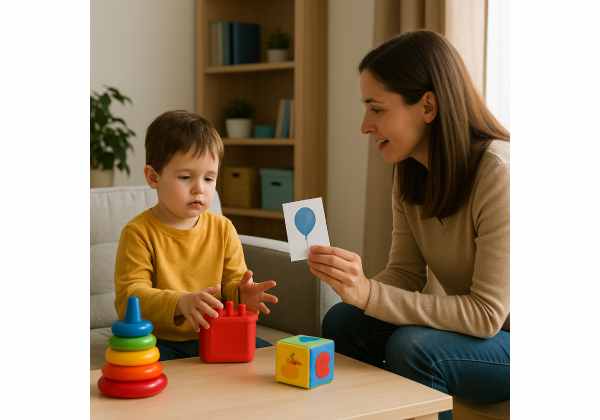
Infantile autism is an older clinical term for what is now usually described as autism spectrum disorder when the features are present from early childhood. The word “infantile” can be misleading because autism is not limited to infancy, and many children are not recognized or diagnosed until toddlerhood, preschool, school age, or later. Still, the term points to an important idea: autism is a neurodevelopmental condition, meaning it begins as the brain develops, even if its signs become clearer over time.
Autism affects social communication, social interaction, behavior patterns, sensory processing, interests, learning style, and daily functioning in different ways. Some autistic children speak early and have strong skills in certain areas. Others have delayed speech, limited spoken language, intellectual disability, epilepsy, or major daily support needs. The word “spectrum” reflects this wide range, not a mild-to-severe straight line.
What matters most early on
- Infantile autism usually refers to early-appearing autism spectrum disorder, not a separate modern diagnosis.
- Core signs involve social communication differences plus restricted, repetitive, or highly focused patterns of behavior or interests.
- Early clues may include limited response to name, reduced gestures, delayed pretend play, unusual sensory reactions, or loss of words or social skills.
- Autism can be confused with speech delay, hearing loss, ADHD, anxiety, intellectual disability, trauma-related withdrawal, or learning differences.
- A professional evaluation matters when developmental concerns persist, skills regress, or daily functioning is clearly affected.
Table of Contents
- What infantile autism means today
- Core symptoms and behavioral signs
- Early signs by age and setting
- Causes and brain development
- Risk factors that raise likelihood
- Conditions that can look similar
- Diagnostic context and evaluation
- Possible effects and complications
What infantile autism means today
Infantile autism is best understood as a legacy term for early-onset autism, now usually classified under autism spectrum disorder. Modern diagnostic systems no longer treat classic autism, Asperger syndrome, and related developmental labels as entirely separate conditions in the same way older systems did; they are now generally considered within a broader autism spectrum, with attention to language, intellectual development, support needs, and associated conditions.
Historically, “infantile autism” was used to describe children who showed clear developmental differences early in life, especially in social relatedness, communication, play, and behavior. The term overlaps with older phrases such as childhood autism, autistic disorder, and Kanner syndrome. In everyday use, some clinicians, records, or translated medical documents may still use “infantile autism,” especially when referring to diagnoses made under older coding systems.
The more current phrase, autism spectrum disorder, is more accurate because autism does not look the same in every child. One child may have no spoken language, repetitive movements, high sensory sensitivity, and major difficulty with changes in routine. Another may speak fluently but struggle with back-and-forth conversation, peer relationships, flexible play, or hidden social rules. A third may show strong early vocabulary but have intense distress around transitions, narrow interests, or sensory overload.
Autism is not defined by appearance, intelligence, parenting style, or personality. It is defined by patterns of development and behavior. The diagnosis requires persistent differences in social communication and interaction, along with restricted or repetitive patterns of behavior, interests, or sensory responses. These features must be developmentally meaningful, not just occasional habits or preferences.
The “infantile” label can also create confusion because some signs are subtle in infancy. A baby may seem calm, fussy, unusually independent, unusually sensitive, or simply different in ways that are hard to interpret. More recognizable signs often appear between 12 and 24 months, when social attention, gestures, imitation, shared play, and early language usually become more visible. Some children show signs in the first year; others seem to develop typically for a period and then plateau or lose skills.
Because autism is lifelong, early signs do not disappear from relevance once a child grows older. Childhood traits may change, become masked, or appear differently as social demands increase. A child who seemed only “quiet” at age two may struggle more clearly with peer play at age four. A school-age child may have strong factual knowledge but find group work, transitions, noise, or figurative language very difficult.
Core symptoms and behavioral signs
The core symptoms of infantile autism involve two broad areas: social communication differences and restricted, repetitive, or sensory-related patterns. A child does not need to show every possible sign, but the overall pattern must be consistent enough to affect development or daily functioning.
Social communication signs often involve how a child uses eye gaze, facial expression, gestures, speech, shared attention, and social response. For example, a toddler may not consistently look where another person points, may not bring objects to show interest, or may not respond to their name despite normal hearing. Some children do make eye contact, but it may be brief, intense, poorly coordinated with communication, or less useful for reading social meaning.
Speech and language differences vary widely. Some autistic children have delayed first words or do not develop spoken language. Others speak on time but use language in unusual ways, such as repeating phrases, scripting lines from videos, using formal speech, or talking at length about a preferred topic without noticing whether the listener is engaged. Echolalia, or repeated speech, can be meaningless in some moments but communicative in others, so it should not be dismissed as “just repetition.”
Restricted and repetitive behaviors can include hand flapping, rocking, spinning, lining up objects, repeating the same play sequence, or becoming very distressed when routines change. Focused interests may be unusually intense for the child’s age, such as deep fascination with letters, numbers, maps, fans, train schedules, animals, logos, or parts of objects. These interests may be a source of pleasure and learning, but they can also interfere with flexibility when the child cannot shift attention.
Sensory differences are also common. A child may cover their ears to ordinary sounds, avoid certain textures, gag at specific foods, seek pressure, stare at spinning objects, smell items, or react strongly to lights, clothing tags, grooming, or crowded places. Sensory features do not prove autism by themselves, but they often help explain behavior that might otherwise be mistaken for defiance or anxiety.
| Area | Examples of possible signs | Why it matters |
|---|---|---|
| Social attention | Limited response to name, reduced showing or sharing, less interest in back-and-forth play | May reflect difficulty coordinating attention with another person |
| Communication | Delayed speech, few gestures, repeated phrases, unusual tone, limited conversation rhythm | May affect how needs, feelings, and interests are expressed |
| Play and flexibility | Repeating the same play, lining up toys, distress with changes, limited pretend play | May show differences in symbolic play, flexibility, and routine dependence |
| Sensory processing | Strong reactions to sounds, textures, light, movement, smells, or pain | May contribute to distress, avoidance, meltdowns, or unusual seeking behaviors |
These signs need context. A toddler who lines up cars once is not necessarily autistic. A child who avoids eye contact when shy, tired, or overwhelmed may not have autism. The concern grows when multiple signs appear together, persist across settings, and affect communication, play, learning, safety, or relationships.
Early signs by age and setting
Early signs of infantile autism often become clearer when a child is expected to share attention, imitate, gesture, speak, pretend, and play flexibly. Watching development across home, childcare, preschool, and medical visits gives a fuller picture than judging one behavior in isolation.
In infancy, possible signs may include limited social smiling, reduced back-and-forth vocalizing, unusual quietness or irritability, limited response to familiar voices, or less interest in faces. These signs are not specific to autism and may also reflect hearing problems, vision problems, temperament, sleep issues, prematurity, or other developmental concerns. That is why early signs are best treated as prompts for closer developmental observation, not as proof.
By 9 to 12 months, concerns may become more specific if a baby rarely responds to their name, uses few gestures, does not reach to be picked up in expected ways, shows limited imitation, or seems less interested in social games. Some babies show unusual sensory responses, such as intense distress with ordinary sounds or fascination with lights, spinning objects, or repetitive movement.
By 15 to 18 months, many typically developing toddlers point to show interest, bring objects to share, look back and forth between a person and an object, imitate simple actions, and begin pretend play. Possible autism signs at this stage include not pointing to share interest, limited showing, few words or gestures, little pretend play, or using an adult’s hand as a tool without social checking. Concerns at this age often lead to autism screening in toddlers, especially when parents, caregivers, or clinicians notice repeated patterns.
By 24 months, a child may show clearer differences in speech, play, social response, flexibility, or sensory regulation. Some autistic toddlers speak very little. Others know many words but mainly label objects, recite, or request, rather than use language for social back-and-forth. A child may prefer solitary play, resist changes, become upset by minor disruptions, or repeat movements when excited or overwhelmed.
In preschool and early school years, signs may appear as difficulty joining peers, literal interpretation of language, intense interests, rigid rule-following, distress with transitions, sensory overload, or trouble understanding pretend roles. Some children are recognized only after social demands exceed what they can manage. Others are first identified because of speech delay, behavior concerns, sleep problems, feeding selectivity, or differences noted by teachers.
Regression deserves special attention. Some children lose words, gestures, social engagement, play skills, or adaptive abilities after previously using them. Regression can occur in autism, but it can also signal neurological, metabolic, hearing, seizure-related, or other medical problems. Loss of skills, new seizures, sudden confusion, major change in movement, or rapid developmental decline should be evaluated promptly.
Causes and brain development
Infantile autism does not have one single known cause. Current evidence supports a complex developmental picture involving genetics, early brain development, and environmental or biological influences that may affect risk in some children.
Autism is strongly influenced by genetic factors. This does not mean every autistic child has one identifiable gene change, or that autism is inherited in a simple parent-to-child pattern. Many genes appear to contribute, and different combinations may affect brain development, language, social attention, sensory processing, and learning. In some children, autism is associated with a known genetic or chromosomal condition, such as fragile X syndrome, tuberous sclerosis complex, Rett syndrome, or certain copy number variants. In many others, no single cause is found.
Brain development differences may begin before birth. Autism is associated with differences in how brain networks develop, connect, and process information. These differences can affect attention to social cues, prediction, sensory filtering, flexibility, motor planning, language, and learning. The brain is not “damaged” in one simple location; autism involves broad developmental pathways that vary from person to person.
Environmental risk factors are often misunderstood. In autism research, “environmental” does not mean parenting style, emotional warmth, discipline, or ordinary household experiences. It refers to non-genetic influences that may occur before birth, around birth, or early in development. Examples studied include prematurity, very low birth weight, certain prenatal exposures, maternal infection or immune activation, metabolic conditions during pregnancy, birth complications, and advanced parental age. These factors may slightly raise risk at a population level but usually do not determine an individual child’s outcome by themselves.
It is also important to separate risk from blame. A risk factor is not the same as a cause in a specific child. Many children with risk factors are not autistic, and many autistic children have no obvious risk factor beyond family history or genetic susceptibility. Families should be cautious about explanations that claim one event, food, device, parenting choice, or routine childhood experience “caused” autism without strong evidence.
Vaccines have been repeatedly studied because of public concern, and high-quality evidence does not support a causal link between vaccines and autism. This point matters because vaccine myths can distract families from real developmental questions and increase fear around routine medical care. Autism signs often become noticeable around the same age when toddlers receive scheduled vaccines, but timing overlap is not the same as causation.
Autism is not caused by cold parenting, lack of affection, poor discipline, screen use alone, or a child being “spoiled.” Screen exposure, sleep, family stress, and learning opportunities can influence behavior and development, but they do not explain the core neurodevelopmental pattern of autism. The most accurate view is that infantile autism reflects early differences in brain development shaped by a mixture of genetic and biological influences.
Risk factors that raise likelihood
Risk factors can make autism more likely, but they cannot diagnose autism and they rarely explain an individual child’s development on their own. They are most useful when they help clinicians decide which children need closer developmental monitoring or a more complete evaluation.
A family history of autism is one of the strongest known risk factors. If a child has an autistic sibling, the chance of autism is higher than in the general population. The likelihood may be higher when more than one sibling is autistic or when the younger child is male. Family history can also include related traits, such as language delay, learning differences, ADHD, intellectual disability, or broader social communication differences.
Sex is another factor. Autism is diagnosed more often in boys than in girls. This difference may reflect both biology and under-recognition. Girls may show less obvious repetitive behavior, imitate peers more, have interests that seem socially typical on the surface, or mask confusion until social demands become more complex. As a result, some girls are identified later or first receive diagnoses such as anxiety, selective mutism, ADHD, or eating-related concerns.
Certain genetic and chromosomal conditions increase autism likelihood. Fragile X syndrome, tuberous sclerosis complex, Down syndrome, Rett syndrome, and some rare copy number variants can be associated with autistic features. Not every child with these conditions is autistic, and not every autistic child has a known genetic syndrome, but their overlap is clinically important.
Pregnancy and birth-related factors may also be associated with increased likelihood at a population level. These include prematurity, low birth weight, birth complications, older parental age, some prenatal infections, and maternal metabolic conditions such as diabetes or obesity. These associations are complex. They may involve biology, genetics, healthcare access, measurement differences, or shared family factors. They should not be used to blame parents.
Developmental history matters as well. A child with delayed speech, limited gestures, reduced shared attention, unusual sensory responses, or regression should be observed closely, especially when several concerns appear together. A single isolated delay may point to many possibilities, but a pattern across social communication, play, behavior, and sensory processing is more suggestive.
Risk factors are not destiny. A premature infant, a child with an older parent, or a toddler with a speech delay does not automatically have autism. Likewise, a child without obvious risk factors can still be autistic. Evaluation depends on the child’s actual developmental pattern, not only on background risk.
For families trying to understand overlapping traits, comparisons such as autism and ADHD differences can be useful because both conditions may involve attention, impulse control, social difficulty, sensory seeking, and emotional outbursts. The distinction often depends on the reason behind the behavior, the developmental history, and the presence or absence of restricted and repetitive patterns.
Conditions that can look similar
Several developmental, medical, and mental health conditions can resemble infantile autism, overlap with it, or occur alongside it. A careful evaluation looks for the full pattern rather than assuming that one visible behavior explains everything.
Speech and language disorders are among the most common sources of confusion. A child with expressive language delay may speak late but still use eye contact, gestures, pointing, showing, imitation, and pretend play well. A child with autism may also have language delay, but the concern usually includes social communication differences beyond speech alone. Receptive language problems, childhood apraxia of speech, and pragmatic language difficulties can complicate the picture.
Hearing loss can also look like autism. A child who does not respond to their name, follows few verbal instructions, or speaks late needs hearing considered, even if they startle to loud noises or respond sometimes. Partial hearing loss, fluctuating hearing from ear fluid, or auditory processing differences may be missed without formal assessment.
ADHD may overlap with autism through impulsivity, emotional outbursts, difficulty waiting, trouble following group routines, and peer conflict. The difference is not always obvious. ADHD is more centered on attention regulation, hyperactivity, and impulse control, while autism requires the specific pattern of social communication differences plus restricted, repetitive, or sensory features. Many children have both, which can make school and home behavior more complex.
Intellectual disability and global developmental delay can include delayed language, slower learning, immature play, and difficulty with adaptive skills. Autism may be diagnosed when social communication is more affected than expected for the child’s overall developmental level, or when repetitive behaviors and sensory differences are prominent. Developmental testing helps clarify whether delays are broad, autism-specific, or both.
Anxiety, selective mutism, trauma-related withdrawal, and attachment-related concerns can also affect eye contact, speech, play, and social engagement. A child who is fearful in one setting may appear socially shut down but communicate more typically in a safe and familiar environment. Autism signs are usually more persistent across contexts, though they may still vary depending on sensory load, fatigue, stress, and familiarity.
Some medical or neurological conditions may present with developmental regression, unusual movements, staring spells, sleep disruption, feeding problems, or behavioral changes. Seizure disorders, genetic syndromes, metabolic disorders, sleep disorders, and vision or hearing problems may need consideration, especially when the developmental story is atypical.
Because overlap is common, autism evaluation should not be a quick label based on a checklist alone. Tools can help organize information, but diagnosis depends on developmental history, direct observation, caregiver report, functioning across settings, and consideration of other explanations. Related assessments, including testing for ADHD and learning differences, may be relevant when attention, school performance, or academic skills are also concerns.
Diagnostic context and evaluation
Infantile autism is diagnosed through developmental and behavioral assessment, not through a blood test, brain scan, or single questionnaire. Clinicians look at whether the child’s history and current behavior meet autism spectrum disorder criteria and whether another condition better explains the concerns.
Screening and diagnosis are not the same. Screening identifies children who may need further evaluation. A screening result can be positive even if a child does not have autism, and it can be negative even if concerns later become clearer. Common toddler screening may include parent questionnaires such as the M-CHAT-R/F, which is designed to identify children who need closer follow-up. A parent who wants to understand what a screening result can and cannot show may benefit from reading about M-CHAT screening results.
A full diagnostic workup usually includes a detailed developmental history, review of milestones, caregiver interview, direct observation of social communication and play, assessment of language and cognitive skills, and review of adaptive functioning. Clinicians may ask about pregnancy and birth history, medical issues, sleep, feeding, sensory responses, family history, regression, school or childcare observations, and behavior across different settings.
Standardized tools may be used, but they do not replace clinical judgment. The ADOS autism test, for example, is a structured observation used in many diagnostic evaluations. Other tools may include caregiver interviews, rating scales, language testing, cognitive testing, adaptive behavior scales, and school-based developmental information. The specific tools depend on the child’s age, language level, developmental profile, and referral question.
Medical evaluation may also be relevant. Hearing testing is often important when speech delay or poor response to name is present. Vision assessment, neurological evaluation, genetic testing, or other medical review may be considered when there are seizures, unusual physical findings, intellectual disability, regression, or a family history that suggests a genetic condition. Brain scans are not used to diagnose autism itself, but they may be ordered if there are separate neurological concerns.
Professional evaluation is especially important when concerns are persistent, appear in more than one setting, affect daily functioning, or include loss of skills. The process described in autism testing in children often involves more than one professional, such as a developmental-behavioral pediatrician, psychologist, speech-language pathologist, neurologist, psychiatrist, or specialized autism team.
Urgent evaluation is needed when a child has sudden loss of language or motor skills, new seizures, episodes of unresponsiveness, severe self-injury, major change in consciousness, signs of abuse or neglect, or dangerous behavior that cannot be safely managed. These situations may or may not be related to autism, but they should not be attributed to autism without medical review.
Possible effects and complications
The effects of infantile autism depend on the child’s communication, cognitive profile, sensory needs, medical conditions, environment, and support needs. Autism itself is not a single predictable pathway; outcomes vary widely, and complications often come from the interaction between autistic traits and daily demands.
Communication challenges can affect safety, relationships, learning, and emotional expression. A child who cannot explain pain, fear, hunger, or confusion may cry, withdraw, bolt, bite, hit, or melt down instead. A fluent-speaking child may still struggle to describe internal states, understand sarcasm, follow fast group conversation, or ask for help before becoming overwhelmed.
Social differences can affect peer relationships. Young children may play near others rather than with them, miss social cues, prefer predictable adult interaction, or become distressed when peers change the rules of play. Older children may be vulnerable to isolation, bullying, misunderstanding, or exhaustion from trying to imitate others. Some want friendships deeply but do not know how to maintain them; others are content with less social contact but still need respect, inclusion, and safety.
Sensory differences can complicate ordinary environments. Bright classrooms, crowded stores, haircuts, dental visits, clothing textures, alarms, hand dryers, or cafeteria noise may trigger distress. A child may appear oppositional when the real issue is sensory overload, difficulty shifting attention, or inability to predict what will happen next. Repeated overload can contribute to avoidance, sleep disruption, feeding problems, or behavior that seems sudden from the outside.
Common co-occurring conditions include ADHD, anxiety, sleep problems, gastrointestinal complaints, feeding selectivity, motor coordination difficulties, language disorder, intellectual disability, and seizure disorders. These conditions can affect daily functioning as much as, or sometimes more than, autism traits themselves. Recognizing them matters because a child’s difficulties should not all be lumped under one label.
Safety can be a major concern for some families. Children with autism may wander, bolt toward water or traffic, have reduced danger awareness, or become overwhelmed in unfamiliar places. Others may have strong fear responses, panic in crowds, or freeze during transitions. Self-injury, aggression, or property destruction can occur, especially when communication is limited, pain is unrecognized, or demands exceed coping capacity.
Emotional complications may become more visible with age. Autistic children and adolescents can experience anxiety, depression, low self-esteem, irritability, burnout, or trauma from chronic misunderstanding. These are not inevitable, but they are important to watch for, particularly when a child’s environment consistently demands skills they do not yet have or punishes distress without understanding it.
The most important practical point is that complications should be evaluated rather than assumed to be “just autism.” New pain behaviors, sleep changes, regression, severe anxiety, loss of appetite, seizures, sudden aggression, or marked withdrawal may signal an additional medical, neurological, or mental health issue. Autism can explain a developmental pattern, but it should not become a reason to overlook new or worsening symptoms.
References
- Autism 2025 (Fact Sheet)
- About Autism Spectrum Disorder 2026 (Government Resource)
- Signs and Symptoms of Autism Spectrum Disorder 2024 (Government Resource)
- Clinical Testing and Diagnosis for Autism Spectrum Disorder 2025 (Government Resource)
- Identification, Evaluation, and Management of Children With Autism Spectrum Disorder 2020 (Clinical Report)
- Statement of the WHO Global Advisory Committee on Vaccine Safety (GACVS) on vaccines and autism 2025 (Position Statement)
Disclaimer
This article is for general educational purposes only and is not a substitute for professional medical advice, diagnosis, or treatment. Concerns about autism, developmental regression, seizures, self-injury, or major changes in a child’s behavior should be discussed with a qualified healthcare professional.
Thank you for taking the time to read about this sensitive topic; sharing it may help another family recognize developmental concerns with more clarity and less confusion.





