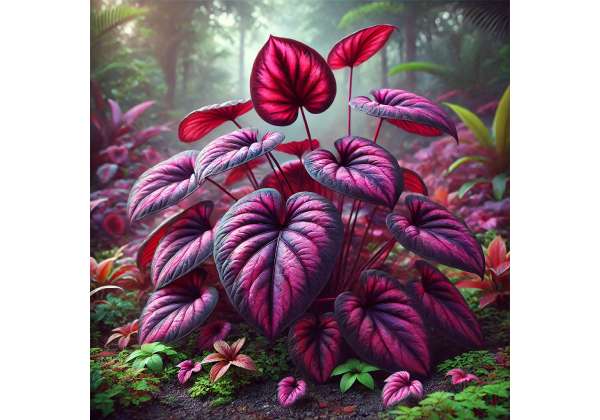
Iresine, better known botanically as Iresine herbstii and commonly called bloodleaf, is one of those plants that lives in two worlds at once. Most people know it as an ornamental with vivid red, burgundy, or pink-veined foliage. But in parts of Latin America and Asia, it also appears in traditional medicine, where the leaves have been used for skin problems, post-labor recovery, ritual healing, and blood-related weakness. Modern research adds another layer: laboratory and animal studies suggest antioxidant, antiviral, cytotoxic, and mild hematologic effects, while phytochemical work points to phenols, flavonoids, alkaloids, and a few unusual isoflavonoids.
Still, Iresine is not a well-standardized medicinal herb with proven human outcomes. The strongest evidence is preclinical, and the safety profile for regular internal use remains incomplete. That makes it a plant worth discussing with care: interesting, promising in spots, but not established enough to justify sweeping claims. A good article on Iresine should therefore do two things at once: explain what traditional use and early research suggest, and be equally clear about what is still unknown.
Core Points
- Iresine shows early promise for antioxidant activity and topical skin-related use.
- Animal and laboratory studies also suggest antiviral and blood-supportive potential.
- No validated human dose exists; animal studies used oral extract doses of 100 to 400 mg/kg.
- Avoid unsupervised internal use during pregnancy, breastfeeding, childhood, or alongside prescription treatment.
- The strongest current evidence is preclinical, not clinical.
Table of Contents
- What is Iresine?
- Key compounds and plant actions
- What does it help with?
- How Iresine is used
- How much per day?
- Side effects and who should avoid it
- What the research actually shows
What is Iresine?
Iresine herbstii is a tropical member of the Amaranthaceae family, the same broad plant family that includes amaranth and several pigment-rich leafy species. In horticulture, it is best known as bloodleaf or beefsteak plant and is prized for its showy foliage rather than its flowers. It is generally described as a short-lived perennial, often grown as an annual or as a houseplant, with red stems and purple-red leaves marked by lighter veins. In cultivation, it is usually grown for looks, not for food.
That ornamental identity is important because it shapes the way many readers first encounter the plant. Unlike chamomile, ginger, or peppermint, Iresine is not widely sold in mainstream herbal commerce as a tea, capsule, or standardized tincture. Yet ethnomedical sources show that it has a second history beyond gardening. In traditional use, especially in parts of the northern Peruvian Andes and in some Asian medical contexts, the leaves have been used for ritual and curative purposes, including wound-related and skin-related applications, and in formulas associated with blood nourishment and women’s reproductive recovery.
This combination makes Iresine unusually easy to misread. Some articles treat it like a purely decorative plant and ignore the medicinal record altogether. Others do the opposite and overstate early herbal findings as if the species were already clinically established. The more accurate middle ground is that Iresine is an ornamental plant with documented traditional medicinal use and a modest but real preclinical research trail. That is enough to justify careful discussion, but not enough to present it as a proven therapeutic herb.
For readers, this means context matters. If you grow Iresine in a pot, you are interacting with a foliage plant. If you study its older folk uses, you are entering a different body of knowledge, one that includes skin applications, postpartum tonic use, and ritual practice. Those traditions deserve respect, but they also need modern scrutiny. The plant may be culturally meaningful and pharmacologically interesting at the same time, yet still fall short of the evidence needed for confident medical claims. That balance is the right starting point for everything that follows.
If you are interested in related pigment-rich plants from the same broader family, articles on amaranth-family plants offer a useful comparison point, but Iresine should still be evaluated on its own evidence rather than by family resemblance alone.
Key compounds and plant actions
The chemistry of Iresine is one of the reasons the plant keeps resurfacing in pharmacology papers. Different extracts contain different proportions of phenolic compounds, flavonoids, alkaloids, and other constituents, and solvent choice matters. Experimental work suggests that ethanolic extracts can hold higher quantities of measured phytochemicals than some other preparations, while total phenolic and total flavonoid values vary by solvent and method. That matters because many of the “benefits” associated with Iresine are really extract-specific observations rather than fixed, universal properties of the whole plant.
One useful anchor comes from animal research reporting that the leaves contain flavonoids, phenols, and alkaloids, along with measurable nutrient content and minerals such as zinc, iron, phosphorus, calcium, and magnesium, plus vitamins A, C, E, and several B vitamins. This does not automatically make Iresine a superior nutritive herb, but it helps explain why the plant has sometimes been associated with “blood support” or restorative use in traditional settings. A plant with pigments, phenolic compounds, and trace nutrients is at least chemically plausible as a tonic-like leaf remedy.
The species also has a more specialized chemistry story. Phytochemical work has isolated unusual compounds such as a new isoflavanone from the aerial parts of Iresine herbstii, together with another isoflavone, and tested them for alpha-glucosidase inhibitory activity. The measured effect was relatively low in that experiment, but the paper still matters because it confirms that Iresine is not chemically generic. It has species-specific secondary metabolites that deserve more attention than the usual vague label of “plant antioxidants.”
In practical terms, the plant’s main proposed actions can be grouped like this:
- antioxidant activity
- mild antimicrobial or antiviral potential in experimental systems
- possible wound-supportive or skin-supportive effects
- exploratory hematologic support in animal work
- possible central nervous system interaction based on receptor-binding work
That last point deserves care. Receptor-binding findings do not prove that Iresine is a safe or effective neurologic herb. They only suggest that extracts show affinity on several cerebral receptor targets in vitro, which may help explain why the plant appears in ritual or “central effect” contexts in some traditions. Mechanism signals are not the same as human benefit.
So what should readers remember? Iresine contains enough biologically active chemistry to justify research, but not enough standardized evidence to treat it like a fully mapped medicinal plant. Its compounds help explain why it is interesting; they do not, by themselves, prove that a home-prepared leaf tea or tincture will produce predictable therapeutic outcomes. That gap between chemistry and clinically useful effect is the central caution around Iresine.
What does it help with?
The most honest answer is that Iresine may help in a few traditional or experimental areas, but the confidence level differs sharply depending on the claim. The strongest low-level support is for antioxidant activity. Recent in vitro work reported antioxidant effects in water and ethanol extracts, and earlier antiviral research also documented substantial phenolic and flavonoid content across tested extracts. That makes “antioxidant potential” a fair description, though still a laboratory one.
The second area is topical and skin-oriented use. Ethnopharmacology and review literature describe external use of the leaves for wound healing and skin conditions such as irritated or inflamed areas. That does not mean Iresine is as well established for skin care as calendula or other better-known topical herbs, but it does make topical folk use one of the more grounded traditional applications. The evidence here is suggestive rather than definitive. There is traditional support and plausibility, but not a modern clinical wound-healing dossier.
A third area is blood-related support. In some local traditions, the plant has reportedly been used to improve blood supply, and animal studies have found that leaf extract can improve red blood cell count in experimentally induced anemia. This is one of the most concrete preclinical signals around Iresine, but it remains animal data. It does not establish that the plant treats human anemia or can replace iron therapy, lab testing, or medical evaluation.
A fourth area is antiviral and cytotoxic activity in laboratory settings. Some studies report antiviral activity in ovo and antioxidant, cytotoxic, and antiestrogen-related activity in cell models. These findings are intriguing, but they are not clinical cancer or antiviral claims. They tell us where researchers may explore next, not what patients should do now.
In short, the realistic benefit profile looks like this:
- most plausible:
- antioxidant support
- topical traditional skin use
- exploratory blood-supportive potential
- possible but unproven:
- antiviral activity
- reproductive-support traditions
- central nervous system effects
- not established:
- cancer treatment
- routine anemia treatment
- safe long-term tonic use
That ranking matters. It helps keep Iresine in the right category: promising, culturally important, and pharmacologically active, but not yet a clinically validated herb for any single condition.
How Iresine is used
Traditional use of Iresine is much more varied than modern herbal product labels would suggest. In the ethnomedical literature, the leaves are the main medicinal part. They have been used externally for skin complaints and wound support, internally as part of tonic-type preparations, and ritually in Andean healing practices. In some Asian traditional systems, the plant also appears in formulas related to women’s health and blood nourishment. These are not interchangeable uses, and they should not be flattened into a single consumer-style “how to take it” instruction.
For topical use, the traditional logic is the easiest to understand. Fresh leaves or simple preparations were used on affected skin or minor wounds. From a modern point of view, this is still the most conservative way to think about practical use: local, limited, and easy to stop if irritation develops. Anyone exploring that tradition should still treat it like a folk practice rather than a proven dermatologic treatment.
Internal use is more complicated. The research literature often uses methanolic, ethanolic, aqueous, or mixed solvent extracts, not household infusions made in one standardized way. That makes translation difficult. A lab extract showing antioxidant or receptor-binding activity does not tell a reader how much fresh leaf, dried leaf, or decoction would reproduce the same effect. It only tells us that the plant contains active compounds worth studying.
The most practical way to frame Iresine use today is in three levels:
- Ornamental use
This is by far the most established. The plant is widely grown for foliage and is easy to propagate from cuttings. - Traditional topical use
This has historical support, especially for minor skin-related applications, but limited modern clinical validation. - Experimental internal use
This exists in traditional medicine and in preclinical research, but it lacks standardized human dosing and strong safety data. That means it should be approached carefully, if at all.
For readers who mainly want a gentle, better-known topical herb, aloe vera is easier to use responsibly because the preparation style and safety expectations are more familiar. Iresine is different. It is a plant with meaningful traditions, but it still sits closer to exploratory herbalism than to mainstream evidence-based self-care.
That does not reduce its value. It simply means the form matters as much as the plant. A topical folk use, an ornamental use, and a concentrated internal extract are three different conversations, and good herbal practice keeps them separate.
How much per day?
There is no validated human medicinal dose for Iresine herbstii. That is the most important dosage fact, and it should stay front and center. No clinical guideline tells us how many grams of leaf, how many milliliters of tincture, or how many capsules per day are safe and effective for a defined health target. Any article that gives a precise human regimen without acknowledging that gap is overstating the evidence.
What we do have are preclinical numbers. In animal research on anemia-related parameters, methanolic leaf extract was given orally at 100, 200, and 400 mg/kg for 14 days, and acute toxicity testing in the same line of work reported oral doses up to 5000 mg/kg, with an LD50 above that threshold in rats. These findings are useful for understanding research scale and broad tolerability in animals. They are not a direct human dose recommendation.
This distinction matters because readers often convert animal doses into consumer use too quickly. That is risky for several reasons:
- the extract type may differ from any home preparation
- the active compounds are not standardized across preparations
- absorption in humans may not match rats
- repeated human use data are missing
- traditional use does not equal validated modern dosing
A responsible dosage section for Iresine therefore looks different from one for a well-studied herb. Instead of pretending a standard exists, it should explain the limits.
The safest practical guidance is:
- no established oral human dose can be recommended
- do not use animal doses as a home blueprint
- if used topically in traditional style, keep the application small-area and short-term
- stop with any irritation, rash, digestive upset, or unusual symptoms
- avoid prolonged internal experimentation
If someone is seeking a plant with clearer daily intake guidance, Iresine is probably the wrong herb to start with. It is better viewed as a plant under investigation than as a mature self-care botanical. That is especially true for people interested in internal use for blood building, reproductive support, or long-term antioxidant goals. The research is not yet good enough to support a routine regimen.
So the best answer to “how much per day?” is not a number. It is a boundary: there is no evidence-based human daily dose at present, and that uncertainty should be treated as part of the safety profile, not as a minor missing detail.
Side effects and who should avoid it
Human safety data on Iresine are limited. That does not automatically mean the plant is dangerous, but it does mean caution should come before enthusiasm. Animal data suggest a fairly wide acute safety margin for one methanolic leaf extract, yet that finding does not settle the question for other extracts, different plant material, long-term use, pregnancy, or people taking medication. It is a piece of safety information, not a complete safety profile.
The main practical risk with Iresine is uncertainty. Readers may assume that a colorful ornamental with a folk-medicine history must also be gentle enough for casual internal use. That is not a safe assumption. Receptor-affinity findings suggest that Iresine extracts may interact with central nervous system receptor systems in vitro, which is interesting scientifically but also a reason to be careful around sedatives, psychiatric conditions, or any attempt to use the plant for mood, trance, or nervous-system effects without expert supervision.
Groups that should avoid unsupervised medicinal use include:
- pregnant or breastfeeding people
- children
- people using prescription drugs for mood, sleep, seizures, or other central nervous system conditions
- those being treated for anemia or reproductive disorders
- anyone with severe allergies or highly reactive skin
- people planning long-term internal use
Possible side effects have not been defined well in human trials, but the sensible list of concerns includes:
- stomach upset from internal plant extracts
- skin irritation with fresh topical application
- unpredictable interaction with other herbs or medicines
- false reassurance in people who need medical care, especially for anemia or reproductive symptoms
That last point is often missed. A plant with traditional “blood-building” or postpartum associations may sound supportive, but those are exactly the situations where medical context matters. Low hemoglobin, abnormal bleeding, severe fatigue, or postpartum weakness should not be self-managed with an understudied plant.
If your interest in Iresine is mostly skin related, it is still wise to patch-test any fresh preparation first. Traditional topical use does not guarantee universal tolerance. Even herbs with a longer surface-use history can irritate some people, which is one reason better-defined topical plants such as witch hazel are often easier to use conservatively.
Overall, the safest summary is straightforward: Iresine is interesting enough to study, but not studied enough to use casually as a daily medicinal herb. Until more human data exist, the right approach is modest, short-term, and cautious.
What the research actually shows
The research on Iresine is enough to justify curiosity, but not enough to justify hype. That is the simplest way to summarize the evidence. The plant has a documented ornamental identity, a real ethnomedical footprint, and several preclinical findings that make it pharmacologically interesting. Yet it still lacks the kind of human trial data needed to confirm clear benefits, dosing, or long-term safety.
Here is what the evidence supports best right now:
- traditional use exists in multiple cultural settings
- the plant contains measurable phytochemicals and some unusual isolated compounds
- antioxidant activity is fairly consistent across experimental papers
- antiviral, cytotoxic, and antiestrogen-related findings exist in laboratory or in ovo models
- animal studies suggest possible support for red blood cell count in induced anemia
- acute oral toxicity in one rat extract study did not reveal a low LD50
Here is what the evidence does not yet support:
- a clinically validated medicinal dose
- proven treatment of anemia in humans
- established anticancer use
- routine reproductive-health recommendations
- predictable neurologic or mood effects
- long-term internal safety
That mismatch is exactly why Iresine should be handled differently from better-studied herbs. It belongs in the category of promising traditional plants with early pharmacologic signals, not in the category of evidence-secure self-treatment options. For readers who want a better-established immune or wellness herb, something like echinacea has a much more developed clinical conversation than Iresine.
Another point worth emphasizing is that many of the positive findings come from extracts, not from standardized consumer preparations. A methanolic leaf extract in animals, an ethanolic extract in vitro, and a fresh ornamental leaf in a garden are not equivalent forms of the same product. That is why simplistic statements such as “bloodleaf cures X” collapse under scrutiny. The plant may hold useful compounds, but the bridge from plant to therapy is still incomplete.
So the most evidence-based conclusion is this: Iresine has legitimate traditional medicinal interest and several promising preclinical properties, especially around antioxidant activity, topical folk use, and exploratory blood-supportive effects. But it remains an early-stage herbal candidate, not a clinically proven remedy. That balanced view is less dramatic than marketing language, but it is far more useful to anyone trying to judge the plant honestly.
References
- In Vitro Investigation of the Cytotoxic and Antioxidant Activities of Ardisia polycephala, Iresine herbstii, and Oenanthe javanica Extracts With Potential Applications in Breast Cancer Therapy 2025
- Analysis of bioactive composites and antiviral activity of Iresine herbstii extracts against Newcastle disease virus in ovo 2020
- Review on medicinal and pharmacological properties of Iresine herbstii, Chrozophora rottleri and Ecbolium linneanum 2011
- The effect of Iresine herbstii Hook on some haematological parameters of experimentally induced anaemic rats 2016
- A new isoflavanone from Iresine herbstii 2011
Disclaimer
This article is for educational purposes only and is not a diagnosis, treatment recommendation, or substitute for professional medical advice. Iresine has limited human research, no established clinical dose, and an incomplete safety profile for routine internal use. Anyone who is pregnant, breastfeeding, taking prescription medication, managing anemia or reproductive symptoms, or considering long-term use should speak with a qualified healthcare professional before using this plant medicinally.
If this article helped you, please share it on Facebook, X, or your preferred platform so others can find a careful, evidence-aware overview.