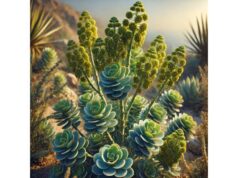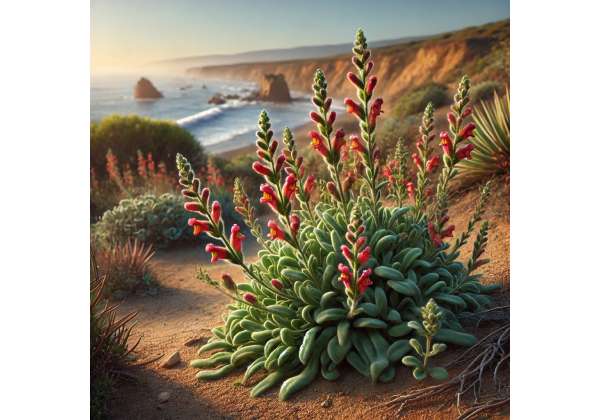
Island Snapdragon, traditionally known in horticulture as Galvezia speciosa and now more often accepted botanically as Gambelia speciosa, is a striking Channel Islands shrub with red tubular flowers and a stronger ornamental reputation than medicinal one. That distinction matters. Many plants with “snapdragon” in the name invite herbal assumptions, yet Island Snapdragon is not a mainstream remedy with a long, well-standardized record of therapeutic use. What makes it worth discussing is the narrow but interesting evidence that does exist. Chemotaxonomic work places the species among plants containing iridoid-type compounds, and recent ecological and pigment studies show antimicrobial nectar chemistry and distinctive red floral pigments. Those findings suggest biological activity, but they do not turn the plant into a proven home medicine.
The most helpful way to read Island Snapdragon is with discipline: as a rare native shrub with intriguing phytochemistry, possible antioxidant and antimicrobial relevance, and very limited evidence for internal medicinal use. That means the best article is not the one that promises the most. It is the one that separates real potential from guesswork.
Core Points
- Island Snapdragon shows the strongest evidence for biologically active compounds, not for proven human therapeutic use.
- Species-level research supports iridoid-related chemistry and antimicrobial nectar defenses rather than established clinical benefits.
- No validated medicinal dose exists, though exploratory infusion-style use is sometimes framed at 1 to 2 g dried aerial parts in 240 mL water.
- Avoid self-treatment during pregnancy, breastfeeding, childhood, and when taking prescription medicines or managing chronic illness.
Table of Contents
- What is Island Snapdragon
- Key compounds and actions
- What can Island Snapdragon help with
- How Island Snapdragon is used
- How much Island Snapdragon per day
- Safety, interactions, and who should avoid it
- What the evidence says
What is Island Snapdragon
Island Snapdragon is a rare shrub native to California’s Channel Islands and Guadalupe Island off Baja California. Many gardeners still know it as Galvezia speciosa, while current botanical references often accept the name Gambelia speciosa. That naming shift is not just academic. It matters because people looking for medicinal information often search the older ornamental name and miss the fact that the plant is now cataloged under a different genus in major references.
The plant belongs to the plantain family, Plantaginaceae, and produces long, arching stems with narrow leaves and vivid red flowers that attract hummingbirds. In landscaping, it is valued for drought tolerance, coastal resilience, and nearly year-round color in mild climates. In herbal literature, however, it occupies a very different position. It is not a common tea herb, not a standardized supplement, and not a species with a large body of clinical research. In fact, that gap between gardening fame and medicinal obscurity is one of the most important things a reader should understand at the start.
A helpful way to frame Island Snapdragon is by comparing it to other plants that look “herbal” but are better known ecologically than medicinally. The flowers, nectar, pigments, and leaf chemistry all tell us the plant is biochemically active, but biochemical activity alone is not enough to place it beside classic medicinal species. It is better understood as a research-interest native shrub than as a working household herb.
Another useful distinction is between ornamental use and medicinal use. Ornamental sources emphasize drought tolerance, flowering habit, and pollinator value. Medicinal writing, when it mentions the plant at all, usually leans on chemistry or inference from related snapdragon relatives rather than on direct human evidence. That means Island Snapdragon articles often drift into one of two errors. Either they ignore its chemistry entirely, or they overstate sparse evidence and present it as a forgotten therapeutic gem. Neither approach is very useful.
Its narrow native range also matters. Plants with restricted island distributions often attract conservation interest, and that should shape how people think about harvesting or wild use. A plant can be native, beautiful, and pharmacologically interesting without being a sensible candidate for casual foraging.
The best starting conclusion is this: Island Snapdragon is primarily a rare ornamental and ecological native species whose medicinal relevance is still early, tentative, and mostly chemistry-driven. That does not make it unimportant. It simply means the reader should expect a careful, limited, and evidence-aware discussion rather than the broad wellness claims attached to more established herbs.
Key compounds and actions
The most solid medicinal discussion around Island Snapdragon comes from plant chemistry. Species-level work is limited, but it is enough to show that the plant is not inert. One of the most meaningful older findings is the detection of antirrhinoside, an iridoid glycoside associated with the Antirrhineae group. In plain language, this places Island Snapdragon within a line of snapdragon relatives that produce a recognizable class of defense-related plant compounds.
Iridoid glycosides matter because they often help explain why a plant has bitter, protective, or signaling roles in nature. Across many botanical families, they are linked with deterrence against herbivores and microbes and sometimes with anti-inflammatory or antioxidant interest in pharmacology. That does not mean Island Snapdragon automatically shares the same therapeutic profile as every iridoid-rich plant. It does mean its chemistry supports the idea that the species deserves more than ornamental attention.
A second interesting area is the plant’s nectar chemistry. Recent work measuring hydrogen peroxide in floral nectar found Island Snapdragon among species with detectable peroxide in nectar. This is not a human health claim. It is an ecological one. Nectar peroxide is part of a plant’s antimicrobial defense system, helping limit microbial growth in a sugar-rich environment. For readers, this is a useful reminder that plant “medicinal properties” often begin as ecological defenses long before they become human remedies.
A third area is flower pigment chemistry. Recent pigment research in California hummingbird flowers reported that Gambelia speciosa produces pelargonidins rather than carotenoid-driven red pigmentation. That is primarily relevant to pollination biology, but it also tells us the flowers contain specialized flavonoid-related pigment pathways. While flower pigments are not a direct medicinal use signal, they reinforce the broader point that the species has active secondary metabolism worth studying.
In practical terms, the most defensible actions suggested by current evidence are:
- Protective phytochemistry, especially through iridoid glycosides.
- Ecological antimicrobial behavior, particularly in floral nectar.
- Pigment-driven antioxidant potential, inferred from anthocyanidin-related flower chemistry.
- General bioactivity, without a corresponding human clinical profile.
What is missing is just as important as what is present. There is no strong, species-specific record of standardized leaf extracts, root pharmacology, or well-defined traditional preparations. That means even the “key ingredients” discussion has to stay modest. We know more about the plant’s chemical signals than about the safest or most useful way to translate them into human practice.
This is where comparison helps. Some readers may be more familiar with iridoid-bearing or antioxidant-rich herbs that have clearer traditions. A broader example is calendula in topical herbal practice, where the chemistry has been matched to much longer practical use. Island Snapdragon is not there yet. Its compounds are real, but their applied meaning is still unfinished.
What can Island Snapdragon help with
This is the section where honesty matters most. If a reader asks what Island Snapdragon can help with, the most accurate answer is that its potential benefits remain mostly theoretical or experimental. The plant has interesting compounds and ecological defense chemistry, but it does not have a well-established therapeutic role in human herbal practice.
The most realistic potential benefit is low-level antioxidant support, inferred from its active secondary metabolites and floral pigment chemistry. That sounds modest because it is modest. Antioxidant language is easy to inflate, but in a plant with sparse human evidence it should be treated as a clue, not a promise. It tells us the chemistry is relevant to stress-response biology, not that a home infusion will produce dramatic health results.
A second possible area is antimicrobial relevance, but here the evidence is even more specialized. The nectar peroxide finding shows that the species participates in plant antimicrobial defense. That is scientifically interesting, yet it should not be confused with proof that the plant is a useful antimicrobial herb for people. Ecological antimicrobial activity and clinical antimicrobial therapy are not the same thing.
A third plausible area is general inflammation-related interest, but this is largely an extrapolation from iridoid chemistry and from related groups rather than from direct Island Snapdragon trials. This is one of the places where many herb articles go too far. They see iridoids and immediately start writing about pain relief, joint support, or immune balance as if those outcomes had been demonstrated. With Island Snapdragon, that leap would be unjustified.
In practice, then, the most responsible benefits list looks like this:
- It may offer experimental antioxidant value because of active plant metabolites.
- It shows ecological antimicrobial chemistry in floral nectar.
- It may have future phytopharmacologic relevance because of iridoid-related compounds.
- It does not currently have proven human medicinal benefits.
That last point deserves emphasis. Some plants are important because they are already useful in home herbalism. Others are important because they expand our understanding of plant chemistry and evolution. Island Snapdragon belongs much more clearly to the second group.
For readers who are actually trying to solve a health problem, that distinction matters. If the goal is gentle antimicrobial support, tea tree as a better-known antimicrobial botanical has a clearer use history. If the goal is soothing tissue irritation, calendula or witch hazel are easier to evaluate. Island Snapdragon may become more relevant in the future, but today it remains a plant of possibility more than proven practice.
The most helpful conclusion is therefore restrained: Island Snapdragon may help researchers understand bioactive compounds and ecological defense systems, and it may eventually have niche herbal applications. For now, it should not be presented as a reliable remedy for infection, inflammation, digestion, or chronic illness.
How Island Snapdragon is used
In real life, Island Snapdragon is used far more often in gardens than in herbal cabinets. That is not a weakness of the plant. It is simply its current role. Most people encounter it as a drought-tolerant native shrub, a hummingbird plant, or a cascading ornamental for coastal and Mediterranean-style landscapes. Medicinal use, when discussed at all, is mostly speculative or experimental.
That means the first practical rule is to separate horticultural use from medicinal use. A nursery plant chosen for landscaping is not automatically suitable for tea, tincture, or home extraction. It may have been treated with fertilizers, pesticides, or fungicides. Even untreated garden plants raise a second issue: species with limited medicinal history should not be casually promoted into internal use just because they are attractive or native.
If a person were to explore the plant medicinally, the most conservative path would be a very mild infusion of dried aerial parts, simply because this is the lowest-intensity way to interact with plant chemistry. Yet even here, caution is essential. There is no recognized traditional dose standard, no well-described preparation method, and no clinical framework telling us what part of the plant is preferable or safest.
Concentrated forms raise even more questions:
- Tinctures may extract compounds differently from water.
- Powdered material can vary in quality and plant-part composition.
- Experimental extracts used in chemical or ecological studies are not home-use instructions.
- Fresh plant preparations are especially unpredictable in niche species.
Topical use is slightly easier to justify than internal use because it limits exposure and keeps the plant in a lower-risk context. Still, there is no widely recognized traditional topical formula for Island Snapdragon. A cooled infusion compress is theoretically gentler than swallowing a concentrated extract, but it remains an exploratory rather than established use.
This is one of those plants where “less” is almost always the wiser principle. Simpler preparation, lower concentration, shorter duration, and smaller area of exposure all reduce the chance of turning curiosity into a problem.
A useful comparison is with chamomile as a well-established infusion herb. Chamomile has centuries of preparation norms, known tolerability patterns, and a recognizable household role. Island Snapdragon does not. That difference should shape expectations. It is not that one plant is “stronger” than the other. It is that one has crossed into practical herbal use and the other largely has not.
So how is Island Snapdragon used? Mostly as a native ornamental. Medicinally, any use should be described as experimental, limited, and secondary to the plant’s ecological and horticultural importance. That answer may feel restrained, but it is much more useful than pretending the plant has a stable traditional practice when it does not.
How much Island Snapdragon per day
This is the simplest section to answer honestly: there is no validated medicinal dose for Island Snapdragon. No clinical trials define a safe daily intake. No standard monographs set a leaf, stem, or whole-plant dose. No major herbal pharmacopeia treats Galvezia speciosa or Gambelia speciosa as a routine medicinal herb with a standard preparation.
That means any number offered here has to be treated as cautious exploratory guidance, not evidence-based dosing. For readers who still want a practical framework, the only rational starting point is a very mild infusion-style range, such as:
- 1 to 2 g dried aerial parts
- in 240 mL hot water
- once daily at first
This kind of range is borrowed from conservative practice with under-studied dried herbs. It is not specific proof for Island Snapdragon. It is simply a way to keep exposure low if someone chooses to experiment.
A few rules matter more than the number itself.
- Start low. A narrow, weak preparation gives you more information than a strong one.
- Use one form at a time. Do not combine infusion, tincture, and topical use all at once.
- Keep the trial short. A few days is more reasonable than weeks of unexplained use.
- Stop quickly if anything feels off. Nausea, dizziness, headache, rash, or stomach upset are all reasons to stop.
- Do not escalate concentration just because nothing happens. Lack of an obvious effect is not permission to force one.
Timing is mainly practical. Earlier in the day is sensible until personal tolerance is clear. Taking it after food may reduce irritation. There is no evidence-based reason to treat it as a sleep herb, stimulant, or digestive tonic.
There is even less confidence around tinctures or concentrated extracts. Because species-specific extraction data for human use are minimal, a liquid extract can easily create more uncertainty, not less. Stronger is not better when the plant has not been standardized.
This is where comparison can help readers avoid a common mistake. With a well-studied beverage herb such as green tea, dosing ranges are meaningful because tradition and research overlap. With Island Snapdragon, they do not. So the key message is not “take this much.” It is “there is no established dose, and any use should be minimal, short, and cautious.”
That may sound less satisfying than a clean dosage chart, but for a plant like this it is the only responsible answer. The absence of validated dosing is part of the plant’s safety profile, not a gap to fill with confidence.
Safety, interactions, and who should avoid it
Safety with Island Snapdragon is defined less by known toxicity than by limited medicinal experience and limited human data. In other words, the main reason for caution is not that the plant is known to be highly dangerous. It is that we do not have enough evidence to support routine self-treatment.
The first safety principle is simple: a plant can be non-notorious and still be a poor choice for casual medicinal use. That is especially true for rare native ornamentals. When a species lacks standardized preparations, long-standing household use, and interaction studies, the wisest approach is restraint.
Possible short-term concerns include:
- stomach upset from unfamiliar plant compounds,
- irritation from stronger preparations,
- allergic or sensitivity reactions,
- and unpredictable responses when combined with other herbs or medicines.
Because the literature does not provide a mapped interaction profile, there is no good reason to experiment with Island Snapdragon alongside prescription medicines. This is especially relevant for people taking drugs that affect heart rhythm, immune function, liver metabolism, or sedation. The honest rule is not that an interaction is known. It is that interaction uncertainty is too high to ignore.
Certain groups should avoid self-use entirely:
- pregnant people,
- breastfeeding people,
- infants and children,
- people with chronic liver, kidney, or gastrointestinal disease,
- people with multiple prescription medications,
- and anyone using the plant mainly because they assume “native” means “safe.”
Topical use is not automatically risk-free either. Even without evidence of severe toxicity, a novel plant preparation can irritate skin or trigger delayed sensitivity. Patch testing on a small area is the only sensible way to explore topical contact.
Another overlooked risk is source quality. Island Snapdragon is primarily sold as an ornamental, not as a medicinal-grade dried herb. That means material may come from garden stock, commercial nursery production, or non-standardized harvesting. The quality-control problems here may matter as much as the plant itself.
For readers who mainly want gentle astringent or tissue-supporting plant care, a more established option such as witch hazel for topical use is far easier to evaluate. That comparison highlights the central issue with Island Snapdragon: it is not obviously high-risk, but it is still too uncertain to recommend casually.
The most practical safety summary is this: treat Island Snapdragon as a plant of scientific interest, not as a default self-care herb. Limited evidence, no validated dose, no interaction map, and uncertain sourcing all push the balance toward caution.
What the evidence says
The evidence base for Island Snapdragon is narrow but meaningful. It tells us enough to take the plant seriously as a biochemical species, but not enough to present it as a proven medicinal herb.
The strongest evidence is taxonomic and ecological. Major botanical references agree that the accepted name is Gambelia speciosa, with Galvezia speciosa as a synonym, and they describe it as a rare shrub native to the California Channel Islands and Guadalupe Island. That establishes the plant’s identity and range clearly, which matters because misnaming is common in garden and herbal writing.
The next strongest evidence is chemotaxonomic. Older phytochemical work detected antirrhinoside in Galvezia speciosa, placing it within a recognizable iridoid-bearing pattern among related snapdragon allies. This is the clearest species-linked medicinal clue currently available. It tells us the plant contains compounds consistent with biological defense chemistry and possible pharmacologic interest.
A newer layer of evidence comes from ecological chemistry. The floral nectar study showing measurable hydrogen peroxide in Gambelia speciosa demonstrates that the species uses antimicrobial chemistry in a real biological context. That does not translate directly into a human health claim, but it does strengthen the case that the plant has meaningful defensive metabolites.
A fourth layer comes from flower pigment research. The finding that Gambelia speciosa uses pelargonidins for red floral coloration shows active pigment pathways and adds to the broader picture of species-level chemical specialization. Again, this is not clinical medicine. It is strong botanical context.
What is missing is the most important thing for a medicinal article: human therapeutic evidence.
There are no well-known randomized trials.
There is no standard monograph dose.
There is no widely recognized medicinal tradition with defined preparations.
There is no clear safety database for oral therapeutic use.
That means the evidence summary should be read like this:
- Well supported: accepted taxonomy, native range, rare status, and some species-level chemistry.
- Moderately supported: ecological antimicrobial chemistry and pigment specialization.
- Weakly supported: practical human health benefits.
- Not established: standardized medicinal use, clinical dose, or long-term safety.
This kind of conclusion may feel narrow, but it is exactly what makes the article useful. Plants do not become valuable only when they fit neatly into supplement marketing. Some are important because they are rare, chemically interesting, and worthy of future study. Island Snapdragon belongs in that category. Today, it is best described as a rare native shrub with documented bioactive chemistry and undocumented clinical usefulness.
That is still a meaningful outcome. It gives readers a clear answer: respect the plant, appreciate the science, and do not mistake emerging chemistry for established therapy.
References
- Gambelia speciosa Nutt. | Plants of the World Online | Kew Science 2026
- Gambelia speciosa – Calflora 2026
- The occurrence of iridoid glycosides in the Scrophulariaceae 1970
- Nectar peroxide: assessing variation among plant species, microbial tolerance, and effects on microbial community assembly 2025
- CALIFORNIA RED HUMMINGBIRD FLOWERS: COLOR CONVERGENCE ACROSS FOUR BIOCHEMICAL CATEGORIES 2025
Disclaimer
This article is for educational purposes only and is not medical advice. Island Snapdragon is a rare native plant with limited medicinal research, no validated therapeutic dose, and no established place in routine self-care. Do not use it to replace medical care for infection, inflammation, pain, digestive symptoms, or any chronic condition. Speak with a qualified healthcare professional before using Island Snapdragon medicinally, especially if you are pregnant, breastfeeding, treating a child, living with chronic disease, or taking prescription medicines.
If this article helped you, please share it on Facebook, X, or your preferred platform so more readers can find careful, evidence-aware information on Island Snapdragon.