Isopyrum thalictroides is a delicate woodland perennial from the buttercup family, native to parts of Europe and better known to gardeners and botanists than to most herbalists. That alone makes it unusual in the world of medicinal plant writing. Unlike widely used herbs with long commercial histories and clear dosing traditions, isopyrum sits in a much narrower category: a plant with intriguing chemistry, several published laboratory studies, and very limited modern clinical guidance. Its roots, rhizomes, and aerial parts contain isoquinoline and bisbenzylisoquinoline alkaloids, compounds that have drawn attention for antimicrobial, immunological, anti-inflammatory, and even antimalarial activity in preclinical research.
That does not mean it is a proven remedy. In fact, the most important thing to know about isopyrum may be how incomplete the evidence still is. There is no well-established human dosing standard, no modern therapeutic consensus, and no good reason to treat it like a routine self-care herb. This guide explains what is known, what is merely promising, how the plant has been studied, and why caution matters more here than enthusiasm.
Essential Insights
- Isopyrum is most notable for its alkaloid chemistry and early laboratory evidence, not for established everyday herbal use.
- The plant has shown antimicrobial and anti-inflammatory activity in preclinical research, but human evidence is still lacking.
- No validated human oral dose in g or mg has been established for routine self-care use.
- Pregnancy, breastfeeding, childhood use, and unsupervised use with medication should all be treated as avoid categories.
- This plant is better viewed as a research-interest botanical than as a practical home remedy.
Table of Contents
- What is isopyrum
- Key compounds and medicinal actions
- What has isopyrum been used for
- Does isopyrum show real benefits
- How isopyrum has been prepared
- Dosage and why self-dosing is risky
- Side effects, interactions, and who should avoid it
- What the research actually says
What is isopyrum
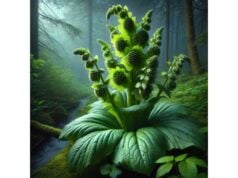
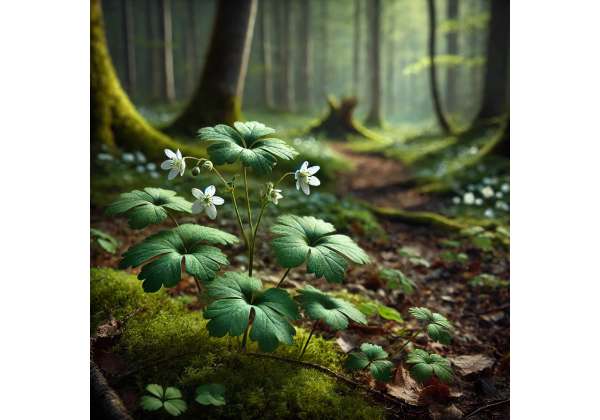
Isopyrum thalictroides is an accepted botanical species in the Ranunculaceae, or buttercup, family. It is a perennial woodland plant with fine, divided leaves and small white flowers that give it a light, almost anemone-like appearance. In the wild, it is associated with moist, shaded habitats and spring growth, and it is distributed across parts of Europe rather than across the tropical or subtropical regions more commonly associated with commercial medicinal herbs.
That botanical setting matters because isopyrum is not a mainstream traditional herb in the same way as chamomile, ginger, nettle, or licorice. It appears more often in phytochemical and pharmacological literature than in modern Western herbal practice. In other words, this is a plant people study more than a plant people commonly recommend. That distinction should shape expectations from the start.
It is also important to separate Isopyrum thalictroides from unrelated species that share similar-looking flowers or similar-sounding names. Botanical precision matters here because the plant’s medicinal discussion is already narrow. A mislabeled or loosely identified specimen only adds more uncertainty. For that reason, any reference to “isopyrum” in a health context should be tied to the full species name rather than a casual common name.
Several features make the plant scientifically interesting:
- It belongs to a family known for potent and sometimes toxic bioactive compounds.
- Its roots and rhizomes are rich in isoquinoline-type alkaloids.
- Its aerial parts have also yielded distinct alkaloid profiles.
- It has been the subject of antimicrobial, immunological, and anti-inflammatory studies.
Still, none of those points automatically make it a practical herb. Some plants are better known because they are easy to grow and pretty in gardens. Others are better known because they have a long medicinal tradition. Isopyrum sits in a more unusual middle ground: it is a legitimate botanical species with notable chemistry, but its direct therapeutic role remains uncertain.
That is why the most useful introduction is not to call it a forgotten miracle. It is better described as a lesser-known European medicinal-research plant with potent alkaloid content and limited real-world herbal guidance. Readers looking for a safe, familiar, broadly accepted herb will usually be better served elsewhere. Readers interested in plant chemistry, emerging pharmacology, and the limits of herbal evidence may find isopyrum genuinely fascinating.
Its story, then, is not mainly one of folk popularity. It is the story of a modest woodland plant that attracted scientific attention because its compounds behaved in interesting ways under laboratory conditions. That is a real story, but it is a different story from the one implied by the word “benefits” alone.
Key compounds and medicinal actions
The main reason Isopyrum thalictroides appears in the scientific literature is its alkaloid content. Researchers working on the roots, rhizomes, and aerial parts have isolated a series of isoquinoline and bisbenzylisoquinoline alkaloids, including reticuline, isocorydine, columbamine, palmatine, fangchinoline, and a number of compounds first described from this species, such as isopyruthaldine, isopythaldine, isothalmidine, thaliphine, and isothaliphine.
That list is more than a catalog. It tells us something important about how the plant may act. Isoquinoline alkaloids are chemically active molecules with a long track record of pharmacological interest. In other plants, related alkaloids have been studied for antimicrobial, smooth-muscle, immunological, cardiovascular, and signaling effects. That does not let us assume that isopyrum behaves exactly like those better-known plants, but it does make the plant’s experimental activity more plausible.
A practical way to understand isopyrum’s chemistry is to group its likely actions this way:
- Bisbenzylisoquinoline alkaloids may contribute to immune and inflammatory pathway effects.
- Isoquinoline alkaloids may help explain antimicrobial and protozoa-related findings.
- Root and rhizome compounds appear especially rich in structurally unusual alkaloids.
- Aerial parts provide a somewhat different but still pharmacologically relevant profile.
This is where isopyrum becomes interesting to anyone who follows alkaloid-rich medicinal plants. Some of the compounds identified in this species overlap conceptually with the kinds of plant alkaloids that make barberry’s alkaloid profile pharmacologically significant, even though the plants themselves are very different and should not be treated as interchangeable.
The phrase “medicinal properties” is best handled carefully here. In a narrow scientific sense, isopyrum does appear to have medicinally relevant properties because isolated compounds and extracts affect microorganisms, immune signaling, complement pathways, and inflammatory responses in preclinical systems. In a practical consumer sense, however, those same properties also mean the plant is not trivial. Potent alkaloids are one reason to pay attention. They are also one reason not to improvise.
Another important detail is that the chemistry seems to be concentrated differently across plant parts. Roots and rhizomes are especially emphasized in alkaloid-isolation papers, while aerial parts have yielded additional alkaloids not previously reported in the genus. That means the phrase “isopyrum extract” is incomplete unless the plant part is specified.
The bottom line is that isopyrum’s value lies much more in its chemistry than in its current place in modern self-care. It is a pharmacologically intriguing plant because it contains molecules that can do biologically meaningful things. But that is exactly why it should be read first as a research botanical and only very cautiously as a possible remedy.
What has isopyrum been used for
This is the section where honesty matters most. Isopyrum thalictroides does not have a broad, well-documented, globally recognized medicinal tradition in the way many commercial herbs do. It appears in some regional medicinal plant records and in pharmacological studies, but its use history is not strong enough to support the kind of confident consumer advice often given for mainstream botanicals.
That does not mean the plant has no use history at all. The scientific papers on isopyrum did not appear out of nowhere. It has been included in ethnopharmacological and medicinal-plant contexts, especially in Eastern European research traditions, which helps explain why investigators chose to study it. But the documented use pattern is still much more limited and much less standardized than readers may expect from a typical herb monograph.
The most reasonable historical-use themes are these:
- A plant of regional medicinal interest rather than mass traditional popularity.
- A species investigated for infection-related and inflammatory uses.
- A plant associated more with alkaloid pharmacology than with daily tonic use.
- A botanical whose experimental use now outpaces its everyday herbal use.
This difference matters because it changes how we interpret the word “benefit.” With a herb like ginger, the path from traditional use to modern human application is easy to see. With isopyrum, the path is much thinner. That is why the article has to lean more on experimentally suggested benefit areas than on widespread traditional practice.
A good example is inflammation. There are preclinical signals that isopyrum alkaloids may modulate complement and suppress some inflammatory responses. But that does not mean traditional healers across multiple regions used it widely for arthritis, swollen joints, or pain. It means laboratory findings point toward one plausible direction. Those are not the same level of evidence.
The same logic applies to digestive or antimicrobial interpretation. Because certain alkaloids show antimicrobial effects, readers may be tempted to assume the plant was historically a digestive-infection herb. That may be partly true in limited regional contexts, but the modern evidence base is too sparse to state that as a settled herbal identity.
One useful way to frame the plant is by contrast. If someone wants a botanical with a stronger anti-inflammatory track record in actual practice, better-studied anti-inflammatory herbs provide a much clearer evidence trail than isopyrum. That does not diminish isopyrum’s scientific interest. It simply helps place it honestly on the map.
So what has isopyrum been used for? The fairest answer is that it has been used much more as a source of pharmacologically active compounds and experimental extracts than as a stable, widely adopted home remedy. Its traditional footprint appears narrow, its clinical footprint narrower still, and its main value today lies in what it may teach researchers about alkaloid-rich plant pharmacology.
That may sound restrained, but it is actually useful. It keeps readers from mistaking obscurity for hidden superiority. Sometimes a plant is obscure because it is overlooked. Sometimes it is obscure because its practical use never became safe, standardized, or compelling enough to spread widely. With isopyrum, that question remains open.
Does isopyrum show real benefits
Yes, but mostly in the narrow sense that laboratory and animal research suggest real biological activity. No, in the sense that these findings do not yet translate into a dependable home-use herb with proven clinical outcomes. That distinction is the most important one in the entire article.
The best-supported experimental benefit areas are antimicrobial, immunological, anti-inflammatory, and antimalarial activity. In one study, ethanol extracts and fractions from roots and aerial parts showed antimicrobial effects against several test microorganisms and influenced complement activity and immune responses. In another line of work, purified alkaloids affected complement-mediated pathways and reduced inflammation in animal models. A separate study found that penduline, one of the isolated bisbenzylisoquinoline alkaloids, had noteworthy in vitro antimalarial activity.
Those are not trivial findings. They tell us that isopyrum is pharmacologically active and that its alkaloids deserve attention. But readers should translate those findings with care.
A realistic summary of the plant’s “benefits” looks like this:
- It has demonstrated interesting preclinical antimicrobial activity.
- Certain alkaloids appear to affect complement and inflammatory signaling.
- Some isolated compounds show promising antiparasitic activity in vitro.
- No strong human clinical evidence confirms therapeutic benefit in everyday use.
That fourth point changes everything. A plant can be compelling in a petri dish and disappointing in real life. It can also be biologically active enough to create side effects before it creates reliable benefit. That is especially relevant with alkaloid-rich species.
It also helps to distinguish whole-plant benefit from compound benefit. Much of the most impressive work on isopyrum centers on isolated alkaloids or enriched fractions, not on the kind of whole-plant tea, tincture, or capsule most readers imagine when they think of herbal use. This is one reason it would be misleading to say the herb itself has “proven anti-inflammatory benefits” in the way a consumer might understand that phrase.
Another practical insight is that isopyrum’s strongest signals come from specialized endpoints that are hard to reproduce at home. Complement modulation, antiplasmodial activity, and immune suppression are not simple wellness outcomes. They are specialized pharmacological effects. That makes the plant scientifically interesting, but it does not make it simple to use responsibly.
If someone is looking for a better-established digestive or soothing herb rather than an experimental alkaloid plant, peppermint for digestive support offers a far clearer practical profile. That comparison helps keep expectations grounded.
So, does isopyrum show real benefits? Yes, in the lab. Yes, in the language of pharmacology. But not yet in the sense that most readers mean when they ask whether a herb “works.” It has real signals, real compounds, and real scientific interest. What it does not yet have is real clinical maturity.
How isopyrum has been prepared
There is no modern, widely accepted commercial preparation standard for Isopyrum thalictroides. That is another clue that this plant does not belong in the same category as mainstream herbs. Most of the published work focuses on ethanol extracts, alkaloid fractions, purified compounds, and laboratory isolation from roots, rhizomes, or aerial parts rather than on everyday kitchen or apothecary use.
That said, the plant has been examined through several preparation routes:
- Ethanol extracts from roots and aerial parts.
- Fractionated alkaloid extracts.
- Purified bisbenzylisoquinoline alkaloids.
- Separate analyses of roots, rhizomes, and aerial portions.
This matters because “how to use it” and “how it has been used in research” are not the same question. In research, solvent extraction is often chosen because it concentrates active fractions and makes testing easier. In real-world self-care, that same concentration can make a plant less predictable and less safe.
If someone were determined to think about practical form rather than laboratory form, there are still problems. There is no standard leaf tea tradition to lean on, no widely accepted tincture strength, no common capsule range, and no strong consumer safety framework. That means even before dosage comes up, the preparation question is already unresolved.
A good rule for herbs is that when the preparation tradition is unclear, caution should increase rather than decrease. With isopyrum, that means several things:
- Whole-plant self-preparation is poorly guided.
- Extracts may concentrate alkaloids in ways that are hard to predict.
- Plant-part choice matters because chemistry differs by part.
- Home use cannot rely on the kind of centuries-deep preparation tradition that protects users from obvious mistakes.
This is also why the article cannot honestly recommend a simple tea, tincture, capsule, or powder routine. Doing so would imply a degree of practical knowledge that the evidence does not provide. In that sense, the most responsible “use” advice is not a recipe but a limit: do not confuse the presence of scientific papers with the existence of a safe do-it-yourself method.
For readers who are more interested in the general idea of complex alkaloid-rich botanicals than in isopyrum specifically, goldenseal’s more familiar alkaloid-driven profile offers a much clearer example of how plant chemistry, preparation, and safety can be discussed in a practical way.
The honest takeaway is simple. Isopyrum has been prepared mainly as extracts and fractions in research contexts. That is useful for science. It is not a strong foundation for home herbal use. When preparation is uncertain, the safest assumption is not to improvise. With this plant, that is not a timid conclusion. It is a competent one.
Dosage and why self-dosing is risky
There is no validated human oral dose for Isopyrum thalictroides in routine self-care. That is the most important dosage statement, and it deserves to be said plainly. The plant has not been studied in the kind of modern human trials that would allow a responsible article to recommend a daily dose in grams, milligrams, capsules, or drops.
This lack of dosing guidance is not a minor inconvenience. It is central to the safety profile. A plant that contains pharmacologically active alkaloids but lacks a recognized dosing tradition is exactly the kind of plant that should not be self-prescribed casually.
Several reasons explain why no practical dose can be given with confidence:
- Research has focused on extracts, fractions, and isolated compounds, not consumer preparations.
- Plant part matters, and roots or rhizomes may differ from aerial parts.
- Human safety data are minimal.
- The biological effects observed in vitro or in animals cannot be translated directly into home dosing.
This is a common mistake in herbal reading. Someone finds a promising paper, sees that an extract showed effect in mice or in cell work, and then assumes the plant can be dosed at home using a tea, tincture, or capsule. With isopyrum, that jump would be especially unwise.
A more honest dosage framework looks like this:
- No established self-care oral dose exists.
- No extract strength can be recommended for home use.
- No traditional range is well documented enough to support advice.
- Experimental dosing should be viewed as research-only, not consumer guidance.
That may feel unsatisfying, especially because the prompt asks for dosage. But there is a difference between being incomplete and being invented. A made-up dose would sound more helpful while actually being less safe.
The most practical advice here is therefore not how much to take, but how to think:
- Do not translate lab data directly into human self-dosing.
- Do not assume that a low dose is automatically safe when the active compounds are unclear.
- Do not treat rarity or obscurity as a reason to experiment.
- Do not combine a poorly characterized alkaloid plant with medication or other strong supplements.
Readers who want a model of how a better-characterized herb handles dose, preparation, and safety might look at gentian’s more established dosing tradition. That comparison helps show what is missing in isopyrum: not just enthusiasm, but usable human guidance.
So the dosage section ends in a place that is more protective than promotional. For this plant, the safest dose for unsupervised medicinal use is not “a little.” It is none. That does not mean the plant lacks value. It means its value currently belongs more to pharmacognosy and controlled research than to a home wellness routine.
Side effects, interactions, and who should avoid it
Because Isopyrum thalictroides contains biologically active alkaloids and lacks robust human safety data, the safest approach is to assume meaningful risk until better evidence says otherwise. This is not the kind of plant where absence of consumer warnings should be mistaken for proven safety.
The most likely concerns are not fully mapped, but several risk categories are clear.
First, alkaloid-rich plants can interact with physiology in ways that are not obvious from taste or appearance. Effects on immune signaling, complement pathways, microorganisms, or parasite activity sound beneficial in the abstract, but they also imply real biological power. Any plant with that kind of activity deserves caution with pregnancy, breastfeeding, childhood use, chronic disease, and concurrent medication.
Second, the buttercup family includes species with known irritant and toxic potential. That does not prove that isopyrum is highly poisonous in the way some notorious Ranunculaceae members are, but it does argue against treating the plant as casually edible or inherently gentle.
Third, interaction risk is a serious unknown. Based on the kinds of effects seen in the literature, it would be prudent to avoid combining isopyrum with:
- Immunomodulating or immunosuppressive medication.
- Antimicrobial or antiparasitic drug regimens without supervision.
- Other potent alkaloid-containing herbs or supplements.
- Experimental botanicals used for inflammatory conditions.
The groups who should clearly avoid self-use include:
- Pregnant and breastfeeding people.
- Children and adolescents.
- People with autoimmune disease or on immune-active medication.
- Anyone taking multiple prescription medicines.
- People with liver or kidney disease.
- Anyone attempting to self-treat infection, inflammatory illness, or unexplained symptoms.
Potential side effects have not been well characterized in human trials, which means the danger is uncertainty rather than a clean list. Possible issues could include gastrointestinal upset, neurological effects, allergic response, or interactions that only become visible when combined with other treatments. With poorly studied alkaloid plants, uncertainty itself is part of the safety profile.
One useful comparison is with white sage and other herbs that require stronger safety framing. The lesson is not that isopyrum and white sage are the same plant. It is that not every botanical should be normalized into everyday use simply because it is natural.
The practical safety message is therefore stronger than for most herbs. Isopyrum thalictroides is not a sensible candidate for casual experimentation, especially not in tincture, extract, or self-formulated capsule form. If a plant has narrow evidence, potent compounds, and no standardized dose, the burden of caution should be high. In this case, it is.
What the research actually says
The research on Isopyrum thalictroides is real, but it is narrow, older, and heavily preclinical. That three-part description explains both the promise and the limitation of the plant.
The chemistry work is the strongest part. Multiple papers have isolated and described new bisbenzylisoquinoline and aporphine-benzylisoquinoline alkaloids from the plant, especially from roots and rhizomes. These studies give isopyrum a clear phytochemical identity and confirm that it is not just a random woodland perennial with vague medicinal rumors. It is a real source of structurally interesting alkaloids.
The pharmacology work is the second strong area. Extracts and isolated compounds have shown antimicrobial and immunological activity, complement modulation, anti-inflammatory effects in animal models, and in vitro antimalarial activity. This is enough to say the plant is biologically active and worth scientific attention.
The weak point is the bridge between those findings and real-world use. That bridge is still missing. There are no major modern clinical trials, no accepted self-care monographs, no standard human dose, and no broad medical consensus about when or whether the plant should be used therapeutically.
A fair evidence summary would say:
- Strongest evidence: alkaloid chemistry.
- Next strongest evidence: preclinical immune, inflammatory, and antimicrobial activity.
- Weakest evidence: actual human therapeutic use.
- Missing evidence: dosing, long-term safety, product standardization, and clinical outcomes.
That imbalance matters because it changes how the article should be read. This is not an herb where consumer enthusiasm ran ahead of the science. It is one where the science remains interesting but incomplete, and the consumer case is still largely unbuilt.
That makes isopyrum more comparable to a pharmacognosy case study than to a finished herbal medicine. Readers interested in evidence quality may find this contrast useful: with something like research-backed inflammation support, there is at least a recognizable clinical pathway. With isopyrum, the literature still lives mostly at the level of compounds and models.
The best final judgment is therefore restrained but not dismissive. Isopyrum thalictroides does appear to contain medicinally relevant alkaloids. It has shown promising activity in several preclinical domains. That alone is enough to justify scientific curiosity. What it does not justify is confident consumer advice, disease claims, or supplement-style self-medication.
If the reader’s goal is practical herbal guidance, isopyrum is not yet a mature answer. If the goal is to understand how promising plant chemistry can exist long before safe, standardized human use, then isopyrum is an excellent example.
References
- Isopyrum thalictroides L. | Plants of the World Online | Kew Science 2026
- Antimicrobial and immunological activity of ethanol extracts and fractions from Isopyrum thalictroides 1996
- Complement modulatory activity of bisbenzylisoquinoline alkaloids isolated from Isopyrum thalictroides–II. Influence on C3-9 reactions in vitro and antiinflammatory effect in vivo 1999
- Alkaloids from Isopyrum thalictroides L 2000
- In vitro antimalarial activity of penduline, a bisbenzylisoquinoline from Isopyrum thalictroides 1997
Disclaimer
This article is for educational purposes only and does not diagnose, treat, or replace medical care. Isopyrum thalictroides is not a well-established self-care herb, and its published research is largely preclinical. Because no validated human dose is available and the plant contains biologically active alkaloids, medicinal self-use should be avoided unless guided by a qualified clinician or researcher with appropriate expertise. Seek medical care promptly for infection, inflammatory symptoms, gastrointestinal bleeding, unexplained pain, or any worsening condition rather than attempting to treat it with a poorly characterized plant.
If this guide was helpful, please share it on Facebook, X, or any other platform where careful, evidence-minded herbal writing can reach the right readers.