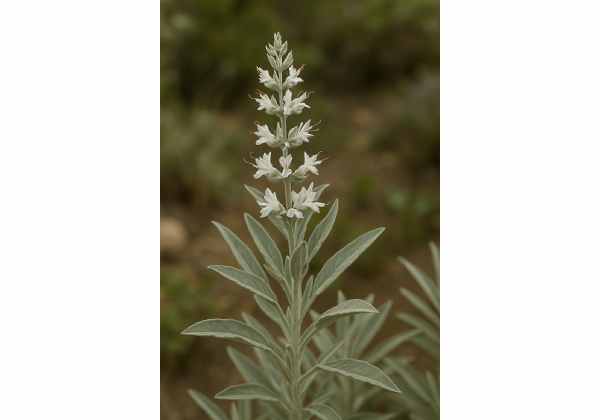
White sage, or Salvia apiana, is a strongly aromatic shrub native to Southern California and Baja California. Many people know it first through its ceremonial importance, but it also has a long history as a medicinal and household plant. Traditional uses included teas for colds, gargles for sore throats, washes for the body and hair, and calming preparations taken for tension, heaviness, or minor digestive discomfort. Modern research adds another layer by showing that white sage contains a rich mix of volatile oils, diterpenes, triterpenes, and flavonoids with antioxidant, antimicrobial, and receptor-active potential.
At the same time, this herb deserves a more careful introduction than many common kitchen sages. White sage is culturally significant, chemically distinct, and best approached with respect for both its Indigenous context and its concentrated forms. Leaf tea and topical preparations are very different from essential oil or heavy smoke exposure. For most people, white sage is most useful when understood as a traditional aromatic herb with promising laboratory evidence, limited human data, and a need for thoughtful, restrained use.
Top Highlights
- White sage may help soothe mild sore throat discomfort and light post-meal digestive heaviness.
- Its extracts and volatile compounds show antioxidant, antimicrobial, and anti-inflammatory promise in laboratory research.
- A cautious traditional tea range is about 1 to 2 g dried leaf in 240 mL hot water, once or twice daily.
- Pregnant or breastfeeding people, small children, and anyone considering internal essential-oil use should avoid medicinal self-use.
Table of Contents
- What White Sage Is and How It Differs From Other Sages
- Key Compounds in White Sage
- Potential Health Benefits and Medicinal Properties
- Traditional Uses and Respectful Modern Context
- What Research Actually Supports
- Dosage Preparation and Best Forms
- Safety Side Effects and Who Should Avoid It
What White Sage Is and How It Differs From Other Sages
White sage is an evergreen shrub in the mint family, Lamiaceae. It grows naturally in chaparral and coastal sage scrub, where the air is dry, the sunlight is strong, and the plant’s silvery leaves help it manage heat and water loss. The foliage is soft, pale, and highly fragrant, with a resinous scent that feels broader and more balsamic than common culinary sage. That aroma is one reason the plant has remained important for both practical and ceremonial use.
Botanically, white sage is not the same as common sage, Salvia officinalis. The two belong to the same large genus, but they are not interchangeable. Common sage is the better-known culinary and medicinal species in Europe and modern herbal commerce. White sage, by contrast, is a North American plant with its own chemistry, traditional uses, and cultural setting. This difference matters because people often transfer claims from one sage to another too freely.
White sage is also distinct from “desert sages” or from plants sold casually under vague labels such as sagebrush or ceremonial sage. Accurate identification matters here for three reasons:
- Different Salvia species can have very different volatile profiles.
- Traditional uses depend on the correct plant.
- Safety and effectiveness cannot be assumed across the entire genus.
The plant’s main above-ground parts are the leaves and flowering stems. Traditional use focused heavily on the leaves, which were brewed as tea, applied externally, rubbed on the body, or dried for ceremonial smoke. In phytochemical work, the aerial parts are also the main site of essential oil production.
One of the most useful ways to understand white sage is to separate its identities without forcing them apart. It is:
- a culturally important Native plant
- a medicinal herb with traditional uses
- a chemically rich aromatic shrub
- a species that is often oversimplified by commercial trends
That last point deserves emphasis. White sage is often reduced to a single fashionable use, but its actual story is broader and more grounded. It has been used as a calmative, a gargle herb, a cold remedy, a body deodorant, and a wash, not only as something to burn. At the same time, ceremonial use has specific meaning in Native traditions, and modern discussions should avoid treating that context as a generic lifestyle aesthetic.
In practical herbal terms, white sage is best viewed as a traditional aromatic leaf herb with strong sensory qualities and a narrower evidence base than common sage. That does not make it unimportant. It makes it a plant that rewards accuracy, restraint, and context.
Key Compounds in White Sage
White sage contains a remarkably rich chemical profile, and that complexity explains much of its medicinal reputation. Two broad groups matter most: volatile essential-oil constituents and non-volatile compounds such as diterpenes, triterpenes, flavonoids, and phenolic acids.
The essential oil is the part most people notice first because it shapes the plant’s scent. White sage oil has been reported as rich in compounds such as:
- 1,8-cineole
- α-pinene
- β-pinene
- β-myrcene
- camphor
- other monoterpenes in varying amounts
One notable detail from newer white sage work is that its oil has been described as thujone-free or at least not dominated by thujone in the way some other sage oils can be. That is a meaningful distinction because thujone is one reason concentrated common sage oil is treated cautiously. Even so, “lower thujone” does not mean “use freely.” Essential oils remain concentrated and pharmacologically active.
The non-volatile chemistry is just as important. White sage has yielded compounds including:
- carnosol
- rosmadial
- sageone
- salvigenin
- cirsimaritin
- oleanolic acid
- ursolic acid
- related diterpenes and triterpenes
These compounds help explain why researchers keep returning to this species. Several of them are associated, in the broader plant chemistry literature, with antioxidant, anti-inflammatory, antimicrobial, or receptor-related activity. White sage also contains C23 terpenoids and other specialized metabolites that distinguish it within the genus.
From a practical perspective, this means whole-leaf tea and essential oil should not be treated as equivalents. A leaf infusion delivers a broad mixture of water-soluble and lightly volatile constituents at relatively gentle levels. Essential oil delivers a concentrated volatile fraction. An ethanol extract produces yet another profile. Each form behaves differently in the body, and that is why people can talk past each other when they make broad claims about “white sage.”
White sage’s chemistry also helps explain its mixed traditional actions. A tea may feel mildly calming, drying, warming, and cleansing at the same time. A gargle may seem astringent and aromatic. A body wash may feel deodorizing and refreshing. Those effects are not contradictions. They reflect the overlap between volatile oils, polyphenolic constituents, and terpenoid-rich fractions.
There is another reason this section matters: plant identity. Because different salvias vary chemically, proper authentication is not a technical luxury. It is part of responsible use. That is one reason modern studies on Salvia species have focused not only on activity but also on chemical fingerprinting and species-level distinction.
So when people ask about the “key ingredients” in white sage, the most useful answer is not just a list of names. It is the relationship between form and chemistry. White sage leaf, tincture, hydrolate, and essential oil are related, but they are not interchangeable, and the difference begins at the compound level.
Potential Health Benefits and Medicinal Properties
White sage has plausible medicinal value, but it is best understood as a traditional herb with promising preclinical evidence rather than as a modern clinically established remedy. The benefits most often discussed fall into a few clear categories.
The first is aromatic calming support. Traditional records describe white sage as a calmative. That description makes sense. Strongly aromatic herbs often influence comfort through scent, warmth, ritual, and mild physiologic effects all at once. A warm infusion of white sage may help a person slow down, settle the stomach, and feel less tense. This is not the same thing as proving a treatment for anxiety disorders, but it is a real and recognizable herbal use.
The second is sore throat and upper-respiratory support. White sage tea and gargles were historically used for colds, throat discomfort, and chest irritation. The likely explanation is a blend of aromatic freshness, mild antimicrobial action, and surface astringency. Used as a warm gargle, the herb may help the throat feel cleaner and less raw.
The third is digestive and drying support. Traditional sources describe white sage as a stomach tonic and as a plant that can reduce sweating, salivation, and other excess secretions. That gives it a drying character in older herbal language. In practical terms, it may suit people who feel heavy, damp, overly mucusy, or sluggish rather than dry and depleted.
The fourth is topical cleansing and deodorizing use. Historically, leaves were rubbed on the body to reduce odor, and the plant was used in washes and hair care. That fits both the strong aroma and the antimicrobial tendencies seen in laboratory work.
The fifth is experimental receptor-related activity. White sage extracts and isolated compounds have shown interaction with cannabinoid, opioid, and GABA-related systems in early research. This is scientifically interesting because it may help explain some of the plant’s calming and sensory effects. But it should not be exaggerated. Receptor binding in the lab does not automatically become a proven clinical effect in people.
A balanced benefit summary looks like this:
- mild calming and settling support
- sore throat and cold-season gargle use
- light digestive and post-meal support
- topical cleansing and freshening value
- antioxidant and antimicrobial promise in extracts
Just as important is what white sage does not clearly establish. It is not a proven treatment for depression, chronic infection, dementia, or major inflammatory disease. Some readers may be tempted to extend promising lab findings too far because the plant has such a strong reputation. That leap is not justified.
For people seeking gentler calming support in tea form, an herb such as lemon balm for mild calm and digestive ease may often be a simpler everyday choice. White sage, by contrast, is better treated as a more distinctive aromatic herb whose benefits are real but context-dependent.
Traditional Uses and Respectful Modern Context
Any useful article on white sage has to address traditional use with care. This is not just another herb lifted out of context and dropped into a supplement trend. White sage has long-standing medicinal and ceremonial importance among Native peoples of Southern California, including the Chumash and other California tribes. Historical records describe it as a ritual plant, a tea herb, a cold remedy, a deodorizing leaf, a hair cleanser, and a soothing wash.
Traditional medicinal applications included:
- tea for common colds
- gargles and drinks for sore throats
- calming infusions
- body rubs and washes
- sweathouse and ceremonial use
- occasional postpartum or women’s-health uses in older records
This does not mean every traditional use should be copied into modern self-care. Some of those uses came from systems of knowledge that involved preparation, timing, community context, and spiritual meaning that cannot be reduced to a consumer recipe.
That is especially true for ceremonial smoke use. In many Native traditions, the plant is not simply “burned for fragrance.” It carries prayer, purification, and relational meaning. Modern discussions are better when they separate three things clearly:
- Traditional ceremonial use with living cultural meaning
- Medicinal use such as tea, gargles, and washes
- Commercial trend use that may flatten the first two into a lifestyle product
This distinction matters not because readers need a lecture, but because accurate context is part of respecting the plant. White sage can still be discussed as an herb while recognizing that not all uses are identical and not all uses belong to everyone in the same way.
A respectful modern approach usually includes a few practical principles:
- know which plant you are using
- buy cultivated or transparently sourced material when possible
- do not assume smoke use is the same as medicinal use
- do not confuse white sage with common sage or other salvias
- avoid turning ceremonial context into a marketing shortcut
This is also the section where a more grounded view of “uses” becomes helpful. White sage was historically broader than the modern smudge-stick image suggests. A warm tea, cooled throat gargle, mild hair rinse, or diluted topical wash all fit the plant’s historical personality better than overblown claims about detox, psychic cleansing, or universal healing.
For readers interested mainly in soothing external care, a plant such as calendula for gentler topical support may often be easier to integrate into everyday use. White sage remains useful, but it asks for more context and more discretion than many mainstream herbs.
The real modern lesson is simple: white sage is best approached as a culturally important medicinal plant, not as a generic wellness accessory.
What Research Actually Supports
White sage research is intriguing, but it is still much stronger in chemistry and early bioactivity than in human clinical evidence. That gap should shape expectations.
The best-supported parts of the literature are:
- phytochemical characterization
- essential-oil composition
- in vitro antioxidant and antimicrobial activity
- receptor-binding or enzyme-inhibition findings
- early work on anti-inflammatory, immunomodulatory, and cosmetic-relevant bioactivity
This is already meaningful. It tells us white sage is not merely a fragrant folk plant. It contains compounds worth studying, and those compounds produce measurable effects in laboratory systems. Newer work on microshoot cultures and elicited essential-oil production has added detail to the plant’s volatile profile and to its biological activity, including cholinesterase, hyaluronidase, tyrosinase, and immunomodulatory findings.
Those findings suggest several legitimate research directions:
- cognitive and sensory relevance through aromatic constituents
- topical and cosmetic potential through enzyme-related effects
- immune and inflammatory relevance in carefully controlled models
- species-specific product development that avoids unnecessary pressure on wild populations
But it is equally important to state what the research does not yet provide. We do not have a large body of human trials showing that white sage tea or extracts reliably treat sore throat, anxiety, poor digestion, or respiratory illness. Much of the modern evidence remains preclinical.
That means the honest evidence statement is this:
- White sage has real medicinal plausibility.
- Some traditional claims are supported indirectly by chemistry and lab work.
- Human clinical confirmation remains limited.
- Concentrated products should not be justified by lab studies alone.
This is where many herb articles become too enthusiastic. A receptor-binding study becomes a claim about mood. An antimicrobial assay becomes a claim about infection treatment. An enzyme assay becomes a claim about anti-aging efficacy. White sage deserves better than that kind of inflation.
A more grounded conclusion is that white sage appears promising as a source of bioactive compounds and as a traditional aromatic herb, but it is not yet a thoroughly validated clinical botanical. Readers who mainly want a better-established digestive aromatic may find peppermint for more clearly studied digestive support easier to justify. White sage’s value lies more in its specific traditional profile and emerging research than in a large base of modern trials.
That may sound modest, but it is actually good news. It means the plant is being taken seriously without being oversold. In herbal writing, that is often the healthiest balance.
Dosage Preparation and Best Forms
White sage dosage depends heavily on the form used. This is one of the most important practical points in the whole article. Leaf tea, gargle, hydrolate, tincture, and essential oil are not interchangeable.
For most adults, the gentlest and most traditional medicinal form is leaf infusion. A cautious traditional range is about 1 to 2 g dried leaf in 240 mL hot water, taken once or twice daily for short-term use. This is best viewed as a modest household amount, not a clinically standardized prescription.
A practical preparation looks like this:
- Use 1 to 2 g dried leaf, or a small amount of fresh leaf.
- Pour hot water over the herb.
- Cover and steep for 5 to 10 minutes.
- Strain and sip slowly, or let it cool slightly for gargling.
Covering the cup helps preserve the volatile oils. If the goal is throat comfort, the infusion can be used first as a gargle and then swallowed in small amounts. If the goal is mild digestive support, it generally makes more sense after meals or at the first sign of heaviness.
Other practical forms include:
- mild rinse or wash: a cooled infusion for external cleansing
- hair rinse: traditional but less common today
- hydrolate: gentler than essential oil, sometimes used in topical products
- tincture: possible, but less standardized for white sage than for major commercial herbs
Essential oil is the form that requires the most restraint. Even though white sage oil is often discussed more favorably than some thujone-rich sage oils, it is still concentrated and pharmacologically active. There is no well-established self-care oral dose that can be recommended confidently. Internal essential-oil use should not be treated casually.
This is why the best form depends on the goal:
- for throat comfort, use a mild tea or gargle
- for light digestive support, use a modest infusion
- for external freshening, use a cooled tea or properly formulated product
- for concentrated oil, use only with a clear reason and careful guidance
Duration should also stay modest. White sage is better suited to short-term, purposeful use than to indefinite daily use. A few days around a cold, sore throat, or temporary digestive discomfort is one thing. Turning it into a daily tonic without a reason is another.
It is also worth saying that stronger is not necessarily better. White sage has an intense flavor and drying tendency. Very strong infusions can become harsh, bitter, or overly astringent. In that respect, it behaves more like a focused aromatic herb than a gentle beverage tea.
For people looking for a simple warm drink with broader tolerance, chamomile or lemon balm may be easier for frequent use. White sage works best when used intentionally, lightly, and in forms that match its traditional strengths.
Safety Side Effects and Who Should Avoid It
White sage is not among the most dangerous herbs, but it still deserves a careful safety discussion, especially because its cultural visibility can make it seem automatically harmless.
For most adults, modest leaf tea or occasional culinary-scale use is usually the lowest-risk form. Even then, side effects can happen. The most likely include:
- stomach upset from strong tea
- dry mouth or excessive dryness
- bitterness or throat irritation from concentrated infusions
- skin sensitivity with topical use
- scent-triggered discomfort in people sensitive to aromatic plants
Essential oil is where the safety stakes rise. White sage oil is concentrated, variable, and not appropriate for casual internal use. Even when the oil is comparatively low in thujone, it still contains active terpenes that can irritate skin, mucous membranes, and the digestive tract if used incorrectly. Undiluted topical use is not wise, and internal use without professional guidance is harder to justify than leaf tea.
Smoke is another important form to discuss honestly. Ceremonial smoke use has cultural meaning, but from a health standpoint smoke is still smoke. People with asthma, COPD, chronic cough, migraine triggered by scent, or general smoke sensitivity may do poorly with any indoor smoke exposure. Medicinal use should not assume that burning a plant is the same as safe respiratory support.
People who should avoid medicinal self-use or use extra caution include:
- pregnant or breastfeeding people
- young children
- people with seizure disorders unless cleared by a clinician
- those with severe reflux or very dry mouth and throat
- anyone using essential oils internally
- people with asthma or smoke-sensitive lung conditions when burning the plant
Breastfeeding deserves special mention because older herbal sources describe sage-type plants, including white sage, as drying and lactation-reducing. That historical use is one reason self-treatment during nursing is not a casual decision.
There is also a practical safety issue around identity and sourcing. Because commercial white sage products vary widely, some users may not know whether they have the correct species, a blend, or material of uncertain age and potency. That is another reason concentrated forms call for more caution than loose leaf.
A balanced bottom line looks like this:
- leaf tea is usually the gentlest medicinal form
- stronger is not better
- essential oil is not a beginner format
- ceremonial smoke should not be treated as a universal health practice
- pregnancy, breastfeeding, childhood, and respiratory vulnerability all raise the threshold for use
For simple short-term aromatic respiratory comfort, many people may be better served by eucalyptus in better-defined aromatic applications rather than by assuming white sage smoke is a medical substitute.
White sage can be used thoughtfully, but it rewards moderation. Respecting the form, the context, and the person using it is the safest way to keep the plant in proper proportion.
References
- White Sage (Salvia apiana)-a Ritual and Medicinal Plant of the Chaparral: Plant Characteristics in Comparison with Other Salvia Species 2022 (Review)
- Evaluation of the yield, chemical composition and biological properties of essential oil from bioreactor-grown cultures of Salvia apiana microshoots 2023 (Preclinical Study)
- Elicited Production of Essential Oil with Immunomodulatory Activity in Salvia apiana Microshoot Culture 2025 (Preclinical Study)
- Phytochemical and biological evaluation of Salvia apiana 2017 (Phytochemical Study)
- WHITE SAGE 2001 (Official Plant Guide)
Disclaimer
This article is for educational purposes only and is not medical advice. White sage has traditional medicinal uses, but modern evidence is still limited, and concentrated forms such as essential oil or heavy smoke exposure are not equivalent to mild leaf tea. Anyone who is pregnant, breastfeeding, has a chronic lung condition, takes regular medicines, or plans to use white sage beyond occasional tea or topical self-care should consult a qualified healthcare professional first.
If you found this article helpful, please share it on Facebook, X, or another platform you prefer.