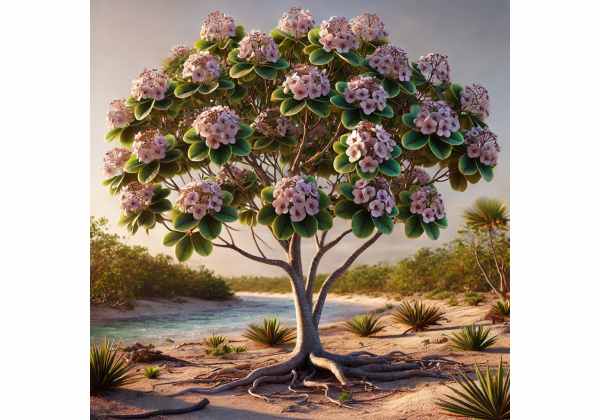
Jamaican dogwood is a Caribbean and Central American tree whose root bark has a long history in traditional pain and sleep formulas. In older herbal practice, it was valued for a very specific profile: it was not mainly a “daily wellness” herb, but a stronger remedy used when pain, muscle spasm, menstrual cramping, or nervous tension made rest difficult. That traditional reputation still shapes interest in the plant today.
What makes Jamaican dogwood unusual is the gap between reputation and modern evidence. Historical reports and laboratory studies suggest sedative, analgesic, and antispasmodic effects, and researchers have identified isoflavones, rotenoid-type compounds, tannins, and other constituents that may help explain those actions. At the same time, modern human research is extremely limited, and safety concerns are more important here than with many gentler herbs.
That means Jamaican dogwood deserves a careful, realistic discussion. It may have a place in skilled traditional practice, but it is not a casual sleep herb, not a beginner’s pain remedy, and not something to self-dose aggressively.
Key Insights
- Jamaican dogwood has been used traditionally for nerve pain, cramping pain, and sleeplessness linked to pain or tension.
- Its best-supported actions are sedative, analgesic, and antispasmodic, but modern human evidence remains weak.
- Traditional monographs often list about 2 to 4 g/day as tea or 4 to 12 mL/day as tincture.
- It should be avoided during pregnancy, breastfeeding, childhood, and alongside alcohol or sedative medicines.
Table of Contents
- What is Jamaican dogwood
- Key ingredients and medicinal properties
- What does it help with
- How Jamaican dogwood is used
- How much Jamaican dogwood per day
- Side effects, interactions, and who should avoid it
- What the evidence actually shows
What is Jamaican dogwood
Jamaican dogwood is the common name for Piscidia piscipula, a legume-family tree native to parts of the Caribbean, southern Florida, Mexico, and Central America. Older herbal texts also use the name Piscidia erythrina, and many modern references still mention both names. For readers trying to identify products, that naming overlap matters. A bottle labeled Piscidia erythrina is often referring to the same traditional medicinal plant discussed as Jamaican dogwood.
The medicinal part is usually the root bark, not the flower, fruit, or wood. That root bark has a long record in Caribbean folk medicine and in older Eclectic and American herbal practice. Historically, it was used for painful conditions that were hard to settle at night, including neuralgia, migraine, cramping pain, and sleeplessness caused by pain or nervous excitability. It also gained a reputation as a fish-stunning plant, which helps explain why modern safety discussions around it are much more serious than the discussions around many calming herbs.
That dual identity is important. Jamaican dogwood was never just “a natural relaxer.” It was traditionally understood as a potent botanical with a narrow practical role. Herbalists reached for it when they wanted three things at once:
- less pain,
- less spasm,
- and a quieter nervous system.
In older writing, it is often described as a narcotic or powerful sedative. Today, that language sounds outdated and can be misleading, but it points to something real: this herb was historically used for strong effects, not subtle ones.
The plant’s modern image is often softened by supplement marketing. Online listings may describe it as a gentle aid for stress, sleep, or cramps. That framing misses the more accurate picture. Jamaican dogwood belongs closer to the category of a traditional specialty herb than a broad-use tonic. It is not comparable to everyday culinary herbs, and it is not ideal for casual experimentation.
Another point that readers rarely see is that the herb’s traditional use was closely tied to preparation quality and plant part. Root bark was considered the most active material. Commercial formulas that do not specify the plant part, extraction method, or source can vary widely. That makes standardization difficult and partly explains why modern evidence is so thin. Researchers are not always studying the same thing that traditional practitioners used.
So, what is Jamaican dogwood in practical terms? It is a historically respected but somewhat austere pain-and-spasm herb with possible sedative action, meaningful toxicity concerns, and far less modern clinical validation than its reputation might suggest.
Key ingredients and medicinal properties
The chemistry of Jamaican dogwood helps explain why it has been described as analgesic, antispasmodic, and sedative. The challenge is that most commercial products are not well standardized, and older literature often uses different naming systems than modern phytochemistry. Even so, the broad picture is fairly consistent: the root bark contains several classes of compounds that can influence smooth muscle tone, nervous system activity, and overall tolerability.
The best-known groups include:
- isoflavones,
- rotenoid-type compounds,
- tannins,
- resinous constituents,
- and smaller amounts of saponin-like material in some descriptions.
Isoflavones matter because they are among the better-described active principles in the plant. Older pharmacologic work linked these compounds with spasm-relieving effects, especially on smooth muscle. That helps make sense of Jamaican dogwood’s traditional use for menstrual cramps, abdominal tension, and pain with a “tight” or contracted quality.
Rotenoid-type compounds are more complicated. These are often mentioned in relation to older names such as rotenone and related constituents. They likely contribute to some of the herb’s traditional biologic activity, but they also play a role in why safety concerns cannot be treated lightly. This is not a plant where “active” automatically means “safe.” In Jamaican dogwood, the same chemistry that may contribute to therapeutic effects is also part of the reason careful dosing and avoidance in vulnerable groups are essential.
Tannins add a second layer. They are not usually the first compounds people think about when they hear “pain herb,” yet they may contribute to the plant’s overall astringent and tissue-modulating character. Tannins can also make preparations more irritating to sensitive stomachs, especially when the herb is taken in large or repeated doses.
From a medicinal-properties perspective, Jamaican dogwood is usually described in four overlapping ways:
- Sedative
It appears to reduce nervous excitability and may help when pain is preventing rest. - Analgesic
Traditional use and older pharmacology both point toward pain-relieving potential, especially for neuralgic or spasmodic pain. - Antispasmodic
This is one of its more believable traditional uses, particularly for uterine or smooth-muscle tension. - Mildly nervine
It has been used not only for pain itself, but for the agitated, sleepless, “cannot settle” state that often comes with pain.
A useful way to think about Jamaican dogwood is that its value, when it has value, probably comes from a combination effect rather than one isolated miracle compound. A person with migraine, cramping, or nerve irritation may not need only analgesia. They may also need decreased spasm and enough sedation to break a cycle of tension. Jamaican dogwood’s traditional profile fits that pattern.
Still, the chemistry does not justify casual use. It just explains why the herb has stayed in traditional materia medica for so long. The more accurate conclusion is not that Jamaican dogwood is a superior remedy. It is that it is a chemically active herb with a profile that can feel useful in theory, but demands more caution than its “natural” label might suggest.
What does it help with
Jamaican dogwood is traditionally used for a narrow set of complaints, and that narrowness is part of what makes it interesting. This is not a plant that herbalists reached for to improve general vitality or support long-term wellness. It was used when pain, spasm, and nervous tension overlapped.
The most common traditional uses include:
- nerve pain or neuralgia,
- migraine and headache with tension,
- menstrual cramping,
- muscle spasm,
- nighttime restlessness caused by pain,
- and occasional use for cough or spasmodic irritation.
Of these, the most believable modern carryovers are painful spasm, cramping discomfort, and pain-linked insomnia. That does not mean the herb has been proven to treat those problems in modern trials. It means those uses fit what is known about its traditional action pattern and older pharmacology.
For example, menstrual pain is a logical fit because Jamaican dogwood has long been described as both antispasmodic and calming. A cramp is not only pain; it is also tension and contraction. In that setting, a plant that may reduce spasm while also making the nervous system less reactive has a coherent traditional role.
The same logic applies to nerve pain and migraine. People did not historically use Jamaican dogwood because it was a clean, modern analgesic. They used it because it sometimes matched a particular type of suffering: pain that felt wired, sharp, sleepless, and hard to settle. That is a different target than simple soreness after exercise.
Where expectations should stay modest is in chronic everyday use. Jamaican dogwood is not well supported as a daily arthritis supplement, a routine anxiety herb, or a first-line sleep aid. In fact, many people looking for a gentler bedtime plant would usually be better served by passionflower for stress-related sleep trouble rather than a stronger, more toxic traditional bark remedy.
Realistic outcomes, when the herb helps, would likely look like this:
- less painful tightness,
- easier relaxation in the evening,
- less restless pain-related waking,
- or a modest decrease in the felt intensity of spasm.
That is very different from sweeping claims such as “eliminates pain,” “works like an opioid,” or “treats anxiety naturally.” Those are the kinds of claims Jamaican dogwood does not support well.
It is also worth noting what it probably does not help with very well. There is little good reason to view it as a mood herb, a general anti-inflammatory tonic, a cognitive aid, or a long-term nervous-system restorative. Its reputation is much more situational than restorative.
In practical decision-making, Jamaican dogwood makes the most sense in theory when the complaint has three traits:
- pain,
- tension or spasm,
- and inability to settle.
Once you remove those traits, the herb becomes less compelling and its safety tradeoffs become harder to justify. That is why modern readers should evaluate it less as a miracle remedy and more as a historically specific botanical that may fit a limited type of symptom picture.
How Jamaican dogwood is used
Jamaican dogwood is most often used as a tincture, capsule, powder, or tea made from the root bark. Among these, tinctures and encapsulated preparations are the most common in modern herbal commerce because they allow smaller, more measured dosing. Teas do exist, but bark herbs are less convenient than leaves or flowers, and flavor is not the main reason people choose this plant.
Traditional-style use usually follows one of three patterns.
First, it may be used as a short-term pain herb. In this setting, the goal is not long-term wellness but temporary easing of pain with spasm or nervous irritation. That might include a few days around difficult menstrual cramping or occasional nighttime nerve pain.
Second, it may be used as part of a blended formula. This is historically common. Herbalists often combined strong herbs so that one plant addressed pain, another spasm, and another the person’s general nervous tone. Jamaican dogwood was rarely the only herb in the room.
Third, it may be used at night rather than during the day. This makes practical sense because even at appropriate doses it may impair alertness or feel too heavy for daytime use.
If someone were using it in a supervised traditional style, a cautious process would look something like this:
- Confirm the product is made from root bark.
- Choose a form with clear serving information.
- Start at the low end of the stated range.
- Use it for a short, defined purpose rather than indefinitely.
- Stop quickly if drowsiness, stomach upset, or unusual symptoms appear.
Jamaican dogwood is also one of those herbs where pairings reveal how practitioners think about it. For cramping pain, it may be conceptually paired with cramp bark for added smooth-muscle support. For pain with bedtime tension, some herbalists pair it with milder calming herbs rather than simply increasing the dogwood dose. That is often a smarter strategy, because raising the dose may raise risk faster than benefit.
There are also common mistakes in how people use it:
- taking it for ordinary stress rather than pain-linked tension,
- using it as a daily supplement for months,
- combining it with alcohol or sedatives,
- or assuming that more bark equals more relief.
Preparation matters too. A lightly flavored sleep tea blend with a token amount of Jamaican dogwood is not the same as a concentrated tincture. Likewise, two products labeled “Piscidia” can differ significantly in strength. This is one reason the herb is poorly suited to casual online buying without guidance.
The most honest conclusion is that Jamaican dogwood is best approached as a specialty herb for short-term, carefully targeted use. It is not well suited to “just trying it” the way someone might try lemon balm, chamomile, or other lower-risk botanicals.
How much Jamaican dogwood per day
There is no well-established, evidence-based modern daily dose for Jamaican dogwood. That point matters more here than it does for many herbs. With better-studied botanicals, dosage ranges may come from clinical trials, pharmacopoeias, or modern monographs. With Jamaican dogwood, the range is shaped mostly by traditional practice and practitioner monographs, not high-quality human data.
That means the right question is not simply, “How much should I take?” The better question is, “Is this herb appropriate at all, and if so, is the dose conservative enough for a short, supervised purpose?”
Traditional monograph-style ranges commonly cited today include:
- tea or decoction totaling about 2 to 4 g/day of root bark,
- tincture totaling about 4 to 12 mL/day,
- and smaller capsule amounts that vary widely by brand and extraction strength.
Those numbers should be read as legacy-use ranges, not proof-backed therapeutic standards. They also do not mean all forms are interchangeable. A 4 mL tincture dose cannot be assumed to match a certain gram amount of bark unless the extract ratio is known, and many labels do not make that easy to interpret.
Timing also matters. Because Jamaican dogwood is traditionally valued for pain with restlessness, people usually place it later in the day or at bedtime rather than first thing in the morning. A daytime trial makes little sense if the herb causes fogginess, slowed reaction time, or an unsteady feeling.
A cautious, common-sense approach would include these rules:
- stay at the low end first,
- avoid using multiple forms at once,
- do not increase the dose simply because the first dose felt mild,
- and do not continue beyond a short trial without professional oversight.
Duration should also be conservative. This is not the kind of herb most people should take daily for months. If a person finds that they “need” Jamaican dogwood every night to sleep, that is usually a sign to reassess the underlying pain, the formula, or the diagnosis, not a reason to normalize long-term use.
One subtle but important issue is threshold chasing. Pain herbs that also sedate can tempt people to escalate until they “feel something.” With Jamaican dogwood, that is a poor strategy. The first strong sensation may be side effects, not a clean therapeutic response.
In practical terms, the dosage discussion ends with three realities:
- there is no strong clinical standard,
- traditional ranges exist but are imperfect,
- and the margin for sloppy dosing is narrower than many supplement users assume.
For that reason, Jamaican dogwood belongs in the “use sparingly and specifically” category rather than the “take daily as a supportive herb” category. If the question is whether it has a simple, reliable, modern dose that fits self-directed use, the honest answer is no.
Side effects, interactions, and who should avoid it
Safety is the most important part of any Jamaican dogwood discussion. This herb is often described in traditional sources with a tone of respect bordering on warning, and modern readers should keep that tone. Jamaican dogwood is not just “strong.” It has a real toxicity profile, and that changes how it should be approached.
Lower-dose side effects may include:
- drowsiness,
- dizziness,
- nausea,
- stomach upset,
- sweating,
- increased salivation,
- or a generally unpleasant heavy feeling.
At higher or poorly judged doses, older reports describe more serious toxicity, including tremor-like symptoms, marked weakness, slowed heart rate, shortness of breath, and dangerous nervous-system effects. That is one reason this herb has never been an ideal self-care plant.
Interactions are also important. Jamaican dogwood should not be combined casually with:
- alcohol,
- benzodiazepines,
- opioid pain medicines,
- prescription sleep medications,
- sedating antihistamines,
- muscle relaxants,
- anticonvulsants,
- or other strongly calming herbs.
Even combinations that sound “natural,” such as Jamaican dogwood with valerian and other sedative sleep herbs, can create a stack of drowsiness and impaired alertness that is harder to predict than many people expect.
Who should avoid it entirely or almost entirely?
- pregnant people,
- breastfeeding people,
- children,
- older adults,
- anyone driving or operating machinery,
- people using sedative or pain medicines,
- people with unstable heart or breathing conditions,
- and anyone with unexplained chronic pain who has not had the cause assessed.
Pregnancy deserves special emphasis. Older pharmacologic work suggests uterine effects, which is enough reason to avoid the herb during pregnancy even without modern large-scale safety trials. Breastfeeding is also a poor fit because the herb contains active compounds with too little modern safety data and too much traditional toxicity concern.
Another overlooked issue is quality control. Jamaican dogwood products are not standardized the way pharmaceutical agents are standardized. One tincture may be mild, another much stronger, and a poorly made powdered product may not reflect traditional preparation at all. This variability increases the risk of both underestimating and overestimating dose.
From a practical safety standpoint, Jamaican dogwood should be viewed less like chamomile and more like a limited-use botanical with meaningful downside potential. That does not mean it has no medicinal value. It means the safety burden is higher. A herb can be traditional and still be a poor fit for unsupervised use, and Jamaican dogwood is one of the clearest examples of that principle.
What the evidence actually shows
The evidence base for Jamaican dogwood is thin, old, and mostly preclinical. That is the most important fact to keep in view when reading modern claims about the herb.
Traditional use is substantial. Historical reports from the nineteenth century describe the herb as useful for pain, spasm, and sleeplessness. Mid-twentieth-century investigations tried to connect those uses with pharmacologic effects, especially in root bark preparations. Later laboratory work identified spasm-relieving isoflavones and suggested sedative or central nervous system effects in animal models.
That gives Jamaican dogwood a plausible research story, but not a modern clinical one.
What the evidence can reasonably support:
- the herb has long-standing traditional use,
- the root bark contains active compounds with plausible biologic effects,
- laboratory and animal work support antispasmodic and sedative potential,
- and the herb is active enough that toxicity is a genuine concern.
What the evidence does not support well:
- routine self-treatment for anxiety,
- confident dosing for chronic insomnia,
- regular daily use for migraine prevention,
- long-term use for arthritis or nerve pain,
- or strong claims that it is a proven natural analgesic in humans.
That difference matters. A herb can have biologic activity without having proven clinical usefulness. Jamaican dogwood sits in that exact space. It is active, interesting, and historically important, but not modernly well validated.
A second issue is evidence age. Much of the material people still cite comes from old literature or from nonhuman studies. That does not make it worthless, but it does mean we should avoid turning historical enthusiasm into modern certainty. If a supplement label sounds much more confident than the actual research base, the label is the weak point, not the science.
The limited evidence also changes how to compare Jamaican dogwood with other herbs. In many real-world situations, practitioners now prefer better-characterized botanicals with a wider safety margin. That is especially true when the goal is simple sleep support, mild anxiety relief, or routine cramp care. Jamaican dogwood may still attract interest because it sits in the older category of “stronger botanical pain calmatives,” but that is not the same as being the best option today.
The most balanced evidence summary is this:
- Jamaican dogwood has a coherent traditional use profile.
- Its chemistry and older pharmacology help explain that profile.
- Modern human evidence is weak to nearly absent.
- Safety concerns are significant enough to limit casual use.
- Its best modern role, if any, is narrow and supervised.
In short, Jamaican dogwood is a good example of why “traditional use” and “evidence-based use” are not identical. It may still have value, but its reputation should be filtered through modern caution, not amplified by marketing language.
References
- On the Medical Properties of the Piscidia Erythrina, or Jamaica Dogwood 1832 (Historical Clinical Report)
- An investigation of Piscidia erythrina (Jamaica dogwood) 1948 (Pharmacology)
- [Evaluation of the activity on the mouse CNS of several plant extracts and a combination of them] 1981 (Animal Study)
- Isoflavones as spasmolytic principles of Piscidia erythrina 1988 (Mechanistic Study)
- Piscidia piscipula Monograph 2025 (Practitioner Monograph)
Disclaimer
This article is for educational purposes only and does not replace medical advice, diagnosis, or treatment. Jamaican dogwood is a potentially toxic herb with limited modern clinical evidence and should not be used as a casual self-care remedy. Speak with a qualified healthcare professional before considering it, especially if you are pregnant, breastfeeding, older, taking sedatives, pain medicines, or prescription sleep aids, or have heart, breathing, or neurologic conditions.
If this article helped you, please share it on Facebook, X, or any platform your audience prefers.