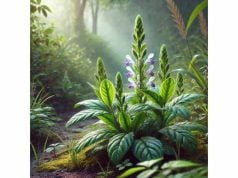
Jiaogulan, the climbing herb Gynostemma pentaphyllum, is often called the “immortality herb,” but its real appeal is less mystical and more practical. Traditionally used as a tea and tonic across parts of China and Southeast Asia, it has become known for helping the body adapt to stress, supporting metabolic health, and offering broad antioxidant protection. Unlike many trendy herbs, jiaogulan sits at an interesting crossroads between folk use and modern research: it is consumed as a daily beverage, yet it also contains a sophisticated mix of active compounds that may influence energy balance, inflammation, blood lipids, and glucose regulation.
The herb’s most important compounds are gypenosides, along with flavonoids and polysaccharides. Together, they help explain why jiaogulan is discussed for fatigue, stress resilience, cholesterol balance, and weight-related support. Even so, the evidence is stronger for some uses than for others, and not every extract works the same way.
For most readers, the most useful question is not whether jiaogulan is impressive in theory, but whether it fits a clear goal, a sensible dose, and a safe plan.
Quick Facts
- Jiaogulan may help support stress resilience and perceived fatigue in some adults.
- It shows the most consistent promise for metabolic support, especially around lipids, body fat, and glucose handling.
- Standardized extracts in human studies are commonly used at about 200 to 450 mg per day.
- People who are pregnant, breastfeeding, or taking blood sugar, blood pressure, or blood-thinning medicines should avoid unsupervised use.
Table of Contents
- What is jiaogulan
- Key compounds and medicinal properties
- Does jiaogulan help with stress
- Can it support metabolic health
- How to use jiaogulan
- How much should you take
- Safety and research limits
What is jiaogulan
Jiaogulan is a perennial vine in the cucumber and gourd family, not the ginseng family, even though it is often described as “ginseng-like.” That comparison comes from function more than botany. In traditional practice, jiaogulan has been used as a tonic herb and brewed as a daily tea for stamina, recovery, circulation, and general vitality. Its leaves are the most commonly used part, although some preparations may include the stems.
The plant grows naturally in parts of China, Japan, Korea, Thailand, Vietnam, and nearby regions. In traditional Chinese herbal use, it is valued less as a dramatic rescue remedy and more as a steady, balancing herb. That is part of why modern wellness culture has embraced it. Jiaogulan is often framed as an adaptogen, meaning a plant used to support resilience during physical or mental stress. That term is useful, but it should not be treated as a formal medical category. It is better understood as a practical shorthand for herbs used to help the body maintain balance under pressure.
Several features make jiaogulan stand out:
- it is mild enough to be taken as a tea
- it has a long history of use as a daily tonic
- it contains a large number of saponins called gypenosides
- it appears to act on metabolic and stress-related pathways rather than one single symptom
That last point matters. Jiaogulan is not usually chosen for sharp, immediate effects like a sedative, stimulant, or laxative. Instead, it is more often used for patterns such as low endurance, stress-related wear and tear, metabolic sluggishness, or a desire for long-term support.
This is also why people sometimes misunderstand it. A person expecting a burst of energy like caffeine may find it subtle. A person looking for a calming herb for bedtime may also be disappointed. Jiaogulan tends to sit in the middle: not strongly stimulating, not strongly sedating, but supportive in ways that may become more noticeable over several weeks.
Its most common modern use cases include:
- tea for general wellness
- standardized extract for weight and metabolic support
- fatigue or exercise-performance formulas
- stress-oriented wellness blends
It helps to think of jiaogulan as a “systems herb.” It is often discussed in relation to energy regulation, inflammatory balance, glucose handling, and cardiovascular function rather than a single organ or symptom. Readers familiar with tonic herbs may notice that it overlaps conceptually with adaptogenic rhodiola, though the chemistry, evidence base, and day-to-day feel are quite different.
Used thoughtfully, jiaogulan is best seen as a long-game herb: one that may support resilience and metabolism over time, but not one that should be oversold as a cure-all.
Key compounds and medicinal properties
The best-known active compounds in jiaogulan are gypenosides, a large group of dammarane-type saponins. These are the plant’s signature constituents and one reason it is often compared with ginseng. While jiaogulan is not botanically related to ginseng, some of its saponins share structural similarities with ginsenosides, which helps explain the frequent comparison.
Beyond gypenosides, jiaogulan also contains:
- flavonoids
- polysaccharides
- phytosterols
- amino acids and trace minerals in whole-leaf preparations
- smaller phenolic compounds with antioxidant activity
Each group contributes something different to the herb’s profile.
Gypenosides are most closely linked to the herb’s adaptogenic reputation and its metabolic effects. In laboratory and animal studies, they appear to influence antioxidant defenses, inflammatory signaling, lipid handling, and cellular energy pathways, especially AMPK. AMPK is often described as an energy-sensing switch inside cells. When this pathway is activated appropriately, it may help improve how the body manages glucose, fat oxidation, and energy balance.
Flavonoids contribute antioxidant and vascular-support effects. They may help protect cells from oxidative stress and support endothelial function, which matters for circulation and cardiometabolic health. Polysaccharides are often discussed for immune-modulating and gut-related effects, though the human evidence here is still much thinner than the marketing language suggests.
The most useful medicinal properties of jiaogulan can be summarized this way:
- antioxidant activity that may reduce oxidative stress
- anti-inflammatory actions that could support long-term metabolic health
- adaptogenic or stress-buffering effects in certain contexts
- metabolic support through lipid and glucose regulation
- possible endothelial and cardiovascular support
Still, there is an important difference between “has interesting mechanisms” and “reliably improves health outcomes in people.” Jiaogulan is rich in mechanisms. Human proof is more selective.
Another practical point is that product type changes the chemistry a user actually gets. A whole-leaf tea provides a broader but milder spectrum of compounds. A standardized extract may emphasize specific gypenosides and deliver a more concentrated effect. A branded extract used in one clinical trial should not automatically be treated as interchangeable with every capsule sold online.
This is why label reading matters. Look for:
- the plant part used, usually leaf
- whether the product is a tea, powder, or extract
- the extract ratio, if listed
- any standardization to total saponins or gypenosides
- whether the formula combines jiaogulan with other herbs
Jiaogulan’s chemistry also explains why it is sometimes described as a “bridge herb” between tea and supplement. It can be gentle enough for daily infusion, yet potent enough in concentrated form to show measurable metabolic effects. Readers curious about botanical saponins more broadly may want to compare this with ginseng’s active-compound profile, since the two herbs often get discussed in the same metabolic and adaptogenic conversations.
In short, the key ingredients in jiaogulan are not just decorative plant compounds. They are the reason the herb is relevant to stress physiology, metabolic health, and long-term tonic use.
Does jiaogulan help with stress
Stress support is one of the main reasons people try jiaogulan, and it is also one of the easiest areas to oversimplify. Jiaogulan is not a sedative, and it does not work like caffeine. Its appeal is that it may help some people feel more resilient under chronic pressure without pushing them sharply in either direction.
That is where the adaptogen label becomes useful. In practical terms, jiaogulan is used to support steadier energy, reduced stress burden, and better recovery from mental or physical strain. Some human research gives this idea a reasonable foundation. In one placebo-controlled trial, an extract of jiaogulan leaves was associated with reduced anxiety-proneness in healthy adults under chronic psychological stress. That does not mean it treats anxiety disorders, but it does suggest a possible role in everyday stress resilience.
The fatigue and performance story is also worth noting. Newer clinical work has explored jiaogulan extracts for exercise-induced fatigue and physical performance. The findings are interesting: some studies suggest improved exercise performance, lower perceived fatigue, or changes in energy-related markers. This fits the traditional reputation of the herb as a vitality tonic better than the simple claim that it is “calming.”
The most realistic benefits in the stress and energy category are probably these:
- feeling less worn down during ongoing stress
- modest support for physical endurance or recovery
- improved perceived resilience rather than sedation
- better fit for daytime use than bedtime use
A useful way to understand this is to match the herb to the pattern. Jiaogulan often makes more sense when someone feels:
- mentally taxed but not wired
- physically drained but still functional
- stuck in a cycle of poor recovery
- interested in daily support rather than quick relief
It makes less sense when the main goal is immediate sleep support, acute panic relief, or rapid mood change. In those situations, other interventions are often better matched. Some people looking specifically for stress-focused botanicals may compare it with ashwagandha for stress resilience, but the two herbs differ in feel, evidence profile, and typical use. Ashwagandha is often used when tension and stress feel heavy and draining. Jiaogulan is more often chosen when the goal includes stress tolerance plus energy or metabolic support.
There is also a dosage and expectation issue. The stress effects of jiaogulan usually seem more likely with regular use over weeks, not after a single serving. Tea drinkers sometimes notice a subtle lift in steadiness, while extract users may notice more defined changes in endurance or stress tolerance.
The key insight is that jiaogulan may be a helpful stress-support herb for the right person, but it is not a replacement for sleep, nutrition, exercise, or mental health care. It is a support tool, not a complete stress strategy. When used in that realistic frame, its reputation starts to make sense.
Can it support metabolic health
Metabolic health is where jiaogulan has some of its strongest modern interest. This includes body composition, blood lipids, glucose handling, and broader cardiometabolic balance. It is also the area where readers need the clearest distinction between promising and proven.
The most encouraging findings relate to lipids and body composition. Clinical research has explored jiaogulan in adults with dyslipidemia and in people with overweight or obesity. Some results suggest improvements in triglycerides, HDL cholesterol, body fat, waist-related measures, or total fat mass, depending on the extract and study design. That does not make it a replacement for established therapy, but it does support the idea that jiaogulan may have real metabolic activity in humans.
Several mechanisms may help explain this:
- activation of AMPK, which can influence energy use and fat metabolism
- antioxidant and anti-inflammatory effects that support metabolic regulation
- possible effects on adipokines and cellular energy signaling
- support for lipid metabolism and glucose uptake seen in preclinical work
The most realistic metabolic claims are modest ones. Jiaogulan may help as an add-on strategy for people trying to improve weight-related markers, triglycerides, or general metabolic health. It is not a substitute for medical care in diabetes, severe dyslipidemia, fatty liver disease, or cardiovascular risk management.
This is where the herb may appeal to two groups. The first is people looking for a tea or supplement that supports a healthier metabolic baseline. The second is people already working on diet, sleep, movement, and weight loss who want a botanical that may complement those efforts. Jiaogulan seems more credible in the second group than in the first, because herbs tend to work better as part of a broader pattern change than as stand-alone fixes.
Still, it helps to keep expectations grounded. The extract used in a body-composition study is not the same as drinking a cup of leaf tea now and then. Standardized extracts used in research are usually stronger, more consistent, and taken for weeks to months. That is why someone using tea alone should not expect the same body-fat or triglyceride results seen in extract trials.
For readers comparing options, jiaogulan occupies a middle ground. It is broader and gentler than aggressive single-pathway supplements, but it is more metabolically focused than a simple wellness tea. Those interested in a sharper glucose-and-lipid angle may also compare it with berberine’s metabolic-support pattern, which is more targeted but often less gentle.
The bottom line is that jiaogulan’s metabolic reputation is not empty hype. It has some human data behind it, especially for lipids and body composition. But the evidence is still not strong enough to justify dramatic claims such as “melts fat,” “reverses diabetes,” or “replaces statins.” Used realistically, it is best viewed as a potentially useful adjunct for metabolic support rather than a primary treatment.
How to use jiaogulan
Jiaogulan is used in two main ways: as a tea and as a standardized extract. The best choice depends on what you want from it. Tea is better suited to gentle daily use and traditional wellness habits. Extracts are more practical when the goal is a measurable dose aligned with clinical research.
Tea is the most traditional form. The dried leaves are steeped in hot water and taken once or several times through the day. Many people choose tea because it feels like an everyday ritual rather than a medical intervention. The taste is usually described as mildly bitter, slightly sweet, and grassy. Some people find it pleasant on its own, while others prefer it blended with mint, lemon peel, or other mild herbs.
Tea use makes the most sense when your goals are:
- general wellness
- steady daytime support
- replacing sugary or heavily caffeinated drinks
- long-term, low-intensity use
In that role, jiaogulan is closer to a functional tea than a targeted clinical extract. Readers who want another example of an herb that crosses the line between beverage and daily wellness habit may think of green tea’s everyday tea model, though jiaogulan is caffeine-free and works quite differently.
Standardized extracts are the better choice when the goal is closer to what has been tested in human studies, such as stress support, fatigue, or metabolic outcomes. Capsules, tablets, and powdered extracts offer more control over daily intake. The tradeoff is that concentrated products may feel less gentle and require more attention to dose and interactions.
Practical ways to use jiaogulan include:
- Tea in the morning or early afternoon for a steady, non-jittery wellness routine.
- Extract with meals when using it as part of a metabolic-support plan.
- Regular use for several weeks rather than sporadic single doses.
- Starting with one product at a time instead of stacking multiple adaptogens immediately.
Some people also use jiaogulan in blended formulas with ginseng, rhodiola, or mushroom extracts. That can make sense in practitioner-led programs, but it can also make results harder to interpret. If a person wants to know whether jiaogulan suits them, a single-herb trial is usually smarter than a complex blend.
Timing matters a little. Since jiaogulan may feel gently enlivening in some people, daytime use is usually a better starting point than bedtime use. If using capsules, taking them with food may improve comfort for sensitive stomachs.
The most practical advice is to match the form to the goal. Choose tea for habit-building and daily support. Choose extract for clearer dosing and more research-like use. In both cases, consistency matters more than intensity.
How much should you take
Jiaogulan dosing is highly product-dependent, so the best dose is never just a number. It is always a number tied to a specific form. That is why leaf tea, powdered herb, and standardized extract should not be treated as interchangeable.
The clearest human dosing data come from extract studies. Across clinical work, commonly used extract ranges include:
- 200 mg twice daily, for a total of 400 mg per day
- 450 mg per day of a dried leaf extract
- 450 mg per day across 12 weeks or 16 weeks in performance and body-composition studies
Those numbers give a reasonable practical range for standardized extracts: about 200 to 450 mg per day is the most familiar research territory. That does not mean more is better. It means that if a product falls far outside that range, the user should be especially careful about assuming it matches the evidence.
For tea, the dosing is looser. There is no single universally accepted daily gram amount equivalent to the extract trials, because leaf quality, steeping time, and plant processing vary. A common real-world approach is one to three cups daily, starting at the lower end. Tea is best treated as a gentler form rather than a precise substitute for capsule trials.
A sensible dosing strategy usually looks like this:
- Start low, especially if you are new to the herb.
- Use one format only at first.
- Stay within the label directions for standardized products.
- Give the herb enough time to show whether it fits, usually several weeks.
- Reassess if you notice no benefit rather than simply increasing the dose.
Duration matters. In human studies, benefits were generally assessed over 4 to 16 weeks, not over a few days. That means jiaogulan is usually not the right herb for someone expecting instant results. It is better suited to short-to-medium trials with a clear purpose, such as an 8-week stress-support trial or a 12- to 16-week metabolic support plan.
Some extra dosing notes are worth keeping in mind:
- Take daytime doses earlier if you are sensitive to anything mildly activating.
- Take with food if your stomach is easily irritated.
- Do not copy doses from unrelated “adaptogen blends” and assume they apply to jiaogulan alone.
- Avoid combining several concentrated metabolic herbs at once unless you know why you are doing it.
The best dose is the lowest dose that matches the product, the goal, and the person’s tolerance. That may sound conservative, but it is often how herbs work best in real life. Jiaogulan is a plant for measured use, not heroic dosing.
Safety and research limits
Jiaogulan is often described as well tolerated, and that is broadly fair, but “well tolerated” is not the same as risk-free. Most people who use it in tea form or moderate extract doses do not report major problems, yet there are still clear reasons to be cautious.
Possible side effects may include:
- stomach upset
- nausea or loose stools
- dizziness in sensitive users
- headache or general discomfort with concentrated products
These issues are usually mild and more likely when the dose is too high, the extract is strong, or the person is already sensitive to herbs and supplements. Tea tends to be gentler than capsules.
The larger safety questions involve special populations and medication use. Because jiaogulan may influence blood sugar, blood pressure, lipid metabolism, platelet activity, or immune signaling, it deserves extra caution in people taking:
- diabetes medicines
- blood pressure medicines
- anticoagulants or antiplatelet drugs
- immunosuppressive therapy
- multiple cardiometabolic medications at once
This does not prove a dangerous interaction in every case, but it is enough to make unsupervised experimentation a poor idea.
Pregnancy and breastfeeding are also caution zones. There is not enough strong safety evidence to recommend medicinal use in either setting. The same conservative approach applies to children, people preparing for surgery, and people with unstable chronic illness.
Who should avoid self-prescribed jiaogulan or seek medical guidance first:
- pregnant or breastfeeding adults
- people with autoimmune disease on immune-directed treatment
- people with bleeding risk or blood-thinning therapy
- people with recurrent low blood pressure or frequent dizziness
- anyone with diabetes using glucose-lowering medication
- anyone using it instead of treatment for serious metabolic disease
Research limits also matter. Much of the enthusiasm around jiaogulan comes from preclinical work, mechanistic studies, and modest-sized trials. Human evidence exists, but it is still narrower than marketing language suggests. Different studies use different extracts, different standardization methods, and different outcomes. That makes it difficult to generalize from one product to all products.
So what can a careful reader conclude? Jiaogulan appears promising, especially for stress resilience, fatigue, lipid support, and body composition. It is also probably safer than many stronger metabolic supplements when used appropriately. But it is not fully established as a treatment for obesity, diabetes, anxiety disorders, or cardiovascular disease.
That balanced view is important. Jiaogulan has enough evidence to deserve serious interest, but not enough to justify exaggerated promises. Readers interested in broader tonic herbs with a stronger liver-and-stress reputation sometimes compare it with schisandra’s adaptogenic and liver-support profile, but even then, the right choice depends on the symptom pattern, the goal, and the person’s safety considerations.
Jiaogulan is best approached with optimism and restraint at the same time. That is usually where the most useful herbal decisions are made.
References
- Gypenosides, a promising phytochemical triterpenoid: research progress on its pharmacological activity and mechanism 2025 (Review)
- Gynostemma pentaphyllum for dyslipidemia: A systematic review of randomized controlled trials 2022 (Systematic Review)
- Effects of gypenoside L-containing Gynostemma pentaphyllum extract on fatigue and physical performance: A double-blind, placebo-controlled, randomized trial 2023 (RCT)
- The effect of an orally‐dosed Gynostemma pentaphyllum extract (ActivAMP®) on body composition in overweight, adult men and women: A double‐blind, randomised, placebo‐controlled study 2022 (RCT)
- Supplementation with extract of Gynostemma pentaphyllum leaves reduces anxiety in healthy subjects with chronic psychological stress: A randomized, double-blind, placebo-controlled clinical trial 2019 (RCT)
Disclaimer
This article is for educational purposes only and is not medical advice. Jiaogulan may affect blood sugar, blood pressure, and other treatment-sensitive pathways, so it should not replace professional care for anxiety, obesity, dyslipidemia, diabetes, cardiovascular disease, or any chronic condition. Seek qualified medical guidance before using concentrated jiaogulan products if you are pregnant, breastfeeding, taking prescription medicines, preparing for surgery, or managing a long-term illness.
If this article helped you, please share it on Facebook, X, or any platform your readers and colleagues use most.