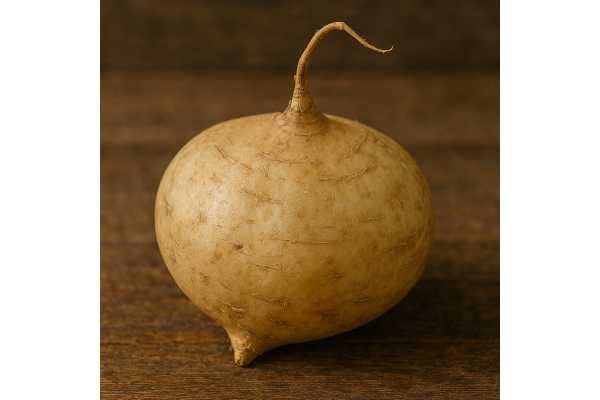
Jicama is a crisp, juicy root vegetable that often surprises people the first time they bite into it. Under its rough brown skin, the flesh is snowy white, mildly sweet, and refreshingly crunchy—somewhere between an apple, a water chestnut, and a very mild radish. Sometimes called yam bean or Pachyrhizus erosus, jicama is native to Mexico but is now enjoyed across Asia, the Americas, and beyond.
Nutritionally, jicama is low in calories, rich in water, and a meaningful source of vitamin C, fiber, and prebiotic carbohydrates that can support a healthy gut microbiome. Its low glycemic index and high fiber density make it appealing for people who are watching blood sugar, appetite, or overall calorie intake. At the same time, the plant itself is unusual: only the peeled root is edible, while the seeds and other parts contain a natural pesticide called rotenone. This article unpacks jicama’s nutrition, benefits, safe use, and best ways to enjoy it day to day.
Quick Facts for Jicama
- A 100 g serving of raw jicama has about 38 kcal, roughly 9–10 g net carbohydrates, and around 4–5 g fiber with significant vitamin C.
- Jicama provides prebiotic inulin type fiber that can support beneficial gut bacteria and help with regularity and satiety.
- A typical serving is ½–1 cup (60–130 g) raw or lightly cooked jicama, enjoyed several times per week as part of mixed meals.
- Only the peeled root is edible; leaves, stems, pods, and seeds are toxic due to rotenone and should never be eaten.
- People with irritable bowel syndrome, significant digestive sensitivity, or advanced kidney disease should introduce jicama slowly and discuss portions with a healthcare professional.
Table of Contents
- Jicama origins uses and types
- Jicama nutrients per 100 grams
- Documented health effects of jicama
- Jicama side effects sensitivities and interactions
- How to choose store and source jicama sustainably
- Preparing and cooking jicama while preserving nutrition
- Jicama portions comparisons and common questions
Jicama origins uses and types
Jicama is the common name for the tuberous root of Pachyrhizus erosus, a climbing legume in the pea family. It originated in Mexico and Central America, where it has been cultivated for centuries, and was later introduced to Southeast Asia and other tropical and subtropical regions. You may see it labeled as yam bean, sengkuang, bang kuang, or Mexican turnip, but all of these typically refer to the same edible root.
The plant itself is striking. Above ground, jicama is a vigorous vine with leaves and bean like pods. Below ground, it forms large, rounded or slightly elongated roots. Only the peeled root is safe to eat. The leaves, stems, flowers, and seeds contain rotenone, a natural insecticide and fish poison. Historically, crushed seeds were used to stun fish. This is why food guidance is very clear: treat jicama as a root vegetable, and never eat the rest of the plant.
Culinarily, jicama is versatile and forgiving. When raw, it is:
- Crisp and juicy, with a faint sweetness and a very mild earthy note.
- Neutral enough to pair with citrus, chili, salt, herbs, and both sweet and savory flavors.
- Sturdy enough to hold its crunch in salads and slaws for hours if kept chilled.
Common uses include:
- Raw sticks or matchsticks for dipping into hummus, guacamole, yogurt dips, or salsa.
- Shredded into salads, slaws, and fresh spring rolls for crunch and hydration.
- Diced into fruit salads with lime and chili for a sweet–savory snack.
- Lightly stir fried in vegetable mixes where you want crunch that is less starchy than potato.
Cooked jicama becomes slightly more tender and less sweet, and can be used in stir fries, curries, soups, and even oven baked “fries” or hash style dishes. Because it carries flavor well without dominating, it fits into Latin American, Asian, and fusion recipes with ease.
Jicama nutrients per 100 grams
Most nutrient data for jicama come from analyses of the raw peeled root. Cooking changes some values slightly, especially water and vitamin C, but the overall pattern remains similar. The numbers below describe a typical composition for 100 g of raw jicama.
Macros and electrolytes (per 100 g, raw)
| Nutrient | Amount | Approximate % Daily Value* |
|---|---|---|
| Energy | 38 kcal | — |
| Protein | 0.7–1.0 g | 1–2% |
| Total fat | 0.1 g | 0% |
| Total carbohydrate | 8.5–9.0 g | 3% |
| Dietary fiber (total) | 4.5–5.0 g | 16–18% |
| Sugars | 1.5–2.0 g | — |
| Water | ~85–90 g | — |
| Sodium | 3–5 mg | 0% |
| Potassium | ~150–200 mg | 3–5% |
*Percent Daily Values are approximate and based on a 2,000 kcal diet.
A large share of jicama’s carbohydrate is inulin and related fructans—prebiotic fibers that humans cannot digest but gut bacteria can ferment. That is why net digestible carbohydrate is relatively low despite the total carbohydrate figure.
Vitamins (per 100 g, raw)
| Vitamin | Amount | Approximate %DV |
|---|---|---|
| Vitamin C (ascorbic acid) | 18–22 mg | 20–25% |
| Folate (Vitamin B9) | ~12–20 µg | 3–5% |
| Thiamin (Vitamin B1) | ~0.03–0.05 mg | 3–4% |
| Riboflavin (Vitamin B2) | ~0.03–0.04 mg | 2–3% |
| Vitamin B6 | ~0.04–0.05 mg | 2–3% |
| Niacin (Vitamin B3) | ~0.2–0.3 mg | 1–2% |
| Vitamin E and K | trace amounts | negligible |
Vitamin C is the standout here: a modest serving of jicama can cover a significant portion of daily needs, supporting immune health, collagen formation, and antioxidant defenses.
Minerals and trace elements (per 100 g, raw)
| Mineral | Amount | Approximate %DV |
|---|---|---|
| Calcium | ~12–20 mg | 1–2% |
| Magnesium | ~11–12 mg | 3% |
| Phosphorus | ~18–25 mg | 2–3% |
| Potassium | 150–200 mg | 3–5% |
| Iron | ~0.5–0.6 mg | 3–4% |
| Copper | ~0.04–0.05 mg | 4–6% |
| Zinc | ~0.1–0.2 mg | 1–2% |
Jicama is not a mineral powerhouse like some leafy greens or legumes, but it contributes helpful amounts of potassium and small doses of several other minerals, especially given its low calorie content.
Glycemic and acid–base characteristics
Jicama is typically classified as:
- Low glycemic index (values around 15–20 are commonly reported).
- Low glycemic load per standard serving, due to modest net carbohydrate and high fiber.
- Mildly alkaline forming on potential renal acid load (PRAL) scales.
In everyday terms, that means jicama tends to have a gentle effect on blood glucose, especially when enjoyed as part of a mixed meal with protein and fat.
Documented health effects of jicama
The health interest around jicama comes from its combination of prebiotic fibers, vitamin C, hydration, and phytochemicals such as phenolic acids and isoflavones. Research spans cell experiments, animal studies, and observational work in humans. While more human trials are needed, several themes emerge.
Gut microbiome and digestive health
Because jicama is rich in inulin and related prebiotic carbohydrates, it can encourage the growth of beneficial gut bacteria. Studies of jicama fiber and inulin type fructans show:
- Increased populations of helpful bacteria such as Bifidobacterium and Lactobacillus.
- Improved stool frequency and softer stool consistency in people with low baseline fiber intake (shown more broadly for inulin).
- Production of short chain fatty acids such as butyrate, which help nourish colon cells and support gut barrier integrity.
For many people, gradually including jicama can be a simple way to introduce more prebiotic fiber without major changes in meals.
Blood sugar and metabolic effects
Several animal studies using jicama fiber or extracts suggest that it may:
- Help prevent excessive rises in blood glucose in the context of high sugar or high fat diets.
- Improve markers of insulin sensitivity.
- Limit diet induced weight gain and unfavorable changes in liver and fat tissue.
These effects are likely driven by the combination of viscous and fermentable fibers, which can slow glucose absorption, support better gut hormone responses, and beneficially shift gut microbiota. For humans, the practical takeaway is that using jicama as a side or snack instead of refined starches can slightly lower the glycemic impact of a meal and support appetite regulation.
Cardiovascular and immune support
Jicama contributes:
- Soluble and insoluble fiber, which can help lower LDL cholesterol and support healthy blood pressure when part of a broader heart supportive diet.
- Vitamin C and other antioxidants that help neutralize free radicals and support immune function.
- Modest potassium, which contributes to blood pressure regulation, especially when overall sodium intake is reasonable.
Some laboratory work also suggests that jicama tuber extracts have anti inflammatory and chemopreventive potential, though these findings are preliminary and not a reason to use jicama as a treatment.
Hydration and weight management
With around 85–90 percent water and a crunchy texture, jicama is naturally filling for relatively few calories. Including it in salads, snack plates, and main dishes can:
- Increase meal volume and chewing time.
- Add fiber and fluid that promote satiety.
- Provide a refreshing, low energy alternative to chips or crackers.
On its own, jicama will not cause weight loss, but it can support weight management goals when it replaces more calorie dense foods and fits into an overall balanced pattern.
Jicama side effects sensitivities and interactions
Most people can enjoy reasonable amounts of jicama without problems, but there are important safety points, particularly regarding which parts of the plant are edible and how much fiber your gut can comfortably handle.
Plant part toxicity and rotenone
The most critical safety rule is simple:
Only the peeled root of jicama is edible. The rest of the plant is not.
- Leaves, stems, flowers, pods, and especially seeds contain rotenone, a naturally occurring pesticide and fish poison.
- Rotenone interferes with mitochondrial energy production and is highly toxic to fish and insects and potentially harmful to humans at sufficient doses.
- There has been at least one documented fatal human poisoning from ingesting a large quantity of jicama seeds, which underscores that this is not just a theoretical risk.
Commercial jicama sold as a peeled or unpeeled root in grocery stores is safe when treated like a root vegetable. Never sprout or eat the seeds, and do not use other plant parts in teas, powders, or home remedies.
Digestive symptoms from prebiotic fiber
The same inulin type fibers that support beneficial gut bacteria can also cause gas, bloating, and cramping in people who are sensitive to FODMAPs or sudden increases in fiber. This is more likely if you:
- Eat large servings of jicama after a low fiber period.
- Have irritable bowel syndrome, small intestinal bacterial overgrowth, or a history of digestive sensitivity.
- Combine jicama with many other high FODMAP foods in the same meal.
To reduce discomfort, start with small portions (for example, ¼–½ cup raw) a few times per week and increase gradually only if tolerated.
Blood sugar and medication timing
Although jicama is low glycemic, it still contains digestible carbohydrates. People with diabetes or prediabetes should count it within their carbohydrate goals and monitor blood glucose when trying new foods. Extensive fiber intake from jicama and other sources may slightly delay the absorption of some oral medications if swallowed at the same time, so leaving a one to two hour window between large high fiber meals and critical medicines is a reasonable precaution unless your healthcare provider advises differently.
Kidney disease and potassium
Jicama’s potassium content is moderate rather than extreme, but for individuals with advanced chronic kidney disease or those on strict potassium restricted diets, even moderate sources should be planned. In such cases:
- Discuss appropriate portion sizes with a renal dietitian or nephrologist.
- Keep servings small and avoid combining many potassium rich foods in the same meal.
Allergic reactions
True jicama allergy appears to be rare. However, anyone who experiences itching, hives, swelling, or breathing difficulty after eating jicama should seek immediate medical attention and avoid further exposure until evaluated by an allergist.
How to choose store and source jicama sustainably
Choosing good jicama starts at the market and continues with how you store it at home. There are also interesting sustainability aspects, since jicama is a legume that can help support soil health.
Selecting quality roots
When buying jicama:
- Look for roots that feel heavy for their size, with firm, smooth skin.
- Surface should be dry and intact, without large cuts, soft spots, or mold.
- Fine root hairs or slight scars are normal; deep cracks or wet, slimy areas are not.
- A little dirt is acceptable, but avoid roots that smell sour or fermented.
Size is partly personal preference. Smaller roots tend to be slightly sweeter and more tender. Larger ones are easier to peel and cut but may have more fibrous areas near the skin.
In some regions, you may find pre peeled, cut jicama sticks in the refrigerated produce section. These are convenient but perishable. Check the use by date, ensure they look bright and moist (not dried out or slimy), and keep them cold until use.
Storage and shelf life at home
Whole, uncut jicama stores best:
- In a cool, dry, well ventilated place out of direct sunlight.
- At a temperature similar to a pantry or slightly cool cellar.
- Away from ethylene producing fruits like apples and bananas, which can accelerate aging.
Refrigeration is possible, but very cold temperatures or high humidity can promote chilling injury and mold over time. Many home cooks store jicama as they would potatoes or onions and then refrigerate after cutting.
Once peeled and cut:
- Wrap sticks or chunks in an airtight container.
- Optionally add a damp paper towel to prevent drying.
- Keep in the refrigerator and use within 3–4 days.
- To reduce browning, you can splash with lime or lemon juice before chilling.
Sustainability and agricultural considerations
Jicama is relatively promising from a sustainability standpoint:
- As a legume, it can fix nitrogen in the soil, reducing the need for synthetic fertilizers when grown in rotations or intercrops.
- It tolerates warm climates and can yield well in conditions that might challenge more delicate crops.
- Both the root and above ground biomass can be used—roots for food and vines for animal feed or soil incorporation—reducing waste.
However, because seeds and aerial parts are toxic, they must be managed carefully to avoid accidental ingestion by livestock or wildlife and to prevent rotenone rich residues from entering waterways. Responsible producers handle plant residues appropriately and follow guidelines for safe disposal or composting.
Consumers who want to prioritize sustainable jicama can:
- Buy from local farmers or regional growers when available.
- Ask about growing practices, especially pesticide use and crop rotations.
- Choose whole, minimally packaged roots over heavily processed products to reduce packaging waste.
Preparing and cooking jicama while preserving nutrition
Jicama is easy to work with once you know the basic steps. Good preparation not only improves flavor and texture but also helps preserve vitamin C and fiber and maintain safety.
Peeling and trimming
- Rinse the whole root under cool running water to remove any soil.
- Slice off both ends to create flat surfaces so the root sits securely on the cutting board.
- Use a sharp knife or sturdy vegetable peeler to remove the thick brown skin and any fibrous layer just beneath it. The peel and any greenish or damaged areas should be discarded.
- Once peeled, the flesh should be uniformly white to cream colored; trim away any bruised or discolored spots.
Remember that only the peeled root is edible; do not use any leaves, stems, pods, or seeds.
Raw preparations
Raw jicama is popular because it retains maximum crunch, hydration, and vitamin C. Simple ideas include:
- Sticks or slices with lime juice and chili powder.
- Matchsticks in cabbage slaw, adding sweetness and crunch without mayonnaise heavy dressings.
- Diced into fruit salads with mango, pineapple, cucumber, and mint.
- Wrapped in rice paper rolls with herbs, lettuce, and shrimp or tofu.
To reduce browning and keep texture crisp, toss raw pieces with a little citrus juice just after cutting and store them chilled until serving.
Cooking techniques and nutrient retention
Cooking will soften jicama slightly and can be useful for people who find raw forms too fibrous. To preserve nutrients:
- Stir fry or sauté quickly over medium–high heat so pieces warm and slightly soften but retain some crunch.
- Roast or bake at moderate temperatures with a small amount of oil and seasoning; avoid charring or very dark browning, which can create off flavors and undesirable compounds.
- Add jicama near the end of soup or stew cooking rather than at the very beginning, to limit vitamin C loss.
- Steam small chunks briefly instead of boiling them for long periods in large volumes of water.
The fiber and prebiotic component are quite heat stable; the main nutrient losses from cooking involve vitamin C and some B vitamins, especially with long heating in water.
Blended and value added uses
Jicama can also be:
- Grated into vegetable patties or fritters to add moisture and bulk.
- Blended into chilled soups with cucumber and herbs for a light starter.
- Incorporated into salsas and taco toppings for crunch without heft.
- Used in combination with carrot and apple in juices or smoothies, in modest amounts, to add fiber and volume.
For children or adults with chewing difficulties, finely grated or lightly cooked, mashed jicama mixed into other dishes can offer the hydration and fiber benefits in a gentler texture.
Jicama portions comparisons and common questions
Understanding how much jicama to eat and how it compares to other foods makes it easier to fit into everyday meals.
Reasonable portions and frequency
For most healthy adults:
- A common serving is about ½–1 cup (roughly 60–130 g) of raw jicama sticks or cubes.
- Enjoying this amount several times per week is reasonable within a varied diet.
- People new to high fiber or prebiotic rich foods may want to start with ¼–½ cup and build up gradually.
Children can eat smaller age appropriate portions, always ensuring that sticks are cut in a way that reduces choking risk (thin, short pieces rather than large, hard chunks).
Individuals with digestive disorders, diabetes, kidney disease, or complex medical conditions should personalize portions with their healthcare team.
How does jicama compare with other snacks and sides?
Compared with:
- Potato: Jicama has fewer calories and a much lower glycemic index per 100 g. It also provides more vitamin C and more fiber, but far less starch.
- Carrots: Jicama offers more vitamin C and water but much less vitamin A. Both are low calorie and crunchy.
- Apples: Jicama has similar crunch and hydration but fewer calories and sugars and more vitamin C for the same volume. Fiber is broadly comparable, though apples typically provide more soluble pectin.
For people reducing refined snacks, jicama can substitute for chips or crackers to add volume and fiber with far fewer calories.
Is jicama low carb or keto friendly?
Jicama is lower in net carbohydrates than many starchy vegetables, but it still contributes about 8–10 g of net carbs per 100 g. For moderate low carb plans, a small serving often fits. For strict ketogenic diets with very low daily carbohydrate limits, jicama needs to be carefully portioned, if used at all.
Is jicama low FODMAP?
Because of its inulin content, jicama is not strictly a low FODMAP food, especially in larger portions. Small servings may be tolerated by some people with irritable bowel syndrome, while others may experience gas and bloating even at modest intakes. A dietitian experienced in FODMAP guidance can help tailor portions.
Can you eat jicama skin?
It is best not to. The peel is tough, can harbor residues of soil and agrochemicals, and sits just above tissues with higher concentrations of plant defense compounds. Standard recommendations are to peel jicama before eating to maximize safety and palatability.
Is jicama safe during pregnancy and breastfeeding?
In typical culinary amounts, peeled jicama root is generally considered safe during pregnancy and breastfeeding. It offers vitamin C, fiber, and hydration. As always, it should be thoroughly washed, peeled, and prepared with good food safety practices, and overall fiber intake should be increased gradually to avoid digestive discomfort.
References
- Polysaccharides of nutritional interest in jicama (Pachyrhizus erosus) during root development 2022 (Research Article)
- The Bioactivity and Phytochemicals of Pachyrhizus erosus (L.) Urb.: A Multifunctional Underutilized Crop Plant 2022 (Systematic Review)
- Jicama (Pachyrhizus erosus) fiber prevents excessive blood glucose and body weight increase without affecting food intake in mice fed with high-sugar diet 2019 (Animal Study)
- The first fatal case of yam bean and rotenone toxicity in Thailand 2005 (Case Report)
- Jicama Nutrition Facts and Health Benefits 2023 (Clinical Summary)
Disclaimer
The information in this article is intended for general education and should not be taken as personal medical advice, diagnosis, or treatment. Jicama and other high fiber or prebiotic rich foods can interact with individual health conditions, medications, and dietary needs in ways that require professional assessment. Always consult a qualified healthcare provider or registered dietitian before making substantial changes to your diet, especially if you have digestive disorders, diabetes, kidney disease, allergies, are pregnant or breastfeeding, or are taking prescription medicines.
If you found this guide to jicama helpful, you are warmly encouraged to share it on Facebook, X (formerly Twitter), or any other platform you prefer. Thoughtful sharing supports our ability to continue creating careful, evidence informed nutrition content for more readers.