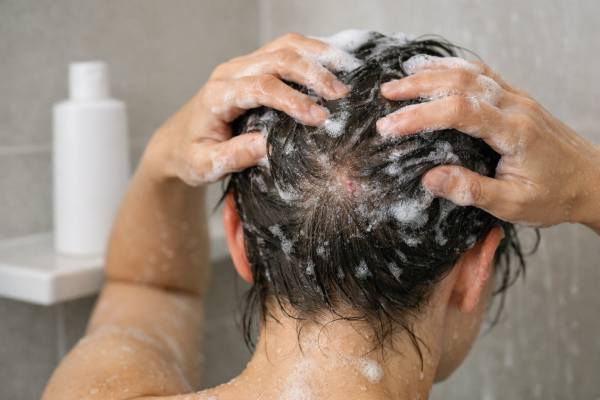
A flaky, itchy scalp can feel like a small problem until it starts affecting how often you wash your hair, what you wear, and how confident you feel. Add increased shedding to the picture, and it is easy to wonder whether one treatment can calm both issues at once. Ketoconazole shampoo sits right in that overlap. It is best known as an anti-dandruff shampoo, but many people also reach for it when they notice thinning, excess scalp oil, or inflammation around the follicles.
The key is using it for the right reason and in the right way. Ketoconazole is not a general hair-growth shampoo, and it is not meant to be scrubbed in like an ordinary cleanser and forgotten. Its benefits depend on contact time, frequency, and whether your scalp problem is actually yeast-driven dandruff or something else entirely. Once those pieces are clear, this shampoo becomes much easier to use well.
Quick Overview
- Ketoconazole shampoo can reduce flaking, itch, and scalp oiliness when dandruff or seborrheic dermatitis is part of the problem.
- It may help limit inflammation-related shedding, but it is not a stand-alone treatment for pattern hair loss.
- Apply it to the scalp, not just the hair, and leave it on for about 3 to 5 minutes before rinsing.
- Overuse can make the scalp and hair feel dry, so follow the product schedule instead of washing with it every day.
- Stop and get medical advice if you develop marked burning, swelling, a rash, or worsening hair loss.
Table of Contents
- What Ketoconazole Shampoo Actually Does
- Why It Helps Dandruff
- Can It Help Hair Loss
- How to Use It Correctly
- Side Effects and Common Mistakes
- When Ketoconazole Is Not Enough
What Ketoconazole Shampoo Actually Does
Ketoconazole is an antifungal ingredient. In scalp care, its main job is to reduce the growth of Malassezia, a yeast that naturally lives on the skin but can become part of the dandruff and seborrheic dermatitis cycle. When that cycle ramps up, the scalp may become itchy, oily, inflamed, and visibly flaky. Ketoconazole helps by lowering that yeast burden and calming some of the inflammation that goes with it.
That is why ketoconazole shampoo is more than a cosmetic cleanser. A standard shampoo mostly removes oil, sweat, and product buildup for a short period. Ketoconazole shampoo aims at the process driving the flakes in the first place. This is also why contact time matters. The active ingredient needs a few minutes on the scalp to do its work.
You will usually see two strengths discussed. Over-the-counter products are often 1%, while 2% shampoos are commonly used under medical guidance and, in some markets, are labeled for dandruff and seborrheic dermatitis. The stronger option is not always “better” for every person. It can be more useful when symptoms are more stubborn, but it can also feel drier or more irritating on a sensitive scalp.
What ketoconazole shampoo does not do is repair split ends, reverse bleach damage, or replace a healthy wash routine. Its target is the scalp. If you pour it onto the hair lengths and rinse quickly, you miss the point. Think scalp first, hair second.
It also helps to remember that flakes are not all the same. Some are tied to yeast, oil, and inflammation. Others come from irritation, eczema, psoriasis, contact allergy, or simple dryness. That is one reason ketoconazole can feel like a miracle for one person and a disappointment for another. The ingredient is acting on a specific pathway, not on every itchy scalp problem.
If you want a better sense of why the scalp environment matters so much, a primer on the scalp microbiome can make ketoconazole’s role easier to understand. When you use it in the right setting, the usual improvements are less itch, fewer visible flakes, and a calmer scalp that sheds less from irritation.
Why It Helps Dandruff
Dandruff is often treated like a hygiene issue, but that misses the real pattern. Most persistent dandruff is linked to a mix of scalp oil, inflammation, and Malassezia activity. Seborrheic dermatitis sits on the same spectrum, usually with more redness, irritation, and greasy yellowish scale. Ketoconazole shampoo works well here because it targets a central driver rather than only lifting flakes off the surface.
That is why many people notice two changes at once after a few weeks of correct use: fewer flakes on the shoulders and less urge to scratch. Itch matters because scratching can worsen inflammation, disturb the skin barrier, and make the scalp feel raw even when the visible scale has started to improve.
Ketoconazole tends to be a good fit when your dandruff looks and feels like this:
- fine or greasy flakes that keep returning
- scalp itch that improves after washing but quickly comes back
- redness around the hairline, crown, or behind the ears
- flare-ups during stress, cold weather, or periods of heavier oil production
It may be a less perfect fit when the main issue is dry, tight skin with very fine powdery flakes and little oil, or when there are thick plaques, sores, pus-filled bumps, or sharply defined bald patches. In those cases, the scalp may need a different diagnosis and a different treatment plan.
Another reason ketoconazole helps is that dandruff is rarely only about visible scale. Many people with chronic flaking also have a disrupted scalp barrier. Once the barrier is irritated, fragrance, harsh detergents, and over-washing can sting more. As the inflammation settles, the scalp often becomes less reactive to ordinary products again.
Still, ketoconazole is not the only active used for dandruff. Selenium sulfide, zinc-based formulas, ciclopirox, coal tar, and salicylic acid can all have a place depending on whether the scalp is mainly oily, inflamed, or thickly scaled. Ketoconazole stands out when you want a yeast-focused option with a long track record of use.
If your flakes come with persistent redness around the nose, eyebrows, ears, or beard area, it helps to think beyond “dry scalp” and toward seborrheic dermatitis patterns and triggers. That broader picture explains why the problem keeps returning and why maintenance use is often more effective than stopping the shampoo the moment the flakes disappear.
Can It Help Hair Loss
This is where expectations need to be precise. Ketoconazole shampoo may help with some kinds of hair shedding, but it is not a primary regrowth treatment in the same way that minoxidil is, and it is not a substitute for treatments used for androgenetic alopecia. Its value is usually indirect.
The clearest situation is inflammation-related shedding. When the scalp is persistently itchy, greasy, inflamed, and covered with scale, follicles sit in a less favorable environment. People often notice more hairs in the shower during a seborrheic dermatitis flare. When ketoconazole calms that flare, shedding may ease because the scalp is less inflamed and less frequently scratched.
There is also interest in ketoconazole as an adjunct in pattern hair loss. Some early studies and reviews suggest topical ketoconazole may improve hair shaft diameter or support fuller-looking hair over time, possibly because of anti-inflammatory effects and a mild influence on pathways involved in androgen-sensitive hair loss. But the evidence is still much lighter than it is for established treatments. In practical terms, that means ketoconazole can be a useful supporting player, not the lead therapy.
A good way to think about it is this:
- Best-supported role: dandruff and seborrheic dermatitis control
- Possible secondary benefit: less shedding when scalp inflammation is part of the cause
- Possible adjunct role: part of a broader routine for androgenetic alopecia
- Poor fit as a solo answer: sudden heavy shedding, patchy bald spots, scarring alopecia, or long-standing pattern thinning by itself
Another important point is that less shedding and new growth are not the same thing. A calmer scalp may reduce breakage from scratching and may lower inflammation-related shedding within weeks, but visible density changes move on hair-cycle time. That usually means months, not days.
If you are also using minoxidil, the combination can make sense, especially when dandruff and thinning overlap. The main caution is dryness. A medicated anti-dandruff shampoo plus a leave-on hair-growth treatment can irritate a sensitive scalp if the routine is too aggressive. In that case, a guide to minoxidil options for sensitive scalps can help you build a routine that is effective without being harsh.
So yes, ketoconazole shampoo can have a place in hair-loss care, but usually because it improves the scalp environment rather than because it acts as a stand-alone hair-restoration treatment.
How to Use It Correctly
Using ketoconazole shampoo well is mostly about three things: getting it onto the scalp, leaving it on long enough, and following the right schedule for the strength you are using.
For many over-the-counter 1% shampoos marketed for dandruff, a common label direction is every 3 to 4 days for up to 8 weeks, then as needed to keep dandruff under control. For 2% ketoconazole shampoos used for dandruff or seborrheic dermatitis, common medical guidance is twice weekly for 2 to 4 weeks, followed by maintenance about once weekly or every 1 to 2 weeks if symptoms tend to return. Product instructions can differ by country and formula, so the bottle or your clinician’s advice should always win.
A good wash looks like this:
- Wet the scalp thoroughly.
- Apply the shampoo to the scalp, not just the hair.
- Massage gently until it lathers over the whole affected area.
- Leave it on for about 3 to 5 minutes.
- Rinse well.
- Condition only the mid-lengths and ends if your hair feels dry.
A few technique details make a big difference. If you have thick, curly, coily, or very dense hair, parting the hair in sections can help you reach the scalp evenly. If you use heavy oils, styling creams, or dry shampoo, a gentle first cleanse with your regular shampoo can help ketoconazole contact the skin instead of sitting on buildup. If your hair is fragile or color-treated, keep the medicated lather focused on the scalp and limit the time it sits on the lengths.
What you should not do is use more product than needed, scrub aggressively with nails, or assume daily use will work faster. Overuse usually means more dryness, more irritation, and less consistency because the routine becomes hard to tolerate.
It is also smart to think about the rest of your wash schedule. Ketoconazole does not have to be your only shampoo. Many people do best with a simple pattern: medicated shampoo on treatment days and a gentle regular shampoo on other wash days. If you are unsure how frequently your scalp actually needs washing, this guide on wash frequency by scalp type can help you space treatment days more intelligently.
Most people can tell within 2 to 4 weeks whether the shampoo is reducing itch and flakes. If nothing improves after that, or the scalp looks worse, the issue may not be dandruff alone.
Side Effects and Common Mistakes
Ketoconazole shampoo is usually well tolerated, but “well tolerated” does not mean side-effect free. The most common problems are dryness, mild irritation, burning, itching, and a rougher hair feel after washing. Some people notice the lengths becoming duller because medicated shampoos are designed for scalp treatment, not softness. Less often, people can develop contact dermatitis, changes in hair texture, or shifts in hair color, especially when the hair is chemically treated or very porous.
The biggest mistake is treating it like an ordinary shampoo. That usually leads to one of two problems: either it gets rinsed off too fast to work, or it gets used too often and dries the scalp out. Both are common.
Other routine mistakes include:
- applying it mostly to the hair lengths instead of the scalp
- combining several medicated anti-dandruff shampoos in the same wash without guidance
- scrubbing an already inflamed scalp hard to “lift off” flakes
- using it on broken, severely irritated, or freshly scratched skin
- stopping as soon as symptoms improve, then wondering why they return two weeks later
There are also a few situations that call for more caution. Children may need different guidance depending on the product. People with known sensitivities to medicated cleansers, benzyl alcohol, fragrance, or preservatives can react more easily. Anyone with a history of eczema, contact allergy, or a very reactive scalp should watch closely for worsening redness or stinging rather than assuming all irritation is just part of treatment.
If your scalp burns sharply, develops swelling, oozing, or a spreading rash, stop the product and get medical advice. The same applies if your hair shedding clearly accelerates after starting it and the scalp looks more inflamed, not less. Sometimes the issue is not ketoconazole itself but the broader formula around it.
That distinction matters, especially if you have reacted to scented hair products before. In that case, it helps to understand the difference between irritation and allergy, and to review common fragrance triggers in itchy scalp products. A scalp that is already inflamed often becomes less forgiving, so the simplest routine is usually the safest one while you are trying a medicated shampoo.
When Ketoconazole Is Not Enough
Ketoconazole shampoo is useful, but it is not a catch-all answer for every scalp problem that flakes or sheds. Knowing when to move beyond self-treatment can save months of frustration.
You should think about a professional evaluation if you have any of the following:
- thick silvery plaques or heavy crusting
- painful scalp tenderness, pustules, or drainage
- sharply defined bald patches
- broken hairs with black dots or scaling that suggests fungal scalp infection
- eyebrow, eyelash, or beard involvement that is getting worse
- major shedding lasting more than a few months
- no meaningful improvement after a well-used 2- to 4-week treatment period
These patterns can point toward psoriasis, contact dermatitis, tinea capitis, alopecia areata, bacterial folliculitis, scarring alopecia, or another condition that needs a different plan.
Ketoconazole may also be only one part of treatment. Some people need scale-loosening help first, especially if the scalp has thick buildup. Others need an anti-inflammatory prescription during a bad flare, then switch back to ketoconazole for maintenance. If hair loss is the central concern rather than a side effect of scalp inflammation, treatment may need to focus on the hair-loss diagnosis itself, whether that is androgenetic alopecia, telogen effluvium, traction, iron deficiency, thyroid disease, or something else.
This is also where product rotation can be useful. A clinician may suggest alternating ketoconazole with another medicated shampoo, such as selenium sulfide, ciclopirox, or salicylic acid, depending on whether yeast, oiliness, or thick scale is the main issue. Rotation is different from piling everything on at once. The goal is a routine your scalp can tolerate over time.
If the symptom that bothers you most is persistent itch, burning, or tenderness rather than visible flaking, it helps to step back and look at the wider list of itchy scalp causes and red flags. Ketoconazole is excellent when the diagnosis fits. When it does not, continuing to use it harder or more often usually delays the right answer.
References
- Ketoconazole Shampoo for Seborrheic Dermatitis of the Scalp: A Narrative Review – PMC 2024 (Narrative Review)
- Child and Adult Seborrheic Dermatitis: A Narrative Review of the Current Treatment Landscape – PMC 2025 (Narrative Review)
- Topical ketoconazole for the treatment of androgenetic alopecia: A systematic review – PubMed 2020 (Systematic Review)
- How and when to use ketoconazole – NHS 2024 (Guidance)
Disclaimer
This article is for educational purposes only and is not a medical diagnosis or personal treatment plan. Dandruff, seborrheic dermatitis, and hair loss can overlap with other scalp conditions that need different care. Seek advice from a qualified clinician if you have sudden or severe shedding, scalp pain, swelling, pus, bald patches, thick plaques, or symptoms that do not improve with appropriate shampoo use. Follow the instructions on your specific product, especially for age limits, frequency, and how long to leave it on the scalp.
If this article helped you, please share it on Facebook, X (formerly Twitter), or any platform your friends, clients, or community use.