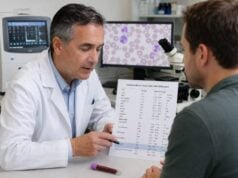
A low platelet count means your blood has fewer platelets than expected. Platelets are tiny blood cell fragments that help seal damaged blood vessels and form clots after an injury. The medical term is thrombocytopenia, usually defined in adults as a platelet count below 150,000 platelets per microliter of blood, also written as below 150 × 10⁹/L. Many low results are mild and do not cause bleeding, especially when the count is only slightly below the reference range and the rest of the blood count is normal.
A low platelet result still deserves context. The number can fall because the bone marrow is making fewer platelets, the immune system or an illness is destroying them faster, the spleen is trapping them, or the sample has platelet clumping that makes the count look falsely low. The safest next step is usually to confirm the result, compare it with past counts, and look for bleeding symptoms or other abnormal blood markers.
- A low platelet count is usually below 150,000/µL, but mild results between 100,000 and 149,000/µL often have little bleeding risk.
- Bleeding risk rises more clearly below 50,000/µL, especially with injury, surgery, blood thinners, or abnormal platelet function.
- Counts below 20,000/µL need prompt medical attention, and counts below 10,000/µL can carry a higher risk of spontaneous bleeding.
- Platelet clumping can cause a falsely low result, so a repeat CBC and blood smear may be needed before assuming true thrombocytopenia.
- Common causes include immune thrombocytopenia, infections, medications, liver disease, alcohol, pregnancy-related changes, sepsis, DIC, and bone marrow disorders.
Table of Contents
- What a Low Platelet Count Means
- Platelet Ranges and Bleeding Risk
- Common Causes of Low Platelets
- Symptoms and Urgent Warning Signs
- How Doctors Confirm the Result
- Follow-Up Tests and Blood Count Patterns
- Treatment and Safe Next Steps
- Special Situations That Change the Meaning
What a Low Platelet Count Means
A low platelet count means the platelet number on your blood test is below the lab’s expected range. Most adult labs use a reference range close to 150,000 to 450,000/µL, or 150 to 450 × 10⁹/L. Your result may appear on a complete blood count as “platelets,” “PLT,” or “platelet count.”
Platelets help stop bleeding by sticking to a damaged blood vessel wall, recruiting more platelets, and supporting clot formation. A low platelet number can make bruising or bleeding more likely, but platelet count is only one part of the clotting system. Blood vessel health, platelet function, medications, liver function, clotting factors, and the cause of the low count also shape bleeding risk.
Thrombocytopenia can be mild, temporary, or serious. A result of 135,000/µL in someone who feels well, has no bleeding, and has a stable history may mean something very different from a sudden drop from 250,000/µL to 60,000/µL during an infection. Trend matters. A new fall is often more important than a single mildly low number.
The platelet count also has to be interpreted with the rest of the CBC. Low platelets by themselves suggest a narrower set of causes, such as immune thrombocytopenia or a medication effect. Low platelets plus low red blood cells and low white blood cells can point toward a broader marrow, infection, nutritional, autoimmune, or systemic illness pattern. When all three blood cell lines are low, doctors call it pancytopenia, a pattern discussed in more detail in low RBC, WBC, and platelet results.
A single low platelet result should not be used to self-diagnose cancer, immune disease, or a bleeding disorder. It is a signal to check whether the count is real, whether it is stable, and whether the clinical picture fits the number.
Platelet Ranges and Bleeding Risk
Bleeding risk does not rise in a perfectly straight line as platelets fall. Some people with very low counts have little bleeding, while others bleed at higher counts because of aspirin, anticoagulants, kidney failure, liver disease, infection, inherited platelet dysfunction, or a procedure. Still, platelet ranges are useful for understanding urgency.
| Platelet count | Common description | Typical bleeding risk | Usual next step |
|---|---|---|---|
| 150,000–450,000/µL | Common adult reference range | Usually normal platelet number | Interpret with the rest of the CBC and symptoms |
| 100,000–149,000/µL | Mild thrombocytopenia | Often low if there are no symptoms or other abnormalities | Repeat or monitor, especially if new |
| 50,000–99,000/µL | Moderate thrombocytopenia | Usually low at rest, higher with injury, surgery, or blood thinners | Medical review and cause-based testing |
| 20,000–49,000/µL | Severe thrombocytopenia | Higher risk of bruising, nosebleeds, gum bleeding, or heavy periods | Prompt evaluation; avoid injury and unnecessary blood-thinning medicines |
| Below 20,000/µL | Very severe thrombocytopenia | Risk of spontaneous mucosal bleeding increases | Urgent medical guidance, especially if new or symptomatic |
| Below 10,000/µL | Critical range in many settings | Higher risk of spontaneous serious bleeding | Same-day urgent care or hospital-based evaluation is often needed |
A person with 80,000/µL may not bleed during daily life, but that count can matter before surgery, dental extraction, childbirth, spinal anesthesia, or invasive procedures. Some procedures can be done safely at lower platelet counts than others. A skin biopsy is not the same as brain surgery, neuraxial anesthesia, or a liver biopsy.
The count also does not measure platelet function. Aspirin, clopidogrel, some anti-inflammatory medicines, uremia from kidney failure, inherited platelet disorders, and certain blood cancers can impair platelet activity even when the number looks acceptable. That is why platelet count and platelet function are separate concepts. In people with bruising or bleeding despite a count that does not seem low enough to explain it, platelet count and platelet function may need to be considered together.
A stable, mildly low platelet count is often watched rather than treated. A fast drop, a very low number, new bleeding, abnormal cells on the smear, or low counts in other blood cell lines needs faster medical attention.
Common Causes of Low Platelets
Low platelets happen for four broad reasons: the count is falsely low, the body is making too few platelets, platelets are being destroyed or consumed too quickly, or the spleen is holding too many platelets. More than one mechanism can happen at the same time.
Falsely low platelet count
A falsely low count, called pseudothrombocytopenia, often happens when platelets clump inside the blood tube. The analyzer may count clumps as too few platelets. This is not a bleeding disorder. A blood smear or repeat blood draw in a different tube can often clarify it.
Clumping is one reason a surprising low result should be confirmed before major conclusions are made. A lab comment such as “platelet clumps present” or “platelet estimate appears adequate” can change the meaning of the number.
Reduced platelet production
Platelets are made in the bone marrow by large cells called megakaryocytes. Production can fall when the marrow is suppressed, crowded, damaged, or lacking nutrients. Causes include:
- Chemotherapy, radiation therapy, or some immune-suppressing medicines
- Heavy alcohol use, especially with poor nutrition or liver disease
- Vitamin B12, folate, or copper deficiency
- Viral infections such as HIV, hepatitis C, Epstein-Barr virus, or other acute viral illnesses
- Bone marrow disorders such as aplastic anemia, myelodysplastic syndromes, leukemia, lymphoma, or marrow infiltration
- Severe systemic illness, including sepsis
Nutritional causes often affect more than platelets. For example, B12 or folate deficiency may cause large red blood cells and anemia, a pattern related to high MCV and macrocytic anemia. Copper deficiency can sometimes cause low white cells and anemia as well.
Increased platelet destruction or consumption
In many people, the marrow can still make platelets, but platelets disappear from the bloodstream too quickly. Causes include:
- Immune thrombocytopenia, often shortened to ITP
- Drug-induced immune thrombocytopenia
- Heparin-induced thrombocytopenia, or HIT
- Sepsis and severe inflammation
- Disseminated intravascular coagulation, or DIC
- Thrombotic thrombocytopenic purpura, or TTP
- Hemolytic uremic syndrome, or HUS
- Pregnancy-related disorders such as preeclampsia and HELLP syndrome
- Autoimmune diseases such as lupus
ITP is usually an isolated low platelet count caused by immune-mediated platelet destruction and sometimes reduced platelet production. It is often diagnosed after other causes are excluded. Many adults with ITP have platelet counts below 100,000/µL, but symptoms vary widely.
HIT is different from most low-platelet problems because it is mainly a clotting risk, not only a bleeding risk. It can occur after exposure to heparin and may cause new clots even though platelets are low. A falling platelet count after heparin should be treated as medically urgent until a clinician rules it out.
TTP is also urgent. It may cause low platelets, anemia from red cell destruction, kidney problems, neurologic symptoms, fever, or abnormal smear findings. It requires emergency treatment.
Splenic trapping and liver disease
The spleen normally stores some platelets. When it enlarges, it can hold onto more platelets and lower the circulating count. Chronic liver disease, cirrhosis, and portal hypertension are common reasons. In this setting, platelets may be low along with abnormal liver enzymes, low albumin, high bilirubin, or clotting test changes. A broader liver function test pattern can help show whether liver disease is part of the explanation.
| Mechanism | Common examples | Clues that may appear with it |
|---|---|---|
| False low count | Platelet clumping in the tube | Lab comment about clumps; smear estimate higher than analyzer count |
| Reduced production | Marrow suppression, chemotherapy, alcohol, B12 or folate deficiency, marrow disorders | Other CBC abnormalities, low reticulocytes, abnormal cells, fatigue, infections |
| Immune destruction | ITP, drug-induced immune thrombocytopenia, autoimmune disease | Often isolated low platelets; bruising or petechiae may occur |
| Consumption | DIC, sepsis, TTP, HUS, major bleeding, severe inflammation | Acute illness, abnormal coagulation or hemolysis markers, organ dysfunction |
| Sequestration | Enlarged spleen, cirrhosis, portal hypertension | Known liver disease, enlarged spleen, abnormal liver-related markers |
Symptoms and Urgent Warning Signs
Many people with mild thrombocytopenia have no symptoms. The low count may be found during routine testing, before surgery, during pregnancy, or while monitoring another condition. Symptoms become more likely as the count falls, but the pattern of bleeding matters as much as the number.
Common platelet-related bleeding symptoms include:
- Easy bruising without a clear injury
- Petechiae, which are tiny red, purple, or brown pinpoint spots, often on the legs
- Purpura, which are larger purple spots under the skin
- Frequent or prolonged nosebleeds
- Bleeding gums, especially without dental disease
- Heavy or longer menstrual bleeding
- Blood in urine or stool
- Prolonged bleeding after cuts, dental work, injections, or blood draws
Seek urgent medical care for a very low platelet count, active bleeding, or symptoms that suggest internal bleeding or a dangerous clotting disorder. Concerning signs include severe headache, confusion, weakness on one side, vision changes, vomiting blood, black tarry stool, red blood in stool, blood in urine, shortness of breath, chest pain, fainting, fever with a very low count, or bleeding that will not stop with firm pressure.
A recent head injury needs special caution when platelets are low, even if there is no immediate bleeding. The skull leaves little room for swelling or bleeding, so a clinician may recommend urgent evaluation.
Bleeding into the skin can look dramatic but may not always be dangerous by itself. A few scattered bruises with a platelet count of 130,000/µL is different from widespread petechiae with a count of 8,000/µL. The combination of symptoms, platelet level, trend, and other tests guides urgency.
Also watch for symptoms that suggest the cause rather than the platelet number alone. Fever, severe illness, jaundice, dark urine, new neurologic symptoms, pregnancy complications, or signs of anemia can shift the concern toward infection, hemolysis, liver disease, HELLP syndrome, TTP, DIC, or marrow disease.
How Doctors Confirm the Result
The first step is often to confirm that the low platelet count is real. This is especially true when the result is unexpected, mild, or does not match the person’s symptoms.
A clinician may repeat the CBC, review past platelet counts, and order a peripheral blood smear. The smear lets a trained reviewer look at the cells under a microscope. It can show platelet clumping, large platelets, abnormal white cells, fragmented red cells, or other clues that an analyzer number alone can miss.
Platelet clumping can be handled by repeating the sample in a tube with a different anticoagulant, depending on the lab’s process. If the smear shows clumps but the person has no bleeding and the platelet estimate looks adequate, the “low” count may be a lab artifact.
Past results are very helpful. A platelet count that has been 115,000/µL for years is less alarming than a count that fell from 260,000/µL to 45,000/µL in one week. The pace of change helps separate long-standing inherited or splenic patterns from acute immune, drug-related, infectious, or consumptive causes.
Medication review is also central. Drugs and supplements can lower platelets or worsen bleeding. Important examples include heparin, quinine, trimethoprim-sulfamethoxazole, linezolid, valproate, some anticonvulsants, chemotherapy, immune therapies, and some herbal products. Aspirin, clopidogrel, warfarin, apixaban, rivaroxaban, dabigatran, and nonsteroidal anti-inflammatory drugs may not always lower the platelet count, but they can increase bleeding risk.
Doctors also ask about alcohol intake, recent infections, vaccines, autoimmune disease, liver disease, pregnancy, recent hospitalization, transfusions, travel, tick exposure, family history, weight loss, night sweats, and new clots. These details can prevent overtesting in a simple mild case and speed up care in a dangerous one.
Follow-Up Tests and Blood Count Patterns
Follow-up testing depends on severity, symptoms, age, pregnancy status, medications, and whether other CBC markers are abnormal. A person with mild isolated thrombocytopenia may need repeat testing and observation. A person with severe thrombocytopenia, anemia, abnormal white cells, kidney injury, fever, or bleeding needs a much broader evaluation.
Common follow-up tests may include:
- Repeat CBC with differential
- Blood smear review
- Reticulocyte count if anemia is present
- Liver enzymes, bilirubin, albumin, and kidney function
- PT, INR, aPTT, fibrinogen, and D-dimer when DIC or clotting factor problems are possible
- LDH, haptoglobin, bilirubin, and smear review for hemolysis
- Vitamin B12, folate, iron studies, and sometimes copper
- HIV and hepatitis C testing when clinically appropriate
- Pregnancy test in people who could be pregnant
- Autoimmune testing if symptoms suggest lupus or another autoimmune disease
- Bone marrow testing when marrow disease is suspected or the cause remains unclear
A coagulation panel is especially useful when low platelets occur during severe infection, bleeding, liver failure, pregnancy complications, or suspected DIC. Platelets are only one part of clotting. PT, INR, aPTT, fibrinogen, and D-dimer help show whether clotting factors are also being consumed or impaired.
The rest of the CBC can narrow the possibilities:
| Pattern | Possible meaning | Why it matters |
|---|---|---|
| Low platelets only | ITP, drug effect, early infection, pseudothrombocytopenia, inherited platelet pattern | Often evaluated differently from multi-line blood count problems |
| Low platelets plus low hemoglobin | Bleeding, hemolysis, nutritional deficiency, marrow disease, TTP, DIC | Anemia can signal blood loss or red cell destruction |
| Low platelets plus low white blood cells | Viral infection, medication effect, autoimmune disease, marrow suppression, nutritional deficiency | Infection risk and marrow function may need attention |
| Low platelets plus abnormal white cells | Leukemia, lymphoma, severe infection, marrow disorder | May require urgent hematology review |
| Low platelets plus fragmented red cells | TTP, HUS, DIC, severe vascular injury | Can be an emergency pattern |
When low platelets appear with low hemoglobin, the anemia pattern becomes important. A related low hemoglobin result may reflect bleeding, iron deficiency, hemolysis, inflammation, kidney disease, or marrow problems, depending on the rest of the labs.
Platelet size markers can also help, but they are not diagnostic by themselves. Mean platelet volume, or MPV, may be higher when the marrow releases larger young platelets after destruction, and lower or normal in some production problems. The smear is often more useful than MPV alone because it can show giant platelets, clumping, platelet estimate, and abnormal cells.
Bone marrow biopsy is not needed for every low platelet count. It becomes more likely when the cause remains unclear, the patient is older, other blood cell lines are low, the smear shows abnormal cells, there are systemic symptoms, or the platelet count does not behave as expected.
Treatment and Safe Next Steps
Treatment depends on the cause, the platelet count, bleeding symptoms, and upcoming procedures. The number alone does not decide everything.
Mild thrombocytopenia often needs monitoring rather than treatment. If the count is stable above 100,000/µL, there is no bleeding, and the smear is reassuring, clinicians may repeat the CBC after a period of time and review medications, alcohol, infections, and liver-related markers.
If a medication is suspected, the clinician may stop or replace it. Do not stop prescribed anticoagulants, antiplatelet drugs, seizure medicines, antibiotics, or immune therapies without medical direction, because stopping can sometimes be dangerous. Heparin-related platelet drops need urgent clinician management because of clot risk.
ITP treatment depends on bleeding and platelet level. Some people are observed. Others may receive corticosteroids, intravenous immune globulin, anti-D immune globulin in selected patients, thrombopoietin receptor agonists, rituximab, or other immune-directed therapies. Platelet transfusion is not usually a stand-alone fix for ITP because the immune system may destroy transfused platelets quickly, but transfusion may be used in serious bleeding along with treatments that slow immune destruction.
Platelet transfusion is used differently depending on the setting. It may be used for active major bleeding, very low counts in hospitalized patients, or to prepare for certain procedures. Procedure thresholds vary. Some low-risk procedures may need lower platelet targets than major surgery or neuraxial procedures. The decision also considers bleeding history, medications, platelet function, fever, sepsis, and the urgency of the procedure.
Practical steps can reduce bleeding risk while the count is being evaluated:
- Avoid contact sports or high-impact activities if the count is very low or bruising is significant.
- Use a soft toothbrush and avoid aggressive flossing if gums bleed easily.
- Avoid aspirin and nonsteroidal anti-inflammatory drugs unless your clinician says they are safe for you.
- Limit alcohol, especially if liver disease, marrow suppression, or falls are concerns.
- Tell dentists, surgeons, and clinicians about the low platelet count before procedures.
- Seek advice before starting supplements that may affect bleeding, such as high-dose fish oil, ginkgo, garlic extract, or similar products.
These steps are not a substitute for diagnosis. They are a bridge between finding the result and getting the right follow-up.
Special Situations That Change the Meaning
Pregnancy
Mild thrombocytopenia is common in pregnancy, especially later in pregnancy. Gestational thrombocytopenia is usually mild, appears in the second or third trimester, and often resolves after delivery. It usually does not cause major bleeding.
Lower counts, early pregnancy thrombocytopenia, a rapid platelet drop, high blood pressure, abnormal liver enzymes, kidney problems, severe headache, right upper abdominal pain, or signs of hemolysis raise concern for other causes such as ITP, preeclampsia, HELLP syndrome, TTP, or acute fatty liver of pregnancy. Platelet targets for delivery and epidural or spinal anesthesia depend on the full obstetric and anesthesia picture, not just a single platelet number.
Children
Children can develop low platelets after viral infections, and childhood ITP often behaves differently from adult ITP. Some cases resolve over weeks to months. Warning signs such as severe bleeding, neurologic symptoms, very low counts, abnormal white cells, bone pain, weight loss, or enlarged lymph nodes need prompt pediatric evaluation.
Older adults
In older adults, a new low platelet count deserves careful review because marrow disorders, medication effects, liver disease, cancer-related conditions, and inflammatory illness become more common with age. Mild isolated thrombocytopenia can still be benign, but abnormal smear findings or multiple low blood cell lines should not be ignored.
Hospitalized or critically ill patients
In the hospital, platelets can fall from sepsis, DIC, major bleeding, transfusion dilution, medications, extracorporeal circuits, liver failure, kidney failure, immune reactions, or HIT. The cause may change quickly, so clinicians often follow trends over hours to days. In critical illness, bleeding risk depends on platelet count plus coagulation tests, organ failure, procedures, and the underlying disease.
Inherited low platelet counts
Some people are born with lower platelet counts or unusually large platelets. These inherited thrombocytopenias may be mistaken for ITP, especially if the person has had a low count for many years. Family history, lifelong bruising, large platelets on smear, hearing loss, kidney disease, cataracts, immune problems, or skeletal findings can point toward inherited causes. Platelet morphology findings can help decide whether genetic testing or specialist evaluation is needed.
Low platelets with clots
Low platelets do not always mean the main danger is bleeding. HIT, antiphospholipid syndrome, TTP, cancer, COVID-related clotting patterns, and some inflammatory conditions can involve low platelets with thrombosis risk. New leg swelling, chest pain, shortness of breath, neurologic symptoms, or a platelet fall after heparin exposure should be treated urgently.
References
- Thrombocytopenia: Evaluation and Management 2022 (Review)
- Platelet Transfusion: 2025 AABB and ICTMG International Clinical Practice Guideline 2025 (Guideline)
- Reference guide for the diagnosis of adult primary immune thrombocytopenia, 2023 edition 2024 (Guideline)
- Thrombocytopenia in the intensive care unit: diagnosis and management 2025 (Review)
- The Society for Obstetric Anesthesia and Perinatology Interdisciplinary Consensus Statement on Neuraxial Procedures in Obstetric Patients With Thrombocytopenia 2021 (Consensus Statement)
- ITP in pregnancy: diagnostics and therapeutics in 2024 2024 (Review)
Disclaimer
A low platelet count can be mild and temporary, but it can also signal a condition that needs urgent care. This information is for education and should not replace medical evaluation, especially if the count is below 50,000/µL, falling quickly, or linked with bleeding, fever, pregnancy complications, abnormal blood cells, or new neurologic symptoms. Always review your result with a qualified clinician who can interpret the number in the context of your symptoms, medications, and full blood test pattern.