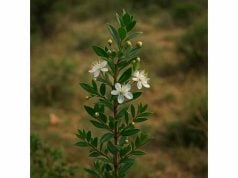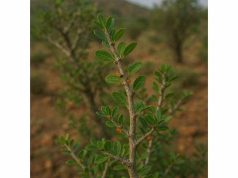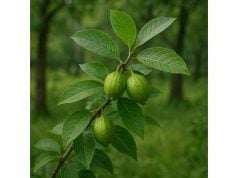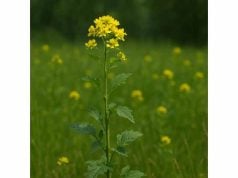
Mahonia, better known botanically as Mahonia aquifolium, is an evergreen shrub in the barberry family that has long been valued for both its vivid yellow root bark and its striking medicinal chemistry. Many people know it by the common name Oregon grape, though it is not a true grape. In herbal practice, Mahonia is most often discussed for skin support, bitter digestive action, and its naturally occurring alkaloids, especially berberine and related compounds.
What makes this herb especially interesting is the gap between traditional use and modern evidence. Folk medicine has used Mahonia for inflammatory skin conditions, sluggish digestion, and occasional infections. Modern research gives the strongest support to topical use, particularly in psoriasis, while oral use is more complicated and much less standardized. That difference matters.
Mahonia is not a casual wellness herb for everyone. It can be useful when chosen carefully, but its alkaloid-rich profile also means that dosage, product type, and safety screening deserve real attention. A good article on Mahonia should not just list benefits. It should explain where the evidence is strongest, where the limits are, and how to use the herb with a clear margin of caution.
Quick Summary
- Topical Mahonia is best known for helping reduce plaque psoriasis symptoms in some people.
- Its berberine-rich alkaloids may support antimicrobial and anti-inflammatory activity, especially in skin-focused use.
- The best-studied topical range is 10% cream or ointment applied 1 to 3 times daily for about 4 to 12 weeks.
- Avoid oral self-use during pregnancy, breastfeeding, infancy, and when taking diabetes or liver-metabolized medicines.
Table of Contents
- What is Mahonia and why it is used
- Key ingredients and medicinal properties of Mahonia
- What benefits are best supported by the evidence
- How Mahonia is used in modern herbal practice
- Dosage, forms, timing, and practical use
- Side effects, interactions, and who should avoid Mahonia
- What the research really says
What is Mahonia and why it is used
Mahonia is a spiny, evergreen shrub native to western North America and widely cultivated in temperate gardens. Its glossy holly-like leaves, yellow spring flowers, and blue-purple berries make it easy to recognize, but in herbal medicine the most valued parts are usually the root and stem bark. These tissues have a characteristic yellow color that signals the presence of isoquinoline alkaloids, the compounds most responsible for Mahonia’s pharmacological activity.
The herb is often discussed under several names. Depending on the tradition or product label, you may see Mahonia, Oregon grape, Oregon grape root, holly-leaved barberry, or Mahonia aquifolium. That naming overlap can confuse shoppers. It also matters because one product may be a topical cream for skin symptoms, while another may be a capsule marketed for digestion or “microbial balance.” Those are not interchangeable uses.
Historically, Mahonia has been used for inflammatory skin complaints, digestive sluggishness, and conditions linked to excess heat or irritation in traditional herbal systems. In Western herbalism, it is commonly described as a bitter alterative with a special affinity for the skin, liver, and mucous membranes. In more modern language, that usually translates into topical support for scaly, inflamed skin and cautious internal use when a berberine-containing herb is desired.
Mahonia belongs to the same broader medicinal conversation as other berberine-containing shrubs such as barberry. That connection is useful because it helps explain both its benefits and its limits. Like related plants, Mahonia is more pharmacologically active than many gentle teas or culinary herbs. Its value comes from that activity, but so do its interaction concerns.
The most important practical point is that Mahonia’s reputation should be divided into two categories. The first is topical evidence, where the herb has its strongest modern support, especially in mild to moderate plaque psoriasis. The second is oral traditional use, which remains more variable in form, potency, and evidence. People often assume that if a plant works well topically it must also be a good general oral remedy. With Mahonia, that assumption is too simple.
In other words, Mahonia is best understood as a targeted medicinal shrub rather than an all-purpose tonic. It has a meaningful place in herbal care, especially for the skin, but it works best when the form matches the goal and the user understands that “natural” does not mean weak or risk-free.
Key ingredients and medicinal properties of Mahonia
Mahonia’s medicinal profile is driven mainly by a group of alkaloids called protoberberines and related isoquinoline compounds. These are concentrated most heavily in the root and stem bark, which is why those parts are far more important medicinally than the berries. The herb’s bright yellow interior is not just visually distinctive. It reflects the presence of strongly bioactive constituents.
Main active compounds
The key ingredients most often associated with Mahonia aquifolium include:
- Berberine
- Jatrorrhizine
- Palmatine
- Magnoflorine
- Berbamine and related alkaloids in some extracts
Berberine is the best known of these compounds, and for good reason. It has been studied widely for antimicrobial, anti-inflammatory, metabolic, and cell-signaling effects. However, Mahonia is not simply “a berberine plant.” Whole-herb extracts contain a mixture of alkaloids that may act together differently than isolated berberine alone. That distinction helps explain why some Mahonia products are used topically rather than just replaced with berberine capsules.
If you want a broader comparison of how isolated berberine behaves in supplements, this berberine guide offers helpful context. Mahonia shares some chemistry with that compound-centered approach, but the herb itself is more than a single ingredient.
How these compounds may work
Mahonia’s medicinal properties are usually described in four overlapping ways.
First, it appears to have anti-inflammatory activity. This matters most in dermatology, where the herb has been studied for psoriasis and, to a lesser extent, atopic dermatitis. Some components appear to influence inflammatory signaling and may help reduce excessive keratinocyte activity and irritation in affected skin.
Second, it has antimicrobial potential. Berberine and related alkaloids are known for activity against some bacteria and other microbes in laboratory settings. This helps explain Mahonia’s traditional use in irritated skin and mucosal conditions, though lab activity does not automatically translate into broad clinical effectiveness.
Third, Mahonia has antiproliferative properties. In simpler terms, some of its compounds may help slow abnormal cell overgrowth. That feature is one reason it became interesting in psoriasis, a condition marked by excessive skin cell turnover.
Fourth, it has a classic bitter tonic profile when taken internally. Bitter herbs can stimulate digestive secretions and are often used traditionally to support appetite and sluggish digestion. Mahonia fits that pattern, but its oral use deserves more caution than many milder bitters because of its alkaloid content.
One common mistake is to treat all of these properties as equally proven. They are not. The herb’s chemistry is real, but its strongest human evidence still centers on topical skin use, not on general oral “detox” claims or broad immune promises.
So when people ask about Mahonia’s medicinal properties, the best answer is this: it is an alkaloid-rich, bitter, anti-inflammatory, and antimicrobial-leaning herb with its clearest modern role in topical dermatologic support. That description is narrower than many marketing blurbs, but it is also more useful and much more accurate.
What benefits are best supported by the evidence
Mahonia is often credited with a long list of possible health benefits, but the evidence is not evenly distributed across all claims. Some uses are backed by clinical trials and reviews, while others remain largely traditional or preclinical. Sorting the difference is the best way to understand what this herb can realistically offer.
Most supported benefit: psoriasis support
The strongest modern support for Mahonia is topical use in mild to moderate plaque psoriasis. Several clinical studies and later reviews found that Mahonia-containing creams or ointments improved psoriasis severity scores, scaling, redness, plaque thickness, or quality-of-life measures in at least some patients. This does not mean the herb outperforms standard dermatology care in every case, but it does mean it has one of the more credible evidence bases among botanical skin options.
This is the single benefit most readers should remember. If someone asks what Mahonia is actually “for,” psoriasis is the clearest answer.
Possible second-line benefit: atopic dermatitis support
The evidence for atopic dermatitis or eczema-like symptoms is smaller, but not absent. Some topical data suggest that Mahonia preparations may improve itching, lesion appearance, and symptom scores in selected adults. The support is much thinner than it is for psoriasis, so it is best framed as promising but limited rather than established.
Traditional and plausible, but less proven uses
Mahonia is also traditionally used for:
- Sluggish digestion
- Bitter digestive stimulation
- Minor microbial imbalance
- General skin reactivity linked to inflammation
- Liver and “alterative” support in traditional herbal language
These uses make sense from the herb’s chemistry, but they do not all rest on strong human trial data. That is especially true for oral use. Many claims about detoxification, liver cleansing, and broad immune correction are still more traditional than clinical.
For topical skin care, Mahonia is sometimes compared with other astringent or soothing botanicals. If your focus is calmer, irritated skin rather than alkaloid-rich anti-inflammatory activity, witch hazel for topical use offers a useful contrast.
Benefits that need restraint
Some product pages stretch Mahonia into claims about blood sugar, infection control, or broad “whole-body inflammation.” These claims usually borrow confidence from berberine research or from related herbs, then apply it too broadly to Mahonia itself. That is not the most careful way to read the evidence.
A more honest ranking looks like this:
- Topical support for plaque psoriasis
- Possible topical support for atopic dermatitis
- Traditional bitter and antimicrobial uses with limited direct clinical confirmation
- Speculative or overextended oral claims that should not be treated as established benefits
That ranking matters because it keeps expectations realistic. Mahonia is not a cure-all shrub hiding in plain sight. It is a well-targeted herb whose biggest strength lies in a specific dermatologic niche. Used that way, it becomes much easier to understand and much easier to use responsibly.
How Mahonia is used in modern herbal practice
In current practice, Mahonia is used in three main ways: as a topical dermatology herb, as an oral bitter and berberine-containing botanical, and as a comparative herb in conversations about skin inflammation and antimicrobial support. The first of these is the most evidence-based. The second is where the greatest variation and caution appear.
Topical use
Modern herbal and integrative dermatology interest focuses mainly on creams and ointments. These are used for scaly, inflamed, plaque-type skin conditions, especially psoriasis. The goal is not cosmetic “glow,” but reduction in scaling, redness, thickness, itch, and lesion irritation over a period of weeks.
People who choose topical Mahonia usually do so because:
- They want a nonsteroid adjunct
- They have mild to moderate plaque psoriasis
- They are interested in plant-based options with at least some trial support
- They want a targeted topical rather than a systemic herb
Topical Mahonia is often used as a structured trial, meaning the person applies it consistently for a defined period and then reassesses. That approach fits the research and reduces random use.
Oral use
Internally, Mahonia is sold as tinctures, capsules, powders, decoctions, or Oregon grape root products. Oral use is traditionally aimed at bitter digestive stimulation, skin support from the inside, and antimicrobial or “alterative” effects. However, products vary widely in strength, plant part, extraction method, and berberine content. That makes oral use much less standardized than the topical route.
For that reason, oral Mahonia should be treated more like a specialty herb than a routine daily tonic. It may have a place in skilled herbal formulation, but it is not the easiest or safest starting point for casual self-prescribing.
How practitioners often think about it
A thoughtful practitioner may use Mahonia when the pattern is both inflammatory and sluggish: reactive skin, greasy or thick plaques, irritation with digestive heaviness, or a need for a bitter alkaloid herb that is not being used in pregnancy, infancy, or alongside complex medication regimens.
It is also often discussed alongside other berberine-rich herbs such as goldenseal, although the sustainability, indications, and product traditions differ. That comparison helps people understand that Mahonia is part of a family of more “medicine-like” botanicals, not a mild kitchen herb.
In practical use, Mahonia works best when the form matches the problem. Topical inflammatory skin complaints fit it well. Undefined wellness goals do not. The closer the user stays to that principle, the more likely the herb will be both effective and appropriate.
Dosage, forms, timing, and practical use
Dosage is where Mahonia becomes much easier to discuss if we separate topical and oral use. The topical side has recognizable study patterns. The oral side is more variable and much less certain.
Best-studied topical dosing
The clearest trial pattern involves 10% Mahonia cream or ointment. Across clinical studies, these products were generally used:
- 1 to 3 times daily
- for 4 to 12 weeks
- mainly for mild to moderate plaque psoriasis
- sometimes in half-side comparisons or placebo-controlled designs
A practical way to interpret that evidence is not “more is better,” but “consistency matters.” A person using a standardized topical Mahonia product would usually apply a thin layer to affected skin on a regular schedule and evaluate change over several weeks, not after two or three days.
Oral forms and why dosing is harder
Oral Mahonia products may appear as:
- Tinctures
- Capsules
- Dried root powders
- Decoctions
- Oregon grape root blends
The problem is that labels do not always state alkaloid content clearly. One tincture may be mildly bitter. Another may be much more concentrated. One capsule may be whole-root powder, while another behaves more like a berberine extract. Because of that inconsistency, there is no single well-supported oral dose that deserves the same confidence as the topical 10% products.
That does not mean oral Mahonia is never used. It means its dosing should be conservative, product-specific, and ideally guided by someone who understands both botanical medicine and drug interaction risk.
Timing and duration
For topical use, Mahonia is usually tried for a defined course, often one to three months, with skin response tracked over time. It is not typically used as an indefinite “apply forever” product without reassessment.
For oral use, shorter and more purposeful trials are wiser than vague long-term use. Because Mahonia is a bitter, alkaloid-rich herb, it makes more sense as a targeted intervention than a permanent daily habit.
Common mistakes to avoid
- Using Mahonia for the wrong goal, such as general energy or immune support
- Treating nonstandardized oral products as equivalent to studied topical products
- Mixing it with multiple other berberine-rich supplements
- Expecting rapid overnight improvement in chronic skin disease
- Ignoring worsening irritation, rash, or digestive side effects
So what is the most useful dosage answer for most readers? It is this: topical 10% Mahonia, applied consistently for several weeks, is the best-studied use. Everything beyond that requires more caution, more label reading, and better clinical judgment than most people expect.
Side effects, interactions, and who should avoid Mahonia
Mahonia is not among the most dangerous herbs in common use, but it is strong enough that safety should be discussed before benefits are. The plant’s alkaloid content gives it real therapeutic potential, but it also raises the chance of side effects and medication interactions, especially with internal use.
Possible side effects
With topical use, the most commonly reported issues are local:
- Burning or stinging on application
- Mild itching
- Rash
- Clothing stain with some older ointment bases
- Irritation in already sensitive or broken skin
These effects are usually mild, but they still matter. A patch test or cautious first application is sensible, especially in people with reactive skin.
With oral use, possible problems are broader and may include:
- Nausea
- Stomach upset
- Cramping
- Loose stools
- Bitter intolerance
- Possible interaction-related symptoms depending on the medicine list
Because Mahonia contains berberine-like alkaloids, oral products should not be treated as neutral add-ons.
Who should avoid Mahonia
The groups most often advised to avoid internal self-use include:
- Pregnant people
- Breastfeeding people
- Infants
- People with significant liver disease
- People taking diabetes medicines
- People on complex medication regimens affected by liver metabolism
- Anyone with a history of strong reactions to alkaloid-rich herbs
Pregnancy, breastfeeding, and infancy are especially important. Berberine-containing herbs are generally approached cautiously in these groups because of inadequate safety assurance and concern around vulnerable populations.
Interaction concerns
Oral Mahonia may interact with medicines involved in blood sugar control, liver metabolism, and some antimicrobial or immunomodulatory pathways. This does not mean every interaction is guaranteed, but it does mean self-prescribing is a poor fit for people already taking multiple prescriptions.
A good rule is simple: the more “medicine-like” the herb, the more it should be screened like a medicine. Mahonia belongs in that category.
When to stop and reassess
Stop use and seek guidance if you develop:
- worsening rash
- marked burning or swelling
- persistent GI upset
- signs of allergy
- unexpected changes in blood sugar control
- symptoms that keep escalating rather than settling
The safest overall summary is that topical Mahonia is often tolerable when used as directed, while oral Mahonia deserves much more caution. That distinction should shape almost every decision about this herb.
What the research really says
Mahonia is a good example of an herb that benefits from careful reading rather than enthusiastic summary. The research does not say that it is useless. It also does not say that it is a broad-spectrum natural answer for everything from eczema to gut imbalance to metabolic dysfunction. What it says is more focused, and that focus is where the herb becomes most valuable.
The strongest clinical support remains topical treatment for mild to moderate plaque psoriasis. Multiple studies and later reviews suggest that Mahonia preparations can improve symptom scores and are generally well tolerated in many users. That does not place the herb above conventional dermatology therapy, but it does justify its role as a reasonable integrative option in selected cases.
The evidence for atopic dermatitis is smaller and more tentative. The signal is promising, but the number and quality of studies are not enough to make this the herb’s headline claim. It is fair to say there is some support, but not enough to overstate.
The evidence for oral internal use is even more limited in everyday clinical terms. Mahonia clearly contains active alkaloids, and its chemistry supports why traditional systems found it useful. Preclinical work suggests anti-inflammatory, antimicrobial, and antiproliferative actions. But oral human use is still much less standardized, and product variability makes broad dosing claims unreliable.
That leads to the most useful conclusion: Mahonia is a credible topical skin herb first, and a cautious oral specialty herb second. Readers searching for “benefits” often want a longer list. A better article gives a truer one.
The research also reminds us of a broader point. An herb does not need to be good for ten things to be worth knowing. Mahonia’s value lies in being relatively well matched to a particular problem: inflamed, scaly skin that may benefit from a carefully chosen botanical topical. Once you understand that, the herb starts to make sense.
So the real takeaway is not that Mahonia should be feared or exaggerated. It should be right-sized. It is useful, especially in topical dermatologic care. It is chemically active enough to deserve respect. And it works best when people choose it for the situations where the evidence is strongest, rather than asking it to be a universal natural remedy.
References
- Herbal medicine for treating psoriasis: A systematic review 2025 (Systematic Review)
- The Efficacy of Complementary and Alternative Medicines in Medical Dermatology: A Comprehensive Review 2025 (Review)
- Pharmacological Potential of Three Berberine-Containing Plant Extracts Obtained from Berberis vulgaris L., Mahonia aquifolium (Pursh) Nutt., and Phellodendron amurense Rupr 2024 (Preclinical Study)
- Review of the Efficacy and Safety of Topical Mahonia aquifolium for the Treatment of Psoriasis and Atopic Dermatitis 2018 (Review)
- Treatment of mild to moderate psoriasis with Reliéva, a Mahonia aquifolium extract–a double-blind, placebo-controlled study 2006 (RCT)
Disclaimer
This article is for educational purposes only and does not replace medical advice, diagnosis, or treatment. Mahonia is an alkaloid-rich herb with meaningful pharmacologic activity, which means it may cause side effects or interact with medications, especially when taken orally. Skin conditions such as psoriasis and eczema can overlap with infections, allergic reactions, and other disorders that need proper diagnosis. Speak with a qualified healthcare professional before using Mahonia if you are pregnant, breastfeeding, taking prescription medicines, managing a chronic illness, or considering internal use.
If this article was helpful, please share it on Facebook, X, or your preferred platform.