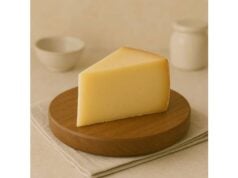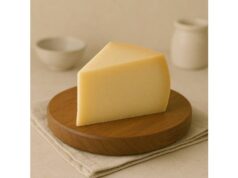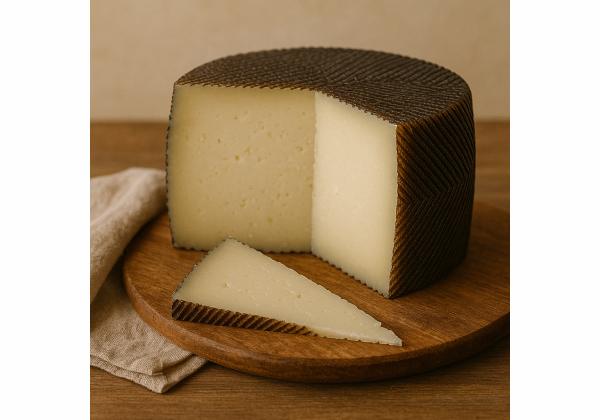
Manchego is Spain’s most famous sheep’s milk cheese, protected by a designated origin and prized for its nutty, gently piquant flavor. Aging ranges from two months to two years, shaping everything from texture to aroma: joven (young) slices ooze butteriness, while curado and viejo turn firm, crystalline, and deeply savory. For everyday eating, Manchego brings concentrated protein, bioavailable calcium, and near-zero lactose when well aged—making it a versatile option for snack boards, sandwiches, salads, and hot dishes where it melts cleanly without greasiness. Compared with fresh cheeses, it keeps longer, travels well, and delivers bold flavor in small portions. The hallmark herringbone rind pattern and wheat-sheaf stamp nod to its La Mancha heritage, but what wins fans is how easily it pairs: think quince paste (membrillo), figs, roasted peppers, jamón, olives, almonds, or a drizzle of olive oil. This guide walks you through Manchego’s nutrition per 100 g, evidence-based benefits and risks, how to spot authentic quality, practical storage, cooking tips, smart portions, and quick answers to common questions.
Key Takeaways
- Aged Manchego supplies ~24 g protein and ~700 mg calcium per 100 g, supporting bones and satiety.
- Long aging reduces lactose to trace levels; many people with lactose intolerance tolerate aged portions.
- Typical serving is 30–40 g, 3–5 times per week, balancing sodium and saturated fat within daily limits.
- Contains milk proteins: avoid if you have a confirmed dairy allergy; choose pasteurized for pregnancy.
Table of Contents
- Manchego Cheese: Detailed Overview
- Manchego Nutrition Profile (per 100 g)
- Evidence-Based Benefits of Manchego
- Risks, Allergies and Interactions
- Selecting, Quality, Sustainability and Storage
- Preparation, Cooking and Nutrient Retention
- Portions, Comparisons and FAQs
Manchego Cheese: Detailed Overview
What it is. Manchego is a pressed, semi-hard to hard cheese made exclusively from the milk of Manchega sheep raised in Spain’s La Mancha region. The Protected Designation of Origin (PDO) rules standardize milk source, make techniques (starter cultures, coagulation with rennet or approved enzymes, cutting, molding, pressing), and aging: a minimum of 30 days for small wheels (≤1.5 kg), 60 days for larger wheels, and up to 24 months. This controlled process concentrates nutrients, develops complex flavors, and drives down residual lactose.
Flavor and texture spectrum.
- Semicurado (≈2–3 months): Supple, sliceable, buttery with lactic sweetness; ideal for sandwiches and tapas.
- Curado (≈6 months): Firm, drier, with roasted-nut notes and mild pepperiness; great for grating curls over salads or vegetables.
- Viejo (≈12–24 months): Hard, flaky, sometimes crystalline; intense umami and caramelized edges; excels on cheese boards or shaved thinly.
How to identify authentic wheels. Look for the characteristic herringbone (“pleita”) pattern on the rind’s sides and a wheat-sheaf (“flor”) imprint on the faces. Genuine PDO Manchego includes a casein identifier embedded in the rind and certification labeling from the Regulatory Council. Pasteurized or raw-milk versions exist; raw-milk wheels may be labeled artesano and typically show a more layered aroma.
Typical uses.
- Cold: Slices with membrillo; with olives, almonds, and citrus; shaved over arugula with olive oil and lemon.
- Hot: Melts evenly into tortillas españolas, vegetable gratins, stuffed peppers, or over roasted mushrooms.
- Pairings: Dry or off-dry ciders, Tempranillo or Garnacha, fino or amontillado sherry; non-alcoholic pairings include sparkling water with lemon, Spanish orange soda, or cold-brew tea.
Nutrition context. As a concentrated dairy, Manchego is calorie-dense yet nutrient-rich. A small 30–40 g serving delivers meaningful protein, calcium, phosphorus, vitamin B12, and fat-soluble nutrients. Sodium and saturated fat require portion awareness, especially for people managing blood pressure or LDL cholesterol.
Who it suits. Omnivores and Mediterranean-style eaters looking for a robust flavor per bite; many people with lactose intolerance tolerate aged Manchego; not appropriate for those with cow’s or sheep’s milk allergy or for those avoiding high-sodium foods.
Manchego Nutrition Profile (per 100 g)
How to read this profile. Values are typical for well-aged Manchego; specific brands vary by fat content and salt level. %DV uses adult Daily Values (U.S.) for general guidance.
Macros & Electrolytes (per 100 g)
| Nutrient | Amount | %DV |
|---|---|---|
| Energy | 360–380 kcal | — |
| Protein | 22–26 g | 44–52 |
| Total Fat | 28–33 g | 36–42 |
| Saturated Fat | 17–20 g | 85–100 |
| Trans Fat | 0–0.3 g | — |
| Carbohydrate | 0–2 g | 0 |
| Total Sugars | 0–1 g | — |
| Dietary Fiber | 0 g | 0 |
| Sodium | 600–750 mg | 26–33 |
| Potassium | 60–120 mg | 1–3 |
| Water | ~38–42 g | — |
Fats & Fatty Acids
| Component | Amount | Notes |
|---|---|---|
| Monounsaturated Fat | ~10–12 g | Primarily oleic acid from sheep milk fat. |
| Polyunsaturated Fat | ~1 g | Contains linoleic and small amounts of omega-3. |
| Cholesterol | 70–95 mg | From milk fat; varies with aging and fat-in-dry-matter. |
| Conjugated Linoleic Acid (CLA) | 0.3–0.7 g | Present in ruminant dairy; influenced by pasture. |
Protein & Amino Acids
| Metric | Detail |
|---|---|
| Total Protein | 22–26 g/100 g (complete protein) |
| Notable Amino Acids | Leucine, lysine, valine abundant; casein-derived peptides form during aging. |
Vitamins (per 100 g)
| Vitamin | Amount | %DV |
|---|---|---|
| Vitamin B12 (cobalamin) | 1.5–2.4 µg | 63–100 |
| Riboflavin (B2) | 0.3–0.4 mg | 23–31 |
| Vitamin A (RAE) | 200–280 µg | 22–31 |
| Vitamin D | 0.3–0.6 µg | 2–3 |
| Niacin (B3) | 0.2–0.4 mg | 1–3 |
| Folate | 10–20 µg | 3–5 |
Minerals (per 100 g)
| Mineral | Amount | %DV |
|---|---|---|
| Calcium | 650–800 mg | 50–62 |
| Phosphorus | 350–500 mg | 28–40 |
| Zinc | 2.5–3.5 mg | 23–32 |
| Iodine | 10–25 µg | 7–17 |
| Selenium | 10–20 µg | 18–36 |
| Magnesium | 20–30 mg | 5–7 |
| Iron | 0–0.3 mg | 0–2 |
Carbohydrates & Glycemic Metrics
| Metric | Detail |
|---|---|
| Total Carbohydrate | 0–2 g/100 g |
| Lactose | often <0.5 g/100 g in well-aged cheeses |
| Glycemic Index | Not applicable (minimal carbohydrate). |
Allergens & Intolerance Markers
- Contains milk proteins (casein, whey traces) and milk fat.
- Lactose is very low after extended aging but not always zero—tolerance is individual.
Additives & Fortification
- PDO standards limit additives to rennet/coagulant and salt; surface treatments (e.g., oil, permitted coatings) may be used on the rind. Manchego is not typically fortified.
Contaminants/Residues (context)
- Regulatory microbiological limits aim for absence of Listeria and Salmonella in 25 g; reputable producers test milk and finished wheels. Choose pasteurized for higher-risk groups.
Evidence-Based Benefits of Manchego
1) Bone support via calcium and phosphorus.
Manchego is a concentrated source of calcium (≈50–62% DV per 100 g) and phosphorus (≈28–40% DV). These minerals work together to mineralize bone; protein and vitamin B12 in cheese also support bone remodeling and muscle function—both relevant to fall prevention in older adults. In dietary patterns like the Mediterranean diet, modest portions of aged cheese contribute to total calcium without large lactose loads.
2) High-quality protein for satiety and muscle.
At ~22–26 g protein per 100 g, Manchego provides all essential amino acids. Casein digests more slowly than whey, which can enhance satiety and assist with between-meal hunger control. For athletes or active adults, small servings add dense protein without excessive volume.
3) Fermented dairy and cardiometabolic outcomes.
Large cohort syntheses increasingly distinguish fermented dairy (cheese, yogurt) from milk. Across pooled prospective data, moderate cheese intake has been associated with small reductions in risk for cardiovascular events and stroke in the context of an overall healthy diet. The “dairy matrix” hypothesis suggests that minerals (calcium, potassium), fermentation-derived bioactives, and the structure of fat/protein interact to blunt the expected LDL-raising effect of saturated fat, leading to neutral or modestly favorable cardiometabolic associations at moderate intakes. For individuals who enjoy cheese, replacing refined snacks or processed meats with a measured portion of Manchego is one practical application.
4) Very low lactose after aging.
During cheesemaking, lactose drains with the whey and remaining lactose is metabolized by starter cultures as the wheel ages. Many people with lactose intolerance tolerate aged cheeses (often up to ~12 g aged cheese per meal or more) without symptoms—especially when eaten with other foods. Manchego’s typical lab profiles place residual lactose near or below 0.5 g/100 g in well-aged wheels, though labels may not always claim “lactose-free.”
5) Micronutrient density in small portions.
Beyond calcium and phosphorus, Manchego supplies vitamin B12 (helpful for nerve function and red blood cell formation), riboflavin, zinc, and selenium in meaningful amounts. For those limiting overall dairy volume, a 30–40 g piece can still cover a notable share of daily needs.
How to translate evidence into practice.
- Aim for 30–40 g portions, several days a week, within calorie and saturated-fat goals.
- Pair with fiber-rich foods (vegetables, fruit, whole grains) to improve meal quality.
- Use Manchego to replace options that add sodium and refined starch (e.g., processed meat on a sandwich) rather than simply adding calories.
Risks, Allergies and Interactions
1) Sodium and blood pressure.
Manchego often provides 600–750 mg sodium per 100 g. Portion control (30–40 g) keeps sodium in the 180–300 mg range, which is easier to fit into daily totals. If you monitor blood pressure or follow specific sodium limits, compare brands and age levels—older wheels are sometimes saltier.
2) Saturated fat and LDL cholesterol.
At 17–20 g saturated fat per 100 g, Manchego can contribute substantially to daily intake. In the context of a diet rich in vegetables, legumes, whole grains, and unsaturated fats, moderate cheese intake has not consistently shown harm, but excess saturated fat from multiple sources can raise LDL cholesterol. Choose small servings and balance the rest of the day with olive oil, nuts, and fish.
3) Milk allergy vs. lactose intolerance.
A milk allergy (to casein or whey proteins) is immune-mediated and requires strict avoidance of all dairy, including sheep’s milk cheeses like Manchego. Lactose intolerance is digestive and dose-dependent; many people tolerate aged cheeses. If symptoms persist even with small amounts, consult an allergist or gastroenterologist for evaluation.
4) Pregnancy and food safety.
For people who are pregnant, immunocompromised, or elderly, choose pasteurized Manchego to lower the risk of Listeria. Keep cheese refrigerated at ≤4 °C, avoid cross-contamination, and respect use-by dates. When in doubt about a rind treatment, trim it away before eating; the rind is not typically consumed.
5) Histamine and biogenic amines.
Long-aged cheeses may contain histamine and other biogenic amines that can trigger headaches, flushing, or hives in sensitive individuals or those taking monoamine oxidase inhibitors (MAOIs). If you notice reproducible symptoms, favor younger wheels or limit aged varieties.
6) Drug-nutrient considerations.
- MAOIs: Avoid high-amine cheeses (often older/viejo).
- ACE inhibitors/ARBs or potassium-sparing diuretics: Manchego is not high in potassium, but total dietary potassium should be considered.
- Statins: No known direct interaction; the focus is on overall saturated-fat patterns and LDL targets.
7) Cross-contact and rinds.
Rinds may be treated with food-grade coatings or oils. If you have contact sensitivities or prefer to minimize additives, trim the rind and a thin adjacent layer.
Selecting, Quality, Sustainability and Storage
How to buy excellent Manchego.
- Verify origin: Look for PDO certification marks and the embedded casein ID disc. Labels should specify 100% Manchega sheep’s milk.
- Match the age to the use:
- Semicurado (2–3 months): sandwiches, tapas, melting.
- Curado (≈6 months): salads, grating, snacking.
- Viejo (12–24 months): cheese boards, shaving over vegetables or pasta.
- Inspect the wedge: Even, ivory paste with small, irregular eyes; a clean, firm rind; no excessive cracking or ammonia odor.
- Choose format wisely: Whole or half wheels age more slowly after purchase; pre-cut wedges are convenient but lose moisture faster.
Flavor cues and faults.
- Pleasant: nutty, slightly peppery, buttery, olive-straw notes.
- Red flags: strong ammonia, rancid or soapy aroma, slimy rind, large mechanical cracks, pink/orange smear beneath the rind (possible defect).
Sustainability considerations.
- Pasture and animal welfare: Manchega sheep are adapted to semi-arid La Mancha; producers using grazing and seasonal forages can improve milk fatty-acid profiles and biodiversity.
- Packaging: Seek minimal plastic or vacuum packs sized to your consumption rate to minimize waste.
- Local cut vs. prepacked: Buying from a counter allows right-sized pieces and less waste.
Storage best practices.
- Unwrap factory plastic once opened; rewrap tightly in cheese paper or parchment topped with a loose plastic layer to allow the cheese to breathe while preventing drying.
- Store in the vegetable drawer (cool, slightly humid).
- Change the wrap every 3–4 days to prevent surface moisture buildup.
- Freezing? Not ideal—texture becomes crumbly—though grated Manchego can be frozen for cooking.
- Mold management: Blue/green surface spots on the cut face can be scraped and trimmed 1 cm below the spot if smell and taste remain clean; widespread growth or sliminess calls for discarding.
Shelf life once opened.
- Semicurado: ~10–14 days with proper wrapping.
- Curado/Viejo: 2–4 weeks kept dry and cold.
- Pre-sliced or grated: use within 5–7 days.
Preparation, Cooking and Nutrient Retention
Serving temperature matters. Cold Manchego tastes muted and waxy. For full aroma and mouthfeel, temper 20–30 minutes at room temperature before serving. Slice just before eating to reduce moisture loss.
Cutting and plating.
- Wedges for boards: Cut lengthwise from rind to tip into slender triangles; remove rind edge on each slice if you do not eat rind.
- Shaving: Use a peeler or microplane for viejo over asparagus, roasted cauliflower, or pasta.
- Grating: Curado grates well for warm dishes without stringiness.
Melting behavior. Manchego melts evenly and forms a cohesive layer rather than long strings. Use it to:
- Top roasted peppers or mushrooms; broil until bubbling.
- Add to tortillas, quesadillas, or flatbreads for nutty depth.
- Finish soups (e.g., tomato-pepper) with grated Manchego off heat.
Salt and fat management while cooking.
- Because Manchego brings sodium and saturated fat, modulate added salt and rely on acidity and herbs to balance richness. Lemon juice, sherry vinegar, smoked paprika, thyme, or rosemary sharpen flavors without more salt or fat.
Retaining nutrients.
- Calcium and protein are heat-stable; cooking does not destroy them.
- Fat-soluble vitamins (A, D) remain, though some may leach into pan drippings. Serve with vegetables to enhance absorption of fat-soluble nutrients.
- Lactose remains very low regardless of heating; cooking does not add lactose.
Simple applications (ready in minutes).
- Citrus-herb salad: Arugula, orange segments, shaved Manchego, toasted almonds, olive oil, lemon.
- Roasted vegetable finish: Toss hot roasted broccoli or carrots with grated curado and a squeeze of lemon.
- Warm tapas: Stuff piquillo peppers with mashed chickpeas, parsley, garlic, and Manchego; bake until the cheese just melts.
What not to do.
- Avoid prolonged high heat that can oil-off the cheese; add late in cooking or use gentle broiling.
- Do not store pre-grated for long—aroma fades and surfaces dry.
Portions, Comparisons and FAQs
Smart portions and frequency.
- A practical serving is 30–40 g (about 1–1½ oz), 3–5 times per week, folded into meals or snacks. This pace fits most calorie budgets and keeps sodium and saturated fat reasonable.
- For children, scale to hand size (two fingers’ width of a slice) and overall dairy goals. For athletes with higher energy needs, servings can be larger on training days.
How Manchego compares to other cheeses (per 30 g).
- Manchego (curado): ~110–120 kcal; 7–8 g fat (5–6 g saturated); 7–8 g protein; ~200 mg calcium; ~180–230 mg sodium.
- Parmigiano Reggiano: ~120 kcal; 8 g fat; 10 g protein; ~330 mg calcium; ~180 mg sodium; very hard and intensely savory.
- Cheddar (mature): ~120 kcal; 10 g fat; 7 g protein; ~200 mg calcium; ~190–220 mg sodium.
- Feta (brined): ~80 kcal; 6 g fat; 4 g protein; ~140 mg calcium; 280–360 mg sodium; tangy and moist, higher brine salt.
For lactose intolerance: Manchego or Parmesan?
Both are typically well tolerated due to low lactose after long aging. Individual responses vary—start with 10–15 g alongside other foods and assess comfort.
Skin on the rind—eat it?
The rind is not usually eaten. It may be coated in oil or a permitted treatment; trim before serving, especially for those sensitive to coatings.
Is raw-milk Manchego safe?
For healthy adults, raw-milk artesano Manchego from reputable producers is generally safe when handled properly. Pregnant people, older adults, and immunocompromised individuals should prefer pasteurized versions and careful storage.
Budget tips.
- Buy smaller wedges of viejo for a flavor bomb in minimal grams.
- Ask a cheesemonger for end pieces (often discounted) for grating and cooking.
Quick pairing matrix.
- Sweet: quince paste, figs, dates, honey.
- Savory: jamón serrano, chorizo-style chickpeas, olives.
- Veg: roasted peppers, charred leeks, tomatoes, artichokes.
- Carbs: crusty bread, whole-grain crackers, herbed couscous.
- Spices: smoked paprika, cumin, black pepper.
Frequently asked questions
- Does Manchego contain carbs? Usually 0–2 g/100 g—effectively negligible.
- Is it gluten-free? Yes; pure cheese contains no gluten. Check flavored or rubbed rinds.
- Keto-friendly? In moderation, yes; prioritize overall nutrient density.
- How long can it sit out? Keep under 2 hours at room temperature; return leftovers to the fridge wrapped properly.
- Can I grate and freeze it? Yes for cooking use; expect a drier, crumblier texture.
References
- Cheese consumption and multiple health outcomes: an umbrella review and updated meta-analysis of prospective studies 2023 (Systematic Review)
- A global analysis of dairy consumption and incident cardiovascular disease 2025 (Meta-analysis)
- How Listeria Spread: Soft Cheeses and Raw Milk | Listeria Infection | CDC 2025 (Guidance)
- Lactose Residual Content in PDO Cheeses: Novel Inclusions for Consumers with Lactose Intolerance 2021 (Review)
- FoodData Central 2025 (Database)
Disclaimer
The information in this article is for general education and is not a substitute for personalized medical advice, diagnosis, or treatment. Always consult a qualified health professional about dietary choices if you are pregnant, have a medical condition (such as cardiovascular disease, hypertension, or food allergies), or take prescription medications.
If you found this guide useful, please consider sharing it on Facebook, X (formerly Twitter), or your preferred platform to help others and support our continued work. Thank you.