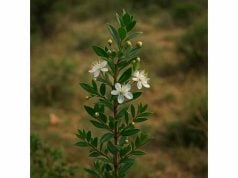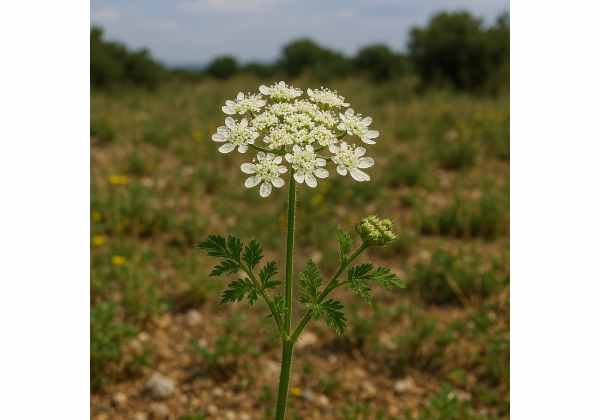
Mediterranean hartwort, Tordylium apulum, is a wild Apiaceae plant native to the Mediterranean basin, where it has long been gathered more as a seasonal food than as a mainstream medicinal herb. Its young aerial parts have been eaten in parts of Greece, Cyprus, Crete, Sicily, and southern Italy, while modern laboratory work has identified phenolics, flavonoids, essential-oil components, and several coumarins that make the species scientifically interesting. That combination can make it sound like a forgotten therapeutic treasure. The evidence, however, needs careful handling.
At present, Mediterranean hartwort is best understood as a traditional edible wild plant with promising phytochemistry and mostly preclinical biological findings. Extracts and essential oils show antioxidant and enzyme-related activity in laboratory settings, and the plant contains compounds worth studying further. But there are no established clinical trials confirming routine medicinal use in humans, and no validated therapeutic dose has been set. In other words, the plant deserves interest, but not exaggeration. This guide explains what Mediterranean hartwort contains, what benefits are plausible, how it has been used traditionally, and why safety, identification, and restraint matter more here than they do with better-established herbs.
Brief Summary
- Mediterranean hartwort is better supported as a traditional wild edible plant than as a proven medicinal herb.
- Its aerial parts contain phenolics, flavonoids, essential-oil compounds, and coumarins that show interesting laboratory activity.
- The clearest practical use is culinary, especially as a boiled wild green, seasoning, or pie herb in some Mediterranean traditions.
- No validated medicinal dose has been established for human self-care.
- Pregnant people, children, people on photosensitizing routines, and anyone unsure of wild-plant identification should avoid self-experimenting with concentrated preparations.
Table of Contents
- What Mediterranean hartwort is and how it should be understood
- Key ingredients and phytochemical profile
- Mediterranean hartwort health benefits and what evidence supports
- Traditional properties and reported uses
- How to use Mediterranean hartwort in practice
- Dosage, timing, and why no standard human dose exists
- Safety, side effects, interactions, and who should avoid it
What Mediterranean hartwort is and how it should be understood
Mediterranean hartwort belongs to the parsley family, Apiaceae, a group that includes many familiar edible and medicinal plants, from fennel and coriander to celery and dill. That family resemblance is useful, but it can also mislead. A plant in Apiaceae may be aromatic, edible, and chemically active without automatically being a validated medicinal herb. Tordylium apulum fits that middle zone. It is clearly a useful traditional wild plant, yet its strongest documented role remains culinary and ethnobotanical rather than clinical.
Botanically, Mediterranean hartwort is a Mediterranean wild herb that grows in open, sunny places such as margins, disturbed soils, fields, and dry ground. It produces the umbrella-shaped flower structure typical of the family and has tender green parts that have been gathered in several regional food traditions. In modern ethnobotanical literature it appears repeatedly as a wild edible, especially in southern European and eastern Mediterranean settings, where young shoots, basal rosettes, and aerial parts have been boiled, seasoned, or used in pastries and pies.
That food-first identity matters. Many online descriptions try to move straight from “wild edible” to “healing herb,” but those are not the same category. A plant can be nutritious, aromatic, and culturally important without having a clinically established medicinal role. With Mediterranean hartwort, that distinction protects readers from overconfident claims. The plant is interesting because it combines traditional edibility with noteworthy chemistry, not because it has a long, well-standardized medical tradition like some better-known herbs.
It also helps to recognize that the plant is locally used rather than universally celebrated. Even in areas where it is known, it is often one among many gathered greens rather than a standalone star. In Sicily, for example, broader inventories of native edible plants list it among less commonly harvested species. That suggests a real but modest place in local plant use, not a dominant or indispensable food herb.
One helpful comparison is with better-known edible Apiaceae plants such as coriander as a culinary and medicinal umbellifer. Coriander has a clear identity in cuisine, traditional medicine, and modern plant chemistry. Mediterranean hartwort shares some family resemblance and aromatic logic, but it does not have the same level of formal medicinal recognition. That does not diminish its value. It simply places it in the right frame.
So the best way to understand Mediterranean hartwort is as a traditional Mediterranean wild food plant with intriguing phytochemistry and limited medicinal evidence. That frame allows genuine interest without forcing the plant into a stronger herbal role than the literature currently supports.
Key ingredients and phytochemical profile
Mediterranean hartwort has a much more interesting chemical profile than its low public profile might suggest. Recent work on aerial-part extracts has identified a broad mixture of phenolics, flavonoids, carbohydrates, amino acids, and related secondary metabolites. Essential-oil studies also show a volatile fraction rich in monoterpene and related aromatic compounds, while older phytochemical work identified several coumarins with notable in vitro activity.
The first major group is the phenolic and flavonoid fraction. These compounds are often discussed because they contribute antioxidant capacity in laboratory assays and may participate in enzyme-related biological effects. In the newest extract-focused work on Tordylium apulum, different solvents pulled out different levels of phenolics and flavonoids, which is a useful reminder that the chemistry of a plant is not fixed in one simple form. A water extract, an ethanol extract, and a fresh wild food preparation do not behave identically.
The second major group is the essential oil. In a recent Sicilian accession, the essential oil showed a large monoterpene hydrocarbon fraction, with β-cis-ocimene reported as a dominant component and octyl hexanoate as a notable genus-linked marker. Earlier work from other collections reported somewhat different dominant compounds, which suggests that geography, harvest conditions, and plant material can influence the oil profile. This is common in aromatic plants, but it matters especially when people try to generalize one local sample into a universal medicinal claim.
The third and perhaps most pharmacologically provocative group is the coumarin fraction. Older phytochemical studies isolated multiple coumarins from the aerial parts, including compounds such as bergaptene, cnidiadin, umbelliferone, isoimperatorin, and related molecules. These are the constituents that often attract medicinal interest because coumarins as a class can show antioxidant, antiproliferative, enzyme-related, or photoactive behavior depending on structure. That does not mean Mediterranean hartwort should be used as a coumarin supplement, but it does explain why researchers keep returning to it.
From a practical standpoint, these constituents support a few likely interpretations:
- the plant may have antioxidant potential in laboratory systems
- aromatic fractions may contribute flavor, smell, and some antimicrobial interest
- coumarins may underlie some of the more biologically active findings
- whole-plant food use is chemically different from concentrated extracts or oils
That last point is especially important. A boiled wild green is not equivalent to a purified essential oil or an ethanol extract. The same species can be mildly edible in one context and much more pharmacologically active in another. This is one reason Mediterranean hartwort should not be casually converted into homemade tinctures or strong extracts without better data.
Readers familiar with other aromatic Mediterranean plants may be tempted to compare it with fennel as another Apiaceae plant with culinary and phytochemical interest. The family resemblance makes that comparison understandable, but Mediterranean hartwort is still much less standardized in both food and medicinal use.
So the “key ingredients” story here is real, but nuanced. Mediterranean hartwort contains meaningful phytochemicals, especially phenolics, volatile constituents, and coumarins. That chemistry makes the plant scientifically promising, yet it does not by itself prove safe or effective therapeutic use in humans.
Mediterranean hartwort health benefits and what evidence supports
The most important rule for discussing Mediterranean hartwort’s health benefits is to separate plausible potential from proven human benefit. At the moment, nearly all of the stronger-looking claims belong to preclinical research, not to clinical trials. That means the plant may deserve further study, but it should not be marketed as though its benefits have already been confirmed in people.
The clearest and safest benefit is nutritional and culinary. As a traditional edible wild plant, Mediterranean hartwort can contribute dietary variety, bitterness or aroma, and plant-derived micronutrients and phytochemicals in the same way other gathered greens do. This is not a glamorous claim, but it is a real one. Food plants do not need to be miracle herbs to be valuable. In many cases, their most honest benefit is that they expand the diet with minimally processed seasonal plant material.
A second plausible area is antioxidant support. Several laboratory studies and reviews point to meaningful antioxidant activity in extracts and essential oil. This makes sense given the plant’s phenolic and flavonoid content. Still, antioxidant assays are only an early step. A plant can score well in DPPH or FRAP testing without producing clearly measurable benefits in human health outcomes. So antioxidant language should stay modest.
A third area is enzyme-related activity. Recent extract work reported inhibitory effects against cholinesterases, tyrosinase, α-amylase, α-glucosidase, and carbonic anhydrase isoenzymes in vitro. These are scientifically interesting results because they point toward possible neuroactive, skin-related, and metabolic relevance. But this kind of result is still several steps away from practical medical use. Inhibition in a test system does not tell us the right dose, bioavailability, tissue distribution, long-term safety, or real clinical value in humans.
A fourth area is antiproliferative or cytotoxic potential. Older work on isolated coumarins from the aerial parts found activity against cell lines, including a non-small-cell bronchial carcinoma line. This should be interpreted carefully. Cell-line cytotoxicity is not the same as anticancer treatment. Many plant compounds can inhibit cells in vitro and still prove impractical, unsafe, or ineffective in living humans. This is a research signal, not a therapeutic recommendation.
So the evidence ranking looks like this:
- well supported: traditional edible use as a wild food
- plausible and laboratory supported: antioxidant and enzyme-related activity
- scientifically interesting but preliminary: antiproliferative effects of isolated coumarins
- not established: routine medicinal benefit in humans for digestion, blood sugar, cognition, skin, or cancer care
This is where comparison helps. Mediterranean hartwort may contain compounds worth watching, but it is not in the same evidence class as dill as a familiar Apiaceae plant with clearer culinary and traditional medicinal use. The family relationship creates some thematic overlap, yet the clinical footing is much less mature.
In short, Mediterranean hartwort’s likely benefits are real enough to justify scientific curiosity and respectful culinary use. They are not strong enough to justify routine therapeutic claims. For readers, that is not a limitation so much as a guide to using the plant sensibly.
Traditional properties and reported uses
Traditional use is the part of the Mediterranean hartwort story that feels most grounded. Across Mediterranean food cultures, the plant appears as a gathered green rather than as a classic stand-alone medicinal herb. Regional literature documents its young aerial parts and basal rosettes being used boiled, added to pastries, included in mixtures for pies, or used as a seasoning. In Cyprus, young aerial parts are described as seasoning material. In Crete, young aerial parts appear in pie mixtures. In Greece, basal rosettes are boiled or used in pastry contexts. In parts of Italy and Albania, aerial parts are also reported as food.
This pattern suggests a plant with two overlapping identities. First, it is a wild vegetable. Second, it is part of a broader concept of food as gentle medicine. That second point matters in Mediterranean ethnobotany. Many wild greens are not treated as “drugs,” yet they are still valued because they are bitter, aromatic, seasonal, and believed to be good for the body. Their role is often preventive or balancing rather than aggressively therapeutic.
There are also indications from older ethnobotanical work that Tordylium apulum has been associated with folk medicinal properties in at least some local traditions. The problem is that these uses are not consistently detailed across accessible, high-quality sources. That makes it hard to present a neat list of traditional indications with confidence. The safest interpretation is that the plant carried some medicinal reputation, but mostly within broader food and household-use systems rather than within a clearly standardized herbal pharmacopoeia.
This is important because many lesser-known Mediterranean plants become over-romanticized once they enter wellness writing. A plant used in a seasonal pie mixture suddenly becomes a “forgotten healing herb.” That kind of upgrade is rarely justified. With Mediterranean hartwort, the food tradition is strong enough to stand on its own. It does not need embellishment.
Another useful clue comes from taste and family identity. Plants in Apiaceae often serve as culinary bridges between food and medicine because aroma and bitterness can both stimulate interest in digestion and appetite. That does not mean Mediterranean hartwort is a proven digestive herb, but it does make its traditional food role more understandable. It belongs to the same general cultural logic as aromatic wild umbellifers used to flavor, lighten, or round out simple dishes.
For readers interested in comparable edible Mediterranean umbellifers, celery as a food-first Apiaceae plant offers a useful comparison. Celery is clearly edible and has some medicinal reputation, yet its strongest role remains culinary. Mediterranean hartwort seems to occupy an even more food-centered position.
So the best account of traditional properties is this: Mediterranean hartwort was and is a useful seasonal wild edible, sometimes valued as more than food, but not strongly documented as a standardized medicinal herb. Its traditional importance lies in how people cooked it, gathered it, and folded it into regional diets. That is a meaningful kind of plant use, and one worth preserving without turning it into something grander than the record supports.
How to use Mediterranean hartwort in practice
If Mediterranean hartwort is used at all in modern practice, the best-supported route is as a food, not as a home medicine project. Its traditional identity points toward modest culinary use of young aerial parts rather than toward concentrated extracts, strong essential-oil preparations, or improvised herbal protocols.
The most sensible use pattern is seasonal and food-based. Young aerial parts can be cooked as a wild green, used in mixed herb dishes, or added in small amounts where their flavor fits. In traditional contexts this kind of use often softens bitterness, improves palatability, and lowers the risk that comes from experimenting with large raw servings of unfamiliar wild plants. For a lesser-known Apiaceae species, that caution is wise.
A second practical use is aromatic seasoning. In some regions, young hartwort parts are used more like an accent than a main vegetable. This may be the safest and most realistic introduction for curious cooks who already understand wild edible plants. Small culinary inclusion respects both tradition and uncertainty.
What is not well supported is self-directed medicinal use. There is no validated tea practice, no established tincture range, and no accepted therapeutic extract. The moment Mediterranean hartwort is transformed from a seasonal edible into a capsule, oil, or concentrated remedy, the evidence becomes much thinner and the safety questions become larger.
A practical home-use framework would be:
- Use only positively identified plant material.
- Keep the plant in the culinary category rather than the medicinal-extract category.
- Prefer cooked use over casual large raw intake.
- Start with a small amount in mixed dishes rather than a large single serving.
- Stop immediately if any skin, digestive, or allergy-like reaction appears.
Identification deserves special emphasis. Apiaceae includes both delicious edibles and dangerously toxic look-alikes. That family-level risk changes the practical advice dramatically. A person who is not trained in wild umbellifer identification should not rely on guesswork, social-media photos, or vague common names. The plant’s chemistry is not the only issue. Misidentification can be far more dangerous than the plant itself.
It is also worth remembering that a wild edible does not need to become a wellness product to be valuable. Many traditional greens contribute most when eaten occasionally in diverse mixtures, not when isolated and standardized. Readers drawn to Mediterranean hartwort because they like wild edible herbs may find more day-to-day use from better-known species such as garden cress in modest culinary and functional use, while approaching hartwort with more care.
So the best practical advice is conservative but not dismissive. Mediterranean hartwort belongs in the kitchen, if anywhere, and even there it belongs in the hands of people who know the plant or can verify it confidently. The current evidence does not support treating it as a routine medicinal herb, and the family-level identification risk is too high to ignore.
Dosage, timing, and why no standard human dose exists
No evidence-based medicinal dose has been established for Mediterranean hartwort in humans. That is the most important dosing fact, and everything else should be read through that lens. There is no monograph defining a safe adult infusion range, no standardized extract with accepted daily intake, and no clinical tradition that supports routine therapeutic dosing.
Why does this matter? Because plants with interesting chemistry often tempt people into premature standardization. Once a species contains coumarins, phenolics, or enzyme-active extracts, it starts to sound like something that ought to have a capsule dose. But chemistry alone does not create dosage guidance. Dose only becomes meaningful when there is a reliable tradition, pharmacologic clarity, human safety information, or preferably all three. Mediterranean hartwort does not yet meet that standard.
The closest thing to a practical dose is culinary, not medicinal. If eaten as part of a traditional food practice, it should be treated as a minor or moderate wild green rather than a dominant ingredient. Small food amounts, especially in mixed cooked dishes, are the most realistic and historically grounded way to approach it. That is not a therapeutic range in milligrams. It is a food-use principle: modest, seasonal, and cautious.
This has a few implications:
- there is no evidence-based tea recipe for medical use
- there is no reliable oral extract dose for self-treatment
- there is no reason to assume more is better
- concentrated essential-oil or ethanol-extract use is far less supported than simple food use
Timing is therefore simple. If the plant is used, it should be used as food, with food, and in ordinary meal contexts. There is no special reason to time it around sleep, exercise, or fasting. Likewise, there is no validated duration rule beyond common sense. Occasional culinary use is one thing. Repeated daily self-dosing as if it were a treatment is another.
A useful contrast is with plants that truly do have dose traditions. fennel can be discussed in terms of seed infusion ranges and digestive timing because such use is common and well documented. Mediterranean hartwort cannot be discussed that way without inventing precision that the literature does not support.
Another issue is extract inflation. Recent research used various solvents to study phenolic content and enzyme activity, but laboratory extraction is not an invitation for home extraction. A study showing that ethanol or water extracts have interesting properties does not tell the public how to reproduce them safely or whether doing so is even appropriate. It only tells us the plant deserves further investigation.
So the most honest dosage advice is deliberate restraint. Use the plant, if at all, as a traditionally framed wild food and not as a medicinal preparation. The absence of a standardized dose is not a failure of the article. It is part of the truth about the plant.
In herbal safety, false precision is often worse than uncertainty. Mediterranean hartwort is a clear example. The correct dose for self-prescribed medicinal use is not “low.” It is “not established.”
Safety, side effects, interactions, and who should avoid it
Mediterranean hartwort’s main safety issues arise from uncertainty, plant-family risk, and its coumarin content. There is no strong evidence that ordinary traditional culinary use is inherently dangerous, but there is also not enough human data to treat the plant as a carefree medicinal herb. That means safety has to be built on good sense rather than on a well-developed clinical rulebook.
The first and most serious issue is identification. Apiaceae contains some excellent edible plants and some notoriously dangerous toxic species. This alone makes wild self-harvesting a high-skill activity. Anyone unsure of identification should not experiment. The risk is not theoretical. Confusing a lesser-known wild umbellifer with another species can be far more hazardous than any issue related to Mediterranean hartwort’s own chemistry.
The second issue is concentration. The plant contains coumarins and aromatic compounds, which become more relevant when concentrated. A few cooked wild greens in a mixed dish are not the same as a homemade tincture, a strong essential-oil preparation, or repeated extract use. With concentrated forms, broad family-level cautions become more important. Some coumarins in Apiaceae plants are photoactive or biologically potent enough that concentrated exposure may raise concerns that do not arise from casual food use. That does not prove Mediterranean hartwort is strongly phototoxic in every preparation, but it is enough to justify caution.
The third issue is lack of human dosing and pregnancy data. For that reason, the following groups should avoid self-directed medicinal use:
- pregnant or breastfeeding individuals
- children
- people with known allergy to Apiaceae plants
- anyone using strong photosensitizing routines or medications
- people with chronic illness who are tempted to self-treat with extracts
Digestive upset is also possible. Aromatic wild plants and coumarin-rich preparations can be irritating in concentrated amounts, especially in sensitive individuals. Likewise, people with a history of reactions to celery, coriander, fennel, or related plants should not assume Mediterranean hartwort will be problem-free.
There is also a practical issue of ethnobotanical drift. Some inventories of edible plants note that traditional food use can include species that are only safe in very specific forms, limited amounts, or local preparation methods. Modern users often skip those cultural safeguards and jump directly to concentrated or experimental use. That is exactly the wrong approach here.
For readers looking for a more established bitter or aromatic herb, cumin as a better-known Apiaceae spice herb is a much safer and more practical candidate for routine home use. Mediterranean hartwort simply does not have the same level of safety familiarity.
So the bottom line is cautious but clear. Mediterranean hartwort is not a plant that demands fear, but it does demand respect. Respect means using it, if at all, as a carefully identified food plant rather than as a self-invented herbal remedy. It means avoiding concentration, avoiding guesswork, and avoiding the temptation to treat interesting lab results as a permission slip for personal experimentation.
That is the safest way to honor both the plant and the evidence: curiosity without overreach, and tradition without unnecessary risk.
References
- A multifunctional natural treasure based on a “one stone, many birds” strategy for designing health-promoting applications: Tordylium apulum 2024
- Chemical composition and antioxidant activities of the essential oil of Tordylium apulum L. collected in Sicily 2024
- Wild Species from the Family Apiaceae, Traditionally Used as Food in Some Mediterranean Countries 2024 (Review)
- An Updated Checklist of the Sicilian Native Edible Plants: Preserving the Traditional Ecological Knowledge of Century-Old Agro-Pastoral Landscapes 2020
- Cytotoxic coumarins from the aerial parts of Tordylium apulum and their effects on a non-small-cell bronchial carcinoma line 1998
Disclaimer
This article is for educational purposes only and is not a substitute for medical advice, diagnosis, or treatment. Mediterranean hartwort is a traditional wild edible plant with promising laboratory findings, but it is not a clinically established medicinal herb, and no validated therapeutic dose has been defined for human self-care. Wild plants in the Apiaceae family can be difficult to identify correctly, and concentrated preparations may carry risks that are not obvious from ordinary culinary use. Anyone who is pregnant, breastfeeding, allergic to related plants, managing a medical condition, or considering wild-foraged plant use should consult a qualified healthcare professional and avoid self-treatment based on limited evidence.
If you found this article useful, please share it on Facebook, X, or any other platform you prefer.