Milkweed, especially common milkweed (Asclepias syriaca), is a striking North American plant with a long history of traditional use and a much more complicated safety profile than many casual herb guides suggest. Herbal traditions have used parts of the root and latex for concerns such as respiratory irritation, swelling, and minor skin problems, while food traditions in some communities have used carefully prepared young shoots, buds, and pods. At the same time, milkweed contains cardioactive compounds that can be harmful if the wrong part, dose, or preparation is used.
That tension is what makes this herb interesting and important to understand. Milkweed is not a beginner herb, and it is not a general wellness tonic. Its value lies in its distinctive chemistry, its role in traditional medicine, and its possible topical or carefully selected folk uses. This guide explains what common milkweed contains, what its traditional benefits may be, where the evidence is limited, how it has been used, typical dosage ranges reported in herbal practice, and the safety issues that matter most.
Essential Insights
- Traditional use centers on respiratory support and topical skin applications rather than routine daily supplementation.
- Bitter and latex-rich constituents may contribute to expectorant, irritant, and counterirritant effects, but human clinical evidence is limited.
- Typical traditional root range is about 300–600 mg powdered root or 1–2 mL tincture up to 3 times daily.
- Avoid self-treatment during pregnancy, breastfeeding, heart disease, digoxin use, or if plant identification is uncertain.
Table of Contents
- What is common milkweed?
- Key ingredients and medicinal properties
- Potential benefits and what the evidence says
- Traditional uses and how milkweed has been prepared
- Dosage, forms, and practical use
- Safety, side effects, and interactions
- Foraging, quality, and when to avoid self-treatment
What is common milkweed?
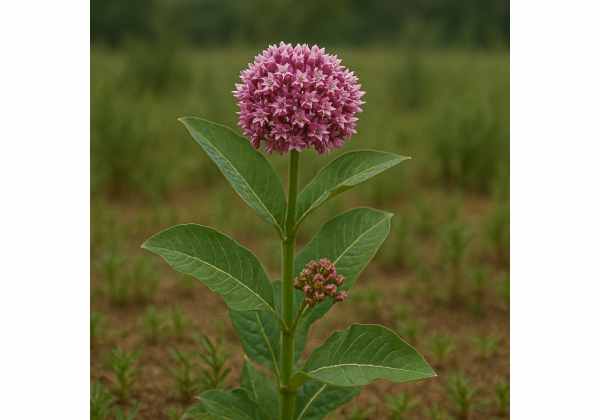
Common milkweed is a perennial herb native to North America. It is best known for its broad leaves, pinkish flower clusters, thick stems, and white milky sap that appears when the plant is cut. Botanically, it belongs to the Apocynaceae family, a group that includes several plants with potent medicinal and toxic constituents. That family connection is a clue that milkweed should be approached with respect rather than treated like an ordinary kitchen herb.
Historically, common milkweed sat at the boundary between food, fiber plant, and medicine. Some Indigenous communities used carefully selected parts as food after specific preparation methods, while herbal traditions used the root and latex in targeted ways. In older North American herbal writing, milkweed root was sometimes described as expectorant, diaphoretic, or antispasmodic. The latex was more often associated with external folk uses such as warts or minor skin lesions. Those uses reflect traditional knowledge, not the same thing as modern clinical proof.
A practical way to understand milkweed is to think in terms of plant parts:
- Root: the part most often tied to old medicinal use.
- Young shoots, buds, and pods: sometimes used as food only after careful identification and preparation.
- Leaves and latex: more strongly associated with toxicity concerns.
- Flowers: occasionally used in culinary or folk preparations, but far less often than the root in medicinal contexts.
Milkweed also varies in potency. Species differ, plant parts differ, and season matters. That means one casual statement such as “milkweed is edible” or “milkweed is medicinal” is too simple to be reliable. Even within common milkweed, one part may be used traditionally while another is much less forgiving.
For readers who usually work with gentler bitter or digestive herbs, milkweed is not in the same everyday category as dandelion for digestion and routine herbal use. It belongs in the more advanced, caution-heavy end of herbal practice, where identification, dose, and preparation are central to safety.
Key ingredients and medicinal properties
The chemistry of common milkweed helps explain both its traditional use and its risks. The best-known compounds are cardenolides, a group of cardioactive glycosides that can affect the sodium-potassium pump in animal cells. In plain language, these are biologically powerful compounds with heart-related toxic potential. They are the main reason milkweed should never be treated as a casual tea herb.
Beyond cardenolides, milkweed contains a mixture of other constituents that may shape its traditional properties:
- Resins and latex components that can irritate tissues and may have been used as topical counterirritants in folk medicine.
- Flavonoids and phenolic compounds that may contribute antioxidant activity.
- Small amounts of alkaloid-like or nitrogen-containing defensive compounds reported in modern phytochemical work.
- Bitter constituents that may partly explain why older texts described root preparations as stimulating or expectorant.
From a traditional herbal perspective, common milkweed has usually been described with a few recurring action terms:
- Expectorant: may help loosen or move mucus.
- Diaphoretic: may encourage sweating during febrile states in older herbal systems.
- Antispasmodic: sometimes described as easing tight, irritable cough patterns.
- Topical irritant or keratolytic folk use: especially for wart-like lesions in historical practice.
These labels need context. A traditional action term does not mean the plant has been proven effective in modern clinical trials. It means repeated historical use pointed practitioners in that direction. With milkweed, that is especially important because active chemistry and toxicity travel together.
Another useful distinction is between likely mechanism and likely benefit. A plant can contain compounds with measurable biological activity without being a sensible modern self-care remedy. Milkweed is a good example. The presence of cardenolides shows strong activity, but strong activity does not automatically equal safe therapeutic value.
Modern interest in milkweed chemistry is real, but much of it is still preclinical. Researchers are studying the structure and potency of its cardenolides and other metabolites. That makes milkweed scientifically interesting, yet it still leaves a gap between laboratory findings and safe at-home use. For day-to-day herbal practice, the most important conclusion is simple: common milkweed is pharmacologically active enough that small mistakes matter.
If your main goal is soothing irritated tissues rather than working with a stimulating or potentially irritating herb, a gentler demulcent such as marshmallow for mucosal soothing is usually easier to use responsibly.
Potential benefits and what the evidence says
When people search for milkweed benefits, they often expect a straightforward list. The more honest answer is that common milkweed has traditional medicinal uses and interesting chemistry, but limited direct human clinical evidence. That means its potential benefits should be framed carefully.
One possible benefit is respiratory support in traditional practice. Older herbal systems used milkweed root for coughs, chest tightness, and conditions where mucus felt stuck or breathing felt constrained. The idea was not that milkweed “cures” lung disease, but that it might stimulate secretions, ease spasmodic cough patterns, or support sweating during feverish illness. Those traditional descriptions help explain why herbalists sometimes grouped it with expectorant plants. Even so, stronger modern evidence is lacking, so this remains a traditional rather than clinically established benefit.
A second possible benefit is topical use for stubborn skin lesions. Folk use of the milky sap for warts and similar rough spots appears in ethnobotanical records. The logic is easy to see: latex-bearing plants often contain compounds that irritate tissue and may gradually break down surface growths. The problem is that the same property can also inflame healthy skin. That makes topical milkweed more of a historical remedy than a broadly recommended modern one.
A third area is general bioactivity. Laboratory work suggests milkweed contains compounds with antioxidant, antimicrobial, and cytotoxic potential. These findings are promising for research, but they should not be converted into claims that milkweed is an anticancer or anti-infective herb for home use. Preclinical activity is not the same thing as proven patient benefit.
A practical evidence summary looks like this:
- Strongest confidence: milkweed is chemically active and can be toxic.
- Moderate confidence: common milkweed has documented traditional food and medicinal use in selected contexts.
- Limited confidence: root may have traditional expectorant and diaphoretic value.
- Very limited confidence: topical latex may help some superficial lesions, but irritation risk is substantial.
- Weak confidence for self-treatment: there is not enough human clinical evidence to support routine modern use for chronic disease.
That is why milkweed is better understood as a historically important herb with narrow, cautious applications rather than a broad-spectrum wellness plant. For cough support, many people would be better served by herbs with a wider safety margin, such as mullein for gentle respiratory support, unless guided by a qualified practitioner who knows this plant well.
Traditional uses and how milkweed has been prepared
Traditional use of common milkweed is highly part-specific. That matters because the way the plant has been prepared often determines whether people discuss it as food, medicine, or poison. Modern readers sometimes miss that distinction and assume every part can be used the same way. It cannot.
In historical herbal use, the dried root was the main medicinal material. Preparations included powder, decoction, and tincture. Older practitioners used it for:
- Colds accompanied by chills or poor sweating
- Irritative coughs with mucus that was hard to expel
- Occasional rheumatic or inflammatory discomfort in traditional systems
- General stimulation of secretory or eliminative processes
Externally, the fresh latex was used in folk practice on warts, ringworm-like lesions, insect stings, or other localized problems. This kind of use belongs to a long tradition of plant latex remedies, but it also carries a real risk of irritation, blistering, and accidental eye exposure.
Food use is even more preparation-sensitive. Ethnobotanical and culinary traditions describe young shoots, flower buds, immature pods, and occasionally flowers as edible after careful identification and thorough cooking, often with repeated boiling in water. This does not mean the plant is broadly safe to eat raw or that all parts are edible. Mature tissues, leaves, and latex-heavy portions are much more concerning. Confusion between food tradition and medicinal self-treatment is one reason milkweed poisoning still occurs.
People also need to separate traditional use from trend-driven foraging. A historical food use usually came with preparation knowledge, seasonal timing, and community experience. Online recipes often remove that context. That is risky with milkweed.
Reasonable takeaways from traditional preparation are:
- Root was the main medicinal part in older practice.
- Latex was used externally, not casually.
- Food use focused on specific young parts and careful processing.
- More is not better; potency and tolerance vary widely.
When people want a topical herb with a much gentler reputation for inflamed or minor irritated skin, calendula for skin support is usually a more forgiving option than experimenting with milkweed latex at home.
Dosage, forms, and practical use
Because common milkweed is not a mainstream modern herbal supplement, there is no universally standardized dose backed by large clinical trials. Most dosing guidance comes from traditional herbal practice and older materia medica rather than modern evidence-based monographs. That means any dosage discussion should be conservative.
Traditional adult root dosing is often described within ranges such as:
- Powdered dried root: about 300 to 600 mg per dose, up to 3 times daily
- Tincture: about 1 to 2 mL per dose, up to 3 times daily
- Decoction: a small cup made from a modest amount of dried root, usually used short term rather than as a daily tonic
These are not doses for self-escalation. With milkweed, the safest interpretation is to use the lowest end of any traditional range, only for a short period, and ideally only with professional guidance.
Practical use questions matter as much as the dose itself:
- Timing: traditional respiratory use often placed root preparations between meals or during acute episodes, not as a long-term daily supplement.
- Duration: milkweed is better viewed as a short-course herb, not a maintenance herb.
- Form choice: root is the only form usually discussed for internal medicinal use; casual internal use of leaves or latex is not appropriate.
- Monitoring: nausea, dizziness, unusual pulse changes, marked stomach upset, or visual symptoms are reasons to stop and seek advice.
It is also worth matching the herb to the goal. If someone wants sweating support during the early stage of a simple febrile illness, old herbals sometimes compared milkweed with yarrow-like strategies. If someone wants mucus support, they often combine stimulating expectorants with soothing plants to reduce irritation. In modern practice, that usually points toward safer alternatives first.
Two common mistakes are worth avoiding:
- Using food-preparation advice as if it were medicinal dosing guidance
- Assuming that a “wild edible” amount is the same as a safe therapeutic amount
For readers mostly seeking urinary or fluid-balance support, milkweed is not a sensible first option. A more targeted and gentler comparison is corn silk for urinary comfort and mild fluid support.
Safety, side effects, and interactions
Safety is the most important part of any milkweed article. Common milkweed contains cardioactive glycosides, and human poisoning cases have been reported after ingestion. Symptoms can range from mild nausea and vomiting to more serious cardiac effects. The exact risk depends on species, plant part, dose, preparation, and the individual person.
Possible adverse effects include:
- Nausea or vomiting
- Abdominal cramping or diarrhea
- Dizziness
- Mouth and throat irritation
- Skin irritation from latex contact
- Eye irritation if sap is transferred by the hands
- Weakness, slowed pulse, or abnormal heart rhythm in more serious exposures
Who should avoid milkweed entirely:
- Pregnant people
- Breastfeeding people
- Children
- Anyone with heart disease or arrhythmia
- Anyone taking digoxin or other cardiac glycosides
- People taking antiarrhythmic drugs
- People with significant kidney disease
- Anyone with uncertain plant identification
- Anyone trying to self-treat a chronic illness
Interactions are a major concern. In theory and in practice, milkweed may add to the effects or risks of medications that influence heart rhythm or cardiac conduction. It may also complicate clinical interpretation because plant cardenolides can cross-react with digoxin testing in some settings. That means even “mild” exposures can become medically relevant.
Topical use also deserves caution. Latex can inflame skin, and accidental eye contact can be far more serious than people expect. Gloves, hand washing, and avoiding the face are basic precautions whenever handling fresh milkweed.
Seek urgent medical care after ingestion if there is repeated vomiting, marked weakness, confusion, chest discomfort, slow pulse, faintness, or trouble breathing. Do not try to “balance it out” with other herbs.
For people seeking pain, fever, or inflammation support, safer traditional choices exist. For example, yarrow for traditional sweating and inflammatory support is generally easier to work with than milkweed, though it still requires thoughtful use.
Foraging, quality, and when to avoid self-treatment
Milkweed is one of those plants where responsible use begins before the first dose. Identification errors, contamination, and online folklore create as much risk as the chemistry itself. If you are not fully confident that you can identify common milkweed in the field and distinguish it from other latex-bearing plants, foraging it for food or medicine is not a good idea.
A few principles can lower risk:
- Never harvest from roadsides, industrial edges, or sprayed areas.
- Do not rely on one photo or one app for identification.
- Learn the plant through the full season: leaves, flowers, pods, and sap.
- Treat young edible-part traditions and medicinal root traditions as separate subjects.
- Do not improvise with raw latex internally.
Quality is another challenge. Milkweed is not commonly sold as a standardized modern herbal product, which means raw material quality can be inconsistent. Even when properly identified, potency can vary by growing conditions and plant age. That unpredictability is the opposite of what you want with an herb that already has toxicity concerns.
There are also several situations where self-treatment with milkweed makes little sense:
- Persistent cough lasting more than a few weeks
- Shortness of breath, wheezing, or chest pain
- Fever with severe symptoms
- Recurrent skin lesions that need diagnosis
- Suspected wart, mole, or growth near the eyes or genitals
- Any attempt to use milkweed for heart, cancer, or infection treatment
The best modern role for milkweed is often educational rather than practical. It is a fascinating herbobotanical case study: a plant with real historical use, remarkable chemistry, ecological importance, and very clear limits for safe home use. That may sound less exciting than a hype-driven wellness article, but it is more useful.
In most cases, common milkweed is better approached as a plant to understand deeply than a plant to self-prescribe casually.
References
- Potential Therapeutic and Medicinal Applications of Four Invasive Non-Native Plant Species: A PRISMA-Guided Systematic Review of PubMed Studies 2025 (Systematic Review)
- Cardenolides in Asclepias syriaca Seeds: Exploring the Legacy of Tadeus Reichstein 2025
- Native Food Uses of Common Milkweed (Asclepias syriaca) 2024
- Forage and You Shall Find: Cardiac Glycoside Poisoning and the Danger of Foraging 2023
- Toxicity of Milkweed Leaves and Latex: Chromatographic Quantification Versus Biological Activity of Cardenolides in 16 Asclepias Species 2019
Disclaimer
This article is for educational purposes only and does not replace medical advice, diagnosis, or treatment. Common milkweed is a pharmacologically active plant with meaningful toxicity risks, especially when misidentified, poorly prepared, or used by people with heart conditions, during pregnancy, or alongside prescription medicines. Do not use milkweed internally or topically for a medical condition without guidance from a qualified healthcare professional or a clinician trained in botanical medicine. Seek urgent medical attention after suspected poisoning or if concerning symptoms develop.
If you found this guide useful, please share it on Facebook, X, or your preferred platform to help others approach herbal medicine with more clarity and caution.