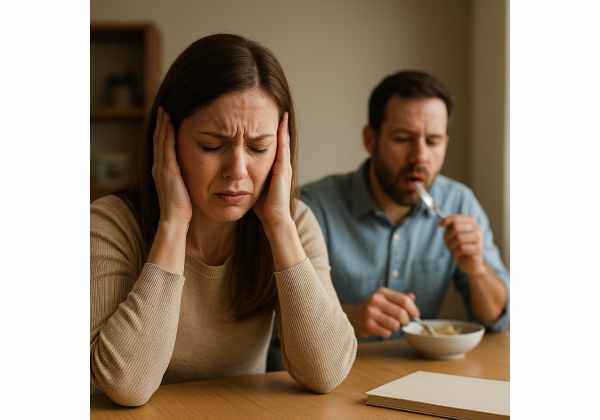
Misophonia is a condition in which certain everyday sounds or related sensory cues trigger an unusually strong emotional, physical, and behavioral reaction. The reaction is not simply annoyance, pickiness, or a dislike of noise. For many people, a specific sound such as chewing, sniffing, tapping, breathing, or throat clearing can feel instantly overwhelming, even when the sound is quiet and other people barely notice it.
Misophonia is still an evolving clinical and research area. It is not listed as a stand-alone diagnosis in major diagnostic manuals, but it is recognized in the scientific literature as a distinct pattern of decreased tolerance to specific sounds and related cues. Understanding the condition clearly matters because it can affect family life, school, work, relationships, concentration, and mental health.
What matters most about misophonia
- Misophonia involves intense reactions to specific trigger sounds or related cues, not a general sensitivity to all sound.
- Common reactions include anger, disgust, anxiety, panic-like arousal, muscle tension, an urge to escape, or an urge to stop the sound.
- It is often confused with ordinary irritation, hyperacusis, tinnitus distress, anxiety, OCD, autism-related sensory sensitivity, or anger problems.
- Symptoms often begin in childhood or adolescence, but adults may also recognize the pattern later in life.
- Professional evaluation may matter when reactions cause major impairment, aggression, severe avoidance, self-harm thoughts, or concern about another mental health condition.
Table of Contents
- What Misophonia Is
- Misophonia Symptoms and Reactions
- Common Misophonia Triggers
- Signs Across Children, Teens, and Adults
- Causes and Brain Mechanisms
- Risk Factors and Related Conditions
- Diagnosis and Differential Context
- Complications and Urgent Warning Signs
What Misophonia Is
Misophonia is best understood as a disorder of decreased tolerance to specific sounds or sound-related cues. The key feature is a strong, rapid, and disproportionate response to particular triggers, rather than a broad dislike of noise or a problem with hearing volume.
The word misophonia is often translated loosely as “hatred of sound,” but that phrase can be misleading. Most people with misophonia do not hate all sound. They may enjoy music, conversation, nature sounds, or background noise, yet react intensely to a narrow set of trigger sounds. The trigger is often meaningful in some way: who is making it, how repetitive it is, whether it feels intrusive, or whether escape feels possible.
A defining feature is that the reaction is not mainly driven by loudness. A quiet chewing sound, soft breathing, or faint pen clicking may be far more distressing than a loud but non-triggering noise. This separates misophonia from many ordinary noise complaints. Someone may tolerate a vacuum cleaner or traffic but feel overwhelmed by a family member eating cereal across the room.
Researchers describe misophonia as involving emotional, physical, and behavioral responses. The emotional response may be anger, disgust, irritation, anxiety, fear, panic, or a sense of being trapped. Physical arousal may include muscle tension, increased heart rate, sweating, chest tightness, heat, or a jolt of nervous-system activation. Behaviorally, a person may leave the room, cover their ears, ask the source to stop, freeze, stare, cry, snap verbally, or occasionally react impulsively.
Misophonia can vary widely in severity. Some people have mild symptoms that are uncomfortable but limited. Others experience severe impairment that affects meals, classrooms, workplaces, public transport, relationships, sleep, and social participation. Severity also depends on context. The same sound may feel more tolerable from a stranger than from a close family member, or worse when the person is tired, stressed, trapped, or expected to stay quiet.
Misophonia is not the same as being “too sensitive,” rude, controlling, or dramatic. Many affected people are aware that their reaction is stronger than the situation seems to warrant. That awareness can add shame, embarrassment, and confusion. They may try hard not to react, yet the trigger response can feel automatic and difficult to interrupt once it begins.
It is also important not to overstate what is known. Misophonia research has grown quickly, but the field is still young. There is no single universally accepted clinical test, no definitive biomarker, and no fully settled explanation of cause. Still, the condition has a clear enough pattern that clinicians and researchers can describe it, measure it, and distinguish it from several look-alike problems.
Misophonia Symptoms and Reactions
The central symptom of misophonia is a strong negative reaction after noticing a specific trigger. That reaction often arrives quickly, feels hard to control, and may include emotions, body sensations, thoughts, urges, and behavior.
For many people, the first feeling is not mild irritation but a sharp internal alarm. A trigger sound may produce an immediate sense of “I have to get away,” “I cannot focus,” or “this has to stop.” The person may feel as if their attention is captured by the sound and locked onto it. Even when they try to think about something else, the trigger can dominate awareness.
Common emotional symptoms include:
- Anger, rage, or sudden irritability
- Disgust or revulsion
- Anxiety, dread, or fear of being trapped with the sound
- Panic-like distress
- Shame or guilt after reacting
- Helplessness when the trigger cannot be avoided
- Resentment toward the source of the sound, even when the person knows the sound is not intentional
Physical symptoms often resemble a fight-or-flight response. People may notice a racing heart, muscle tightening, jaw clenching, heat in the face, sweating, stomach discomfort, chest pressure, or a restless urge to move. Some describe a sudden surge of adrenaline. Others feel frozen, tense, or unable to speak.
The behavioral response may be obvious or hidden. Some people leave the room, cover their ears, use headphones, avoid meals with others, or sit far away from trigger sources. Others try to suppress the reaction and appear calm while feeling intense distress internally. In some cases, the person may glare, snap, yell, mimic the sound, make a competing sound, or ask the other person to stop. Physical aggression is possible but not typical for most adults; when it occurs or feels likely, it is a sign that evaluation is important.
Misophonia also has a cognitive side. The person may become hyperaware of the possibility of triggers before they occur. They may scan the environment for gum chewing, snack bags, breathing noises, or repetitive movements. This anticipation can make ordinary settings feel unsafe or exhausting. A quiet classroom, meeting, train ride, or family dinner may become stressful because the person expects a trigger to appear.
Not every reaction is sound-only. Some people also react to visual cues associated with sound, such as chewing motions, jaw movement, leg bouncing, foot tapping, or hand movements. The visual cue may be distressing because it predicts a sound, reminds the person of a trigger, or becomes a trigger itself. This overlap can make misophonia feel less like a simple hearing problem and more like a multisensory intolerance pattern.
Misophonia symptoms can also fluctuate. Reactions may be stronger when a person is sleep deprived, stressed, hungry, overstimulated, anxious, or already emotionally worn down. This does not mean misophonia is imaginary or caused only by mood. It means the nervous system’s overall state may influence how intense the response becomes.
Common Misophonia Triggers
Misophonia triggers are usually specific, repetitive, and strongly tied to the source or meaning of the sound. Mouth, nose, throat, breathing, and repetitive human-made sounds are among the most common, but triggers vary widely from person to person.
Many people first associate misophonia with chewing, but the trigger range is broader. One person may react mainly to eating sounds. Another may react to sniffing, keyboard tapping, throat clearing, or a neighbor’s bass vibrations. Someone else may react to a visual cue, such as seeing another person chew, even when the sound is faint.
| Trigger category | Examples | Why it can be confusing |
|---|---|---|
| Mouth and eating sounds | Chewing, lip smacking, crunching, slurping, swallowing | Others may view these as normal mealtime sounds, while the person with misophonia experiences them as overwhelming. |
| Nose and breathing sounds | Sniffing, snoring, heavy breathing, nose blowing | The sound may be quiet but repetitive, making the reaction seem disproportionate to observers. |
| Throat and voice sounds | Throat clearing, coughing, humming, certain speech sounds | The trigger may depend on pattern, closeness, or who is making the sound. |
| Repetitive object sounds | Pen clicking, keyboard tapping, clock ticking, utensil scraping | These may overlap with ordinary annoyance, but misophonia reactions are more intense and impairing. |
| Visual or movement cues | Jaw movement, leg bouncing, finger tapping, repetitive gestures | The reaction may occur even when sound is absent or barely audible. |
A useful distinction is that misophonia is selective. A person may be triggered by one family member chewing but not by their own chewing, or by a particular type of breathing but not by loud music. This selectivity can make the condition hard for others to understand. It may look personal, even when the person with misophonia does not want it to be.
Triggers often involve other people’s bodies. Eating, breathing, sniffing, coughing, and throat clearing are common because they are repetitive, close-range, and socially difficult to escape. The person may feel trapped because asking someone to stop breathing, chewing, or clearing their throat is socially awkward or impossible.
Context can change the reaction. A sound may be worse in a quiet room than in a noisy café because it stands out. It may be worse during a meal with family than during a brief encounter with a stranger because the person anticipates repeated exposure. It may be worse when the person is expected to remain polite, still, or attentive.
Misophonia can overlap with sensory overload, but they are not identical. Sensory overload usually refers to broad overwhelm from too much input, such as noise, light, crowds, smells, or demands. Misophonia is more specific: a particular trigger may create an outsized response even when the environment is otherwise calm.
Signs Across Children, Teens, and Adults
Misophonia often becomes noticeable in childhood or adolescence, though adults may recognize it later after years of unexplained distress. The signs can look different by age because children, teens, and adults differ in emotional control, language, social expectations, and ability to leave triggering situations.
In children, misophonia may appear as sudden anger, crying, refusal to eat with others, covering the ears, leaving the table, hiding, or yelling at family members. A child may not be able to explain the reaction clearly. They may say the sound is “gross,” “too much,” “painful,” or “making me mad,” even when the sound is not physically loud. Because family meals are a common trigger setting, the condition may be mistaken for defiance, picky behavior, attention-seeking, or sibling conflict.
Children may also show school-related signs. They may struggle in quiet classrooms where small sounds are noticeable, such as pencil tapping, gum chewing, sniffing, whispering, or keyboard use. They may become distracted, irritable, avoidant, or unable to complete work. If the child cannot explain the internal reaction, adults may interpret the behavior as inattention, oppositional behavior, anxiety, or poor frustration tolerance.
In teens, signs may become more hidden. Adolescents often understand that their reactions seem unusual, so they may suppress them, avoid social situations, eat alone, use headphones frequently, or appear withdrawn. Some teens become intensely anxious before meals, classes, exams, sleepovers, or public transport. Others may lash out at home but remain quiet in public, which can make the problem look like a family-only behavior issue.
Adults may have a longer history of adaptation. They may choose jobs, living situations, relationships, restaurants, or routines around trigger avoidance without naming the reason. Some adults feel ashamed that ordinary sounds from a partner, child, colleague, or roommate can trigger intense anger or disgust. Others may develop elaborate mental rules about where to sit, whom to eat with, or how to escape a setting if a trigger appears.
Across ages, the condition can be misunderstood as a personality problem. A child may be called rude. A teen may be called dramatic. An adult may be accused of being controlling. Yet the inner experience is often one of distress, loss of control, and conflict between what the person feels and how they want to behave.
Misophonia can also be part of a broader neurodevelopmental or sensory profile. Some people who have autism, ADHD, tic disorders, or sensory processing differences also report trigger-specific sound intolerance. This does not mean every person with misophonia has a neurodevelopmental condition, but it does mean that clinicians may need to consider overlapping traits. For example, autism and ADHD differences can be relevant when sound intolerance appears alongside attention problems, social fatigue, routines, sensory sensitivities, or executive-function challenges.
Causes and Brain Mechanisms
The exact cause of misophonia is not known. Current evidence suggests a complex pattern involving sound processing, emotional salience, attention, autonomic arousal, learning, and possibly individual differences in sensory and motor networks.
Misophonia does not appear to be simply a problem of hearing acuity. Many people with misophonia have normal hearing tests. The trigger is often not loud, sharp, or acoustically dangerous. Instead, the reaction seems connected to the specific pattern, source, predictability, repetition, or personal meaning of the sound.
One major area of interest is the link between auditory processing and emotion. Trigger sounds may activate networks involved in salience, threat detection, body arousal, and emotional response. In plain language, the brain may treat a harmless but specific sound as highly important and difficult to ignore. Once the trigger is detected, attention narrows, body arousal rises, and the person may feel a powerful urge to escape or stop the stimulus.
The anterior insula, auditory cortex, salience network, limbic system, and autonomic nervous system have all been discussed in misophonia research. These systems are involved in noticing internal body states, processing sound, assigning emotional importance, and preparing the body for action. However, brain findings should be interpreted carefully. They show possible mechanisms, not a simple “misophonia spot” in the brain.
Learning may also play a role. A trigger can become linked with distress through repeated experiences, especially if the person feels trapped, embarrassed, criticized, or unable to control exposure. For example, a child who repeatedly experiences overwhelming distress during family meals may begin anticipating the trigger before the meal begins. Over time, anticipation itself can raise tension.
Some researchers have also explored motor-system involvement. This is relevant because many triggers involve human actions, such as chewing, breathing, tapping, or throat clearing. The brain may respond not only to the sound but also to the perceived action behind the sound. This could help explain why visual cues such as jaw movement or leg bouncing can trigger some people even when the sound is reduced.
Genetic or familial factors are possible but not fully established. Some people report relatives with similar sound intolerance, sensory sensitivity, anxiety, OCD traits, tinnitus, or neurodevelopmental differences. That does not prove direct inheritance, but it suggests that biology, temperament, family patterns, and environment may all contribute.
It is also possible that misophonia is not one single pathway for everyone. Some people may have a relatively specific trigger-response pattern without many other symptoms. Others may have broader sensory sensitivity, anxiety, obsessive traits, tinnitus, trauma symptoms, or emotional-regulation difficulties. This is one reason careful assessment matters: similar outward symptoms may have different contributing factors.
Risk Factors and Related Conditions
No single risk factor explains misophonia, but research has linked it with early onset, family history, sensory sensitivity, anxiety, obsessive-compulsive traits, tinnitus, hyperacusis, and some neurodevelopmental or psychiatric conditions. These links do not mean misophonia is caused by any one of them.
Age is one important pattern. Many people report first noticing symptoms in childhood or early adolescence. This may be because family meals, classrooms, and shared living spaces create repeated exposure to close-range sounds. It may also reflect developmental changes in attention, emotion regulation, social awareness, and sensory processing.
Sex and gender findings are mixed. Some studies have reported higher rates or greater help-seeking among girls and women, while others show smaller or inconsistent differences. Differences may reflect actual biology, reporting patterns, social expectations, or study design. It is safest to say misophonia can affect people of any sex or gender.
Family history may be relevant. Some people report relatives who also have strong sound intolerance, sensory sensitivities, anxiety, or obsessive traits. Shared genetics, shared environment, and learned responses may all contribute. Current evidence is not strong enough to predict who will develop misophonia based on family history alone.
Co-occurring conditions are common in clinical and research samples. Misophonia has been described alongside anxiety disorders, depression, obsessive-compulsive symptoms, PTSD symptoms, ADHD, autism spectrum traits, tic disorders, tinnitus, hyperacusis, migraine, and broader sensory sensitivity. The relationship can vary. In one person, anxiety may develop after years of anticipating triggers. In another, existing anxiety may intensify the reaction. In another, both may share underlying nervous-system sensitivity.
The overlap with OCD can be especially confusing. Misophonia may involve intrusive awareness of a trigger, distress, avoidance, and repeated checking of the environment. OCD involves obsessions and compulsions, often driven by feared consequences, uncertainty, or a need to neutralize distress. The two can co-occur, but misophonia is not automatically OCD. When repetitive thoughts, rituals, or compulsions are prominent, OCD and anxiety differences may be important in the broader diagnostic picture.
Tinnitus and hyperacusis are also relevant comparisons. Tinnitus involves hearing sound without an external source, such as ringing or buzzing. Hyperacusis involves reduced tolerance to sound intensity, where ordinary sounds may seem painfully loud or physically uncomfortable. Misophonia is more trigger-specific and meaning-specific. A person can have one, two, or all three, which can complicate evaluation. The relationship between tinnitus and anxiety can also matter when sound distress becomes persistent and emotionally charged.
Risk should not be framed as blame. Misophonia is not caused by weak character, bad manners, or a lack of willpower. At the same time, related emotional, sensory, and psychiatric factors can influence how severe the condition becomes and how much it interferes with life.
Diagnosis and Differential Context
Misophonia does not currently have a universally accepted formal diagnostic test, so evaluation usually depends on a careful clinical history. The goal is to understand the trigger pattern, reaction intensity, impairment, safety concerns, and whether another condition better explains the symptoms.
A clinician may ask what sounds or cues trigger the reaction, how quickly the response begins, what emotions and body sensations occur, what the person does next, and how much the pattern affects daily life. They may also ask about onset age, family history, hearing symptoms, anxiety, mood, trauma symptoms, obsessive thoughts, attention problems, autism traits, sleep, school or work impairment, and relationship conflict.
Misophonia evaluation may involve mental health clinicians, audiologists, primary care clinicians, pediatricians, psychiatrists, psychologists, or other specialists depending on the situation. There is no single route for everyone. A person with prominent hearing symptoms may need a hearing-focused assessment. A child with school impairment may need developmental and mental health context. An adult with panic, depression, or obsessive symptoms may need broader psychiatric evaluation.
Screening tools and questionnaires can help describe severity, triggers, impairment, or symptom patterns, but they are not the same as a confirmed diagnosis. This distinction matters because a high score on a questionnaire may show distress without explaining why it is happening. For broader context, screening and diagnosis are different steps in mental health evaluation.
| Condition or experience | How it can look similar | Key distinction |
|---|---|---|
| Ordinary sound annoyance | A person dislikes chewing, tapping, or loud habits | Misophonia reactions are more intense, automatic, impairing, and often tied to physical arousal. |
| Hyperacusis | Everyday sounds feel intolerable | Hyperacusis is more related to loudness or physical discomfort; misophonia is more trigger-specific. |
| Tinnitus distress | Sound-related distress affects mood and focus | Tinnitus involves internally perceived sound, while misophonia is usually triggered by external cues. |
| Phonophobia | Sound leads to fear or avoidance | Phonophobia is fear-based; misophonia often centers on anger, disgust, irritation, or trapped distress. |
| OCD | Intrusive awareness and avoidance may occur | OCD includes obsessions and compulsions that may not be limited to specific sensory triggers. |
| Autism-related sensory sensitivity | Sounds, lights, textures, or crowds may be overwhelming | Misophonia is usually narrower and tied to specific trigger patterns, though overlap can occur. |
The differential context also includes anger problems and relationship conflict. Misophonia can cause anger, but it is not simply an anger disorder. The anger is usually cue-triggered and may appear suddenly in response to a specific sound. Similarly, conflict with a partner, parent, sibling, roommate, or coworker may be a consequence of misophonia rather than its cause, although conflict can worsen distress.
A thorough mental health evaluation may be especially relevant when symptoms are severe, confusing, or accompanied by depression, panic, compulsions, trauma symptoms, self-harm thoughts, aggression, or major functional impairment.
Complications and Urgent Warning Signs
The main complications of misophonia come from distress, avoidance, conflict, impaired functioning, and the emotional burden of living around unpredictable triggers. In severe cases, the condition can affect nearly every shared environment.
Family life is often affected first. Meals may become tense. Parents may feel blamed for ordinary sounds. Siblings may feel unfairly criticized. Partners may feel rejected or controlled. The person with misophonia may feel guilty, ashamed, or misunderstood. Over time, family members may change routines to reduce conflict, but the underlying pattern can still create resentment on all sides.
School and work can also become difficult. Quiet rooms can make small sounds stand out. A student may lose focus during exams because of sniffing or pencil tapping. An employee may struggle in open offices, meetings, shared break rooms, or video calls. If others do not understand the condition, the person may be seen as difficult, distractible, irritable, or antisocial.
Social life may shrink. Restaurants, movie theaters, public transport, classrooms, libraries, shared housing, and group meals can become stressful. Some people begin avoiding invitations because they fear triggers or worry about reacting. This can lead to loneliness, reduced confidence, and fewer opportunities for normal social connection.
Mental health complications can include anxiety, low mood, irritability, shame, hypervigilance, and anticipatory dread. A person may spend significant energy scanning for sounds, planning exits, or trying not to react. This constant monitoring can be exhausting. When misophonia overlaps with depression, OCD, trauma symptoms, or broader anxiety, impairment may be greater.
The condition can also affect identity. People may ask, “Why can’t I just ignore it?” or “Why do I get so angry over something so small?” This self-criticism can be painful, especially when others minimize the reaction. Clear language helps: the sound may be small, but the nervous-system response can be large.
Brief professional evaluation is important when misophonia causes major impairment in school, work, relationships, eating, sleep, or daily activities. It is also important when the person has intense guilt, panic, depression, escalating conflict, or concern that another condition may be involved.
Urgent professional help is needed if misophonia is associated with thoughts of self-harm, suicidal thoughts, threats to harm someone else, loss of control around aggression, or immediate safety concerns. These situations should be treated as safety concerns, not as ordinary sound sensitivity. If there is immediate danger, emergency services or local crisis resources should be contacted right away.
Misophonia is not directly life-threatening, and many people with symptoms do not become aggressive or suicidal. Still, severe distress deserves to be taken seriously. The condition can be isolating, and dismissing it as mere annoyance can delay appropriate evaluation, increase shame, and worsen conflict.
References
- Consensus Definition of Misophonia: A Delphi Study 2022 (Consensus Study)
- Misophonia: A Systematic Review of Current and Future Trends in This Emerging Clinical Field 2022 (Systematic Review)
- Toward a Multidimensional Understanding of Misophonia Using Cluster-Based Phenotyping 2022 (Original Research)
- Prevalence of Misophonia in Adolescents and Adults Across the Globe: A Systematic Review 2024 (Systematic Review)
- Quality of Life among Youth with Misophonia: The Role of Internalizing Symptoms and Pessimism 2024 (Original Research)
- Misophonia 2023 (Medical Review)
Disclaimer
This article is for general educational purposes only and is not a substitute for professional medical advice, diagnosis, or treatment. Misophonia-like symptoms can overlap with hearing conditions, anxiety, OCD, trauma symptoms, neurodevelopmental conditions, and other mental health concerns, so significant distress or impairment should be discussed with a qualified health professional.
Thank you for taking the time to read this sensitive topic; sharing it may help someone else feel less alone and better understood.