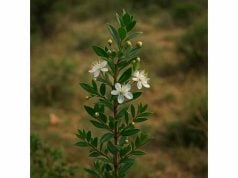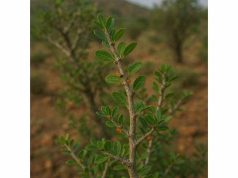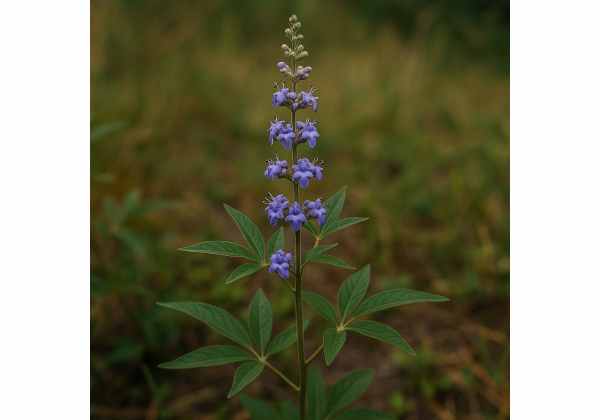
Monk’s pepper, also called vitex, chaste tree, or chasteberry, is the dried fruit of Vitex agnus-castus, a Mediterranean shrub long used in women’s herbal medicine. Despite the name, it is not a culinary pepper. Modern interest in monk’s pepper centers on premenstrual syndrome, cyclical breast tenderness, and certain menstrual-cycle complaints, especially when symptoms seem linked to the luteal phase. What makes this herb unusual is that it does not behave like a simple “female tonic” or a straightforward estrogen mimic. Its best-studied extracts appear to influence dopaminergic signaling and prolactin regulation, which may help explain why some people notice changes in breast pain, irritability, bloating, and cycle-related discomfort.
Still, monk’s pepper is a product-specific herb, not a one-size-fits-all remedy. The strongest evidence applies to standardized fruit extracts taken consistently for several cycles, not to any random blend labeled “hormone balance.” Used thoughtfully, it can be a useful option. Used casually, it can create unrealistic expectations or, in some cases, interact with medical conditions and medicines in ways that deserve more care.
Essential Insights
- Monk’s pepper may reduce overall premenstrual symptom burden, especially breast tenderness, irritability, and cyclical discomfort.
- The best-supported use is standardized vitex fruit extract for premenstrual syndrome rather than general hormone boosting.
- A common standardized dose is 20 mg once daily for at least 3 menstrual cycles, although extracts vary by product.
- Avoid self-treatment during pregnancy or breastfeeding, and get medical guidance if you have a pituitary disorder, hormone-sensitive cancer, or take dopamine-related medicines.
Table of Contents
- What Monk’s Pepper Is and Why Its Fruit Matters
- Key Ingredients and Medicinal Properties of Monk’s Pepper
- What Monk’s Pepper May Help and Where the Evidence Is Strongest
- How to Use Vitex for PMS, Breast Tenderness, and Cycle Complaints
- Dosage, Timing, and How Long to Take Monk’s Pepper
- Safety, Interactions, and Who Should Avoid Vitex
What Monk’s Pepper Is and Why Its Fruit Matters
Monk’s pepper comes from the small, peppery-tasting fruit of Vitex agnus-castus, a shrub native to the Mediterranean region and parts of western Asia. The dried fruit is the medicinal part used in modern products. This detail matters because many people talk about “vitex” as though the whole plant were interchangeable. It is not. The fruit is the form recognized in most traditional and modern medicinal preparations, and the evidence behind the herb mainly concerns fruit extracts rather than leaves, flowers, or homemade blends.
The herb has a long reputation in menstrual and reproductive care. Historically, it was used for irregular cycles, breast discomfort, and symptoms that appeared in the days before menstruation. Modern use is narrower and more practical. Most people now consider monk’s pepper for premenstrual syndrome, cyclical mastalgia or breast tenderness, and selected menstrual-cycle complaints where prolactin-related or luteal-phase symptoms may play a role.
One of the most important things to understand is what monk’s pepper is not. It is not a quick fix for every hormonal problem. It is not a reliable fertility treatment by itself. It is not a menopause herb in the same way that people discuss black cohosh for hot flashes and night sweats. And it should not be treated like a casual “balance your hormones” supplement with no need for context. Monk’s pepper is much more specific than that.
Its product form also matters. A standardized dry extract used in a clinical setting is very different from a loose herbal blend, a gummy, or a proprietary capsule that hides the actual amount of vitex. When readers feel confused about the herb, that is often the reason. They are comparing unlike products under one name.
In practical terms, monk’s pepper tends to fit best when symptoms are cyclical, repeat month after month, and seem to cluster before menstruation. Examples include breast fullness, irritability, bloating, mood reactivity, water retention, and a feeling that the luteal phase is predictably harder than the rest of the cycle. It is a less convincing match for symptoms that are constant all month, unrelated to the cycle, or clearly tied to another medical cause.
Another point that often helps is timing. Monk’s pepper is rarely an herb people “feel” on day one. It usually works, if it works at all, as a steady intervention across several cycles. That means it rewards patience, structured tracking, and realistic expectations more than impulse buying.
So the best way to frame monk’s pepper is this: it is a fruit-based herbal medicine with the strongest relevance to premenstrual and cyclical symptoms, especially in standardized extract form. That focused understanding makes the rest of the discussion about benefits, dosage, and safety much clearer.
Key Ingredients and Medicinal Properties of Monk’s Pepper
Monk’s pepper has a more complex chemistry than its plain appearance suggests. The fruit contains several groups of compounds that are believed to contribute to its medicinal effects, including diterpenes, flavonoids, iridoid glycosides, and small amounts of volatile constituents. In everyday language, that means the herb is chemically active in more than one way, but not every compound matters equally in every product.
Among the most discussed constituents are diterpenes such as rotundifuran and related compounds, because these have been linked to dopaminergic activity in experimental research. This matters because dopamine helps regulate prolactin release. Prolactin is best known for its role in lactation, but it also affects breast tenderness, menstrual signaling, and aspects of the luteal phase. This prolactin connection is one of the main reasons monk’s pepper is discussed for cyclical breast pain and premenstrual symptoms rather than for general wellness.
The fruit also contains flavonoids, including casticin and related polyphenols. These are often described for antioxidant and signaling roles, though that language should not be overstated. In herbs, antioxidant claims are easy to inflate. What is more useful here is that these compounds help define the plant’s profile and may contribute to the broader biologic activity of standardized extracts.
Iridoid glycosides such as agnuside and aucubin are also important markers in vitex preparations. They are commonly used in phytochemical characterization and help distinguish the fruit’s medicinal identity. For consumers, this is less about memorizing names and more about understanding why extract quality matters. Standardized products are better studied because their chemistry is better described.
When people describe the medicinal properties of monk’s pepper, they usually mean a cluster of practical actions rather than one dramatic effect:
- It may help modulate prolactin-related symptoms.
- It may support comfort in the premenstrual phase.
- It may reduce cyclical breast tenderness in some users.
- It may influence luteal-phase symptom patterns rather than acting like direct hormone replacement.
That last point deserves emphasis. Monk’s pepper is often marketed in ways that make it sound estrogenic, progesteronic, or universally “hormone balancing.” That language is too loose. The better view is that vitex appears to influence upstream signaling, especially dopamine-related pathways and prolactin regulation, with downstream effects that may matter for certain cycle complaints.
This is also why the herb can help one person and disappoint another. If the dominant issue is classic premenstrual breast tenderness and cyclic irritability, monk’s pepper may fit well. If the issue is thyroid dysfunction, severe endometriosis, anemia, pregnancy-related symptoms, or menopause-related vasomotor symptoms, the same herb may be irrelevant or poorly matched.
It is also worth noting that monk’s pepper is not just a “traditional” herb that modern science ignores. It has enough mechanistic and clinical interest to justify cautious, evidence-aware use. At the same time, it remains highly product-specific. The chemistry of a studied dry extract is not automatically reproduced in every supplement on a store shelf. That is why quality, extract type, and labeled dose matter more here than they do with many culinary herbs.
What Monk’s Pepper May Help and Where the Evidence Is Strongest
The strongest case for monk’s pepper is premenstrual syndrome. Across reviews and clinical trials, standardized Vitex agnus-castus extracts appear most useful for reducing overall PMS symptom burden, particularly where symptoms include breast tenderness, irritability, bloating, mood shifts, and physical discomfort in the days before menstruation. That does not mean every trial is perfect or every effect is dramatic. It means PMS is the area where the herb has the clearest evidence base.
A careful reading of the literature suggests several practical points. First, vitex is not equally convincing for every PMS symptom. It tends to look stronger for breast-related symptoms and global symptom scores than for highly specific mood outcomes in isolation. Second, the benefits are tied to defined preparations. Many older studies differ in design, symptom scoring, and extract characterization, which is one reason the evidence looks promising but not perfectly uniform.
Cyclical mastalgia, or breast pain that predictably worsens with the cycle, is another area where monk’s pepper deserves attention. This is one of the most plausible uses given the herb’s suspected prolactin-related actions. For women whose breast tenderness peaks before menstruation and eases afterward, vitex may be a reasonable option to discuss, especially when the pain pattern is recurrent and nonalarming.
Menstrual irregularity and dysmenorrhea are more mixed. Recent observational data suggest that some women experience improvement in bleeding patterns, menstrual pain, and quality of life over several months of treatment. That is encouraging, but it is not the same level of evidence as a high-quality placebo-controlled program focused on a single clear indication. In other words, the signal is interesting, but it should not be oversold.
A fair summary of the evidence looks like this:
- Strongest support: PMS symptom relief with standardized extracts
- Moderate support: cyclical breast tenderness or mastalgia
- Promising but less definitive: some menstrual-cycle irregularity and menstrual pain patterns
- Weak or uncertain: infertility, polycystic ovary syndrome, menopause, and general “hormone balance” claims
That last line is especially important. Monk’s pepper is often pulled into broad online discussions about fertility, PCOS, luteal phase defect, acne, and menopause. Some of those uses have biologic plausibility. Some have scattered clinical interest. But the herb is not established enough in those areas to justify sweeping claims.
This is where comparison can help. Someone looking for breast discomfort support may also come across evening primrose for cyclical breast tenderness. The two herbs are not interchangeable, but they sometimes appear in the same conversation because both are used for cyclical, hormone-linked symptom patterns. Vitex is usually the more endocrine-oriented choice, while evening primrose is often discussed in a broader comfort and inflammatory context.
The best expectation is not “this fixes hormones.” It is “this may reduce recurring premenstrual symptom patterns when the product is well chosen and the indication is right.” That is a narrower promise, but it is a more honest and useful one.
How to Use Vitex for PMS, Breast Tenderness, and Cycle Complaints
Using vitex well is less about chasing the strongest-looking bottle and more about matching the herb to a repeatable symptom pattern. This is one of those herbs that works best when the user is methodical. If symptoms are vague, constant, or poorly tracked, it is hard to tell whether monk’s pepper is helping or whether time, stress, sleep, or diet changes are doing more of the work.
The first step is to identify the pattern you are trying to change. Vitex makes the most sense when symptoms recur in a clear cyclical way. Examples include breast tenderness in the week before menstruation, predictable luteal-phase irritability, water retention, or a sense that each premenstrual phase becomes unusually difficult. If symptoms do not follow the cycle at all, vitex is a weaker fit.
The second step is to choose the right product form. Standardized tablets or capsules are usually the best option because they are easier to dose consistently and are closer to the forms used in clinical research. Teas, powders, and blended formulas can be harder to evaluate because the actual amount of active material may be unclear. For this herb, clarity is an advantage.
A practical way to use vitex is:
- Pick one single-ingredient product with a clearly stated extract and dose.
- Take it consistently every day rather than only when symptoms flare.
- Track symptoms across at least 2 to 3 cycles.
- Reassess whether the pattern, severity, or daily burden has changed.
That third point matters. Monk’s pepper is not usually a “take as needed” herb. It is more often used as a daily intervention across consecutive cycles. Many people give up too early because they expect an immediate effect in the same way they might expect from a pain reliever. That is usually not how vitex works.
Another common mistake is combining it with several hormone-targeted supplements at once. If you start vitex together with magnesium, vitamin B6, evening primrose, an adaptogen, and a multi-herb formula, you lose the ability to judge what is helping or causing side effects. Start simple.
It also helps to separate the herb’s likely benefits from lifestyle issues that can intensify PMS. Sleep disruption, high alcohol intake, chronic under-eating, irregular meals, and unresolved stress can all worsen cycle-related symptoms. Vitex is more likely to feel effective when those basics are at least somewhat stable. In real life, some people do best by pairing a structured vitex trial with symptom logging, regular meals, and a modest reduction in inflammatory or stress-amplifying habits.
If you prefer to compare traditional menstrual-support herbs, you may also see yarrow for menstrual comfort and flow support. Yarrow and vitex serve different roles. Yarrow is usually discussed more for traditional menstrual support and spasm-oriented use, while vitex is more closely tied to premenstrual and endocrine-pattern symptoms.
The goal is not to “override” the cycle. It is to see whether a standardized, well-matched extract meaningfully reduces the symptoms that make each cycle harder than it needs to be.
Dosage, Timing, and How Long to Take Monk’s Pepper
Dosing with monk’s pepper can be confusing because labels may describe the product as milligrams of dried fruit, milligrams of extract, or drops of a liquid preparation. Those numbers are not automatically comparable. A 20 mg dry extract is not “less” than a much larger number of raw herb. It may simply be a different preparation. That is why product-specific dosing is especially important for vitex.
The clearest official guidance comes from standardized medicinal preparations. A commonly cited regimen is 20 mg of a defined dry extract once daily for female adults. Traditional preparations may also be used at different strengths, including once-daily extract doses around 2 to 4 mg for certain dry extracts, around 165 mg once daily for some liquid-based equivalent preparations, or 400 mg twice daily for powdered herbal substance. These differences are not contradictions. They reflect different extract types and different product standards.
The practical lesson is simple: do not compare vitex doses by milligram number alone. Compare them by the exact preparation.
For most readers, the most useful consumer-level approach is:
- Choose one reputable standardized product.
- Follow the labeled daily dose exactly.
- Use it every day, not only premenstrually.
- Give it at least 3 menstrual cycles before deciding it has failed.
That last point is central. Monk’s pepper is often described as needing continued use over three months to show optimal effect. Some people notice change earlier, especially with breast tenderness, but a proper trial is usually longer than a week or two.
Timing within the day is usually flexible. Many products are taken once daily, often in the morning simply because that makes adherence easier. Taking it at the same time each day helps maintain consistency. It does not generally need to be cycled with the menstrual phase unless a clinician has advised a specific protocol.
Several practical dosing mistakes are common:
- Increasing the dose too quickly because month one did not feel dramatic
- Switching brands mid-trial
- Stopping after a single cycle
- Taking multiple vitex-containing products without realizing it
- Ignoring the extract type on the label
It can also help to set a stop rule before you begin. For example: “I will take this daily for three cycles, track breast tenderness, mood reactivity, bloating, and overall PMS burden, then reassess.” That kind of structure prevents endless casual use without a clear outcome.
Some people compare vitex with nutrient approaches such as vitamin B6 for PMS support. That comparison can be useful, but it is best done thoughtfully rather than by taking everything together from day one. Structured trials give cleaner answers.
Monk’s pepper dosing is therefore best thought of as precise rather than high. The right dose is the one that matches the studied extract and is taken consistently for long enough to judge a real response.
Safety, Interactions, and Who Should Avoid Vitex
Monk’s pepper is generally well tolerated in healthy adult users when taken in standard oral doses, but “generally well tolerated” is not the same as universally safe. Because the herb may influence pituitary-hypothalamic signaling and dopaminergic pathways, safety depends not only on side effects but also on who is taking it and why.
Common side effects are usually mild and may include digestive upset, nausea, headache, dizziness, skin reactions, acne-like breakouts, menstrual changes, or mild rash. These effects are often reversible after stopping the product. Even so, any herb intended to modify cyclical symptoms should be taken seriously if it seems to worsen mood, trigger unusual bleeding, or create a pattern that feels different from the user’s normal cycle experience.
The people who need the most caution include those who are pregnant, trying to self-manage fertility without supervision, or breastfeeding. Monk’s pepper is not recommended during pregnancy, and it is not a routine breastfeeding herb despite its connection with prolactin. Pregnancy-related or postpartum hormone questions deserve direct clinical guidance rather than self-prescribing.
Other groups who should not use vitex casually include people with:
- A history of pituitary disorders
- Suspected or known prolactin-secreting tumors
- Hormone-sensitive or estrogen-sensitive cancers
- Unexplained nipple discharge, new breast lumps, or abnormal uterine bleeding
- Adolescents under 18, because adequate data are lacking
- Current use of dopamine agonists, dopamine antagonists, estrogens, or antiestrogens
The interaction issue is especially important. Even though many commercial labels make vitex sound gentle and simple, official guidance advises caution because interactions with dopamine-related medicines, estrogens, and antiestrogens cannot be excluded. In practical terms, this means people using antipsychotic medicines, dopamine agonists for neurologic conditions, or hormone-directed therapy should not add vitex casually.
Another point that deserves more attention is diagnostic delay. If someone has severe PMS-like symptoms, irregular bleeding, breast changes, galactorrhea, or persistent menstrual disruption, starting vitex without medical evaluation can sometimes blur the picture rather than clarify it. That is especially relevant because pituitary disorders, thyroid disease, endometriosis, fibroids, and other conditions can mimic “hormone imbalance” language found online.
Stop use and seek medical advice if you develop worsening symptoms, persistent headache, marked cycle disruption, significant rash, or any new alarming breast or bleeding symptom. Also get care if the original problem continues unchanged after about three months of appropriate use. Endless self-treatment is not a good substitute for assessment.
The safest overall view is this: monk’s pepper can be a thoughtful option for the right adult user with the right cyclical symptoms, but it should be avoided or medically supervised when pregnancy, endocrine disease, cancer history, dopamine-related therapy, or unusual symptoms are part of the picture.
References
- European Union herbal monograph on Vitex agnus-castus L., fructus 2018 (Guideline)
- Effects, Mechanisms of Action and Application of Vitex agnus-castus for Improvement of Health and Female Reproduction 2025 (Review)
- Vitex agnus castus Extract Ze 440: Diterpene and Triterpene’s Interactions with Dopamine D2 Receptor 2024 (Mechanistic Study)
- Use of Vitex agnus-castus in patients with menstrual cycle disorders: a single-center retrospective longitudinal cohort study 2024 (Cohort Study)
- Vitex agnus-castus in premenstrual syndrome: A meta-analysis of double-blind randomised controlled trials 2019 (Meta-Analysis)
Disclaimer
This article is for educational purposes only and is not a diagnosis or a substitute for personalized medical care. Menstrual and breast symptoms can overlap with conditions that need proper evaluation, including pregnancy, endocrine disorders, fibroids, endometriosis, thyroid disease, pituitary disorders, and hormone-sensitive cancers. Monk’s pepper may interact with medicines and is not appropriate for everyone. Speak with a qualified clinician before using it if you are pregnant, breastfeeding, under 18, taking hormone-related or dopamine-related medicines, or managing persistent, severe, or changing symptoms.
If this article helped you, please consider sharing it on Facebook, X, or your preferred platform.