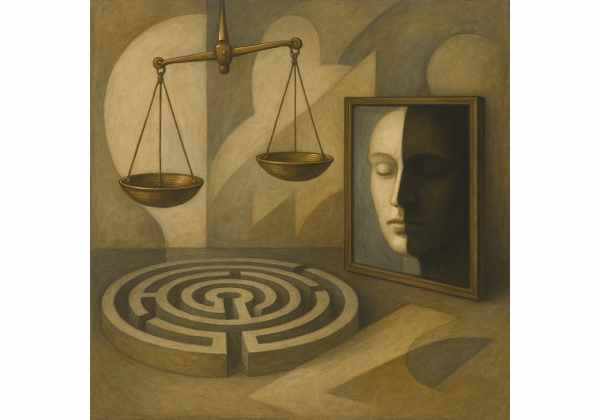
“Moral insanity” is a historical psychiatric term, not a diagnosis used in modern mental health classification. In the 1800s, it was used to describe people who appeared intellectually intact but showed serious disturbances in moral judgment, impulse control, empathy, or socially acceptable behavior. Today, clinicians would not diagnose someone with moral insanity. They would instead evaluate the person’s long-term behavior, emotional functioning, relationships, developmental history, substance use, medical conditions, and possible psychiatric disorders.
The term is still important because people may encounter it in older medical writing, legal history, family records, or discussions of psychopathy and antisocial behavior. It needs careful handling. “Moral insanity” can sound as if a person’s character or morality is the illness, but modern mental health assessment avoids that kind of judgmental framing. The central question is not whether someone is “bad,” but whether there is a persistent pattern of impaired functioning, unsafe behavior, distorted judgment, lack of empathy, impulsivity, or another condition that requires professional evaluation.
Important points to understand:
- Moral insanity is an outdated concept, not a current DSM-5-TR or ICD-11 diagnosis.
- It historically referred to severe problems with conduct, conscience, emotional control, or social responsibility despite apparently intact reasoning.
- Modern clinicians may consider antisocial personality disorder, other personality disorders, substance-related conditions, mania, psychosis, trauma-related disorders, or neurocognitive problems instead.
- Warning signs may include repeated violation of others’ rights, persistent deceitfulness, reckless disregard for safety, aggression, lack of remorse, or major changes in personality.
- Sudden behavior change, threats of harm, psychosis, severe intoxication, or inability to stay safe may require urgent professional evaluation.
Table of Contents
- What Moral Insanity Means Today
- Historical Meaning and Modern Context
- Symptoms and Behavioral Patterns
- Observable Signs and Red Flags
- Causes and Developmental Pathways
- Risk Factors That Can Increase Vulnerability
- Conditions It Can Be Confused With
- Diagnostic Context and Professional Evaluation
- Complications and Real-World Effects
What Moral Insanity Means Today
Moral insanity is best understood as a historical label for patterns that modern clinicians would assess more precisely. It is not a condition a doctor should diagnose today, and it should not be used as a casual label for someone who behaves cruelly, irresponsibly, or unlawfully.
In older psychiatric writing, the term often described a person who seemed rational in speech and memory but repeatedly behaved in ways considered morally abnormal, socially destructive, impulsive, or dangerous. The person might not have obvious delusions or hallucinations, yet their conduct appeared deeply disturbed. This made the idea especially controversial, because it sat between medicine, morality, and law.
Modern mental health practice takes a different approach. Instead of treating “immorality” as a symptom by itself, clinicians look for specific patterns:
- Is the behavior persistent or sudden?
- Did it begin in childhood, adolescence, or adulthood?
- Does the person understand reality accurately?
- Is there evidence of mania, psychosis, intoxication, withdrawal, dementia, brain injury, or another medical cause?
- Are there long-standing impairments in empathy, self-control, identity, relationships, responsibility, or respect for others’ rights?
- Is the behavior limited to one situation, or does it appear across work, family, intimate relationships, finances, and the law?
This distinction matters because a harmful act is not automatically evidence of a psychiatric disorder. Some people make destructive choices without having a mental illness. Others have a mental disorder that affects judgment, impulse control, emotional regulation, or perception of reality. Still others have a mixture of personality traits, substance use, trauma history, environmental stress, and learned behavior.
A modern personality disorder assessment focuses on long-term patterns rather than isolated incidents. It examines how a person thinks, feels, relates to others, controls impulses, responds to consequences, and functions over time. That is very different from simply asking whether a person has a “moral” problem.
The safest modern interpretation is this: moral insanity is an obsolete umbrella term that partly overlaps with later concepts such as personality disorder, psychopathy, and antisocial behavior, but it does not map neatly onto any single modern diagnosis.
Historical Meaning and Modern Context
Historically, moral insanity described a supposed disorder of moral feelings, impulses, or conduct without obvious loss of intellect. It became influential because it offered an explanation for deeply troubling behavior in people who did not appear confused, delusional, or intellectually impaired.
In the 19th century, psychiatry was still developing as a profession. Physicians and asylum doctors were trying to distinguish different forms of “madness,” including cases in which a person’s reasoning seemed intact but their behavior violated social and moral expectations. Moral insanity was one attempt to explain those cases. It was also used in legal settings, where it raised difficult questions about responsibility, confinement, and whether a person could be mentally disordered without obvious psychosis.
That history is one reason the term can be misleading today. It mixed medical observation with the moral standards of its time. Behaviors judged “perverse,” “unfit,” or “immoral” in older writing may reflect outdated social values, stigma, class bias, gender bias, or legal concerns as much as clinical reality. Modern psychiatry tries to reduce those problems by using diagnostic criteria that focus on distress, impairment, duration, developmental context, and exclusion of other explanations.
The relationship between moral insanity and modern concepts is partial, not exact.
| Term or concept | How it relates to moral insanity | Important distinction |
|---|---|---|
| Moral insanity | Historical label for disturbed moral conduct or impulses despite apparent reasoning ability | Not a current diagnosis and often shaped by 19th-century moral and legal assumptions |
| Antisocial personality disorder | May overlap when there is a long-standing pattern of violating others’ rights, deceit, aggression, irresponsibility, or lack of remorse | Requires specific diagnostic criteria, adult age, and developmental history |
| Psychopathy | Overlaps with callousness, low empathy, manipulation, and persistent antisocial behavior | Often used as a research or forensic construct, not as a general everyday label |
| Personality disorder | May describe enduring problems in self-functioning, relationships, emotional patterns, and impulse control | Not all personality disorders involve cruelty, crime, or lack of remorse |
| Legal insanity | Sometimes historically connected to debates about moral insanity | A legal standard, not the same as a psychiatric diagnosis |
This context helps prevent two common mistakes. The first is treating moral insanity as if it were simply an old name for antisocial personality disorder. The second is assuming that harmful behavior always means a person has a mental disorder. Modern assessment is more cautious than either assumption.
Symptoms and Behavioral Patterns
Because moral insanity is not a current diagnosis, it does not have official symptoms. The useful question is which behavioral patterns the old term was trying to describe and how those patterns might be understood today.
The historical descriptions often centered on a striking gap: the person could reason, speak coherently, and understand ordinary facts, yet repeatedly acted in ways that seemed reckless, cruel, exploitative, impulsive, or socially destructive. Modern clinicians would break that broad description into more specific domains.
Possible patterns include:
- Impaired empathy: seeming indifferent to others’ fear, pain, humiliation, or loss.
- Lack of remorse: minimizing harm, blaming the victim, or rationalizing mistreatment.
- Repeated deceitfulness: lying, conning, using aliases, manipulating trust, or exploiting others for gain.
- Impulsivity: acting without considering consequences, repeatedly making unsafe or destructive decisions.
- Aggression or intimidation: frequent fights, threats, coercion, cruelty, or reckless domination of others.
- Irresponsibility: repeated failure to meet work, financial, caregiving, or legal obligations.
- Violation of boundaries or rights: disregarding consent, property, safety, privacy, or agreed responsibilities.
- Poor learning from consequences: repeating harmful behavior despite punishment, loss, rejection, or legal trouble.
These patterns may appear in different ways depending on age and context. In children and adolescents, clinicians would not use the term moral insanity and would not diagnose adult antisocial personality disorder. They would look at conduct problems, developmental history, family environment, school behavior, peer relationships, trauma exposure, neurodevelopmental conditions, and emotional development. In adults, the focus shifts toward stable patterns across many settings.
A key point is duration. A single episode of cruelty, dishonesty, risky behavior, or aggression does not establish a personality disorder or any other diagnosis. Clinicians look for persistence, pervasiveness, impairment, and a pattern that cannot be better explained by a temporary episode such as intoxication, withdrawal, mania, psychosis, severe stress, or acute medical illness.
The word “symptoms” can also be tricky here. Some people with these patterns may not feel distressed by their own behavior. The distress may fall more heavily on family members, partners, coworkers, victims, or communities. That does not make the pattern less clinically important, but it changes how it is recognized. The problem may appear through repeated consequences rather than through the person’s own complaint.
Observable Signs and Red Flags
Signs that resemble the old idea of moral insanity are usually noticed through repeated behavior, not through one conversation. Family members, clinicians, employers, schools, courts, or partners may see patterns that the person denies, minimizes, or explains away.
Observable signs may include a long history of conflicts that follow a similar pattern. For example, the person may repeatedly charm others at first, break trust, exploit money or status, react aggressively when challenged, and then blame everyone else. Another sign is a mismatch between verbal understanding and actual behavior. The person may be able to describe rules, consequences, or another person’s feelings, yet still behave as if those realities do not matter.
Some red flags are especially important because they may signal immediate risk or the need for urgent assessment:
- Threats to harm oneself or another person
- Escalating violence, stalking, coercion, or intimidation
- Cruelty to animals or vulnerable people
- Fire-setting, weapon threats, or serious property destruction
- Sudden personality change, confusion, paranoia, or disorganized behavior
- New hallucinations, delusions, or severely impaired reality testing
- Severe intoxication, withdrawal, or drug-related agitation
- Reckless behavior that creates immediate danger, such as unsafe driving, assaultive behavior, or inability to supervise dependents
In these situations, the issue is not whether the historical term “moral insanity” applies. It does not. The issue is safety and accurate evaluation. Sudden changes are especially important because enduring personality patterns usually develop over time. A dramatic shift in behavior may point to a medical, neurological, substance-related, mood, or psychotic condition.
There is also a difference between private traits and public signs. A person may have low empathy, shallow emotional expression, or little guilt, but those traits become clinically significant when they contribute to harm, impairment, repeated conflict, unsafe behavior, or inability to maintain basic responsibilities.
Clinicians often need collateral information when evaluating these patterns. That means information from records, family members, prior evaluations, school history, legal history, or other reliable sources. This is not because every person being assessed is dishonest. It is because long-term patterns are hard to judge from self-report alone, especially when the behavior involves denial, blame-shifting, manipulation, fear, shame, or incomplete insight.
Causes and Developmental Pathways
There is no single cause behind the behaviors once grouped under moral insanity. Modern research points to developmental pathways shaped by temperament, genetics, early environment, trauma exposure, learning, neurobiology, peer context, and broader social conditions.
For personality-related patterns, clinicians usually think in terms of vulnerability plus development. Some people may have early temperamental traits such as low fearfulness, high novelty seeking, emotional under-reactivity, impulsiveness, irritability, or reduced sensitivity to punishment. These traits do not determine a person’s future by themselves. They may become more or less problematic depending on caregiving, attachment, discipline, social learning, trauma exposure, school environment, substance use, and opportunities for stable relationships.
Early adversity can matter. Abuse, neglect, household instability, exposure to violence, inconsistent caregiving, and chronic stress can affect emotional development and behavior. These experiences do not excuse harmful actions, and they do not mean a person will develop severe antisocial patterns. They can, however, increase risk for difficulties with trust, emotional regulation, threat perception, impulse control, and social learning. When developmental trauma is relevant, careful assessment may include trauma history and dissociation, such as in trauma-related dissociation screening when symptoms fit.
Conduct problems in childhood are another major developmental clue. Persistent aggression, theft, serious rule violations, cruelty, property destruction, or deceit in childhood may indicate a higher-risk pathway, especially when combined with callous-unemotional traits. Even then, many children with conduct problems do not develop adult antisocial personality disorder. Development can change, and risk is not destiny.
Neurobiological factors may also contribute. Research has examined differences in arousal, reward processing, threat response, executive function, emotional learning, and brain systems involved in impulse control and empathy. These findings are not simple enough to diagnose an individual from a scan or lab test. They are better understood as pieces of a complex picture.
Medical and neurological causes must also be considered, especially when behavior changes suddenly in adulthood. Brain injury, seizures, dementia, tumors, endocrine problems, infections, toxins, medication effects, intoxication, and withdrawal can all change behavior, judgment, mood, or impulse control. This is one reason broad claims about “moral character” are clinically unsafe. Similar-looking behavior can have very different causes.
Risk Factors That Can Increase Vulnerability
Risk factors do not prove that someone has a disorder, and they do not mean a person is destined to harm others. They identify circumstances or traits that may increase the likelihood of persistent antisocial, callous, impulsive, or high-risk behavior.
Relevant risk factors may include:
- A childhood history of conduct problems, especially severe or early-onset patterns
- Repeated aggression, cruelty, property destruction, deceit, or serious rule violations during youth
- Callous-unemotional traits, such as low guilt, low empathy, and reduced concern about performance or consequences
- Family history of antisocial behavior, substance use disorders, or certain personality-related difficulties
- Childhood abuse, neglect, instability, or exposure to violence
- Inconsistent, harsh, absent, or chaotic caregiving
- Association with peers who reinforce aggression, delinquency, or exploitation
- Substance use, especially when linked with impulsivity, aggression, or legal problems
- Traumatic brain injury or neurological conditions affecting impulse control or judgment
- Chronic social adversity, school failure, homelessness, unemployment, or repeated institutional involvement
Adverse childhood experiences are relevant but should be interpreted carefully. Screening for early adversity, such as ACEs screening, can help identify exposure to stressors, but it does not diagnose a personality disorder and should not be used to label someone as dangerous.
Sex and gender also require nuance. Antisocial personality disorder is diagnosed more often in men, but harmful, exploitative, or callous patterns can occur in any gender. Women and girls may be under-recognized when their behavior is less overtly violent or more relational, manipulative, coercive, or hidden within caregiving, romantic, social, or financial contexts. At the same time, stereotypes can lead to overinterpretation of assertiveness, anger, sexuality, or nonconformity as pathology. Good assessment avoids both errors.
Protective factors matter too, even though this article is focused on risk. Stable relationships, safer environments, consistent expectations, school or work connection, reduced substance exposure, and accountability can influence how traits develop. Risk is probabilistic, not fixed. A person’s history helps explain vulnerability, but it does not replace careful evaluation of current behavior and functioning.
Conditions It Can Be Confused With
Behavior once labeled moral insanity can resemble several modern conditions. Distinguishing them matters because similar outward behavior may come from very different internal states.
One major distinction is between an enduring personality pattern and an episode-based condition. Personality-related patterns are usually long-standing and appear across many situations. Mood episodes, psychotic episodes, intoxication, withdrawal, delirium, and some neurological conditions may cause more sudden or fluctuating changes.
Common areas of confusion include:
| Possible explanation | Why it may look similar | Clues that help separate it |
|---|---|---|
| Antisocial personality disorder | Repeated deceit, aggression, irresponsibility, violation of others’ rights, or lack of remorse | Long-standing pattern, adult diagnosis, evidence of conduct problems before adulthood |
| Mania or hypomania | Risk-taking, impulsive spending, sexual risk, irritability, grandiosity, or disregard for consequences | Episodic change in mood, energy, sleep, speech, and activity |
| Psychosis | Strange, unsafe, aggressive, or socially inappropriate behavior | Delusions, hallucinations, disorganized thought, impaired reality testing |
| Substance intoxication or withdrawal | Aggression, disinhibition, paranoia, recklessness, or poor judgment | Timing linked to alcohol, drugs, medications, withdrawal, or toxic exposure |
| Neurocognitive disorder or brain injury | Disinhibition, personality change, poor judgment, apathy, irritability, or social inappropriateness | New or progressive cognitive, neurological, or functional decline |
| Trauma-related disorders | Anger, emotional numbing, distrust, dissociation, impulsivity, or defensive aggression | Symptoms connected to trauma reminders, hyperarousal, avoidance, or dissociative states |
This is where screening versus diagnosis in mental health becomes important. A checklist may identify concerning traits, but diagnosis requires context, duration, impairment, exclusions, and clinical judgment.
Psychosis is a particularly important distinction. A person with antisocial traits may understand reality clearly but disregard others’ rights. A person experiencing psychosis may act on false beliefs, hallucinations, or disorganized thinking. A psychosis evaluation focuses on hallucinations, delusions, disorganization, and reality testing, which are not core features of a personality disorder.
Substance-related explanations also need careful attention. Alcohol, stimulants, sedatives, cannabis, hallucinogens, withdrawal states, and medication interactions can all alter judgment and behavior. In some evaluations, toxicology screening may help clarify whether substances are contributing to the presentation.
Diagnostic Context and Professional Evaluation
A professional evaluation is most useful when behavior is persistent, harmful, confusing, risky, or significantly different from the person’s usual pattern. The goal is not to revive the label moral insanity, but to understand what is actually happening.
A modern evaluation may include a psychiatric interview, developmental history, medical history, substance use history, mental status examination, risk assessment, and collateral information when appropriate. Clinicians may ask about childhood behavior, school problems, aggression, legal history, work functioning, relationships, financial responsibility, empathy, remorse, impulsivity, mood episodes, trauma exposure, psychotic symptoms, and neurological changes.
The evaluation may also consider whether the person’s behavior is better explained by another condition. Personality disorders should not be diagnosed solely during an acute episode of mania, psychosis, intoxication, withdrawal, delirium, or severe medical illness if those states could explain the behavior. A careful mental health evaluation helps organize these possibilities and decide what further assessment is appropriate.
Urgent evaluation may be needed when there is immediate risk. Examples include credible threats, active suicidal or homicidal thoughts, escalating violence, severe paranoia, hallucinations commanding harmful acts, extreme agitation, confusion, inability to care for basic needs, or dangerous intoxication. In those situations, the priority is safety and rapid assessment, not assigning a personality label.
It is also important to avoid amateur diagnosis. Calling someone a psychopath, sociopath, narcissist, or morally insane can intensify conflict and may be inaccurate. Patterns such as manipulation, cruelty, lying, or lack of remorse are serious, but they still require context. A person may behave harmfully because of personality pathology, substance use, learned coercive behavior, an acute psychiatric episode, neurological change, or deliberate misconduct without a mental disorder.
Legal questions require a separate lens. “Insanity” in law is not the same as mental illness in medicine, and moral insanity is not a modern legal standard. Courts use jurisdiction-specific rules about responsibility, capacity, competency, and risk. Clinical evaluation may inform legal decisions, but it does not replace them.
Complications and Real-World Effects
The patterns historically associated with moral insanity can have serious consequences, especially when they involve chronic disregard for others, impulsivity, aggression, deceit, or unsafe behavior. The effects often extend beyond the individual to partners, children, families, workplaces, victims, and communities.
Possible complications include:
- Unstable or abusive relationships
- Repeated job loss or poor work functioning
- Debt, fraud, unpaid obligations, or financial exploitation
- Legal problems, arrests, restraining orders, or incarceration
- Substance use problems and related health risks
- Physical injury from fights, accidents, reckless driving, or dangerous situations
- Social isolation after repeated betrayal or conflict
- Harm to children, dependents, partners, animals, or vulnerable people
- Increased risk of suicide, homicide, accidental death, or premature mortality in some severe antisocial patterns
Complications can also appear as diagnostic delay. If behavior is dismissed only as bad character, a medical or psychiatric cause may be missed. If it is excused too quickly as illness, personal responsibility and victim safety may be minimized. Both errors can cause harm. A balanced view recognizes that mental health assessment can explain patterns without erasing consequences.
Family members and partners may experience confusion because the person can appear composed, intelligent, charming, or convincing in some settings while behaving very differently in private. This split presentation can make others doubt their own perceptions. Documentation of repeated incidents, timelines, and objective consequences often gives a clearer picture than isolated impressions.
For clinicians, the complications include risk-assessment challenges. A person may deny intent, minimize harm, or present well during an interview. That is why collateral information, prior records, and behavior over time can be crucial. Risk is not based only on what someone says in the moment; it is also based on pattern, escalation, access to means, recent stressors, substance use, past violence, and current mental state.
For the person being evaluated, complications may include shame, stigma, mistrust, and resistance to assessment. The term moral insanity can worsen that stigma because it sounds like a condemnation of the whole person. Modern language is more precise and less moralizing: specific behaviors, specific impairments, specific risks, and specific diagnostic possibilities.
References
- Clinical descriptions and diagnostic requirements for ICD-11 mental, behavioural and neurodevelopmental disorders (CDDR). 2024 (Guideline)
- Antisocial Personality Disorder. 2024 (Review)
- Personality Disorder. 2024 (Review)
- Personality Disorder Diagnoses in ICD-11: Transforming Conceptualisations and Practice. 2022 (Review)
- Callous and Unemotional Traits as Precursors to the Development of Female Psychopathy. 2023 (Systematic Review)
- Moral insanity and psychological disorder: the hybrid roots of psychiatry. 2017 (Review)
Disclaimer
This content is for general educational purposes only. Moral insanity is not a modern diagnosis, and concerns about severe behavior change, violence risk, psychosis, substance-related symptoms, or possible personality disorder should be assessed by a qualified medical or mental health professional. This article is not a substitute for professional medical advice, diagnosis, or treatment.
Thank you for taking the time to read about a sensitive and often misunderstood topic; sharing this article may help others approach the subject with more accuracy and less stigma.