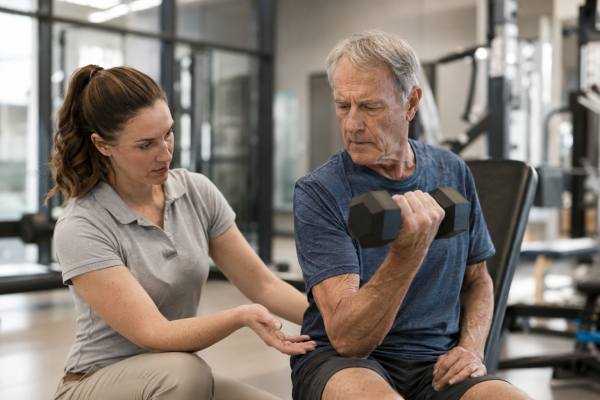
Muscle loss in men often starts quietly. A shirt fits looser in the shoulders, stairs feel harder, grip feels weaker, or a usual workout no longer produces the same results. Some loss of muscle size and power is common with age, but sarcopenia is more than “getting older.” It means muscle strength, muscle amount, and physical performance have dropped enough to affect health, independence, injury risk, and daily life.
Men may notice the change after 40, more clearly after 50, and especially after illness, surgery, long periods of sitting, weight loss, poor sleep, or low protein intake. The good news is that muscle can respond at almost any age. Rebuilding strength usually takes a combination of progressive resistance training, enough protein, better recovery, medical evaluation when symptoms are unexplained, and patience over months rather than days.
Table of Contents
- What Sarcopenia Means in Men
- Early Signs of Muscle Loss Men Often Miss
- Main Causes of Muscle Loss in Men
- When Muscle Loss Needs Medical Evaluation
- How to Rebuild Strength Safely
- Protein, Nutrition, and Recovery for Muscle Repair
- Common Mistakes That Slow Muscle Regain
- How Long It Takes to Regain Strength
What Sarcopenia Means in Men
Sarcopenia is a muscle disease linked to loss of muscle strength, muscle mass, and physical function. In everyday terms, it means the body has less usable muscle power for standing, walking, lifting, balancing, climbing, and recovering from stress.
Muscle size matters, but strength matters even more. A man can look fairly normal in clothes and still have weak grip strength, poor leg power, slow walking speed, or trouble rising from a chair. This is why sarcopenia is not judged only by appearance or weight.
Doctors and researchers often look at three areas:
| Area | What it means | Everyday example |
|---|---|---|
| Muscle strength | How much force your muscles can produce | Weaker grip, harder time lifting groceries, difficulty standing from a low chair |
| Muscle mass | How much skeletal muscle the body has | Thinner arms or legs, smaller shoulders, looser clothing despite stable weight |
| Physical performance | How well strength works during movement | Slower walking, poor balance, more effort climbing stairs |
Men often focus on biceps, chest, or waist size, but sarcopenia usually shows up first in function. The legs, hips, back, and grip are especially important because they affect mobility and fall risk. Losing power in the thighs and glutes can make stairs, getting out of a car, and carrying weight feel harder.
Sarcopenia can happen alongside weight gain. A man may lose muscle while gaining belly fat, so the scale stays the same or even rises. This combination is sometimes called sarcopenic obesity. It can hide muscle loss because body weight looks stable, even though body composition has changed.
Muscle loss is also different from temporary soreness or a short break from training. Missing the gym for two weeks may reduce performance, but sarcopenia is a broader, more persistent decline. It usually builds over months or years, although illness, injury, hospitalization, or rapid weight loss can speed it up.
For men in midlife and later life, muscle is not only about appearance. It helps regulate blood sugar, supports joints, protects bones, improves balance, supports metabolism, and helps the body recover from illness. Preserving strength is one of the main ways men maintain independence as they age.
Early Signs of Muscle Loss Men Often Miss
The first warning sign is often not a visible change in the mirror. It is a task that suddenly feels harder than it should. A man may still work, drive, and exercise, but small losses in strength begin to show up during daily routines.
Common early signs include:
- Getting tired faster during yard work, home repairs, or walking uphill
- Needing to push off with the hands to rise from a chair
- Losing grip strength when opening jars or carrying bags
- Feeling less steady on uneven ground
- Taking longer to climb stairs
- Shrinking arms, thighs, chest, or shoulders
- Slower walking pace without choosing to slow down
- More soreness after normal activity
- Trouble maintaining workout weights that used to feel manageable
- Unintentional weight loss or a softer body shape despite similar weight
Leg weakness deserves special attention. Men may blame knee pain, aging, or “being out of shape,” but weak thigh and hip muscles often drive the problem. If standing from a chair, climbing stairs, or stepping onto a curb feels harder, lower-body strength may be slipping.
Grip strength is another useful clue. A weaker handshake is not a diagnosis, but grip strength often reflects overall muscle strength. Trouble carrying grocery bags, holding tools, or opening tight lids may signal a wider decline.
Balance changes can also point to muscle loss. Sarcopenia weakens the muscles that help stabilize the hips, ankles, and trunk. Men may notice they reach for railings more often, avoid ladders, or feel less confident walking on wet grass, gravel, or stairs.
Some signs are easy to confuse with fatigue, low motivation, or normal aging. For example, a man who stops walking after dinner because he feels “worn out” may actually be losing endurance and leg strength. A man who avoids lifting luggage may be adjusting his life around weakness without naming it.
Muscle loss can also affect confidence. Men may stop joining physical activities because they feel embarrassed by reduced strength or slower movement. This can create a loop: less activity leads to more weakness, which leads to even less activity.
A simple home check is the chair rise. Sit in a firm chair with arms crossed over the chest, then stand and sit five times at a safe, controlled pace. Needing the arms, feeling very unstable, or taking much longer than expected is a reason to pay attention. It is not a formal diagnosis, but it can reveal declining leg power.
Another useful check is whether your normal loads have changed. If the same dumbbells, bags of mulch, suitcase, or work equipment feel much heavier than they did a year ago, the issue may be muscle strength rather than willpower.
Main Causes of Muscle Loss in Men
Muscle loss usually has more than one cause. Aging plays a role, but inactivity, poor recovery, illness, nutrition gaps, hormones, medications, and weight changes often matter just as much.
Aging and lower muscle-building signals
As men age, the body becomes less efficient at building and repairing muscle. Muscle protein synthesis, the process of creating new muscle tissue, does not respond as strongly to small protein meals or light activity. Fast-twitch muscle fibers, which help with power and quick movement, tend to decline.
This does not mean muscle growth stops. It means the signal has to be stronger and more consistent. A few short walks are good for health, but they are usually not enough to preserve muscle size and strength. Resistance training becomes more important with each decade.
Inactivity and too much sitting
Muscle is expensive tissue for the body to maintain. If it is not used, the body gradually reduces it. Desk work, long commutes, screen time, injury, retirement, and fewer physical chores can all lower the daily stimulus muscles need.
Even men who exercise may sit enough to lose strength over time. A few cardio sessions per week may not fully offset low resistance training, especially for the legs and hips. Men who want a structured approach can use strength training after 40 principles to build muscle while protecting joints and recovery.
Low protein or uneven protein intake
Many men eat enough calories but not enough high-quality protein spread across the day. A pastry for breakfast, a light lunch, and one large dinner may leave muscles underfed for much of the day.
Older adults often need more attention to protein because their muscles respond less strongly to small doses. Protein needs vary by body size, kidney health, training level, and medical conditions, but many active or older men do better with protein at each meal rather than saving most of it for dinner.
Rapid weight loss
Losing weight can improve blood pressure, blood sugar, joint pain, and energy, but rapid weight loss can also reduce lean mass if protein and resistance training are not in place. This matters for men using aggressive diets, appetite-suppressing medications, or long fasting windows.
The goal is not only to lose pounds. It is to lose mostly fat while preserving or building muscle. Men with belly fat or metabolic risk may benefit from weight loss, but the plan should protect strength, especially during midlife and later life. For men working on body composition, reducing visceral belly fat and preserving muscle should happen together.
Hormonal changes
Testosterone, thyroid hormone, insulin, growth hormone signaling, and vitamin D status can all influence muscle health. Low testosterone can contribute to low energy, reduced training drive, lower libido, mood changes, and reduced muscle maintenance, but it is not the only explanation for weakness.
Men should avoid assuming every strength problem is testosterone-related. Poor sleep, alcohol, depression, undertraining, low protein, medication effects, and chronic disease can look similar. When symptoms overlap, testing can clarify whether low testosterone symptoms are part of the picture.
Chronic disease and inflammation
Diabetes, kidney disease, heart failure, chronic lung disease, cancer, inflammatory conditions, and long infections can all speed muscle loss. These conditions may reduce appetite, increase inflammation, limit activity, or change how the body uses protein and energy.
Type 2 diabetes is especially important because muscle helps clear glucose from the bloodstream. Less muscle can worsen insulin resistance, and insulin resistance can make muscle maintenance harder. Men with rising blood sugar should think of strength training as part of metabolic health, not only fitness.
Poor sleep and sleep apnea
Muscle repair happens during recovery, not just during workouts. Short sleep, fragmented sleep, night shift work, heavy alcohol use, and untreated sleep apnea can reduce recovery and training quality.
Sleep apnea is common in men, especially with snoring, belly weight, morning headaches, high blood pressure, or daytime sleepiness. A man who trains hard but wakes up exhausted may not be recovering well. Sleep evaluation may be needed when fatigue, snoring, and poor performance cluster together.
Alcohol, smoking, and medications
Heavy alcohol intake can interfere with sleep, hormones, liver health, appetite, balance, and muscle protein synthesis. Smoking affects circulation and lung capacity, making training and recovery harder.
Some medications can contribute to weakness, muscle pain, fatigue, or falls. Examples may include long-term corticosteroids, some sedatives, certain cancer treatments, some drugs that affect appetite, and medications that cause dizziness or low blood pressure. Never stop prescribed medication on your own, but ask a clinician whether your medication list could be affecting strength or balance.
When Muscle Loss Needs Medical Evaluation
Gradual strength loss after years of inactivity is common, but unexplained or fast muscle loss should be checked. The concern is higher when weakness appears suddenly, affects one side, comes with pain, or occurs with weight loss, fever, numbness, or major fatigue.
Make a medical appointment if you notice:
- Unintentional weight loss
- Rapid loss of muscle size over weeks or a few months
- New trouble walking, climbing stairs, or rising from a chair
- Repeated falls or near-falls
- Severe fatigue that does not match activity level
- New muscle pain, cramps, or weakness after starting medication
- Numbness, tingling, or one-sided weakness
- Loss of appetite or digestive problems
- Shortness of breath, chest discomfort, or swelling in the legs
- Weakness after hospitalization, surgery, infection, or cancer treatment
Urgent care is needed for sudden one-sided weakness, facial drooping, trouble speaking, severe chest pain, severe shortness of breath, loss of bladder or bowel control with weakness, or inability to walk normally.
A clinician may review your weight history, diet, training pattern, sleep, medications, alcohol intake, mood, chronic diseases, and fall history. The exam may include grip strength, gait speed, balance, chair rise testing, and muscle measurements. In some cases, body composition tests such as DXA, bioelectrical impedance, CT, or MRI may be used, though many men start with simpler functional testing.
Lab work depends on symptoms. Common checks may include a complete blood count, metabolic panel, thyroid tests, vitamin D, B12, A1C or fasting glucose, inflammatory markers, kidney and liver markers, and testosterone testing when symptoms fit. A broader annual physical for men can also identify blood pressure, cholesterol, blood sugar, and other risks that affect training safety.
Do not ignore weakness by calling it laziness. Loss of strength can be a sign of undertraining, but it can also be a clue to anemia, thyroid disease, diabetes, low testosterone, depression, medication effects, nerve disease, cancer, or inflammatory illness.
A physical therapist can help when pain, balance problems, arthritis, surgery recovery, or fear of falling makes exercise difficult. Men who have not trained in years often do better with a guided start than with a random high-intensity program.
How to Rebuild Strength Safely
The best exercise for sarcopenia is progressive resistance training. “Progressive” means the muscles face a little more challenge over time. That challenge can come from more weight, more repetitions, slower control, better range of motion, more sets, or harder exercise variations.
Walking is excellent for the heart, blood sugar, mood, and endurance, but it usually does not provide enough resistance to rebuild lost muscle. Men need some form of loaded work: weights, machines, resistance bands, bodyweight exercises, cable machines, weighted carries, or supervised functional training.
A beginner plan can start with two or three full-body sessions per week. The goal is not to destroy the muscles. It is to practice good movement, build consistency, and add challenge gradually.
A simple full-body structure includes:
- Squat or sit-to-stand pattern
- Hip hinge pattern, such as a deadlift variation or bridge
- Push pattern, such as a chest press or incline push-up
- Pull pattern, such as a row or pulldown
- Carry or grip work
- Core and balance work
For a man starting from low strength, this might look like chair sit-to-stands, wall push-ups, band rows, step-ups, light dumbbell deadlifts, and farmer carries with manageable weights. For a trained man, it may include squats, Romanian deadlifts, bench presses, rows, pulldowns, lunges, and loaded carries.
A practical starting dose is 1 to 3 sets of 8 to 12 controlled repetitions for major movements. The last few reps should feel challenging but not reckless. Pain in joints, sharp pain, chest pain, dizziness, or unusual shortness of breath means the session needs to stop or be adjusted.
Progress can be small. Add one or two reps, a little weight, or an extra set once the current level feels controlled. Men often get hurt when they try to train like their younger self on day one. Tendons, joints, balance, and recovery need time to catch up.
Lower-body training is especially important. Many men prefer upper-body work because it feels familiar, but leg strength protects independence. Squats, step-ups, lunges, deadlift variations, leg presses, hamstring curls, calf raises, and loaded carries help with stairs, walking speed, balance, and fall prevention.
Power also matters. Power is strength used quickly, such as catching yourself when you trip or standing up briskly. Older men should build basic strength first, then add safe power work if appropriate. Examples include faster sit-to-stands, light medicine ball throws, controlled step-ups, or supervised low-impact power exercises.
Cardio still belongs in the plan. Aim for regular walking, cycling, swimming, or other aerobic activity that fits your joints and fitness level. Cardio improves circulation, endurance, and metabolic health. The mistake is using cardio as a replacement for resistance training when the main problem is muscle loss.
Men with heart disease, severe high blood pressure, dizziness, neuropathy, significant arthritis, recent surgery, or repeated falls should get guidance before pushing intensity. The right plan may start with physical therapy, machines, water exercise, or supervised sessions.
Protein, Nutrition, and Recovery for Muscle Repair
Muscle rebuilding requires training plus raw materials. Lifting creates the signal. Protein, calories, sleep, and recovery help the body respond.
Protein needs are individual, but many men trying to preserve or rebuild muscle aim for a protein source at each meal. Common protein foods include eggs, Greek yogurt, cottage cheese, fish, chicken, turkey, lean beef, tofu, tempeh, lentils, beans, and protein powders when whole-food intake is difficult.
A useful meal target for many men is 25 to 40 grams of protein per meal, adjusted for body size and medical needs. Larger men and men doing harder training may need more. Men with kidney disease or complex medical conditions should ask a clinician or dietitian before increasing protein significantly.
Protein quality matters, but the full day matters too. Animal proteins are rich in essential amino acids, including leucine, which helps trigger muscle protein synthesis. Plant-based diets can also support muscle, but may require larger portions, variety, or careful planning to reach enough total protein and essential amino acids.
Men who struggle to eat enough may benefit from a simple shake, especially after training or as part of breakfast. A guide to protein powder for men can help with label checks, added sugar, serving size, and safety concerns.
Calories also matter. A man in a steep calorie deficit may lose muscle even with decent protein. If fat loss is needed, a moderate deficit with resistance training is usually better for muscle than crash dieting. During illness recovery or major weakness, the first goal may be adequate calories and protein, not aggressive weight loss.
Carbohydrates help training performance. Men sometimes cut carbs so low that workouts suffer. Whole grains, potatoes, fruit, beans, and vegetables can support energy while adding fiber and micronutrients. Fat is also important for hormone health and calorie adequacy, especially from sources such as olive oil, nuts, seeds, avocado, and fatty fish.
Creatine monohydrate is one of the better-studied sports supplements for strength and power. It is not a testosterone booster, and it does not replace training, but it may help some men train harder and gain lean mass when combined with resistance exercise. Men with kidney disease or complex medical conditions should ask a clinician first. For a deeper look at benefits and myths, see creatine for men.
Vitamin D matters when levels are low. Deficiency can affect bone health and may contribute to muscle weakness. Testing is useful because taking high doses without knowing your level can be unsafe. Food alone may not correct a major deficiency.
Recovery is not optional. Muscles need rest days, sleep, hydration, and enough food to adapt. Men who train hard but sleep five hours, drink heavily, and skip breakfast often blame age when the real problem is poor recovery.
A strong muscle-building day might look like this:
- Protein-rich breakfast, such as eggs and Greek yogurt or tofu scramble
- Walk or light activity during the day
- Full-body resistance training
- Protein and carbohydrate within a normal meal after training
- Hydration through the day
- Seven to nine hours of sleep opportunity
The pattern matters more than perfection. A consistent routine followed for months beats an extreme plan followed for two weeks.
Common Mistakes That Slow Muscle Regain
The most common mistake is doing exercise that is too easy to change muscle. Light activity is better than sitting, but muscles need a challenge. If every set feels effortless, the body has little reason to build strength.
Another mistake is doing only cardio. Men who walk daily may still lose upper-body strength, grip, hip power, and fast-twitch muscle. Walking should stay, but it should be paired with resistance training.
Training too hard too soon is the opposite problem. A man who has not lifted in years may try heavy squats, high-volume circuits, or intense boot-camp workouts. The result is often joint pain, back strain, tendon irritation, or quitting. Starting lower and progressing steadily is not weakness; it is smart programming.
Poor exercise form can also limit results. Half-reps, bouncing weights, holding the breath too long, or rushing movements may raise injury risk. Controlled range of motion, steady breathing, and good posture matter more than lifting the biggest weight in the room.
Skipping legs is a major issue. Upper-body training may improve appearance, but lower-body weakness is more closely tied to mobility problems. Men should train thighs, hips, glutes, calves, and trunk regularly.
Under-eating protein slows repair. Some men eat “clean” but too little. Others eat plenty of calories from snacks, alcohol, or refined carbs but miss protein. Muscle needs enough total intake and enough protein distribution across the day.
Relying on testosterone, supplements, or “boosters” without fixing training and recovery is another trap. Testosterone therapy may be appropriate for some men with confirmed deficiency and symptoms, but it is not a general sarcopenia treatment. It also requires medical monitoring and can affect fertility, red blood cell count, prostate monitoring, acne, sleep apnea, and other issues. Men considering hormone therapy should understand testosterone replacement therapy monitoring before making decisions.
Ignoring pain is different from working hard. Muscle effort is expected. Sharp joint pain, nerve symptoms, chest pressure, faintness, or pain that changes your walking pattern needs attention. Training should build capacity, not create new disability.
Another common mistake is changing the plan every week. Muscle responds to repeated practice. A man needs enough consistency to improve the same movement patterns over time. Switching constantly makes it harder to track progress and overload safely.
Alcohol can quietly erase progress. A few drinks may not ruin a program, but heavy or frequent drinking can reduce sleep quality, increase fall risk, worsen blood pressure, add calories, and interfere with recovery. Men noticing weakness, poor sleep, or belly weight should be honest about alcohol patterns.
Finally, many men stop as soon as they feel better. Sarcopenia prevention is not a 30-day project. Muscle needs lifelong maintenance. Once strength improves, the plan can become simpler, but it should not disappear.
How Long It Takes to Regain Strength
Strength often improves before muscle size visibly changes. In the first few weeks, the nervous system gets better at recruiting muscle fibers. Movements feel smoother, balance improves, and weights feel more controlled. This is real progress even if the mirror looks the same.
A realistic timeline looks like this:
| Timeframe | What may improve | What to focus on |
|---|---|---|
| Weeks 1–2 | Less fear of movement, better technique, mild soreness | Learning form, starting easy, avoiding injury |
| Weeks 3–6 | Better coordination, stronger grip, easier chair rises or stairs | Adding reps or small weight increases |
| Weeks 8–12 | Clearer strength gains, better endurance, possible body composition changes | Consistent progressive training and protein intake |
| 3–6 months | Visible muscle changes, improved function, better confidence | Maintaining routine and adjusting exercises as needed |
| 6–12 months | Major improvements in strength, mobility, and resilience | Long-term programming and relapse prevention |
Men recovering from illness, surgery, hospitalization, or long inactivity may need a slower timeline. Progress may come in daily function before gym numbers. Standing up without using the hands, carrying groceries, walking faster, or climbing stairs with less effort are meaningful wins.
Track progress in more than one way. Useful measures include workout weights, reps, walking pace, chair-rise ability, waist circumference, body weight, energy, balance, and how daily tasks feel. Photos and clothing fit can help, but they should not be the only measures.
Plateaus are normal. If progress stalls for several weeks, look at the basics: Are you training each major muscle group? Are sets challenging? Are you eating enough protein? Are you sleeping enough? Are you recovering between sessions? Are pain or medications limiting effort?
Men over 50 should also think beyond muscle size. The goal is to build a body that can carry, climb, push, pull, balance, and recover. That type of strength supports long-term independence and fits naturally into broader men’s health after 50 priorities.
The most durable plan is one you can keep. Some men prefer gyms and barbells. Others do better with machines, bands, home dumbbells, classes, or physical therapy. The method can vary. The principles stay the same: challenge the muscles, progress gradually, eat enough protein, recover well, and check medical causes when weakness does not make sense.
References
- Position statement: Evidence-Based Exercise Guidelines for Sarcopenia in Older Adults: Insights from the Korean Working Group on Sarcopenia 2025 (Position Statement)
- Dietary Protein and Physical Exercise for the Treatment of Sarcopenia 2024 (Review)
- The effectiveness of protein supplementation combined with resistance exercise programs among community-dwelling older adults with sarcopenia: a systematic review and meta-analysis 2024 (Systematic Review)
- Singapore Clinical Practice Guidelines For Sarcopenia: Screening, Diagnosis, Management and Prevention 2022 (Guideline)
- Sarcopenia 2023 (Review)
- How can strength training build healthier bodies as we age? 2022 (Official Resource)
Disclaimer
This article is educational and does not replace care from a qualified health professional. Men with rapid muscle loss, unexplained weakness, falls, major fatigue, pain, or symptoms after illness, surgery, or medication changes should seek medical evaluation. Exercise, protein intake, supplements, and hormone treatment should be adjusted for personal health conditions, kidney function, heart risk, medications, and mobility limitations.