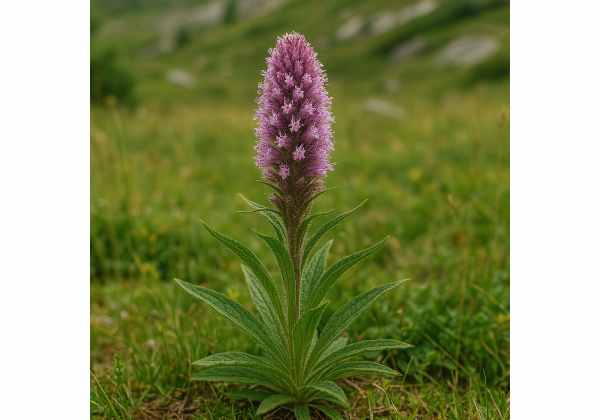
Nard, also called spikenard or jatamansi, is an aromatic Himalayan herb prized for its rhizome and root. It has a long history in Ayurveda, Tibetan medicine, and perfumery, where it is associated with calm, clarity, and deep fragrance. Modern interest in nard centers on its sesquiterpenes and volatile compounds, especially molecules such as jatamansone and nardosinone that may influence stress pathways, sleep, neuroinflammation, and circulation. That sounds promising, but the evidence needs careful reading. Much of the excitement comes from laboratory and animal research, while human studies remain limited and use different preparations. Even so, nard stands out as a plant with real pharmacological interest, especially for relaxation, mood balance, and brain-health research. It is also a plant that deserves thoughtful sourcing and cautious dosing, because wild populations have faced heavy harvesting pressure and commercial products vary widely in strength. A useful nard guide therefore has to do two things well: explain what the herb may offer, and show where the evidence is still early or incomplete.
Quick Overview
- Nard is most strongly associated with calming, sleep-supportive, and neuroprotective effects.
- Its best-known active compounds include sesquiterpenes such as jatamansone and nardosinone.
- Small human studies have used about 3 g/day of powdered rhizome in divided doses.
- People who are pregnant, breastfeeding, or taking sedatives or blood-pressure medicine should avoid self-treatment.
- Essential oil and powdered rhizome are not interchangeable for dosing or safety.
Table of Contents
- What nard is and why it still matters
- Key compounds and how they may work
- What benefits look most plausible
- Traditional uses and modern forms
- Dosage, timing, and how to choose a product
- Safety, side effects, and interactions
- Common mistakes when using nard
What nard is and why it still matters
Nard comes from Nardostachys jatamansi, a perennial, aromatic herb native to high-altitude Himalayan regions. The medicinal part is mainly the rhizome and root, which carry the plant’s distinctive scent and much of its traditional therapeutic reputation. In older texts and trade language, it is often called spikenard, jatamansi, or Indian nard. That mix of names matters because people sometimes confuse it with related calming herbs, substitute materials, or perfumery ingredients that are not botanically identical.
Part of nard’s appeal is cultural as much as pharmacological. It has been valued for centuries in Ayurvedic medicine as a medhya and calming herb, often discussed in relation to sleep, mental steadiness, emotional excess, and nervous-system balance. It also appears in Tibetan, Chinese, and regional Himalayan traditions. At the same time, it has a long fragrance history. Nard oil has been used in incense, sacred formulations, hair oils, and aromatic preparations, which helps explain why modern consumers meet it in both supplement and wellness markets.
Botanically, nard has also carried some taxonomic confusion. Older literature may place it in Valerianaceae, while more recent botanical treatment places it within Caprifoliaceae. Readers will also see it compared with valerian-type herbs because of overlapping traditional uses around calm and sleep. That comparison can be useful, but it should not erase the fact that nard has its own chemistry, aroma profile, and research history. For readers who want a clearer sense of how another classic calming root is discussed, valerian sleep support makes a useful reference point.
Nard still matters today for three main reasons. First, it remains an important medicinal plant in South Asian and Himalayan traditions. Second, its phytochemistry keeps attracting researchers interested in neuroprotection, inflammation, and mood-related pathways. Third, it sits at the intersection of herbal medicine and conservation. Commercial demand has historically pressured wild populations, so quality, legality, and sustainability are not side notes. They are part of responsible use.
That combination of history, aroma, pharmacology, and sourcing concerns is why nard deserves a careful modern guide. It is not just a romantic old-world herb. It is a serious medicinal plant candidate with real therapeutic interest, a limited but growing human evidence base, and a need for better standardization. Understanding all three makes the difference between informed use and idealized use.
Key compounds and how they may work
Nard’s medicinal interest begins with its chemistry. The herb is especially rich in sesquiterpenes, a class of compounds that appears repeatedly in discussions of its neurological, anti-inflammatory, and cardiovascular potential. Among the most frequently mentioned constituents are jatamansone, also called valeranone in some contexts, and nardosinone. These are not the only active molecules in the plant, but they help explain why nard keeps showing up in pharmacological reviews.
Jatamansone has been linked in preclinical literature with calming, antihypertensive, anti-arrhythmic, and antimicrobial interest. Nardosinone has drawn attention for anti-inflammatory and neuroprotective pathways and for possible effects on neural growth and cellular signaling. Researchers also discuss volatile oil fractions, lignans, coumarin-like constituents, phenolic compounds, and antioxidant components that may contribute to the plant’s broader effects. In real life, that means nard is probably not a one-molecule herb. It appears to work more like a multi-compound botanical with overlapping actions.
How might those actions matter in the body? The most plausible mechanisms cluster around four themes.
- CNS calming and sleep modulation
Animal studies suggest nard may reduce nervous-system overactivity and influence pathways related to GABA signaling and sedative tone. That does not prove it works like a sleeping pill, but it helps explain its traditional use for insomnia, agitation, and nervous tension. - Antioxidant and neuroprotective effects
Nard compounds may help reduce oxidative stress and inflammatory signaling in models of brain injury and neurodegeneration. This is one reason the herb is often discussed in relation to memory, resilience, and age-related neurological decline. - Anti-inflammatory signaling
Certain isolated compounds, especially nardosinone-related fractions, have shown anti-inflammatory effects in experimental systems. That opens the door to research beyond mood and sleep. - Cardiovascular support
Some data suggest nard may influence blood pressure, stress-related autonomic tone, and cardiac protection, though this area is not yet strong enough for broad clinical claims.
This phytochemical pattern puts nard in the company of other “brain and stress” herbs whose value comes from layered activity rather than a single dramatic effect. A useful comparison is bacopa for memory and focus, another herb where active compounds and mechanism matter as much as the traditional label. With nard, the chemistry is interesting enough to justify ongoing research, but not standardized enough to make all commercial products equivalent. The more concentrated or refined the preparation, the less safe it is to assume that a traditional dose applies directly.
What benefits look most plausible
The most helpful way to discuss nard’s benefits is to separate traditional reputation, preclinical evidence, and human evidence. Those layers overlap, but they are not equally strong.
The best-supported traditional theme is calming support. Nard has long been used for insomnia, emotional agitation, hysteria-like states in older medical language, and stress-related nervous complaints. Modern animal work fits that tradition fairly well. Experimental studies suggest central nervous system depressant effects, improved sleep onset in animals, antioxidant activity in brain tissue, and mechanisms that may reduce neuroinflammation. This makes sleep and stress the most plausible starting point for understanding the herb.
Mood and depression are also areas of real interest, but the evidence is less settled. Preclinical work points toward antidepressant-like activity and stress-buffering effects, and recent clinical interest has expanded into adjunctive psychiatric use. Still, this is not enough to treat nard as a stand-alone answer for depression or anxiety disorders. At most, it suggests that the herb may have a future role as an adjunct in carefully designed formulations or supervised integrative care.
Cognitive and neuroprotective claims should also be phrased with care. Nard is often described online as a memory herb or brain tonic. That language is not baseless, but much of it rests on animal data, antioxidant models, and compound-level studies rather than robust human trials. A more accurate statement is that nard is being studied for neuroprotective and cognition-related potential, especially where oxidative stress, inflammation, and sleep disruption overlap.
Cardiovascular benefit is one of the more interesting human-facing areas. A small randomized study in essential hypertension found reduced systolic and diastolic blood pressure with a powdered nard preparation over four weeks. That is worth noticing, but it is not enough to replace standard hypertension care or to assume every nard product lowers blood pressure safely. Product form, dose, patient selection, and duration all matter.
So which benefits look most plausible right now?
- support for calm and evening relaxation
- gentle sleep support rather than rapid sedation
- possible adjunctive value in stress-linked mood imbalance
- promising but still early neuroprotective and cognitive interest
- possible blood-pressure support in selected contexts
What should readers avoid? Oversized claims about dementia reversal, guaranteed antidepressant action, or universal sleep effects. Nard is better understood as a plant with credible calming and neurobiological potential than as a fully established clinical herb. If your main goal is day-to-day stress support, a better-studied mainstream comparison may be ashwagandha for stress and sleep. Nard remains more specialized, more aromatic, and somewhat less standardized in routine practice.
Traditional uses and modern forms
Traditional nard use is broad, but it tends to circle back to the same core themes: calming the mind, settling disturbed sleep, supporting the nervous system, and lending fragrance to oils, incense, and ritual preparations. In classical Ayurvedic use, the rhizome appears in powders, decoctions, medicated oils, and multi-herb formulas. It is often grouped with herbs used for mind-body balance rather than for quick symptomatic suppression. That traditional framing still matters because it shapes how nard is best used today: usually as a measured, supportive herb rather than an emergency herb.
Modern use falls into four main forms.
- Powdered rhizome
This is the most traditional format and the one used in several small human studies. It is often taken with warm water, milk, or honey depending on the tradition and the person’s constitution or digestive tolerance. - Capsules and extracts
These are the most practical for modern consumers. The problem is variability. Some products use plain powdered root, some use concentrated extracts, and many provide very little information about extraction ratio or marker compounds. - Essential oil
Nard oil is valued in perfumery and aromatherapy for its heavy, earthy, resinous scent. Aromatic use makes sense. Internal use is much less straightforward and should not be assumed safe just because the oil is “natural.” - Topical and hair-oil applications
In traditional practice, nard-containing oils may be used for scalp massage, relaxation rituals, or head applications designed to cool and settle the system. Modern wellness products often borrow that model.
The question of “how to use it” depends on the goal. For evening calm, people usually prefer capsules, powder, or aromatic oil diffusion. For traditional restorative routines, scalp or head oiling may be part of the experience. For supplement buyers, the biggest issue is not creativity but consistency. Many products are sold more on mystique than on standardization.
A useful comparison here is lavender for calming aroma. Both herbs have strong fragrance identities and a reputation for relaxation, but with nard, sourcing and formulation variability are bigger concerns. That means buyers should be stricter about ingredient transparency, plant-part labeling, and responsible sourcing.
In practice, the most grounded modern use for nard is as a cautious calming herb in a clearly labeled product, ideally from a company that identifies the botanical name, plant part, extraction style, and origin. The less transparent the label, the less confidence you should have in either its benefit or its safety.
Dosage, timing, and how to choose a product
Nard dosage is less standardized than many people expect. That is partly because studies have used different preparations and partly because traditional systems do not always translate neatly into modern capsule labels. The safest way to think about nard dosing is by form, goal, and evidence level.
In small human research, powdered rhizome has been used at about 3 g/day in divided doses for hypertension over four weeks. Older insomnia research used substantially higher divided amounts of powder, which shows how wide the traditional dose landscape can be. That does not mean all users should jump to high daily intakes. It means the preparation matters, the clinical context matters, and concentrated extracts cannot be treated as dose-equivalent to plain powder.
A careful consumer framework looks like this:
- Powdered rhizome: traditional and simple, but bulky and harder to standardize
- Capsules with plain powder: easier to measure, often closer to traditional use
- Extract capsules: more convenient, but only if the extraction ratio and standardization are disclosed
- Essential oil: best reserved for aroma or topical products, not casual internal dosing
Timing should match purpose. For calming or sleep-oriented use, nard makes the most sense in the evening or late afternoon. Morning use may suit some people, but it is less predictable if the product has noticeable sedative effect. Duration also matters. Herbs with subtle nervous-system effects usually need days to weeks of consistent use rather than a single dramatic dose. A reasonable trial window is often two to four weeks, with close attention to sleep quality, morning grogginess, mood steadiness, and blood-pressure changes if relevant.
When choosing a product, look for:
- the full botanical name, Nardostachys jatamansi
- clear labeling of root or rhizome content
- an explanation of whether it is powder or extract
- transparent dose per serving
- sourcing information that avoids vague “wildcrafted Himalayan herb” marketing
That last point is important. Romantic sourcing language is not the same as ethical sourcing. Because nard has faced heavy collection pressure, reputable cultivation or verified legal sourcing is preferable.
For people comparing nard with other bedtime herbs, chamomile for evening calm usually offers a gentler first step. Nard belongs later in the decision tree, especially for readers specifically interested in traditional Ayurvedic nervous-system herbs rather than general herbal sleep support.
Safety, side effects, and interactions
Nard’s safety profile is not alarming, but it is incomplete. That means the right approach is cautious rather than fearful. Small studies and animal work do not suggest dramatic toxicity at commonly studied doses, yet long-term human data are limited, extract quality varies, and interaction risk is easy to underestimate.
The most plausible side effects are related to its calming profile. These may include:
- drowsiness or mental slowing
- excessive relaxation at higher doses
- lightheadedness
- mild digestive upset
- headache in sensitive users
- lowered alertness the next morning if taken too late or too heavily
Because nard may have sedative or CNS-depressant activity, it should be treated carefully alongside alcohol, sleep medicines, benzodiazepines, sedating antihistamines, some antidepressants, or other calming herbs. The goal is not to assume a dangerous interaction in every case, but to recognize the possibility of additive effects. This is especially relevant for people who already use herbs such as saffron for mood support or prescription agents for mood and sleep.
Blood pressure is another area where caution makes sense. Since one clinical study found antihypertensive effects, people taking blood-pressure medication should avoid casual self-experimentation. The herb may not lower blood pressure dramatically in every product, but uncertainty itself is enough reason to be careful.
Who should avoid nard unless advised by a qualified clinician?
- pregnant or breastfeeding people
- children, unless supervised by a practitioner who knows the herb well
- people taking sedatives, sleep medications, or multiple psychiatric medicines
- people with symptomatic low blood pressure
- anyone with a history of unusual reactions to strong aromatic herbs or essential oils
Essential oil deserves separate caution. Aromatherapy is one thing; internal use is another. Essential oils are concentrated preparations and should not be treated as interchangeable with powdered rhizome. Even topical use can irritate sensitive skin if improperly diluted.
The broader safety lesson is simple: nard is a specialized herb, not a casual “more is better” herb. Use it with the same respect you would give a botanically active nervine or aromatic medicine. When in doubt, low-dose, clearly labeled products and short, deliberate trials are safer than aggressive experimentation.
Common mistakes when using nard
Most problems with nard do not come from the plant alone. They come from the way people buy it, dose it, or imagine it. A few mistakes show up again and again.
Mistake 1: Treating every nard product as the same
A plain powdered rhizome capsule, a concentrated extract, and an essential oil do not behave the same way. People often read one dosage suggestion and apply it across all forms. That is not safe or accurate.
Mistake 2: Expecting instant heavy sedation
Nard is traditionally a calming herb, but it is not always dramatic. Some people expect it to act like a pharmaceutical sleeping agent and then keep increasing the dose when the first use feels subtle. That approach can raise next-day grogginess or interaction risk without producing better sleep.
Mistake 3: Ignoring product identity and sourcing
Because nard is aromatic and relatively expensive, poor-quality sourcing, substitution, and vague labels are real concerns. Buy the botanical name, not the story.
Mistake 4: Using it to replace needed care
A person with major depression, severe insomnia, panic attacks, or uncontrolled hypertension should not rely on nard as a substitute for diagnosis and treatment. At most, it belongs in a broader plan.
Mistake 5: Overlooking conservation ethics
Nard has faced significant harvest pressure. Choosing responsibly sourced material is not just an environmental preference. It is part of using the herb intelligently.
Mistake 6: Combining too many calming products at once
People often stack nard with other sleep herbs, magnesium, antihistamines, alcohol, or prescription sedatives without considering cumulative effects. Simplicity is safer.
A thoughtful way to use nard is to ask three questions before starting: What form is this? What outcome do I want? What will I monitor? If the answers are vague, the product is probably not ready for use.
For readers who want a more accessible entry into cognitive or calming botanical support, gotu kola and gentle cognitive support may be easier to work with. Nard is more niche, more aromatic, and more dependent on careful product choice. Used thoughtfully, it may offer meaningful support. Used casually, it is more likely to disappoint than to help.
References
- Nardostachys jatamansi: Phytochemistry, ethnomedicinal uses, and pharmacological activities: A comprehensive review 2024 (Review)
- Central nervous system depressant activity of Jatamansi (Nardostachys jatamansi DC.) rhizome 2022 (Preclinical Study)
- A review of nardosinone for pharmacological activities 2021 (Review)
- Efficacy of Nardostachys jatamansi (D.Don) DC in essential hypertension: A randomized controlled study 2020 (RCT)
- Nardostachys jatamansi (D.Don) DC.-Challenges and opportunities of harnessing the untapped medicinal plant from the Himalayas 2020 (Review)
Disclaimer
This article is for educational purposes only and is not medical advice. Nard may interact with sedatives, psychiatric medicines, and blood-pressure treatments, and its human evidence base is still limited. Do not use it to replace treatment for depression, anxiety, insomnia, or hypertension. Seek professional guidance before using nard during pregnancy, breastfeeding, or alongside prescription medication.
Share this article on Facebook, X, or your preferred platform if it may help others make safer and more informed choices about herbal medicine.