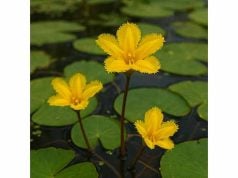
Nuphar, usually identified as Nuphar lutea and often called yellow water-lily or yellow pond lily, is an aquatic medicinal plant with a long but uneven history of use. Traditional herbal sources have described the rhizome, root, and leaves as astringent, soothing, and useful for inflammatory complaints, skin irritation, swelling, mouth and throat discomfort, and certain genitourinary concerns. Modern research has added new interest by isolating unusual sulfur-containing sesquiterpene alkaloids, especially nupharidines and related thioalkaloids, along with tannins, flavonoids, sterols, and other bioactive constituents.
What makes Nuphar especially interesting is also what makes it complicated. Its strongest evidence today comes from laboratory and animal studies on anti-inflammatory, antimicrobial, antiviral, antiparasitic, and cytotoxic effects. Human clinical use remains limited, and traditional preparations are not interchangeable with modern purified extracts. That means the herb deserves a balanced reading: promising, pharmacologically active, and historically respected, yet still far from being a routine self-care remedy. For readers, the most useful goal is not hype, but clarity about where Nuphar may fit and where caution should take over.
Quick Facts
- Nuphar’s most plausible benefits are anti-inflammatory support and traditional astringent use for irritated tissues.
- Modern preclinical studies also suggest antimicrobial, antiviral, and antiparasitic potential from Nuphar alkaloids.
- Historical use describes about 2 to 4 fl oz of a weak rhizome decoction up to 3 times daily, but no validated modern clinical dose exists.
- Avoid concentrated or home-made Nuphar remedies during pregnancy, breastfeeding, childhood, and whenever plant identity or water quality is uncertain.
Table of Contents
- What is Nuphar and how has it been used
- Key ingredients and medicinal properties
- Potential health benefits and what the evidence shows
- Nuphar in traditional practice and modern interest
- How Nuphar is prepared and used
- Dosage, timing, and duration
- Safety, side effects, and who should avoid it
What is Nuphar and how has it been used
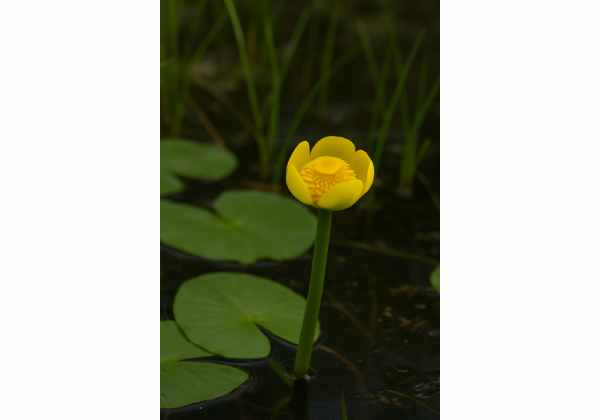
Nuphar is an aquatic plant rather than a field or garden herb in the ordinary sense. It grows in ponds, lakes, marsh edges, and slow-moving freshwater, with floating leaves, thick underwater rhizomes, and distinctive yellow cup-like flowers. Botanically, Nuphar lutea belongs to the Nymphaeaceae family, which gives it a visual resemblance to water lilies, though it has a different medicinal profile and a stronger reputation for astringency.
Traditional use has centered mainly on the rhizome and root, with the leaves sometimes used externally. Older European and folk-herbal descriptions portray the plant as astringent, demulcent, somewhat sedative, and useful where tissues feel inflamed, overly moist, or irritated. That helps explain why it appears in older references for diarrhea, dysentery, oral irritation, inflamed skin, swellings, and certain genitourinary complaints. In some systems, the plant was also associated with reducing inflammatory pain, fever, and aching.
This pattern is not unusual for plants high in tannins and other phenolic compounds. Astringent plants were historically valued when people wanted to “tighten,” dry, or calm tissue, especially in the mouth, throat, gut, or skin. In that way, Nuphar belongs conceptually with other tannin-rich astringent remedies, even though its aquatic habitat and thioalkaloid chemistry make it much more distinctive.
At the same time, Nuphar is not a well-standardized modern herb. It does not have a widely accepted clinical monograph, a broad human trial base, or a consumer-friendly extract tradition. Most modern scientific interest has focused on semi-purified extracts and isolated compounds from leaves or rhizomes, not on simple household decoctions. That matters because the plant people used in traditional medicine and the purified molecules tested in laboratories are related, but they are not interchangeable.
There is also a practical issue that many herb profiles ignore: aquatic plants reflect their environment. Water quality, sediment contamination, and correct species identification all affect safety. A medicinal plant harvested from stagnant or polluted water is not the same as one gathered from a clean, well-understood habitat. That simple fact makes Nuphar harder to use casually than land-based herbs.
The most grounded way to understand Nuphar is as a traditional aquatic medicinal plant with a strong astringent reputation and a rising preclinical profile. It is not a mainstream herbal supplement, but it is more than a historical curiosity. Its real interest lies in the meeting point between old tissue-soothing uses and modern research on highly active alkaloids.
Key ingredients and medicinal properties
Nuphar’s medicinal story begins with an unusual chemical family: sesquiterpene thioalkaloids, often grouped under names such as nupharidines, thiobinupharidines, and related sulfur-containing dimers. Among the best-studied compounds is 6,6′-dihydroxythiobinupharidine, often shortened to DTBN. This compound has attracted substantial interest because it appears to interact with several inflammatory, microbial, and cancer-related pathways in experimental systems.
That does not mean Nuphar is defined by one molecule alone. Traditional whole-plant and rhizome effects also likely depend on tannins, polyphenols, flavonoids, sterols, and mucilage-like or starch-rich components. The rhizome in particular has long been associated with astringent and soothing actions, which fit well with a profile that includes tannic and gallic acid-like compounds. Those constituents help explain why older herbal texts describe the plant as useful for irritated mucosa, loose stools, and topical applications where moisture and swelling need to be reduced.
The modern pharmacology of Nuphar is more ambitious than its traditional image suggests. Research on purified DTBN and semi-purified extracts has linked the plant to inhibition of NF-κB signaling, modulation of cytokines, effects on protein kinase C, activity against selected pathogens, and cytotoxic action in cancer cell models. This is a much more mechanistic picture than the old language of “astringent” or “cooling,” but the two are not contradictory. The traditional uses point to where the plant seemed active. The chemistry offers clues about why.
From a practical herbal point of view, Nuphar’s medicinal properties can be grouped into five main categories:
- Astringent, especially in rhizome-based traditional use
- Anti-inflammatory, particularly in modern extract research
- Antimicrobial or pathogen-directed, based on laboratory studies
- Tissue-soothing or demulcent-adjacent, especially in older mucosal uses
- Cytotoxic or antitumor-related, but mainly at the research stage
The astringent side of Nuphar makes it easiest to compare with other tissue-tightening herbs used topically, though Nuphar’s alkaloid profile makes it far more complex than a simple tannin remedy. That distinction is important. A plant can be both an old-fashioned astringent and a source of modern pharmacological leads.
Another key point is that different parts of the plant behave differently. Traditional oral use often centered on the rhizome or root, while a good deal of modern experimental work has used leaf-derived or semi-purified extracts. That means the part of the plant, the extraction method, and the preparation style all influence what “Nuphar” actually means in practice.
So the ingredient story is not just a list of compounds. It is a reminder that Nuphar spans two worlds. In one, it is a traditional aquatic remedy for irritated tissues. In the other, it is a source of chemically sophisticated molecules with measurable biologic activity. Both are true, and neither should be simplified too far.
Potential health benefits and what the evidence shows
Nuphar’s benefit profile looks broad on paper, but the evidence is much stronger in preclinical research than in human use. The most credible article on this plant should say that plainly. It is a promising medicinal plant, not a clinically settled one.
The best-supported benefit category is anti-inflammatory activity. This is where Nuphar has repeatedly shown interesting results. A partially purified leaf extract reduced inflammatory signaling in murine septic-shock models, affecting NF-κB activity, cytokine production, and ERK-related pathways. More recently, purified DTBN also reduced inflammatory and damage markers in a mouse model of chronic kidney disease. These findings do not prove a consumer remedy for chronic inflammation, but they do support the idea that Nuphar contains genuinely active anti-inflammatory compounds.
The second major category is pathogen-related activity. Nuphar extracts have shown antibacterial, antifungal, antiviral, and antiparasitic promise in laboratory and animal work. The antiviral side includes activity against measles virus in cell studies and later proof-of-concept work with DTBN against SARS-CoV-2 in infected cells and mice. The antiparasitic side includes encouraging activity against Leishmania major. These are compelling results, but they remain experimental. They should not be translated into home treatment for infections.
The third category is antitumor and cytotoxic research. Nuphar extracts and purified compounds have shown cytotoxicity in leukemia and other cancer-related models, and earlier work suggested synergy with conventional anticancer agents in experimental settings. This supports continued drug-discovery interest, but it absolutely does not justify unsupervised cancer use. In real clinical life, this is still a laboratory story, not a home-herbal one.
The fourth category is traditional mucosal and topical support. Nuphar’s older uses for diarrhea, mouth irritation, skin inflammation, and swellings are less glamorous than antiviral or anticancer claims, but they are often more believable from a practical herbal perspective. They fit the plant’s astringent character and may represent the most realistic traditional benefit zone.
A fair summary of the evidence looks like this:
- Strongest modern support: anti-inflammatory mechanisms in preclinical studies
- Interesting but still early support: antiviral and antiparasitic activity
- Important but nonconsumer evidence: cytotoxic and anticancer-related findings
- Historically grounded use: astringent support for irritated skin and mucosa
This is where comparison helps. Readers who want a day-to-day anti-inflammatory herb are generally better served by better-studied anti-inflammatory botanicals. Nuphar is more of a pharmacological lead and traditional remedy than a routine supplement.
The plant’s benefits are therefore best described as credible, selective, and not yet clinically mature. That may sound cautious, but it is exactly what makes the guidance useful. Nuphar is not underwhelming. It is simply a herb whose research is more exciting than its present-day self-care role. Respecting that gap protects readers from the most common mistake: turning promising laboratory activity into exaggerated human claims.
Nuphar in traditional practice and modern interest
Nuphar is a good example of a plant whose older uses and newer science overlap without fully matching. Traditional practice mostly treated it as a local, tissue-focused remedy. Modern research treats it as a source of highly active small molecules with broader pharmacological potential. Both views are useful, but they answer different questions.
In traditional herbal use, Nuphar was often prepared from the rhizome or root as an astringent decoction or infusion. Older texts describe it for loose stools, dysenteric patterns, oral irritation, inflamed throats, swellings, and moist skin conditions. Leaves and roots also appear in topical uses, especially in poultices for boils, inflamed tissue, and minor surface irritation. Some traditions extended it to urinary or genitourinary complaints, where its astringent quality was considered relevant.
Modern research, by contrast, often begins with semi-purified leaf extracts or isolated DTBN rather than simple rhizome preparations. The focus shifts from “tightening and soothing” to specific pathways: NF-κB, cytokines, protein kinase C, topoisomerase, pathogen survival, and cancer-cell apoptosis. This is a very different language, but it does not erase the old uses. In fact, it helps explain why the plant may have seemed medicinally potent in the first place.
One especially useful insight is that Nuphar probably makes more sense as a short-term, problem-oriented herb than as a general tonic. Traditional astringents are often chosen when tissues feel overly damp, irritated, inflamed, or lax, not because the plant is intended for indefinite daily use. That traditional framing is much more realistic than trying to market Nuphar as a universal wellness extract.
The urinary and mucosal uses are a good example. Astringent plants have long been used where tissues feel inflamed or overactive, especially in the mouth, throat, and lower urinary tract. That does not mean Nuphar is interchangeable with more familiar urinary astringents such as uva ursi, but it helps modern readers understand the functional logic behind older indications.
Modern interest is strongest where purified compounds are concerned. DTBN and related nupharidines are being studied because they appear pleiotropic, meaning they act on several pathways rather than one narrow target. That is scientifically exciting. It also means the plant is not easy to reduce to a simple consumer use.
So where does Nuphar fit today? Most honestly, in three places:
- As a traditional astringent aquatic remedy with historical value
- As a research plant with intriguing anti-inflammatory and pathogen-related activity
- As a poor candidate for casual self-prescription in strong or concentrated forms
That combination explains why the plant still matters. It also explains why it is not more popular in mainstream herbal products. Nuphar is interesting, active, and tradition-rich, but it asks for more judgment than many common herbs. That makes it worthwhile for thoughtful readers and less suitable for simplistic wellness advice.
How Nuphar is prepared and used
Preparation is one of the most important parts of understanding Nuphar because traditional use and modern research rely on very different forms. If those forms are blurred together, the plant becomes easy to misread.
Historically, the most common internal preparation was a weak rhizome or root decoction. That makes sense because Nuphar’s underground parts are dense, starchy, and better suited to simmering than brief steeping. Decoctions were used when an astringent or soothing action was desired in the digestive tract, mouth, or throat. Older descriptions also mention infusions or gargles for oral and throat irritation, which fits the plant’s astringent profile.
For external use, a poultice of decocted root or crushed plant material appears in traditional references for boils, inflamed skin, minor swellings, and irritated tissues. These topical uses are easier to understand than some of the more ambitious modern claims because they align closely with what an astringent aquatic plant might realistically do.
What modern research uses is very different. Experimental papers often rely on semi-purified leaf extracts, alkaloid-enriched fractions, or isolated DTBN. These are not kitchen remedies. They are laboratory preparations designed to enrich highly active thioalkaloids. That distinction matters because it prevents a common error: assuming that a traditional rhizome tea and a purified leaf-derived molecule are simply stronger and weaker versions of the same thing. They are related, but not equivalent.
There are also practical harvesting concerns that apply more strongly to aquatic plants than to most garden herbs:
- Water quality matters
- Sediment contamination matters
- Correct botanical identification matters
- Different species and habitats may not yield interchangeable material
These concerns alone make Nuphar less suited to do-it-yourself wildcrafting than many land plants. Even when the plant is correctly identified, the source water may introduce safety concerns that have nothing to do with the plant’s own chemistry.
If someone is exploring the plant from a historical or herbal perspective, the safest preparation hierarchy is usually this:
- Traditional weak decoction or gargle, used conservatively
- Limited topical use on minor, nonserious irritated skin
- Avoidance of home-made concentrated extracts
- Avoidance of raw experimentation with large amounts of rhizome or leaf material
For readers used to gentler mucosal herbs, it may help to contrast Nuphar with more straightforward soothing plants such as marshmallow. Marshmallow is broadly demulcent and relatively forgiving. Nuphar is more astringent, more pharmacologically ambitious, and less forgiving if pushed too far.
That is why preparation is not just a technical note. It is one of the main reasons Nuphar can be either a traditional remedy or a bad self-experiment. The line between those two outcomes often lies in how the plant is prepared.
Dosage, timing, and duration
Nuphar does not have a validated modern clinical dose in the way better-studied herbs sometimes do. That should be the starting point for any dosage discussion. Most dosing language around Nuphar comes either from older herbal traditions or from laboratory and animal research on purified compounds. Those are not the same kind of guidance.
The most usable historical reference is a weak rhizome infusion or decoction. Older Western herbal descriptions mention using roughly 2 to 4 fl oz per dose, taken up to 3 times daily, often prepared from coarse root or rhizome material. This is useful as a historical benchmark, but it should not be treated like a modern evidence-based standard. It reflects traditional practice, not contemporary clinical validation.
Modern experimental dosing looks very different. For example, purified DTBN has been studied in mouse models using microgram-level injections or lesion-targeted dosing, such as around 20 to 25 μg in specific animal experiments. Those numbers are important for science but not for self-care. They show how active the isolated compounds are, and they also underline why it is unsafe to improvise with extracts at home.
A practical dosage framework therefore has to separate traditional use from experimental research:
- Traditional oral use: weak rhizome or root decoction in small, time-limited amounts
- Traditional topical use: diluted wash, gargle, or poultice for short-term local use
- Experimental pharmacology: purified compounds in animal or cell studies only
- Consumer self-use: no standardized extract or capsule dose can be recommended confidently
Timing depends on the intended use. Historically, astringent decoctions were taken around the period of active irritation rather than as indefinite tonics. A gargle or wash would be used as needed for short-term local symptoms. Topical application would also be limited and problem-focused.
Duration should stay short. Nuphar is not a sensible long-term daily herb. If someone is trying a traditional rhizome preparation, it makes sense to reassess within a few days. If no clear benefit appears, or if symptoms are severe or recurrent, increasing the dose is not the right next step. Reconsidering the problem is.
This is especially true for digestive and urinary symptoms. Persistent diarrhea, fever, blood, strong pelvic pain, or suspected infection call for assessment, not repeated dosing of a strong astringent plant. Likewise, concentrated alkaloid-rich extracts should not be treated as stronger versions of an old decoction. They belong to research, not casual self-treatment.
The most honest dosing advice, then, is also the most useful: historical weak decoctions exist, but modern validated human dosing does not. Use that fact to lower expectations and raise caution. With Nuphar, uncertainty around dose is part of the plant’s profile, not a small missing detail.
Safety, side effects, and who should avoid it
Nuphar is a plant with meaningful pharmacological activity, and that alone is enough reason to be careful. The same compounds that make it interesting in inflammation, infection, and cancer research also make it unsuitable for casual or indiscriminate use. Human safety data are limited, and much of the strongest modern evidence involves purified molecules rather than ordinary traditional preparations.
The first safety concern is dose and concentration. Traditional weak decoctions are one thing. Alkaloid-enriched extracts are another. Research on DTBN and related thioalkaloids clearly shows that these compounds are biologically potent and in some settings cytotoxic. That does not make the plant universally dangerous, but it does mean concentrated self-preparations are a poor idea.
The second safety concern is source contamination. Because Nuphar is aquatic, it can reflect the chemical quality of the water and sediment where it grows. Polluted ponds, agricultural runoff, industrial contamination, and stagnant water all complicate wild harvesting. A contaminated aquatic plant may be risky even if the species itself is correctly identified.
The third concern is traditional toxicity warnings. Older herbal texts often note that large doses may be potentially toxic. Modern clinical data are too limited to define a precise human toxicity threshold, but that old caution remains relevant. It tells us that traditional herbalists did not regard Nuphar as a free-use plant.
The people who should avoid self-directed Nuphar use include:
- Pregnant individuals
- Breastfeeding individuals
- Children
- Anyone with kidney or liver disease
- Anyone using multiple prescription medicines without professional guidance
- Anyone wanting to self-treat infection, cancer, or chronic inflammatory disease
- Anyone unsure of the plant’s identity or harvest environment
Potential side effects from stronger use may include nausea, stomach upset, excessive dryness or irritation of tissues, and unpredictable responses to concentrated alkaloids. Topical use is not automatically safe either. Fresh or poorly cleaned aquatic plant material may worsen a wound rather than help it.
For readers who want a more forgiving plant for everyday soothing, gentler herbs such as chamomile are often easier to understand and use. Nuphar sits in a different category: more niche, more active, and less suitable for improvisation.
The safest way to summarize Nuphar is this: it is a traditional medicinal aquatic plant with promising preclinical activity, but not a beginner-friendly herb. Use should stay conservative, historically grounded, and brief. Once symptoms become severe, chronic, infectious, or systemically important, Nuphar should stop being the center of the plan. With this plant, safety is not an afterthought. It is the condition that makes every other discussion possible.
References
- A Nuphar lutea plant active ingredient, 6,6′-dihydroxythiobinupharidine, ameliorates kidney damage and inflammation in a mouse model of chronic kidney disease 2024. (Preclinical Study)
- Anti- Leishmania major Properties of Nuphar lutea (Yellow Water Lily) Leaf Extracts and Purified 6,6′ Dihydroxythiobinupharidine (DTBN) 2024. (Preclinical Study)
- In Vitro and In Vivo Therapeutic Potential of 6,6′-Dihydroxythiobinupharidine (DTBN) from Nuphar lutea on Cells and K18-hACE2 Mice Infected with SARS-CoV-2 2023. (Preclinical Study)
- Cytotoxicity of Thioalkaloid-Enriched Nuphar lutea Extract and Purified 6,6′-Dihydroxythiobinupharidine in Acute Myeloid Leukemia Cells: The Role of Oxidative Stress and Intracellular Calcium 2022. (Preclinical Study)
- Anti-inflammatory effect of a Nuphar lutea partially purified leaf extract in murine models of septic shock 2015. (Preclinical Study)
Disclaimer
This article is for educational purposes only and does not replace medical advice, diagnosis, or treatment. Nuphar is a traditional medicinal aquatic plant with promising laboratory and animal research, but it does not have a well-established modern clinical dosing standard for general self-care. Because the plant is pharmacologically active and may vary by source, preparation, and purity, it should not be used casually for infection, cancer, kidney disease, inflammatory disorders, pregnancy-related concerns, or persistent digestive or urinary symptoms without guidance from a qualified healthcare professional.
If this article helped you, please share it on Facebook, X, or another platform you prefer so others can find careful, evidence-aware herbal information.