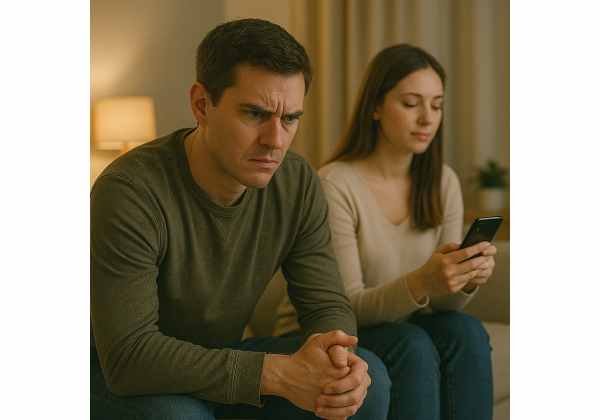
Obsessive jealousy is more than ordinary insecurity in a relationship. It involves repeated, distressing, or hard-to-control preoccupation with a partner’s possible unfaithfulness, loss of interest, or emotional connection with someone else. The concern may be based on very little evidence, may persist despite reassurance, and may lead to checking, questioning, monitoring, accusations, or conflict.
This topic needs careful wording because jealousy exists on a wide spectrum. Some jealousy is temporary and reality-based. Obsessive jealousy is more persistent and intrusive. Delusional jealousy, sometimes called Othello syndrome, is more severe because the person becomes fixed in a false belief that a partner is unfaithful despite lack of reliable evidence. These patterns can overlap with anxiety, obsessive-compulsive symptoms, trauma-related insecurity, substance use, psychosis, neurological illness, or coercive relationship behavior.
Important points about obsessive jealousy
- Obsessive jealousy usually involves repeated doubts, mental images, urges to check, or a need for reassurance about a partner’s fidelity.
- It may be confused with normal jealousy, anxious attachment, OCD-like intrusive thoughts, relationship conflict, or delusional jealousy.
- Warning signs include persistent accusations, phone or location checking, interrogating a partner, misreading neutral events as proof, and escalating anger or distress.
- Professional evaluation may matter when jealousy feels uncontrollable, causes major impairment, includes fixed false beliefs, or creates fear or safety concerns.
- Urgent evaluation is especially important if there are threats, violence, stalking, suicidal thoughts, homicidal thoughts, psychosis, intoxication, or sudden personality change.
Table of Contents
- Obsessive Jealousy Overview
- Normal Jealousy vs Obsessive Jealousy
- Symptoms and Signs of Obsessive Jealousy
- Causes and Mental Health Context
- Risk Factors and Related Conditions
- Diagnostic Context and Assessment
- Effects, Complications, and Safety Concerns
- When Urgent Evaluation May Be Needed
Obsessive Jealousy Overview
Obsessive jealousy is a persistent pattern of jealousy-related thoughts, fears, and behaviors that becomes distressing, excessive, or disruptive. The central concern is usually that a romantic partner is cheating, attracted to someone else, hiding something, or preparing to leave, even when the available evidence is weak, ambiguous, or repeatedly disproven.
The word “obsessive” is important. In this context, it often means the jealousy returns again and again, feels hard to dismiss, and drives urges to seek certainty. A person may know that their fears are exaggerated but still feel unable to stop checking, comparing, replaying conversations, or asking for reassurance. In other cases, insight is poor: the person becomes increasingly convinced their interpretation is correct.
Obsessive jealousy is not a single formal diagnosis in the same way that major depressive disorder or schizophrenia is. It is better understood as a clinical pattern that can appear in different conditions. For some people, it resembles obsessive-compulsive symptoms: unwanted thoughts, anxiety, checking, and reassurance-seeking. For others, it may be closer to delusional jealousy, where the belief of infidelity becomes fixed and resistant to correction. It can also occur alongside anxiety disorders, trauma-related symptoms, substance use, mood disorders, personality patterns, or neurological conditions.
A useful way to understand obsessive jealousy is to separate the emotion from the pattern. Jealousy itself is a human emotion. It can arise when someone feels a valued relationship is threatened. What makes the pattern clinically concerning is not simply feeling jealous, but the intensity, persistence, loss of control, and consequences.
Examples include:
- Spending hours analyzing a partner’s tone, clothing, schedule, or social media activity
- Repeatedly asking for reassurance but feeling relief only briefly
- Checking messages, call logs, location data, belongings, or receipts
- Treating ordinary events as hidden evidence of betrayal
- Becoming unable to work, sleep, study, parent, or socialize because of jealousy-related thoughts
- Accusing, interrogating, threatening, following, or restricting a partner
The pattern may be painful for both people in the relationship. The jealous person may feel ashamed, frightened, angry, or desperate for certainty. The partner may feel mistrusted, controlled, emotionally exhausted, or unsafe. When jealousy becomes linked with intimidation, monitoring, threats, or violence, it should not be minimized as “just insecurity.”
Normal Jealousy vs Obsessive Jealousy
The main difference between normal jealousy and obsessive jealousy is whether the reaction is proportionate, temporary, and reality-based, or persistent, intrusive, and impairing. Normal jealousy can be uncomfortable, but it usually responds to context, communication, and time. Obsessive jealousy keeps escalating or repeating even when there is little evidence or after concerns have been addressed.
A person can feel jealous after a clear relationship boundary is crossed, after a partner lies, or during a period of uncertainty. That does not automatically mean the jealousy is obsessive or pathological. The concern becomes more significant when the mind keeps demanding impossible certainty, when neutral details are treated as proof, or when the jealous person feels driven to investigate or control.
| Pattern | Typical features | Why it matters |
|---|---|---|
| Normal jealousy | Brief, situation-linked, and usually open to discussion or new information | Often resolves when the situation becomes clearer or trust is repaired |
| Obsessive jealousy | Repeated doubts, intrusive images, checking, reassurance-seeking, or rumination | Can impair daily life and strain the relationship even when the person partly recognizes the fear is excessive |
| Delusional jealousy | Fixed false belief that a partner is unfaithful despite lack of reliable evidence | May reflect psychosis, substance-related symptoms, or neurological illness and can raise safety concerns |
| Coercive control framed as jealousy | Monitoring, isolation, threats, intimidation, or restrictions justified as “love” or “concern” | Can be a form of abuse, regardless of whether the jealous person feels anxious or convinced |
Obsessive jealousy is also different from limerence, although the two can overlap. Limerence centers on intense longing, fantasy, and preoccupation with being loved by someone. Obsessive jealousy centers on fear of losing a partner, fear of betrayal, or perceived rivalry.
It can also overlap with anxious attachment. Someone with anxious attachment and reassurance seeking may become highly sensitive to distance, delayed replies, or changes in affection. That pattern may increase vulnerability to jealous thoughts, but obsessive jealousy is more specific: the fear often narrows around infidelity, romantic rivals, checking, or accusations.
A key clinical distinction is insight. In obsessional jealousy, the person may say, “I know I may be overreacting, but I cannot stop thinking about it.” In delusional jealousy, the person may say, “I know it is true, and everyone else is lying or covering it up.” Poor insight does not make someone “bad,” but it does change the level of concern and the need for careful evaluation.
Symptoms and Signs of Obsessive Jealousy
Obsessive jealousy usually shows up as a combination of thoughts, emotions, body sensations, and behaviors. The most recognizable sign is a repeated cycle: suspicion, distress, checking or reassurance-seeking, brief relief, and then renewed suspicion.
The thoughts may feel intrusive. A person may imagine their partner flirting, lying, hiding messages, meeting someone secretly, or comparing them unfavorably with another person. These thoughts may arrive suddenly and feel vivid, even without clear evidence. Some people mentally replay past conversations or scan memories for “clues” they missed.
Common emotional symptoms include anxiety, panic, anger, shame, humiliation, sadness, resentment, or fear of abandonment. The person may feel trapped between wanting reassurance and fearing what they might discover. They may become irritable or emotionally flooded when their partner is unavailable, private, late, tired, distracted, or socially engaged.
Physical symptoms can include a racing heart, nausea, chest tightness, restlessness, insomnia, muscle tension, trembling, or loss of appetite. These symptoms can make the suspicion feel more convincing because the body reacts as if danger is present.
Behavioral signs often create the most relationship damage. They may include:
- Repeatedly asking the same questions about fidelity, attraction, past relationships, or social interactions
- Checking a partner’s phone, email, messages, browser history, photos, location, clothing, car, or belongings
- Monitoring social media follows, likes, comments, online status, or response times
- Comparing oneself to coworkers, friends, ex-partners, or strangers
- Interrogating a partner after ordinary delays or changes in routine
- Avoiding social events because potential rivals may be present
- Pressuring a partner to share passwords, stop seeing friends, change clothing, or prove loyalty
- Testing the partner through traps, false stories, or repeated “confessions”
- Following, driving by, calling repeatedly, or showing up unexpectedly to verify whereabouts
Some signs are more suggestive of delusional jealousy. These include absolute certainty despite contradictory evidence, elaborate explanations for why evidence has been hidden, claims that unrelated events prove infidelity, or suspicion involving implausible situations. A person may interpret a receipt, a facial expression, a song lyric, a neighbor’s glance, or a partner’s clothing as proof.
Obsessive jealousy can also include intrusive thoughts that feel unwanted and disturbing. The person may not want to accuse or check, yet feels intense pressure to do so. The distress is real, but the behavior can still harm others, especially when it becomes controlling or frightening.
Causes and Mental Health Context
There is no single cause of obsessive jealousy. It usually develops from several interacting factors, including temperament, relationship history, thinking patterns, attachment insecurity, mental health symptoms, substance use, and sometimes neurological or medical conditions.
One common pathway is uncertainty intolerance. Some people experience uncertainty in relationships as unbearable. A delayed text, a vague answer, or a partner’s private moment may trigger an urgent need to know. The mind then searches for certainty, but relationships rarely provide complete certainty. Checking may reduce anxiety briefly, but it can train the brain to keep checking whenever doubt returns.
Another pathway involves threat interpretation. A person may overread ambiguous information: a smile becomes flirtation, privacy becomes secrecy, tiredness becomes loss of love, and coincidence becomes evidence. Once suspicion takes hold, confirmation bias can make the person notice details that support the fear and ignore details that do not.
Obsessive-compulsive processes can play a role. In OCD-like jealousy, the person may have repeated unwanted doubts, mental images, or urges to check. Reassurance may become a compulsion: it reduces anxiety briefly but does not settle the fear. When obsessive jealousy resembles OCD, clinicians often look closely at insight, compulsive checking, avoidance, mental reviewing, and the broader pattern of obsessions and compulsions. An evaluation for OCD-related symptoms may be relevant when jealousy is repetitive, intrusive, and ritualized.
Psychotic processes can also be involved. Delusional jealousy may occur as part of delusional disorder, schizophrenia-spectrum disorders, mood disorders with psychotic features, substance-induced psychosis, or neurological illness. In this pattern, the belief is not experienced as a doubt but as a fact. The person may build a detailed system around the belief and become increasingly resistant to reassurance.
Substances and medical conditions matter. Heavy alcohol use has long been associated with morbid or delusional jealousy in clinical literature. Stimulants, some intoxication states, withdrawal states, sleep deprivation, brain injury, dementia, stroke, Parkinson’s disease, and certain medication-related neuropsychiatric effects may also be relevant in some cases. This does not mean most jealous people have a neurological illness. It means sudden, severe, late-onset, or bizarre jealousy deserves careful medical and psychiatric assessment.
Past relationship experiences can also shape jealousy. Betrayal, abandonment, emotional neglect, humiliation, trauma, or repeated unstable relationships may prime the nervous system to expect loss. However, past betrayal does not automatically cause obsessive jealousy, and it does not justify controlling behavior. It may explain why a person’s threat system is easily activated.
Risk Factors and Related Conditions
Risk factors increase the likelihood of obsessive jealousy, but they do not determine a person’s behavior. Many people with insecurity, trauma, anxiety, or past betrayal do not become controlling or delusional. Risk is best understood as a set of vulnerabilities that can interact under stress.
Common risk factors include:
- A history of betrayal, abandonment, unstable caregiving, or emotionally unpredictable relationships
- High anxiety, low self-esteem, shame sensitivity, or intense fear of rejection
- Difficulty tolerating uncertainty, ambiguity, or private boundaries in relationships
- Previous episodes of severe jealousy in past relationships
- Repeated reassurance-seeking that temporarily calms anxiety but strengthens the jealousy cycle
- Substance misuse, especially when intoxication increases suspicion, aggression, impulsivity, or memory gaps
- Sleep deprivation, high stress, social isolation, or major life disruption
- Current relationship conflict, secrecy, repeated lying, or unclear boundaries
- Psychotic symptoms, mood episodes, cognitive decline, neurological illness, or sudden personality change
- Cultural or family beliefs that normalize possessiveness, surveillance, or control as proof of love
Several related conditions can look similar from the outside. Anxiety disorders can create fear, scanning, and reassurance-seeking. OCD can create intrusive doubts and checking. Depression can intensify worthlessness and fear of abandonment. Trauma-related symptoms can make emotional threat feel immediate, especially in close relationships. Personality disorder patterns may involve intense fear of abandonment, mistrust, anger, or unstable relationship perceptions. Psychosis can produce fixed false beliefs about betrayal.
Childhood and adult trauma can affect trust, emotional regulation, and threat perception. A person who has experienced childhood trauma in adult relationships may be more likely to interpret distance or ambiguity as danger, though jealousy is only one possible expression of that vulnerability.
Alcohol and drug use require special attention because they can worsen suspicion, lower inhibition, and increase risk during conflict. If jealousy escalates mainly during intoxication, withdrawal, blackouts, or heavy use, clinicians may consider substance-related assessment, including alcohol use screening when appropriate.
Relationship context matters too. Not all jealousy is irrational. A partner may be reacting to real deception, betrayal, coercion, or emotional unavailability. The clinical question is not simply “Is there jealousy?” but “How strong is the evidence, how flexible is the belief, how much impairment is present, and what behaviors are occurring?”
Diagnostic Context and Assessment
Obsessive jealousy is assessed by understanding the whole pattern, not by judging one argument or one suspicious thought in isolation. A clinician would usually look at the person’s beliefs, insight, behaviors, distress, functioning, relationship context, safety, substance use, and possible medical or neurological contributors.
A diagnostic conversation may explore:
- When the jealousy began and whether it appeared gradually or suddenly
- Whether the person experiences the concern as a doubt, an intrusive thought, an overvalued idea, or a fixed fact
- What evidence the person sees as proof and whether they can consider alternative explanations
- How much time is spent thinking, checking, asking, monitoring, or arguing
- Whether the person can resist urges to check or accuse
- Whether jealousy affects work, sleep, parenting, friendships, finances, or legal problems
- Whether there are threats, stalking, aggression, self-harm thoughts, or fear in the relationship
- Whether alcohol, drugs, sleep loss, head injury, cognitive changes, or neurological symptoms are present
- Whether there are hallucinations, paranoia, mania, severe depression, or disorganized thinking
The difference between screening and diagnosis is important. A questionnaire may identify obsessive thoughts, compulsive behaviors, anxiety, depression, alcohol misuse, or psychosis risk, but it does not by itself explain the cause of jealousy. A full evaluation considers context and differential diagnosis. This distinction is similar to the broader difference between mental health screening and diagnosis.
Collateral information may be important when safety or psychosis is a concern. With appropriate consent and safeguards, a clinician may ask about the partner’s experience, reports from family members, or evidence of behavior changes. This can help clarify whether the person’s beliefs are reality-based, exaggerated, obsessive, delusional, substance-related, or part of a broader pattern of coercive control.
Assessment may also involve a mental status examination. This looks at appearance, behavior, mood, thought process, thought content, perception, insight, judgment, cognition, and risk. When delusions, hallucinations, disorganized thinking, or severe paranoia are present, a psychosis evaluation may be clinically relevant.
It is also important not to pathologize a person who is responding to actual betrayal or abuse. A careful assessment asks what happened, what is known, what is inferred, and what behaviors followed. Someone can have valid concerns and still respond in harmful ways. Someone can also be accused of “jealousy” by a partner who is hiding coercive or unsafe behavior. Context is part of clinical accuracy.
Effects, Complications, and Safety Concerns
Obsessive jealousy can cause serious complications because it affects judgment, trust, emotional control, and relationship behavior. Even when the person feels driven by fear rather than malice, the impact can be damaging.
For the jealous person, complications may include chronic anxiety, insomnia, depressed mood, shame, irritability, impaired concentration, reduced work performance, social withdrawal, and worsening self-esteem. The person may feel trapped in a cycle they dislike but cannot easily interrupt. Over time, the jealousy may narrow their attention until the relationship becomes the center of nearly all mental energy.
For the partner, the effects can include feeling watched, interrogated, blamed, isolated, or unsafe. Repeated accusations can erode trust even when no infidelity has occurred. A partner may begin changing normal behavior to avoid conflict: avoiding friends, hiding harmless interactions, sharing passwords out of fear, or giving up privacy. These changes may temporarily reduce arguments but can deepen the controlling pattern.
Relationship complications can include:
- Escalating conflict and emotional exhaustion
- Loss of privacy and autonomy
- Social isolation from friends, family, or coworkers
- Sexual pressure or suspicion around normal boundaries
- Breakups, separations, or custody conflicts
- Workplace or legal problems if jealousy leads to harassment, stalking, threats, or property damage
Jealousy can also be used to justify coercive control. Controlling a partner’s clothing, friendships, phone access, movements, money, work, or social media is not made harmless by calling it jealousy. These behaviors may fit broader patterns seen in toxic relationship dynamics, especially when fear, intimidation, or isolation are present.
Delusional jealousy has additional risks. Because the person may feel absolutely certain, they may act on beliefs that others cannot correct. This can increase risk of confrontation, stalking, violence toward a partner or perceived rival, self-harm, or legal consequences. Risk is higher when jealousy is combined with intoxication, weapons access, previous violence, threats, severe agitation, psychosis, or suicidal or homicidal thoughts.
Not every person with obsessive jealousy is dangerous. Many are distressed, ashamed, and nonviolent. Still, safety concerns should be taken seriously because jealousy-related violence can develop gradually. Warning signs include escalating surveillance, threats, forced isolation, physical intimidation, destruction of property, following, repeated unwanted contact, or statements such as “If I can’t have you, no one can.”
When Urgent Evaluation May Be Needed
Urgent professional evaluation may be needed when jealousy is linked with danger, loss of reality testing, severe distress, or sudden mental status change. This is especially important when the person’s beliefs are fixed, escalating, or connected to threats or self-harm.
Immediate safety concern is raised by:
- Threats to harm oneself, a partner, a perceived rival, children, family members, or pets
- Physical violence, intimidation, stalking, forced confinement, or weapon access
- Repeated unwanted contact after a breakup or separation
- Severe agitation, rage, intoxication, or loss of behavioral control
- Hearing voices, seeing things others do not, or showing other signs of psychosis
- Sudden onset of intense jealousy in midlife or later life, especially with confusion, memory change, neurological symptoms, or personality change
- Jealousy combined with suicidal thoughts, hopelessness, revenge statements, or “nothing matters” thinking
- A partner feeling afraid to disagree, leave, sleep, work, see friends, or seek help
A mental health emergency is not defined only by diagnosis. It is defined by risk, impairment, and the person’s ability to stay safe. A person with obsessive jealousy may need urgent assessment even without a formal diagnosis if their behavior is escalating or others feel unsafe.
Sudden changes deserve particular attention. If a person who was not previously jealous becomes intensely suspicious, confused, disorganized, paranoid, or aggressive, medical and neurological factors may need consideration. Possible contributors can include intoxication, withdrawal, medication effects, delirium, head injury, seizure-related conditions, dementia, stroke, sleep deprivation, or acute psychosis.
When symptoms involve possible psychosis, severe neurological symptoms, or danger to self or others, emergency assessment may be appropriate. A resource on when to go to the ER for mental health or neurological symptoms can help clarify the kinds of situations that should not wait for a routine appointment.
It is also important to name the partner’s safety. If someone is being monitored, threatened, followed, isolated, or physically harmed, the issue is not only the jealous person’s distress. The affected partner’s fear and autonomy matter. Jealousy can be a symptom, but it can also become a vehicle for harm. Both realities can be true at the same time.
References
- Obsessional jealousy in a community sample: Association with relationship factors, impairment and perceived treatment needs 2023 (Research Article)
- Clinical Characterization, Course, and Treatment of Othello Syndrome: A Case Series and Systematic Review of the Literature 2024 (Systematic Review)
- Dangerous Intersection of Alcoholism and Othello Syndrome: A Comprehensive Review of Delusional Jealousy and Treatment Strategies 2024 (Review)
- The role of jealousy and infidelity in intimate partner violence against women: a qualitative meta-synthesis of five studies 2025 (Qualitative Meta-Synthesis)
- Delusional Disorder 2023 (Clinical Review)
- Understanding Psychosis 2023 (Government Health Resource)
Disclaimer
This article is for general educational purposes only and is not a substitute for professional medical advice, diagnosis, or treatment. Obsessive or delusional jealousy can involve serious mental health and safety concerns, so a qualified clinician should assess symptoms that are persistent, impairing, escalating, or associated with threats, violence, psychosis, or self-harm.
Thank you for taking the time to read this sensitive topic; sharing it may help someone recognize when jealousy has moved beyond ordinary relationship stress and deserves careful attention.