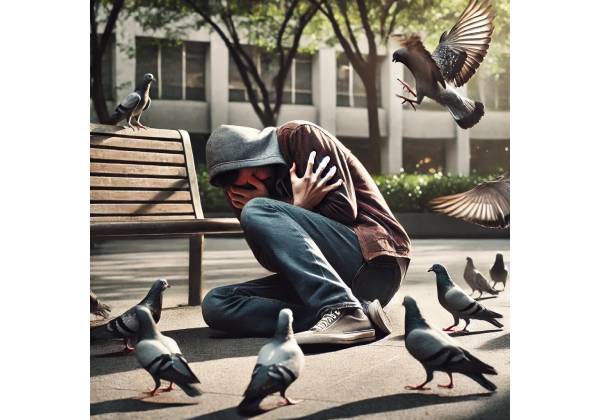
Ornithophobia is an intense fear of birds. For some people, the fear centers on large birds such as geese, gulls, crows, or pigeons in public spaces. For others, even a small bird indoors, a sudden flutter of wings, or the sound of flapping nearby can trigger panic. Many people dislike being startled by animals. Ornithophobia is different because the reaction is persistent, hard to control, and strong enough to shape where a person goes, what they avoids, and how safe daily life feels.
Clinically, ornithophobia is usually understood as an animal-type specific phobia. That means the problem is not simply dislike or caution. The fear becomes a pattern of intense distress and avoidance that can interfere with work, travel, exercise, social plans, or time outdoors. The good news is that this kind of phobia is treatable, and many people improve with structured, evidence-based support.
Table of Contents
- What Ornithophobia Is
- Signs and Symptoms
- Causes and Risk Factors
- How It Is Diagnosed
- Daily Impact and Complications
- Treatment and Therapy Options
- Management, Safety and Outlook
What Ornithophobia Is
Ornithophobia means a marked and persistent fear of birds. The fear may focus on all birds or on a narrower group, such as pigeons, crows, seagulls, chickens, parrots, or birds that approach humans for food. Some people are frightened by pecking, sudden movement, noise, claws, or wings brushing the skin. Others are less afraid of physical injury and more troubled by the sense of unpredictability. A bird can swoop, hop closer, flap without warning, or appear from above, and that lack of control often sits at the center of the fear.
In mental health terms, ornithophobia is generally considered a form of specific phobia, animal type. That classification matters because it separates ordinary discomfort from a clinical problem. Someone with a healthy dislike of aggressive geese may keep a reasonable distance and move on with the day. Someone with ornithophobia may cross streets to avoid open squares, stop using parks, refuse outdoor seating, or panic at the thought of a bird flying nearby.
The fear can be narrow or broad. A person may react only to live birds in close range, or they may also feel distressed by feathers, nests, bird sounds, pet stores, farm visits, bird cages, or videos of birds. In more severe cases, even discussing birds or imagining them can trigger a strong bodily reaction.
Ornithophobia can show up in different ways:
- Fear of being pecked, scratched, or attacked
- Fear of birds flying toward the face
- Fear of sudden noise or flapping
- Fear of contamination from droppings or feathers
- Fear linked to a past frightening encounter
- Fear that feels irrational but still impossible to override
Many people with this phobia know their reaction seems excessive. That insight does not make the fear disappear. In fact, it can add embarrassment and self-criticism. A person may think, “I know this is just a pigeon, so why am I reacting like this?” That gap between logic and bodily alarm is common in phobias.
Ornithophobia often begins early, but it can also emerge after a stressful or traumatic event later in life. What makes it clinically important is not just the fear itself. It is the pattern of anticipatory anxiety, avoidance, and disruption that grows around it. Once that pattern takes hold, the problem becomes less about birds alone and more about how fear starts to organize daily life.
Signs and Symptoms
The symptoms of ornithophobia can be emotional, physical, cognitive, and behavioral. Some people react only when they see a bird close by. Others begin to feel tense long before that, especially in places where birds are common, such as parks, beaches, city plazas, train stations, farms, or outdoor cafés. The body often reacts quickly, even when the person is trying to stay calm.
Emotional symptoms may include intense fear, dread, disgust, helplessness, or an urgent need to escape. A person may feel embarrassed by the reaction and still be unable to stop it. They may avoid eye contact with the bird, freeze in place, or suddenly run away. In children, the fear may appear as crying, clinging, refusal, or tantrums when a bird is nearby.
Physical symptoms can look like a panic response. Common signs include:
- Racing heart
- Sweating
- Trembling
- Shortness of breath
- Tight chest
- Dizziness
- Nausea
- Dry mouth
- Feeling faint
- Muscle tension
Some people also experience a surge of disgust rather than pure fear. That is especially common when the concern involves droppings, feathers, disease, or birds crowding public areas. Fear and disgust can reinforce each other, making the reaction feel even stronger.
Thought patterns are often highly specific. A person may think:
- “It is going to fly at my face.”
- “I will not be able to get away.”
- “It might peck my eyes.”
- “I am going to panic in front of everyone.”
- “If one bird is here, more will come.”
Behavioral symptoms are often the clearest marker that the problem has become significant. A person might:
- Cross the street to avoid flocks or single birds
- Refuse to eat outdoors
- Avoid parks, zoos, farms, or waterfronts
- Keep windows closed to avoid birds landing nearby
- Leave work or school routes that pass common bird areas
- Ask others to check spaces before entering
- Spend excessive time scanning the environment for birds
The severity can vary from mild but persistent distress to full panic. A useful distinction is this: ordinary dislike causes discomfort, but a phobia changes behavior in a repeated and restrictive way. When the fear is interfering with daily movement, work, parenting, exercise, travel, or social life, it is no longer just a personal quirk. It is a condition worth assessing and treating.
Causes and Risk Factors
Ornithophobia usually develops through a mix of learned experience, personal vulnerability, and the way the brain interprets threat. There is rarely one single cause. For some people, the fear starts after a memorable event, such as being chased by a goose, startled by pigeons taking flight, pecked as a child, or trapped in a space with flapping birds. For others, the fear builds more gradually and cannot be traced to one moment.
Direct conditioning is one common pathway. If a bird encounter felt chaotic, painful, or humiliating, the brain may begin to associate birds with danger. That association can then spread. A child frightened by one aggressive bird may later fear all birds, then parks, then any place where birds might appear. This widening pattern is typical of untreated phobias.
Indirect learning also matters. A child may watch a parent react fearfully to birds, hear repeated warnings about birds being dirty or dangerous, or absorb distressing stories about attacks or disease. Even without a direct bad experience, the mind can learn that birds are unsafe.
Several risk factors can make ornithophobia more likely:
- A family history of anxiety or phobias
- Temperament marked by high sensitivity or behavioral inhibition
- Previous traumatic or highly startling animal encounters
- Other specific phobias, especially animal-related fears
- Panic symptoms or a strong fear of losing control
- High disgust sensitivity
- Stressful life periods that lower coping capacity
- Childhood anxiety that was never addressed
Animal phobias often involve more than fear of injury. They may include unpredictability, lack of control, and a strong sensory response. Birds can be especially difficult for fearful individuals because they move in ways that feel erratic. They hop, swoop, perch overhead, cluster in groups, or burst into flight with little warning. A person who feels safest when situations are stable and readable may find this especially distressing.
Risk is also shaped by meaning. One person may see a pigeon as harmless city background. Another may see contamination, chaos, or an attack risk. Those interpretations influence how the nervous system responds. Over time, repeated avoidance strengthens the belief that the feared situation is genuinely dangerous.
It is also common for ornithophobia to overlap with other concerns. Someone may say they fear birds, but the deeper fear may be of public panic, being laughed at, touching dirty surfaces, or feeling trapped outdoors. That is why understanding the personal story behind the phobia matters. Two people can both avoid birds and still need different treatment emphasis.
The presence of risk factors does not guarantee a phobia will develop. It simply means the conditions are more favorable for the brain to lock onto fear. Once that happens, avoidance tends to maintain the problem unless the cycle is interrupted.
How It Is Diagnosed
There is no blood test, brain scan, or single checklist that confirms ornithophobia on its own. Diagnosis is clinical, which means it is based on a careful interview about the fear, the situations that trigger it, how long it has been present, and how much it interferes with daily life. In many cases, a clinician will diagnose it within the broader framework of specific phobia, animal type.
A proper assessment starts by clarifying the trigger. The clinician will want to know whether the fear is about all birds or only certain birds, whether the main reaction is fear or disgust, and whether the person is more afraid of direct contact, sudden movement, contamination, or public embarrassment. These details help shape treatment.
A thorough evaluation often covers the following areas:
- The fear pattern
- Which birds trigger the reaction
- Whether images, videos, feathers, or sounds also trigger symptoms
- Whether the fear is limited to birds or extends to many animals
- Severity
- How strong the physical symptoms become
- Whether panic attacks occur
- How much daily routine changes because of avoidance
- Functional impact
- Missed work or route changes
- Avoided travel, parks, outdoor meals, or social events
- Family strain or lifestyle restriction
- Time course
- Age at onset
- Whether the fear began after a specific event
- Whether it has grown over time
- Related conditions
- Panic disorder
- Social anxiety
- Obsessive-compulsive symptoms
- Post-traumatic stress symptoms
- Other specific phobias
The diagnosis depends less on the specific label and more on the pattern. A clinician is usually asking four main questions: Is the fear persistent? Is it out of proportion to the actual threat? Does it trigger significant distress? Does it lead to avoidance or impairment?
This matters because not every fear of birds is a disorder. Someone who dislikes seagulls stealing food may act cautiously without meeting criteria for a phobia. The threshold is crossed when the fear becomes excessive, recurrent, and restrictive.
Assessment may also identify silent coping strategies that keep the problem hidden. Some people do not describe panic, but they have carefully reorganized life to avoid birds altogether. They may choose indoor exercise only, avoid public squares, or refuse certain holidays. That still counts as meaningful impairment.
A good diagnosis does not just assign a name. It explains what is happening well enough to guide treatment, predict barriers, and help the person understand that the reaction is learned and changeable.
Daily Impact and Complications
Ornithophobia can sound minor to people who have never lived with it. In practice, it can narrow daily life in persistent and exhausting ways. Birds are common in many environments, which means the person may feel exposed not just occasionally, but on the way to work, during school pickup, while walking in town, on vacation, or simply while sitting outdoors.
One of the biggest complications is shrinking freedom. A person may avoid parks, beaches, markets, train platforms, public squares, outdoor restaurants, or tourist sites where birds gather. Exercise can change too. Walking, jogging, cycling, and playground visits may be reduced because the person expects an encounter. Over time, this can affect physical activity, mood, and social connection.
Common areas of impact include:
- Choosing routes based on bird presence
- Declining outdoor social invitations
- Avoiding family outings that involve farms, zoos, or waterfronts
- Distress during travel in cities with many pigeons or gulls
- Extra time spent scanning the environment for birds
- Embarrassment after visible panic in public
- Friction with family members who do not understand the fear
Children and adolescents may be affected in especially practical ways. Schoolyards, sports fields, and playgrounds often attract birds. A child with ornithophobia may avoid recess, resist walking to school, or appear oppositional when the real problem is fear. Adults may experience work disruption if their commute or workplace entry involves bird-heavy areas.
The phobia can also reinforce itself. Avoidance brings short-term relief, which teaches the brain that escaping was the correct move. That relief is powerful but misleading. The next exposure often feels even more threatening because the person has had fewer chances to learn that they can cope safely.
Complications may include:
- Increased general anxiety
- Panic attacks in open public spaces
- Reduced spontaneity and independence
- Social withdrawal
- Shame and low confidence
- Broader avoidance of animals or outdoor settings
In some cases, the fear spreads beyond birds. A person may become more wary of feathers, flying insects, open plazas, pet stores, or situations with sudden movement overhead. This kind of generalization is common when the phobia has been present for years.
The emotional cost is easy to underestimate. People often criticize themselves harshly for “overreacting” to something others ignore. That shame can delay treatment and deepen isolation. Yet the problem is not lack of willpower. It is a conditioned fear response that has been strengthened over time.
Addressing ornithophobia early can prevent the fear from shaping a larger and larger portion of life. The longer avoidance becomes a habit, the more convincing the fear feels.
Treatment and Therapy Options
Ornithophobia is often very treatable, and the strongest evidence supports exposure-based treatment, usually within a cognitive behavioral framework. The central idea is not to force a person into a terrifying situation. It is to help them face feared bird-related cues in a gradual, planned, and manageable way until the brain learns that the danger signal has been exaggerated.
Treatment usually begins with education. Understanding how phobias work can be relieving. The person learns that fear rises, peaks, and falls, and that avoidance prevents the nervous system from updating its predictions. Once this pattern is clear, treatment becomes more collaborative and less mysterious.
Exposure therapy is often structured as a step ladder. A plan might include:
- Talking about birds in a calm setting
- Looking at simple bird illustrations
- Viewing photos of birds
- Watching short videos with sound off, then on
- Standing near a place where birds are visible at a distance
- Walking through a bird-prone area with support
- Remaining in the setting long enough for anxiety to ease
- Practicing repeated real-life exposures until avoidance drops
The exact steps depend on the individual. Someone afraid of pigeon flocks in city squares may need different exposure tasks than someone who fears pet birds indoors.
Cognitive work can be useful alongside exposure. This may involve identifying catastrophic predictions and testing them. A person might believe, “If a bird flies near me, I will completely lose control,” or “I cannot handle the feeling of wings near my face.” Therapy helps shift these beliefs from absolute danger statements to testable thoughts.
Other helpful interventions may include:
- Relaxed breathing and grounding skills
- Attention training to reduce constant scanning
- Work on disgust tolerance when contamination fears are central
- Trauma-focused therapy if the phobia followed a frightening event
- Virtual or video-based exposure when live exposure is too hard at first
Medication is not usually the main treatment for a specific phobia, but it may be considered if the person also has severe anxiety, panic, or depression. Medication decisions should be individualized rather than used as a substitute for therapy.
Treatment can be brief for some people, especially when the fear is narrowly focused and the person is ready to practice. Others need more time, especially if the phobia is longstanding or linked to broader anxiety patterns. Progress is rarely perfectly linear. A person may handle photos easily and still struggle with an open public square full of pigeons. That does not mean treatment is failing. It usually means the fear hierarchy needs refinement and repetition.
The goal is not to make birds feel lovable. The goal is to reduce panic, restore choice, and allow the person to move through ordinary life without being ruled by avoidance.
Management, Safety and Outlook
Living with ornithophobia becomes easier when formal treatment is paired with practical self-management. Daily coping does not replace therapy, but it can reduce the sense of helplessness and make progress more sustainable. The most useful strategies are simple, repeatable, and tied to real situations the person faces.
Helpful self-management steps often include:
- Naming the exact trigger instead of saying “all birds scare me”
- Practicing coping skills before exposure, not only during panic
- Reducing safety behaviors little by little, such as constant route-checking
- Planning short, repeatable exposure exercises several times a week
- Tracking progress by how long you stay present, not by feeling no fear
- Celebrating tolerance and follow-through rather than perfect calm
A person might begin with a two-minute walk near a park entrance, then gradually increase time, closeness, and unpredictability. The key is repetition. One successful exposure helps, but repeated exposures teach the brain more effectively than a single brave moment.
Support from others can help if it is practical rather than dismissive. Useful support sounds like this:
- “Let us stay for two minutes and then reassess.”
- “Focus on the next step, not the whole outing.”
- “Your anxiety is high, but you are still safe.”
- “You do not need to like this to get through it.”
Less helpful responses include teasing, surprise exposure without consent, or telling the person to “just get over it.” Shame tends to deepen phobias, not solve them.
Professional help is especially important when:
- The fear is getting worse over time
- Panic attacks are common
- Daily routes or routines are heavily restricted
- Work, school, parenting, or travel are being disrupted
- The person also has depression, trauma symptoms, or broader anxiety
- Self-help efforts only lead to more avoidance
The outlook is generally favorable. Specific phobias often respond well to targeted treatment, especially when the person is willing to practice between sessions. Improvement does not always mean fear disappears completely. More often, it means the person can notice the fear, stay in the situation, and continue with life anyway.
That is a meaningful change. Someone who once avoided parks, outdoor cafés, and city centers may return to them with only moderate discomfort. A child who once froze at recess may begin to play outdoors again. An adult who once reorganized travel around birds may start choosing destinations more freely.
A good outcome is not fearlessness. It is regained flexibility. When ornithophobia no longer decides where a person can go, what they can enjoy, or how much space the outside world gets to occupy, treatment has done something important.
References
- Specific Phobia 2025
- Recent developments in the intervention of specific phobia among adults: a rapid review 2020 (Review)
- Key factors behind various specific phobia subtypes 2023
- A Novel Hypnotic Intervention for the Treatment of Ornithophobia. A Case Study 2025
Disclaimer
This article is for educational purposes only and is not a substitute for professional medical or mental health care. Ornithophobia can overlap with other anxiety disorders, trauma-related symptoms, panic attacks, and avoidance patterns that deserve proper assessment. Seek help from a licensed clinician if fear of birds is interfering with school, work, relationships, travel, outdoor activity, or overall quality of life. Seek urgent help right away if severe anxiety is accompanied by suicidal thoughts, self-harm risk, chest pain, fainting, or any medical emergency.
If this article was helpful, please consider sharing it on Facebook, X, or another platform that may help someone else recognize the problem and seek support.