
Lugol’s iodine: What It Is, Real Benefits, Safe Dosing, and Risks Explained

Lugol’s iodine is a simple mixture of elemental iodine (I₂) and potassium iodide (KI) dissolved in water. Created in 1829 by French physician J....
Lumbrokinase: Fibrin Support, Stroke Recovery Insights, How to Use It, and Safety Considerations

Lumbrokinase is a group of fibrin-targeting enzymes originally isolated from earthworms and now produced under modern quality controls. People turn to it to support...
Lupeol: Anti-Inflammatory and Antioxidant Properties, Evidence, Dosage, and Side Effects

Lupeol is a plant-derived triterpenoid found in mango, olive, aloe, and many medicinal herbs. Over the past two decades it has drawn wide attention...
Lupin protein: Cardiometabolic Benefits, Daily Dosage Guidelines, Uses in Cooking, and Side Effects

Lupin protein has moved from niche ingredient to serious contender among plant proteins. Milled from the seeds of Lupinus species—most commonly white (Lupinus albus)...
Lutein: Eye Health Benefits, How to Use It, Recommended Dosage, and Side Effects
Lutein is a yellow-orange carotenoid concentrated in the macula—the tiny, central area of the retina responsible for sharp, detailed vision. Because the body cannot...
Luteolin: Neuroinflammation Support, Evidence-Based Benefits, How to Use, and Risks

Luteolin is a naturally occurring flavonoid found in foods like celery, parsley, thyme, green peppers, and chamomile. Over the last decade, it has drawn...
L-Valine: Evidence-Based Benefits for Athletes, How to Use, Dosage, and Risks

L-valine is one of the three branched-chain amino acids (BCAAs), alongside leucine and isoleucine. As an essential amino acid, your body cannot make it;...
Lychee fruit extract: Visceral Fat Support, Muscle and Circulation Benefits, Dosage Guide, and Side Effects
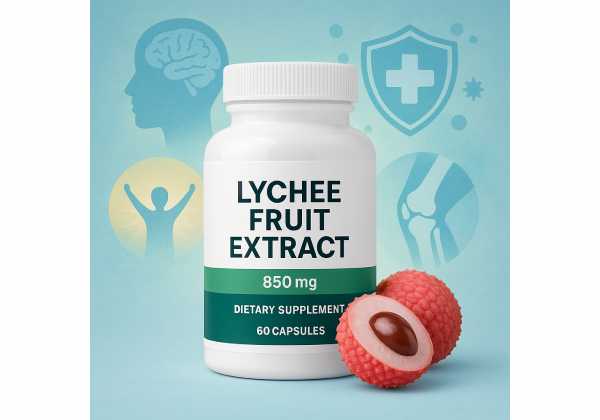
Lychee fruit extract is best known for a standardized form called “oligomerized polyphenols” (often marketed as Oligonol), made from Litchi chinensis. It concentrates small,...
Lycopene: Evidence for Skin and Cardiovascular Support, Best Sources, Dosage, and Risks

Lycopene is the red carotenoid that gives tomatoes, watermelon, and pink grapefruit their color. Beyond appearances, it acts as a potent singlet-oxygen quencher and...
Lycopus virginicus: Thyroid-Calming Benefits, How to Use, Dosage, and Safety

Lycopus virginicus—commonly called bugleweed—is a traditional North American mint-family herb used for calming symptoms that often accompany mild or early hyperthyroidism, such as a...
Lythrum salicaria: Evidence for Gut Support, Best Preparations, Recommended Dosage, and Side Effects

Known as purple loosestrife, Lythrum salicaria is a wetland plant with a long history in European folk and official medicine for soothing acute diarrhea,...
Kachnar (Bauhinia variegata) guide: health benefits, properties, recommended dosage, and risks

Kachnar (Bauhinia variegata)—also called Kanchanar, Mountain Ebony, or Orchid Tree—is a deciduous tree prized across South and Southeast Asia for its bark, flowers, and...
Kacip Fatimah for women’s health: research-backed benefits, how to take it, dosage, and safety

Kacip Fatimah (Labisia pumila) is a small rainforest herb native to Malaysia and neighboring regions, long valued in traditional Malay medicine for women’s health....
Kadamb benefits and uses explained: dosage guidelines, side effects, and research

Kadamb (Neolamarckia cadamba), also known as Anthocephalus cadamba or the cadamba tree, is a fast-growing, culturally revered tree native to South and Southeast Asia....
Kadcyla for HER2-positive breast cancer: how it works, recommended dosage, monitoring, and risks
Kadcyla (ado-trastuzumab emtansine, often written T-DM1) is a targeted anticancer therapy for HER2-positive breast cancer. It joins a monoclonal antibody (trastuzumab) to a microtubule-inhibiting...
Kadian for long-acting pain relief: how it works, recommended dosage, risks, and precautions
Kadian is a brand of morphine sulfate extended-release (ER) capsules designed to deliver steady, around-the-clock pain control for adults who need a continuous opioid...
Kaempferide for inflammation and oxidative stress: how it works, practical dosage, and side effects

Kaempferide (3,5,7-trihydroxy-4′-methoxyflavone) is a naturally occurring flavonol found in several edible and medicinal plants, including Alpinia officinarum (lesser galangal), Tagetes erecta (marigold), and Chromolaena...
Kaempferitrin: Metabolic Benefits, Evidence-Based Dosage, Best Uses, and Safety Profile

Kaempferitrin is a naturally occurring flavonoid glycoside—chemically, kaempferol 3,7-dirhamnoside—best known from the leaves of Bauhinia forficata (Brazil’s “pata-de-vaca”) and a few other botanicals. In...
Kaempferol: What It Is, Proven Benefits, How Much to Take, and Side Effects

Kaempferol is a plant-derived flavonol found in onions, kale, spinach, capers, tea, and many medicinal herbs. In research settings, it’s studied for antioxidant and...
Kahweol: Unfiltered Coffee Effects, Cholesterol Impact, Safe Intake, and Practical Tips

Kahweol is a natural compound found in coffee oils, most abundant in unfiltered brews such as Turkish, Scandinavian boiled, and French press. It belongs...