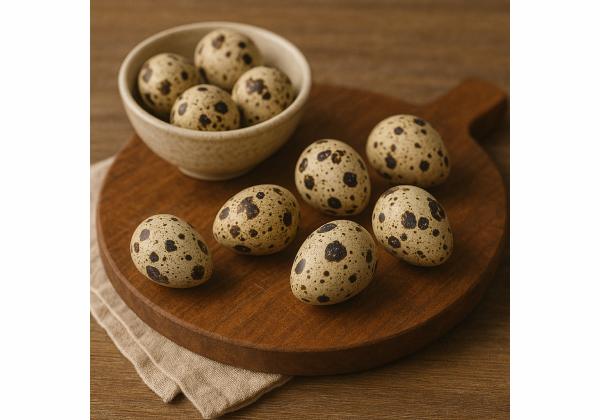
Partridge eggs are petite, speckled, and packed with high-quality protein, essential vitamins, and minerals. Per 100 g, their macronutrient balance closely mirrors that of other game bird and chicken eggs, delivering about 12–13 g protein with very little carbohydrate. Cooks prize them for delicate flavor, tender texture, and striking presentation—perfect for canapés, tapas, salads, and pickling jars. Beyond the plate, partridge eggs offer notable amounts of vitamin B12, riboflavin, selenium, and choline—nutrients linked to energy metabolism, red-blood-cell formation, thyroid support, and brain health. Because partridge eggs are smaller than chicken eggs (typically ~21 g each), portions are easy to tailor: two to three make a snack; four to five stand in for a single large hen’s egg in recipes. As with any raw egg, safe handling and proper cooking matter to minimize foodborne risk. This guide explains the nutrition, evidence-based benefits, potential downsides, buying and storage tips, cooking methods that preserve nutrients, and smart portions—so you can enjoy partridge eggs with confidence.
Fast Facts
- Compact nutrient source: ~12.5 g protein and ~9.5 g fat per 100 g, with meaningful vitamin B12, riboflavin, selenium, and choline.
- Handle like any raw egg: refrigerate at 4 °C (40 °F) or below and cook until yolk and white are firm to reduce Salmonella risk.
- Practical portion: 3 partridge eggs (~60 g total) two to four times per week suits most healthy adults.
- Limit or avoid if you have an egg allergy; discuss intake with your clinician if you are a cholesterol hyper-responder or on a phosphorus-restricted diet.
Table of Contents
- Partridge Eggs: Detailed Overview
- Partridge Egg Nutrition Profile
- Partridge Egg Health Benefits
- Risks, Allergies and Interactions
- Selecting, Quality, Sustainability and Storage
- Preparation, Cooking and Nutrient Retention
- Portions, Comparisons and FAQs
Partridge Eggs: Detailed Overview
Partridge eggs come primarily from species in the genera Alectoris (e.g., chukar/rock partridge) and Perdix (grey partridge). They are oval, cream to buff with speckling, and notably smaller than chicken eggs. A typical chukar partridge egg weighs about 16–25 g (average ~21 g), which means you need roughly two to three partridge eggs to equal the edible mass of one large chicken egg. Shell thickness is fine yet sturdy enough for pickling and soft-boiling, and the yolk-to-white ratio produces a mild, slightly gamey richness that excels in bite-size dishes.
Culinarily, partridge eggs shine where visual impact and subtle flavor matter:
- Halved and topped for canapés (e.g., micro-herbs, smoked salt).
- Soft-boiled and served warm with asparagus or spring vegetables.
- Poached and placed over grain bowls or salads for a small yet satisfying protein.
- Quick-pickled for tapas platters (their size absorbs brine rapidly and looks striking in jars).
From a nutrition standpoint, the proximate composition of game bird eggs—pheasant, chukar partridge, quail, and guinea fowl—is remarkably similar per 100 g to that of hen’s eggs: ~12% protein, ~9–11% fat, ~0.7% carbohydrate, and ~74% moisture. In other words, the smaller size does not dilute nutrient density; it changes only the per-egg total. This makes portion control straightforward: small eggs allow more granularity without overcommitting to a large serving.
Sourcing varies by region. In many countries, wild egg collection is illegal; partridge eggs sold for eating usually come from licensed game farms. Labels may not list full micronutrient panels, but their per-100 g profile aligns closely with standard whole-egg composition. As with all eggs, the hen’s diet and husbandry affect yolk color and certain vitamins (A, D, E) and fatty-acid profile. Expect seasonal and producer-level variation—especially if fed pasture, alfalfa, or specialized feed blends.
In the kitchen, treat partridge eggs as you would any shell egg: keep them cold, cook them thoroughly if unpasteurized, and reserve raw preparations for pasteurized eggs only. Their small size shortens cook times; a few minutes can mean the difference between runny, jammy, and fully set yolks. You’ll find exact time charts in the preparation section below.
Partridge Egg Nutrition Profile
How to read this profile: Values below are per 100 g edible portion of whole egg (shell excluded). Because partridge eggs match the per-100 g composition of other game bird and hen eggs, the tables reflect average whole-egg data. Actual values vary with species, feed, and husbandry. %DV uses current adult Daily Values; for nutrients with Adequate Intakes (AI), this is noted.
Macros and Electrolytes (per 100 g)
| Nutrient | Amount | %DV |
|---|---|---|
| Energy | 143–155 kcal | — |
| Water | ~74 g | — |
| Protein | ~12.5 g | 25% |
| Total Fat | ~9.5 g | 12% |
| Saturated Fatty Acids | ~2.64 g | 13% |
| Monounsaturated Fatty Acids | ~3.66 g | — |
| Polyunsaturated Fatty Acids | ~1.65 g | — |
| Cholesterol | ~398 mg | 133% |
| Carbohydrate | ~0.7 g | 0% |
| Sodium | ~142 mg | 6% |
| Potassium | ~138 mg | 3% |
Fats and Fatty Acids (per 100 g)
| Component | Amount | %DV |
|---|---|---|
| Omega-3 DHA (docosahexaenoic acid) | ~0.09 g | — |
| Omega-3 EPA (eicosapentaenoic acid) | ~0.00–0.003 g | — |
| Omega-6 Linoleic acid (18:2 n-6) | ~1.38 g | — |
| Arachidonic acid (20:4 n-6) | ~0.12–0.13 g | — |
Vitamins (per 100 g)
| Vitamin | Amount | %DV |
|---|---|---|
| Vitamin A (retinol activity equivalents) | ~160 µg | 18% |
| Vitamin D | ~2.0 µg | 10% |
| Vitamin E (alpha-tocopherol) | ~1.05 mg | 7% |
| Vitamin K (phylloquinone) | ~0.3 µg | 0% |
| Thiamin (B1) | ~0.04 mg | 3% |
| Riboflavin (B2) | ~0.457 mg | 35% |
| Niacin (B3) | ~0.075 mg | 0% |
| Pantothenic acid (B5) | ~1.533 mg | 31% |
| Vitamin B6 | ~0.17 mg | 10% |
| Folate (DFE) | ~47 µg | 12% |
| Vitamin B12 | ~0.89 µg | 37% |
| Choline* | ~290–300 mg | ~53% AI* |
*Choline uses Adequate Intake (AI) of 550 mg/day for adults. Eggs are a major dietary choline source.
Minerals and Trace Elements (per 100 g)
| Mineral | Amount | %DV |
|---|---|---|
| Calcium | ~56 mg | 4% |
| Iron | ~1.75 mg | 10% |
| Magnesium | ~12 mg | 3% |
| Phosphorus | ~198 mg | 16% |
| Potassium | ~138 mg | 3% |
| Selenium | ~30 µg | 55% |
| Sodium | ~142 mg | 6% |
| Zinc | ~1.29 mg | 12% |
| Iodine | ~21 µg | 14% |
Allergens & Intolerance Markers
- Major allergen (egg white proteins such as ovomucoid, ovalbumin; yolk proteins can also sensitize).
- Raw whites contain avidin, which binds biotin; cooking denatures avidin and removes this concern.
Contaminants/Residues and Safety Notes
- Like other shell eggs, partridge eggs can harbor Salmonella on/in the shell if not properly handled. Refrigerate promptly at 4 °C (40 °F) or below and cook until yolk and white are firm if using unpasteurized eggs.
Glycemic & Acid–Base Metrics
- Carbohydrate ~0.7 g/100 g → negligible glycemic impact.
- Positive dietary acid load (common to animal proteins), balanced easily with vegetables and fruit in mixed meals.
Additives & Fortification
- Farmed partridge eggs are not typically fortified. Yolk vitamin A/D/E and fatty acids vary with feed (e.g., pasture, alfalfa, added marine oils).
Partridge Egg Health Benefits
1) High-quality, highly usable protein
Partridge eggs provide ~12.5 g complete protein per 100 g, containing all essential amino acids in ratios well suited to human needs. Protein supports maintenance of lean mass, immune function, and recovery from training or illness. Because each partridge egg is small (~21 g), they help you distribute protein across meals and snacks—an approach associated with better muscle protein synthesis than “back-loading” protein into a single large meal.
2) Brain and nerve support from choline and vitamin B12
Choline (largely from yolk phosphatidylcholine) is a precursor to acetylcholine and a component of cell membranes (phospholipids, sphingomyelin). Typical whole-egg portions supply meaningful amounts toward the AI, supporting cognitive function and fetal brain development in pregnancy. Vitamin B12 assists red-blood-cell formation and nervous system maintenance; a 100 g edible portion of eggs provides roughly a third of the daily requirement.
3) Thyroid and antioxidant defense
Eggs naturally supply iodine and selenium. Iodine supports thyroid hormone production; selenium is built into antioxidant enzymes (e.g., glutathione peroxidases) that protect cellular membranes from oxidative damage. Together they contribute to healthy metabolism, with selenium per 100 g reaching roughly half the Daily Value.
4) Eye-friendly carotenoids
Yolk carotenoids (lutein and zeaxanthin) accumulate in the macula of the eye, where they help filter blue light and quench reactive oxygen species. Although absolute amounts vary with the hen’s diet, regular inclusion of yolks raises blood levels of these carotenoids and contributes to long-term eye health. For many people who avoid leafy greens, eggs are an accessible carotenoid source.
5) Heart health—nuanced, not binary
Modern evidence suggests that, for most healthy individuals, eating eggs in moderate amounts does not increase cardiovascular disease risk. The fatty-acid profile favors unsaturated over saturated fats per 100 g, and dietary cholesterol responses differ widely between people. A subset (“hyper-responders”) shows larger LDL-cholesterol increases when dietary cholesterol rises; these individuals should individualize intake with their clinician or dietitian. For everyone, the total diet pattern (refined carb intake, saturated fat pattern, fiber, and activity) influences risk far more than any single food.
6) Satiety and weight management
Protein and dietary fat slow gastric emptying and increase fullness. Swapping a refined-carb breakfast for a protein-rich one (e.g., eggs with vegetables) often reduces snacking and may improve appetite control across the morning. Small eggs like partridge eggs make it easy to dial in the amount of protein you need without overshooting calories.
7) Culinary versatility that supports dietary adherence
Health benefits only matter if foods fit your life. Partridge eggs cook quickly, pair with almost any cuisine, and elevate presentation—useful for family meals, entertaining, or prepping compact, ready-to-eat proteins (e.g., quick-pickled eggs in the fridge). Enjoyment and convenience improve adherence to healthy eating patterns over time.
Risks, Allergies and Interactions
Foodborne illness
All shell eggs, including partridge eggs, can carry Salmonella. Reduce risk by buying refrigerated eggs from reputable sources, refrigerating at 4 °C (40 °F) or below, preventing cross-contamination, and cooking until both white and yolk are firm (or to 71 °C/160 °F in mixed dishes). Pasteurized shell eggs or pasteurized liquid egg products are the safer choice for recipes served raw or barely cooked.
Allergy
Egg allergy is most common in children but can persist into adulthood. Proteins in egg white (e.g., ovomucoid, ovalbumin) and yolk (e.g., livetins) may provoke reactions. Symptoms can include hives, wheezing, vomiting, or anaphylaxis. Those with confirmed egg allergy should strictly avoid partridge eggs unless cleared by an allergist after supervised challenge. Cross-reactivity among avian eggs is possible.
Biotin binding from raw egg whites
Raw egg whites contain avidin, which binds biotin very strongly. Frequent raw-white consumption can reduce biotin bioavailability and cause deficiency-like problems over time. Heat denatures avidin; cooked eggs do not pose this concern.
Cholesterol and hyper-responders
Per 100 g, eggs contain roughly 398 mg cholesterol. Many people show little change in blood cholesterol when they eat eggs, but hyper-responders may experience larger LDL increases. If you have familial hypercholesterolemia, established cardiovascular disease, or you’re on lipid-lowering therapy, personalize egg intake with your healthcare team.
Phosphorus and kidney disease
Whole eggs provide roughly 198 mg phosphorus per 100 g. Individuals on phosphorus-restricted diets (e.g., advanced chronic kidney disease) should consider the cumulative phosphorus load from eggs alongside other dietary sources and clinician guidance.
Pregnancy and immunocompromise
The risk of severe illness from Salmonella is higher during pregnancy, in older adults, and in people with weakened immune systems. Choose pasteurized eggs for any recipe served undercooked, and keep handling exceptionally sanitary.
Medication and lab-test considerations
Large supplemental doses of biotin—not eggs—can interfere with some lab tests. However, the avidin point above matters if consuming raw whites habitually. If you take high-dose biotin, tell your clinician before lab work.
Bottom line
For most healthy adults, properly cooked partridge eggs are a safe, nutrient-dense food. Tailor intake if you have an egg allergy, are a cholesterol hyper-responder, or need to manage phosphorus.
Selecting, Quality, Sustainability and Storage
Selecting quality eggs
- Source: Buy from licensed game farms or reputable specialty retailers. Avoid foraged wild eggs—collection is often illegal and risks contamination.
- Shell check: Choose clean, intact shells with no cracks. Speckling and color variation are normal and not indicators of quality.
- Carton date: If sold in cartons, prefer eggs packed most recently. Farm-stand eggs may carry a collect-by date; ask producers about freshness and refrigeration.
- Smell test once opened: A sour or sulfurous odor means the egg should be discarded.
Sustainability considerations
- Small game farms can minimize transport distances and support biodiversity-friendly land uses. Ask producers about feed (e.g., grains vs. pasture supplements), flock health, and humane practices.
- Reduce waste: partridge eggs cook fast, so plan meals to use what you buy within a few weeks.
Storage and handling—consumer guidance
- Refrigerate immediately at 4 °C (40 °F) or below; keep eggs in their carton on a refrigerator shelf (not on the door).
- Time limits: For best quality, use refrigerated shell eggs within 3 weeks of purchase. Hard-cooked eggs (peeled or in-shell) keep up to 1 week in the refrigerator. Leftover egg dishes keep 3–4 days refrigerated.
- Freezing: Do not freeze in the shell. To freeze, beat whole eggs, portion, and freeze airtight; use within a year for best quality. Whites freeze well; yolks need sugar or salt to prevent gelation if frozen alone.
- Cross-contamination: Wash hands, tools, and surfaces after contact with raw egg. Keep raw and ready-to-eat foods separate.
- For raw or lightly cooked recipes: Use pasteurized shell eggs or pasteurized egg products.
Special note for hatching eggs vs. table eggs
- If you raise partridges, know that storage advice for hatching eggs (e.g., turning, precise humidity, and room-temperature holding periods) differs from table-egg advice. For eating eggs, default to prompt refrigeration and normal kitchen food-safety practices.
Preparation, Cooking and Nutrient Retention
Cook times for partridge eggs (average ~21 g each)
Small eggs set quickly. Use a timer and an ice bath for precision.
- Soft-boiled (runny yolk): 3–3½ minutes at a gentle boil; plunge into ice water 1 minute to stop carryover.
- Jammy-set yolk: 4–4½ minutes; chill briefly; peel under running water.
- Hard-boiled: 5–6 minutes; cool completely for clean peeling.
- Poached: 1½–2 minutes in barely simmering water acidified with a dash of vinegar; swirl gently.
- Fried: Medium-low heat; 1–2 minutes per side for over-easy; longer for over-medium/over-hard.
- Baked/roasted: 6–8 minutes in a 200 °C (400 °F) oven when baking multiple eggs in ramekins or on fingerling potatoes—watch closely.
Flavor pairings and serving ideas
- Bright and herby: chives, dill, parsley, tarragon; lemon zest; capers.
- Smoky and savory: smoked paprika, speck, anchovy crumbs, crisp pancetta.
- Vegetable partners: asparagus tips, baby spinach, roasted peppers, shaved fennel.
- Grains and legumes: farro or barley salads; lentils with mustard vinaigrette and warm halved eggs.
- Pickled: 50/50 vinegar-water brine with 2–3% salt, garlic, peppercorns, and bay; chill 24–72 hours.
Nutrient retention tips
- Cook just to doneness. Overcooking toughens proteins and can green the yolk (iron–sulfur reaction) without improving safety.
- Use moist heat when possible (poach, coddle) to protect heat-sensitive B vitamins.
- Pair with plants. Serve eggs with vegetables or greens to add fiber, potassium, and phytochemicals; this helps balance the meal’s acid load.
- Mind fat quality. If frying, use oils rich in unsaturated fats (e.g., extra-virgin olive oil) and moderate heat to avoid oxidizing lipids.
- Choose pasteurized eggs for recipes that traditionally serve eggs undercooked (e.g., aioli, Caesar dressing); you can keep the texture while maintaining safety.
Kitchen troubleshooting
- Hard to peel? Use eggs that are a few days old and cool fully before peeling. Rolling the egg gently to create micro-cracks helps the shell release.
- Uneven set? Small eggs overcook fast. Reduce heat and try steaming or sous-vide for more control.
- Rubbery whites? Lower your cook temperature or shorten the time; carryover heat matters more in small eggs.
Portions, Comparisons and FAQs
Smart portions
- Everyday use: A practical adult snack is 3 partridge eggs (~60 g total), offering ~7–8 g protein and ~85–95 kcal depending on cook method.
- Swap for chicken eggs: 2–3 partridge eggs ≈ 1 large hen’s egg in most recipes. Adjust salt and oil accordingly.
- Kids: Start with 1–2 partridge eggs, watching texture preferences and ensuring thorough cooking.
- Athletes/active adults: Use partridge eggs to “top off” protein at breakfast or post-workout without adding much volume.
Comparisons
- Versus chicken eggs: Per 100 g, macros and micronutrients are very similar. The main difference is portion control—smaller eggs make it easier to tailor intake.
- Versus quail eggs: Flavor and texture are comparable; quail eggs are typically a bit smaller. Cook times are similar; both pickle beautifully.
- Cholesterol: Per 100 g, cholesterol content aligns closely across bird species; individual responses vary.
- Cost and availability: Partridge eggs are a specialty item and often cost more than hen’s eggs; availability may be seasonal.
Frequently asked questions
Are partridge eggs safe to eat soft-boiled?
Use pasteurized shell eggs for any runny-yolk preparation. If eggs are unpasteurized, cook until both white and yolk are firm for highest safety.
Do partridge eggs taste different from chicken eggs?
They’re slightly richer and “eggier” but not strong. Many tasters describe them as delicate and sweet, with a creamy yolk.
Are partridge eggs lactose-free and gluten-free?
Yes—eggs contain no lactose or gluten. Watch added ingredients in recipes.
Can I eat partridge eggs on a low-carb or keto diet?
Yes. Carbohydrate is below 1 g per 100 g; they fit well in low-carb patterns.
How long do pickled partridge eggs keep?
Refrigerated, properly acidified pickled eggs can keep several weeks. Always keep them cold and use clean utensils to remove eggs from the jar.
Who should limit intake?
People with egg allergy must avoid them. Those with familial hypercholesterolemia, very high LDL-cholesterol, or phosphorus-restricted diets should personalize portions with a clinician or dietitian.
What about ethics and wildlife?
Buy from licensed farms. Collecting wild partridge eggs is often unlawful and ecologically harmful.
References
- The Golden Egg: Nutritional Value, Bioactivities, and Emerging Benefits for Human Health 2019 (Review)
- A Comparison of Egg Quality of Pheasant, Chukar, Quail and Guinea Fowl 2000
- What You Need to Know About Egg Safety 2024 (Guidance)
- Biotin – Health Professional Fact Sheet 2022 (Fact Sheet)
- Effect of Breed and Diet Type on the Freshness and Quality of Eggs 2020 (Study)
Disclaimer
This article is for general information and education. It does not replace personalized medical advice, diagnosis, or treatment. Always consult a qualified healthcare professional about your specific health needs, food allergies, and dietary changes—especially if you are pregnant, immunocompromised, managing high cholesterol, or on a kidney-restricted diet.
If you found this guide useful, please consider sharing it on Facebook, X (formerly Twitter), or your favorite platform. Your support helps us keep producing clear, balanced nutrition content.