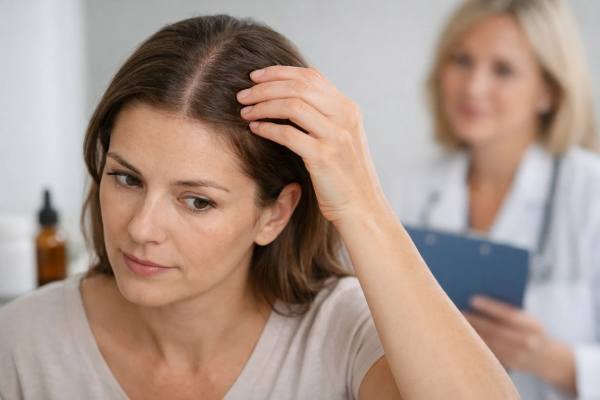
PCOS-related hair loss can feel especially unfair. The same hormonal pattern that drives unwanted facial hair or acne can also thin the scalp, often in a slow, confusing way that is easy to dismiss at first. Many people notice a wider part, less volume at the crown, or a ponytail that feels smaller long before they see obvious bald spots. By the time the change looks visible in photos, the problem has usually been building for months.
That delay is part of what makes PCOS hair loss so stressful. It is not only about “high testosterone.” It involves local conversion to DHT, follicle sensitivity, insulin resistance, inflammation, genetics, and the hair cycle itself. The good news is that treatment can work, especially when the pattern is recognized early and the plan targets both the scalp and the underlying hormonal environment. The most effective approach is rarely one product. It is usually a layered strategy built around diagnosis, realistic timelines, and steady treatment.
Top Highlights
- PCOS hair loss usually behaves like female pattern hair loss, with widening at the part and reduced density through the crown.
- Effective treatment often combines scalp-focused therapy such as minoxidil with hormonal or metabolic treatment when appropriate.
- Early treatment can preserve more hair, because follicles respond better before miniaturization becomes advanced.
- Antiandrogens can help some patients, but they require medical supervision and reliable contraception when pregnancy is possible.
- Track progress with monthly photos in the same lighting, because visible improvement usually takes at least three to six months.
Table of Contents
- Why PCOS can thin scalp hair
- What the thinning pattern looks like
- How diagnosis and workup should happen
- Treatments that target DHT and regrowth
- Lifestyle steps that support better results
- Timelines, setbacks, and when to escalate
Why PCOS can thin scalp hair
PCOS hair loss is often described as a DHT problem, and that is partly true, but it is not the whole story. The fuller explanation begins with hyperandrogenism. In PCOS, the ovaries, and sometimes the adrenal contribution to androgen balance, can create a hormonal environment that is more androgen-active than expected. Those androgens do not affect every follicle equally. The scalp follicles that are genetically sensitive can respond by gradually miniaturizing, meaning each new hair grows back finer, shorter, and less pigmented than before.
DHT matters because it is a more potent androgen at the follicle level than testosterone. In susceptible scalp areas, testosterone can be converted by 5-alpha-reductase into DHT, and that local signal can accelerate follicle shrinkage. Over time, the hair cycle shortens. The anagen phase becomes briefer, the resting interval becomes more prominent, and the visible density of the hair slowly drops.
That still does not explain why one person with PCOS keeps thick hair and another loses it. The answer is sensitivity. Blood levels matter, but local follicle sensitivity matters too. Some people with only mild biochemical androgen excess still develop noticeable thinning. Others with more obvious hormonal changes have acne and hirsutism but limited scalp loss. The follicle’s response is part hormonal, part genetic, and part environmental.
Insulin resistance adds another layer. In many people with PCOS, high insulin levels stimulate ovarian androgen production and lower sex hormone-binding globulin, which increases the amount of active circulating androgen. That can make the scalp environment even less favorable. This is one reason PCOS hair loss often travels with irregular cycles, acne, increased facial hair, central weight gain, or acanthosis nigricans, even though not every patient has the same mix.
There is also a timing issue. Hair responds slowly. A follicle may begin changing long before the mirror reveals the difference. That is why the thinning often feels mysterious. You do not wake up one week and suddenly “have PCOS hair loss.” The process usually builds over months or years, then becomes visible once enough hairs have miniaturized.
A useful way to think about it is this:
- androgens set the stage
- DHT amplifies the scalp signal
- insulin resistance can intensify the hormonal environment
- genetics determines which follicles are most vulnerable
- time turns subtle miniaturization into visible thinning
It is also important to remember that PCOS is not the only cause of thinning in women. Iron deficiency, thyroid disease, medication effects, rapid weight loss, postpartum changes, and telogen effluvium can all overlap with or mimic androgen-driven loss. A broader look at common causes of hair loss in women is often helpful when the story does not fit a simple PCOS pattern.
The practical takeaway is that PCOS hair loss is not random and not purely cosmetic. It reflects a biologic pattern that can be treated more effectively once you understand the hormonal and follicular logic behind it.
What the thinning pattern looks like
Most PCOS-related scalp loss looks more like female pattern hair loss than dramatic patchy baldness. That distinction matters because many people expect a “bald spot” and miss the earlier, more common pattern: a wider central part, reduced density at the crown, and a general sense that the hair no longer covers the scalp the way it used to.
The frontal hairline is often preserved, especially at first. Instead of seeing a sharply receding edge, people notice that the hair at the top of the head looks flatter, the scalp flashes more easily under bright light, or the crown seems sparse when the hair is pulled back. Some describe it as “my hair is still there, but there is less of it.” That description is surprisingly accurate. Miniaturization usually reduces the bulk and caliber of the hair before it produces obvious empty areas.
The pattern can vary. Some people develop widening through the midline and top scalp. Others lose more density over the temples and frontal accentuation area. The change may be gradual enough that it is most obvious in photos, while blow-drying, or when comparing old ponytail thickness with current thickness. Because the process is slow, many people mistake it for normal aging, stress, or a bad haircut.
This is where comparison with other hair disorders helps:
- telogen effluvium usually causes more diffuse shedding from all over the scalp
- alopecia areata causes patchy, discrete smooth bald spots
- traction alopecia favors the hairline and areas under repeated tension
- breakage leaves shorter snapped hairs rather than true root loss
- female pattern loss creates gradual thinning in a characteristic distribution
Shedding can still happen in PCOS, but it is not usually the main event. The core issue is that the new hairs return thinner. That is why the part slowly widens even if the daily shed is not dramatic. Someone may feel that “I am not losing handfuls, but my hair is clearly less dense.” That is classic miniaturization language.
A useful self-check is to ask where the scalp shows most. If visibility is greatest through the part, mid-scalp, and crown, with relative preservation of the sides and occiput, female pattern loss becomes more likely. If the hair loss is abrupt, patchy, inflamed, or painful, the picture may be something else.
Visual staging tools can help, but they are not perfect. Many clinicians use scales such as Ludwig or Olsen patterns to follow severity, yet photos under consistent lighting are often more useful for real-life monitoring. Hair behaves differently under bathroom lights, daylight, oily roots, or freshly styled blowouts, so consistency matters more than memory.
When you want a better framework for what these patterns look like over time, a guide to female pattern hair-loss stages and treatment can help you understand where mild thinning ends and more established miniaturization begins.
The most important point is this: PCOS hair loss often hides in plain sight. It is more often a pattern problem than a patch problem, and recognizing that pattern early can preserve treatment options later.
How diagnosis and workup should happen
A diagnosis of PCOS hair loss should never begin and end with the mirror. Hair thinning may be one clue, but it is not enough by itself to diagnose PCOS, and it is not enough to assume PCOS is the only explanation once the syndrome is already known.
In adults, PCOS is generally diagnosed when two of three features are present after other causes have been excluded: ovulatory dysfunction, clinical or biochemical hyperandrogenism, and polycystic ovarian morphology or an elevated anti-Mullerian hormone result used in the right context. Hair loss fits under clinical hyperandrogenism, but there is an important nuance: female pattern hair loss by itself is a weaker predictor of biochemical hyperandrogenism than hirsutism. That means scalp thinning should prompt a careful evaluation, not an automatic assumption.
A strong workup usually starts with the story. Clinicians want to know:
- when the thinning started
- whether it was gradual or sudden
- whether cycles are irregular
- whether acne, hirsutism, or weight changes are present
- whether pregnancy, postpartum shifts, illness, or crash dieting could explain the shedding
- whether there is a family history of pattern thinning
The scalp exam matters just as much. Pattern thinning with preserved follicular openings points in one direction. Scaling, folliculitis, pain, scarring, or discrete patches point in another. Trichoscopy can help distinguish miniaturization from inflammatory or scarring conditions. In unclear cases, biopsy is sometimes needed, though not routinely.
Laboratory testing depends on the history, but many clinicians consider ferritin or iron studies, thyroid testing, and androgen evaluation. If the hyperandrogenism is new, severe, or progressing unusually fast, the workup has to widen. Rapid-onset virilization, markedly abnormal androgen levels, or severe worsening should prompt evaluation for causes beyond routine PCOS, including adrenal or ovarian tumors and other endocrine disorders.
This is also where overlap becomes important. Someone can have true PCOS and also have iron deficiency, thyroid disease, or telogen effluvium from stress or weight loss. In that case, treating only the androgen side leaves the whole picture incomplete. A careful review of blood tests commonly used in hair-loss evaluation can help clarify why the workup is broader than testosterone alone.
A sensible diagnosis process also rules out look-alikes. Ask more questions when any of these appear:
- sharply patchy loss
- loss of brows or lashes
- marked scale or redness
- scalp pain or burning
- sudden heavy shedding after a trigger
- very fast progression over weeks rather than months
The goal of workup is not to delay treatment. It is to make treatment more accurate. If the thinning is truly androgen-driven in the setting of PCOS, you want to know that early. If it is mixed with other triggers, you want to correct those too. Hair improves fastest when the plan matches the biology from the beginning.
Treatments that target DHT and regrowth
The best treatment plan for PCOS hair loss usually combines two goals: protect the follicle from androgen-driven miniaturization and push more follicles toward stronger growth. That is why “one miracle product” is rarely the answer.
Topical minoxidil remains the most established scalp-directed treatment for female pattern hair loss. It does not block DHT directly. Instead, it helps extend the growth phase and improve follicle performance, which is why it remains the first-line choice for many patients. It works best when used consistently and early. Many people need at least three to six months before judging whether it is helping, and six to twelve months gives a fairer picture. If you are choosing between textures, a guide to minoxidil foam versus solution for a sensitive scalp can help you pick the version you are most likely to keep using.
When androgen excess is a clear driver, antiandrogens may be added. Spironolactone is one of the most common options because it reduces androgen signaling at the follicle level and can be especially useful in women who also have acne, hirsutism, or ongoing signs of hyperandrogenism. It is not instant, and it is not appropriate for everyone, but it is a frequent part of real-world treatment plans. Because antiandrogens can affect a male fetus, effective contraception is essential when pregnancy is possible.
Combined oral contraceptives can also play a role, especially when cycle control and androgen symptom reduction are both goals. They do not regrow hair overnight, but they may reduce the hormonal pressure that is driving further miniaturization. In practice, many patients do best with more than one therapy running at once rather than waiting to see whether one ingredient does everything.
Other options exist, but they are more selective. Low-dose oral minoxidil is increasingly used off-label under supervision, especially when topical use fails or becomes too irritating. Finasteride or dutasteride may be considered in carefully selected adult patients, often under specialist guidance and with strict attention to pregnancy risk. These are not casual first-step treatments for someone who has not even tried minoxidil.
Adjuncts can help, but they deserve realistic expectations:
- platelet-rich plasma may help some patients, but results vary
- low-level light devices may offer modest benefit
- camouflage fibers, part powders, and cut changes can improve quality of life immediately
- treatment of seborrheic dermatitis or scalp inflammation can improve the scalp environment
The most useful thing to remember is that treatment works better as prevention than rescue. A follicle that is thinning can often be helped. A follicle that has miniaturized for years is harder to recover fully.
If spironolactone is being discussed, it helps to understand how spironolactone is used in female hair-loss treatment and why monitoring, contraception, and patience are part of the package. The real wins in PCOS hair loss usually come from layered therapy, not from waiting for one product to solve a hormonal process on its own.
Lifestyle steps that support better results
Lifestyle treatment is often oversold online and undersold in clinic conversations. It cannot replace effective scalp and hormonal therapy when miniaturization is already established. But in PCOS, it is far more than background advice. It can reduce insulin resistance, lower androgen drive in some patients, improve inflammation, and make medical treatment work in a more favorable environment.
The most useful starting point is not a trendy “PCOS diet.” It is metabolic stability. Regular meals, enough protein, better fiber intake, and fewer sharp cycles of restriction and rebound matter more than internet-perfect eating. Hair follicles do not respond well to chaos. Extreme calorie cutting, fasting experiments, and rapid weight swings can add telogen effluvium on top of androgenic thinning, which makes the loss look worse and harder to interpret.
Exercise helps for the same reason. It improves insulin sensitivity, supports weight maintenance, and can shift the endocrine environment in a more favorable direction, even when weight loss is modest. The goal is not punishment exercise. The goal is consistent movement that lowers metabolic stress instead of raising it.
A few lifestyle levers matter more than they sound:
- stable protein intake rather than erratic under-eating
- regular resistance and aerobic activity
- enough sleep to reduce recovery strain
- management of insulin resistance when present
- correction of iron deficiency or other nutritional gaps
- less repeated dietary whiplash from crash plans
That last point deserves emphasis. Some patients with PCOS are told to focus so intensely on weight that they end up under-fueling, which can worsen shedding even while they are “doing everything right.” Hair notices insufficient intake quickly, especially when dieting is aggressive.
Lifestyle work is also most honest when it is specific. “Eat cleaner” is vague. “Build each meal around a protein source, add fiber-rich carbohydrates, and avoid going all day on coffee and a protein bar” is actionable. “Exercise more” is vague. “Aim for a sustainable weekly mix of walking, strength training, and regular movement” is actionable.
For some people, improving insulin resistance is one of the most meaningful non-hair changes they can make for hair. When the metabolic side of PCOS improves, the hormonal pressure on the follicle may ease too. That does not mean lifestyle measures alone will reverse established miniaturization, but they can help make the medical plan more effective and reduce ongoing trigger load.
Nutrients also matter, especially when heavy periods, restrictive eating, or gut issues are part of the picture. Ferritin, vitamin D, B12, and protein status can all influence how well the hair holds on during treatment. This is not the place for blind supplement stacking. It is the place for correcting real gaps.
The practical message is simple: lifestyle care is not a substitute for evidence-based therapy, but in PCOS it is not optional window dressing either. It is the platform that makes the rest of the plan more durable.
Timelines, setbacks, and when to escalate
PCOS hair loss almost always improves more slowly than people want. That is not a sign that treatment is pointless. It is a sign that hair follicles obey biology, not urgency.
The first timeline to understand is the treatment timeline. Most evidence-based therapies need months, not weeks. Topical minoxidil often needs at least three to four months before subtle improvement becomes visible, and six months is a more reasonable checkpoint for whether the trend is moving in the right direction. Hormonal treatments may take just as long or longer. Some people notice reduced shedding before they see thicker coverage. Others do not appreciate progress until monthly photos are placed side by side.
Early setbacks are common. Minoxidil can trigger a temporary shed in some users as hairs cycle through. Hormonal treatment can feel slow and emotionally unrewarding because the scalp changes are delayed while facial or skin changes may shift sooner. Cosmetic improvement also depends on starting point. Hair that is mildly thinned may respond impressively. Hair that has been miniaturized for years may stabilize first and regrow only modestly.
A useful monitoring plan includes:
- baseline photos from the front, top, and crown
- repeat photos every four weeks in the same lighting
- notes on shedding, cycle regularity, acne, and new facial hair
- a review of tolerance, not just efficacy
- a six-month decision point rather than a six-week panic point
This is also where combination treatment earns its value. If one treatment partially helps but the loss remains active, the next step is often not quitting. It is layering thoughtfully. That may mean adding an antiandrogen, changing the minoxidil format, treating a scalp condition, or correcting an overlooked trigger such as low ferritin or thyroid dysfunction.
Escalation matters when the pattern stops behaving like routine PCOS-related thinning. Seek specialist review sooner if you notice:
- rapid progression over weeks
- smooth bald patches
- scalp pain, burning, or visible inflammation
- eyebrow or eyelash loss
- severe shedding after starting a new medication
- no meaningful stabilization after six to twelve months of appropriate treatment
This is especially important because mixed diagnoses are common. PCOS can coexist with telogen effluvium, seborrheic dermatitis, traction, or even autoimmune hair disease. When that happens, the usual PCOS plan may only partly work.
If you are unsure whether the pace of change is still reasonable, review the signs for when it is time to see a dermatologist for hair loss. In many cases, earlier specialist input saves months of trial and error.
The hardest truth about PCOS hair loss is also the most useful one: progress is usually slow, but slow does not mean small. The goal is not overnight reversal. It is to stop active miniaturization, support regrowth where possible, and protect more density over the long term than you would have had without treatment.
References
- Recommendations From the 2023 International Evidence-based Guideline for the Assessment and Management of Polycystic Ovary Syndrome – PMC 2023 (Guideline)
- Female pattern hair loss and polycystic ovarian syndrome: more than just hirsutism – PubMed 2022 (Review)
- Female-pattern hair loss: therapeutic update – PMC 2023 (Review)
- The Efficacy and Safety of Oral Spironolactone in the Treatment of Female Pattern Hair Loss: A Systematic Review and Meta-Analysis – PMC 2023 (Systematic Review)
- Deciphering the Role of Androgen in the Dermatologic Manifestations of Polycystic Ovary Syndrome Patients: A State-of-the-Art Review – PMC 2024 (Review)
Disclaimer
This article is for educational purposes only and is not a substitute for medical advice, diagnosis, or treatment. PCOS-related hair loss can overlap with other causes of thinning and shedding, including iron deficiency, thyroid disease, scalp inflammation, medication effects, and autoimmune hair loss. Prescription treatments for androgen-related hair loss may carry important risks, including pregnancy-related risks with antiandrogens. Seek care from a licensed clinician or dermatologist if hair loss is rapid, patchy, painful, associated with new severe androgen symptoms, or not improving with appropriate treatment.
If this article was helpful, please share it on Facebook, X, or any other platform your readers use most.