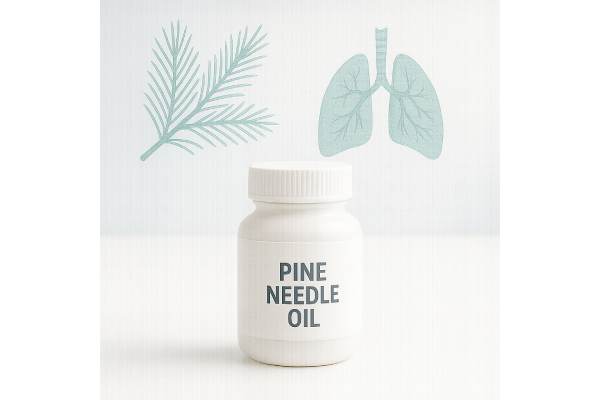
Pine needle oil is a highly concentrated essential oil distilled from the needles and young twigs of pine trees, most often species such as Scots pine or Korean red pine. It carries the sharp, resinous aroma people associate with conifer forests and is widely used in aromatherapy, liniments, bath products, and household cleaners. Traditionally, pine-based preparations have been used for respiratory comfort, muscle aches, and skin support. Modern laboratory research suggests antimicrobial, antioxidant, and anti-inflammatory potential, but human clinical evidence is still limited, especially for oral supplements.
Because pine needle oil is so concentrated, a few drops represent the chemical content of large amounts of plant material. That makes smart use and safety awareness essential. This guide walks you through what pine needle oil is, where it may be helpful, how to use it practically, why dosing is tricky, and who should avoid it so you can make informed decisions rather than rely on unproven marketing claims.
Key Facts for Pine Needle Oil Use
- Pine needle oil is mainly used for aromatic respiratory comfort and topical relief of mild muscle or joint discomfort, with most evidence coming from laboratory and animal studies rather than human trials.
- It is a concentrated essential oil; undiluted use on skin or self-directed oral use can cause irritation, toxicity, or poisoning, especially in children.
- Typical home use involves 1–2% diluted pine needle oil (about 1–2 drops per 5 mL carrier oil) applied to small skin areas, or 3–5 drops in a diffuser per session.
- People who are pregnant or breastfeeding, children, individuals with asthma or fragrance allergies, and anyone with serious chronic illness should avoid pine needle oil unless a qualified professional advises otherwise.
Table of Contents
- What is pine needle oil and how is it used?
- Main benefits of pine needle oil
- How to use pine needle oil safely
- Pine needle oil dosage guidelines
- Side effects and who should avoid pine needle oil
- What research says about pine needle oil
What is pine needle oil and how is it used?
Pine needle oil is an essential oil, not a simple herb extract. It is produced by steam distillation of the fragrant needles and young twigs of pine species. Common sources include Scots pine (Pinus sylvestris) in Europe and Asian species such as Pinus densiflora and Pinus koraiensis. The process concentrates volatile compounds like alpha-pinene, beta-pinene, limonene, bornyl acetate, and other terpenes that give pine its characteristic forest scent.
It is important to distinguish pine needle oil from related products:
- Pine needle tea or water extracts – far less concentrated, closer to a traditional herbal tea.
- Pine bark extract – rich in polyphenols such as proanthocyanidins, chemically quite different from the essential oil.
- Pine nut oil – a fatty food oil pressed from seeds, used in nutrition rather than aromatherapy.
Pine needle oil is usually sold in small dropper bottles as:
- A single essential oil (for diffusers and topical blends).
- An ingredient in chest rubs, massage oils, and bath products.
- A fragrance component in soaps, cleaning sprays, and air fresheners.
- In some markets, concentrated capsules marketed as “red pine needle oil” supplements.
Traditionally, pine oils and pine needle preparations have been used for:
- Easing stuffy noses and coughs through inhalation of vapors.
- Rubbing onto sore muscles and joints as a warming liniment.
- Supporting skin cleansing and wound care in folk medicine.
However, traditional use does not automatically translate into modern proof of benefit or safety. Today, pine needle oil should be viewed primarily as a potent aromatic and topical agent, not as a general-purpose internal remedy. Using it wisely means respecting that a few drops represent the chemical content of many grams of plant material.
Main benefits of pine needle oil
When people look up pine needle oil, they are usually interested in respiratory support, immune health, skin and wound care, or general “detox.” It helps to separate what is reasonably supported by evidence from what is speculation or marketing.
1. Respiratory comfort and airways support
The sharp, resinous aroma of pine needle oil can subjectively open the airways and make breathing feel easier when inhaled. Terpenes such as alpha-pinene may influence mucus clearance and airway smooth muscle tone. Inhalation blends that include pine are traditionally used:
- In diffusers during cold season.
- In steam inhalations (carefully, to avoid burns).
- As chest rubs diluted in carrier oils or balms.
These uses can contribute to a subjective feeling of clearer breathing and comfort, but they are not proven treatments for infections, asthma, or serious lung disease.
2. Antimicrobial and antiviral potential
Laboratory studies show that pine essential oils can inhibit the growth of various bacteria and fungi on culture plates and can inactivate some viruses in test systems. This supports their use as:
- Ingredients in natural cleaning sprays and surface sanitizers.
- Adjuncts in topical preparations designed to help keep minor skin issues clean.
However, these in vitro results cannot be assumed to translate directly into strong antimicrobial effects in the human body. The concentrations used in lab experiments are often higher and applied in ways that do not match real-life use.
3. Antioxidant and anti-inflammatory activity
Pine needle oil demonstrates antioxidant activity in cell models and can reduce inflammation markers in some animal studies. This may help explain traditional use for:
- Mild aches and pains when used in massage blends.
- Comforting inflamed or irritated tissues when properly diluted.
Again, this is supportive but preliminary evidence. It does not mean pine needle oil can treat arthritis, chronic pain, or systemic inflammation on its own.
4. Metabolic and weight-related findings (animal studies)
In some animal experiments, pine needle preparations have influenced body weight, blood lipids, or markers of fatty liver disease. These findings are interesting but early and are not a basis for using pine needle oil as a weight loss or metabolic supplement in humans.
5. Mood and environmental benefits
For many users, the main “benefit” is psychological: the fresh forest aroma can feel grounding and refreshing. Diffusing pine needle oil in moderation may help:
- Create a clean, outdoor-like atmosphere indoors.
- Support a sense of alert calmness or mental clarity.
Overall, pine needle oil offers plausible benefits for aroma, perceived respiratory comfort, and topical soothing, with supportive lab data for antimicrobial and antioxidant actions. What it does not provide is robust, human clinical evidence for curing infections, detoxifying the body, or treating serious illnesses. It is best viewed as a complementary wellness tool, not a stand-alone therapy.
How to use pine needle oil safely
Because pine needle oil is highly concentrated, “how” you use it is just as important as “how much.” The safest approaches are inhalation and diluted topical application. Direct oral use of essential oils is generally not recommended without individualized professional guidance.
1. Aromatherapy diffusion
A common way to use pine needle oil is in an ultrasonic or ceramic diffuser.
Practical guidelines:
- Add 3–5 drops of pine needle oil per 100 mL of water, or follow your diffuser’s instructions.
- Run for 10–30 minutes, 1–3 times per day, rather than all day long.
- Use in a well-ventilated room and avoid placing the diffuser right next to your face.
Special cautions:
- People with asthma or reactive airways may find strong pine vapors irritating and should use very low amounts or avoid diffusion.
- Do not diffuse in small, enclosed spaces around infants, pets, or caged animals.
2. Direct inhalation
For short, focused usage:
- Place 1–2 drops of pine needle oil on a tissue, hold it several centimeters away from your nose, and take a few gentle breaths.
- Alternatively, add 1–2 drops to a bowl of hot (not boiling) water and inhale the steam with your eyes closed and face at a safe distance.
Avoid placing essential oil directly under the nostrils or inside the nose, and never put essential oils into a nebulizer designed for medical inhaler solutions.
3. Topical use in massage or chest rubs
Topical application must always be diluted:
- For general use on small areas (chest, upper back, muscles), a 1–2% dilution is usually sufficient.
- A simple rule of thumb:
- 1% ≈ 1 drop of pine needle oil per teaspoon (5 mL) of carrier oil.
- 2% ≈ 2 drops per teaspoon (5 mL).
Steps:
- Choose a carrier oil such as sweet almond, jojoba, or fractionated coconut oil.
- Calculate the number of drops needed for your chosen dilution.
- Mix thoroughly, then apply a small amount to intact skin.
- Perform a patch test on a small area of the forearm and wait 24 hours before wider use.
Avoid:
- Applying near eyes, inside the nose or ears, or on mucous membranes.
- Using on broken, inflamed, or very sensitive skin.
- Using strong concentrations over large body areas, especially in children.
4. Baths and showers
If you enjoy pine-scented baths:
- Never drop neat essential oil straight into bathwater; it will float on the surface and can irritate skin.
- Instead, mix 3–5 drops with a tablespoon of carrier oil or an unscented bath base, then add this blend to the tub.
For showers, 1–2 drops on the shower floor outside the direct water stream can create a gentle aromatic effect without touching the skin.
5. Household cleaning
Pine needle oil can be added in small amounts to DIY cleaning sprays:
- Combine water, vinegar or mild soap, and a few drops of pine needle oil in a spray bottle.
- Label the bottle clearly and keep out of reach of children and pets.
Even for cleaning, avoid overusing essential oils on surfaces that children frequently touch or might lick.
In all cases, store pine needle oil tightly closed, away from heat and light, and always out of reach of children and animals. Essential oils can be dangerous if swallowed directly from the bottle.
Pine needle oil dosage guidelines
Unlike vitamins or prescription drugs, pine needle oil does not have a universally accepted, evidence-based dosage. Most guidelines are based on professional aromatherapy practice and national regulatory limits rather than on human clinical trials.
It is helpful to separate aromatic/topical dosing from oral supplement dosing, as their risk profiles are very different.
1. Aromatic use (diffusers and inhalation)
For most healthy adults:
- Diffuser use:
- Typically 3–8 drops per session, depending on room size and diffuser model.
- Run for 10–30 minutes at a time, up to 2–3 times daily.
- Steam inhalation:
- 1–2 drops in a bowl of hot water is usually sufficient.
- Use only once or twice a day and discontinue if you feel any irritation, dizziness, or tightness in the chest.
Children, older adults, and people with lung conditions should use lower amounts or avoid stronger forms of inhalation entirely.
2. Topical use (diluted on the skin)
Professional safety resources and regulatory agencies often cap the total essential oil concentration in finished topical products around 5% or less, with routine home use staying near 1–2%.
Practical home guidelines:
- Everyday chest rub or massage oil: 1% dilution (1 drop per teaspoon / 5 mL).
- Short-term use on small, localized areas in otherwise healthy adults: up to 2–3% dilution may be acceptable if the skin tolerates it.
As a rough upper limit for home use, many practitioners aim to stay below about 1–2 mL total essential oil per day across all topical applications, and often much less.
3. Oral supplements and capsules
This is the area where caution is greatest:
- There are no robust human clinical trials defining a safe or effective oral dose of pine needle oil for any condition.
- Commercial capsules may contain around 450 mg of pine needle oil, sometimes with labels suggesting 450–1,350 mg per day. These amounts are marketing decisions, not medically validated dosing.
- Essential oils taken orally can irritate the gastrointestinal lining, and high doses may affect the nervous system, kidneys, or lungs (if aspirated). Children are particularly vulnerable to poisoning from even small volumes of essential oils.
For these reasons, self-directed oral use of pine needle oil is generally not recommended. If a practitioner proposes an internal protocol, it should be tailored to your specific situation, with careful monitoring and clear attention to drug interactions and organ function.
4. Pine needle tea and other non-oil forms
Pine needle tea or standardized extracts are chemically and pharmacologically different from the essential oil:
- They contain water-soluble and mildly volatile compounds at much lower concentrations.
- They cannot be equated to milligram doses of pine needle oil.
If you use tea or non-oil extracts, follow product directions or herbalist guidance separately; do not simply convert essential oil drops into “equivalent” tea doses.
Overall, the safest practical “dosage” strategy for pine needle oil is to keep it low, local, and short-term: small numbers of drops, diluted on limited skin areas or used in brief diffusion sessions, rather than frequent high-dose or oral use.
Side effects and who should avoid pine needle oil
Even natural products can cause harm, and essential oils are a frequent source of preventable poisoning and skin reactions. Understanding pine needle oil’s potential side effects helps you decide if it is appropriate for you or your family.
Common and mild reactions
When used on the skin at typical aromatherapy dilutions, pine needle oil is often tolerated, but side effects can include:
- Skin irritation or redness, especially with higher concentrations or on sensitive areas.
- Allergic contact dermatitis, sometimes delayed by 24–48 hours. People with sensitivity to perfumes, conifer resins, or turpentine may react more easily.
- Headache, dizziness, or nausea from strong inhalation or prolonged diffusion in closed rooms.
These effects usually improve after stopping exposure, but persistent or severe symptoms should be evaluated by a healthcare professional.
More serious risks
With inappropriate use, the risks increase:
- Essential oil poisoning in children: Swallowing even a small amount of pine needle oil directly from the bottle can lead to nausea, vomiting, drowsiness, seizures, or breathing problems. This is a medical emergency.
- Lung injury: Aspiration of essential oils into the lungs (for example, if they are swallowed and “go down the wrong way”) can cause chemical pneumonia.
- Kidney and nervous system stress: High doses of terpene-rich oils in animals have been linked to organ toxicity. While direct human data are limited, this underlines why high-dose oral use is unsafe.
Who should avoid pine needle oil (or use only with specialist guidance)
It is generally best to avoid pine needle oil, or use it only under professional supervision, if:
- You are pregnant or breastfeeding. Animal data and experience with other essential oils raise enough concern to recommend avoidance.
- You are planning pregnancy and considering daily or high-dose use.
- You have asthma, chronic obstructive pulmonary disease (COPD), or very reactive airways, as inhaled terpenes can provoke symptoms in some individuals.
- You have a history of allergic reactions to conifers, resin, pine fragrances, turpentine, or many perfumes.
- You have severe eczema, psoriasis, or other skin barrier disorders, which may make irritation more likely.
- You have chronic liver or kidney disease, particularly if considering anything beyond occasional low-dose aromatic use.
- You are taking multiple medications with a narrow safety margin; essential oils may influence drug-metabolizing enzymes, even though data are incomplete.
Extra caution is needed around:
- Infants and young children: Avoid topical or inhaled pine needle oil in children under about 6 years without specialist guidance, and never allow access to the bottle.
- Pets: Cats, small dogs, birds, and other companion animals can be sensitive to essential oils. Avoid diffusing strong pine aromas in confined spaces with animals and never apply essential oils to pets unless directed by a veterinarian.
If you or someone else experiences trouble breathing, confusion, seizures, or severe vomiting after exposure to pine needle oil, seek emergency medical care and, where available, contact a poison control center.
What research says about pine needle oil
The scientific picture for pine needle oil is nuanced. There is a meaningful body of laboratory and animal research, but very little high-quality human clinical data. This means we can describe mechanisms and possibilities, but we cannot confidently promise clinical outcomes.
1. Chemical composition
Analyses of pine needle essential oils consistently find:
- High levels of monoterpenes such as alpha-pinene and beta-pinene, which contribute to aroma and respiratory effects.
- Other components including limonene, camphene, bornyl acetate, and various sesquiterpenes.
The exact profile varies by pine species, geographic origin, and plant part (needles, cones, branches), which helps explain why different products may smell and behave slightly differently.
2. Antimicrobial, antiviral, and antifungal effects
Multiple in vitro studies show that pine essential oils:
- Inhibit the growth of common bacteria, including some skin and food-borne species.
- Show antifungal activity against molds and yeasts.
- Can reduce the activity of certain viruses in controlled lab conditions.
The most recent work has evaluated essential oils from several Pinus species and oils from pine trunks or needles against a variety of pathogens. These findings support the idea that pine essential oils can contribute to hygiene and surface cleanliness and may be useful components of topical formulations designed to help keep minor wounds and skin issues clean.
However, real human infections are complex. The environment, immune system, and tissue penetration all differ from a petri dish. Lab results cannot be assumed to equal clinical effectiveness against infections.
3. Antioxidant and anti-inflammatory activity
Pine needle oils and extracts show:
- Free-radical scavenging activity and the ability to reduce oxidative stress markers in cell models.
- Anti-inflammatory effects in some rodent models of edema, pain, and tissue injury.
These mechanisms lend some biological plausibility to the traditional use of pine-based preparations for inflamed or painful tissues, but translation to human clinical practice remains incomplete.
4. Metabolic and other systemic effects
In animal models, pine needle preparations have:
- Altered body weight gain and fat accumulation on high-fat diets.
- Modified blood lipid profiles and markers of fatty liver.
These findings are intriguing but remain early-stage and species-specific. There is no solid evidence that pine needle oil supplements provide safe or effective metabolic therapy in humans.
5. Safety and toxicology data
Regulatory monographs and toxicology reviews report:
- Limited human data on long-term oral safety of pine essential oils.
- Acute toxicity in animals at high doses, with essential oils in general capable of causing serious poisoning if misused.
- Occasional cases of skin sensitization and allergic reactions in humans exposed to pine-related fragrance ingredients.
Taken together, the research suggests that pine needle oil is promising in vitro and potentially useful as part of aromatherapy and topical wellness practice, but it has not yet been validated as an oral therapeutic supplement. That is why responsible use focuses on low-dose aromatic and topical applications, with clear respect for its potency and safety limits.
References
- Antibacterial and Antiviral Properties of Pinus densiflora Essential Oil 2023
- Antimicrobial and Antioxidant Activity of Essential Oils from Selected Pinus Species from Bosnia and Herzegovina 2025
- Essential oils: a systematic review on revolutionizing health, nutrition, and omics for optimal well-being 2024 (Systematic Review)
- Toxicological safety assessment of essential oils used as food supplements to establish safe oral recommended doses 2021
Disclaimer
The information in this article is for general educational purposes only and is not intended to replace medical advice, diagnosis, or treatment from a qualified healthcare professional. Pine needle oil and other supplements can interact with medications and underlying health conditions, and their safety and effectiveness may vary between individuals. Always consult your doctor, pharmacist, or a qualified clinical herbalist or aromatherapist before starting, stopping, or changing any treatment or supplement, especially if you are pregnant, breastfeeding, taking prescription medicines, or living with chronic illness. Never delay seeking professional medical care because of something you have read here.
If you found this guide helpful, you are warmly invited to share it on Facebook, X (formerly Twitter), or any other platform you prefer, and to follow us on social media. Your thoughtful sharing helps support our work so we can continue creating clear, evidence-informed health content for more readers.