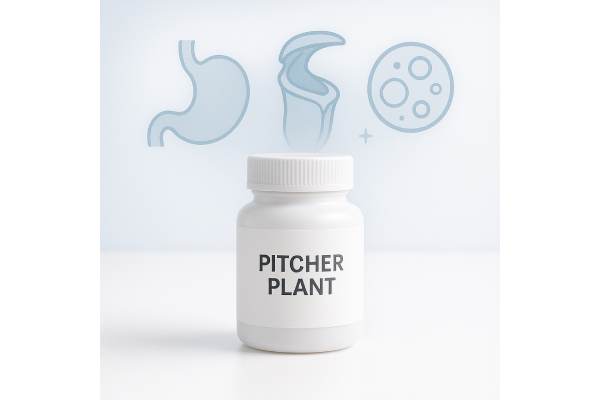
Pitcher plant, especially the purple pitcher plant (Sarracenia purpurea), is a carnivorous bog plant that has attracted both botanists and traditional healers for centuries. While most people know it as an unusual insect-eating plant, certain species have also been used in North American and European herbal traditions for infections, pain, urinary problems, and blood sugar concerns. Today, pitcher plant extracts appear in niche supplements, topical gels for cold sores, and in some countries as injectable preparations for pain management.
However, the modern evidence base is still limited. Most data come from laboratory and animal studies rather than large clinical trials. That means interest is high, but expectations must stay realistic and safety-minded. This guide walks you through what pitcher plant extract is, how it has been used, what current research suggests, possible dosage ranges, and who should avoid it, so you can have a balanced, informed conversation with a qualified healthcare professional.
Key Insights for Pitcher Plant Use
- Pitcher plant extract has traditional uses for infections, pain, urinary issues, and blood sugar support, but human evidence is still limited.
- Laboratory studies suggest antiviral, anti-inflammatory, and cytoprotective effects, particularly for Sarracenia purpurea leaf extracts.
- Common supplemental ranges are around 1–2 g dried herb as tea up to three times daily or 1–2 mL tincture up to three times daily for short-term use, under professional guidance.
- People who are pregnant, breastfeeding, living with serious kidney or liver disease, or taking strong prescription medicines should avoid self-medicating with pitcher plant products.
Table of Contents
- What is pitcher plant extract?
- Pitcher plant traditional and modern uses
- How pitcher plant may work in the body
- How to take pitcher plant safely
- Pitcher plant dosage guidelines and forms
- Pitcher plant side effects and risks
- What the research says about pitcher plant
What is pitcher plant extract?
Pitcher plants are carnivorous plants that trap insects in tubular leaves filled with digestive fluid. Several genera exist worldwide, but when people talk about medicinal “pitcher plant,” they usually mean Sarracenia purpurea, the purple pitcher plant native to North American bogs. Other genera such as Nepenthes and Heliamphora are important botanically, but they are far less common in supplements.
Traditional preparations use above-ground parts (mainly the leaves or “pitchers”) and sometimes the roots. These are dried and then extracted with water, alcohol, or a mix of solvents. The result can be:
- Crude dried herb (cut and sifted or powdered)
- Liquid extracts (tinctures, fluid extracts, glycerites)
- Encapsulated powdered herb or standardized extracts
- Topical gels or creams, often combined with other botanicals
- Injectable alkaline root extracts used in some pain clinics under names such as Sarapin, administered only by healthcare professionals
From a regulatory standpoint, oral and topical products are usually sold as dietary supplements or traditional herbal products. They are not approved as drugs for treating specific diseases. Injectable preparations, where available, are treated more like prescription medicines and are subject to medical and regulatory oversight.
Chemically, pitcher plant tissues contain a complex mixture of polyphenols (such as quercetin glycosides), phenolic acids (like chlorogenic and caffeic acids), triterpenes (such as betulinic and ursolic acid), and other secondary metabolites. These compounds are thought to contribute to reported antiviral, antioxidant, and potential antidiabetic activities in laboratory models.
It is important to understand that “pitcher plant extract” is not a single molecule. Different products may use different species, plant parts, extraction methods, and strengths. This variability makes it hard to compare studies directly or to define one universal dosing standard.
Pitcher plant traditional and modern uses
Historical records and ethnobotanical surveys show that purple pitcher plant has a long history of use in indigenous North American medicine. Cree and other First Nations healers have used the leaves for symptoms related to type 2 diabetes, such as slow-healing infections and nerve pain, and for various digestive and gynecological complaints. In the 19th century, physicians in North America and Europe experimented with Sarracenia purpurea as a treatment for smallpox and other infectious diseases, though these uses were based on empirical observation rather than modern clinical trials.
Common traditional uses include:
- Fever and infectious illnesses (including smallpox in historical reports)
- Respiratory complaints such as cough and bronchial irritation
- Digestive problems, including dyspepsia and constipation
- Urinary issues and fluid retention
- Liver and kidney complaints
- Pain conditions, particularly when using root-derived preparations
In modern herbal and complementary medicine, pitcher plant is promoted for a narrower but still diverse range of purposes:
- As a topical gel or balm for recurrent cold sores (herpes labialis)
- As a complementary approach to blood sugar management and diabetic complications (especially neuropathic symptoms)
- For immune support and general “antiviral” wellness claims
- For chronic musculoskeletal or neuropathic pain when used as an injectable extract administered by clinicians
Small clinical trials have looked at topical pitcher plant extract for cold sores, with some suggesting faster resolution compared with placebo. There is also interest in its role as an adjunct in chronic low back pain when injected near spinal nerves. In laboratory settings, leaf extracts have shown cytoprotective effects in nerve-like cells under high-glucose stress, which supports traditional antidiabetic uses at a mechanistic level.
Despite these promising signals, pitcher plant remains a relatively niche remedy. It has not been evaluated in large-scale, long-term human trials for diabetes, viral infections, or chronic pain. As a result, most modern practitioners treat it as an optional adjunct under close supervision, rather than a primary therapy for serious conditions.
How pitcher plant may work in the body
The potential effects of pitcher plant extracts come from its complex phytochemistry rather than a single “active” ingredient. Research on Sarracenia purpurea has identified several groups of compounds that may contribute to its observed actions in laboratory systems.
Key phytochemical families include:
- Flavonoids, especially quercetin glycosides such as hyperoside (quercetin-3-O-galactoside)
- Phenolic acids like chlorogenic, caffeic, and ellagic acid
- Triterpenoids such as betulinic and ursolic acid
- Other phenolics and minor constituents that may interact synergistically
In cell and animal models, these constituents have been associated with:
- Antiviral activity: Aqueous extracts of Sarracenia purpurea have been shown to inhibit replication of certain poxviruses and herpes simplex virus type 1 (HSV-1). Proposed mechanisms include blocking viral attachment or entry and interfering with viral gene expression. In vitro, these effects occur at concentrations that do not appear toxic to host cells.
- Cytoprotective and antidiabetic effects: Leaf extracts can protect neuron-like cells from glucotoxicity in models of diabetic peripheral neuropathy. Identified compounds such as hyperoside and morroniside have known antioxidant and neuroprotective properties, and may help limit oxidative stress, advanced glycation end products, and other pathways linked to diabetic complications.
- Anti-inflammatory and antioxidant actions: Polyphenols and triterpenes are generally capable of modulating inflammatory mediators and scavenging free radicals. This may underlie traditional uses for pain and inflammatory conditions.
- Possible antimycobacterial and anticancer effects: In vitro studies suggest that some pitcher plant constituents can inhibit Mycobacterium species and may affect cancer cell lines. These findings are preliminary and have not yet translated into approved clinical uses.
Injectable root extracts used for pain (such as Sarapin) are believed to act differently from leaf-based supplements. Experimental data suggest these alkaline root extracts may selectively block C-fiber activity, modulating pain transmission without the broad numbness seen with classic local anesthetics. However, definitive mechanisms and active components remain uncertain.
Overall, pitcher plant appears to act as a multi-target botanical, affecting oxidative stress, inflammation, viral replication, and neuronal excitability in various models. The same complexity that makes it interesting also makes it difficult to standardize. The balance of compounds changes with species, plant part, harvest conditions, and extraction method, so different products may have very different biological profiles.
How to take pitcher plant safely
Because pitcher plant is not a mainstream supplement with widely accepted dosing standards, safety starts with cautious, individualized use. Before trying it, it is important to discuss your medical history and medications with a qualified healthcare professional, especially if you have chronic illness.
If you and your clinician decide to experiment with pitcher plant, a prudent approach includes:
- Choose the right form for your goal
- For general herbal support, oral forms (tea, tincture, capsules) based on leaves are most common.
- For cold sores, a standardized topical gel, lip balm, or cream designed for mucosal use is preferred.
- For chronic pain, only injectable preparations administered by trained clinicians should be considered; these should never be self-injected.
- Start low and go slow
- Begin at the lower end of suggested supplemental ranges rather than the maximum dose.
- Use short trial periods (for example 1–2 weeks) before deciding whether to continue.
- Avoid self-treatment of serious conditions
- Do not rely on pitcher plant extract alone for infections like shingles, mpox, or tuberculosis, or for diabetes, cancer, or severe neuropathy.
- It should never replace proven therapies such as antiviral, antibiotic, or antidiabetic medications.
- Monitor for side effects and interactions
- Watch for digestive upset, headache, dizziness, or unusual skin reactions.
- If you have diabetes, monitor blood glucose more closely when starting any herbal product, including pitcher plant.
- Consider sustainability and source
- Some pitcher plant species are threatened in the wild due to habitat loss and over-collection. Choose products that state they use cultivated plants or sustainable sources.
- Prefer manufacturers that provide clear labels, including species name, plant part, extraction ratio, and independent quality testing where possible.
- Limit duration unless medically supervised
- For acute cold sore outbreaks or short-term symptom flares, use might be limited to a few days or weeks.
- Longer-term use for chronic conditions should only happen under ongoing professional supervision, with periodic reassessment of benefits and risks.
If at any point you experience worsening symptoms, signs of infection (such as high fever, spreading rash, or difficulty breathing), or new neurological changes, stop the product and seek medical help immediately.
Pitcher plant dosage guidelines and forms
There is currently no universally accepted standard dose for pitcher plant in humans. The ranges below reflect traditional herbal practice, product labels, and general principles of herbal dosing, not definitive clinical recommendations. They are intended only as context for discussion with your healthcare provider.
1. Dried herb (tea or decoction)
Pitcher plant leaves are fairly tough and often prepared as a decoction:
- Typical adult range: about 1–2 g dried leaf per cup of water, simmered gently for 10–15 minutes, up to three times daily.
- Many practitioners prefer short-term use (for example, up to 7–14 days for an acute issue) rather than long continuous courses.
Because taste can be quite bitter and astringent, this form is less commonly used than tinctures or capsules.
2. Liquid extracts (tinctures or fluid extracts)
Leaf-based tinctures are widely used in herbal practice. A common preparation is a 1:5 tincture (1 part dried leaf to 5 parts hydroalcoholic solvent):
- Typical adult range: 1–2 mL per dose, up to three times daily, taken in a little water or juice.
More concentrated fluid extracts may use lower per-dose volumes. Always follow the manufacturer’s label and do not exceed the maximum daily amount without professional guidance.
3. Capsules and tablets
Capsules may contain powdered leaf or standardized extracts:
- Products often provide around 250–500 mg of dried herb equivalent per capsule.
- A typical supplemental range might be 500–1,000 mg up to two or three times daily, depending on the product.
Standardization (for example, to a specific polyphenol content) is not yet common for pitcher plant, so doses are approximate rather than tightly calibrated.
4. Topical gels, creams, or lip balms
For recurrent cold sores, pitcher plant may be included in topical formulations:
- Application frequency often ranges from three to five times daily to the affected area, usually at the first sign of tingling or outbreak, and continued for several days.
- Follow the exact directions on the product and avoid use on large skin areas or broken skin beyond the intended site.
5. Injectable root extracts (clinical use only)
Alkaline root extracts such as Sarapin are used by some pain specialists for nerve blocks and other interventional pain procedures:
- Doses and injection sites are determined by the physician based on the specific technique.
- These preparations should never be self-administered and are outside the scope of self-care supplementation.
Special populations
- Children: There is insufficient safety data to recommend pitcher plant for children.
- Pregnancy or breastfeeding: Because of limited information and theoretical risks, avoid use unless there is a compelling reason and a specialist is overseeing care.
- Kidney or liver disease: Use is generally discouraged because these organs handle detoxification and excretion of herbal constituents.
In all cases, actual dosing decisions should be made with a clinician who can consider your individual health status, medications, and treatment goals.
Pitcher plant side effects and risks
Pitcher plant extracts are often described as “well tolerated” in traditional practice and small studies, but they are not risk-free. Side effects depend on the form (oral, topical, or injectable), dose, and individual sensitivity.
Commonly reported or plausible side effects
- Mild digestive upset, such as nausea, stomach discomfort, or loose stools, especially at higher oral doses
- Headache or lightheadedness in sensitive individuals
- Local irritation, redness, or rash with topical application
- Temporary injection-site pain, swelling, or warmth with clinical injectable use
These reactions are usually mild and self-limited, but they should prompt re-evaluation of dose or continued use.
Less common but more serious concerns
- Allergic reactions: Any herbal product can cause allergic responses in susceptible people. Signs include hives, facial swelling, or difficulty breathing. This requires immediate emergency care.
- Kidney or liver strain: Because some historical uses targeted kidney and liver complaints, people sometimes assume pitcher plant is protective. However, there are no robust human data confirming safety in pre-existing kidney or liver disease, and concentrated extracts could theoretically add strain.
- Blood sugar changes: Leaf extracts with antidiabetic activity in models might alter blood glucose when combined with prescription antidiabetic drugs, increasing the risk of hypoglycemia in some patients.
- Drug interactions: Polyphenol-rich extracts may interact with drug metabolism and transport systems, although specific, well-characterized interactions for pitcher plant remain poorly described. Caution is still prudent if you take multiple medications.
Populations that should avoid self-directed use
- Pregnant or breastfeeding individuals
- Children and adolescents
- People with serious chronic conditions such as significant kidney or liver disease, uncontrolled diabetes, active tuberculosis, cancer under treatment, or autoimmune disease without specialist input
- Anyone with a history of severe plant or herb allergies
Injectable preparations carry additional risks, including nerve damage, infection, bleeding, and procedure-related complications. These should only be used within a medical setting with appropriate sterile technique and monitoring.
Importantly, pitcher plant extracts—no matter how promising the laboratory data—should not be used as a substitute for established medical treatment in serious infections (including poxviruses), herpes infections of the eye, or systemic diseases. At best, they may have a role as carefully chosen adjuncts in a broader, evidence-based treatment plan.
What the research says about pitcher plant
Over the past two decades, research on Sarracenia purpurea has moved from mostly ethnobotanical descriptions to more detailed phytochemical analyses and mechanistic studies. The overall picture is encouraging but preliminary.
Phytochemistry and lab studies
Modern analytical work has mapped a broad spectrum of secondary metabolites in pitcher plant, including flavonoids, phenolic acids, and triterpenes. Reviews focusing on the Sarraceniaceae family highlight potential anti-inflammatory, antimicrobial, anticancer, cardioprotective, hepatoprotective, and neuroprotective activities in vitro and in animal models. These findings support the idea that pitcher plant can influence several biological pathways relevant to human health.
Antiviral research
Several studies have looked at pitcher plant as a botanical antiviral:
- In vitro work shows that aqueous extracts can inhibit replication of vaccinia virus (a model related to smallpox) by interfering with early viral gene transcription.
- Later investigations demonstrated that purple pitcher plant extracts can inhibit herpes simplex virus type 1 through at least two mechanisms: blocking viral attachment or entry and reducing expression of key viral genes.
- A small clinical trial using a topical product containing Sarracenia purpurea extract for cold sores reported symptom improvement and shorter healing times relative to placebo, though larger and independent replication is needed.
These results do not mean that pitcher plant can replace standard antiviral medications, but they explain why the herb is of interest in topical cold sore formulations and as a subject of further antiviral research.
Antidiabetic and cytoprotective data
Leaf extracts of Sarracenia purpurea have shown:
- Protection of neuron-like PC12 cells from high-glucose–induced damage
- Identification of active compounds such as hyperoside and morroniside with known antioxidant and neuroprotective properties
- Additional effects on glucose metabolism in muscle and liver cell models in related work
These data suggest a plausible scientific basis for traditional use in communities with high rates of type 2 diabetes, but they remain preclinical. We do not yet have large human trials showing that pitcher plant improves blood sugar control or diabetic neuropathy outcomes in real-world patients.
Analgesic and pain management evidence
Sarapin, an alkaline root extract of Sarracenia purpurea, has been used in pain clinics for decades:
- Some clinical reports and small trials suggest benefits in chronic low back pain and other neuropathic pain states when injected near spinal nerves.
- Other studies, especially in veterinary models, have been more skeptical about its local anesthetic properties, suggesting that any benefit may work through different, perhaps delayed mechanisms.
Because these studies vary in design and quality, professional guidelines do not yet consider pitcher plant injections a mainstream first-line therapy, but they may be used by experienced clinicians in selected cases.
Overall evidence grade
When all the data are combined, pitcher plant can be described as:
- Strongly supported for interesting in vitro and animal mechanisms (antiviral, cytoprotective, antioxidant).
- Moderately supported for topical cold sore treatment and adjunctive roles in pain management, based on small human studies.
- Weakly supported for systemic uses such as blood sugar control, infection treatment, or cancer therapy in humans.
For the foreseeable future, pitcher plant is best viewed as a promising but still experimental botanical, suitable only as a carefully chosen adjunct, never as a stand-alone treatment for serious medical conditions.
References
- Secondary Metabolites with Biomedical Applications from Plants of the Sarraceniaceae Family 2022 (Systematic Review)
- Characterizing the cytoprotective activity of Sarracenia purpurea L., a medicinal plant that inhibits glucotoxicity in PC12 cells 2013 (Laboratory Study)
- Anti-herpes virus activity of the carnivorous botanical, Sarracenia purpurea 2020 (Laboratory Study)
- Insights Into the Ethnopharmacological Features of Purple Pitcher Plant 2022 (Ethnopharmacological Review)
- Pitcher Plant: Health Benefits, Side Effects, Uses, Dose and Precautions 2024 (Clinical Monograph)
Disclaimer
The information in this article is for educational purposes only and is not intended to provide medical advice, diagnose any condition, or replace the individualized guidance of a licensed healthcare professional. Pitcher plant products have not been approved as treatments for any disease, and evidence in humans remains limited. Never stop or change prescribed medications based on herbal information alone. Always consult your doctor, pharmacist, or qualified health practitioner before starting, stopping, or combining any supplement, especially if you are pregnant, breastfeeding, have chronic health conditions, or take prescription medicines.
If you found this overview helpful, you are welcome to share it with others on Facebook, X (formerly Twitter), or any social platform you prefer, and to follow our work on social media. Your thoughtful support by sharing our articles helps our team continue to research and produce clear, balanced health information for readers like you.