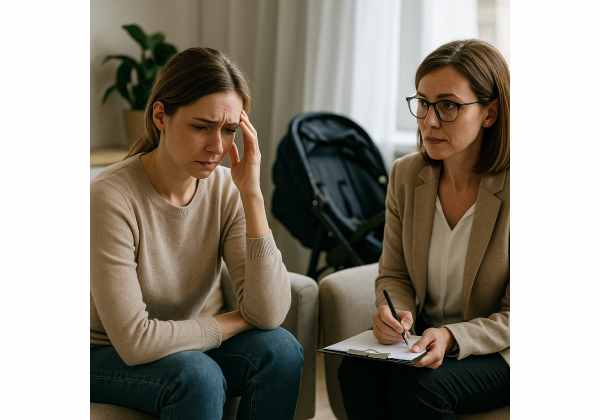
Postpartum psychosis is a rare but serious mental health condition that can occur after childbirth. It involves a break from reality, which may include hallucinations, delusions, severe confusion, paranoia, or rapidly changing mood and behavior. It is very different from the common “baby blues” and is more severe than typical postpartum depression because judgment, perception, sleep, and safety can change quickly.
The condition often begins suddenly, usually in the first days or weeks after delivery. It can happen to someone with a known history of bipolar disorder, psychosis, or previous postpartum psychosis, but it can also be the first major psychiatric episode a person has ever had. Because symptoms may escalate quickly, postpartum psychosis needs urgent professional evaluation when it is suspected.
Key points to understand early
- Postpartum psychosis is uncommon, but it is considered a psychiatric emergency because reality testing and safety can be affected.
- Early signs may include severe insomnia, agitation, confusion, unusual beliefs, paranoia, racing thoughts, or behavior that seems very out of character.
- It is often confused with postpartum depression, anxiety, OCD, sleep deprivation, or the baby blues, but psychosis involves impaired contact with reality.
- The strongest known risk factors include bipolar disorder, a previous episode of postpartum psychosis, and a close family history of postpartum psychosis or bipolar disorder.
- Same-day professional evaluation matters if there are hallucinations, delusions, severe disorganization, suicidal thoughts, thoughts of harming the baby, or rapidly worsening behavior.
Table of Contents
- What Postpartum Psychosis Means
- Symptoms and Signs to Recognize
- When Symptoms Usually Appear
- Causes and Contributing Factors
- Risk Factors That Raise Likelihood
- Conditions That Can Look Similar
- Diagnostic Context and Urgent Evaluation
- Complications and Safety Concerns
What Postpartum Psychosis Means
Postpartum psychosis is a severe mental health episode after childbirth in which a person has difficulty distinguishing what is real from what is not. It may include psychosis, mania, severe depression with psychotic features, or a rapidly shifting mix of mood and thought symptoms.
The word “postpartum” refers to the period after giving birth. The word “psychosis” describes symptoms such as hallucinations, delusions, disorganized thinking, or a major change in perception of reality. In postpartum psychosis, these symptoms occur in the context of the physical, hormonal, sleep, and psychological changes that follow delivery.
Postpartum psychosis is not simply feeling overwhelmed as a new parent. It is not a sign of poor character, weak attachment, lack of love for the baby, or failure to cope. Many people who develop it are frightened, confused, and not fully aware that their thoughts or perceptions have changed. Family members or partners are often the first to notice that something is seriously different.
Clinically, postpartum psychosis is sometimes described as a psychiatric emergency rather than as one single diagnosis. That is because the episode may fall under several diagnostic categories depending on the symptoms, such as bipolar disorder with psychotic features, brief psychotic disorder with postpartum onset, major depression with psychotic features, schizoaffective disorder, or another psychotic disorder. In practical terms, the key issue is not the label alone but the presence of psychotic symptoms after childbirth.
A central feature is impaired reality testing. This means the person may strongly believe things that are not true, hear or see things that others do not, misinterpret normal events as threatening or meaningful, or become unable to organize thoughts and decisions safely. Some delusions involve the baby, the person’s own identity, guilt, danger, religion, contamination, or a belief that someone is trying to harm the family.
Postpartum psychosis is rare. It is often estimated to affect about 1 to 2 people per 1,000 births. Even though it is uncommon, it is important because symptoms can become intense quickly and may affect both the parent and infant. A person can look physically well while being mentally very unwell, so changes in speech, behavior, sleep, beliefs, and safety awareness deserve careful attention.
Postpartum psychosis also sits within the wider area of perinatal mental health, which includes mood, anxiety, obsessive-compulsive, trauma-related, and psychotic symptoms during pregnancy and after childbirth. Routine perinatal mental health screening can identify some concerns, but postpartum psychosis may need direct questioning and urgent clinical assessment because it can develop rapidly between routine visits.
Symptoms and Signs to Recognize
The clearest warning signs of postpartum psychosis are hallucinations, delusions, severe confusion, extreme mood changes, and behavior that seems unsafe or dramatically out of character. Symptoms may fluctuate over hours, so a person may appear more settled at one moment and very unwell soon after.
Psychotic symptoms can include:
- Hearing voices, seeing things, or sensing things that others do not perceive
- Firmly held beliefs that are not based in reality, even when others try to reassure the person
- Paranoia, such as believing relatives, clinicians, strangers, or institutions are trying to cause harm
- Religious, supernatural, grandiose, or guilt-based beliefs that become intense or fixed
- Beliefs that the baby is in danger, has a special identity, is not really theirs, or must be protected from imagined threats
- Disorganized thinking, such as jumping between unrelated ideas or speaking in a way that is hard to follow
Mood and energy changes are also common. Some people develop manic or mixed symptoms, including racing thoughts, pressured speech, high energy despite little sleep, impulsivity, irritability, agitation, or a feeling of being unusually powerful, chosen, or driven by a special mission. Others appear deeply depressed, slowed down, terrified, withdrawn, or overwhelmed by guilt. Many episodes include both high-energy and low-mood features at different times.
Sleep changes can be an early clue. New parents are often sleep deprived, but postpartum psychosis may involve being unable to sleep even when the baby is sleeping, feeling no need for sleep, or becoming more energized as sleep decreases. This pattern is different from ordinary exhaustion.
Behavioral signs may be easier for others to spot than for the affected person to describe. These can include:
- Acting unusually suspicious, guarded, or fearful
- Making sudden, intense, or unrealistic plans
- Becoming unusually talkative, restless, withdrawn, or emotionally intense
- Seeming confused about time, place, events, or the baby’s needs
- Refusing food, fluids, sleep, or ordinary care because of unusual beliefs
- Behaving in a way that family members describe as “not like them at all”
Some symptoms are especially urgent. These include suicidal thoughts, thoughts of harming the baby or someone else, commands from voices, severe agitation, inability to care safely for the baby, or beliefs that the baby would be better off dead, possessed, cursed, in danger, or needing rescue through extreme action. These symptoms should be taken seriously even if the person later denies them, seems embarrassed, or appears calmer.
Postpartum psychosis is not diagnosed by one symptom alone. Clinicians look at the full pattern: timing after childbirth, changes from baseline, psychotic symptoms, mood state, sleep, medical factors, substance use, safety, and whether symptoms are better explained by another condition. A broad psychosis evaluation may be needed when hallucinations, delusions, or disorganized thinking appear after delivery.
When Symptoms Usually Appear
Postpartum psychosis most often begins suddenly in the first days to weeks after birth. Many cases start within the first two weeks, but clinicians may consider postpartum-related onset across a wider period depending on the symptoms and clinical context.
The earliest phase can be subtle. A person may seem unusually energized, unable to sleep, unusually anxious, suspicious, tearful, irritable, or preoccupied with unusual ideas. Because sleep disruption, emotional changes, and worry are common after childbirth, early symptoms may be mistaken for normal adjustment. The difference is the speed, severity, strangeness, and degree of impairment.
A typical pattern may involve a rapid shift such as:
- Sleep drops sharply, but the person does not feel normally tired.
- Thoughts become fast, intense, fearful, grandiose, or hard to organize.
- Suspicion, unusual beliefs, or sensory experiences begin to appear.
- Behavior changes enough that others feel alarmed or unsure about safety.
Symptoms can also appear after a period of seeming well. Someone may come home from the hospital, begin the normal demands of infant care, and then become unwell over several nights. In some cases, family members describe a sudden change: the person stops sleeping, speaks rapidly, becomes fearful, or starts making statements that do not fit reality.
Postpartum psychosis is usually discussed in relation to childbirth, but related episodes may also follow miscarriage, stillbirth, or pregnancy loss. The clinical context matters because sudden hormonal shifts, grief, sleep loss, medical complications, and psychiatric vulnerability can overlap.
Timing can affect how symptoms are interpreted. Very early symptoms after delivery may raise concern for postpartum psychosis, delirium, medication or substance effects, eclampsia-related complications, infection, thyroid disease, or another medical cause. Later symptoms may still be postpartum-related, but clinicians often broaden the assessment to include major mood disorders, primary psychotic disorders, trauma-related symptoms, substance-related conditions, and medical problems.
The main practical point is that waiting to “see if it passes” can be risky when psychotic symptoms are present. The baby blues usually involve tearfulness, mood swings, and emotional sensitivity that peak in the first few days and improve within about two weeks. They do not cause delusions, hallucinations, severe confusion, or loss of reality testing. If those symptoms appear, postpartum psychosis becomes a concern and professional evaluation should not be delayed.
Causes and Contributing Factors
Postpartum psychosis does not have one single known cause. The best explanation is that biological vulnerability, childbirth-related changes, sleep disruption, and psychiatric risk factors can combine to trigger a severe episode.
Childbirth brings abrupt changes in reproductive hormones, immune activity, stress physiology, sleep, and daily demands. These changes do not cause postpartum psychosis in most people, but they may act as a trigger in someone who is biologically vulnerable. This is one reason the condition is strongly linked with bipolar disorder and previous postpartum psychosis.
The relationship with bipolar disorder is especially important. Many postpartum psychosis episodes have manic, mixed, or mood-congruent psychotic features. Some people who first develop postpartum psychosis later receive a diagnosis within the bipolar spectrum. This does not mean every person with postpartum psychosis has bipolar disorder, but it does mean clinicians usually ask carefully about previous mania, hypomania, depression, psychosis, hospitalizations, family history, and mood changes.
Sleep disruption may also play a meaningful role. All new parents lose sleep, but certain people are more vulnerable to mood or psychotic symptoms when sleep is severely reduced. In someone predisposed to mania or psychosis, several nights of little sleep may contribute to racing thoughts, agitation, perceptual changes, and impaired judgment.
Medical and obstetric factors can complicate the picture. Severe infection, thyroid dysfunction, preeclampsia or eclampsia, neurological events, autoimmune illness, medication effects, substance intoxication or withdrawal, and metabolic problems can sometimes produce confusion, agitation, hallucinations, or behavior changes. These do not account for every case, but they are important because not every postpartum episode with psychotic symptoms is purely psychiatric.
Psychological and social stress may add strain but should not be framed as the main cause. A difficult birth, traumatic delivery, lack of support, infant medical complications, feeding difficulties, grief, or relationship stress may worsen vulnerability. However, postpartum psychosis can occur in loving, stable, well-supported families, and it can occur after an uncomplicated birth. It is not caused by ordinary stress alone.
Genetic and family factors also matter. A close family history of bipolar disorder, psychosis, or postpartum psychosis may suggest inherited vulnerability. This risk is not destiny. Many people with family risk never develop postpartum psychosis, and some people who develop it have no known family history.
Because causes are multifactorial, it is usually more accurate to talk about “contributors” than a single cause. This framing also reduces blame. The condition is not caused by bad parenting, ambivalence about the baby, lack of gratitude, or weak willpower. It is a serious change in mental state that requires clinical attention.
Risk Factors That Raise Likelihood
The strongest risk factors for postpartum psychosis are a personal history of bipolar disorder, a previous episode of postpartum psychosis, and a close family history of postpartum psychosis or bipolar disorder. These factors do not guarantee that postpartum psychosis will happen, but they make careful assessment especially important.
Important risk factors include:
- Bipolar I disorder, especially a history of mania or psychosis
- Schizoaffective disorder or a previous psychotic episode
- A previous episode of postpartum psychosis
- A mother, sister, or other close relative with postpartum psychosis
- A family history of bipolar disorder or severe mood disorder
- Severe sleep loss, especially when it has previously triggered mania or mood episodes
- First childbirth in some risk groups
- Recent discontinuity or major changes in psychiatric medication exposure during pregnancy or after delivery
- Severe obstetric complications, pregnancy loss, stillbirth, or infant medical crisis in some cases
- Substance use, intoxication, withdrawal, or medication effects that can worsen mental state
Bipolar disorder deserves special attention because mania can be missed, especially if earlier episodes were brief, untreated, or seen as personality, productivity, anxiety, or stress. A history of needing little sleep, unusually high energy, impulsive behavior, racing thoughts, grandiosity, or periods of unusually elevated or irritable mood may be clinically relevant. People with unclear mood histories may benefit from careful bipolar symptom screening as part of a broader assessment.
A previous episode of postpartum psychosis is one of the clearest warning signs for future pregnancies. Family members should also understand that someone at high risk may be completely well during pregnancy and still become unwell quickly after birth. Risk is about vulnerability under specific postpartum conditions, not about how stable or capable the person seemed beforehand.
It is also important to avoid a false sense of certainty when no risk factors are known. A substantial number of cases occur in people with no documented psychiatric history. That may happen because earlier symptoms were never recognized, because family history is unknown, or because the postpartum trigger reveals a vulnerability for the first time.
Risk factors are most useful when they prompt earlier recognition, not fear or stigma. A person with bipolar disorder or family history can have a healthy pregnancy and postpartum period, while a person with no known history can still develop symptoms. The most important practical signal is a sudden, severe change in sleep, mood, thinking, perception, or behavior after childbirth.
Conditions That Can Look Similar
Postpartum psychosis can be confused with several postpartum mental health and medical conditions. The most important distinction is that postpartum psychosis involves impaired reality testing, severe disorganization, or psychotic symptoms, while many other postpartum conditions do not.
| Condition | Typical features | Key difference from postpartum psychosis |
|---|---|---|
| Baby blues | Tearfulness, mood swings, sensitivity, worry, and fatigue in the first days after birth | Does not cause hallucinations, delusions, severe confusion, or loss of reality testing |
| Postpartum depression | Low mood, loss of interest, guilt, sleep and appetite changes, low energy, and hopelessness | May be severe, but psychosis is not present unless it becomes depression with psychotic features |
| Postpartum anxiety | Excessive worry, panic symptoms, physical tension, reassurance seeking, and fear something bad will happen | Worries are distressing but usually recognized as fears rather than fixed false beliefs |
| Postpartum OCD | Intrusive unwanted thoughts, compulsions, checking, avoidance, and distress about harm-related thoughts | Intrusive thoughts are usually unwanted and ego-dystonic, not held as delusional beliefs |
| Delirium or medical illness | Fluctuating attention, confusion, disorientation, fever, neurological signs, or abnormal vital signs | May have medical triggers that require urgent medical workup |
Postpartum depression is common and can be serious, but it is not the same as postpartum psychosis. Depression usually involves persistent sadness, loss of pleasure, guilt, low energy, sleep changes, appetite changes, and sometimes thoughts of death or self-harm. If hallucinations or delusions appear, the clinical concern changes. Screening tools such as the EPDS can help identify depressive symptoms, but they do not replace a full assessment when psychosis is suspected.
Postpartum anxiety and OCD can be frightening because they may include intense fears about the baby’s safety. In postpartum OCD, intrusive harm thoughts are typically unwanted, distressing, and inconsistent with the person’s values. The person is often horrified by the thoughts and may avoid triggers or seek reassurance. In postpartum psychosis, by contrast, the person may believe a false idea is true or feel compelled by voices, delusions, or confused reasoning.
Severe sleep deprivation can also mimic or worsen mental symptoms. A very tired parent may be tearful, forgetful, irritable, or emotionally fragile. But severe confusion, paranoia, hallucinations, delusions, or energized sleeplessness are not typical new-parent tiredness.
Medical causes must stay on the list. Postpartum infection, thyroid disease, seizures, preeclampsia or eclampsia complications, autoimmune disease, medication reactions, and substance-related states can all affect thinking and perception. This is why an assessment may include both psychiatric and medical evaluation rather than assuming one explanation too quickly.
For many families, the practical question is whether the person is still oriented, reality-based, and able to make safe decisions. When the answer is unclear, it is safer to seek urgent evaluation than to debate whether symptoms are “just anxiety” or “just exhaustion.”
Diagnostic Context and Urgent Evaluation
Postpartum psychosis is diagnosed through clinical evaluation, not a single blood test, brain scan, or questionnaire. The evaluation focuses on symptoms, timing after childbirth, safety, psychiatric history, medical causes, substance exposure, and the person’s ability to care for themselves and the baby safely.
A clinician may ask about:
- When symptoms started and how quickly they changed
- Sleep pattern, energy, speech, mood, and agitation
- Hallucinations, delusions, paranoia, or unusual beliefs
- Thoughts of self-harm, suicide, harming the baby, or being commanded to act
- Prior depression, mania, hypomania, psychosis, trauma, or hospitalization
- Family history of bipolar disorder, psychosis, or postpartum psychosis
- Pregnancy, delivery, infection, blood pressure, seizures, bleeding, pain, and other medical factors
- Medication exposure, substance use, intoxication, withdrawal, or recent medication changes
- Whether the person is eating, drinking, sleeping, and making safe decisions
This assessment may also involve collateral information from a partner, family member, midwife, obstetric clinician, primary care clinician, or mental health professional. Collateral information is often important because the affected person may not recognize the severity of symptoms or may be too frightened, confused, or mistrustful to explain clearly.
Questionnaires can support assessment, but they are not enough when psychosis is possible. Depression screens, anxiety screens, and postpartum symptom questionnaires may identify distress, but hallucinations, delusions, disorganized thinking, mania, delirium, and safety risk require direct clinical questioning. A broader first-episode psychosis evaluation may be relevant if this is the first time the person has had psychotic symptoms.
Urgent evaluation is especially important when symptoms include:
- Hearing voices or seeing things others do not
- Fixed false beliefs about the baby, the self, danger, guilt, religion, or special powers
- Severe confusion, disorientation, or inability to follow a conversation
- No sleep for a prolonged period with high energy, agitation, or racing thoughts
- Statements about suicide, death, sacrifice, punishment, or the baby being unsafe
- Thoughts, urges, or plans to harm the baby or another person
- Behavior that makes family members afraid to leave the person alone with the baby
When immediate safety is uncertain, emergency evaluation is appropriate. This may mean contacting local emergency services, going to an emergency department, or using a local mental health crisis pathway. Guidance on the ER for mental health or neurological symptoms can help families understand why sudden changes in reality testing, confusion, or safety concerns should be treated as urgent.
A careful evaluation does more than confirm postpartum psychosis. It also helps rule out delirium, neurological illness, endocrine problems, medication effects, intoxication, withdrawal, and other causes that can look psychiatric but require different clinical handling. The goal is timely recognition of a serious postpartum mental state change, not blame or judgment.
Complications and Safety Concerns
The main complications of postpartum psychosis come from impaired reality testing, rapid symptom escalation, severe mood disturbance, and reduced ability to judge risk. Without timely recognition, the condition can endanger the affected parent, the baby, and sometimes other family members.
The most serious safety concerns are suicide, accidental harm, and infant harm. Harm-related risk does not always look like obvious aggression. It may arise from delusional beliefs, command hallucinations, severe guilt, terror, disorganized thinking, or a belief that an extreme action is necessary to protect the baby. A person may also unintentionally create danger by wandering, driving unsafely, refusing essential care, leaving the baby unattended, or being unable to respond to the infant’s needs.
Complications may include:
- Severe distress, fear, shame, or confusion for the affected parent
- Loss of sleep, nutrition, hydration, and physical stability
- Unsafe decisions driven by delusions, hallucinations, or disorganized thinking
- Strain on bonding and early caregiving, especially during the acute episode
- Trauma for partners, relatives, and other children who witness the episode
- Delayed diagnosis if symptoms are mistaken for ordinary postpartum stress
- Future concern about recurrence after another pregnancy
The condition can also affect family systems. Partners and relatives may feel frightened, guilty, angry, or unsure how to interpret sudden behavior changes. They may minimize symptoms because they do not want to stigmatize the new parent, or they may assume the person is simply exhausted. Cultural expectations around childbirth can add pressure: the parent may be expected to feel joyful, grateful, and capable, making it harder to speak honestly about frightening thoughts or perceptions.
Stigma is another complication. People with postpartum psychosis are sometimes portrayed unfairly as dangerous by nature, when the reality is more nuanced. The condition is serious because symptoms can affect reality testing and safety, but the person is also ill, often terrified, and not choosing the symptoms. Clear, nonjudgmental language helps families respond sooner and reduces shame.
There can be longer-term diagnostic implications as well. After a postpartum psychosis episode, clinicians often reassess whether the person has an underlying mood disorder such as bipolar disorder, a psychotic disorder, or an episode limited to the postpartum period. This diagnostic context matters for future risk discussions, especially around later pregnancies, but it should be based on professional assessment rather than assumptions.
The safest approach is to take early warning signs seriously. Hallucinations, delusions, severe confusion, suicidal thoughts, thoughts of harming the baby, or behavior that feels unsafe should not be handled as a normal part of new parenthood. Prompt professional evaluation protects the parent and baby while allowing clinicians to clarify what is happening.
References
- Postpartum Psychosis 2023 (Review)
- Screening and Diagnosis of Mental Health Conditions During Pregnancy and Postpartum 2023 (Guideline)
- Mental Health Care in the Perinatal Period: Australian Clinical Practice Guideline 2023 (Guideline)
- Postpartum Psychosis: A Review of Risk Factors, Clinical Picture, Management, Prevention, and Psychosocial Determinants 2023 (Review)
- Postpartum Psychosis: A Preventable Psychiatric Emergency 2024 (Review)
- Sleep and Postpartum Psychosis: A Narrative Review of the Existing Literature 2023 (Review)
Disclaimer
This article is for general educational purposes only and is not a substitute for professional medical advice, diagnosis, or treatment. Postpartum psychosis can involve urgent safety concerns; anyone with hallucinations, delusions, severe confusion, suicidal thoughts, thoughts of harming a baby, or rapidly worsening behavior after childbirth should receive immediate professional evaluation.
Thank you for taking the time to read about this sensitive condition; sharing this article may help another family recognize warning signs sooner.