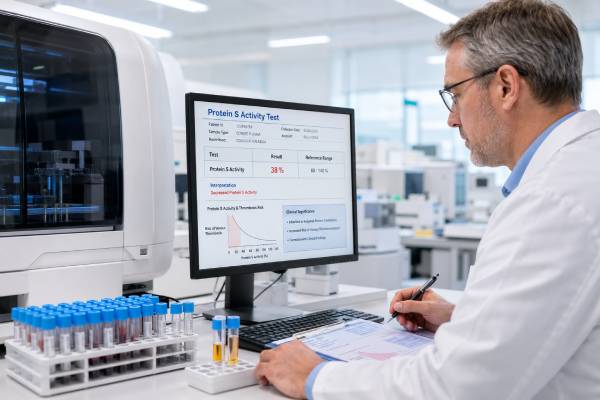
The protein S activity test measures how well protein S helps control blood clotting. Protein S is a natural anticoagulant, which means it helps prevent clots from growing too much or forming when they are not needed. A low protein S activity result raises concern for protein S deficiency, an inherited or acquired condition linked mainly with venous blood clots such as deep vein thrombosis and pulmonary embolism.
This test is useful, but timing matters. Protein S levels fall during pregnancy, acute illness, inflammation, liver disease, vitamin K deficiency, warfarin treatment, and some hormone therapies. Because of this, one low result does not automatically prove an inherited disorder. Doctors usually interpret protein S activity alongside free protein S antigen, total protein S antigen, medical history, medications, and the reason the test was ordered.
- Protein S activity measures function, not just amount. It checks whether protein S is working properly in the clot-control system.
- Low protein S activity suggests higher clot tendency, especially when it is persistent and confirmed with antigen testing.
- Typical adult reference ranges often fall near 60% to 150%, but each lab sets its own range by age, sex, method, and population.
- Testing during warfarin use, pregnancy, acute thrombosis, or inflammation often gives misleading low results.
- High protein S activity usually has no clear clinical meaning and is not usually treated.
- Urgent symptoms include one-sided leg swelling, chest pain, shortness of breath, coughing blood, or sudden neurologic symptoms.
Table of Contents
- What the Protein S Activity Test Measures
- When the Test Is Ordered
- Normal Range and Result Patterns
- Low Protein S Activity Causes
- Blood Clot Risk and Symptoms
- Timing, Preparation, and Interferences
- Follow-Up After an Abnormal Result
- Living With Protein S Deficiency
What the Protein S Activity Test Measures
The protein S activity test measures the working ability of protein S in plasma. Plasma is the liquid part of blood that carries clotting proteins, antibodies, hormones, and nutrients. Protein S helps activated protein C slow clot formation by turning down clotting factors Va and VIIIa. When this control system works well, the body forms clots when needed but limits unnecessary clot growth.
Protein S is vitamin K dependent, meaning the body needs vitamin K to make it correctly. The liver makes much of it, and other tissues also contribute. In the bloodstream, protein S exists in two main forms: bound and free. Only free protein S works well as a cofactor for activated protein C. This distinction matters because a person’s total protein S level can look acceptable while free protein S and activity are low.
The activity test is a functional test. It asks a practical question: does the protein S in this sample help regulate clotting as expected? A protein S antigen test asks a different question: how much protein S is present? Doctors often need both pieces of information.
Protein S testing is often grouped with other thrombophilia tests. Thrombophilia means a tendency to form abnormal blood clots. A typical evaluation might include protein C activity testing, antithrombin testing, factor V Leiden screening, prothrombin gene testing, and antiphospholipid antibody testing. These tests look for different inherited or acquired reasons for excess clotting.
A low protein S activity result does not diagnose a clot by itself. It also does not predict exactly when a clot will occur. Instead, it helps identify one possible reason a person developed a clot, especially when the clot happened at a young age, without a clear trigger, repeatedly, or in an unusual vein.
Protein S deficiency mainly raises risk for venous clots. Venous clots form in veins, most often in the legs or pelvis, and sometimes travel to the lungs. Arterial events such as heart attack and stroke have many other causes, so protein S results need careful interpretation when the clinical problem is arterial rather than venous.
When the Test Is Ordered
Doctors order protein S activity testing when the result is likely to change care. Testing every person after every blood clot is not useful. Many clots happen because of surgery, trauma, hospitalization, cancer, estrogen therapy, pregnancy, long travel, or major illness. In those situations, the trigger itself often explains the clot.
Protein S activity testing becomes more useful when the clot pattern looks unusual or inherited risk seems possible. Common reasons include:
- A first venous clot before age 50, especially without a strong trigger
- Recurrent deep vein thrombosis or pulmonary embolism
- A clot in an unusual site, such as cerebral venous sinuses, portal veins, mesenteric veins, or renal veins
- A strong family history of venous thromboembolism
- A known protein S deficiency in a first-degree relative
- Warfarin-related skin necrosis, especially early after starting warfarin
- Neonatal purpura fulminans or severe clotting in a newborn
- Selected pregnancy or hormone-planning decisions when a close relative has high-risk thrombophilia
The test is also used after an abnormal free protein S antigen result. Many specialists prefer free protein S antigen as the first test for suspected protein S deficiency because activity assays have more interference. Protein S activity still has value when clinical suspicion remains high or when doctors need to classify the deficiency pattern.
A broader clotting workup often includes routine clotting tests, especially when the history includes bleeding, liver disease, anticoagulant use, or abnormal surgical bleeding. A coagulation panel checks markers such as PT, INR, aPTT, fibrinogen, and D-dimer, but those tests do not replace protein S testing. A person with inherited protein S deficiency often has normal routine clotting times.
Testing is less helpful when the result will not change decisions. For example, many people with unprovoked major venous thrombosis already need extended anticoagulation based on clot history alone. A protein S result might explain risk but not change treatment length. This is why thrombophilia testing works best when ordered with a clear clinical question.
Normal Range and Result Patterns
Protein S activity is usually reported as a percentage. A result of 100% means the sample performs near the average activity level expected in the lab’s reference population. It does not mean “perfect” clot protection. It also does not mean a person has exactly 100% of a protein.
Typical adult reference ranges often sit near 60% to 150%, but ranges vary by laboratory, assay, sex, age, pregnancy status, and medication exposure. Some labs use different cutoffs for men and women or for younger and older adults. Always compare the result with the reference interval printed on the report.
A mildly low result needs caution. Protein S activity has biological variation and assay variation. A value slightly below the lower limit during illness, after a clot, or while taking anticoagulants often reflects the situation rather than inherited deficiency. A clearly low, repeated result in a stable person carries more weight.
| Result pattern | Common meaning | Usual next step |
|---|---|---|
| Normal protein S activity | Protein S function appears adequate in that sample. | Review whether testing occurred at a reliable time and whether other thrombophilia tests are needed. |
| Mildly low activity | Possible temporary reduction, assay interference, medication effect, pregnancy effect, or true deficiency. | Repeat later and compare with free and total protein S antigen. |
| Clearly low activity | Stronger concern for protein S deficiency, especially if persistent. | Confirm with repeat testing, antigen levels, medication review, and clinical history. |
| High activity | Usually not clinically important. | No treatment is usually needed for high protein S alone. |
Protein S deficiency is often classified by comparing activity, free protein S antigen, and total protein S antigen.
Type I protein S deficiency shows low total protein S, low free protein S, and low activity. This is a quantitative deficiency, meaning the body has too little protein S.
Type II protein S deficiency shows normal total and free protein S antigen but low activity. This is a qualitative deficiency, meaning the protein is present but does not work properly. Type II is considered rare.
Type III protein S deficiency shows normal total protein S, low free protein S, and low activity. The total amount looks normal, but the active free portion is low.
This classification matters because protein S activity alone cannot show whether the problem is low amount, low free fraction, or abnormal function. It also helps separate inherited patterns from acquired changes.
Low Protein S Activity Causes
Low protein S activity has two broad explanations: inherited deficiency or acquired reduction. Acquired causes are more common in everyday clinical practice. That is why doctors avoid diagnosing inherited protein S deficiency from one isolated abnormal result.
Inherited protein S deficiency usually follows an autosomal dominant pattern. This means one altered copy of the PROS1 gene raises the chance of low protein S and clot risk. Not everyone with the gene change develops clots. Risk rises when inherited susceptibility combines with other triggers, such as surgery, pregnancy, estrogen therapy, immobility, cancer, or a previous clot.
Acquired low protein S activity happens when the body makes less protein S, uses more of it, shifts more protein S into the bound inactive form, or the assay reads falsely low. Common acquired causes include:
- Warfarin or other vitamin K antagonist therapy
- Vitamin K deficiency or poor vitamin K absorption
- Liver disease, because the liver produces vitamin K-dependent proteins
- Pregnancy and the postpartum period
- Estrogen-containing birth control or hormone therapy
- Acute thrombosis
- Severe infection or inflammation
- Disseminated intravascular coagulation
- Nephrotic syndrome, where proteins are lost through urine
- Cancer and some chemotherapy regimens
- Recent surgery, trauma, or major illness
Liver and nutrition markers often help when acquired deficiency is possible. For example, abnormal albumin, bilirubin, PT/INR, or liver enzymes might point toward reduced protein production. A hepatic function panel gives context when liver disease is part of the question. Vitamin K status also matters because protein S, protein C, and several clotting factors need vitamin K for normal production; a vitamin K blood test or related evaluation is sometimes considered when deficiency is suspected.
Protein S activity can also look abnormal because of assay interference. Lupus anticoagulant, factor V Leiden, high factor VIII, direct oral anticoagulants, heparin, and sample handling problems can distort results. If a person has an abnormal protein S activity result and a history suggestive of antiphospholipid syndrome, an antiphospholipid antibody panel helps clarify whether an acquired immune clotting disorder is present.
A low result in a newborn or young infant also needs age-specific interpretation. Natural anticoagulant proteins mature during infancy. Adult ranges do not apply cleanly to babies and young children. Pediatric hematology input is important when protein S deficiency is suspected in a child.
Blood Clot Risk and Symptoms
Low protein S activity matters because it weakens one of the body’s main brakes on clotting. Without enough working protein S, activated protein C cannot regulate factors Va and VIIIa as effectively. This allows more thrombin generation, stronger clot formation, and a greater tendency toward venous thrombosis.
The most common concern is deep vein thrombosis. A DVT often forms in a deep vein of the leg or pelvis. Symptoms include one-sided calf or thigh swelling, pain, warmth, redness, heaviness, or tenderness. Some DVTs cause mild symptoms, while others cause obvious swelling and pain.
A pulmonary embolism happens when part of a clot breaks off and travels to the lungs. This is a medical emergency. Symptoms include sudden shortness of breath, chest pain that worsens with breathing, rapid heartbeat, fainting, coughing blood, or unexplained low oxygen levels. A D-dimer blood test often helps rule out clotting in low-risk situations, but imaging is needed when symptoms or risk level raise strong concern.
Protein S deficiency is also linked with clots in less common veins, including brain venous sinuses and abdominal veins. These clots create symptoms that differ from leg DVT. Cerebral venous sinus thrombosis can cause severe headache, vision changes, seizures, weakness, confusion, or stroke-like symptoms. Portal or mesenteric vein thrombosis can cause severe abdominal pain, nausea, vomiting, bowel swelling, or gastrointestinal bleeding.
Risk is not the same for every person with low protein S. A family member with low protein S activity and no clot history has a different risk profile from someone with repeated unprovoked pulmonary emboli. Doctors weigh several factors:
- How low the protein S activity is
- Whether the result is persistent
- Whether free protein S antigen is also low
- Whether the person has had a clot before
- Age at first clot
- Family history of venous thromboembolism
- Pregnancy plans or estrogen exposure
- Other thrombophilias, such as factor V Leiden or antithrombin deficiency
- Ongoing risk factors, such as cancer, immobility, obesity, or inflammatory disease
Protein S deficiency does not mean a clot is guaranteed. It means the margin of safety is smaller, especially during high-risk periods. This is the practical reason testing matters: it helps clinicians plan prevention during surgery, hospitalization, pregnancy, postpartum recovery, or hormone decisions.
Timing, Preparation, and Interferences
Protein S testing needs careful timing. Bad timing is one of the most common reasons people receive confusing results. The best time to test is usually when the person is medically stable, not pregnant, not in the immediate postpartum period, not in the middle of an acute clot, and not taking a medication that strongly affects protein S.
Warfarin lowers protein S because protein S is vitamin K dependent. Testing during warfarin therapy often produces a low result that reflects the drug. Many clinicians wait at least several weeks after stopping warfarin, when it is safe to stop, before testing. No one should stop anticoagulants just to prepare for a blood test unless the prescribing clinician gives specific instructions.
Direct oral anticoagulants, including apixaban, rivaroxaban, edoxaban, and dabigatran, can interfere with clot-based assays. They do not lower protein S the same way warfarin does, but they can distort activity results. Some labs use drug-removal methods or recommend testing at a certain interval after the last dose, but this must be coordinated with the treating clinician.
Pregnancy lowers free protein S as part of normal physiology. Estrogen-containing birth control and hormone replacement therapy can also reduce protein S levels. Testing during these exposures often answers the wrong question. It might show the effect of hormones rather than the person’s baseline inherited status.
Acute thrombosis and inflammation also reduce reliability. After a clot, the body enters an inflammatory and coagulation-active state. Protein S results drawn during that period can be temporarily low. Many specialists delay inherited thrombophilia testing until the acute event has been treated and the person has returned to a stable baseline.
The blood sample itself matters. Protein S activity is usually measured from citrated plasma. The tube must be filled correctly because the citrate-to-blood ratio affects coagulation testing. Very high hematocrit can require citrate adjustment. Delayed processing, poor freezing, clotting in the tube, or hemolysis can reduce reliability.
Good preparation means giving the ordering clinician and lab a complete medication list. Include warfarin, heparin, direct oral anticoagulants, birth control pills, hormone therapy, chemotherapy, supplements, and recent vitamin K treatment. Also mention pregnancy, recent delivery, recent clot, infection, surgery, hospitalization, liver disease, kidney disease, and inflammatory conditions.
Follow-Up After an Abnormal Result
A low protein S activity result should be confirmed before anyone labels it as inherited protein S deficiency. Confirmation protects people from unnecessary anxiety, incorrect family testing, and treatment decisions based on a temporary result.
The usual follow-up starts with repeat testing at a better time. The clinician checks whether the first test was drawn during warfarin therapy, pregnancy, acute clotting, infection, inflammation, or another unreliable period. If it was, repeat testing after recovery often gives a clearer answer.
Next, doctors compare protein S activity with free and total protein S antigen. This separates low quantity from abnormal function and helps classify the deficiency type. In many cases, free protein S antigen provides the most useful screening information. Activity testing adds value when the antigen pattern and clinical history do not fully match.
A broader thrombophilia evaluation is often considered when the history supports it. This might include antithrombin activity testing, protein C testing, factor V Leiden or activated protein C resistance testing, prothrombin gene testing, and antiphospholipid antibody testing. An activated protein C resistance test helps screen for factor V Leiden-related resistance, which can complicate protein S activity interpretation.
Genetic testing for PROS1 is not always needed. It is most useful when repeated plasma tests strongly suggest inherited protein S deficiency, when family counseling is important, or when results remain unclear despite careful testing. Genetic testing also has limits because not every clinically relevant case is simple to interpret.
Family testing needs a thoughtful approach. Testing relatives makes the most sense when there is a confirmed inherited deficiency and the result would guide decisions about estrogen use, pregnancy planning, surgery prevention, or thrombosis prevention during high-risk periods. Testing children, people without clot history, or relatives with unclear family results should involve a clinician familiar with thrombophilia counseling.
A low protein S result also needs clinical context. Someone with a provoked clot after major surgery and a borderline low result during warfarin therapy should not be handled the same way as someone with repeated unprovoked clots, low free protein S antigen, low activity on repeat testing, and several affected relatives.
Living With Protein S Deficiency
Confirmed protein S deficiency is managed by reducing clot risk, not by trying to “raise” protein S with a simple supplement. There is no routine over-the-counter product that reliably fixes inherited protein S deficiency. Treatment decisions focus on anticoagulation when needed and prevention during high-risk periods.
People who have already had a venous clot need a plan for anticoagulation length. The decision considers whether the clot was provoked or unprovoked, whether it was severe, whether it recurred, whether bleeding risk is high, and whether persistent risk factors remain. Some people need treatment for a defined period. Others need extended or long-term anticoagulation.
People with confirmed deficiency but no clot history usually do not take lifelong anticoagulants automatically. Instead, they often need targeted prevention during high-risk situations. Examples include major surgery, hospitalization, prolonged immobility, long-distance travel with additional risk factors, pregnancy, and postpartum recovery. The prevention plan might include movement, hydration, compression in selected cases, or medication-based prophylaxis when risk is high.
Hormone choices deserve special attention. Estrogen-containing birth control and hormone replacement therapy raise venous clot risk. A person with confirmed protein S deficiency or a strong family history should discuss safer options with a clinician before starting estrogen. Pregnancy also requires planning because clot risk rises during pregnancy and remains elevated after delivery, especially in the first 6 weeks postpartum.
Lifestyle changes cannot erase inherited risk, but they reduce additional strain on the clotting system. Practical steps include:
- Avoid smoking or get help quitting
- Maintain regular movement during travel and desk work
- Treat obesity, sleep apnea, inflammatory disease, and other risk factors when present
- Stay hydrated during illness and travel
- Follow post-surgery walking and prevention instructions
- Tell clinicians about protein S deficiency before surgery, pregnancy care, or hormone therapy
- Seek urgent care for symptoms of DVT, pulmonary embolism, or neurologic clotting
People taking anticoagulants need medication-specific safety counseling. Warfarin requires INR monitoring and attention to vitamin K consistency. Direct oral anticoagulants have fewer routine monitoring needs but still require correct dosing, kidney function review, interaction checks, and adherence. A missed anticoagulant dose matters more in someone with a strong clotting history.
Protein S deficiency also has emotional impact. Many people discover it after a frightening clot or after a family member’s diagnosis. The most useful mindset is practical rather than fearful: know the diagnosis, understand personal triggers, keep records, communicate before high-risk events, and get urgent care for clot symptoms.
References
- American Society of Hematology 2023 guidelines for management of venous thromboembolism: thrombophilia testing 2023 (Guideline)
- Thrombophilia testing: A British Society for Haematology guideline 2022 (Guideline)
- Protein C and S 2025 (Review)
- Venous thromboembolic diseases: diagnosis, management and thrombophilia testing 2023 (Guideline)
- The dos, don’ts, and nuances of thrombophilia testing 2023 (Review)
- Recommendations for clinical laboratory testing for protein S deficiency: Communication from the SSC committee plasma coagulation inhibitors of the ISTH 2021 (Position Statement)
Disclaimer
This article is educational and is not a diagnosis, treatment plan, or substitute for care from a qualified healthcare professional. Protein S activity results are especially sensitive to timing, medications, pregnancy, inflammation, and lab method, so a clinician should interpret them with your medical history. Seek urgent medical care for symptoms of a possible blood clot, including one-sided leg swelling, chest pain, shortness of breath, coughing blood, fainting, or sudden neurologic symptoms.