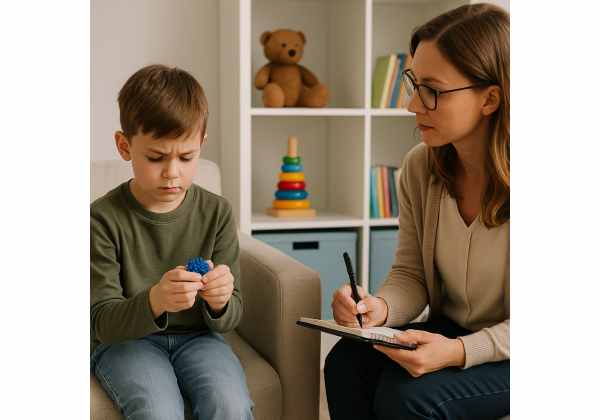
Repetitive behavior disorder is a broad phrase people may use when repeated movements, rituals, self-grooming behaviors, or urges become hard to stop, disruptive, distressing, or physically harmful. In clinical settings, however, the wording usually needs more precision. A person may be evaluated for stereotypic movement disorder, body-focused repetitive behavior disorder, obsessive-compulsive disorder, tic disorders, autism-related restricted and repetitive behaviors, or another medical or neurological cause.
The key issue is not repetition alone. Many repetitive actions are ordinary, calming, cultural, developmental, or harmless habits. They become clinically important when they are persistent, difficult to interrupt, not fully explained by the situation, cause injury, create marked distress, or interfere with school, work, relationships, sleep, hygiene, or daily functioning.
Table of Contents
- What Repetitive Behavior Disorder Means
- Symptoms and Observable Signs
- Common Forms and Related Conditions
- Causes and Brain-Behavior Pathways
- Risk Factors and Triggers
- Diagnostic Context and Urgent Warning Signs
- Complications and Everyday Effects
What Repetitive Behavior Disorder Means
Repetitive behavior disorder is best understood as a descriptive term, not always a single formal diagnosis. It points to repeated behaviors that may be motor, mental, sensory, grooming-related, ritualized, or urge-driven, and that may need a more specific clinical explanation.
A repeated behavior can look simple from the outside but serve very different functions from person to person. One person may rock, pace, tap, or flap because the movement feels regulating or pleasant. Another may repeat checking, counting, washing, arranging, or reviewing because of intrusive fear or a sense that something is incomplete. Someone else may pull hair, pick skin, bite cheeks, or chew nails with partial awareness, sometimes in response to tension and sometimes without noticing until afterward.
This distinction matters because similar-looking behaviors may belong to different clinical categories. For example, repetitive hand movements in a young child may be part of typical development, a motor stereotypy, a sign of a neurodevelopmental condition, or less commonly part of another neurological picture. Repeated checking may be a normal response to uncertainty, but it can also become a compulsion when it is driven by persistent distress and repeated far beyond what the situation requires.
A behavior is more likely to be clinically significant when several features appear together:
- It happens frequently or for long periods.
- It follows a fixed pattern or feels hard to resist.
- It causes distress, shame, frustration, or family conflict.
- It disrupts learning, work, social life, sleep, or self-care.
- It leads to bleeding, bruising, hair loss, dental injury, skin damage, pain, or infection.
- It is new, worsening, or accompanied by confusion, loss of awareness, seizures, severe mood changes, or substance use.
Repetitive behavior disorder should not be confused with ordinary habits. Finger tapping during concentration, pacing while thinking, a child briefly rocking when excited, or a routine bedtime sequence may be harmless. The clinical question is whether the repetition is persistent, impairing, harmful, developmentally unusual, or linked with other symptoms.
It is also important not to treat all repetitive behaviors as automatically “bad.” Some repetitive movements, sometimes discussed as stimming in adults, can be part of sensory regulation, attention, emotional expression, or neurodivergent experience. The concern rises when the behavior causes injury, distress, loss of control, or major interference with daily life.
Symptoms and Observable Signs
The main symptom is a repeated behavior that is persistent enough to cause concern, impairment, distress, or harm. The exact signs depend on the behavior type, the person’s age, the setting, and whether the repetition is linked with urges, anxiety, sensory needs, developmental differences, or neurological symptoms.
Common motor signs include repeated body movements such as rocking, head nodding, hand flapping, finger flicking, pacing, spinning, tapping, mouth movements, or repeated postures. Some movements are rhythmic and predictable. Others occur in bursts, especially during excitement, stress, boredom, fatigue, or focused attention.
Body-focused signs involve repeated contact with the skin, hair, nails, mouth, or teeth. These may include hair pulling, skin picking, nail biting, lip or cheek biting, scab picking, tooth grinding, or repeated chewing. The person may describe a rising urge, physical tension, a sense of relief afterward, or limited awareness during the behavior. Visible signs can include thinning hair, broken hair shafts, irritated skin, scabs, scars, inflamed cuticles, mouth sores, or dental wear.
Ritualized or compulsive signs may look less like movement and more like repeated actions or mental routines. These can include checking locks or appliances, repeating words silently, counting, ordering objects, rereading, washing, seeking reassurance, or restarting tasks until they feel “right.” When these behaviors are linked to intrusive fears or distressing thoughts, an evaluation may consider obsessive-compulsive symptoms. Related background on intrusive thoughts can help clarify why some repetitions feel urgent rather than voluntary.
Observable signs can also include changes around the behavior:
- Avoiding social situations because of embarrassment
- Hiding affected skin, hair, nails, or clothing damage
- Becoming irritable when interrupted
- Spending long periods in bathrooms, mirrors, bedrooms, or private spaces
- Falling behind on tasks because rituals or repetitions consume time
- Repeated injuries in the same body area
- Difficulty explaining why the behavior happens
- Repeating the behavior more during stress, transitions, or sensory overload
A useful distinction is whether the behavior is mostly automatic, focused, or fear-driven. Automatic behaviors may happen with little awareness, such as skin picking while reading or hair pulling while watching a screen. Focused behaviors may happen in response to a feeling, urge, anxiety, discomfort, or perceived imperfection. Fear-driven compulsions usually aim to prevent danger, undo a thought, reduce uncertainty, or create a sense of safety.
Children may not have the words to describe urges or distress. Their signs may appear as repeated movements, sudden agitation when stopped, self-injury, avoidance, or distress during transitions. Adults may be more likely to describe shame, secrecy, loss of control, or exhaustion from trying to suppress the behavior.
Common Forms and Related Conditions
Repetitive behavior disorder can describe several overlapping patterns, but clinicians usually try to identify the most accurate category. The same outward behavior can have different meanings depending on age of onset, inner experience, triggers, associated symptoms, and impairment.
| Pattern | Typical examples | Common distinguishing features |
|---|---|---|
| Motor stereotypies | Rocking, hand flapping, finger movements, head nodding | Often rhythmic, patterned, early-onset, and more likely during excitement, boredom, stress, or focused attention |
| Body-focused repetitive behaviors | Hair pulling, skin picking, nail biting, cheek biting | Often linked with urges, tension, sensory focus, automatic repetition, visible tissue damage, or shame |
| Compulsions | Checking, washing, counting, arranging, repeating, reassurance seeking | Often performed to reduce anxiety, neutralize intrusive thoughts, prevent feared outcomes, or relieve a “not right” feeling |
| Tics | Blinking, facial movements, throat clearing, shoulder movements, sounds | Usually sudden, brief, repetitive movements or sounds; may be preceded by a physical urge and temporarily suppressible |
| Autism-related restricted and repetitive behaviors | Repetitive movements, routines, intense interests, sensory behaviors | Occur in the broader context of autism traits, including social communication differences and sensory processing patterns |
Stereotypic movement disorder is one formal diagnosis involving repetitive, apparently purposeless motor behavior that interferes with activity or causes injury. It usually begins in early development. Examples include body rocking, hand waving, head banging, self-biting, or repeated hitting of one’s own body. Some motor stereotypies can occur in otherwise typically developing children, while others occur with autism, intellectual disability, sensory differences, or neurological conditions.
Body-focused repetitive behavior disorder is used for repetitive self-grooming behaviors other than hair pulling or skin picking when they cause distress or impairment. Hair-pulling disorder and excoriation disorder are related conditions with their own diagnostic categories. These behaviors can overlap with anxiety, obsessive-compulsive symptoms, tic disorders, and emotion regulation difficulties.
OCD-related compulsions are repetitive behaviors or mental acts connected to obsessions, intrusive fears, or distressing uncertainty. A person may repeat actions even when they know the behavior is excessive. Formal OCD screening looks at both obsessions and compulsions because the visible behavior alone does not tell the whole story.
Autism-related repetitive behaviors can include motor movements, repeated speech, insistence on sameness, sensory seeking, sensory avoidance, and focused interests. In that context, repetitive behavior is not automatically a separate disorder. It may be part of the autism profile, which is why autism testing in children or adult assessment may look at behavior history, communication, development, sensory patterns, and daily functioning together.
Causes and Brain-Behavior Pathways
There is rarely one single cause behind repetitive behavior disorder. Repetitive behaviors usually arise from a mix of brain development, habit learning, sensory processing, emotional regulation, reward pathways, genetics, stress response, and sometimes medical or neurological factors.
Many repetitive behaviors involve loops between sensation, urge, action, and relief. A person may feel tension, discomfort, itchiness, anxiety, boredom, or a sense that something is unfinished. The repeated action may briefly reduce that feeling, which makes the behavior more likely to recur. Over time, the loop can become automatic. The person may not experience it as a deliberate choice, even if the movement itself is physically possible to stop for a short time.
Brain circuits involved in movement selection, habit formation, reward, inhibition, and sensory processing are often discussed in relation to repetitive behaviors. These include pathways connecting cortical areas, basal ganglia circuits, and neurotransmitter systems such as dopamine, glutamate, serotonin, and GABA. This does not mean a person has a simple “chemical imbalance.” It means repetitive behaviors can reflect complex coordination between brain systems that regulate movement, motivation, attention, sensory comfort, and emotional salience.
Development also matters. Some repetitive movements appear early in childhood and may fade, persist, or become more noticeable under stress. In some children, repetitive movement is part of typical development. In others, the pattern is more intense, lasts longer, causes injury, or occurs alongside developmental delays, autism traits, intellectual disability, communication differences, or neurological symptoms.
For body-focused repetitive behaviors, both automatic and focused pathways may be involved. Automatic pulling or picking may happen during low stimulation or distracted states. Focused pulling or picking may occur in response to tension, anxiety, frustration, perceived skin irregularities, or a strong sensory urge. Many people experience both patterns at different times.
For compulsive repetition, the pathway often includes intrusive thoughts, uncertainty, threat perception, and temporary relief after the ritual. The relief can reinforce the ritual even when the person recognizes that the feared outcome is unlikely. This is one reason repeated reassurance, checking, or mental reviewing can become consuming.
Medical and neurological contributors should also be considered when repetitive behavior is sudden, unusual, or accompanied by other signs. Substance use, stimulant exposure, medication effects, head injury, seizures, sleep disorders, neurodegenerative illness, delirium, pain, and certain genetic or metabolic conditions can all change behavior or movement patterns. A careful history helps separate long-standing repetitive behaviors from new symptoms that may signal a different clinical problem.
Risk Factors and Triggers
Risk factors do not prove that someone will develop a repetitive behavior disorder, but they can increase vulnerability or make symptoms more persistent. Triggers are the situations or internal states that make the behavior more likely to happen in the moment.
Age of onset is one important clue. Stereotypic movements often begin in early childhood, sometimes before age 3. Tics also commonly begin in childhood, although their timing and pattern differ from stereotypies. Body-focused repetitive behaviors often emerge in childhood or adolescence and may become more noticeable during periods of stress, self-consciousness, or increased time alone.
Family history can matter. Repetitive movements, tics, obsessive-compulsive symptoms, anxiety, and body-focused repetitive behaviors can cluster in families, although inheritance is not simple. A family pattern may reflect genetics, shared temperament, sensory traits, stress response, learned habits, or all of these together.
Neurodevelopmental conditions are another major context. Repetitive behaviors may occur with autism, ADHD, intellectual disability, learning differences, developmental coordination issues, or sensory processing differences. ADHD-related restlessness, fidgeting, impulsivity, and difficulty inhibiting actions may sometimes be mistaken for a repetitive behavior disorder, especially in adults. A broader view of adult ADHD symptoms in daily life can help show why attention, movement, and impulse patterns need careful interpretation.
Emotional and sensory states often influence repetition. Common triggers include:
- Stress, anxiety, frustration, or anger
- Excitement or anticipation
- Boredom, under-stimulation, or waiting
- Fatigue or poor sleep
- Transitions, changes in routine, or uncertainty
- Concentrated work, screen time, reading, or studying
- Sensory discomfort from noise, clothing, lights, textures, or crowds
- Perceived imperfections in skin, hair, nails, or symmetry
- Social pressure to suppress movements
Trauma and chronic stress can increase body vigilance, tension, dissociation, emotional reactivity, and self-soothing behaviors. This does not mean every repetitive behavior is trauma-based. It means personal history can affect the nervous system and should be considered without jumping to conclusions.
Social context can also affect how symptoms appear. Some people suppress repetitive behaviors in public and experience a rebound later in private. Others are unaware of the behavior until someone points it out. Shame, criticism, punishment, or ridicule can increase secrecy and distress, especially when the person already feels limited control over the behavior.
The strongest risk signal is not one factor alone but a pattern: early onset, persistence, loss of control, impairment, distress, injury, family history, developmental differences, or co-occurring anxiety, OCD symptoms, tics, depression, ADHD, or autism traits.
Diagnostic Context and Urgent Warning Signs
Diagnosis focuses on what the behavior is, why it may be happening, how long it has been present, and whether it is better explained by another condition. The goal is not simply to label the repetition but to understand its pattern, function, timing, risks, and clinical context.
A mental health or medical evaluation may include questions about age of onset, frequency, duration, triggers, awareness, urges, relief, distress, injury, developmental history, family history, medications, substance use, sleep, neurological symptoms, and school or work impact. A clinician may also ask whether the behavior can be interrupted, whether the person feels driven to do it, and what happens emotionally or physically before and after.
Several distinctions are especially important:
- Stereotypies are often rhythmic, patterned, and early-onset.
- Tics are often sudden, brief, and may be preceded by a premonitory urge.
- Compulsions are usually connected to intrusive thoughts, anxiety, feared outcomes, or a need for certainty.
- Body-focused repetitive behaviors often involve grooming actions that damage skin, hair, nails, lips, cheeks, or teeth.
- Autism-related repetitive behaviors occur in a broader developmental and sensory profile.
- Neurological or medical causes are more likely when symptoms begin suddenly or occur with changes in consciousness, coordination, memory, speech, or behavior.
A structured mental health evaluation may be part of the diagnostic process, especially when anxiety, OCD, trauma symptoms, depression, ADHD, or self-injury are possible. When repetitive behavior occurs with social communication differences, restricted interests, sensory sensitivities, or long-standing developmental patterns, adult autism testing may be relevant for adults who were not evaluated earlier in life.
Urgent professional evaluation may be needed when repetitive behavior involves serious or escalating self-injury, head banging, eye poking, deep skin wounds, infection, uncontrolled bleeding, sudden confusion, seizure-like episodes, loss of awareness, hallucinations, severe agitation, intoxication, medication reaction, suicidal thoughts, or behavior that creates immediate danger. Guidance on urgent mental health or neurological symptoms can be especially relevant when safety is uncertain.
Children should be assessed promptly when repetitive movements are new, intense, injurious, developmentally unusual, or accompanied by regression, loss of language, staring spells, weakness, severe sleep disruption, or sudden behavior change. Adults should be assessed when a repetitive behavior is new in later life, rapidly worsening, linked with substance use, or paired with cognitive, mood, neurological, or functional decline.
Complications and Everyday Effects
The complications of repetitive behavior disorder depend on the behavior, severity, awareness, and surrounding context. Some repetitive behaviors cause little harm, while others affect physical health, emotional well-being, relationships, education, work, and self-image.
Physical complications are most obvious when the behavior causes direct tissue damage. Hair pulling can lead to patchy hair loss, scalp irritation, broken hair, and distress about appearance. Skin picking can cause bleeding, scabbing, infections, discoloration, thickened skin, or scarring. Nail biting and cuticle picking can cause pain, inflammation, nail changes, and infection. Cheek or lip biting can lead to mouth sores and dental irritation. Head banging, self-hitting, eye poking, or repeated impact behaviors can create more serious injury risks.
Functional complications can be less visible. Repetitive behaviors may consume time, delay tasks, interrupt learning, or make it hard to complete routines. A child may miss instruction because movements or rituals interfere with classroom participation. An adult may lose time to checking, picking, arranging, rereading, grooming, or repeating tasks. Some people avoid social events, dating, haircuts, medical visits, swimming, shared living spaces, or bright lighting because they fear others will notice signs of the behavior.
Emotional complications often include shame, frustration, anxiety, irritability, guilt, or a sense of being “out of control.” People may feel misunderstood when others call the behavior a bad habit or assume it is intentional. Repeated criticism can increase distress and secrecy, which may make the behavior harder to discuss honestly.
Relationships can be affected when family members, partners, teachers, or coworkers misread the behavior. Some may see it as defiance, attention seeking, poor discipline, or lack of willpower. In children, repeated attempts to stop the behavior without understanding its function can lead to conflict. In adults, secrecy may create distance or embarrassment.
Complications are also tied to co-occurring conditions. Repetitive behaviors may overlap with anxiety, OCD, tic disorders, autism, ADHD, depression, trauma symptoms, sleep problems, or substance use. When more than one condition is present, the behavior may be more persistent, more distressing, or harder to interpret. This is why the diagnostic context matters as much as the behavior itself.
A balanced view is important. Repetition is not automatically pathological, and many people have repetitive movements or routines that are harmless or meaningful. The concern is the combination of persistence, distress, impairment, injury, loss of control, or sudden change. When those features are present, the behavior deserves careful attention rather than blame.
References
- Stereotypic movement disorder 2024
- Repetitive Behaviors in Autism and Obsessive-Compulsive Disorder: A Systematic Review 2024 (Systematic Review)
- Anxiety and body-focused repetitive behaviors: A systematic review and meta-analysis of comorbidity rates and symptom associations 2025 (Systematic Review and Meta-analysis)
- Co-morbid tics and stereotypies: a systematic literature review 2024 (Systematic Review)
- Body-Focused Repetitive Behavior Disorder 2025
- Frequency of body focused repetitive behaviors and comparison to self-injurious behaviors in patients with tic disorders 2025
Disclaimer
This article is for general educational purposes only and is not a substitute for professional medical advice, diagnosis, or treatment. Repetitive behaviors that cause injury, severe distress, sudden behavior change, loss of awareness, or safety concerns should be evaluated by a qualified health professional.
Thank you for taking the time to read this sensitive topic; sharing it may help someone recognize when repetitive behaviors deserve careful, compassionate evaluation.