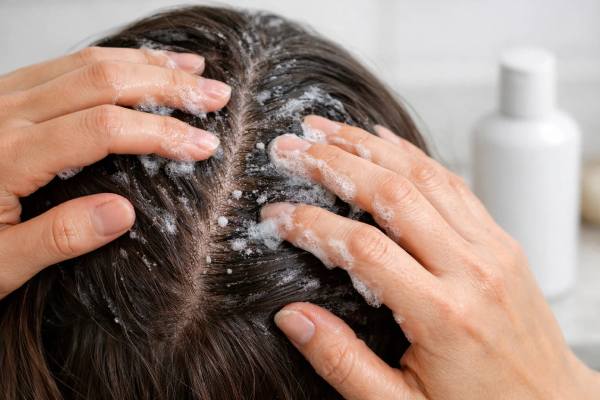
A flaky scalp can look simple from a distance and feel maddening up close. Some flakes are oily and cling to the scalp. Others are dry, fine, and shed like dust. Some come with itch, redness, and a waxy film; others are mostly the result of product residue, sweat, and infrequent cleansing. Salicylic acid can be useful here, but only when it is matched to the right problem and used with the right rhythm.
What makes salicylic acid so effective is not that it “detoxes” the scalp. It works because it helps loosen and lift built-up scale, dead skin, and residue that ordinary shampoo may leave behind. That can quickly make the scalp feel cleaner, calmer, and less congested. But the same exfoliating action that helps with adherent flakes can also over-dry a sensitive scalp if it is used too often or layered with too many other actives. The key is not whether salicylic acid works. It is when it works best, how often your scalp can tolerate it, and when another approach makes more sense.
Core Points
- Salicylic acid is most helpful for adherent flakes, oily scale, and stubborn buildup that does not lift well with regular shampoo alone.
- It can improve itch and visible flaking when scale is thick enough to block effective cleansing or keep medicated shampoo from reaching the scalp well.
- It is more likely to irritate a scalp that is raw, very dry, scratched, or already overloaded with exfoliants.
- A practical starting point is once weekly for buildup-prone or sensitive scalps, with a cautious increase to twice weekly if thick flakes persist and the scalp stays comfortable.
Table of Contents
- Why Salicylic Acid Helps the Scalp
- Which Flakes and Buildup Respond Best
- Safe Frequency for Different Scalp Types
- How to Use It Without Overdoing It
- Who Should Be Cautious or Skip It
- When Salicylic Acid Is Not Enough
Why Salicylic Acid Helps the Scalp
Salicylic acid is a keratolytic. In plain terms, that means it helps break up the bonds that hold excess dead skin and scale together. On the scalp, that matters because flakes do not always sit loosely on the surface. In dandruff, seborrheic dermatitis, and scalp psoriasis, scale can become adherent, compact, and difficult to wash away. Product residue, sweat salts, oils, and styling polymers can make that layer even harder to remove. Salicylic acid helps loosen that material so it can be rinsed out more effectively.
That is why many people notice a fast change in feel before they notice a big change in appearance. The scalp may seem lighter, less coated, and less itchy after one or two uses. Hair may lift better at the roots. That response does not mean salicylic acid has solved the underlying condition. It means it has improved access and removal. In some cases, that alone is enough to make a mild flaky scalp much easier to manage.
Its role is especially useful when scale is physically getting in the way. Thick flakes can trap oil, fragrance, and residue close to the skin. They can also limit how well other medicated ingredients contact the scalp. This is one reason salicylic acid often appears in shampoos meant for dandruff, seborrheic dermatitis, or psoriasis. It is less of a “kill the cause” ingredient and more of a “clear the way” ingredient.
That distinction is important. Salicylic acid does not address every major driver of scalp flaking. It is not primarily antifungal, so it does not replace ingredients such as ketoconazole or selenium sulfide when yeast overgrowth is central to the problem. It is not a moisturizer, so it does not correct a dehydrated, tight-feeling scalp on its own. It is not a cure for psoriasis, eczema, or allergic contact dermatitis. It helps most when excess scale itself is part of what is keeping the cycle going.
This is also why people can get mixed results. Someone with oily, waxy, stuck-on flakes may love it. Someone whose main problem is simple dryness may feel even drier afterward. Someone with inflamed dermatitis may improve if scale is the main issue, but worsen if the scalp barrier is already too reactive.
A useful way to frame salicylic acid is as a scalp “reset” tool rather than a universal scalp treatment. It helps unclog the surface and reduce stubborn debris. If you are comparing dandruff formulas more broadly, these active ingredients in anti-dandruff shampoos show why salicylic acid is often paired with ingredients that target other parts of the problem.
When salicylic acid is used for the right reason, it can make the scalp easier to treat, easier to wash, and noticeably less burdened by scale. The mistake is expecting it to solve every kind of flake in the same way.
Which Flakes and Buildup Respond Best
Not every flaky scalp needs exfoliation. The best candidates for salicylic acid are the ones where material is clearly collecting and clinging at the surface. That usually includes oily flakes, waxy scale, stubborn residue at the roots, and buildup that returns quickly even when you wash regularly. If the scalp looks congested rather than merely dry, salicylic acid becomes more logical.
It tends to help most in four scenarios:
- adherent dandruff flakes: larger flakes that seem stuck to the scalp rather than falling away easily
- seborrheic dermatitis with scale: especially when itching and greasiness come with visible buildup
- scalp psoriasis with thick scale: usually as an adjunct, not a stand-alone treatment
- product buildup: when dry shampoo, styling creams, oils, and sweat leave the scalp coated
These scenarios share a physical feature: too much material sitting on the scalp surface. Salicylic acid is good at loosening that burden. Once the scale lifts, the scalp often feels less itchy and less heavy, and other shampoos can work better.
Where it helps less is just as important. A scalp with tiny, powdery flakes, tightness, and no obvious oiliness may need gentler cleansing and more barrier support, not more exfoliation. The same goes for a scalp that burns after styling products, reacts to fragrance, or feels irritated more than flaky. In those cases, salicylic acid can turn mild irritation into a full flare.
There is also a texture clue many people miss. If you run your fingertips over the scalp and feel a soft film, greasy coating, or little scale plates catching around the roots, salicylic acid may be useful. If the scalp mostly feels clean but dry, the problem may be different. That is one reason people sometimes mistake product residue for dandruff. A proper clarifying wash can help, but a salicylic acid shampoo may be more efficient when the buildup is mixed with scalp scale. If this sounds familiar, this guide to fixing product buildup in hair explains the difference between scalp residue and routine dirt.
Hair type also changes the experience. Finer hair often shows root buildup faster because the hair collapses at the scalp. Curly or coily hair may tolerate less frequent washing, but when scale and oils accumulate between washes, the buildup can become more persistent. In that setting, salicylic acid may be helpful, though the overall routine usually needs more moisture awareness to prevent over-drying.
The simplest test is to look for response after a few careful uses. If flakes become looser, the scalp feels less coated, and the itch eases without new tightness, it is probably a good fit. If the scalp becomes drier, stingier, or more reactive, the match may be wrong. Salicylic acid works best when the problem is too much scale on the surface, not when the scalp is already asking for more gentleness.
Safe Frequency for Different Scalp Types
Frequency is where salicylic acid shifts from helpful to irritating. The right schedule depends less on the ingredient’s popularity and more on what you are treating. A scalp with active, adherent scale can usually tolerate more than a scalp that simply gets occasional residue from dry shampoo or styling products. There is no single schedule that fits everyone, but there are practical patterns that keep most people out of trouble.
A good starting framework looks like this:
- For occasional buildup: once weekly or every 10 to 14 days
- For oily flakes or mild dandruff: once weekly, then twice weekly if clearly helpful and comfortable
- For more persistent adherent scale: twice weekly for a short period, then taper once the scalp looks clearer
- For very sensitive or dry-feeling scalps: start every other week, or choose a gentler non-acid approach first
This is more cautious than many labels, and that is intentional. Product directions for wash-off dandruff and scale shampoos often assume the scalp actually needs regular active treatment. Real life is messier. Some people are using salicylic acid for true seborrheic dermatitis. Others are using it because their roots feel coated after too much dry shampoo. Those are different use cases.
In general, the scalp gives useful feedback quickly. If the first few uses reduce flakes, lift residue, and calm itch without causing stinging or tightness, continuing once or twice weekly is often reasonable. If the scalp starts to feel squeaky, tender, or unusually reactive, the schedule is probably too aggressive. The same is true if the hair begins to feel rough at the roots or the lengths become drier because the shampoo is spreading more than intended.
People with curly, coily, color-treated, or high-porosity hair often need more restraint. The scalp may benefit from exfoliation while the lengths do not. In that case, concentrating the product on the scalp and following with a conditioning routine on the hair can make a major difference.
There is also a difference between flare control and maintenance. During a brief period of active scale, two uses per week may be appropriate. Once the scalp is calmer, staying at that pace indefinitely can create avoidable dryness. Maintenance often looks more like weekly, every other week, or alternating with a gentler antifungal shampoo depending on the condition. For people comparing options, ketoconazole shampoo and dandruff control is useful because salicylic acid and antifungals often play different roles in the same routine.
The safest mindset is to treat salicylic acid as adjustable rather than fixed. More frequent use does not automatically mean better control. A good schedule is the lowest frequency that keeps the scalp clear enough to stay comfortable. When the scalp is quiet, there is no prize for continuing to exfoliate as if it is still in a flare.
How to Use It Without Overdoing It
Salicylic acid works best when it is targeted, brief, and rinsed well. Most problems come from using it too broadly, leaving it on too long, or stacking it with other aggressive steps on the same day. The scalp usually responds better to a measured routine than to a “deep clean” mentality.
A practical wash routine can look like this:
- Wet the scalp thoroughly so the product spreads more evenly.
- Apply the shampoo mainly to the scalp, not the full length of the hair.
- Massage gently with fingertips, not nails or a scrub brush.
- Let it sit for a short contact time if the label suggests it.
- Rinse very thoroughly.
- Follow with conditioner on the lengths and ends, not on the scalp unless the product is designed for that use.
This sequence matters. Salicylic acid is there to loosen scale, not to be ground into the skin. Aggressive scrubbing can create micro-irritation, especially if the scalp is already itchy. The same goes for stacking it with gritty scrubs, glycolic acid, strong essential oils, or other exfoliating leave-ons. One active exfoliating step is usually enough.
It also helps to separate goals. If the scalp is flaky and oily, you may want medicated cleansing at the roots and moisture protection through the hair. If the scalp is flaky and dry-feeling, you may need fewer acid washes and more emphasis on barrier-friendly products between them. The mistake is treating the entire head as if scalp needs and hair-fiber needs are identical.
A few habits lower the chance of irritation:
- avoid using salicylic acid on a freshly scratched or broken scalp
- do not combine it the same day with another acid peel or harsh scalp scrub
- patch test a new formula if your skin reacts easily
- pause if you develop burning, tenderness, or a raw feeling
- step down the frequency instead of pushing through discomfort
Leave-on salicylic acid deserves more caution than wash-off shampoo. A leave-on can be useful in selected cases, but it carries a higher risk of over-exfoliation, especially on a scalp with redness or dermatitis. Many people do better with a wash-off product first because the exposure is easier to control.
It is also worth watching for irritation that looks deceptively like more flaking. Overuse can create small, dry flakes and tightness that mimic the very problem you were trying to treat. If that happens, do not assume the answer is more salicylic acid. Reassess the schedule. If you are unsure whether a new reaction is irritation or a true allergy pattern, this explainer on product allergy versus irritation can help you think it through.
Used well, salicylic acid should make the scalp feel freer and cleaner, not stripped. Once the scalp starts feeling fragile, the routine needs less intensity, not more determination.
Who Should Be Cautious or Skip It
Salicylic acid is common in over-the-counter scalp care, but “common” is not the same as universally appropriate. Some scalps benefit from regular keratolytic use. Others become noticeably worse. Knowing who should be careful is one of the most important parts of using it well.
Be cautious or avoid salicylic acid for now if you have:
- a scalp that is cracked, raw, bleeding, or heavily scratched
- active eczema or a clearly irritated dermatitis flare
- strong burning or stinging with most products
- a known aspirin or salicylate sensitivity
- very young children unless a clinician has specifically advised it
- a need to treat a very large affected area or to use multiple topical salicylates at once
The “large area” point matters because most people think only about local irritation. In normal scalp use, systemic problems are rare. But topical salicylates can be absorbed more when they are used over large areas, on damaged skin, under occlusion, or in ways that far exceed normal directions. That is one reason product instructions and medical guidance become more important when psoriasis is widespread or the skin barrier is compromised.
People with a history of fragrance allergy or reactive scalp disease also need a more careful eye on the full formula. Sometimes salicylic acid gets blamed when the real problem is the vehicle around it: fragrance, preservatives, menthol, or essential oils. If the scalp reacts after one product but not another, salicylic acid may not be the only suspect.
Hair texture can influence caution too. People with dry, tightly curled, bleached, or highly processed hair may still benefit from scalp exfoliation, but they often need lower frequency and more deliberate protection of the hair shaft. If the scalp clears but the roots and lengths begin to feel brittle, the balance is off.
Pregnancy and breastfeeding are another area where broad claims are unhelpful. Small, limited topical use is not the same as frequent high-strength, leave-on, or large-area use. For a scalp shampoo used normally, risk is not typically the issue people fear most, but it is still reasonable to check with a clinician before building a frequent medicated routine, especially if other actives are involved.
This is also where alternatives matter. If salicylic acid repeatedly leaves you tight, sore, or flaky in a drier way, another route may work better. A person with psoriasis may do better with a different keratolytic strategy or a prescription plan. Someone with dandruff driven mainly by yeast and oiliness may do better with an antifungal-focused shampoo. For comparison options, coal tar shampoo and its alternatives can help put salicylic acid in a wider treatment context.
The simplest rule is this: a scalp that is inflamed, broken, or unusually reactive should not be pushed into tolerating an exfoliant. Comfort is not a luxury signal. It is a clinical clue.
When Salicylic Acid Is Not Enough
Salicylic acid can clear scale, but it cannot diagnose the reason scale formed in the first place. That is the limit many people run into. They get cleaner roots and looser flakes, but the problem keeps returning, the itch intensifies, or the scalp begins to look red and inflamed beneath the scale. At that point, the question changes from “Should I use salicylic acid more often?” to “Am I treating the right condition at all?”
It may not be enough when the underlying issue is primarily fungal, inflammatory, autoimmune, allergic, or infectious. Seborrheic dermatitis often needs an antifungal component. Scalp psoriasis may need prescription topicals. Contact dermatitis needs trigger removal, not more exfoliation. Tinea capitis needs medical treatment, not a better wash routine. In these settings, salicylic acid may still help as a supporting step, but it should not carry the whole plan.
You should step back and consider medical evaluation if you notice:
- persistent redness under the flakes
- thick plaques or sharply demarcated patches
- scalp pain or burning
- crusting, pus, or sores
- shedding that seems to be increasing with the scalp flare
- little improvement after several weeks of correct use
- rebound flaking as soon as you stop
Another clue is pattern mismatch. If the scalp is mostly dry and tight, a keratolytic may not be solving the right problem. If the scalp is greasy, itchy, and heavily flaky, salicylic acid may help, but an antifungal or anti-inflammatory treatment may need to do the main work. If the flakes come with obvious hair loss, the threshold for getting help should be lower.
This is where routine discipline matters. A clear but incomplete response is still useful information. It tells you salicylic acid is addressing the scale component but not the full driver. That is not a failure. It is a sign to refine the diagnosis rather than escalate exfoliation indefinitely.
For many people, the best role for salicylic acid is supportive: loosen the scale, improve comfort, and make other treatments work better. When it is being asked to solve chronic inflammation by itself, it usually reaches its limit. If your scalp condition is recurring, worsening, or affecting hair density, this guide on when to see a dermatologist for hair loss or scalp problems is a sensible next step.
The most effective scalp care is often less dramatic than trends suggest. It is not about finding the strongest exfoliant. It is about matching the right tool to the right scalp problem, then using just enough of it to keep the scalp calm.
References
- Scalp Psoriasis: A Literature Review of Effective Therapies and Updated Recommendations for Practical Management 2021 (Review)
- A Cohort Clinical Study on the Efficacy of Topical Salicylic Acid/Piroctone Olamine Dandruff Pre‐Gel and Cleanser in Improving Symptoms of Moderate to Severe Seborrheic Dermatitis of the Scalp 2025 (Clinical Study)
- Child and Adult Seborrheic Dermatitis: A Narrative Review of the Current Treatment Landscape 2025 (Review)
- Unmasking the Hidden Risk of Systemic Toxicity from Topical Salicylates 2025 (Systematic Review)
- Over-the-Counter (OTC) Monograph M032: Drug Products for the Control of Dandruff, Seborrheic Dermatitis, and Psoriasis 2021 (Monograph)
Disclaimer
This article is for educational purposes only and is not a substitute for medical advice, diagnosis, or treatment. Flaking, itch, redness, buildup, and scalp discomfort can result from dandruff, seborrheic dermatitis, psoriasis, eczema, allergy, fungal infection, or other scalp disorders. Salicylic acid can be useful for lifting scale and residue, but it is not appropriate for every scalp problem and should not delay medical care when symptoms are painful, persistent, spreading, or associated with hair loss.
If this article helped, please share it on Facebook, X, or your preferred platform so more readers can treat scalp flakes and buildup with the right level of care.