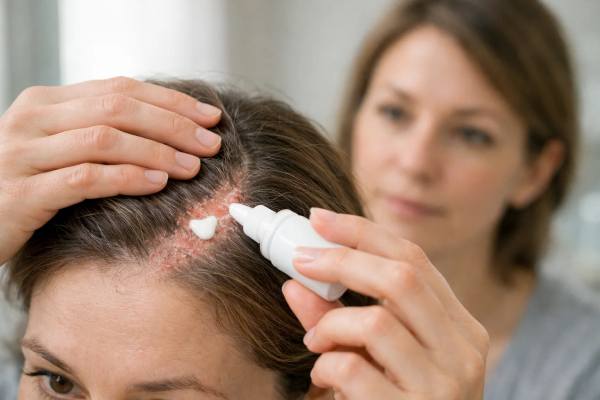
A persistently itchy scalp is easy to dismiss at first. Many people assume it is just dandruff, product buildup, dry weather, or a shampoo that did not suit them. But when the itching keeps returning, flakes become stubborn, patches feel sore, or the scalp starts looking red and inflamed, the problem may be broader than simple dryness. “Scalp eczema” is a common everyday phrase for several eczema-like scalp conditions that can overlap in appearance but behave differently in practice. That is why relief often takes more than switching products at random. The best results come from understanding what the scalp is reacting to, what pattern the rash follows, and whether the trigger is internal, environmental, or chemical. This article explains what scalp eczema usually means, how to recognize its symptoms, what commonly triggers flares, and which relief strategies are most likely to calm the scalp without worsening irritation.
Fast Facts
- Scalp eczema usually improves most when treatment matches the cause, whether that cause is seborrheic dermatitis, atopic eczema, or contact dermatitis.
- Effective relief often combines trigger reduction, barrier-friendly scalp care, and short-term anti-inflammatory or antifungal treatment when needed.
- Itching, flaking, and soreness can overlap with dandruff and psoriasis, so guessing the diagnosis often delays improvement.
- Burning, oozing, painful cracking, or hair thinning around inflamed areas are signs to stop self-experimenting and get evaluated.
- Start with a simple routine: use a gentle scalp cleanser, avoid fragranced irritants, and keep active treatments consistent for several weeks before judging results.
Table of Contents
- What scalp eczema usually means
- Symptoms and what it can look like
- Common triggers behind flare-ups
- Relief that works at home
- Medical treatments that make a difference
- When to seek help and watch for hair loss
What scalp eczema usually means
“Scalp eczema” is useful everyday language, but it is not one single diagnosis. Most often, people use it to describe an inflamed, itchy, flaky scalp that may fall into one of three broad groups: seborrheic dermatitis, atopic dermatitis, or contact dermatitis. Those conditions can look similar from a distance, yet their main drivers differ. Seborrheic dermatitis tends to cluster in oil-rich areas and often produces greasy or yellowish scale. Atopic dermatitis is more tied to a sensitive, dry, inflammation-prone skin barrier and often appears in people with a personal or family history of eczema, asthma, or allergies. Contact dermatitis happens when the scalp reacts to something touching it, such as hair dye, fragrance, essential oils, preservatives, shampoos, or styling products.
This overlap explains why scalp eczema can be frustrating. A person may describe “flakes” and “itch,” but the flakes may be oily, dry, tightly adherent, or paired with burning or weeping. Each version points in a slightly different direction. That is also why many people cycle through anti-dandruff products, scalp scrubs, and oils without much progress. They are treating the surface appearance without identifying the mechanism underneath.
The scalp also behaves differently from other skin. It has hair, more follicles, more oil activity in some people, and less visible access for self-checking. Because of that, irritation can build for weeks before someone realizes the scalp is inflamed rather than simply dry. A scalp can feel tight, itchy, or sore before obvious redness becomes easy to see. On darker skin tones, visible redness may be subtle and show up more as deepening color, violaceous tone, or patchy scaling than bright pinkness.
One helpful mindset is to think of scalp eczema as a reaction pattern rather than a single disease label. The reaction pattern includes itch, inflammation, barrier disruption, and flaking. The exact cause may vary. That framework matters because relief usually depends on matching the treatment to the pattern. A person with product allergy may worsen with more fragranced scalp oils. A person with seborrheic dermatitis may need antifungal shampoo rather than richer moisturizing products. A person with dry, sensitive skin may need gentler cleansing and better barrier care rather than stronger exfoliation.
This is why scalp eczema should not be reduced to “just dandruff.” Dandruff is part of the picture for some people, but not the whole one. If you are unsure where your symptoms fit, it can help to understand how dandruff and dry scalp differ before deciding your scalp is dealing with only one simple issue. A more precise view of the problem usually leads to simpler, more effective care.
Symptoms and what it can look like
Scalp eczema is most often felt before it is clearly seen. The first complaint is usually itch, but itch alone is not specific. What makes scalp eczema more recognizable is the company that itch keeps: flaking, soreness, tenderness, visible scale, tightness after washing, or a scalp that reacts to products that used to feel fine. Some people also notice burning, stinging, or the sense that the scalp is constantly “active,” even on days when it does not look dramatic.
The visual pattern can vary a lot. In seborrheic dermatitis, the scalp often shows diffuse flaking or patches of scale that may look yellowish, waxy, or slightly greasy. The scale may collect around the hairline, behind the ears, in the eyebrows, or around the nose as well as on the scalp. In atopic dermatitis, the scalp can feel drier, more irritated, and more scratch-prone, sometimes with lichenified or thickened areas if rubbing has been intense or chronic. In contact dermatitis, the scalp may itch sharply, burn, swell, or develop patchy scale, often with extension onto the hairline, forehead, ears, neck, or eyelids where products run off.
That overlap is one reason scalp eczema is commonly confused with other conditions. Psoriasis can create thicker, more sharply bordered plaques and adherent scale. Simple dryness can flake without much inflammation. Product buildup can mimic scaling but usually lacks the same persistent itch and reactivity. Sometimes the question is not just “Is this eczema?” but “Which inflamed scalp disorder does this most resemble?” If that distinction feels blurry, comparing symptoms with common scalp psoriasis signs can be useful because psoriasis and eczema often get mixed up in early self-diagnosis.
A few symptoms deserve extra attention:
- Itch that disrupts sleep or keeps returning despite product changes.
- Soreness, burning, or pain rather than itch alone.
- Thick crusting, oozing, or cracking.
- Rash on nearby skin such as the forehead, ears, eyelids, or neck.
- Noticeable increased shedding or breakage in inflamed areas.
The way symptoms behave over time is also revealing. Seborrheic dermatitis often waxes and wanes, improving for a while and then returning with stress, weather shifts, or irregular shampoo use. Contact dermatitis may flare after a new product, color service, essential oil, or styling product, though delayed allergic reactions can make the trigger harder to recognize. Atopic eczema tends to travel with a broader pattern of dry, reactive skin elsewhere on the body.
What many people underestimate is how much scratching changes the picture. Repeated rubbing can thicken the skin, increase soreness, worsen flaking, and turn a moderate flare into a harder one. That is why symptom control matters early. The goal is not only to reduce visible scale. It is to break the itch-scratch cycle before the scalp becomes more inflamed, more tender, and more reactive to everything you put on it.
Common triggers behind flare-ups
Scalp eczema rarely appears out of nowhere. Most flares are shaped by a mix of background susceptibility and day-to-day exposures. The background piece may be oily skin, a naturally sensitive barrier, an atopic tendency, or a scalp microbiome that flares more easily. The exposure piece is what pushes the scalp over the line: weather, stress, aggressive washing, fragranced products, hair dye, sweat, infrequent cleansing, or repeated use of irritating actives.
One of the most common trigger categories is hair products. Shampoos, conditioners, serums, leave-ins, dry shampoos, edge products, hair perfumes, and color treatments all place potential irritants or allergens directly on the scalp or hairline. Fragrance is a frequent issue, not because every scented product is harmful, but because repeated exposure increases the chances that a sensitive scalp will react. Preservatives, botanical extracts, essential oils, surfactants, and hair-dye ingredients can also play a role. If your scalp symptoms worsened after a “soothing” product, it may help to learn more about common fragrance triggers for itchy scalp rather than assuming natural automatically means gentler.
Routine habits matter too. For seborrheic dermatitis-prone scalps, stretching wash days too long can allow scale and oil to build. For drier, eczema-prone scalps, harsh cleansing too often can strip the barrier and intensify irritation. Hot water, vigorous scrubbing, strong scalp exfoliants, and frequent switching between active shampoos can all make a reactive scalp more unstable. The same is true for leaving styling products, sweat, and dry shampoo on the scalp for too long.
Environmental and internal triggers are often less obvious but just as real:
- Stress can amplify itch and inflammation.
- Cold dry air can worsen barrier fragility.
- Heat and sweat can intensify itching and sting.
- Illness or general immune stress may coincide with flares.
- Friction from hats, helmets, wigs, or tight styles can aggravate tender skin.
Hair services deserve special attention. Bleach, relaxers, perms, glosses, bonding treatments, straightening systems, and dye can all irritate an already inflamed scalp. Even when the main culprit is not chemical allergy, a sensitized scalp often becomes less tolerant of anything strongly fragranced, acidic, alkaline, or occlusive. This is why many people report that their scalp “suddenly can’t handle anything” after one bad flare. Once the barrier is compromised, even ordinary products can sting.
A useful way to think about triggers is not as one villain, but as a stack. You might tolerate fragrance on a calm scalp, but not during a winter flare after a stressful week and a hair-color appointment. You might tolerate less frequent washing in mild weather, but not during a sweaty season with heavy styling products. Relief becomes easier when you start tracking that stack instead of chasing a single explanation. The most practical question is often not “What is the cause forever?” but “What is pushing my scalp past its tolerance right now?”
Relief that works at home
Home care works best when it becomes simpler, not more elaborate. Many irritated scalps get worse because people layer too many products in too little time, hoping something will calm the itch. In reality, a reactive scalp usually responds better to fewer variables, more consistency, and gentler handling.
The first priority is to reduce irritation. That means pausing any obviously triggering product, avoiding new fragrance-heavy items, and stepping back from scrubs, harsh exfoliating acids, and essential-oil blends until the flare settles. If your scalp feels both tight and irritated, focus on barrier support rather than stripping. A calm scalp usually improves faster when you build around barrier-friendly scalp care instead of trying to “deep clean” the inflammation away.
A practical at-home relief plan often includes:
- Wash on a regular schedule that matches your scalp type instead of waiting until severe buildup develops.
- Use lukewarm water, not very hot water.
- Choose a gentle shampoo between medicated wash days if the scalp is dry or easily irritated.
- Avoid scratching with nails; gentle fingertip pressure is less damaging.
- Keep styling products off the scalp as much as possible during active flares.
For people whose scalp eczema behaves more like seborrheic dermatitis, antifungal shampoos can help reduce scale and itch. These are often used a few times weekly during a flare and then less often for maintenance. The key is contact time. Rinsing immediately may not give the active ingredients long enough to work. On the other hand, using strong shampoos daily on a dry, eczema-prone scalp can backfire. Technique matters as much as the label.
Moisture has a place too, but scalp moisture is not the same as coating the scalp in heavy oils. Thick oils can trap scale and make medicated shampoos harder to penetrate. For some people, a light scalp treatment, fragrance-free lotion, or clinician-recommended leave-on is more useful than home oiling. Rich oils may soften flakes temporarily while leaving the inflammatory process untouched underneath.
It also helps to protect the rest of your routine. During a flare, minimize heat styling, tight hairstyles, and heavy dry shampoo use. Change pillowcases regularly if styling residue builds easily. Wash combs and brushes if they are loaded with old product. These details sound minor, but they can meaningfully reduce repeated irritation.
The most important home-care principle is patience. A scalp that has been inflamed for weeks usually does not look normal after two washes. Give a calmer routine time to work. If the scalp is mildly to moderately irritated, a steady two- to four-week period of simple care often tells you more than one intense weekend of “detoxing.” Relief that works usually looks boring: less itch, less scale, less burning, and a scalp that gradually stops demanding attention every hour. That kind of improvement is often the most reliable sign that your routine is finally aligned with the problem.
Medical treatments that make a difference
When home care is not enough, medical treatment often helps because it targets the process driving the flare rather than just soothing the symptoms. The best choice depends on whether the pattern looks more seborrheic, atopic, allergic, or mixed.
For scalp eczema with oily or adherent scale, antifungal shampoos are often central. Ketoconazole, ciclopirox, selenium sulfide, and similar ingredients are commonly used when seborrheic dermatitis is part of the picture. These products help lower yeast-related and inflammatory activity on the scalp and are usually used as a treatment course first, then tapered to maintenance if symptoms improve. If you are deciding between medicated options, it can help to understand how ketoconazole shampoos are typically used before rotating products too quickly.
When inflammation is stronger, topical corticosteroids may be prescribed as solutions, foams, lotions, or shampoos that are easier to use on the scalp than creams. These can be very effective for short flares because they reduce redness, itching, and thickened inflammation quickly. The important word is short. Stronger steroids are usually not meant for continuous long-term use without supervision, especially around the hairline, ears, and face where runoff can affect thinner skin.
For atopic eczema or recurrent sensitive-skin patterns, clinicians may also use nonsteroidal anti-inflammatory treatments such as calcineurin inhibitors on nearby skin or other targeted therapies depending on severity and location. If the eczema is widespread or severe beyond the scalp, broader atopic dermatitis treatment may be needed rather than scalp-only care. That is why diagnosis matters so much. A scalp can be the most obvious site while not being the only site that needs treatment.
When allergic contact dermatitis is suspected, the single most effective treatment is allergen identification and avoidance. Medication may calm the current flare, but it will not prevent the next one if the triggering dye, fragrance, botanical, preservative, or styling product keeps returning to the scalp. That is why patch testing can change the whole course of care for some patients. Without it, “sensitive scalp” can turn into a years-long guessing game.
Medical treatment works best when it follows a clear structure:
- Identify the most likely diagnosis.
- Use the right active treatment for the flare.
- Remove the trigger that is keeping the scalp inflamed.
- Shift to maintenance once symptoms are under control.
The maintenance step is where many relapses begin. People often stop everything the moment the scalp improves, then feel frustrated when it returns. Some conditions, especially seborrheic dermatitis, are chronic and relapsing. That means long-term management is usually about control, not one-time cure. A maintenance wash schedule, lower-trigger routine, or intermittent active use may be what keeps the scalp steady. Relief that works medically is rarely dramatic because it is usually built on repetition, accurate diagnosis, and staying just ahead of the next flare instead of only reacting after it becomes severe.
When to seek help and watch for hair loss
Not every itchy scalp needs a clinic visit, but some patterns should not be managed by trial and error alone. See a dermatologist or other qualified clinician if the scalp is painful, weeping, crusted, bleeding, rapidly worsening, or not improving after a few weeks of consistent, sensible care. The same applies if the rash spreads beyond the scalp, especially to the eyelids, ears, neck, or face, because that pattern can strongly suggest contact dermatitis or a broader inflammatory condition.
Hair changes are another reason to get help sooner. Mild shedding can happen during scalp inflammation because the skin environment is irritated and scratching adds extra stress. But clear thinning, broken hairs, patchy loss, or ongoing shedding deserves a closer look. Sometimes the link is indirect, with inflammation and scratching worsening breakage. Other times, the wrong diagnosis is the real issue. A scalp assumed to be eczema may actually reflect psoriasis, fungal infection, scarring alopecia, or another disorder that needs different treatment. If itch and shedding are happening together, it can help to understand the broader landscape of itchy scalp with hair loss rather than assuming the hair changes are harmless.
Several red flags deserve prompt evaluation:
- Tender swollen areas or pustules.
- Thick adherent crusts or oozing fluid.
- Eyebrow, lash, or body-hair changes.
- Symptoms after hair dye, bleach, or salon treatment that keep worsening.
- New bald spots, recession, or thinning around inflamed skin.
It is also worth seeking help if the scalp problem is changing your behavior. Losing sleep from itch, avoiding hair washing because the scalp hurts, or becoming dependent on frequent steroid use without guidance are signs that the condition is no longer mild.
A good medical evaluation often includes questions about product use, timing, family history, other eczema or allergy history, stress, hair practices, and whether symptoms show up anywhere else on the body. In some cases, patch testing is the most important next step. In others, the answer may be a medicated scalp plan, a short anti-inflammatory course, or a correction of an incorrect self-diagnosis.
The reassuring part is that many cases of scalp eczema do improve once the pattern is recognized. The risk is not that the condition is untreatable. The risk is that months of random product changes delay the right treatment. If your scalp is stuck in a cycle of itch, flakes, and reactivity, the most efficient form of relief may not be another scalp product. It may be clarity. Once the diagnosis is sharper, the routine usually gets simpler, and that is often when the scalp finally starts to calm down.
References
- Seborrheic Dermatitis Revisited: Pathophysiology, Diagnosis, and Emerging Therapies—A Narrative Review 2025 (Review)
- Child and Adult Seborrheic Dermatitis: A Narrative Review of the Current Treatment Landscape 2025 (Review)
- Allergic contact dermatitis of the scalp: a review of an underdiagnosed entity 2024 (Review)
- Atopic dermatitis (eczema) guidelines: 2023 American Academy of Allergy, Asthma and Immunology/American College of Allergy, Asthma and Immunology Joint Task Force on Practice Parameters GRADE- and Institute of Medicine-based recommendations 2024 (Guideline)
- Hair Product Allergy: A Review of Epidemiology and Management 2024 (Review)
Disclaimer
This article is for educational purposes only and is not a substitute for medical advice, diagnosis, or treatment. “Scalp eczema” can describe several different conditions, and persistent itching, pain, crusting, spreading rash, or hair loss should be evaluated by a qualified clinician. Medical advice is especially important after hair dye reactions, severe flares, or symptoms that do not improve with a simple, low-irritation routine.
If this article helped you, consider sharing it on Facebook, X, or another platform where it may help someone else recognize scalp eczema earlier and treat it more effectively.