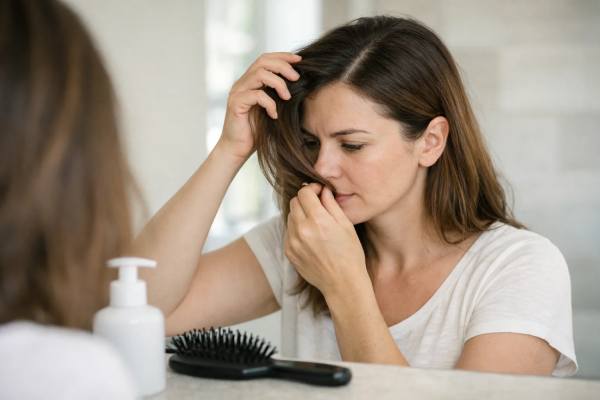
A persistent scalp odor can be surprisingly distressing. It often appears as a sour, musty, oily, or even “cheesy” smell that seems to return quickly after washing. Many people assume it is simply a hygiene issue, yet the reality is more complex. The scalp is a living ecosystem of skin, oil glands, sweat glands, microbes, and hair products. When that balance shifts, odor can develop even in people who wash regularly.
Most cases trace back to three overlapping factors: microbial activity (especially yeast), sweat and oil accumulation, and product buildup that traps moisture and nutrients on the scalp. These elements interact with scalp type, hair density, climate, and washing habits. A person with thick hair, heavy styling products, and an oily scalp will experience a very different environment than someone with dry skin and minimal product use.
Understanding what is actually producing the smell is the key step toward fixing it. Once you identify whether yeast overgrowth, sweat retention, or buildup is the main driver, the solution becomes much more targeted and effective.
Essential Insights
- Scalp odor most often develops when yeast, sweat, and natural oils break down on the scalp surface.
- Product buildup and infrequent cleansing can trap odor-causing microbes and make smells return quickly.
- Harsh scrubbing or excessive washing may worsen irritation and indirectly increase odor.
- Washing the scalp every one to three days and fully drying the roots can significantly reduce odor recurrence.
- Persistent odor with itching, flakes, or bumps may indicate a scalp condition that needs targeted treatment.
Table of Contents
- Why Scalp Odor Happens
- Yeast and Microbial Overgrowth
- Sweat, Oil, and Moisture Trapping
- Product Buildup and Residue
- How to Fix Scalp Odor
- When Odor Signals a Scalp Condition
Why Scalp Odor Happens
Scalp odor develops when microorganisms break down sweat, oils, and skin debris on the scalp. This process is natural. The scalp contains thousands of sebaceous glands that produce sebum, a protective oil that lubricates hair and skin. Sweat glands also release moisture that helps regulate temperature. On their own, these substances are not strongly scented. Odor appears when microbes metabolize them.
The scalp microbiome includes bacteria and yeast that normally coexist in balance. When oils and sweat accumulate, microbes use them as food. During this process they release volatile compounds that produce distinctive smells. Some are fatty acids with sour or rancid notes, while others resemble musty or fermented odors.
Several factors influence how quickly this happens:
- Sebum production: Oily scalps provide more fuel for odor-producing microbes.
- Hair density: Thick or curly hair can trap moisture and oils close to the scalp.
- Environmental conditions: Heat and humidity accelerate microbial activity.
- Washing frequency: Longer intervals between washes allow more buildup.
- Product residue: Styling products create a film that retains oils and microbes.
Another often overlooked factor is airflow. Hair acts like insulation. When the scalp stays covered by thick hair, hats, or tight styles, moisture evaporates more slowly. That environment favors yeast growth and bacterial activity.
Interestingly, scalp odor does not always correlate with visible oiliness. Some people experience odor even when their scalp appears relatively dry. In those cases, microscopic buildup or microbial imbalance may be responsible.
Hair type and routine also matter. Individuals who frequently use dry shampoo, heavy conditioners near the roots, or thick oils may unintentionally create a coating that traps odor molecules. Over time, this layer can become difficult to remove with regular shampoo alone.
Proper cleansing and occasional deeper cleaning help reset the scalp environment. A guide to clarifying shampoo frequency and technique can help remove stubborn residue and reduce the conditions that allow odor to develop.
Understanding the biological source of scalp odor helps explain why perfumes or fragranced products rarely solve the problem. They may temporarily mask the smell, but the microbial process continues underneath.
Yeast and Microbial Overgrowth
One of the most common causes of persistent scalp odor is yeast overgrowth, particularly from a genus known as Malassezia. This yeast naturally lives on human skin and feeds on the fatty components of sebum. In balanced amounts it causes no problems. When conditions favor rapid growth, however, it can trigger irritation, flaking, and a characteristic musty or oily smell.
Yeast thrives in environments where oil, warmth, and moisture are abundant. The scalp provides all three. When washing frequency decreases or heavy products accumulate, yeast populations can expand. The metabolic byproducts they release contribute directly to odor.
Yeast activity is closely linked with dandruff and seborrheic dermatitis. These conditions often produce flakes, itching, and redness along with an oily scalp odor. The smell is not caused by poor hygiene but by the biochemical breakdown of lipids by yeast enzymes.
Several everyday habits can unintentionally promote yeast growth:
- applying oils or thick conditioners directly to the scalp
- leaving wet hair tied up for long periods
- infrequent washing when sebum production is high
- sleeping with damp hair
- repeated use of heavy styling products
Because yeast feeds on scalp oils, treatments that reduce its growth often involve antifungal ingredients. Medicated shampoos containing ketoconazole, selenium sulfide, or ciclopirox are commonly used when yeast overgrowth becomes significant.
For many people with dandruff-related odor, targeted cleansing is more effective than increasing wash frequency alone. A routine built around ketoconazole shampoo for dandruff management may help reduce yeast populations and improve scalp odor at the same time.
Another important step is minimizing unnecessary oil buildup on the scalp. While hair oils can benefit dry hair lengths, applying them heavily to the scalp can provide additional nutrients for yeast.
Finally, consistency matters. Yeast populations rebound quickly if treatment stops too soon. Many dermatologists recommend continuing antifungal shampoos once or twice weekly even after symptoms improve to maintain microbial balance.
When yeast overgrowth is controlled, the characteristic scalp odor usually fades along with flaking and irritation.
Sweat, Oil, and Moisture Trapping
Sweat itself is almost odorless when it leaves the body. The smell associated with sweat develops when microbes break down sweat components on the skin. On the scalp, this process becomes more pronounced because sweat mixes with sebum and remains trapped within hair.
During exercise, warm weather, or stressful situations, sweat glands release moisture across the scalp surface. If this moisture remains trapped in dense hair or under head coverings, microbial activity increases. The result can be a sour or slightly acidic smell that develops within hours.
People who sweat heavily from the scalp may experience odor even with regular washing. This condition, sometimes called scalp hyperhidrosis, creates a continuously damp environment that favors microbial growth.
Several everyday habits can worsen moisture trapping:
- wearing hats or helmets for long periods
- tying hair tightly while still wet
- sleeping with damp hair
- using thick leave-in products that reduce airflow
- exercising frequently without washing or drying the scalp afterward
Hair density plays a major role. Individuals with very thick or curly hair often retain more moisture near the roots, which can prolong drying time. In humid climates, the scalp may remain slightly damp throughout the day.
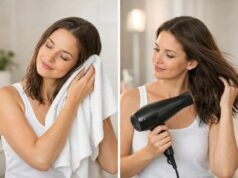
Proper drying is therefore an underrated part of odor prevention. Ensuring the scalp is completely dry after washing can significantly reduce microbial activity. In some cases, gentle blow drying at a low heat setting can help evaporate moisture from the roots.
For people who exercise regularly, rinsing the scalp with water or performing a light wash after workouts can also help remove sweat before microbes begin breaking it down.
Adjusting washing frequency is another useful strategy. Those with oily or sweaty scalps often benefit from washing every one to three days rather than once per week.
Managing scalp sweat may also require paying attention to airflow. Looser hairstyles, breathable hats, and regular scalp cleansing can prevent the humid microenvironment that encourages odor formation.
When moisture levels decrease and oils are removed regularly, the microbes responsible for sweat-related odor lose their ideal habitat.
Product Buildup and Residue
Product buildup is one of the most underestimated contributors to scalp odor. Many styling products contain oils, silicones, waxes, or polymers that cling to hair and scalp surfaces. Over time these ingredients accumulate and form a thin film that traps sweat, sebum, and microbes.
This residue layer changes how the scalp behaves. Instead of allowing oils and sweat to disperse naturally, buildup creates a barrier that holds them against the skin. Microbes then feed on these trapped substances, producing odor even when the scalp appears relatively clean.
Common contributors to buildup include:
- dry shampoo
- hair sprays and gels
- heavy conditioners used near the roots
- thick oils and pomades
- leave-in creams and serums
Dry shampoo deserves special attention. While convenient for absorbing oil between washes, repeated use without proper cleansing can lead to a powdery mixture of starch, oil, and sweat accumulating at the roots. This environment can easily develop a stale smell.
Another factor is incomplete rinsing. When shampoo or conditioner remains on the scalp, it may combine with sebum to form residue. Hard water minerals can also bind with product ingredients, making buildup more difficult to remove.
The solution often involves periodic deep cleansing. Clarifying shampoos use stronger surfactants to dissolve stubborn residue that regular shampoos cannot fully remove.
However, frequent clarifying can be drying, so most people only need it every one to two weeks depending on product use. Those who style hair heavily may need it slightly more often.
Understanding how to identify and remove product buildup is essential for addressing odor caused by trapped residues.
Reducing buildup may also involve adjusting product placement. Applying conditioners and oils primarily to mid-lengths and ends rather than directly onto the scalp helps prevent residue accumulation.
When buildup is removed and washing techniques improve, many people notice that scalp odor decreases significantly without any additional treatments.
How to Fix Scalp Odor
Eliminating scalp odor usually requires addressing the environment that allows microbes to produce odor in the first place. Rather than masking smells with fragrance, the goal is to reduce excess oils, sweat, yeast activity, and product residue.
A practical approach combines several habits that support a healthier scalp environment.
1. Adjust washing frequency
Many people benefit from washing the scalp every one to three days, especially if their scalp is oily or they exercise frequently. Washing less often may allow oils and sweat to accumulate.
2. Focus shampoo on the scalp
The scalp is where odor develops. Massage shampoo directly into the roots rather than concentrating on hair lengths.
3. Dry the scalp thoroughly
Allowing the scalp to remain damp encourages microbial growth. Ensuring hair is fully dry after washing helps reduce odor.
4. Rotate antifungal or clarifying shampoos
If odor is linked to dandruff or buildup, alternating regular shampoo with antifungal or clarifying formulas may improve results.
5. Avoid heavy scalp products
Thick oils, waxes, and leave-in creams can trap moisture and microbes near the scalp.
6. Clean hair tools and accessories
Hairbrushes, pillowcases, and hats can harbor microbes that transfer back to the scalp. Regular cleaning helps prevent recontamination. A guide to hair brush cleaning and hygiene can help maintain cleaner styling tools.
Lifestyle habits can also contribute to odor control. Adequate hydration, balanced diet, and stress management help regulate sweat and oil production.
Another often overlooked factor is scalp exfoliation. Gentle exfoliation removes dead skin cells that microbes feed on, reducing the available material that produces odor.
Consistency is essential. Improvements usually appear within one to two weeks of adjusting washing routines and product use.
When the scalp environment becomes less oily, less humid, and less coated with residue, odor-producing microbes lose the conditions they need to thrive.
When Odor Signals a Scalp Condition
While mild scalp odor can result from normal oil and sweat buildup, a strong or persistent smell may indicate an underlying scalp condition. When odor appears alongside itching, flaking, redness, or bumps, it is often a sign that microbial imbalance or inflammation is present.
One common example is seborrheic dermatitis. This condition causes greasy flakes, irritation, and yeast overgrowth, which can produce a musty or oily smell. The odor may return quickly after washing because yeast populations remain active on the scalp.
Folliculitis is another possibility. This condition involves inflammation of hair follicles caused by bacteria or yeast. It often produces small red bumps or pustules and can sometimes generate an unpleasant smell due to bacterial activity.
Other conditions that may contribute to scalp odor include psoriasis, fungal infections, and allergic reactions to hair products. Each affects the scalp barrier differently but can alter microbial balance and increase odor.
Persistent scalp odor combined with symptoms such as itching or burning may signal inflammation. Understanding early signs of scalp inflammation can help identify when irritation is becoming a medical concern.
Certain warning signs suggest that professional evaluation may be needed:
- strong odor that returns immediately after washing
- painful or itchy scalp lesions
- thick yellow or white scales
- patches of hair loss
- spreading redness or swelling
Dermatologists can examine the scalp and determine whether yeast, bacteria, or inflammatory disease is responsible. Treatment may include medicated shampoos, topical medications, or antifungal therapies.
It is important not to ignore persistent symptoms. Odor itself is rarely dangerous, but the underlying condition causing it may worsen without treatment.
Addressing scalp health early can prevent irritation from progressing and restore the natural microbial balance that keeps the scalp odor-free.
References
- The Human Scalp Microbiome and Its Role in Hair and Scalp Disorders 2024 (Review)
- Seborrheic Dermatitis: Pathophysiology, Clinical Features, and Management 2023 (Review)
- Malassezia Species and Their Role in Skin Diseases 2023 (Review)
- Microbial Metabolism of Sweat and Sebum: Mechanisms of Skin Odor Formation 2022 (Review)
Disclaimer
This article is for educational purposes only and is not a substitute for professional medical advice, diagnosis, or treatment. Scalp odor can sometimes signal underlying conditions such as seborrheic dermatitis, fungal infection, or folliculitis. If you experience persistent odor accompanied by itching, redness, pain, or hair loss, consult a qualified healthcare professional for evaluation and treatment.
If you found this article helpful, consider sharing it on Facebook, X, or your preferred platform so others experiencing scalp odor can learn about its causes and solutions.