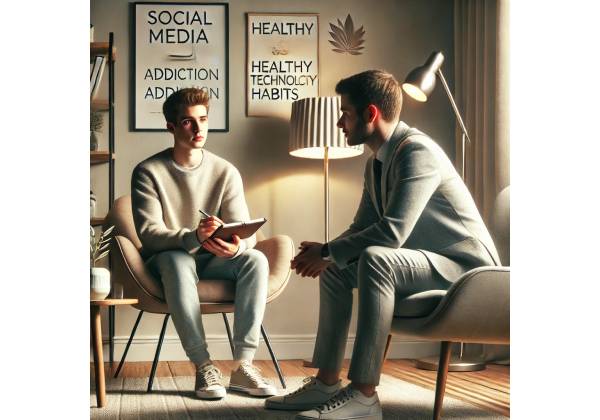
Social media addiction often hides inside ordinary life. It can look like checking one notification before getting out of bed, opening an app during a work task, or promising to stop after five minutes and looking up an hour later. Because the behavior is woven into friendship, news, entertainment, work, and identity, it is easy to dismiss as normal modern life. But for some people, the pattern becomes compulsive. Attention narrows, mood starts to depend on likes, replies, and endless updates, and daily routines begin to bend around the next scroll. The problem is not simply heavy use. It is loss of control, repeated failed attempts to cut back, and continuing despite harm to sleep, focus, relationships, mood, or self-esteem. This article explains what social media addiction means, how it tends to develop, what signs and symptoms are most common, how cravings and withdrawal-like distress can appear, and why the risks can extend far beyond wasted time.
Table of Contents
- What Social Media Addiction Really Means
- How Platforms Hook Attention
- Signs, Symptoms, and Daily Life Disruption
- Cravings, Withdrawal, and the Urge to Check
- Causes, Triggers, and Risk Factors
- Mental Health, Sleep, and Relationship Risks
- When the Problem Becomes Clinically Serious
What Social Media Addiction Really Means
Social media addiction is a term widely used to describe a pattern of social media use that becomes compulsive, difficult to control, and harmful to everyday functioning. Clinicians and researchers often use related terms such as problematic social media use, addictive social media use, or social media use disorder. That wording matters because this condition is still debated more than gambling disorder or alcohol use disorder. It is not an official diagnosis in the major diagnostic systems in the same way those disorders are. Still, the pattern itself is real, and many people experience it in a way that closely resembles other behavioral addictions.
The core issue is not simply spending a lot of time online. Plenty of people use social platforms heavily for work, school, activism, creative projects, or staying connected without becoming addicted. The more concerning pattern includes:
- loss of control over time spent
- repeated failed efforts to cut back
- strong urges to check even without a clear reason
- use that interferes with sleep, work, study, or relationships
- mood that depends heavily on feedback, novelty, or updates
- continued use despite clear harm
In practice, the disorder often looks less dramatic than substance addiction, which is one reason it can go unnoticed for so long. There may be no intoxication, no smell, and no obvious crisis at first. Instead, the person becomes increasingly preoccupied. They think about posting, checking, replying, comparing, refreshing, and not missing out. The phone becomes both a tool and a trigger. A few spare seconds automatically fill with scrolling.
A useful way to understand the problem is to separate ordinary use from addictive use. Ordinary use is flexible. The person can step away, tolerate boredom, and return to offline tasks without much distress. Addictive use is rigid. The person feels pulled back repeatedly, becomes uneasy when blocked from checking, and keeps using even when it is making life narrower, more distracted, or more emotionally unstable.
This is also why social media addiction overlaps with, but is not identical to, smartphone overuse. A person may compulsively open social platforms even when they are not texting, gaming, or doing other digital tasks. Readers who notice that broader device pattern may also recognize overlap with smartphone dependence. But the specific issue here is the social platform loop: attention, comparison, feedback, novelty, and the persistent feeling that something important might happen the moment you look away.
How Platforms Hook Attention
Social media platforms are powerful because they combine several reinforcing experiences at once. They offer novelty, social feedback, entertainment, identity performance, outrage, belonging, and uncertainty in a single scroll. That mixture matters. The brain is not reacting only to pleasure. It is reacting to anticipation, variable reward, social relevance, and the possibility that the next post, message, or number will change how we feel.
This is why the problem can escalate so fast. A person opens an app for a practical reason, then gets caught by a cascade of cues: a red badge, a new follower, a short video, a comment, an argument, a notification, a recommendation designed around past behavior. The result is an environment that makes stopping harder than starting.
Several platform features tend to strengthen compulsive use:
- infinite scroll with no natural stopping point
- variable rewards, such as unpredictable likes, comments, or viral reach
- push notifications that interrupt attention
- algorithmic feeds that learn what keeps the person engaged
- short-form, high-intensity content that resets attention again and again
- social comparison signals such as follower counts, views, and reactions
These features work especially well because they reduce friction. There is almost no pause between urge and action. A moment of boredom becomes a reflexive check. An uncomfortable feeling becomes a scroll. A difficult task becomes an excuse to look away “for a second.” Over time, that repeated switching changes the rhythm of daily life. Quiet moments that once held rest, reflection, or simple boredom become filled automatically.
The social layer also intensifies the pull. People are not only consuming content. They are monitoring how they appear to others, how they compare, whether they are included, whether they are missing something, and whether their latest post is performing. This makes the experience emotionally loaded in a way that many other digital habits are not. It is not just stimulation. It is self-evaluation.
Short-form content deserves special mention because it compresses novelty into rapid bursts. That can make it easier to fall into a cycle of passive swiping, mild dissociation, and repeated attention resets. For readers who want a closer look at why that pattern feels so sticky, there is often strong overlap with doomscrolling and compulsive feed checking.
The most important point is that social media addiction is not only about weak self-control. It grows in an environment built to keep attention moving, returning, and staying emotionally engaged. That design does not create addiction in everyone, but it can intensify risk in people who are already stressed, lonely, impulsive, or highly sensitive to social feedback.
Signs, Symptoms, and Daily Life Disruption
The signs of social media addiction often appear in ordinary routines before they show up as obvious crisis. A person may start checking their accounts the moment they wake up, reach for the phone during every lull in the day, or feel unable to complete simple tasks without repeated app switches. Because this pattern is common in modern life, it can be hard to recognize the point at which habit becomes disorder.
One of the clearest signs is loss of time. The person plans to check for a minute and stays for thirty. They open one platform, then drift through several more. They stop noticing how often their hand moves to the phone. Daily tasks begin to fragment around checking, posting, replying, and refreshing.
Common signs and symptoms include:
- checking social media first thing in the morning and last thing at night
- feeling restless when the phone is not nearby
- repeatedly interrupting conversations or tasks to look at notifications
- losing track of time while scrolling
- using social media during work, study, meals, driving, or time with family
- feeling unusually affected by likes, views, comments, or being ignored
- deleting and reposting content to improve reactions
- hiding the extent of use from others
The emotional symptoms can be just as important as the behavioral ones. Some people become irritable when interrupted. Others feel flat when engagement is low, anxious when they cannot check, or strangely empty after long periods online. Many notice that concentration becomes harder even away from the app. Their mind keeps drifting back to the feed, the comment they made, the story they posted, or the argument they were reading.
This disruption often spreads into identity and self-worth. A person may begin to judge their value through visible metrics or through constant comparison with other people’s curated lives. They may feel behind, unattractive, excluded, unproductive, or invisible after scrolling, then return again looking for relief. That is part of what makes the condition self-reinforcing.
Work, school, and in-person relationships often show the damage clearly. Deadlines slip. Reading becomes harder. Meals are interrupted. Attention during conversations weakens. The person may say they are listening while still monitoring the phone. Over time, the problem can start to resemble broader attention fragmentation, especially when even short periods of unbroken focus begin to feel uncomfortable.
Not everyone with heavy use has an addiction. The difference lies in control and consequences. When use consistently overrides priorities, disrupts functioning, and keeps going despite repeated harm, the pattern has moved beyond simple habit and into something more serious.
Cravings, Withdrawal, and the Urge to Check
Cravings in social media addiction are often underestimated because they do not always feel dramatic. They can appear as a quick, repetitive internal nudge: check now, refresh now, see if anything changed. But that pull can become powerful, especially when it is repeated dozens or hundreds of times a day. The craving is not always about pleasure. Often it is about reducing uncertainty, boredom, loneliness, or inner discomfort.
People commonly crave social media in response to:
- unstructured downtime
- awkward social moments
- stress before or after work or school
- low mood or loneliness
- a notification sound or screen glow
- fear of missing news, jokes, or group activity
- uncertainty about how a post or message was received
These urges can feel almost bodily. Some people describe a surge of restlessness or a reflexive reach toward the phone before they are fully aware of the urge. Others describe mental cravings: replaying what they posted, wondering whether someone replied, or feeling unable to settle until they know what happened online.
When people try to cut back, they often experience withdrawal-like symptoms. These do not look like alcohol or opioid withdrawal, but they are real enough to keep the cycle going. Common experiences include:
- irritability
- boredom that feels sharper than usual
- anxiety or unease when unable to check
- trouble concentrating on slower tasks
- feeling disconnected or left out
- compulsive thoughts about what might be happening online
- an urge to substitute one platform for another
This is one reason stopping can feel harder than expected. The person is not just giving up entertainment. They are losing a rapid, familiar way of changing state. Social media may have been helping them avoid boredom, fill silence, regulate mood, or dodge difficult emotions. Without it, those feelings become more visible.
Nighttime can be especially difficult. People often intend to “scroll for a few minutes” before sleep and end up extending the day by an hour or more. That pattern is not only about poor discipline. It often reflects emotional avoidance, stimulation seeking, and anxiety about disconnecting. For many readers, this overlaps with the broader pattern described in technology, sleep, and late-night scrolling.
The absence of formal detox does not make the condition mild. Strong cravings and withdrawal-like distress can keep people locked in a cycle of checking long after they realize the behavior is undermining their mood, time, and focus.
Causes, Triggers, and Risk Factors
There is no single cause of social media addiction. More often, it develops where platform design, personal vulnerability, and life circumstances overlap. Some people are drawn in mainly by entertainment. Others by loneliness, social comparison, identity-building, news, professional pressure, or the need to feel connected. The same app can play very different roles for different people, which is why the condition can be easy to misunderstand.
Several factors can raise the risk of compulsive use:
- adolescence and young adulthood
- impulsivity or sensation-seeking
- loneliness and low social support
- anxiety, depression, or chronic stress
- attention regulation difficulties
- low self-esteem or high social comparison
- work or creative fields that reward constant online presence
- sleep disruption and irregular daily routines
Fear of missing out is one of the strongest drivers. If a person believes that being offline means losing social relevance, missing opportunities, or falling behind, the urge to stay connected grows much stronger. This is especially true in peer groups where social life, humor, conflict, and validation all move through platforms in real time.
Stress also changes the pattern. Some people use social media to soothe themselves after hard days, then discover that the relief is brief and the emotional aftertaste is worse. Others turn to it when overwhelmed because it offers easy distraction and fast stimulation. Over time, that coping strategy can become automatic.
Personal history matters too. A person who already struggles with attention, compulsive habits, or emotional regulation may be more vulnerable to the fast reward cycles built into social platforms. In those cases, the app does not create the whole problem by itself, but it gives existing vulnerabilities a highly efficient outlet. That is one reason some people notice overlap between compulsive social media use and other impulsive or digital behaviors, including other screen-based addictive patterns.
The content itself also shapes risk. Passive comparison-heavy use often affects people differently than active, purposeful, limited use. Constant exposure to outrage, idealized appearance, peer activity, or emotionally extreme content can intensify insecurity, anger, or dissatisfaction. Likewise, algorithmic feeds can learn and amplify whatever state already hooks the person most strongly, whether that is humor, validation, outrage, envy, or fear.
The condition does not usually begin because someone is weak. It begins because the person finds a tool that reliably changes how they feel, then keeps returning until the behavior starts taking more than it gives. The more often that cycle repeats, the more ingrained it becomes.
Mental Health, Sleep, and Relationship Risks
The harms linked to social media addiction reach far beyond screen time totals. The more serious issue is how compulsive use can affect mood, attention, self-esteem, sleep, and relationships all at once. Not everyone who uses social media heavily develops these problems, but when use becomes addictive, the risk profile changes.
Mental health effects can include:
- increased anxiety
- lower mood
- emotional volatility tied to feedback or exclusion
- stronger social comparison and self-doubt
- reduced satisfaction with offline life
- greater stress after prolonged scrolling
- difficulty disengaging from upsetting or provocative content
For many people, the emotional problem is not only what they see online but the pattern of use itself. Rapid switching, repeated checking, and constant anticipation can leave the nervous system activated for long stretches of the day. Even content meant to relax may end up overstimulating. The person may feel wired, distracted, and emotionally thin by evening.
Sleep is one of the most common casualties. Late-night scrolling pushes bedtimes later, keeps the mind engaged, and makes it harder to accept the quiet that comes with putting the phone down. Sleep can be shortened directly by time spent online and indirectly by rumination, comparison, or emotional arousal from what was consumed. Readers who notice that spillover into sleep may recognize it from the broader effects described in social media, anxiety, and sleep disruption.
Relationships can suffer in more subtle ways than open conflict. People may become physically present but mentally elsewhere. They may compare their real relationships unfavorably with idealized online images, or begin prioritizing digital contact over in-person attention. Partners and friends often notice that conversations are interrupted, shared time feels thinner, and the person seems less able to tolerate undivided presence without checking the phone.
Self-image can also change. Curated feeds, edited photos, status updates, and visible popularity signals can create a steady sense of inadequacy. Some people become more preoccupied with appearance, productivity, lifestyle, or status after scrolling. Others become angrier and more cynical because outrage-based content keeps them emotionally activated.
The larger risk is cumulative. One hour lost is not the main issue. The main issue is repeated daily erosion: poorer sleep, weaker focus, more stress, less presence, lower self-worth, and a shrinking ability to be comfortable offline. That slow accumulation is what makes social media addiction so easy to normalize and so important to recognize early.
When the Problem Becomes Clinically Serious
Social media addiction becomes clinically serious when the pattern is persistent, difficult to control, and clearly harmful to functioning or well-being. Because the formal diagnostic status is still debated, clinicians may use different language. They may describe problematic social media use, addictive use, compulsive use, or a broader digital behavior problem. What matters most is not the label alone, but whether the person is showing a stable pattern of impairment.
Clinical concern rises when several of the following are present at once:
- repeated failed attempts to cut down
- strong urges or preoccupation throughout the day
- major disruption to work, school, sleep, or relationships
- inability to tolerate offline time without distress
- mood that depends heavily on online engagement
- hiding the extent of use or lying about time spent
- continued use despite worsening anxiety, depression, or functioning
Severity is also shaped by age and context. In adolescents, the problem may show up through school decline, conflict at home, emotional dependence on peer feedback, sleep loss, or intense reaction to online exclusion. In adults, it may show up through productivity problems, relationship strain, compulsive checking during work, or an inability to disengage from professional identity online.
A careful assessment also asks what the person is actually doing on social media. Are they seeking reassurance, scrolling passively, monitoring appearance, chasing viral reach, consuming upsetting news, or using the platform as escape from painful emotions? Those details matter because heavy use alone does not tell the whole story. The same amount of time can mean very different levels of risk depending on how it is experienced and what consequences it creates.
Certain red flags deserve prompt attention:
- severe insomnia driven by nighttime scrolling
- marked depression or hopelessness linked to online use
- panic when unable to check accounts
- intense cyberbullying, humiliation, or harassment
- social withdrawal from offline life
- self-harm thoughts after online rejection, exposure, or comparison
This article is focused on the condition itself rather than detailed recovery planning, but readers who recognize this pattern may want a next-step guide on social media addiction treatment approaches. Recognition matters because the disorder often improves only when it is named clearly. When a person keeps returning to social media despite mounting harm, and stopping feels increasingly difficult or frightening, the behavior has moved beyond habit and into a condition that deserves serious attention.
References
- Social Media and Youth Mental Health 2025 (Official Advisory Page)
- Health advisory on social media use in adolescence 2023 (Health Advisory)
- Problematic Social Media Use in Adolescents and Young Adults: Systematic Review and Meta-analysis 2022 (Systematic Review and Meta-Analysis)
- Social media use, mental health and sleep: A systematic review with meta-analyses 2024 (Systematic Review and Meta-Analysis)
- Toward the classification of social media use disorder: Clinical characterization and proposed diagnostic criteria 2025 (Clinical Review)
Disclaimer
This article is for educational purposes only and is not a diagnosis or a substitute for mental health care. Social media addiction can overlap with anxiety, depression, sleep problems, bullying, trauma, attention difficulties, and other mental health conditions. Seek prompt professional help if compulsive use is disrupting work, school, sleep, relationships, or self-worth, or if it is linked to hopelessness, self-harm thoughts, or severe distress. A licensed clinician can help assess whether the pattern reflects problematic social media use on its own or part of a broader mental health issue.
If this article helped, please consider sharing it on Facebook, X, or another platform where it may help someone recognize the pattern earlier.